
The Article The Simple Nominal Sentence There is
- Slides: 13
The Article - The Simple Nominal Sentence
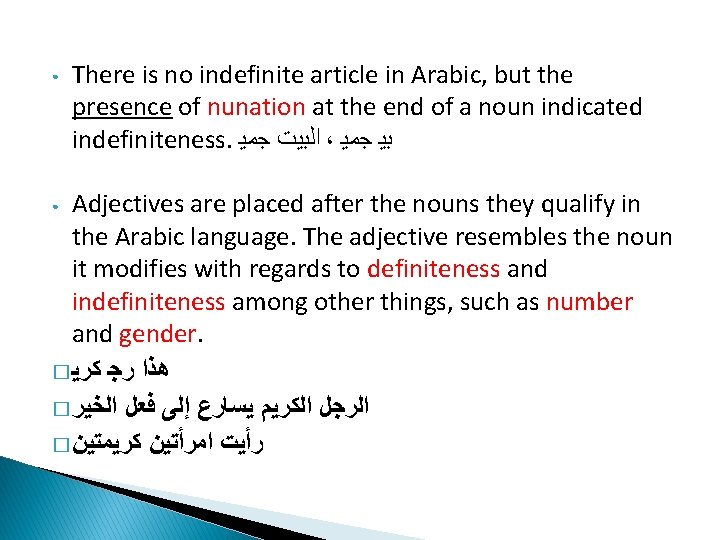
● There is no indefinite article in Arabic, but the presence of nunation at the end of a noun indicated indefiniteness. ﺍﻟﺒﻴﺖ ﺟﻤﻴ ، ﺑﻴ ﺟﻤﻴ Adjectives are placed after the nouns they qualify in the Arabic language. The adjective resembles the noun it modifies with regards to definiteness and indefiniteness among other things, such as number and gender. � ﻫﺬﺍ ﺭﺟ ﻛﺮﻳ � ﺍﻟﺮﺟﻞ ﺍﻟﻜﺮﻳﻢ ﻳﺴﺎﺭﻉ ﺇﻟﻰ ﻓﻌﻞ ﺍﻟﺨﻴﺮ � ﺭﺃﻴﺖ ﺍﻣﺮﺃﺘﻴﻦ ﻛﺮﻳﻤﺘﻴﻦ ●
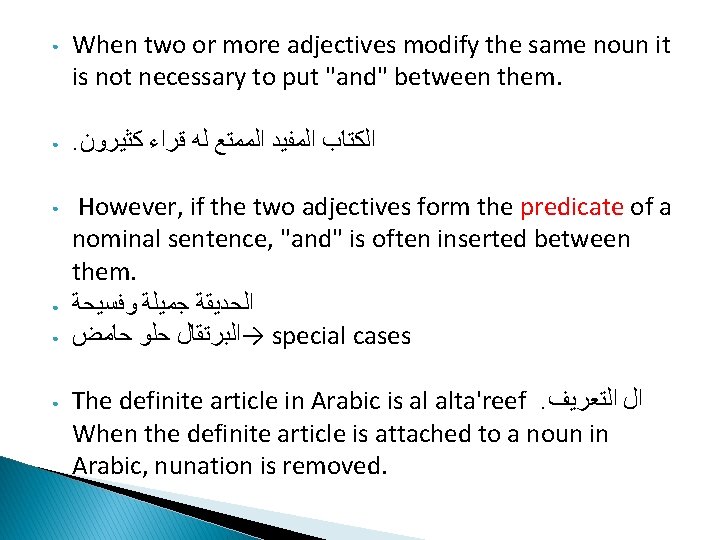
● ● ● When two or more adjectives modify the same noun it is not necessary to put "and" between them. . ﺍﻟﻜﺘﺎﺏ ﺍﻟﻤﻔﻴﺪ ﺍﻟﻤﻤﺘﻊ ﻟﻪ ﻗﺮﺍﺀ ﻛﺜﻴﺮﻭﻥ However, if the two adjectives form the predicate of a nominal sentence, "and" is often inserted between them. ﺍﻟﺤﺪﻳﻘﺔ ﺟﻤﻴﻠﺔ ﻭﻓﺴﻴﺤﺔ →ﺍﻟﺒﺮﺗﻘﺎﻝ ﺣﻠﻮ ﺣﺎﻣﺾ special cases The definite article in Arabic is al alta'reef. ﺍﻝ ﺍﻟﺘﻌﺮﻳﻒ When the definite article is attached to a noun in Arabic, nunation is removed.
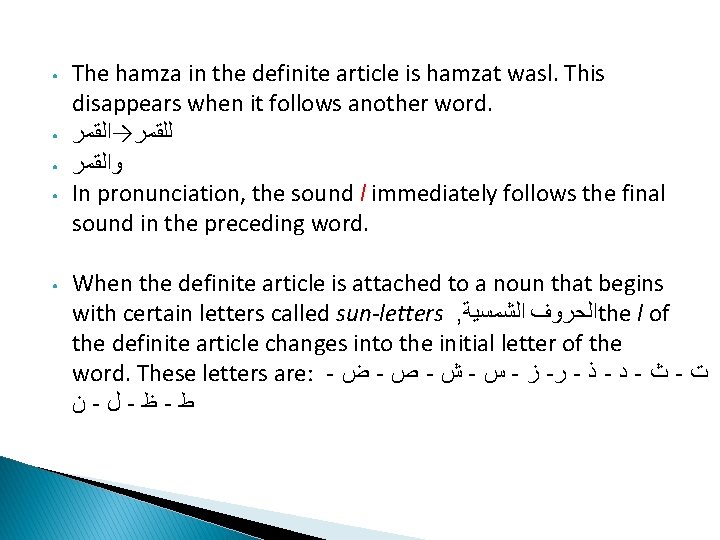
● ● ● The hamza in the definite article is hamzat wasl. This disappears when it follows another word. ﻟﻠﻘﻤﺮ→ﺍﻟﻘﻤﺮ ﻭﺍﻟﻘﻤﺮ In pronunciation, the sound l immediately follows the final sound in the preceding word. When the definite article is attached to a noun that begins with certain letters called sun-letters , ﺍﻟﺤﺮﻭﻑ ﺍﻟﺸﻤﺴﻴﺔ the l of the definite article changes into the initial letter of the word. These letters are: - ﺽ - ﺹ - ﺵ - ﺱ - ﺯ - ﺭ - ﺫ - ﺩ - ﺙ - ﺕ ﻥ - ﻝ - ﻅ - ﻁ
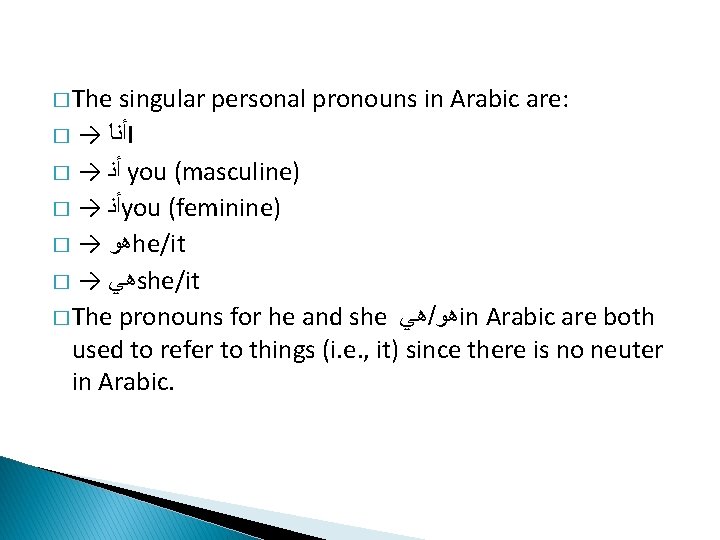
� The singular personal pronouns in Arabic are: � → ﺃﻨﺎ I � → ﺃﻨ you (masculine) � → ﺃﻨ you (feminine) � → ﻫﻮ he/it � → ﻫﻲ she/it � The pronouns for he and she ﻫﻲ / ﻫﻮ in Arabic are both used to refer to things (i. e. , it) since there is no neuter in Arabic.
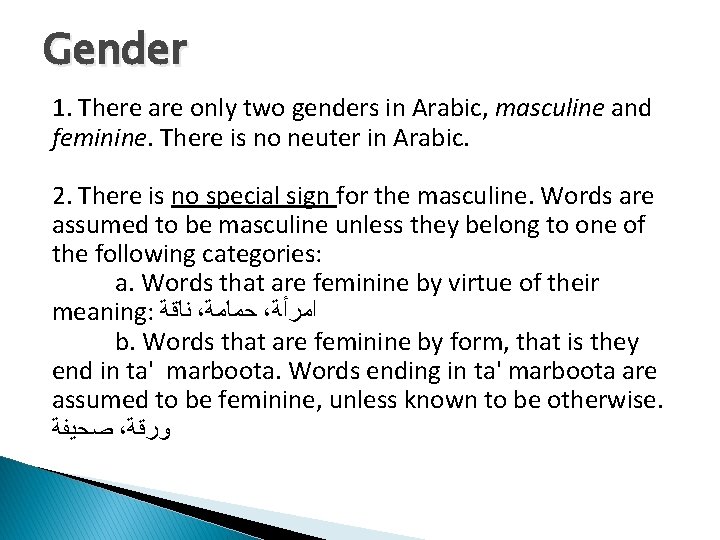
Gender 1. There are only two genders in Arabic, masculine and feminine. There is no neuter in Arabic. 2. There is no special sign for the masculine. Words are assumed to be masculine unless they belong to one of the following categories: a. Words that are feminine by virtue of their meaning: ﻧﺎﻗﺔ ، ﺣﻤﺎﻣﺔ ، ﺍﻣﺮﺃﺔ b. Words that are feminine by form, that is they end in ta' marboota. Words ending in ta' marboota are assumed to be feminine, unless known to be otherwise. ﺻﺤﻴﻔﺔ ، ﻭﺭﻗﺔ
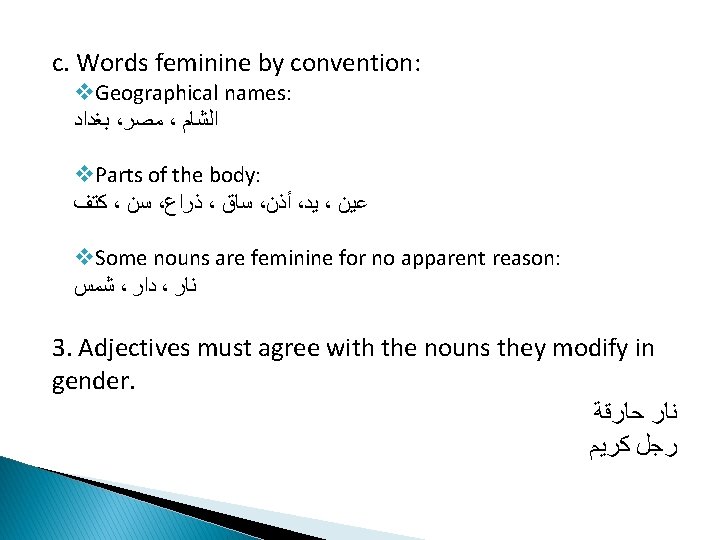
c. Words feminine by convention: v. Geographical names: ﺑﻐﺪﺍﺩ ، ﻣﺼﺮ ، ﺍﻟﺸﺎﻡ v. Parts of the body: ﻛﺘﻒ ، ﺳﻦ ، ﺫﺭﺍﻉ ، ﺳﺎﻕ ، ﺃﺬﻥ ، ﻳﺪ ، ﻋﻴﻦ v. Some nouns are feminine for no apparent reason: ﺷﻤﺲ ، ﺩﺍﺭ ، ﻧﺎﺭ 3. Adjectives must agree with the nouns they modify in gender. ﻧﺎﺭ ﺣﺎﺭﻗﺔ ﺭﺟﻞ ﻛﺮﻳﻢ
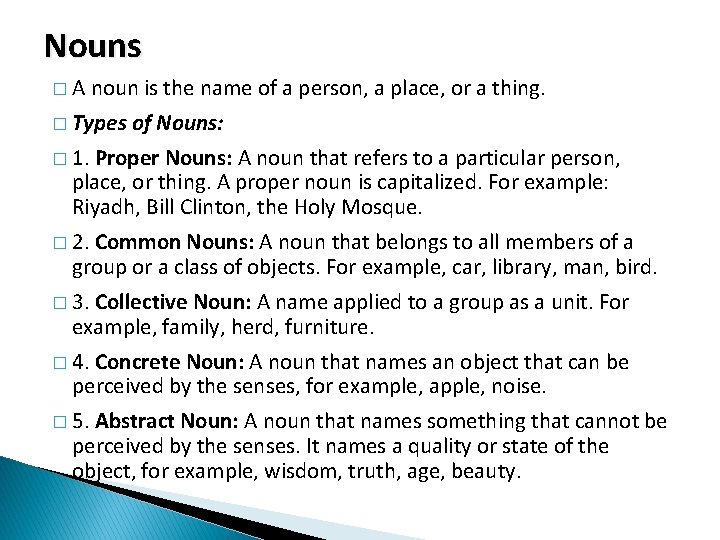
Nouns �A noun is the name of a person, a place, or a thing. � Types of Nouns: � 1. Proper Nouns: A noun that refers to a particular person, place, or thing. A proper noun is capitalized. For example: Riyadh, Bill Clinton, the Holy Mosque. � 2. Common Nouns: A noun that belongs to all members of a group or a class of objects. For example, car, library, man, bird. � 3. Collective Noun: A name applied to a group as a unit. For example, family, herd, furniture. � 4. Concrete Noun: A noun that names an object that can be perceived by the senses, for example, apple, noise. � 5. Abstract Noun: A noun that names something that cannot be perceived by the senses. It names a quality or state of the object, for example, wisdom, truth, age, beauty.
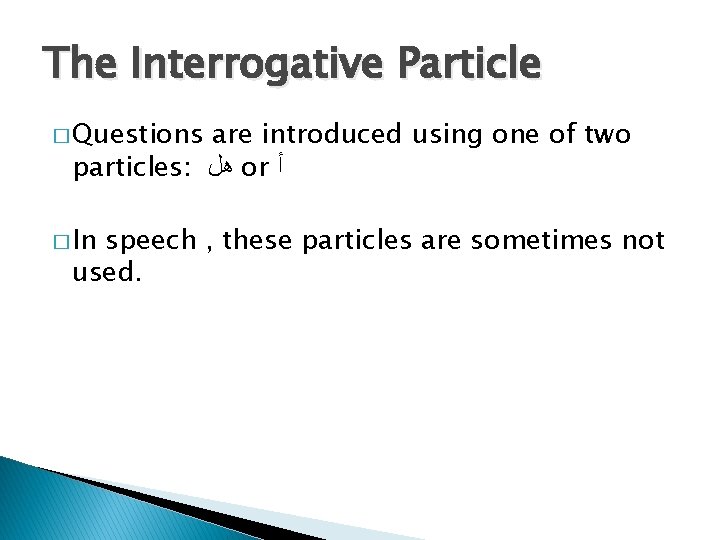
The Interrogative Particle � Questions are introduced using one of two particles: ﻫﻞ or ﺃ � In speech , these particles are sometimes not used.
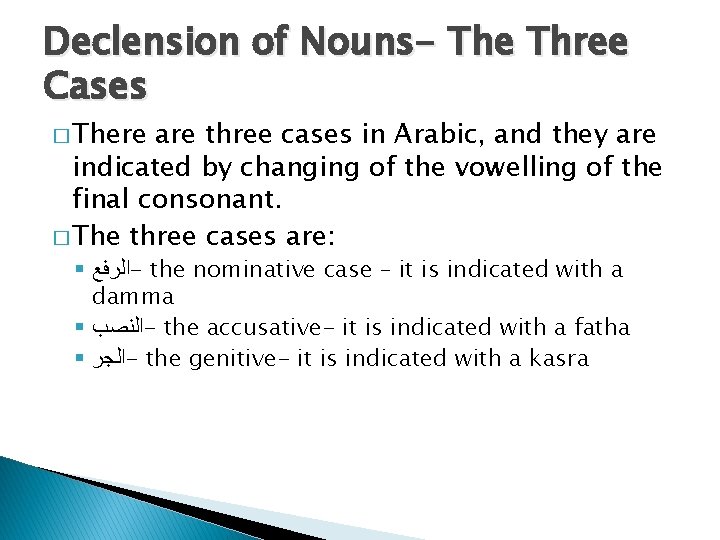
Declension of Nouns- The Three Cases � There are three cases in Arabic, and they are indicated by changing of the vowelling of the final consonant. � The three cases are: § ﺍﻟﺮﻓﻊ - the nominative case – it is indicated with a damma § ﺍﻟﻨﺼﺐ - the accusative- it is indicated with a fatha § ﺍﻟﺠﺮ - the genitive- it is indicated with a kasra
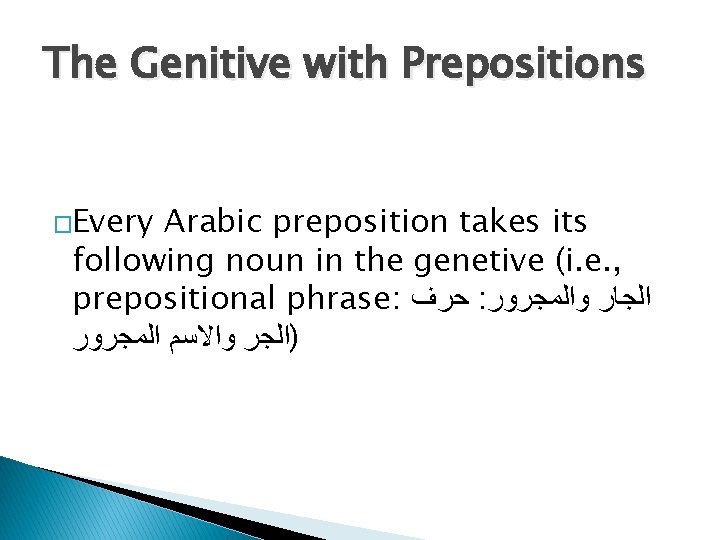
The Genitive with Prepositions �Every Arabic preposition takes its following noun in the genetive (i. e. , prepositional phrase: ﺣﺮﻑ : ﺍﻟﺠﺎﺭ ﻭﺍﻟﻤﺠﺮﻭﺭ )ﺍﻟﺠﺮ ﻭﺍﻻﺳﻢ ﺍﻟﻤﺠﺮﻭﺭ
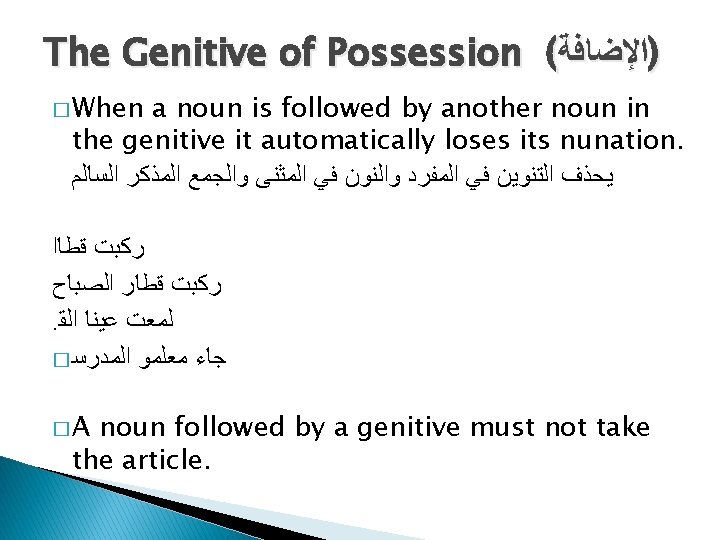
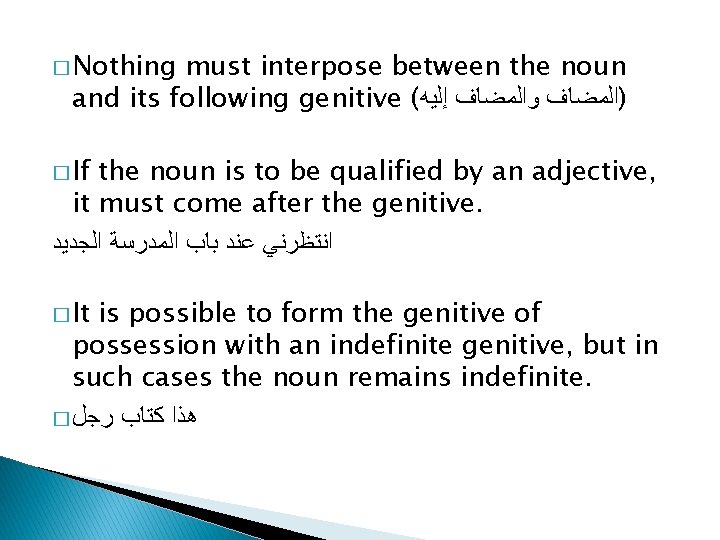
� Nothing must interpose between the noun and its following genitive ( )ﺍﻟﻤﻀﺎﻑ ﻭﺍﻟﻤﻀﺎﻑ ﺇﻟﻴﻪ � If the noun is to be qualified by an adjective, it must come after the genitive. ﺍﻧﺘﻈﺮﻧﻲ ﻋﻨﺪ ﺑﺎﺏ ﺍﻟﻤﺪﺭﺳﺔ ﺍﻟﺠﺪﻳﺪ � It is possible to form the genitive of possession with an indefinite genitive, but in such cases the noun remains indefinite. � ﻫﺬﺍ ﻛﺘﺎﺏ ﺭﺟﻞ