
The Art of Rhetoric Ethos Pathos and Logos
- Slides: 15
The Art of Rhetoric: Ethos, Pathos, and Logos Rhetoric (n): The art of effective or persuasive speaking or writing
3 MAIN TYPES OF RHETORIC • Ethos • Pathos • Logos
Ethos: credibility (or character) of the speaker Key things to look for: • The speaker develops or has… • Trustworthiness (as perceived by the audience) • Similarity (to the audience) • Authority (relative to the audience) • Reputation or Expertise (relative to the topic)
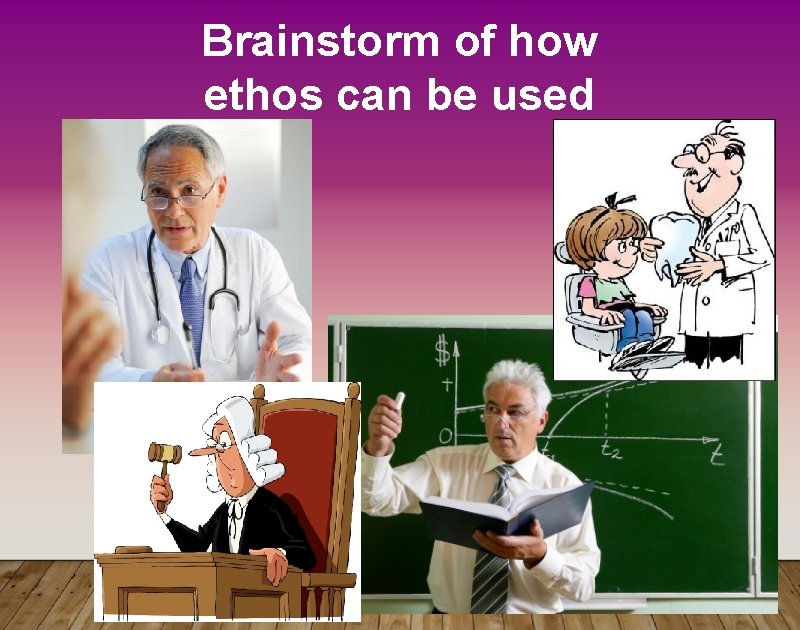
Brainstorm of how ethos can be used
Ethos: credibility (or character) of the speaker Examples of how it’s used: • Appeal to the writer’s/speaker’s believability, qualifications, character; relevant biographical information • Use of credible sources (experts, scholars) • Accurate citation of sources: gives credit where credit is due • Experience and authority: person knows the issues and has experience in the field
Ethos: credibility (or character) of the speaker Examples of how it’s used: • Appropriate language: uses language of the discipline • Appropriate tone: knows the audience and context of situation • Humility: is not arrogant • Uses tentative yet authoritative language; avoids sweeping statements like “Everyone is doing this, ” “This is the only way, ” “This will always work. ” Instead says, “The research suggests that, ” “Some experts believe, ” “In my experience, ” etc.
Pathos: emotional connection to the audience Key things to look for: • The words or examples used evoke an emotional response • The images shown evoke an emotional response • For instance: happiness, excitement, anger, sadness, guilt, etc.
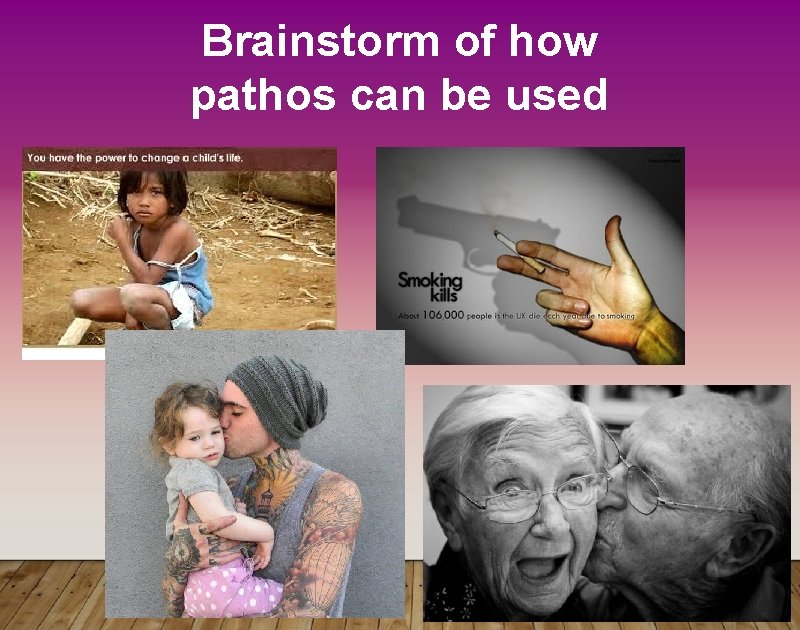
Brainstorm of how pathos can be used
Pathos: emotional connection to the audience Examples of how it's used • Appeal to the heart/emotion • Draw from spirituality or religious traditions • Stories or testimonials • Personal anecdotes or stories • Personal connections • Imagery and figurative language that provokes an emotional response
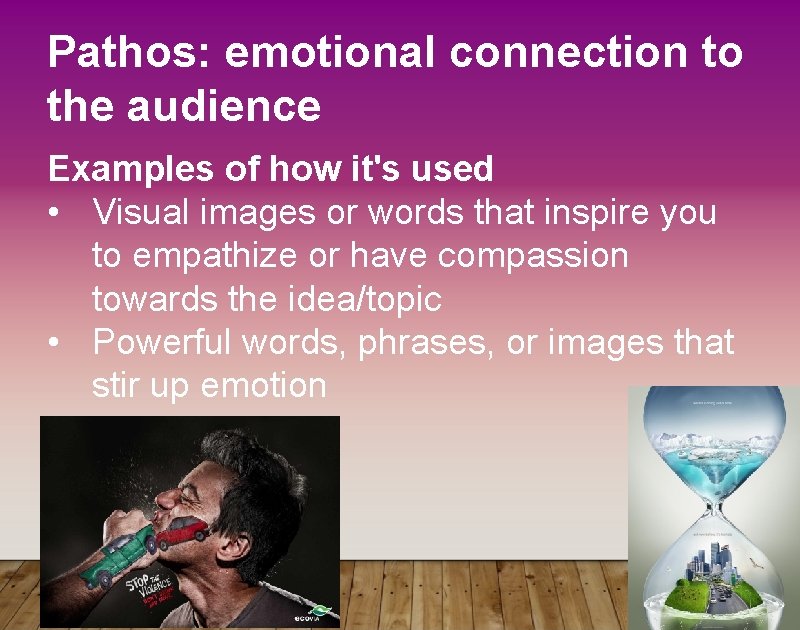
Pathos: emotional connection to the audience Examples of how it's used • Visual images or words that inspire you to empathize or have compassion towards the idea/topic • Powerful words, phrases, or images that stir up emotion
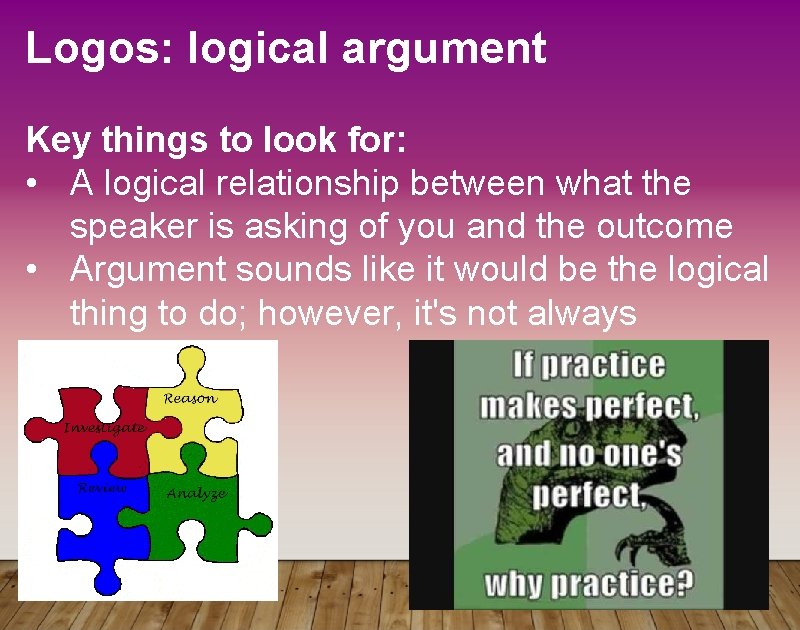
Logos: logical argument Key things to look for: • A logical relationship between what the speaker is asking of you and the outcome • Argument sounds like it would be the logical thing to do; however, it's not always
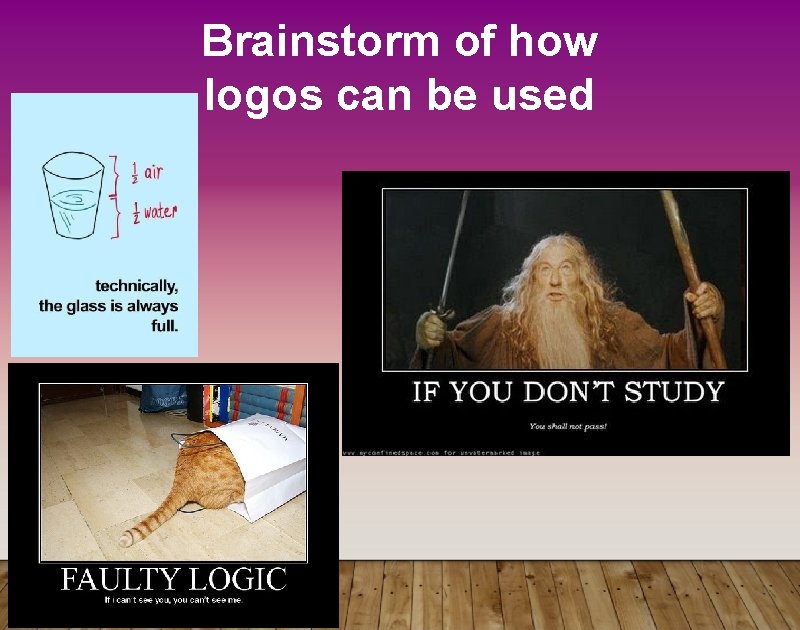
Brainstorm of how logos can be used
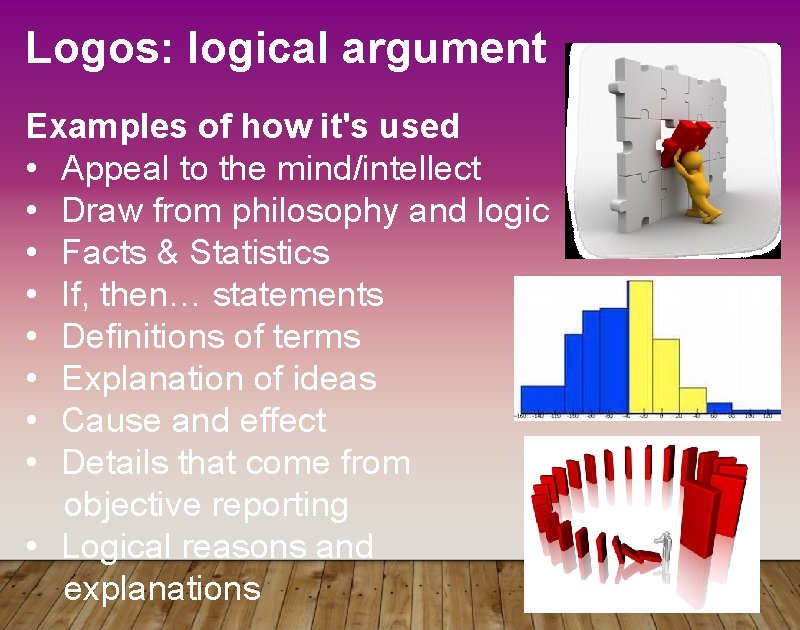
Logos: logical argument Examples of how it's used • Appeal to the mind/intellect • Draw from philosophy and logic • Facts & Statistics • If, then… statements • Definitions of terms • Explanation of ideas • Cause and effect • Details that come from objective reporting • Logical reasons and explanations
IMPORTANT It is very important to know and keep in mind that one statement or example can embody all three. For instance, the commercials that want people to donate to help animals. Remember, they can function as more than one persuasive appeal at a time!!! It appeals to ethos by. . . It appeals to pathos by. . . It appeals to logos by. . .
Assignment You will log onto the computer and find examples of how advertisements, political campaigns, literature, etc. uses each of the persuasive techniques. After you find your examples, create a digital collage on Power. Point for each of the three persuasive techniques. On the slide following, provide an explanation as to how each example you used is the identified persuasive technique.