
The ART of Reading Smoke 1 Why Read
- Slides: 33
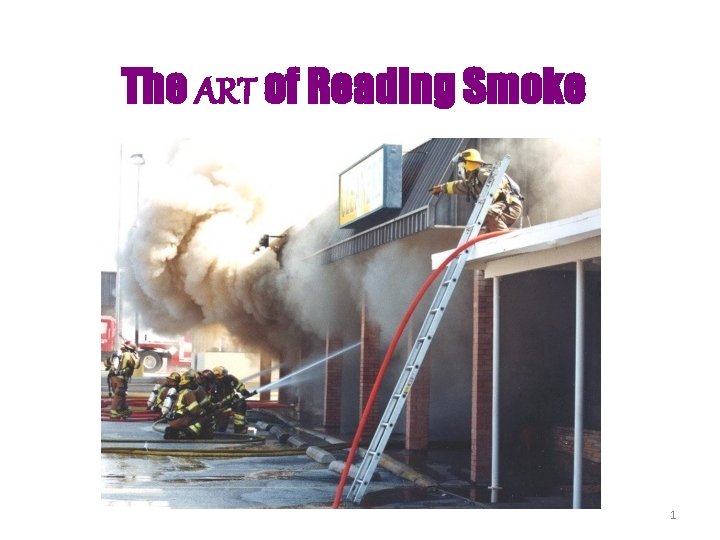
The ART of Reading Smoke 1
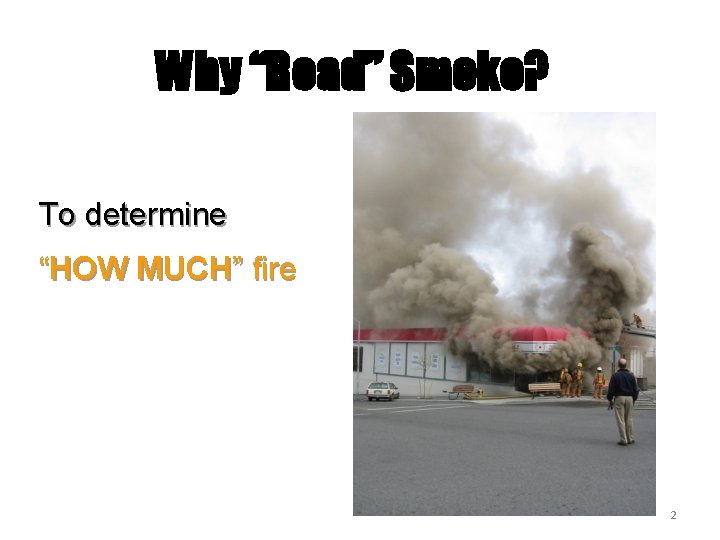
Why “Read” Smoke? To determine “HOW MUCH” fire 2
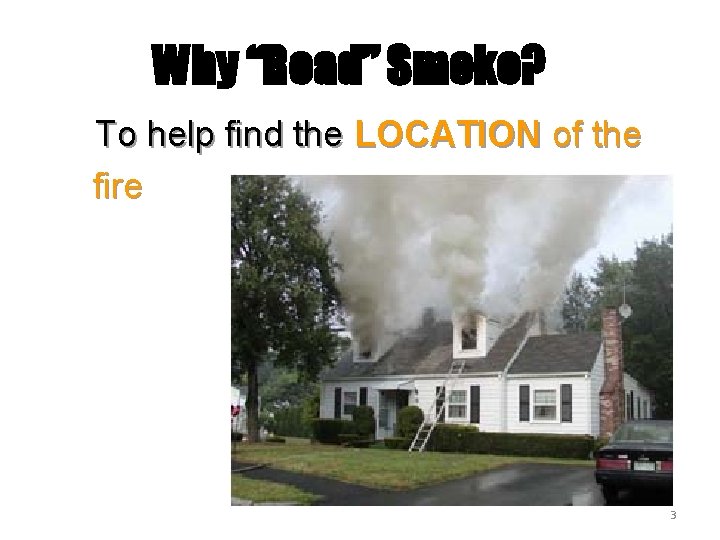
Why “Read” Smoke? To help find the LOCATION of the fire 3
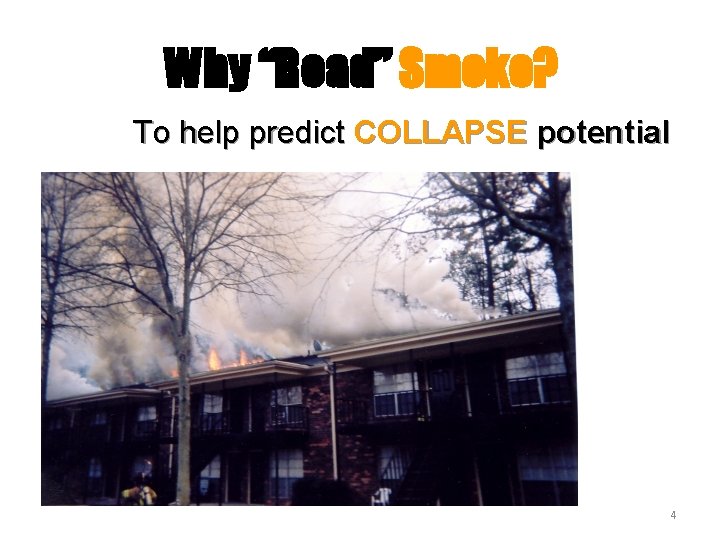
Why “Read” Smoke? To help predict COLLAPSE potential 4
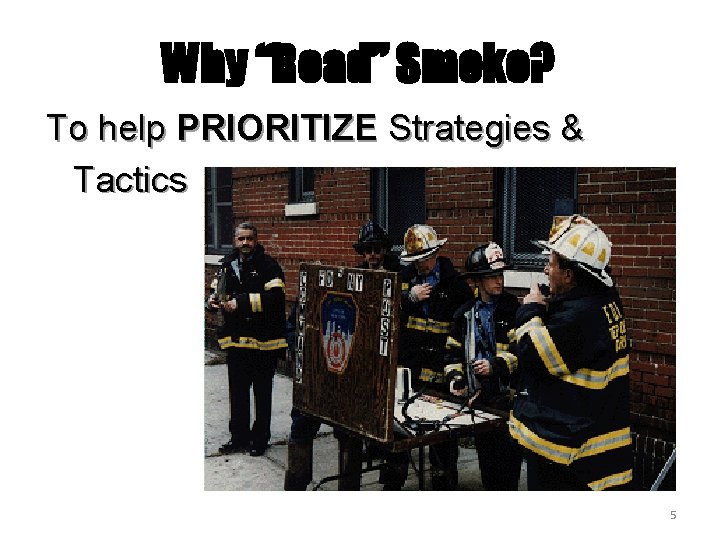
Why “Read” Smoke? To help PRIORITIZE Strategies & Tactics 5
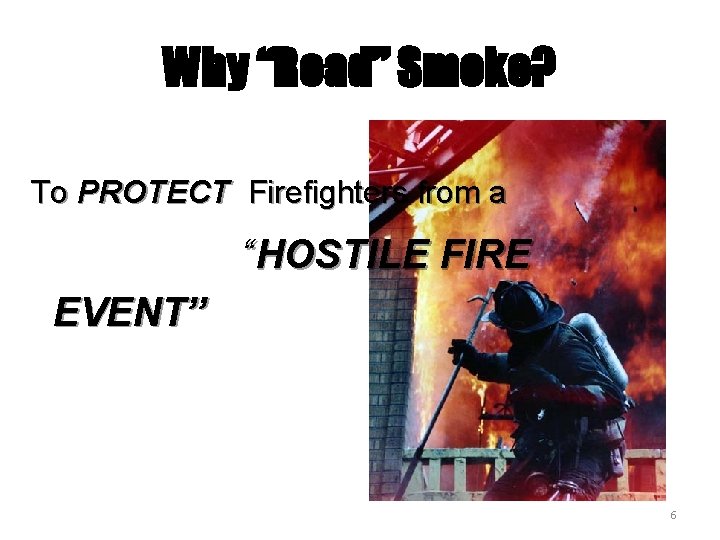
Why “Read” Smoke? To PROTECT Firefighters from a “HOSTILE FIRE EVENT” 6
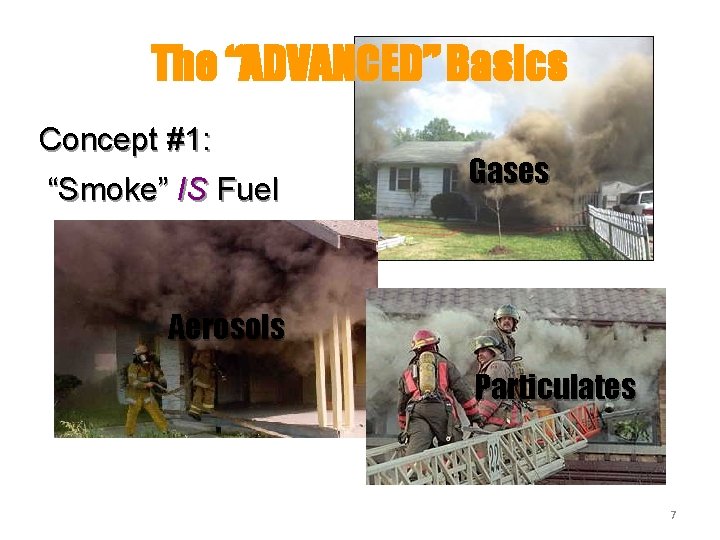
The “ADVANCED” Basics Concept #1: “Smoke” IS Fuel Gases Aerosols Particulates 7
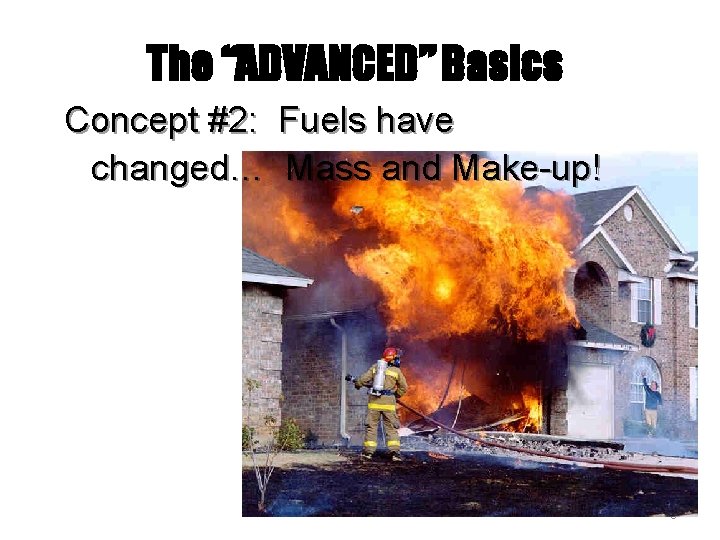
The “ADVANCED” Basics Concept #2: Fuels have changed… Mass and Make-up! 8
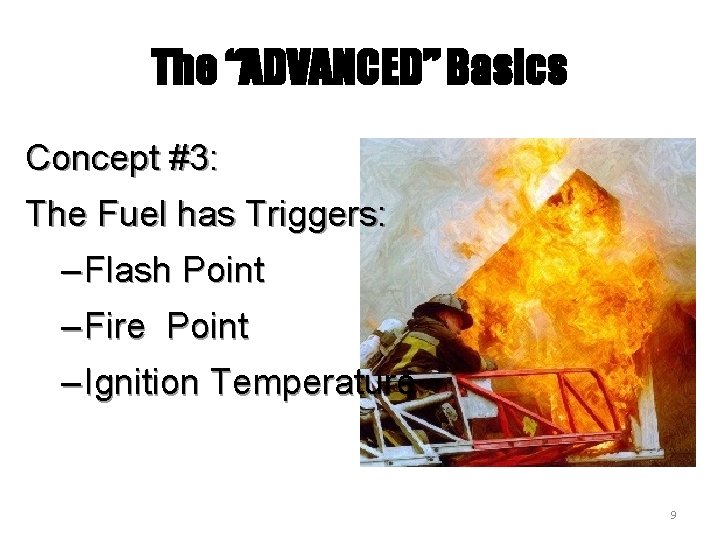
The “ADVANCED” Basics Concept #3: The Fuel has Triggers: – Flash Point – Fire Point – Ignition Temperature 9
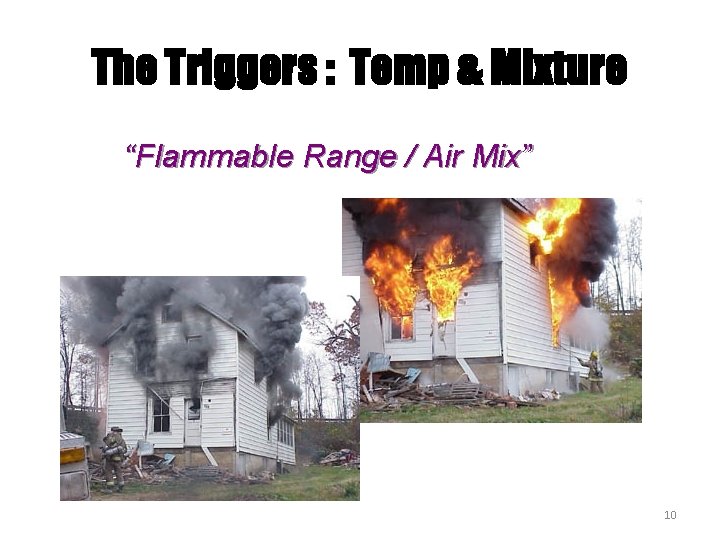
The Triggers : Temp & Mixture “Flammable Range / Air Mix” 10
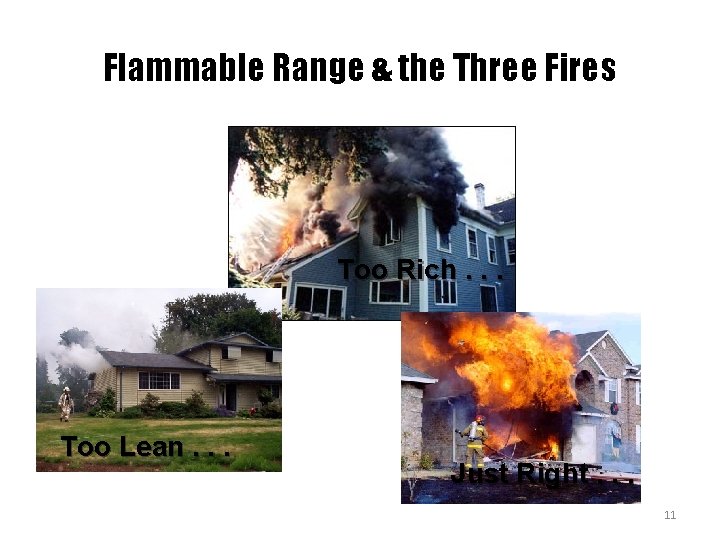
Flammable Range & the Three Fires Too Rich. . . Too Lean. . . Just Right. . . 11
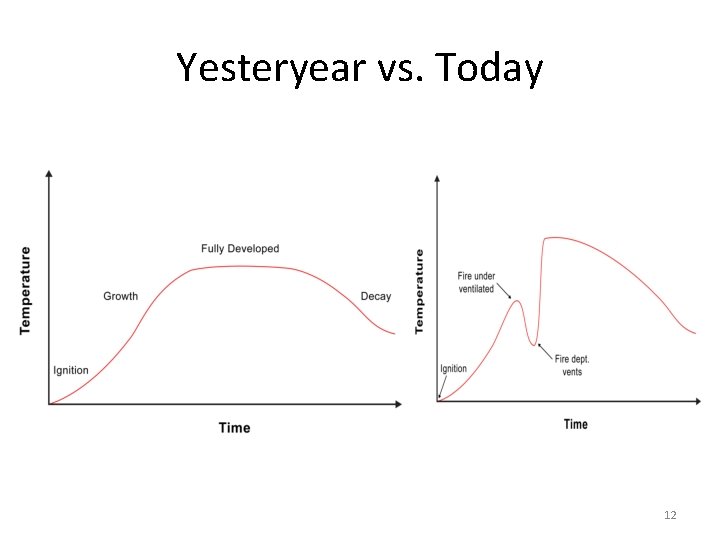
Yesteryear vs. Today 12
Other Prerequisites to Reading Smoke You must be able to determine. . . • Stage of Fire: Early, Growth, or Late • Is the “box” absorbing heat? Laminar vs. TURBULENT flow 13
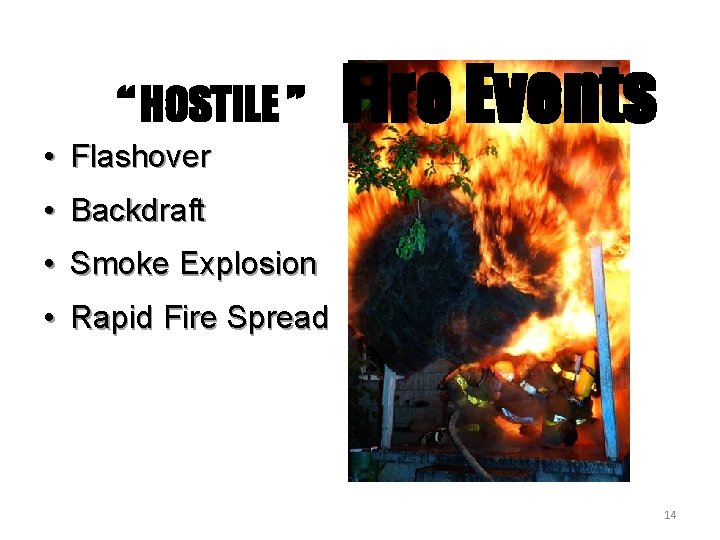
“ HOSTILE ” Fire Events • Flashover • Backdraft • Smoke Explosion • Rapid Fire Spread 14
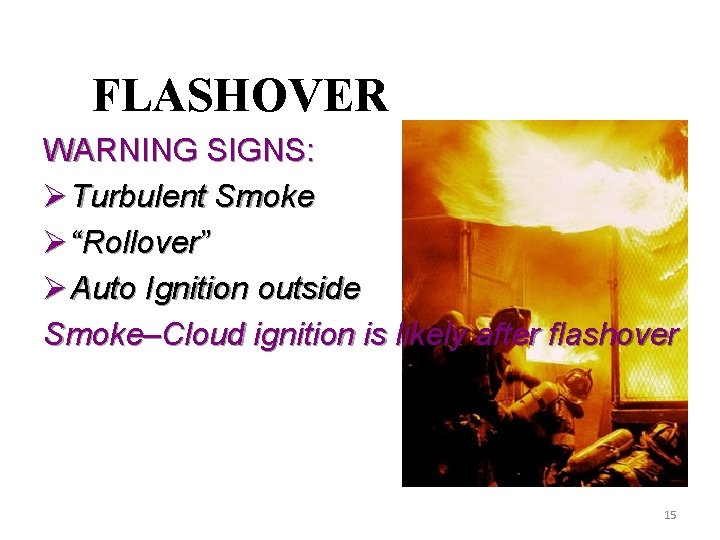
FLASHOVER WARNING SIGNS: Ø Turbulent Smoke Ø “Rollover” Ø Auto Ignition outside Smoke–Cloud ignition is likely after flashover 15
BACKDRAFT Remember – Backdraft is triggered by O 2 being introduced to pressurized smoke that is ABOVE it’s ignition temperature Ø Yellowish-grey smoke Ø Whistling Ø Bowing windows Ø “Sealed” containers 16
SMOKE EXPLOSION Remember – A Smoke Explosion is a spark or flame applied to a mixture below its ignition temperature Ø Trapped gases in upper areas Ø Growing fire Ø Increasing smoke density Ø Air intake overtaking smoke exiting 17
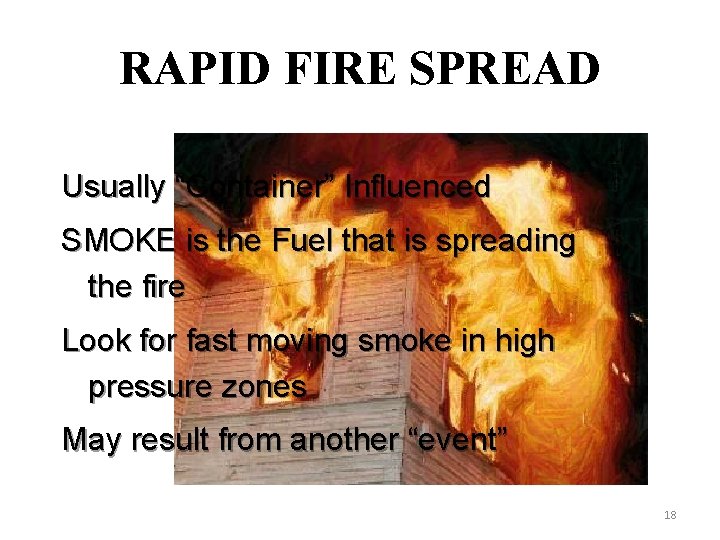
RAPID FIRE SPREAD Usually “Container” Influenced SMOKE is the Fuel that is spreading the fire Look for fast moving smoke in high pressure zones May result from another “event” 18
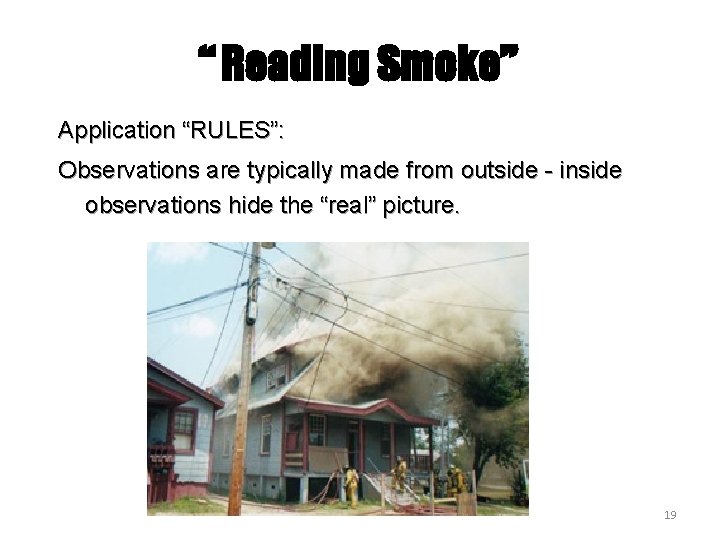
“ Reading Smoke” Application “RULES”: Observations are typically made from outside - inside observations hide the “real” picture. 19
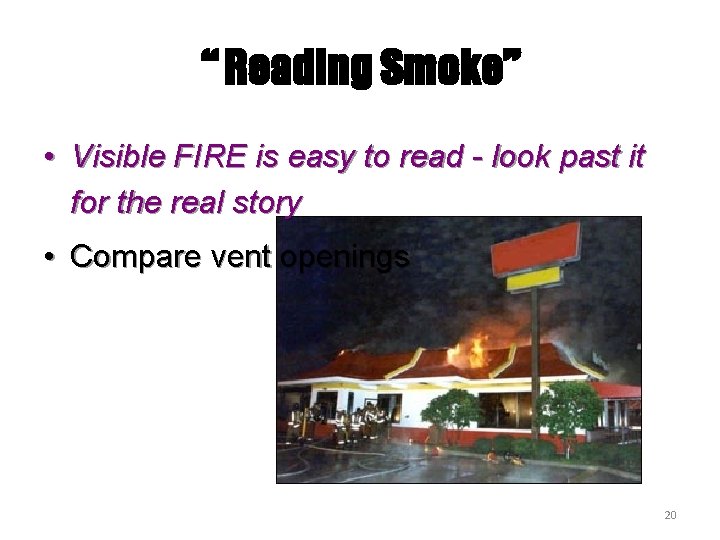
“ Reading Smoke” • Visible FIRE is easy to read - look past it for the real story • Compare vent openings 20
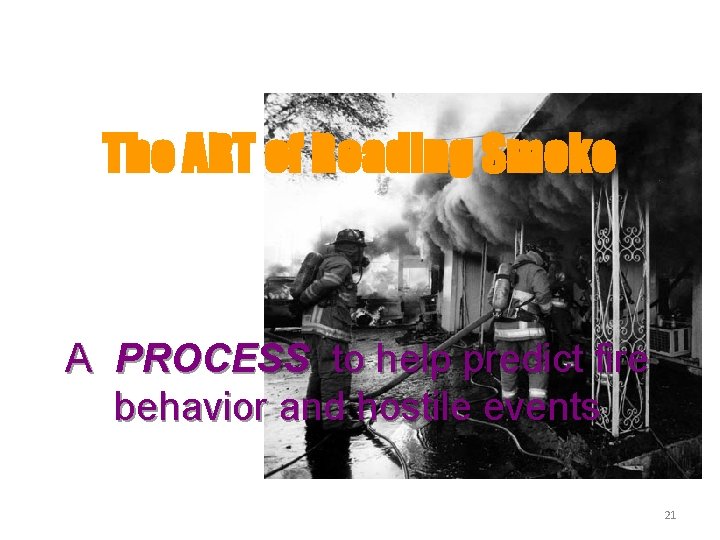
The ART of Reading Smoke A PROCESS to help predict fire behavior and hostile events 21
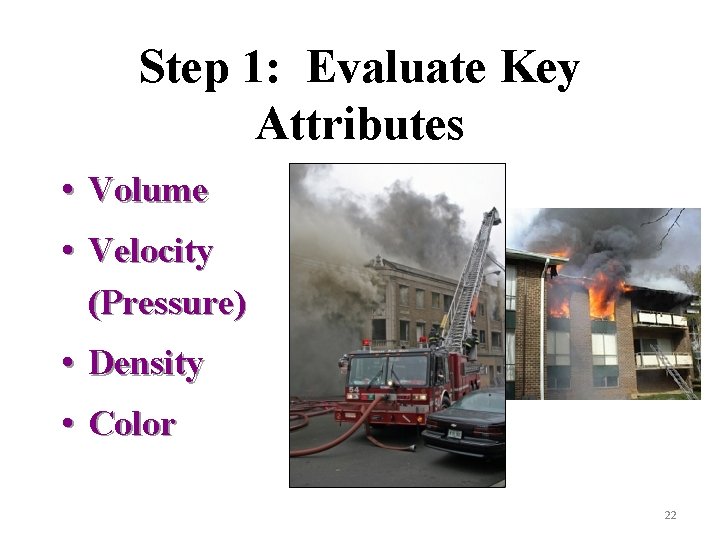
Step 1: Evaluate Key Attributes • Volume • Velocity (Pressure) • Density • Color 22
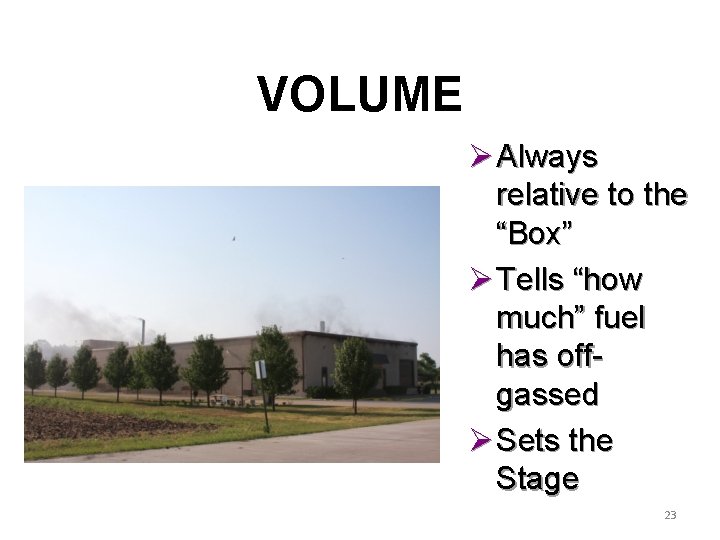
VOLUME Ø Always relative to the “Box” Ø Tells “how much” fuel has offgassed Ø Sets the Stage 23
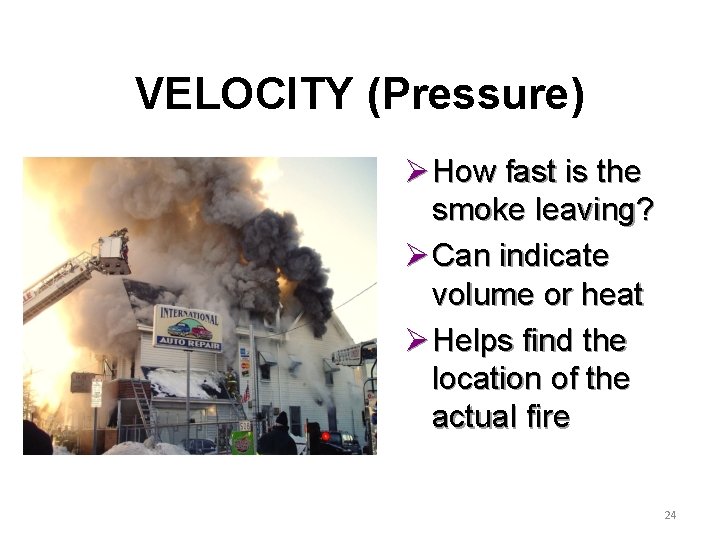
VELOCITY (Pressure) Ø How fast is the smoke leaving? Ø Can indicate volume or heat Ø Helps find the location of the actual fire 24
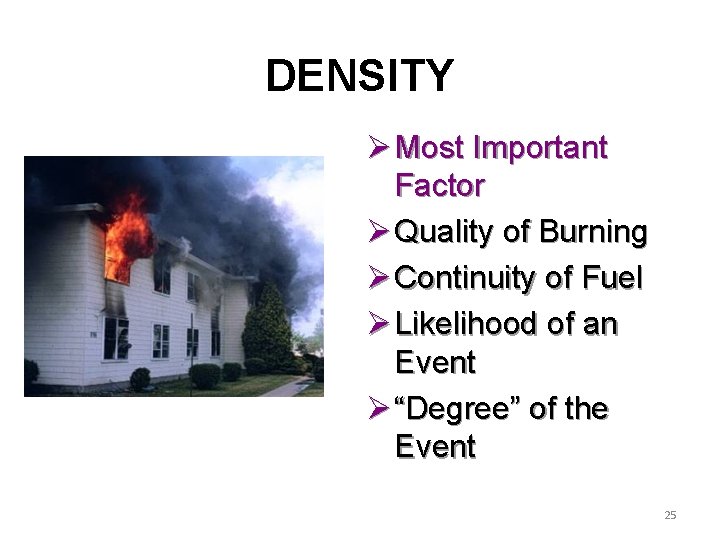
DENSITY Ø Most Important Factor Ø Quality of Burning Ø Continuity of Fuel Ø Likelihood of an Event Ø “Degree” of the Event 25
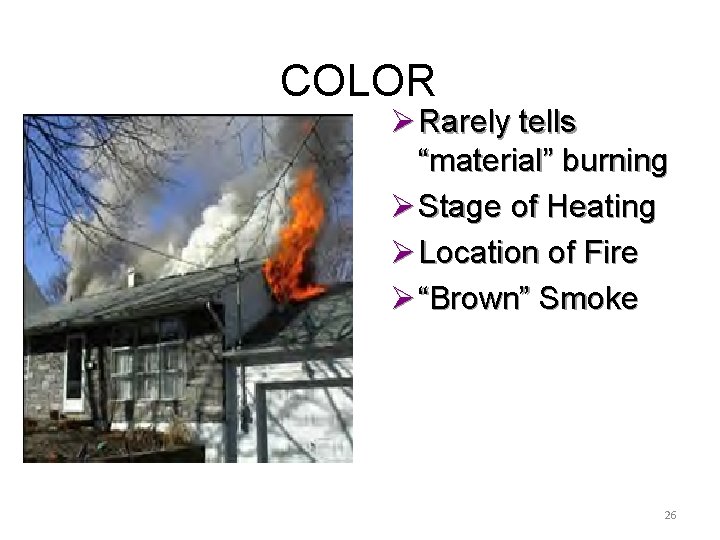
COLOR Ø Rarely tells “material” burning Ø Stage of Heating Ø Location of Fire Ø “Brown” Smoke 26
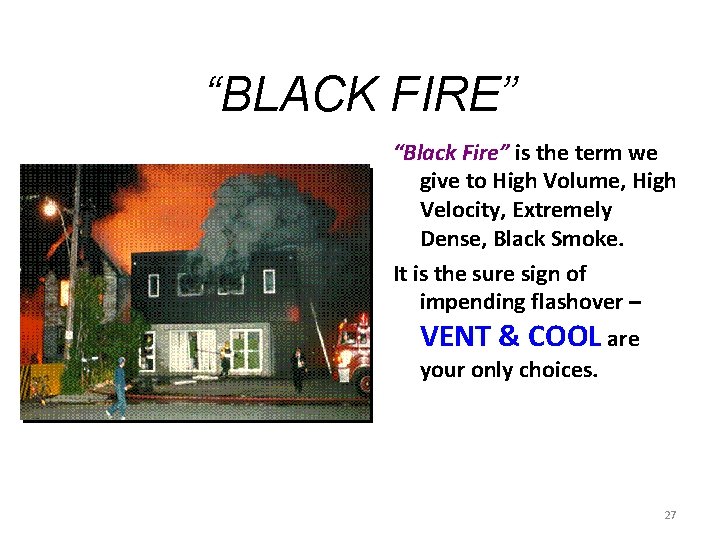
“BLACK FIRE” “Black Fire” is the term we give to High Volume, High Velocity, Extremely Dense, Black Smoke. It is the sure sign of impending flashover – VENT & COOL are your only choices. 27
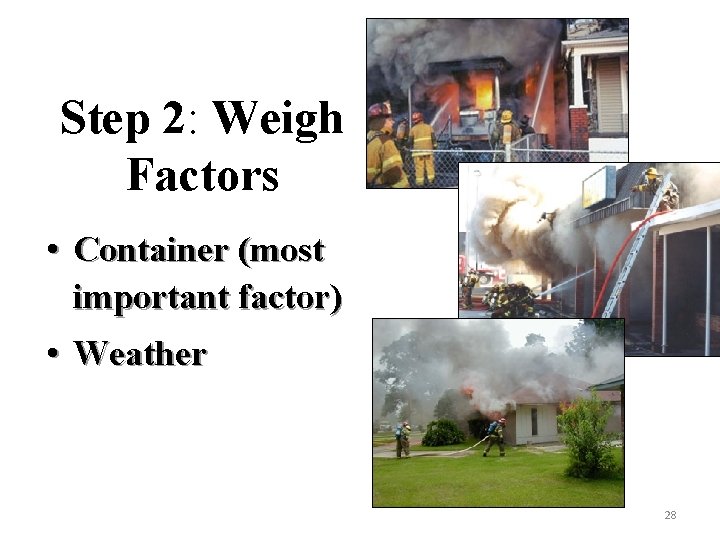
Step 2: Weigh Factors • Container (most important factor) • Weather 28
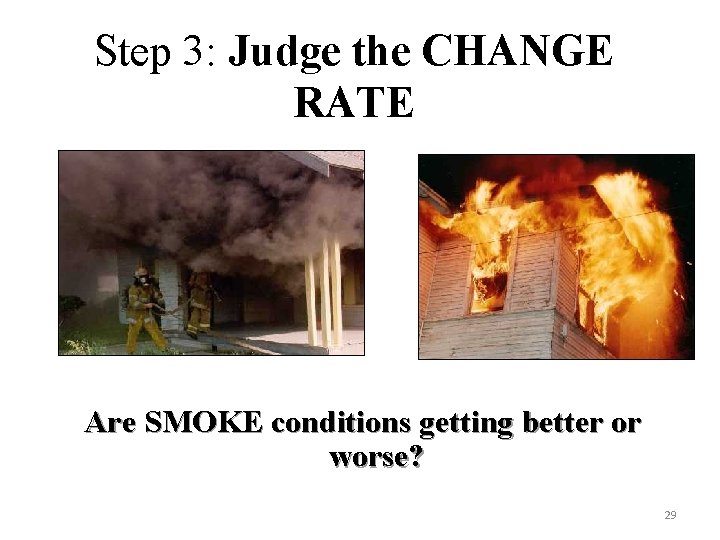
Step 3: Judge the CHANGE RATE Are SMOKE conditions getting better or worse? 29
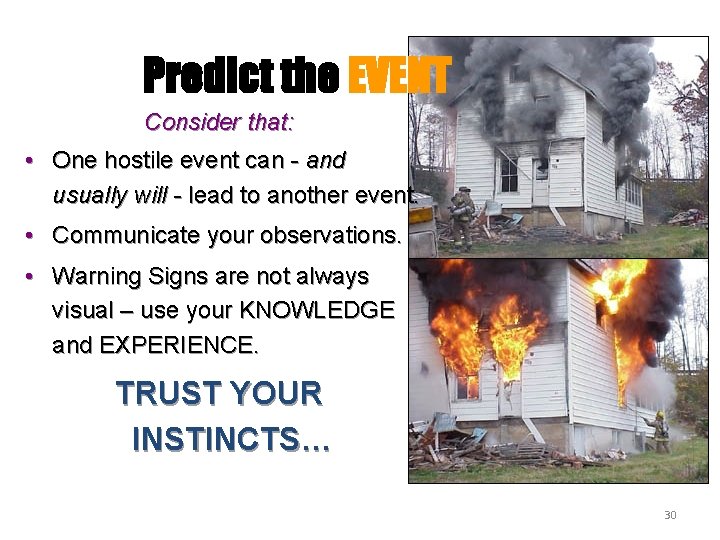
Predict the EVENT Consider that: • One hostile event can - and usually will - lead to another event. • Communicate your observations. • Warning Signs are not always visual – use your KNOWLEDGE and EXPERIENCE. TRUST YOUR INSTINCTS… 30
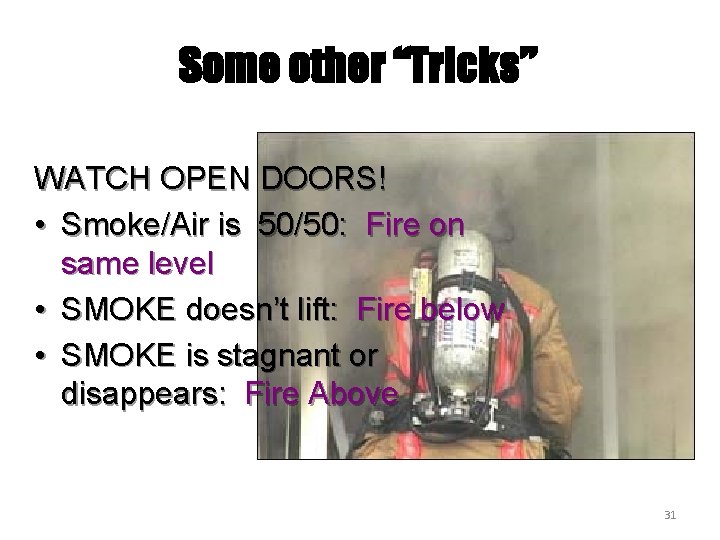
Some other “Tricks” WATCH OPEN DOORS! • Smoke/Air is 50/50: Fire on same level • SMOKE doesn’t lift: Fire below • SMOKE is stagnant or disappears: Fire Above 31
Short Cuts (not absolute) Thick/Black/Fast = heat and explosive Thin/Black/Fast = fire pushed nearby White w/Speed = hot – but distant Uniform speed/color from many places = deep seated • Brown = unfinished wood being heated – a collapse warning in lightweight • Turbulent = Flashover • •
Be Safe – Make it Safe For more info, contact Dave Dodson davedodson@q. com 33