
The Art of Observing Purposeful Data Rhonda L
The Art of Observing: Purposeful Data Rhonda L. Mc. Kay, MAT
What do you mean by observation? Why do you observe? Why should you observe?
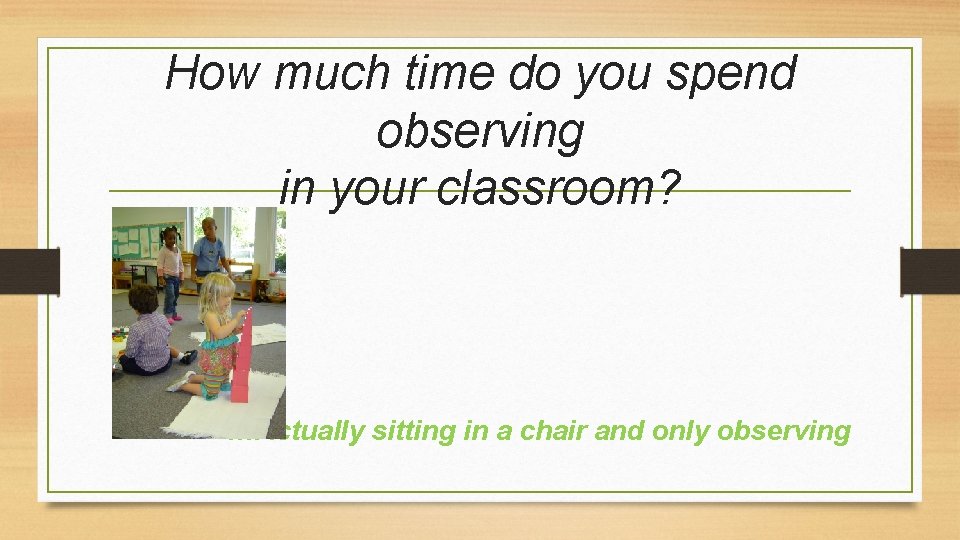
How much time do you spend observing in your classroom? …Actually sitting in a chair and only observing
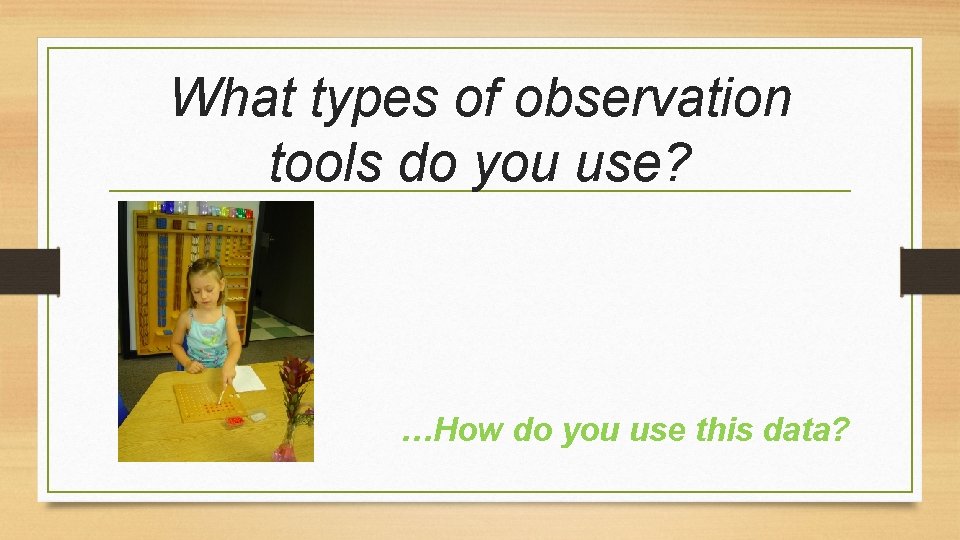
What types of observation tools do you use? …How do you use this data?
Montessori on Observation “The interest in humanity which we wish to educate the teacher must be characterized by the intimate relationship between the observer and the individual to be observed…. With a mixture of respect and love, of sacred curiosity and of a desire to achieve this spiritual greatness, he sets himself to observe every manifestation of this little child. ” Maria Montessori - The Montessori Method, pp. 12 -13.

Why observe? ü Understand the child ü Identify or describe a student’s learning style, learning strengths, personality, and interests ü Assess student growth and academic progress ü Guide the child’s developing spirit ü Make better instructional decisions; for example, alter your presentations to accommodate for the needs, interests, styles of the child ü Modify the classroom learning environment
Why observe? üEvaluate classroom leadership practice üGain insights and understandings about ourselves and our Montessori practice üFurther grow our Montessori professional learning community üDevelop an observational literacy üDiscover new “secrets” of childhood
Regarding Observation … Paradoxes 1. There is never enough time. 2. Observation is not record keeping. ü Record keeping involves observation. ü Observation does not involve record keeping.
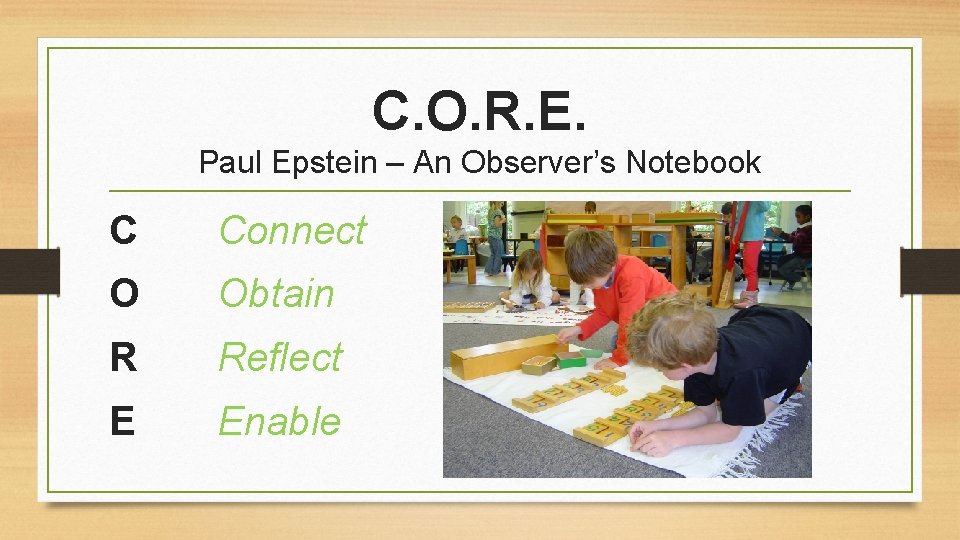
C. O. R. E. Paul Epstein – An Observer’s Notebook C Connect O Obtain R Reflect E Enable
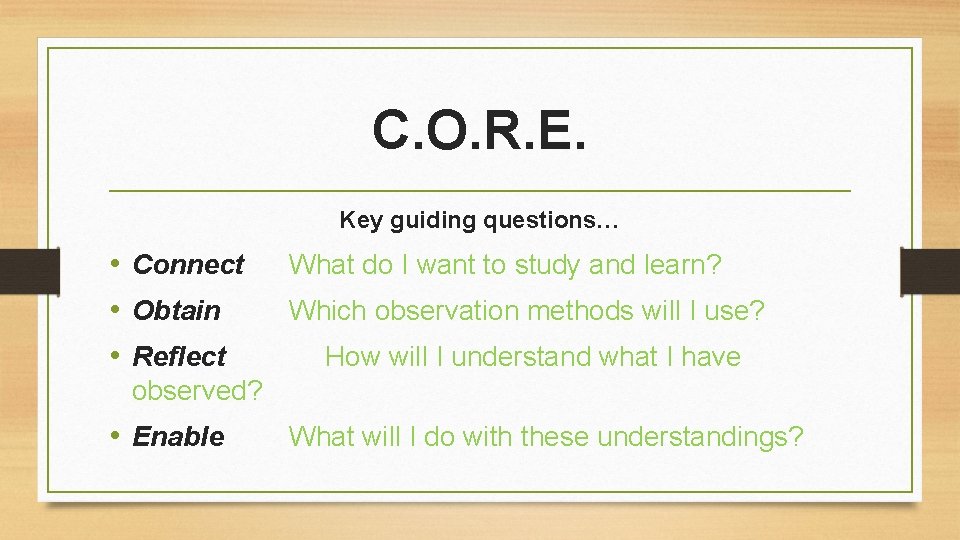
C. O. R. E. Key guiding questions… • Connect • Obtain • Reflect What do I want to study and learn? Which observation methods will I use? How will I understand what I have observed? • Enable What will I do with these understandings?

Connect What do I want to ask and learn about… üA child – interests, learning style, personality, preferences, habits üThe class – behavioral patterns and routines, friendships, use of the prepared environment, transitions üMyself – my understanding, knowledge, practices, effectiveness, spiritual growth, renewal practices üMontessori – the philosophy, other ideologies

Obtain - Methods • Journals - For reflection; Re-focusing; Clarifying interpretations; Collect ideas of new work; Hunches • Physical Maps – Prepared environment; Traffic flow • Anecdotal Records - Purpose: record events right after occurrence

Obtain - Methods Running Records - Purpose: record events as they occur, sequentially üWhat was said üHow it was said – voice inflections, modulations, tempos, and rhythms üTo whom it was said – self, another child, a group of children, a teacher, other adults üBody movements, including postures, rhythms, tempo üFacial expressions

Obtain - Methods Checklists üBased on previously recorded observational information üDesigned with specific behaviors or types of activities that pertain to one topic üDefined using a key that describes the meanings of the different kinds of checks üDated
Obtain - Methods Rating Scales üFocus on one specific topic üRate a set of defined items üRate each item with a set of defined values üUse a consistent defined scale for the values üUse a defined set of levels or degrees for that scale
Obtain - Methods Time Samples üRecord the occurrences of specific behaviors or events during a pre-determined interval of time üShow often something occurred and how long it occurred üIndicate a general pattern of behavior

Obtain – The Plan Create a routine… üTell children when you will observe üRequest support from the other adult or adults in the classroom üManage your observational data
Obtain – General Procedures üPersonalize your writing materials - post-its, notebooks, paper on clipboards, address or other types of sticky labels, and wordprocessing files üRecord the date and a starting time; record the ending time üSeparate observations from interpretations üFollow an observer’s “rule of thumb” – record recollections within twenty-four hours üMaintain confidentiality
Reflect • • A World of Constructed Meaning - Sources of Interpretation How will I understand what I have observed? Culture Geographical region Religion Educational background Generation Gender Personal experiences • • • Mood and rest Traditions and beliefs Values and philosophies Compare and contrast Identify patterns Construct categories for classifications • Develop summary themes
Enable What will I do with these understandings? • Observe some more • Ask new connecting questions • Appreciate what is working; change what is not working • Understand a child’s needs and challenges • Set limits • Request cooperation • Re-present • • Make use of the three-period lesson Develop new materials Change the daily schedule Arrange and hold meetings or conferences • Assess the current classroom environment • Re-prepare the classroom environment • Examine your own behaviors

Personal Reflecting Questions… • After today how are you going to observe differently? • Are there some aspects of observation that you particularly enjoy? • What new habits of observation would you like to develop? • What new practices would you like to learn?
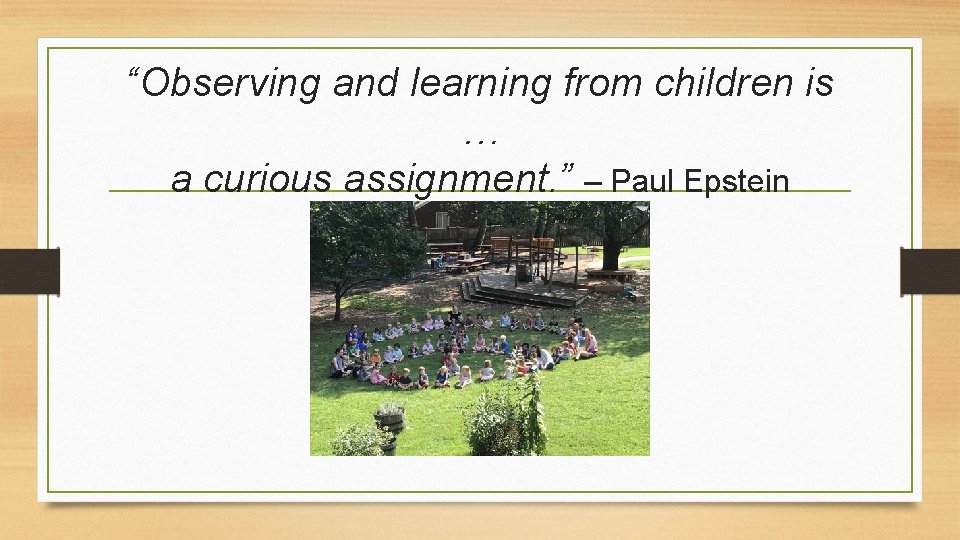
“Observing and learning from children is … a curious assignment. ” – Paul Epstein
For Additional Information… Please contact Rhonda L. Mc. Kay, Director of Children’s House of Nashville rhonda. mckay@childrenshousenashville. org
- Slides: 23