
The Art of LEGO Design Jason Geist Original




- Slides: 24
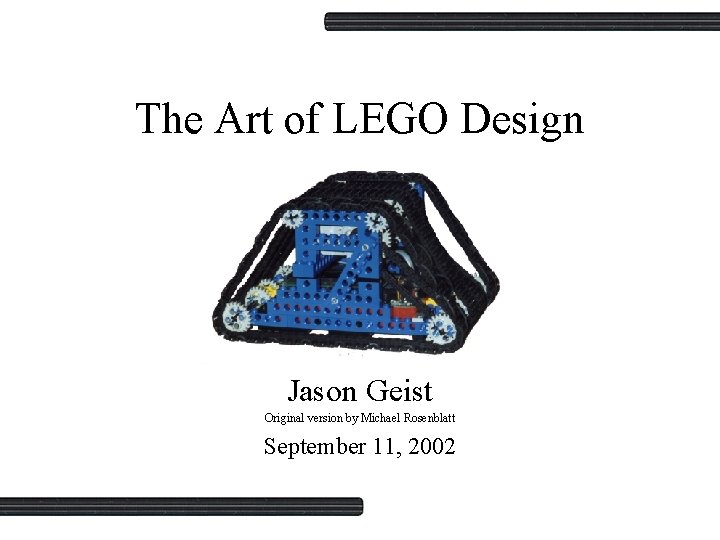
The Art of LEGO Design Jason Geist Original version by Michael Rosenblatt September 11, 2002
Sources • The Art of LEGO Design, by Fred G. Martin • LEGO kit instructions • Internet • ME! And other TA’s, of course.
Goals: • Build better robots – Minimize mechanical breakdowns – Build robots that are easy to control – Encourage good design strategy – Strive for elegant, clever solutions
Know your Materials • Quick facts: – Plastic bricks since 1949 (wooden blocks prior) – On average, 2100 different parts each year – Manufacturing tolerance: 1/1000 of an inch – Number of ways of combining six 8 -stud bricks: 102, 981, 500 – Widely used by scientists and engineers as a rapid prototyping tool
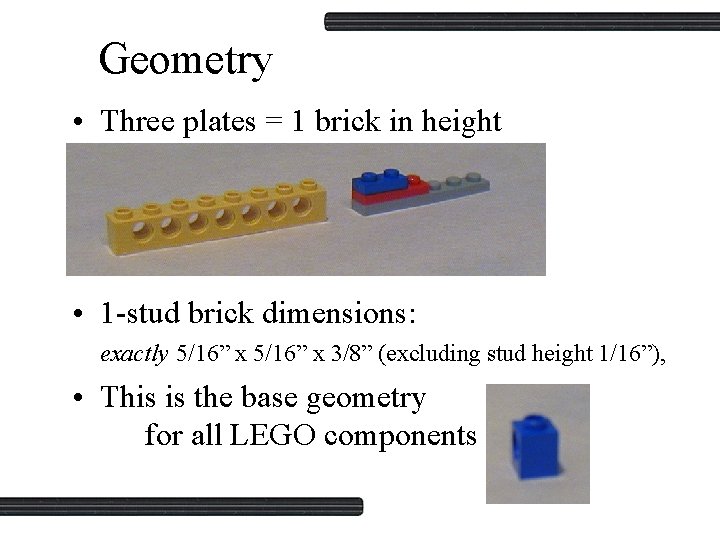
Geometry • Three plates = 1 brick in height • 1 -stud brick dimensions: exactly 5/16” x 3/8” (excluding stud height 1/16”), • This is the base geometry for all LEGO components
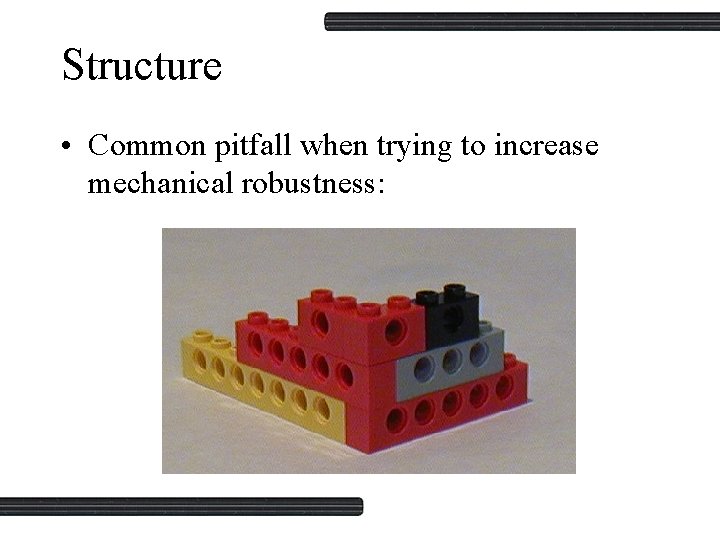
Structure • Common pitfall when trying to increase mechanical robustness:
Structure • The right way:
Structure • The right way:
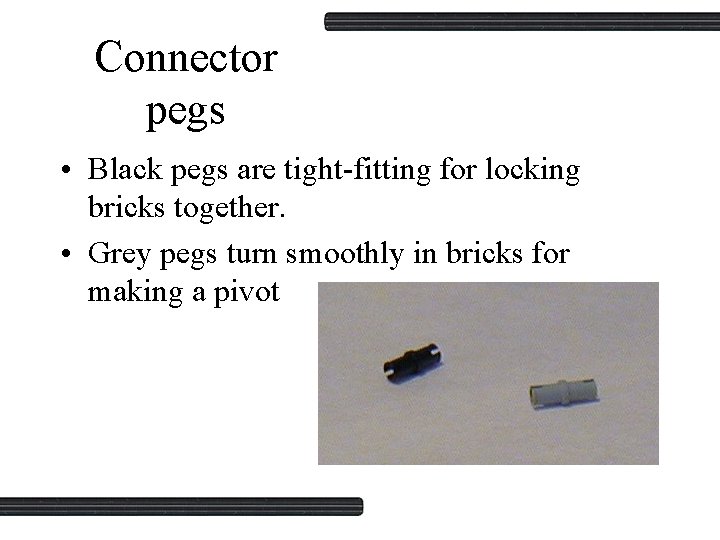
Connector pegs • Black pegs are tight-fitting for locking bricks together. • Grey pegs turn smoothly in bricks for making a pivot
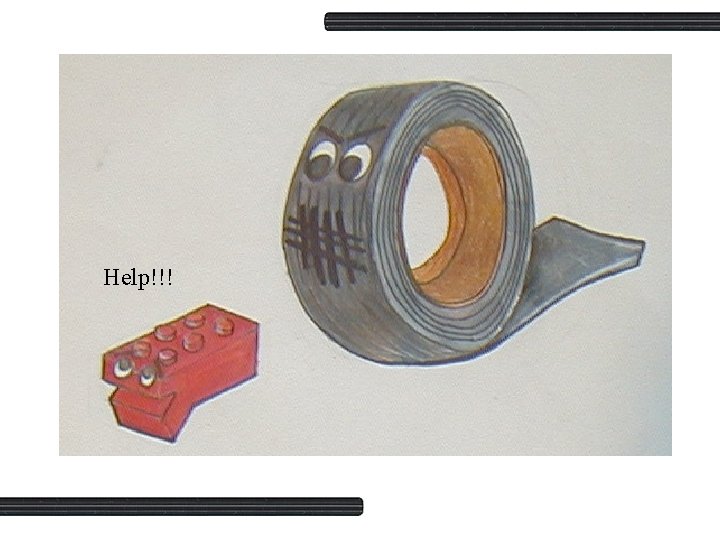
Structure • LEGO bricks are finicky: – They HATE duct tape. – They HATE hot glue. – They HATE super glue. – They HATE epoxy. • You should never need adhesives to build reliable LEGO structures
Help!!!
Drivetrain • LEGO Gears 40 T 8 T 16 T 24 T 1 T Worm 24 T Crown Bevel
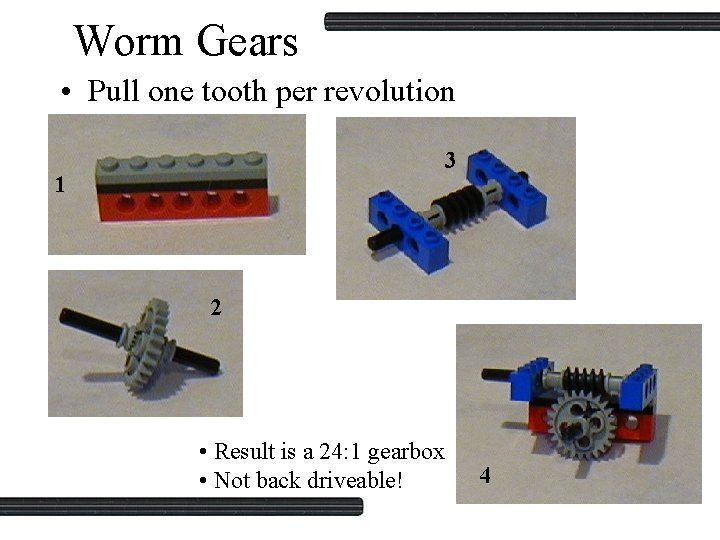
Worm Gears • Pull one tooth per revolution 3 1 2 • Result is a 24: 1 gearbox • Not back driveable! 4
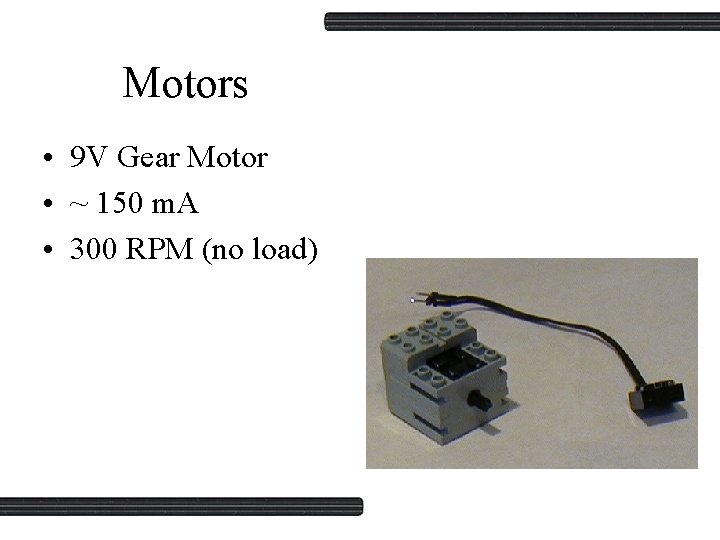
Motors • 9 V Gear Motor • ~ 150 m. A • 300 RPM (no load)
Motors • 9 V Micro Motor • 20 -30 RPM • Internal two stage orbital gearbox (wow!)
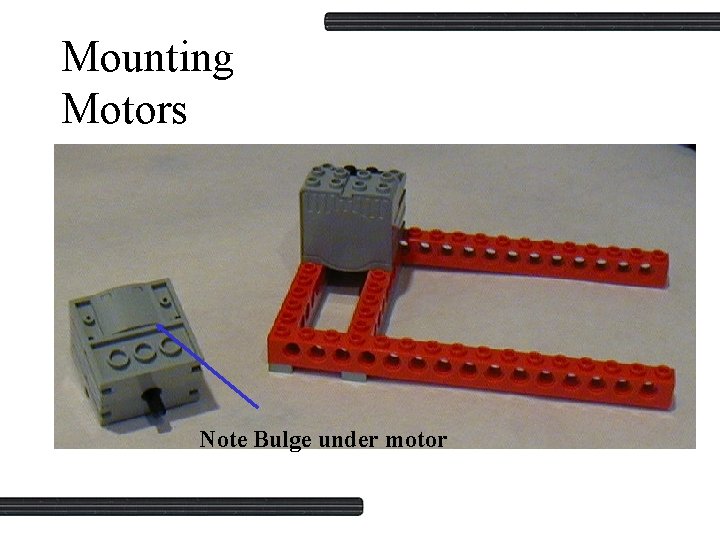
Mounting Motors Note Bulge under motor
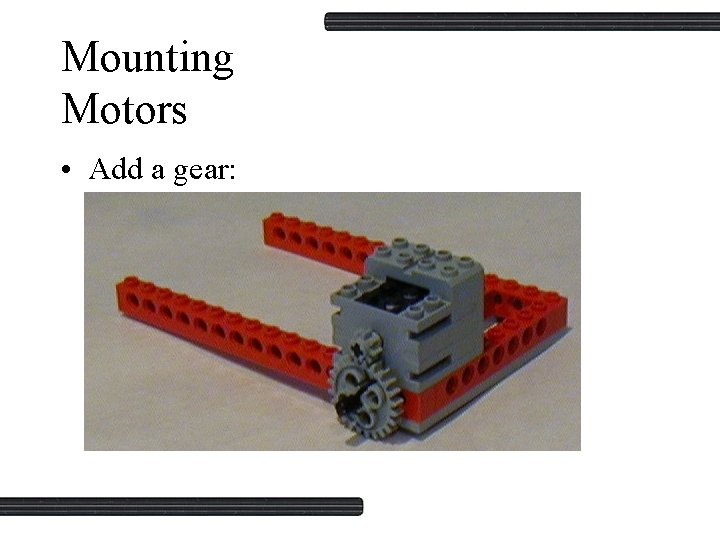
Mounting Motors • Add a gear:
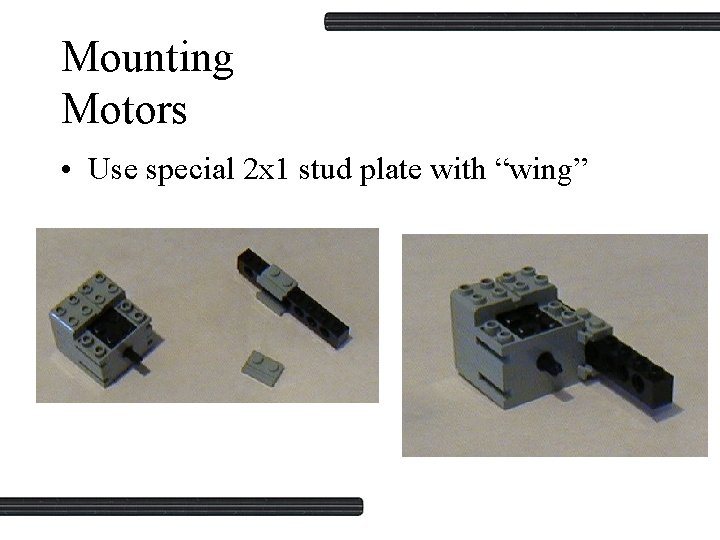
Mounting Motors • Use special 2 x 1 stud plate with “wing”
Build for good control • • Slow vs. fast? Gear backlash Stability Skidding
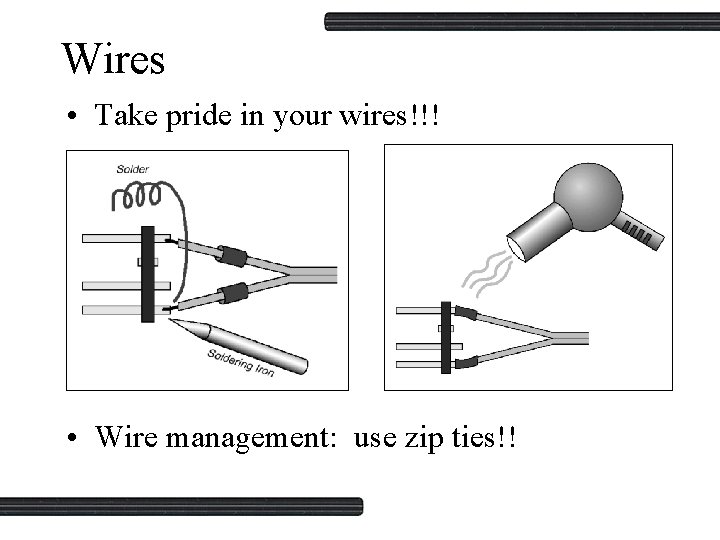
Wires • Take pride in your wires!!! • Wire management: use zip ties!!
Design Strategy • Incremental – Test components parts as you build them • Drivetrain • Sensors, sensor mounting • Structure • Don’t be afraid to redesign • KISS
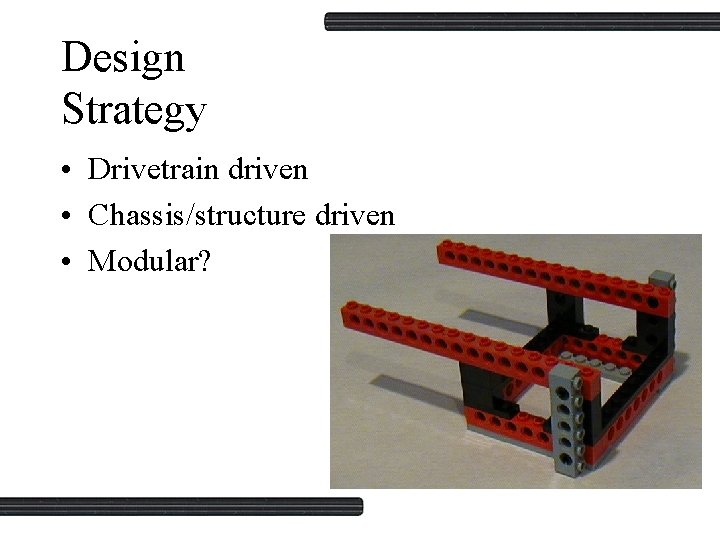
Design Strategy • Drivetrain driven • Chassis/structure driven • Modular?
Testing • Don’t wait until you have a final robot to test – Interaction of systems – Work division (work concurrently) • Develop test methods • Repeatability
Philosophy • • Have fun Be creative, unique Strive for cool solutions, that work! Aesthetics: it’s fun to make beautiful robots!