
THE ART OF INTERVIEWING Mario Delorme Fire Investigator



- Slides: 31
THE ART OF INTERVIEWING Mario Delorme, Fire Investigator CFEI February 5, 2014
What is an interview? • An interview requires two people • It is a meeting • Information is expected to be obtained by the interviewer • Information is revealed by the interviewee • An interview is NOT an interrogation!!!
Definition of interview • An interview is a meeting at which a person records information from another person • Provides you with an insight into the sequence of events of the situation at hand. • Allows you to begin a process
What is a cognitive interview? • Relating to, an incident • It is a thinking person’s interview! • A state of being conscious and creating mental activity, directed at the interviewee • The capability to obtain the maximum information from a person
How to build a successful interview? • Need to build a rapport • Keep eye contact • Let the person speak • Provide feedback • Avoid leading questions
Building a rapport • Be pleasant, open the door for communication. • Find something in common. They will know that you have a job to do but that you have a general interest in what they are going through. • Remain professional and let them know that you are prepared to listen.
Eye contact • Shows that you are interested. A lack of eye contact can demonstrate that you have a lack of interest or that you are unsure of yourself. • People who lie also become uncomfortable with an interviewer who provides regular eye contact. • Emotion is most often shown through eye contact of facial expressions.
Let the person speak! • Do not interrupt. (example) • Avoid distractions. (Turn off cell phones, televisions etc…) • Allow for silence. People generally feel uncomfortable when it becomes silent. They tend to start talking again and provide further information.
Avoid leading questions • A leading question can seriously hurt a statement. • A leading question cause confabulated memories. • Interfere with memory recall. • Informs a deceptive subject exactly what you know. • Provides a blue print for lying.
Cognitive interview • The cognitive interview can be used as a pure version statement. • It requires you to record it: üIn writing üAudio/video üPay attention to the words!!!
Wally and Rick! Wally “I think I’d like to be an engineer when I grow up” Rick “You have to be very intelligent to be an engineer” Wally “You’re trying to tell me something aren’t you”
How to conduct a cognitive Interview • Build a rapport, • Tell the person to go back to a period of time prior to the incident. (30 minutes prior, they were calm. ) • Have them close their eyes or picture that they are watching television and seeing the event unfold. Don’t interrupt!
Differences between Truthful and Deceptive Truthful • Builds story out of memory • Includes other senses • Emotion and fears • Complications and outside connections • Body language
Differences between Truthful and Deceptive • Builds story out of imagination • Generally only sight no other senses • Doesn’t have complications (pizza guy showed up in the middle of the situation) • Usually no emotion or fear • Can portray a hero
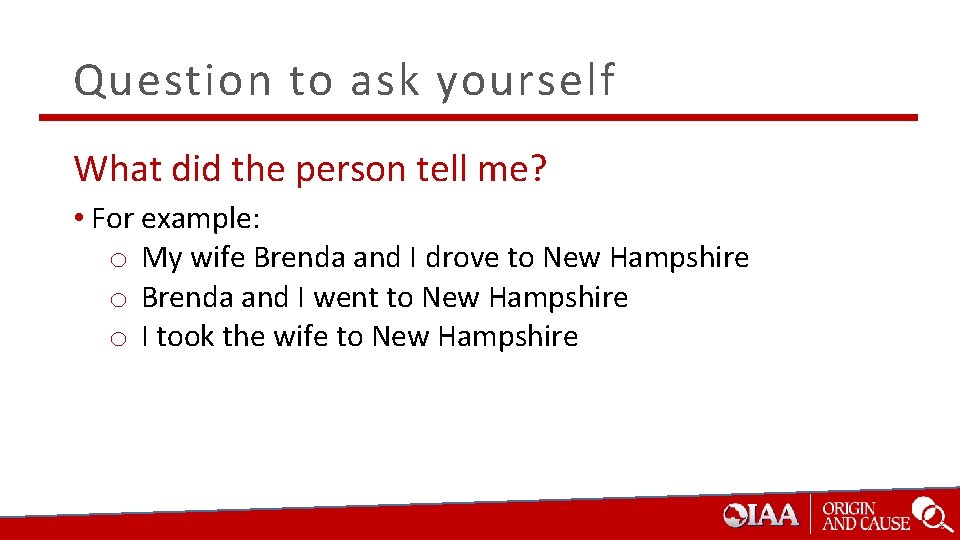
Question to ask yourself What did the person tell me? • For example: o My wife Brenda and I drove to New Hampshire o Brenda and I went to New Hampshire o I took the wife to New Hampshire
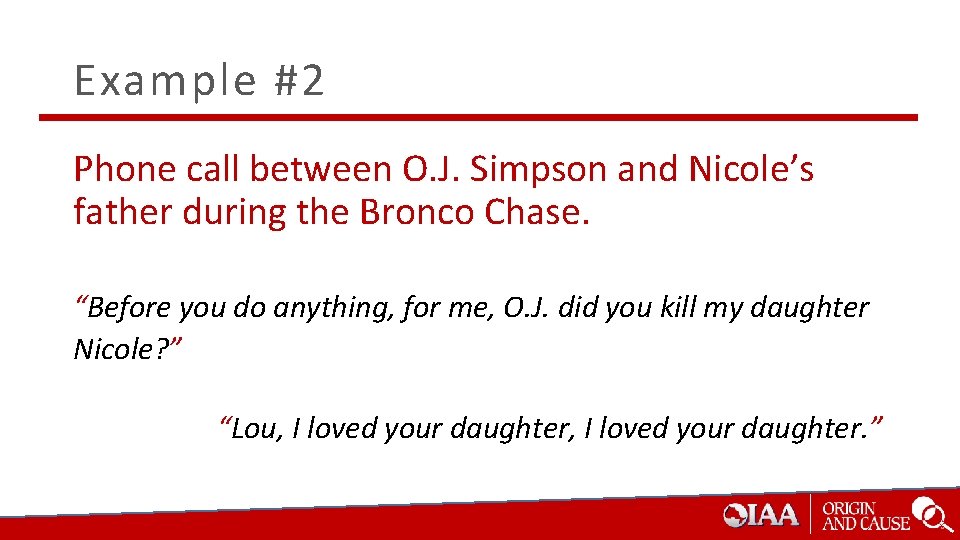
Example #2 Phone call between O. J. Simpson and Nicole’s father during the Bronco Chase. “Before you do anything, for me, O. J. did you kill my daughter Nicole? ” “Lou, I loved your daughter. ”
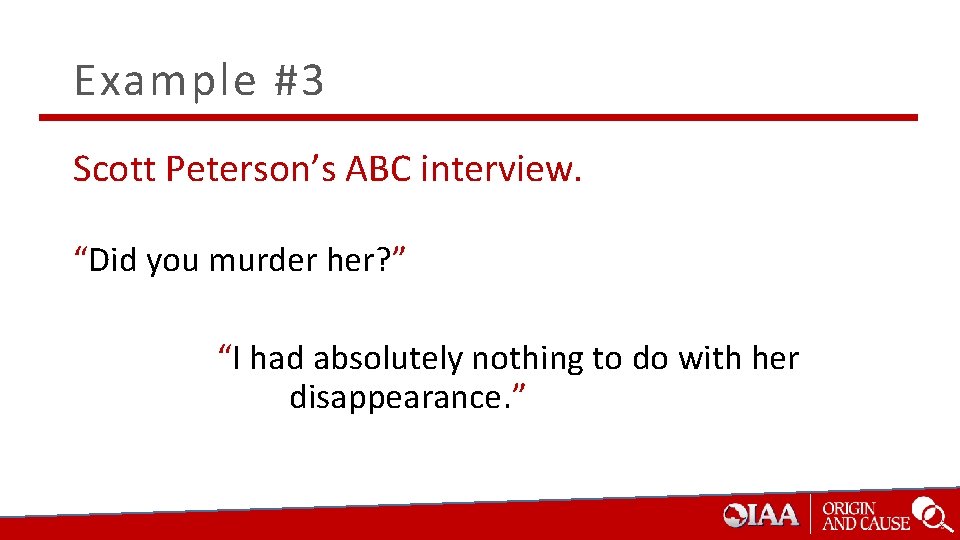
Example #3 Scott Peterson’s ABC interview. “Did you murder her? ” “I had absolutely nothing to do with her disappearance. ”
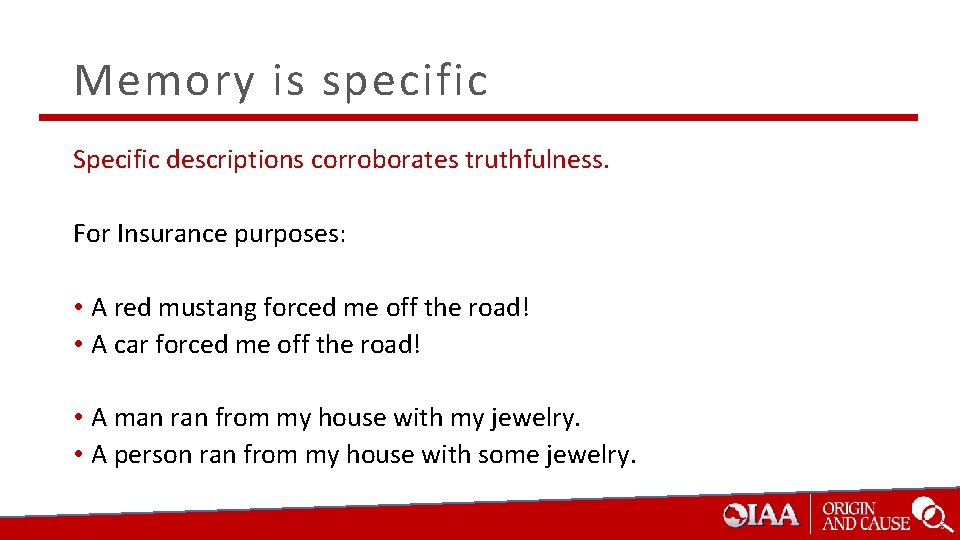
Memory is specific Specific descriptions corroborates truthfulness. For Insurance purposes: • A red mustang forced me off the road! • A car forced me off the road! • A man ran from my house with my jewelry. • A person ran from my house with some jewelry.
Body Language How is the interview going? • It is a known fact that body language from the interviewer can either promote or hinder an interview. • In fact, a person’s facial expressions and actions can determine the outcome of an interview to a higher degree than a person’s vocabulary.
Example: Minor Dog Bite • You are attending a minor dog bite situation and must take a statement from a client. Today is a bad day because you were also assigned a large loss liability claim. You arrive and notice that the house is messy, dirty and smelly. You keep looking at your watch and have kept your arms crossed the entire time. You keep answering the cell phone and discuss the large loss at great lengths. • What message are you sending to the client?
Example House Fire • You attend the scene of the fire and meet with the owner of the house who begins to tell you that her cat “Pyro” died in the fire. You quickly change the conversation and get back to business. You soon realize that the owner has become quiet and distant. She now answers with her arms crossed over her chest. • What may have caused the situation? • What is the significance of the body language? • How do you fix it?
Summary Always Prepare before an interview! • Professionalism (Perceived as interested in the file/claim) • The quantity of information obtained will increase • Less of a chance to be deceived • Better prepared for court • Less of a chance to attend court (More answers)
What is an expert? • An expert is someone whose knowledge or skill is specialized in a given field and is the result of much practical experience.
How can you assist the expert? Have the logistical information available. • • • What type of loss is it? (residential, commercial…) Location of loss? Date and time of loss? Loss amount? Insured?
How can you assist the expert? (logistics continued) • File number • Policy number • Claim number • Authorities or agencies at the scene • Name and telephone number of Police Officers, Fire Marshal, Fire Department Investigator
How can you assist the expert? (logistics continued) • Other Insurance companies involved • Level of communication you expect between insurance companies and the expert • Other engineering firms at scene • Scene security • Restoration company!!!
From the owner? • Floor layouts. (Including location of appliances, utilities, chargers etc) • Last person in the structure? • Smokers or not? • Any recent renovations, upgrades…? • Any previous failures involving electrical or mechanical components or devices • Power outages?
From the owner? • Pets ( can knock over candles) • Uninvited guests (are they smokers? ) • Alarm systems • Fireplace being used • Maintenance • Smoke alarms • Cooking
From the owner? • Household products • Location of smoke or flames • Color of smoke or flames
Purpose of this information? • Fire investigations are largely based on a process of elimination • The interviewer (Adjuster) has an important role in gathering much of this information • This elimination process can assist in identifying the ignition sequence factors as soon as possible • This will result in saving time and money!
31