
THE ART OF INEQUALITY Art resource for 11



- Slides: 23
THE ART OF INEQUALITY Art resource for 11 -14 year olds
SESSION 1 Can information be beautiful?
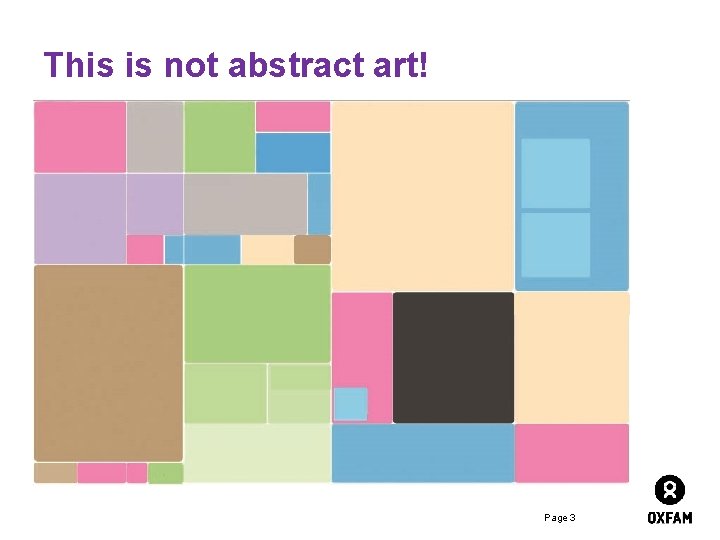
This is not abstract art! Page 3
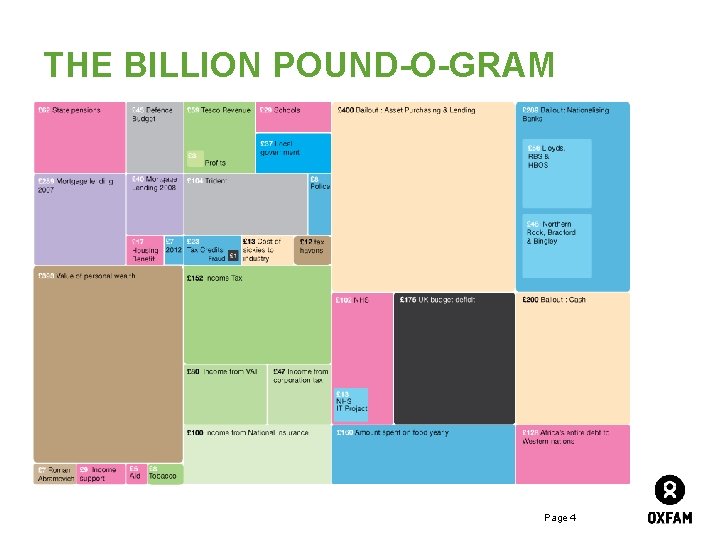
THE BILLION POUND-O-GRAM Page 4
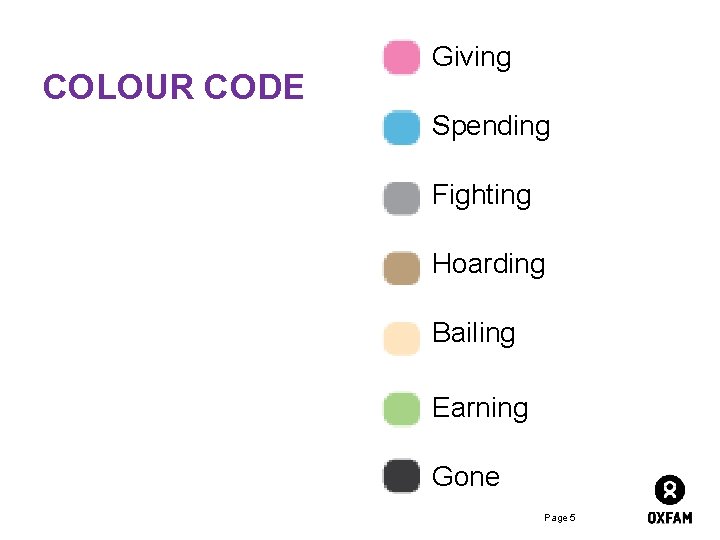
COLOUR CODE Giving Spending Fighting Hoarding Bailing Earning Gone Page 5
THE DESIGNER’S PURPOSE “This image arose out of frustration with reporting of billion dollar amounts in the news. That is, that they’re … literally mind-boggling amounts of money. So here we’ve scraped reported figures from The New York Times, The Guardian, and other news outlets and visualized them as a treemap so you can see in one place figures that would otherwise be scattered across multiple news reports. ” Page 6
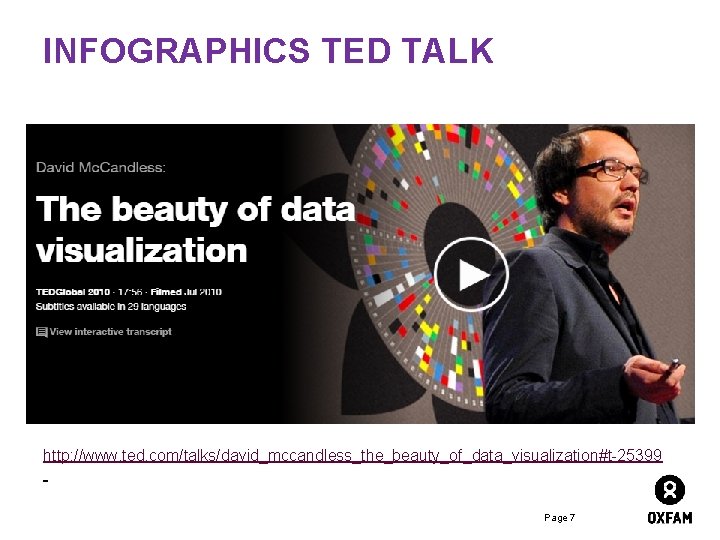
INFOGRAPHICS TED TALK http: //www. ted. com/talks/david_mccandless_the_beauty_of_data_visualization#t-25399 Page 7
SESSION 2 What is inequality?
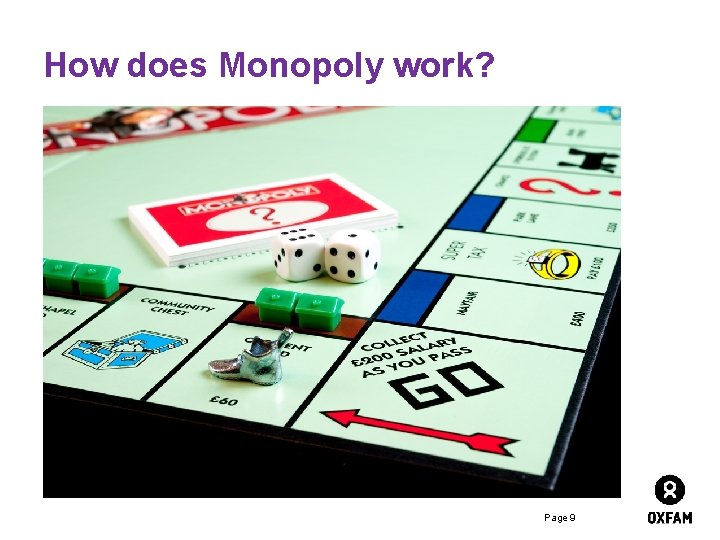
How does Monopoly work? Page 9
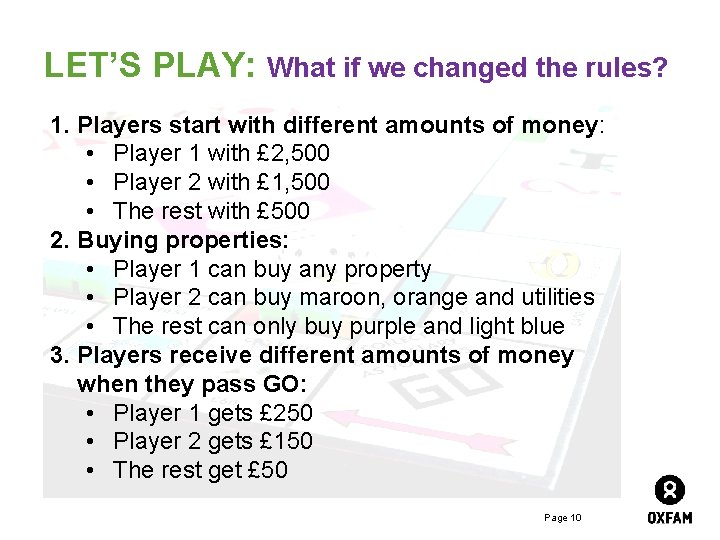
LET’S PLAY: What if we changed the rules? 1. Players start with different amounts of money: • Player 1 with £ 2, 500 • Player 2 with £ 1, 500 • The rest with £ 500 2. Buying properties: • Player 1 can buy any property • Player 2 can buy maroon, orange and utilities • The rest can only buy purple and light blue 3. Players receive different amounts of money when they pass GO: • Player 1 gets £ 250 • Player 2 gets £ 150 • The rest get £ 50 Page 10
AFTER PLAY: How did the new rules change the game? 1. How much did the amount you started with determine your success? 2. Did it matter how much previous Monopoly experience or skill you had? 3. How did/would it feel to lose the game very early on? 4. How could we relate this new version of the game to the real world? Page 11
CASE STUDY: What Is Inequality? Nthabiseng was born to a poor black family in Limpopo, a rural area in South Africa. On the same day, Pieter was born nearby in a rich suburb of Cape Town. Nthabiseng’s mother had no formal schooling and her father is unemployed, whereas Pieter’s parents both completed university education at Stellenbosch University and have well-paid jobs. As a result, Nthabiseng and Pieter’s life chances are vastly different. Nthabiseng is almost one-and-a-half times as likely to die in the first year of her life as Pieter. He is likely to live more than 15 years longer than Nthabiseng. Pieter will complete on average 12 years of schooling and will most probably go to university, whereas Nthabiseng will be lucky if she gets one year. Such basics as clean toilets, clean water or decent health care will be out of her reach. If Nthabiseng has children there is a very high chance they will also grow up equally poor. Page 12
What is inequality? http: //www. oxfam. org. uk/get-involved/campaign-with-us/find-an-action/even-it-up Page 13
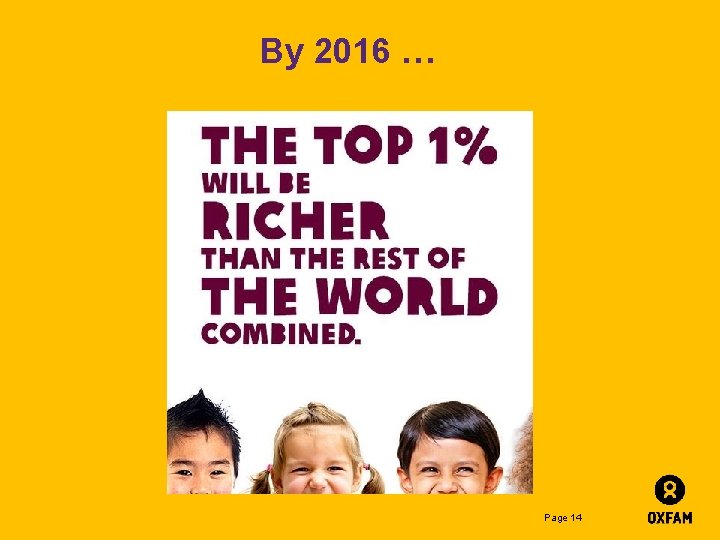
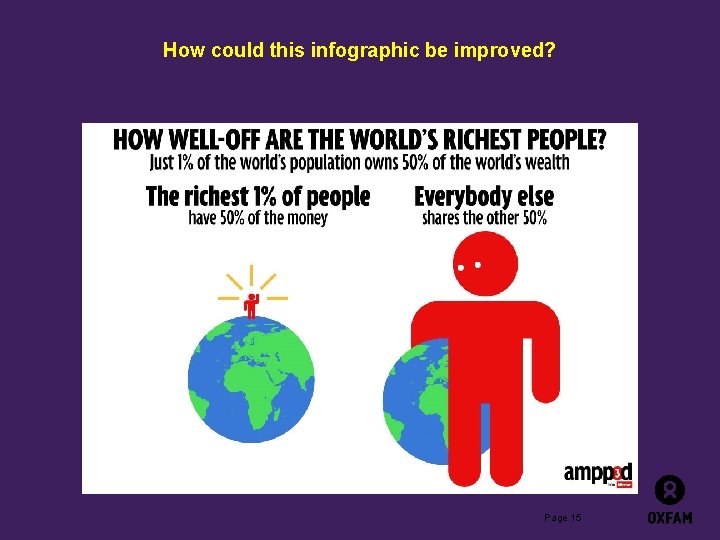
By 2016 … Page 14
How could this infographic be improved? Page 15
Draw your own infographic By 2016, the world’s richest 1% will have more wealth than the rest of the world combined. Page 16
SESSION 3 Big Ideas in Design History
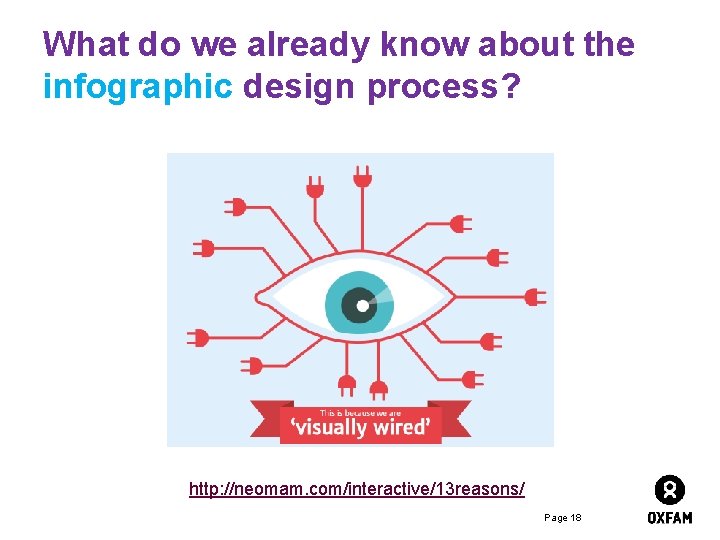
What do we already know about the infographic design process? http: //neomam. com/interactive/13 reasons/ Page 18
Pictograms Page 19
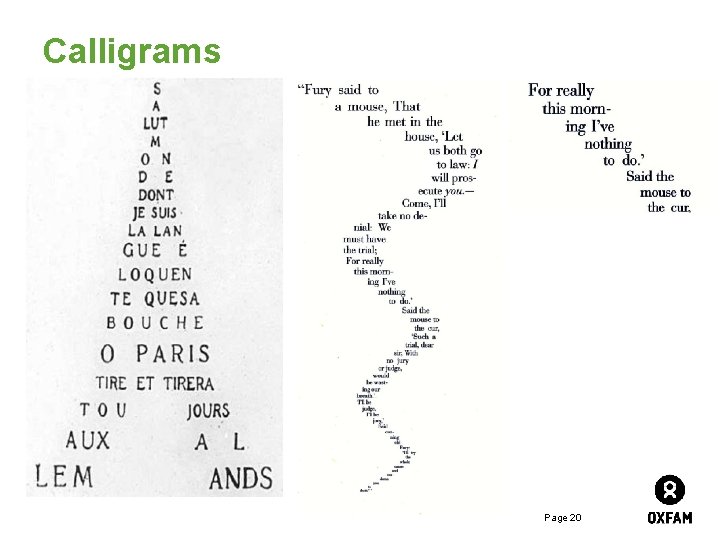
Calligrams Page 20
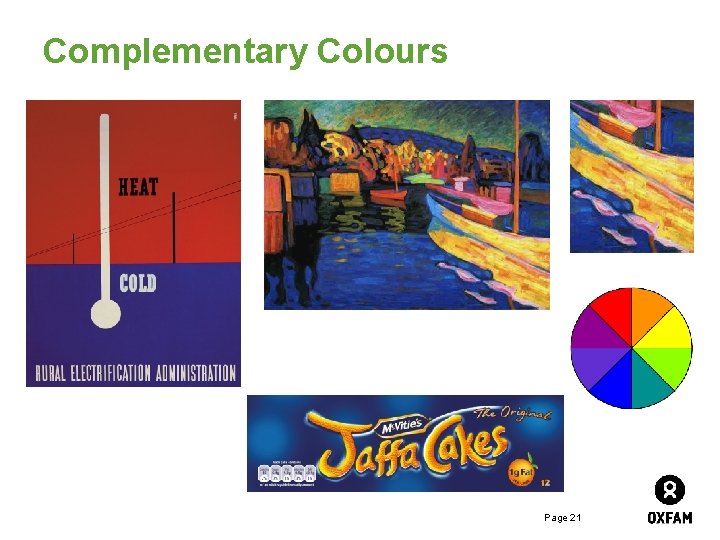
Complementary Colours Page 21
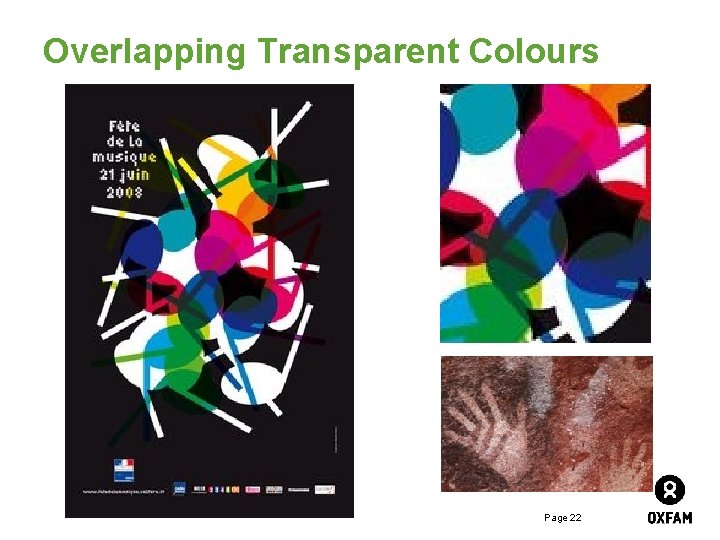
Overlapping Transparent Colours Page 22
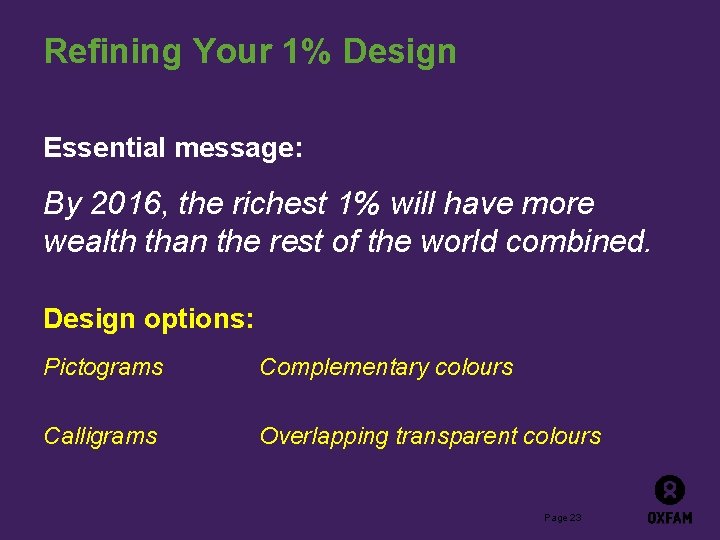
Refining Your 1% Design Essential message: By 2016, the richest 1% will have more wealth than the rest of the world combined. Design options: Pictograms Complementary colours Calligrams Overlapping transparent colours Page 23