
THE ART OF FAILURE FROM THE INSTITUTE OF



- Slides: 23
THE ART OF FAILURE FROM THE INSTITUTE OF LEARNING
THE ART OF FAILURE UNIT • During the next few weeks we will be reading, writing about , and discussing a non fiction texts. • The text, “ Lolo’s No Choke. “ published in TIME magazine in 2012
TWO FOCUS QUESTIONS TO THINK ABOUT…… • 1) Why do people fail? • 2) How do narrative and research work together to convey information in texts?
VIDEO “BEST OLYMPIC FAILS EVER” • https: //www. youtube. com/watch? v=OFr. LGXT 5 ZF 4
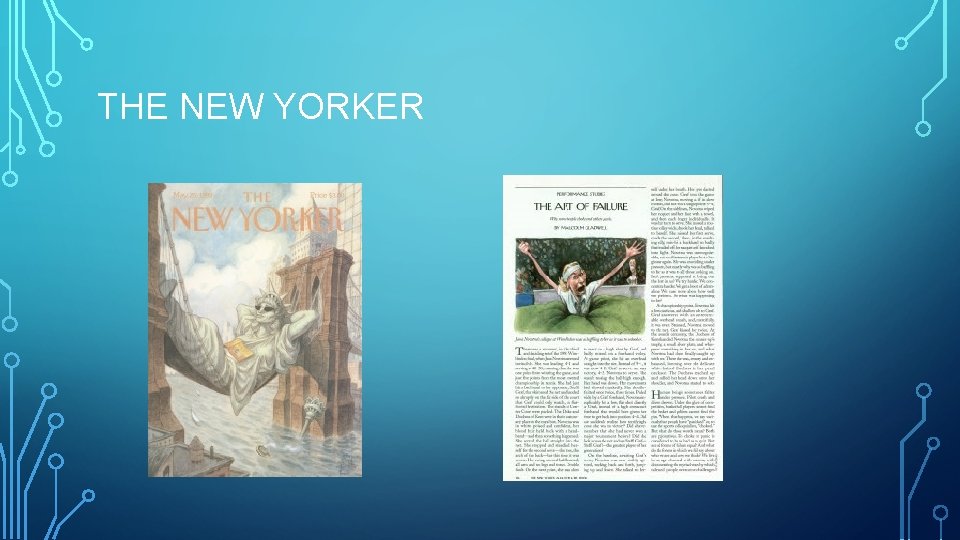
THE NEW YORKER
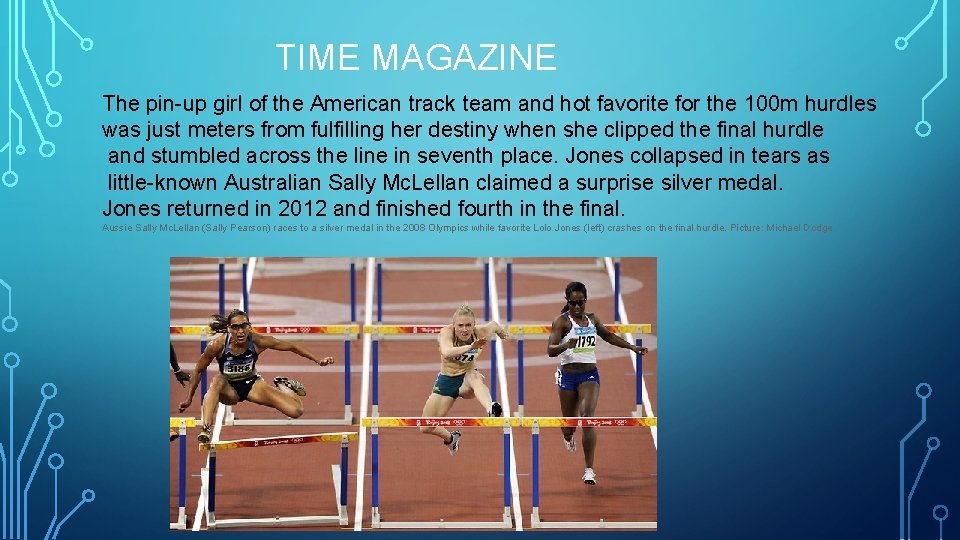
TIME MAGAZINE The pin-up girl of the American track team and hot favorite for the 100 m hurdles was just meters from fulfilling her destiny when she clipped the final hurdle and stumbled across the line in seventh place. Jones collapsed in tears as little-known Australian Sally Mc. Lellan claimed a surprise silver medal. Jones returned in 2012 and finished fourth in the final. Aussie Sally Mc. Lellan (Sally Pearson) races to a silver medal in the 2008 Olympics while favorite Lolo Jones (left) crashes on the final hurdle. Picture: Michael Dodge
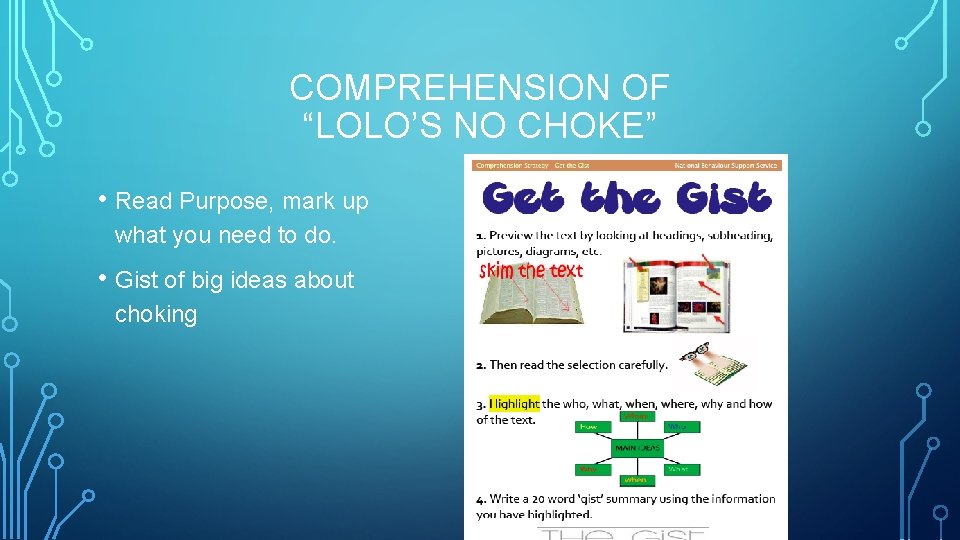
COMPREHENSION OF “LOLO’S NO CHOKE” • Read Purpose, mark up what you need to do. • Gist of big ideas about choking
COMPREHENSION OF “LOLO’S NO CHOKE” • Identify any part of the text you find confusing
COMPREHENSION OF “LOLO’S NO CHOKE” • Read the “TASK” What are the two things you need to do? 1. Note where Gregory is writing about what choking is and how someone might overcome it. Underline places where he states ideas directly, AND………….
2. MARK PLACES WHERE YOU CAN INFER HIS IDEAS THROUGH EXAMPLES, STORIES, AND OTHER INFORMATION
PREPARING TO READ WHOLE GROUP • When you look at this text what do you see/think ? • Long passage • Unfamiliar words/ vocabulary AKA ‘BIG WORDS”
STRATEGIES TO HELP YOU MANAGE LONG TEXT • Your thoughts? ? • Pause when you feel that you are not understanding, or become overwhelmed. Refocus and restate what the author is saying in your own words. • “So what he is saying is………………. ” • Jot a few of your words to sum up and track what you are learning. • Underline important or repeating ideas.
STRATEGIES FOR WORKING WITH UNFAMILIAR WORDS/ VOCABULARY • Your ideas ? ? • Skip over the word, especially when you are able to get the GIST of the sentence or passage. • Read the words before and after an unfamiliar word to see if the author is defining it. • Mark places where your overall understanding is stopped by unfamiliar words, and move on. You can ask for clarification at another time.
MODELING……… LET’S PRACTICE! • I will begin reading “Lolo's No Choke” aloud (my job) • (Your Job) • Mark places where Gregory is writing about what choking is and how to overcome it • Mark moments/ lines that get in the way of you understanding what Gregory is trying to say.
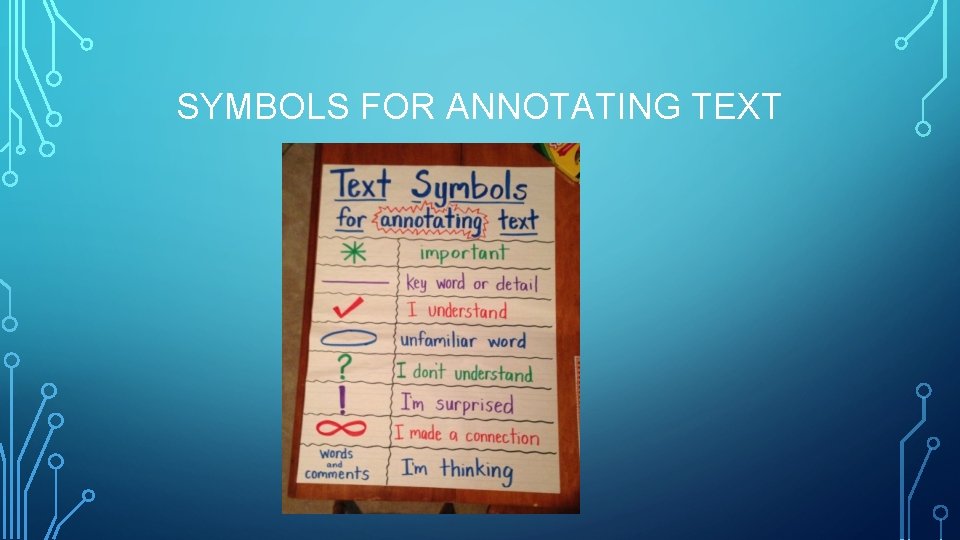
SYMBOLS FOR ANNOTATING TEXT
Lolo’s No Choke By Sean Gregory The U. S. hurdler stumbled horribly in Beijing, losing gold. What we can learn from her nightmare Choke. The word just sounds so noxious, really. Never mind its ties to suffocation and death. Just say it: choke. Athletes in particular would like to strangle the scribe who first applied such an ugly term to their most spectacular — and public — failures. Count Lolo Jones among them. Jones, the telegenic American hurdler, lived through a nightmare in Beijing. With a commanding lead in the 100 -m event, on the verge of taking the gold and winning Americans’ hearts with her good looks and homeless-to-heroine story, she clipped the ninth hurdle. There are 10 of them. She stumbled across the line to finish in seventh place, then tumbled to the ground in a pool of tears. Jones is reflective about her failure. “So many people have said they saw my story in Beijing — they’re inspired, they picked themselves up, ” says Jones, who handled the aftermath of her disaster with incredible grace. “I just want to have this story for all of us. ” But when I ask her for her gut reaction to the word choke, she runs from it at world-record pace. “Choking is going out there and having just a terrible performance from start to end, ” she says while picking at swordfish in a Baton Rouge, La. , restaurant. “I was winning the race. ” But the word was still gnawing at her the next day as she stood on her front lawn waiting to be photographed, visibly stressed out from her demanding training and media obligations. She had
Spent 10 minutes or so in tears. “Nobody has ever asked me that question, ” she says. She sticks to her conviction that if she had truly choked, she would not have been a few ticks away from gold. But now she offers an addendum: “I really just put too much pressure on myself. If people want to consider that choking, if they want to use that terminology for me, I completely understand. I’m not going to argue with them. ” No sporting event puts more mental stress on its participants — or cultivates more choking — than the Olympic Games. They’re a quadrennial pitchfork to the brain. The rare spotlight shines on athletes in barely visible sports: Grab that gold, or call us in 2016. Elite athletes need goldmedal brains to operate their Olympian bodies. And scientists are beginning to understand an athlete’s brain under the intense pressure of the Olympics and why some athletes handle it while others don’t. Performing under pressure demands proper allocation of resources — training the cerebral cortex to filter out the billion distractions available, leaving the body free to perform. Or as Yogi Berra famously said, “How can you think and hit at the same time? ” Jones could use some tips. You’d be hard-pressed to find an Olympic athlete under more strain. “I’m worried, ” says her mother Lori. “Lo is so hard on herself. ” Constant reminders of her Olympic mishap aside, the world will be wondering if Jones, 29, is worth the hype. She’s stolen pre-London buzz despite clocking underwhelming times going into these Games. …. .
No sporting event puts more mental stress on its participants — or cultivates more choking — than the Olympic Games. They’re a quadrennial pitchfork to the brain. The rare spotlight shines on athletes in barely visible sports: Grab that gold, or call us in 2016. Elite athletes need goldmedal brains to operate their Olympian bodies. And scientists are beginning to understand an athlete’s brain under the intense pressure of the Olympics and why some athletes handle it while others don’t. Performing under pressure demands proper allocation of resources — training the cerebral cortex to filter out the billion distractions available, leaving the body free to perform. Or as Yogi Berra famously said, “How can you think and hit at the same time? ” Jones could use some tips. You’d be hard-pressed to find an Olympic athlete under more strain. “I’m worried, ” says her mother Lori. “Lo is so hard on herself. ” Constant reminders of her Olympic mishap aside, the world will be wondering if Jones, 29, is worth the hype. She’s stolen pre-London buzz despite clocking underwhelming times going into these Games. …. . Behind her lighthearted public personality lies a lifetime of mental aches at home, in love and on the track. An Olympic victory would soothe all that pain. A future of adulation and marketing dollars awaits — Lolo! It just rolls off the tongue — if she can survive a 12 -sec. race. Beijing, and her sad eyes, would disappear. “I’ve carried that burden so long, ” says Jones. “I’m tired of carrying it. ” On your marks.
REFRESHING YOUR MEMORY ABOUT THE BIG IDEA IN ‘LOLO’S NO CHOKE’ (1. 2) • • PLEASE SHARE WITH YOUR ELBOW PARTNER WHAT YOU LEARNED ABOUT CHOKING AND HOW TO OVERCOME IT. USE DETAILS FROM ‘LOLO’S NO CHOKE’. HELPFUL HINT ( THINK ABOUT WHAT WE ON • • Gregory: Choking Chart Gregory: Overcoming Chart
LOOK AT “FURTHERING COMPREHENSION OF “LOLO’S NO CHOKE” • Let’s read the Purpose together …. . • What is the purpose of todays task? Put it in your own words……. . • Our focus today is STEP 1 1. Re-read the article one section at a time • Purpose is to get a Firm grip on what Gregory is saying in each section. Clear up any confusing moments you marked up in your first reading. Look up any words, talk ideas over with partner to apply the accurate meaning.
LET’S PRACTICE • We will read the first section of “CHOKE” • As we read please Share moments that “Got in your way” of understanding when you read this section the first time. • WE WILL WORK THROUGH THOSE MOMENTS TOGETHER TO HELP UNTANGLE THE TEXT. • Finally we will summarize the section, after we untangle the text.
ANALYSIS (1. 3) • Reread the text. • Mark the places where Gregory incorporates narrative • Mark the places where he incorporates research. “R” • How does Gregory make narrative ( Gregory telling someone’s story) function in the text? • • Where do you see Gregory telling a person’s story? How does research (refers to finding from scientific investigations and studies) function in the text? • • • “N” Where do you see Gregory stating facts from scientific research? What do you notice about the structure of the text? How does the structure influence (help/ hinder) your understanding of the text?
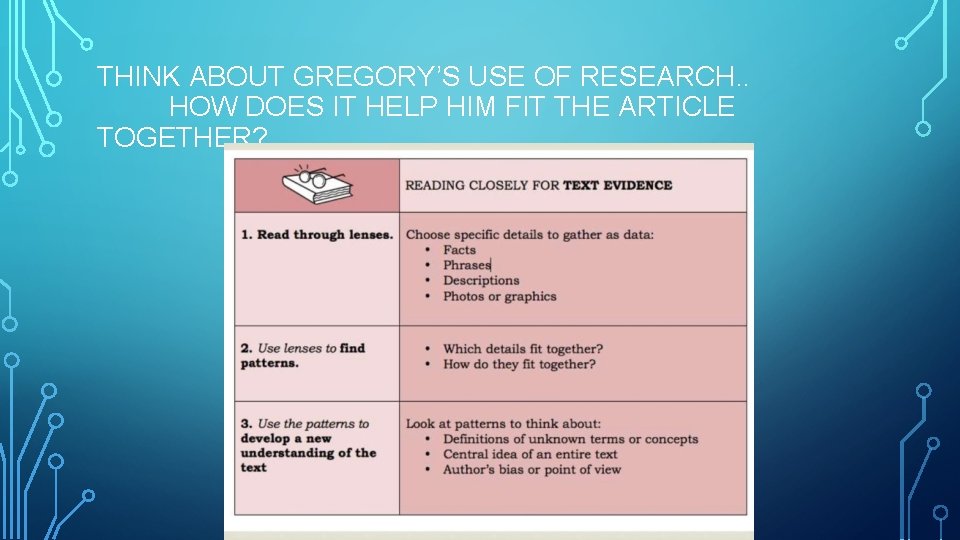
THINK ABOUT GREGORY’S USE OF RESEARCH. . HOW DOES IT HELP HIM FIT THE ARTICLE TOGETHER?