
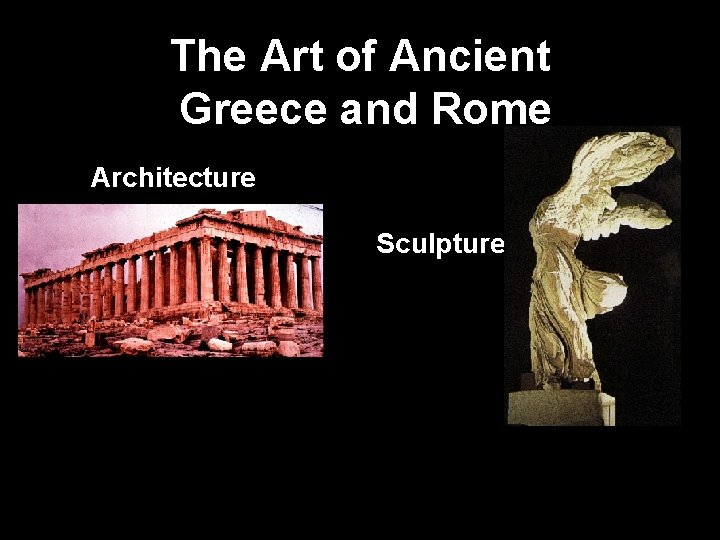
The Art of Ancient Greece and Rome Architecture



- Slides: 53
The Art of Ancient Greece and Rome Architecture Sculpture
Ancient Greece 650 B. C. – 150 B. C. Origin of Western Civilization • • • Art Architecture Poetry Drama Philosophy Government, law, logic • History and mathematics • Humanism • Human figure principle motif • Ideal proportions • Stressed harmony, order, clarity of thought
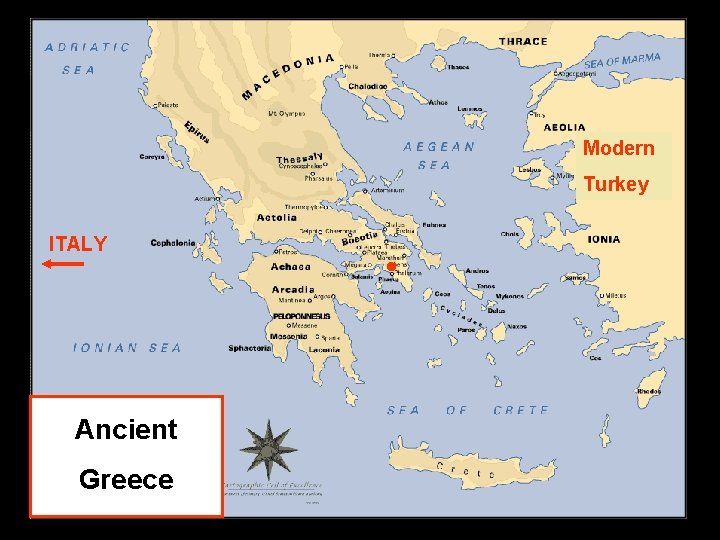
Modern Asia Minor Turkey ITALY Ancient Greece •
Greek Architecture During the Classical Period 480 – 323 BC
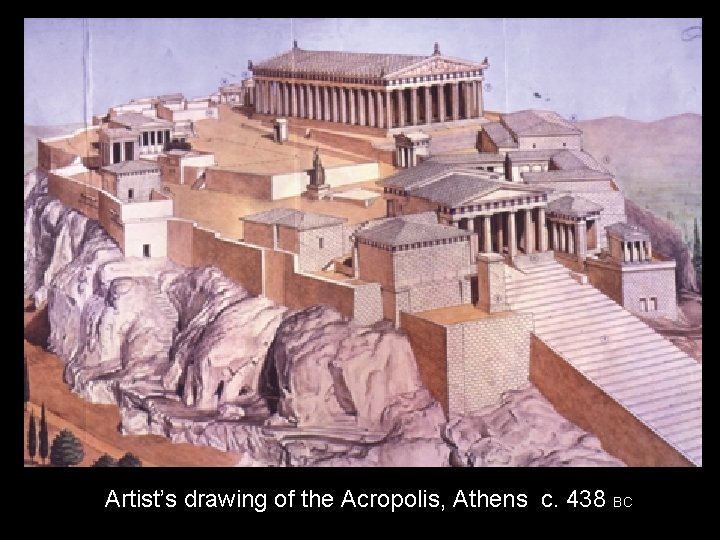
Artist’s drawing of the Acropolis, Athens c. 438 BC
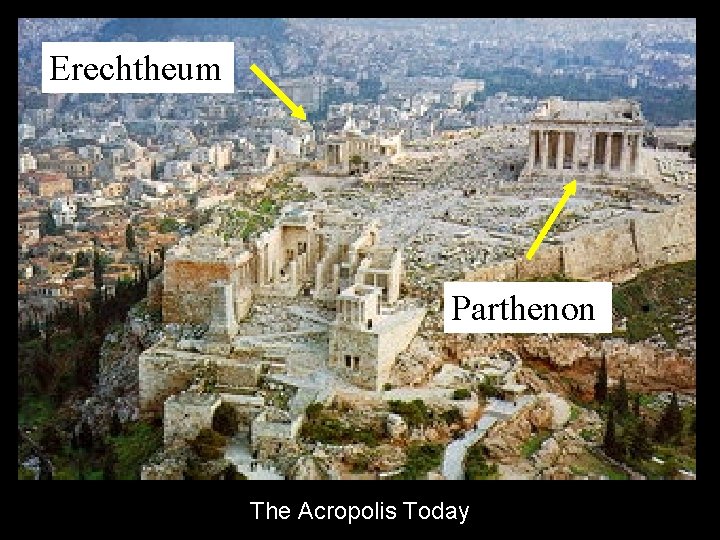
Acropolis • Nearly every Greek city had an acropolis (“high city”) – a walled fort for protection • As city moved outwards, Athens's acropolis became religious center • Athens's acropolis was premier temple complex of all Greece • Hill is dominated by two temples to Athena. Parthenon and Erechtheum
Erechtheum Parthenon The Acropolis Today
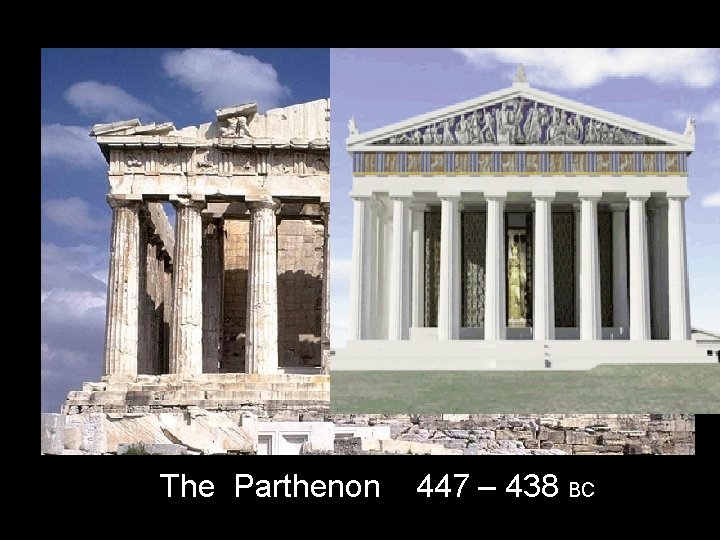
Parthenon • Parthenon built on Acropolis in Athens • Temple is the model for thousands of buildings in western world • Colors have worn away • Sculptures removed to other lands • Explosion in 1687
The Parthenon 447 – 438 BC
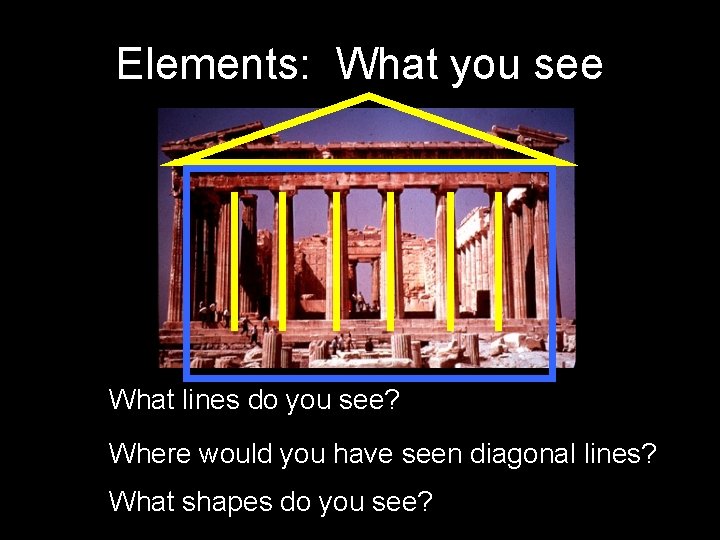
Elements: What you see What lines do you see? Where would you have seen diagonal lines? What shapes do you see?
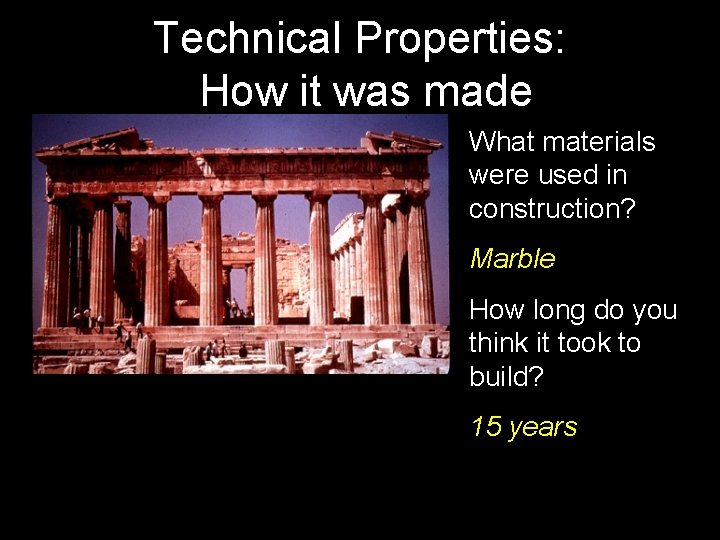
Technical Properties: How it was made What materials were used in construction? Marble How long do you think it took to build? 15 years
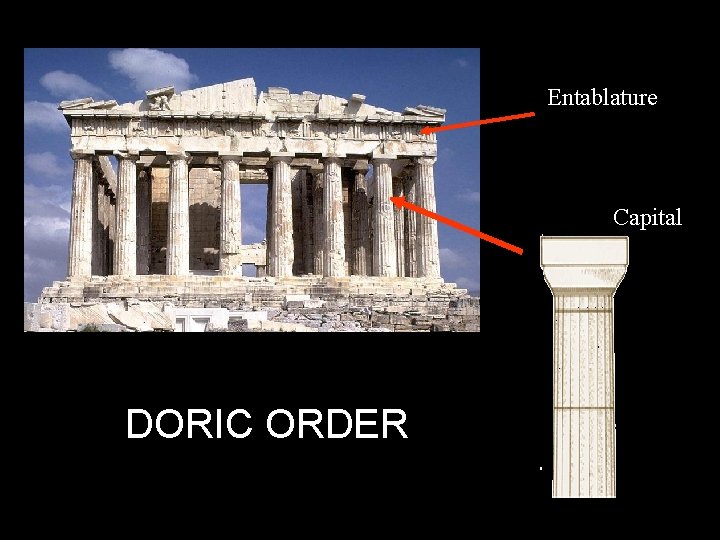
Entablature Capital DORIC ORDER
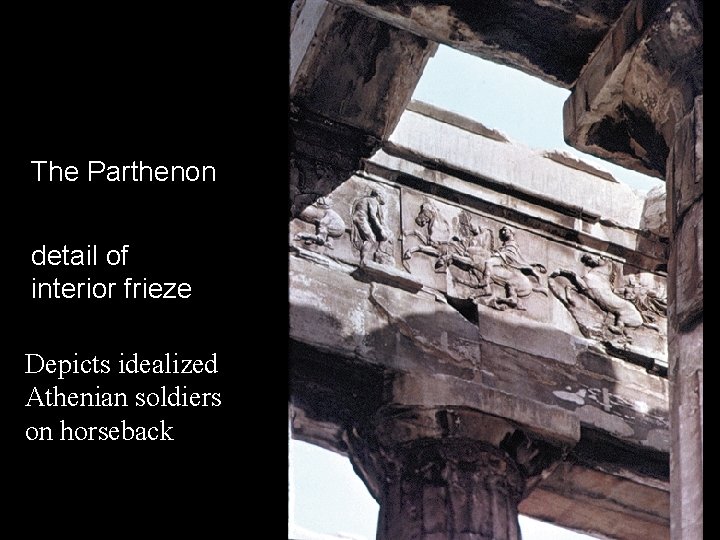
The Parthenon detail of interior frieze Depicts idealized Athenian soldiers on horseback
IONIC ORDER North front of the Erechtheum
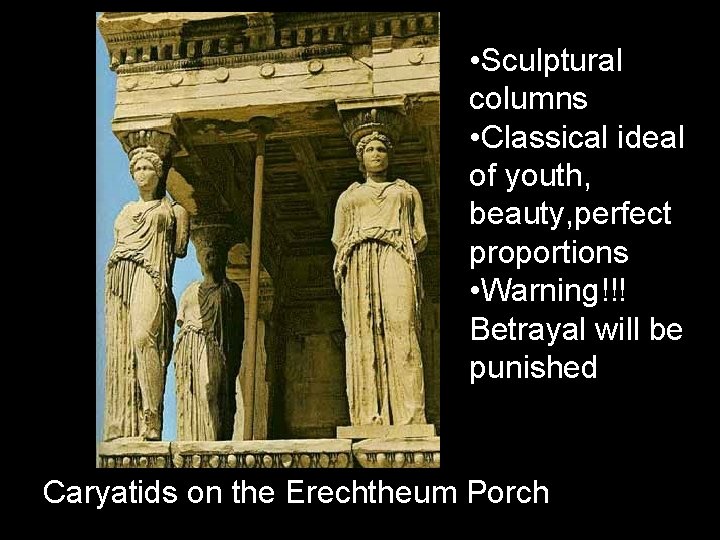
• Sculptural columns • Classical ideal of youth, beauty, perfect proportions • Warning!!! Betrayal will be punished Caryatids on the Erechtheum Porch
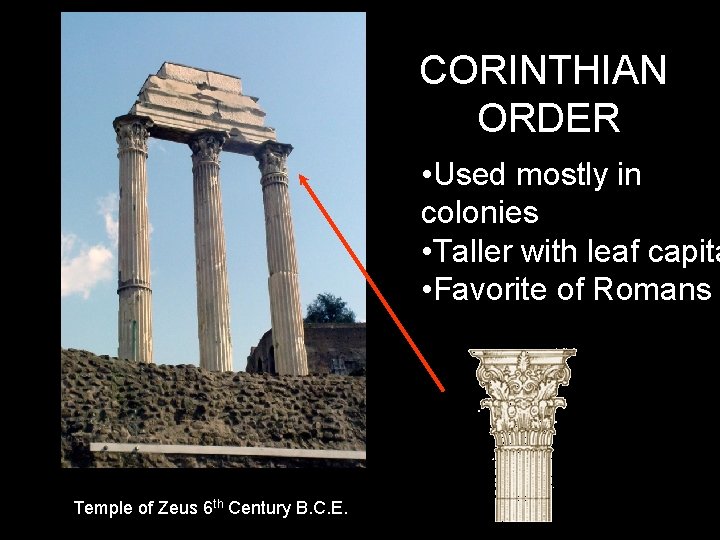
CORINTHIAN ORDER • Used mostly in colonies • Taller with leaf capita • Favorite of Romans Temple of Zeus 6 th Century B. C. E.
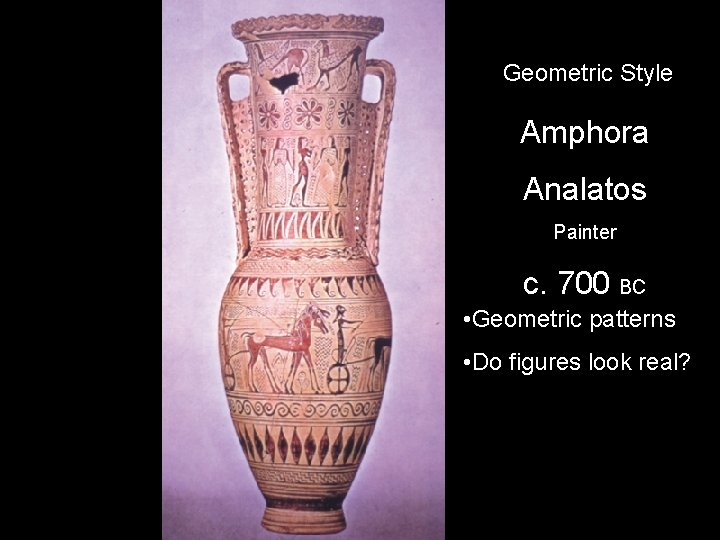
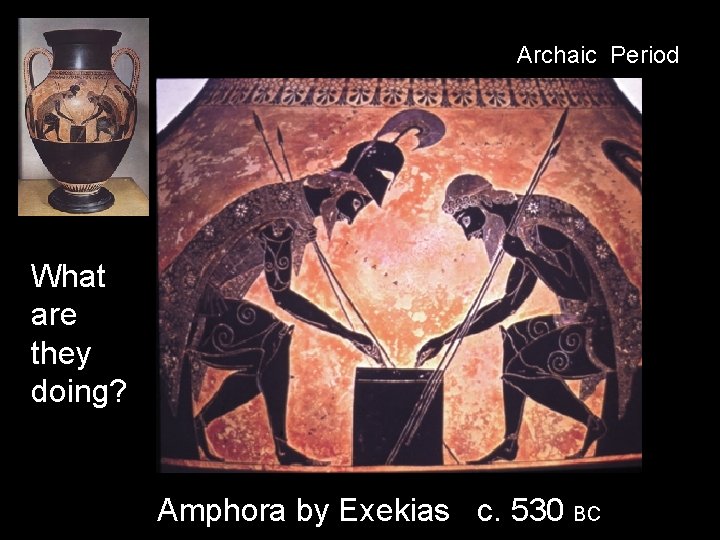
Greek Vase Painting • Virtually all paintings and frescoes of ancient Greece have been destroyed • Visual record is saved on pottery • Most displayed geometric pattern and figure drawing • Scenes often related to function of pot often with heroes or gods
Geometric Style Amphora Analatos Painter c. 700 BC • Geometric patterns • Do figures look real?
Archaic Period What are they doing? Amphora by Exekias c. 530 BC
GREEK SCULPTURE Classical Period 5 th-4 th Century BC • • • Anatomically correct Capable of movement Facial expressions are serene Idealized youth and beauty Influenced Renaissance Artists in 15 th C
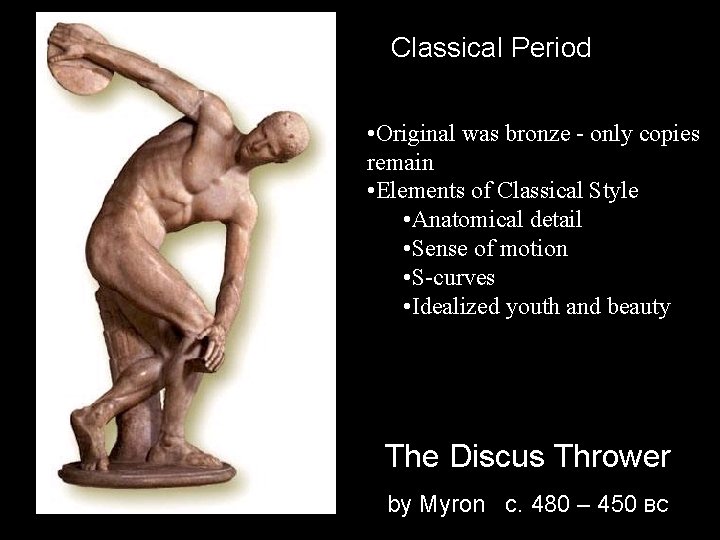
Classical Period • Original was bronze - only copies remain • Elements of Classical Style • Anatomical detail • Sense of motion • S-curves • Idealized youth and beauty The Discus Thrower by Myron c. 480 – 450 BC
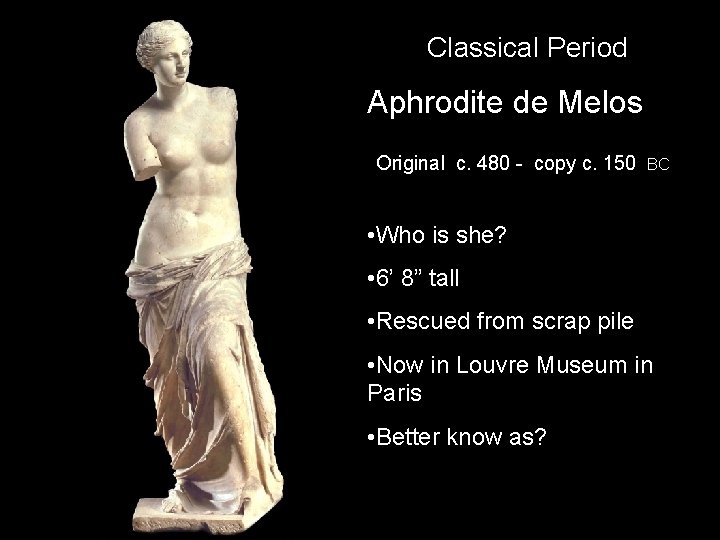
Classical Period Aphrodite de Melos Original c. 480 - copy c. 150 BC • Who is she? • 6’ 8” tall • Rescued from scrap pile • Now in Louvre Museum in Paris • Better know as?
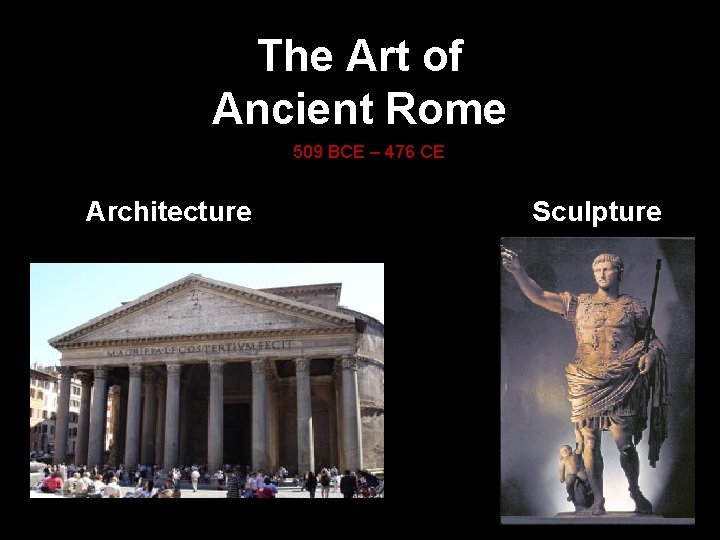
The Art of Ancient Rome 509 BCE – 476 CE Architecture Sculpture
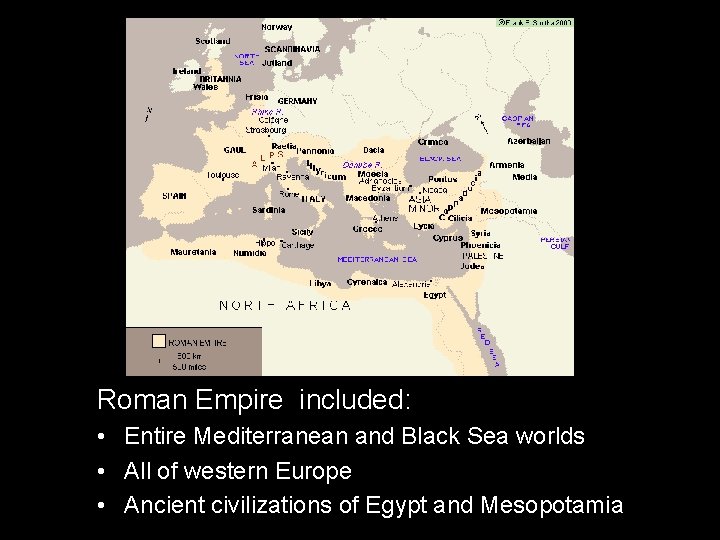
Roman Empire included: • Entire Mediterranean and Black Sea worlds • All of western Europe • Ancient civilizations of Egypt and Mesopotamia
Ancient Rome • Recognized greatness of Greek art • Borrowed from it • Added emotion and realism to sculpture to honor and celebrate Roman leaders and citizens • Changed architecture with development of concrete and supporting arch
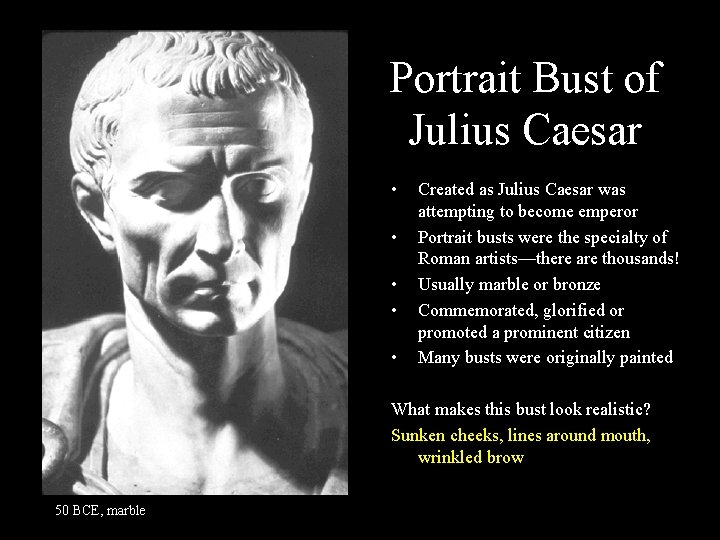
Portrait Bust of Julius Caesar • • • Created as Julius Caesar was attempting to become emperor Portrait busts were the specialty of Roman artists—there are thousands! Usually marble or bronze Commemorated, glorified or promoted a prominent citizen Many busts were originally painted What makes this bust look realistic? Sunken cheeks, lines around mouth, wrinkled brow 50 BCE, marble
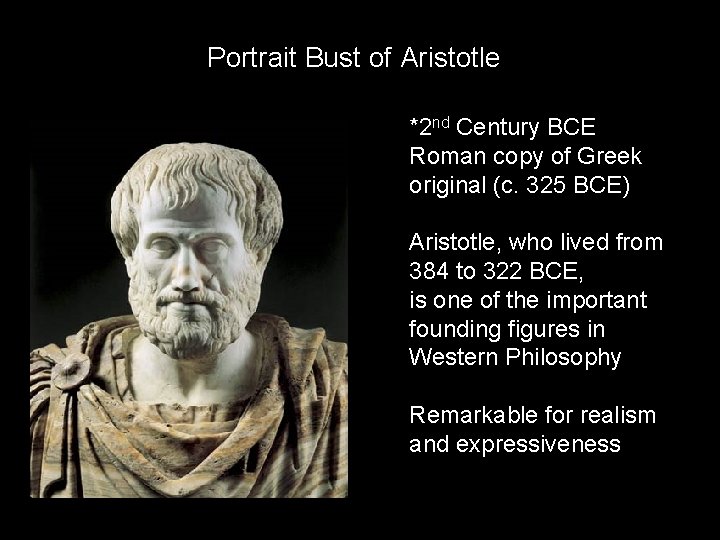
Portrait Bust of Aristotle *2 nd Century BCE Roman copy of Greek original (c. 325 BCE) Aristotle, who lived from 384 to 322 BCE, is one of the important founding figures in Western Philosophy Remarkable for realism and expressiveness
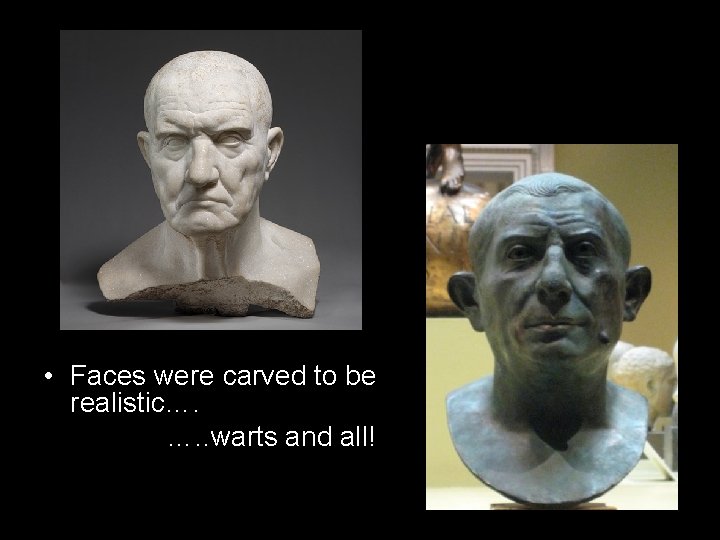
• Faces were carved to be realistic…. …. . warts and all!
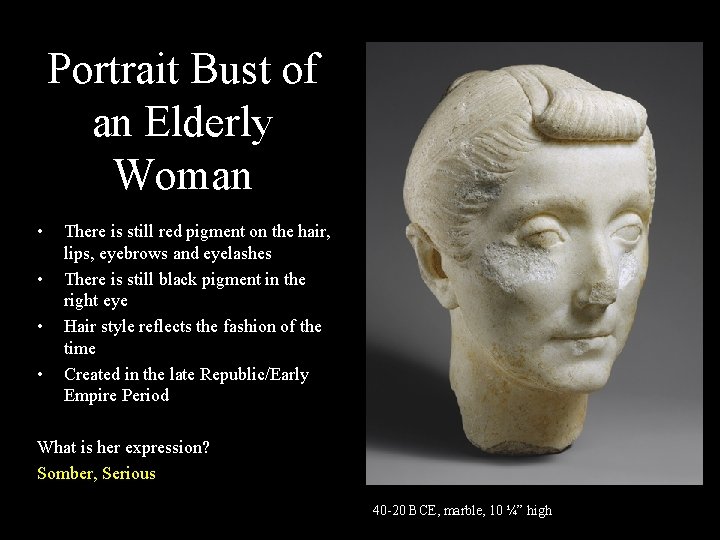
Portrait Bust of an Elderly Woman • • There is still red pigment on the hair, lips, eyebrows and eyelashes There is still black pigment in the right eye Hair style reflects the fashion of the time Created in the late Republic/Early Empire Period What is her expression? Somber, Serious 40 -20 BCE, marble, 10 ¼” high
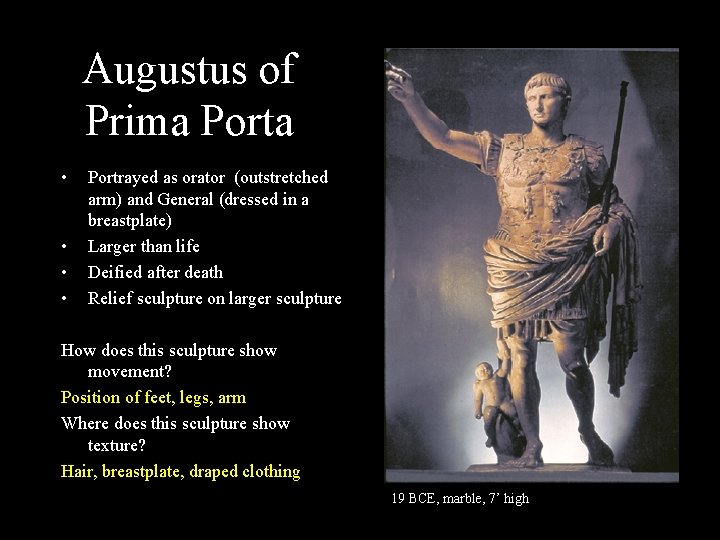
Augustus of Prima Porta • • Portrayed as orator (outstretched arm) and General (dressed in a breastplate) Larger than life Deified after death Relief sculpture on larger sculpture How does this sculpture show movement? Position of feet, legs, arm Where does this sculpture show texture? Hair, breastplate, draped clothing 19 BCE, marble, 7’ high
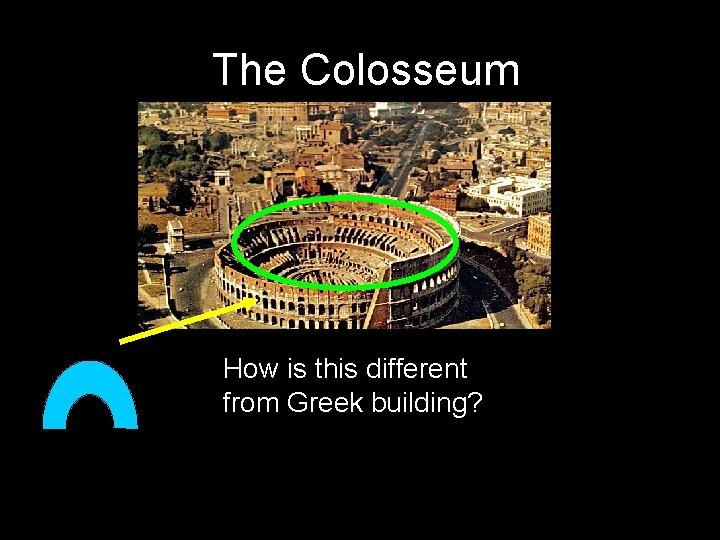
The Colosseum How is this different from Greek building?
The Colosseum • Romans were excellent planners and engineers • Two main contributions to architecture: – Cement – Arch • Colosseum covers 6 acres • Seating capacity 50, 000 • Still one of the largest single buildings in the world
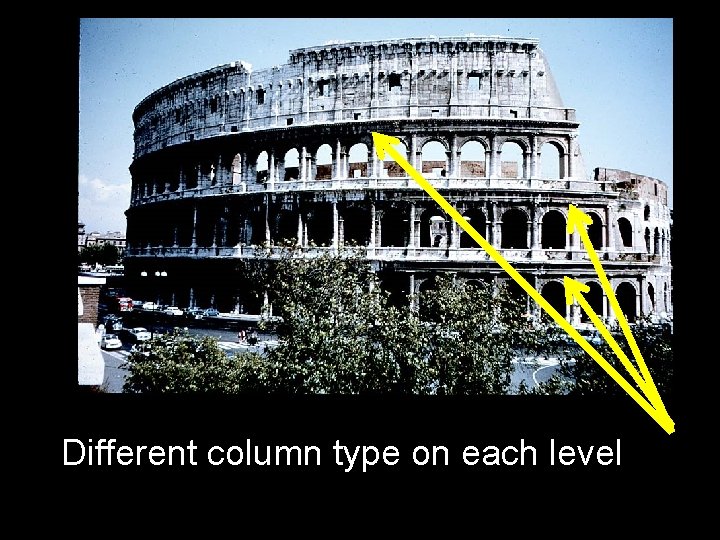
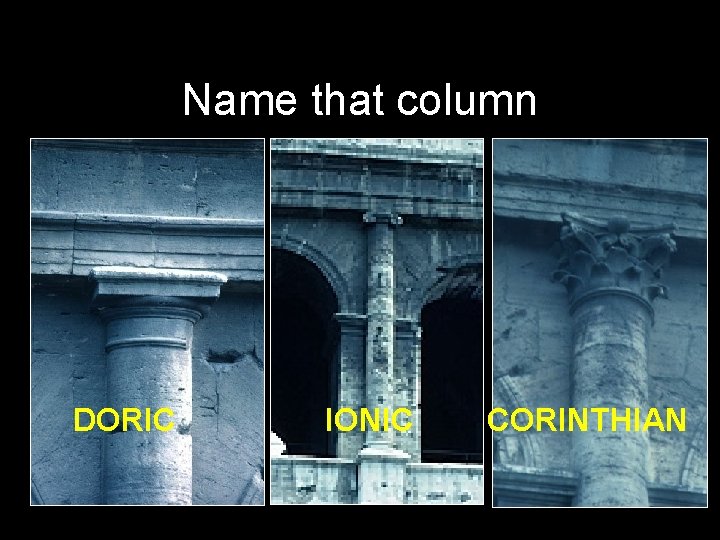
Colosseum Exterior • Large masses of stone from Colosseum used to construct new buildings • Stopped around 1032 • Four levels • Lower three – different Greek column • Decorative only – do not support walls
Different column type on each level
Name that column DORIC IONIC CORINTHIAN
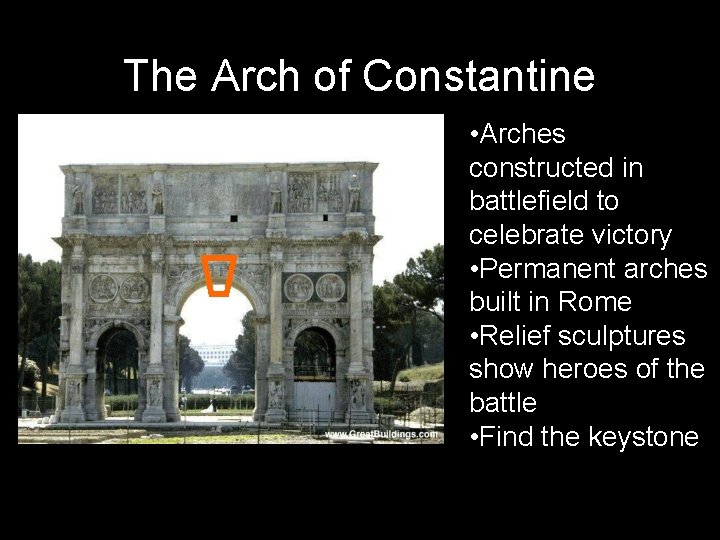
The Arch of Constantine • Arches constructed in battlefield to celebrate victory • Permanent arches built in Rome • Relief sculptures show heroes of the battle • Find the keystone
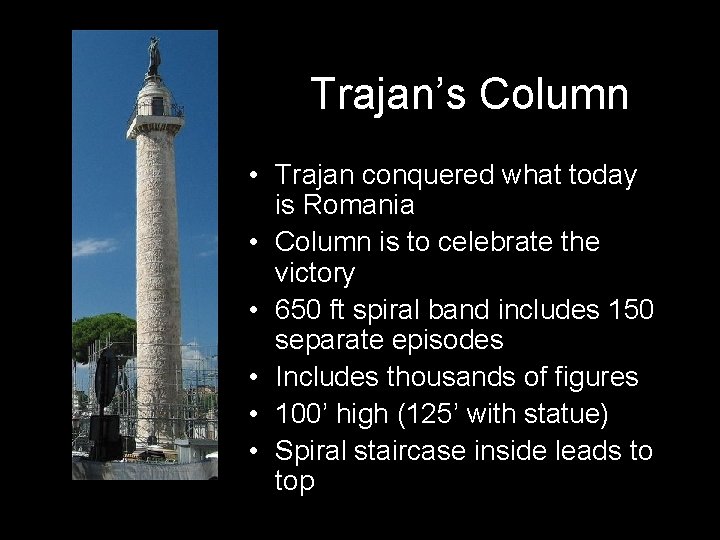
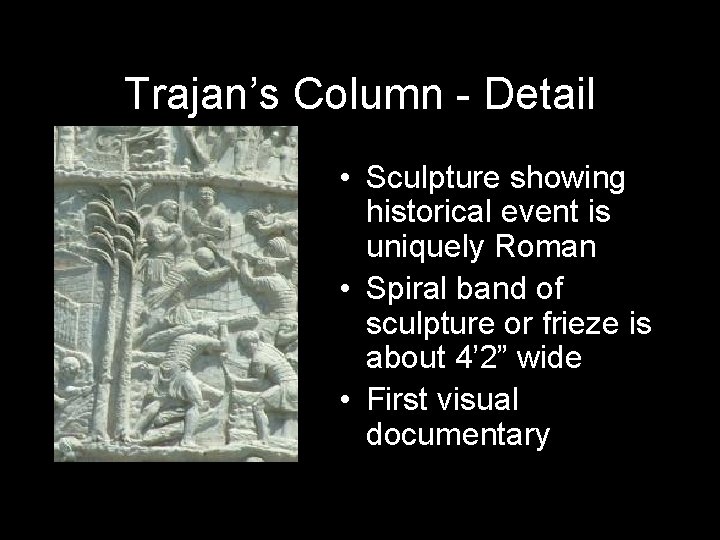
Trajan’s Column • Trajan conquered what today is Romania • Column is to celebrate the victory • 650 ft spiral band includes 150 separate episodes • Includes thousands of figures • 100’ high (125’ with statue) • Spiral staircase inside leads to top
Trajan’s Column - Detail • Sculpture showing historical event is uniquely Roman • Spiral band of sculpture or frieze is about 4’ 2” wide • First visual documentary
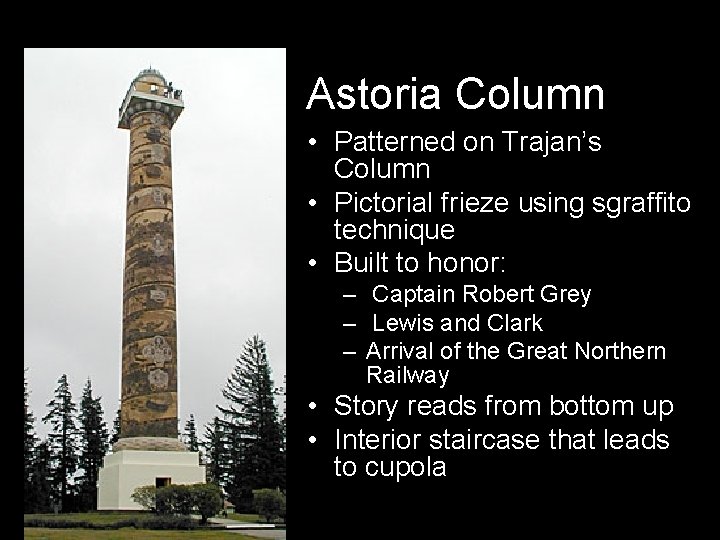
Astoria Column • Patterned on Trajan’s Column • Pictorial frieze using sgraffito technique • Built to honor: – Captain Robert Grey – Lewis and Clark – Arrival of the Great Northern Railway • Story reads from bottom up • Interior staircase that leads to cupola
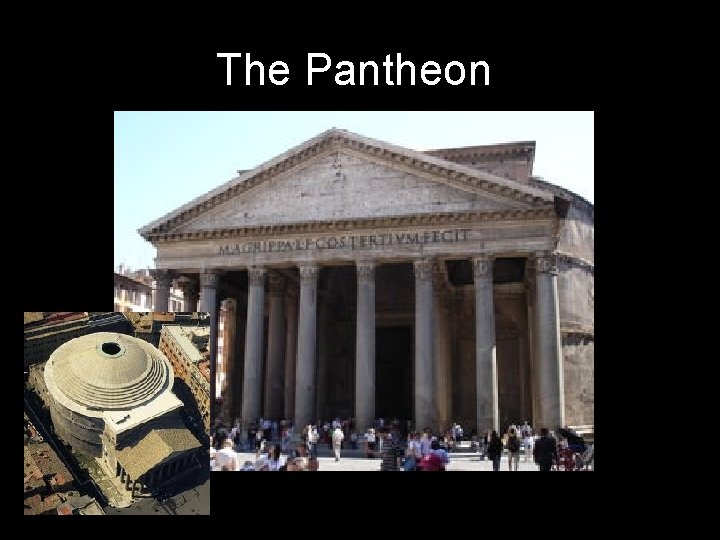
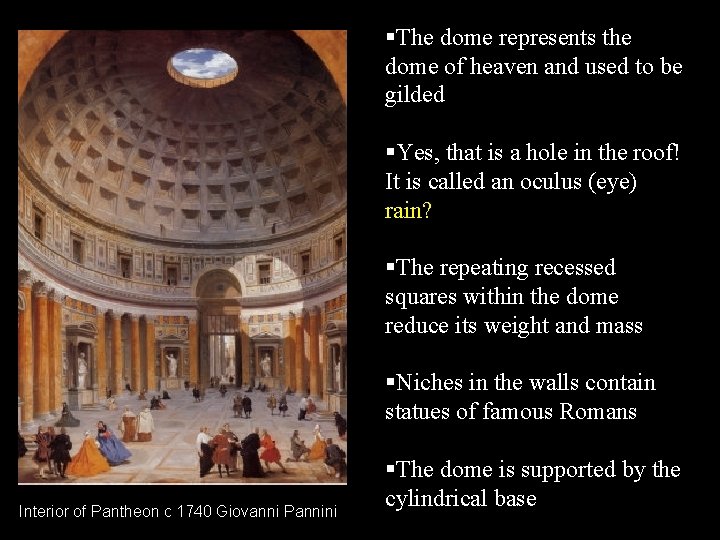
The Pantheon • • • Temple dedicated to all the gods Dome resting on a cylindrical base Both made of poured concrete Walls are 20 feet thick Portico (porch) in front (Greek) Every country in western world has “borrowed” the Pantheon design • Including the United States Capitol
The Pantheon
What kind of columns are these? Who commissioned the Pantheon? Corinthian! Marcus Agrippa
§The dome represents the dome of heaven and used to be gilded §Yes, that is a hole in the roof! It is called an oculus (eye) rain? §The repeating recessed squares within the dome reduce its weight and mass §Niches in the walls contain statues of famous Romans Interior of Pantheon c 1740 Giovanni Pannini §The dome is supported by the cylindrical base
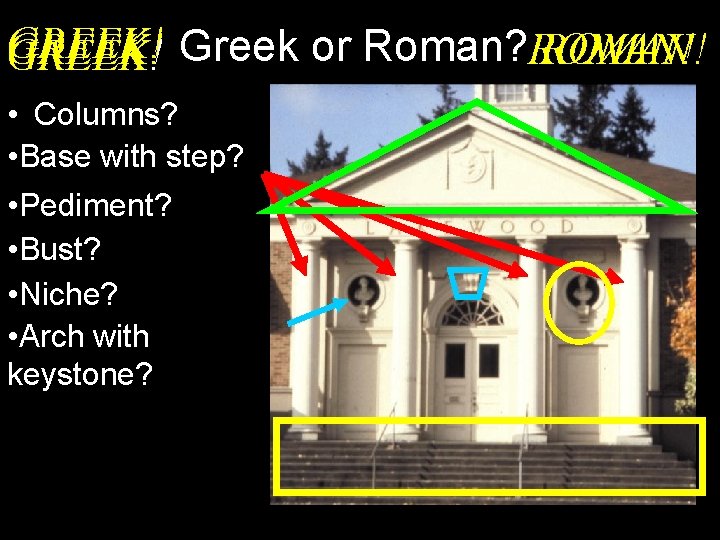
Lakewood Center • Built in 1893 • Rebuilt in 1928 with the current façade
GREEK! ROMAN! GREEK! Greek or Roman? ROMAN! • Columns? • Base with step? • Pediment? • Bust? • Niche? • Arch with keystone?
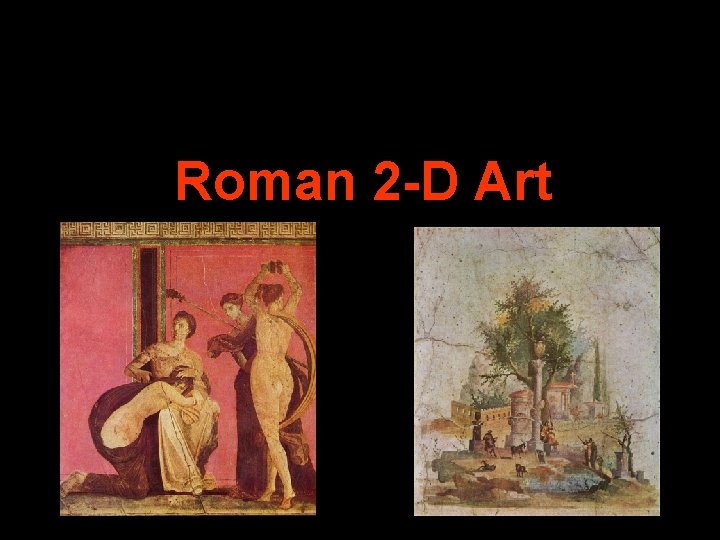
Roman 2 -D Art
• Art in Ancient Rome took on a wider, and sometimes more utilitarian, purpose than Greek art. • Roman culture assimilated many cultures and was for the most part tolerant of the art forms of conquered peoples. • Roman art was commissioned, displayed, and owned in far greater quantities, and adapted to more uses than in Ancient Greece. • Wealthy Romans decorated their walls with art, their home with decorative objects, and themselves with fine jewelry.
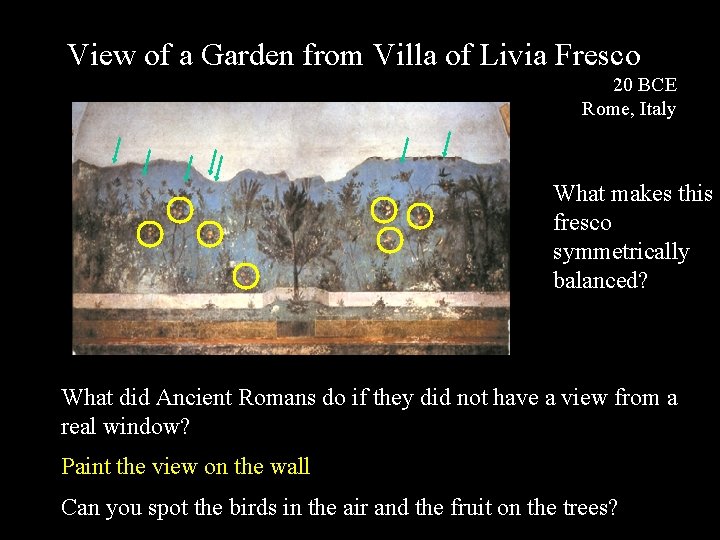
View of a Garden from Villa of Livia Fresco 20 BCE Rome, Italy What makes this fresco symmetrically balanced? What did Ancient Romans do if they did not have a view from a real window? Paint the view on the wall Can you spot the birds in the air and the fruit on the trees?
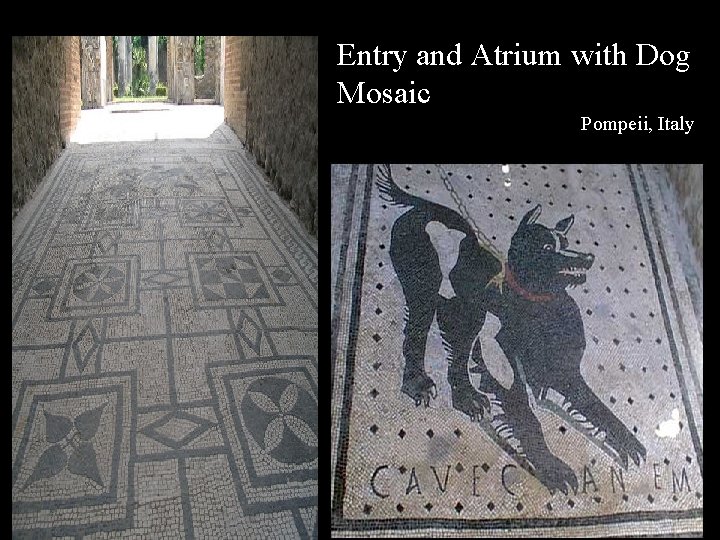
Entry and Atrium with Dog Mosaic Pompeii, Italy
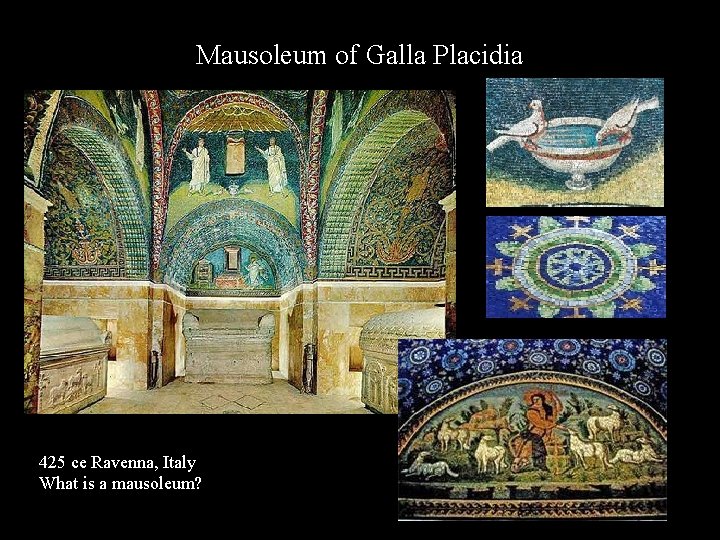
Mausoleum of Galla Placidia 425 ce Ravenna, Italy What is a mausoleum?
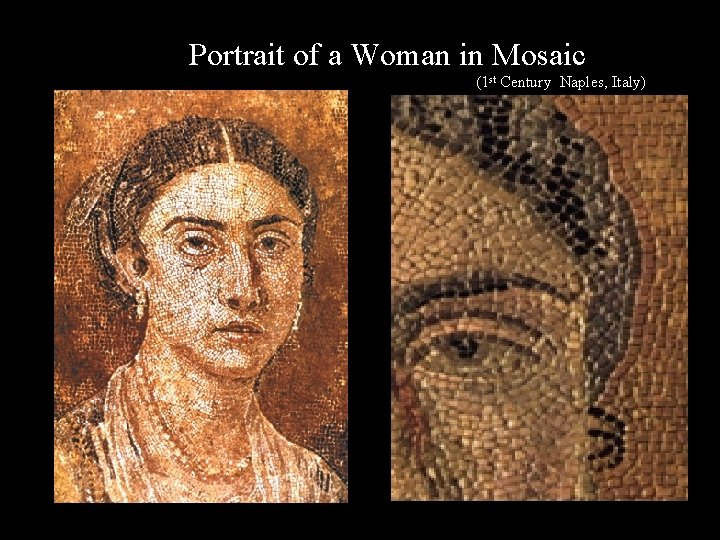
Portrait of a Woman in Mosaic (1 st Century Naples, Italy) §Different colors of mosaic pieces create light and shadow §Pieces in face arranged organically §Pieces in background are arranged geometrically §Notice the Roman style of making portraits realistic
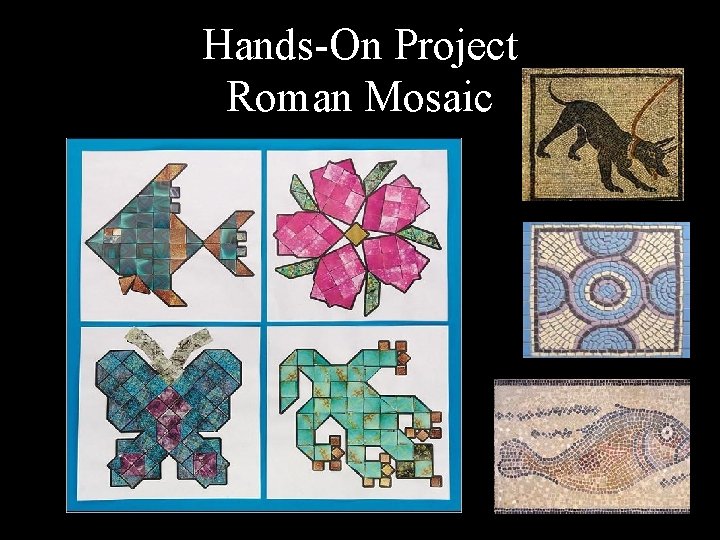
Hands-On Project Roman Mosaic
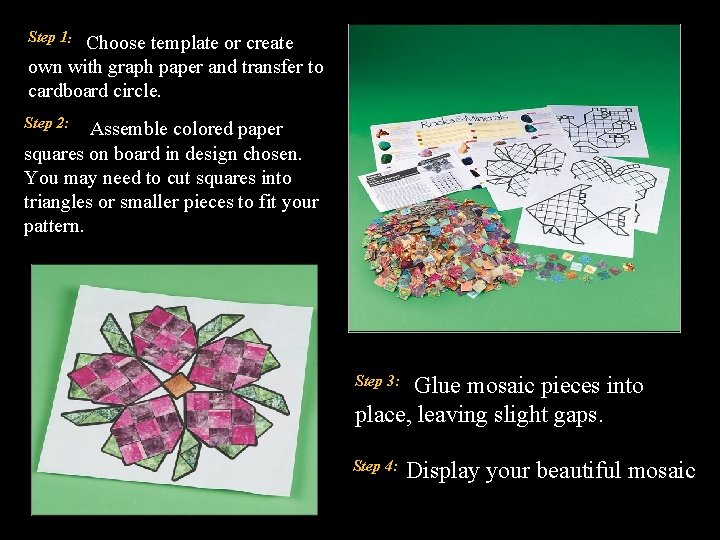
Step 1: Choose template or create own with graph paper and transfer to cardboard circle. Step 2: Assemble colored paper squares on board in design chosen. You may need to cut squares into triangles or smaller pieces to fit your pattern. Glue mosaic pieces into place, leaving slight gaps. Step 3: Step 4: Step 5: Display your beautiful mosaic