
THE ART AND SCIENCE OF INTERPRETING TABLES BACKGROUND
THE ART (AND SCIENCE? ) OF INTERPRETING TABLES
BACKGROUND READINGS • Pollock, Essentials, chs. 3 -4
OUTLINE 1. Components of statistical association 2. Cross-tabulation: format; comparing percentages and means 3. The gamma coefficient 4. Multivariate Relationships 5. Spurious, Enhancement, and Specification Relationships
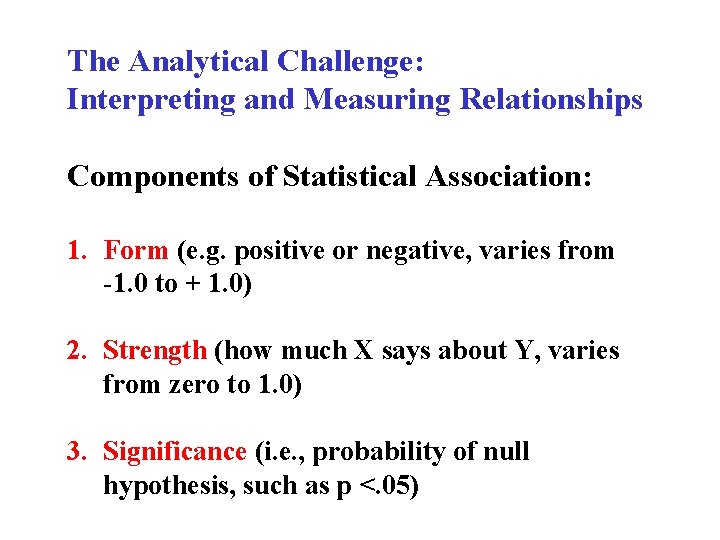
The Analytical Challenge: Interpreting and Measuring Relationships Components of Statistical Association: 1. Form (e. g. positive or negative, varies from -1. 0 to + 1. 0) 2. Strength (how much X says about Y, varies from zero to 1. 0) 3. Significance (i. e. , probability of null hypothesis, such as p <. 05)
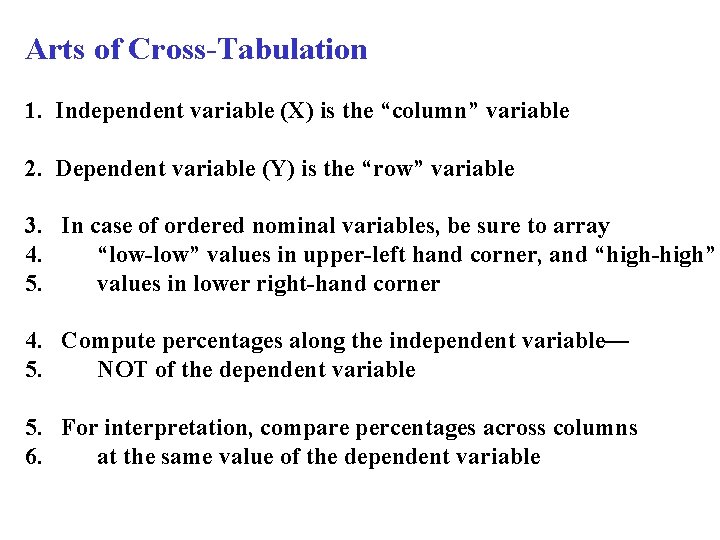
Arts of Cross-Tabulation 1. Independent variable (X) is the “column” variable 2. Dependent variable (Y) is the “row” variable 3. In case of ordered nominal variables, be sure to array 4. “low-low” values in upper-left hand corner, and “high-high” 5. values in lower right-hand corner 4. Compute percentages along the independent variable— 5. NOT of the dependent variable 5. For interpretation, compare percentages across columns 6. at the same value of the dependent variable

On Setting Up Tables _____Y_____ Low Medium High ______X_____ Low Medium High (LL) (MM) (HH)
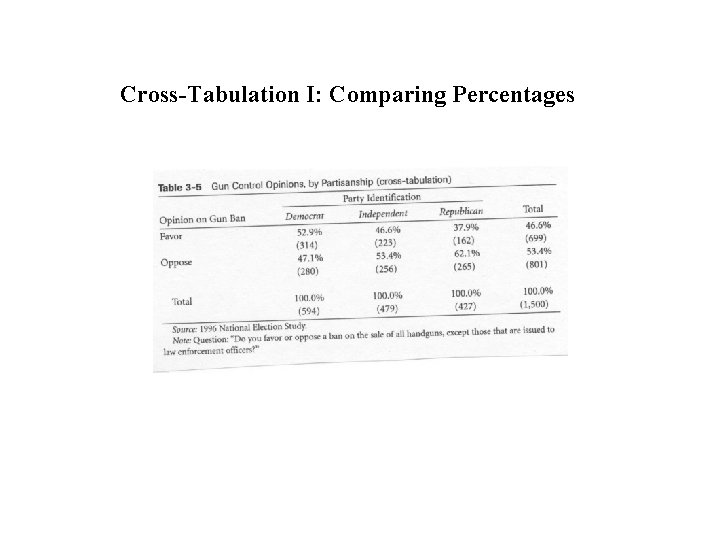
Cross-Tabulation I: Comparing Percentages
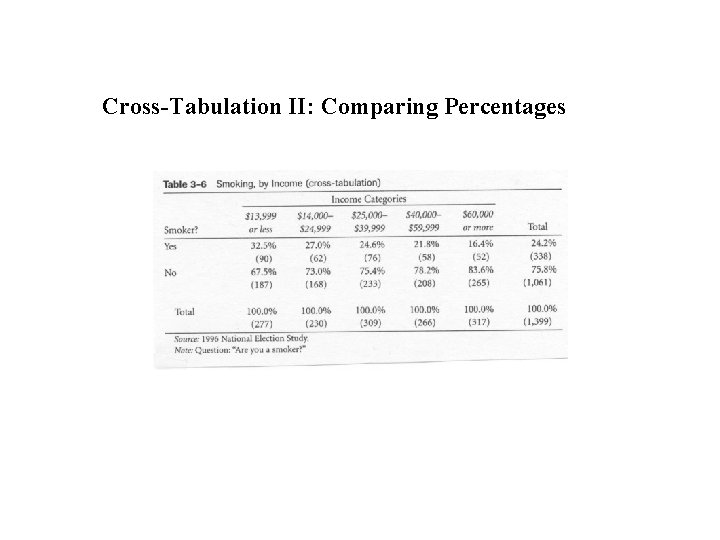
Cross-Tabulation II: Comparing Percentages
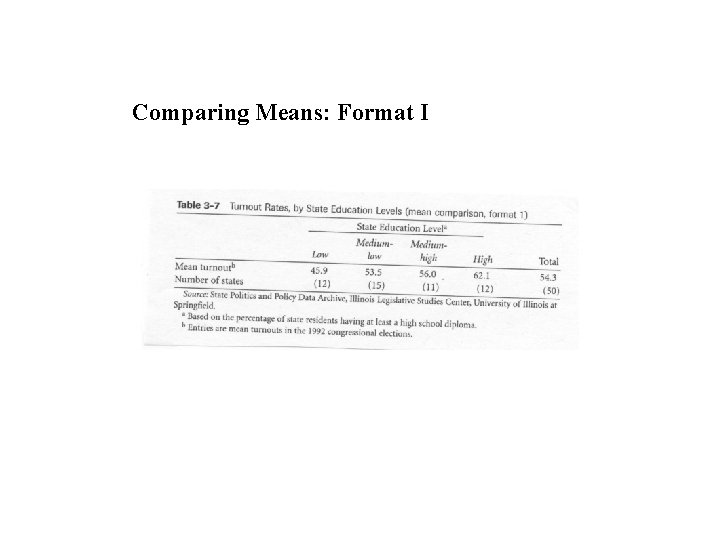
Comparing Means: Format I
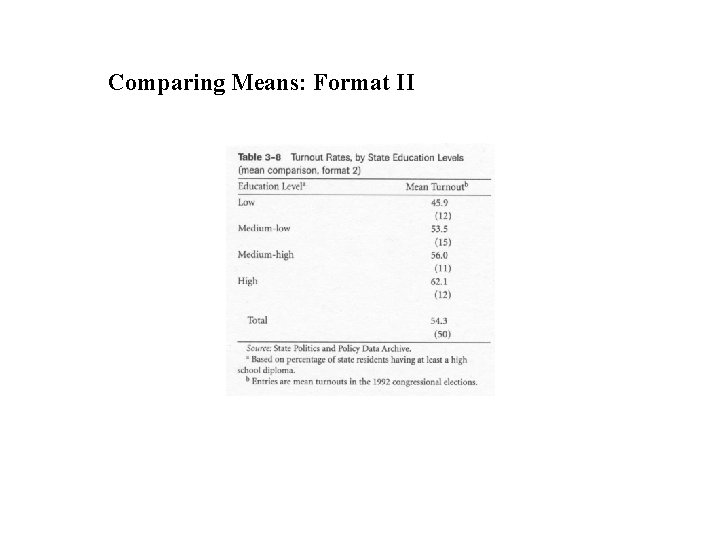
Comparing Means: Format II
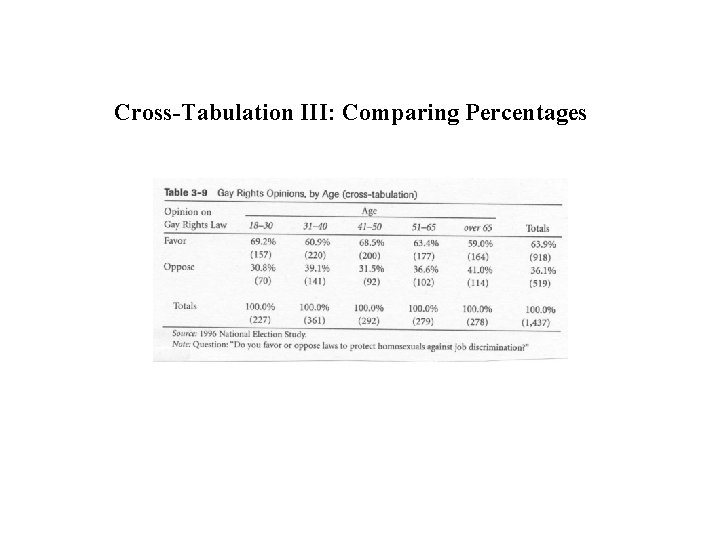
Cross-Tabulation III: Comparing Percentages
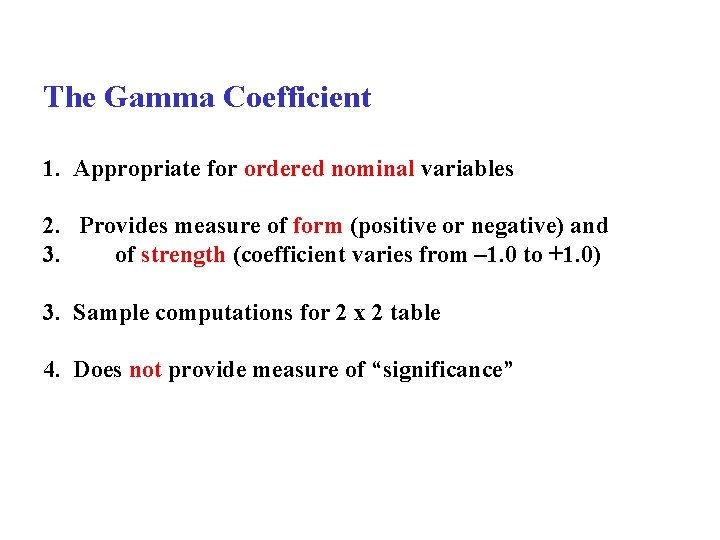
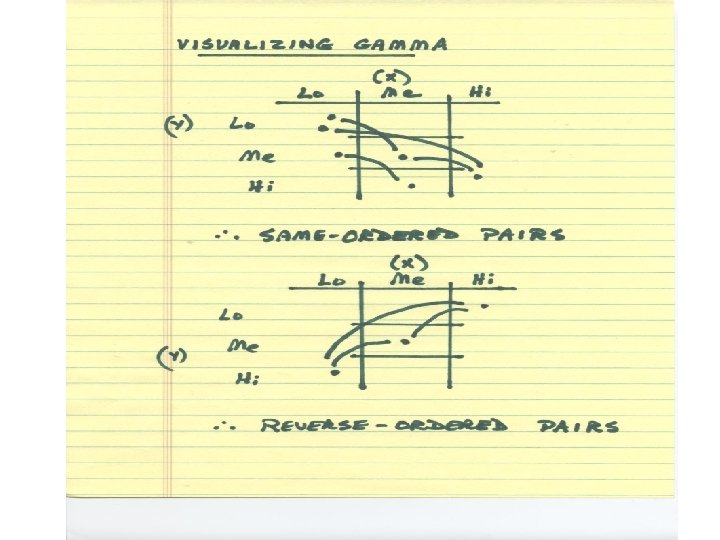
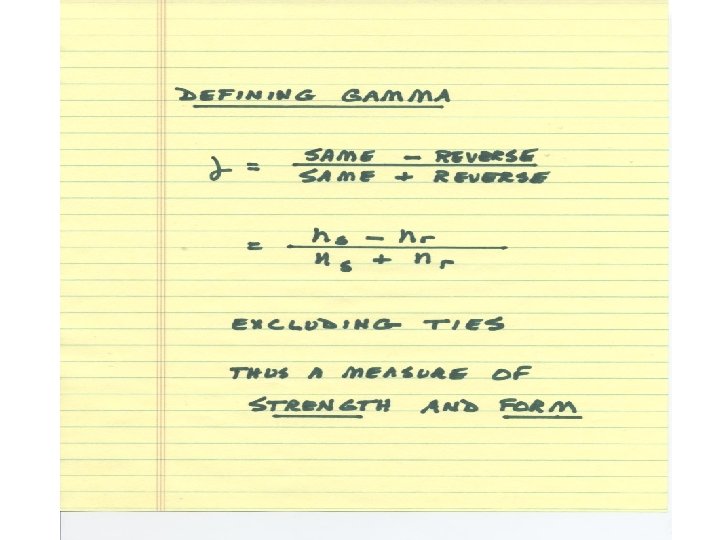
The Gamma Coefficient 1. Appropriate for ordered nominal variables 2. Provides measure of form (positive or negative) and 3. of strength (coefficient varies from – 1. 0 to +1. 0) 3. Sample computations for 2 x 2 table 4. Does not provide measure of “significance”
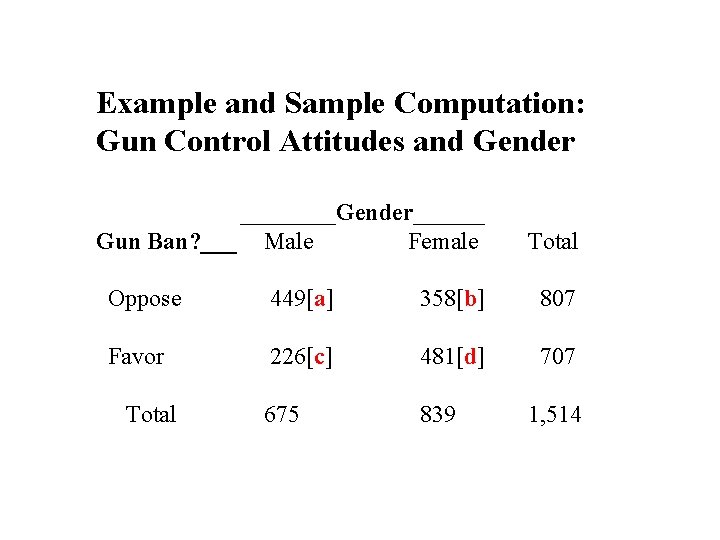
Example and Sample Computation: Gun Control Attitudes and Gender ____Gender______ Gun Ban? ___ Male Female Total Oppose 449[a] 358[b] 807 Favor 226[c] 481[d] 707 675 839 Total 1, 514
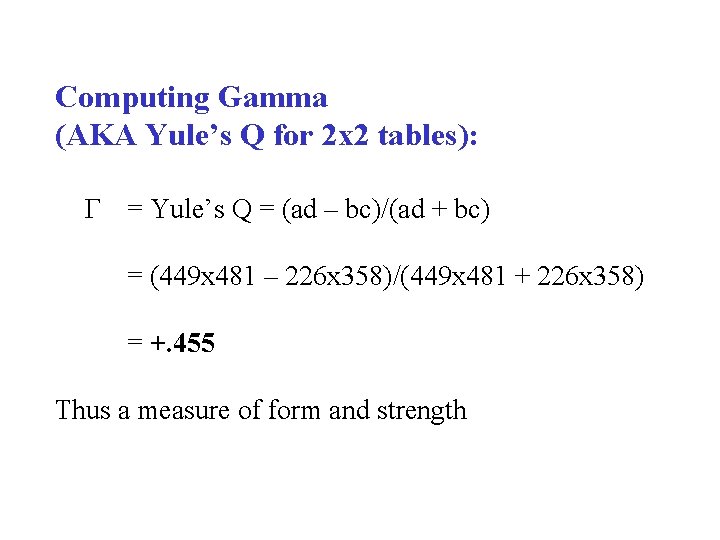
Computing Gamma (AKA Yule’s Q for 2 x 2 tables): Γ = Yule’s Q = (ad – bc)/(ad + bc) = (449 x 481 – 226 x 358)/(449 x 481 + 226 x 358) = +. 455 Thus a measure of form and strength
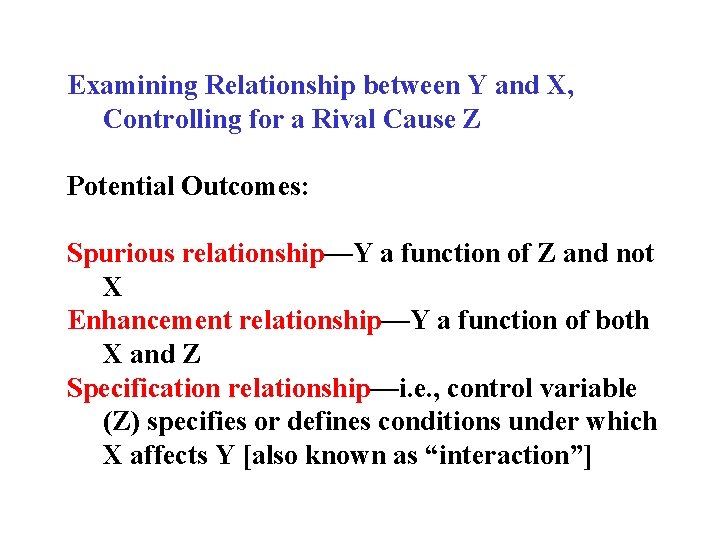
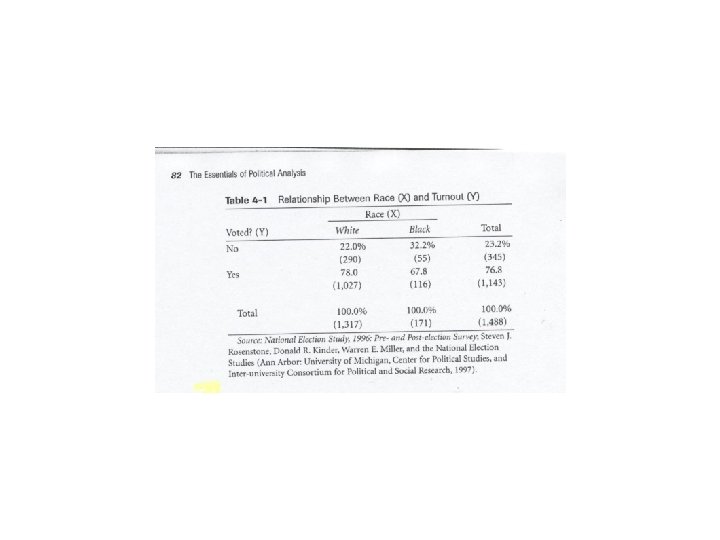
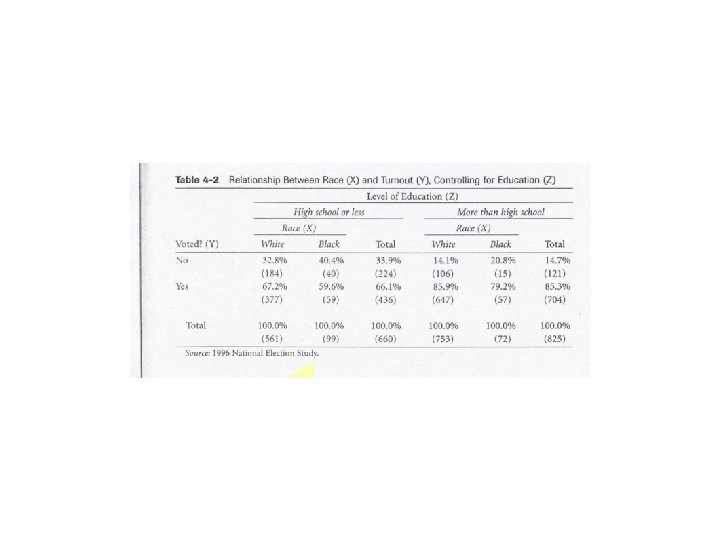
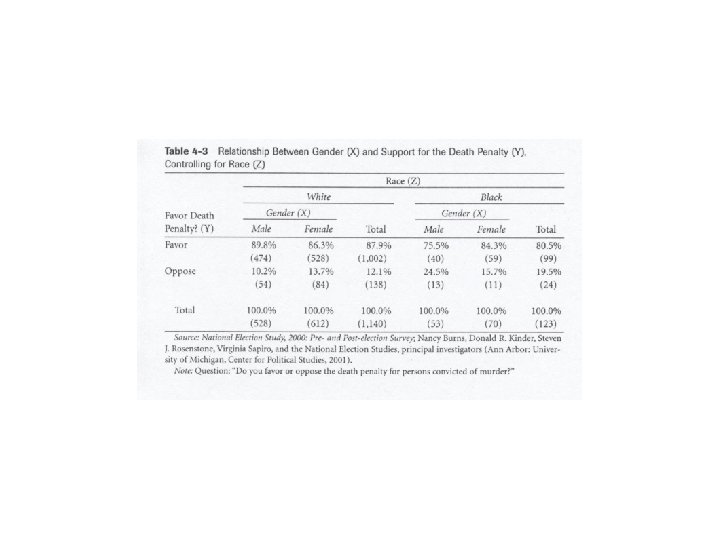
MULTIVARIATE RELATIONSHIPS • The “How Else” Question • Spurious, Enhancement, and Specification Relationships (a. k. a. “Interaction”) • Example 1: Race, Education, and Turnout • Example 2: Gender, Race, and Support for the Death Penalty
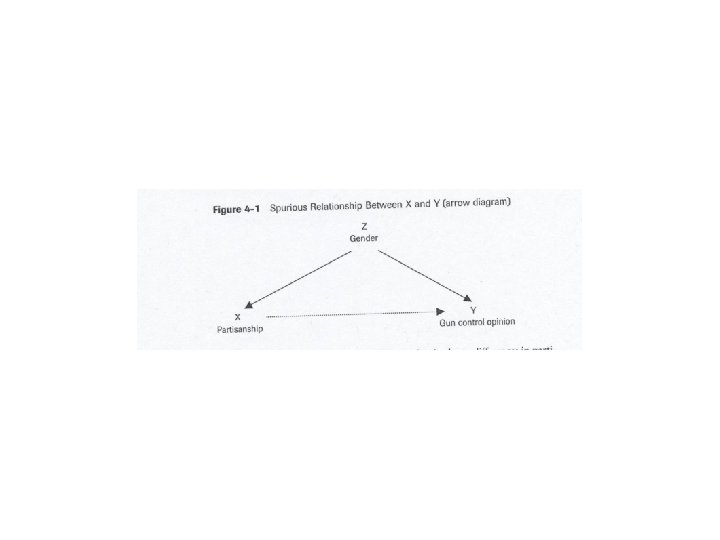
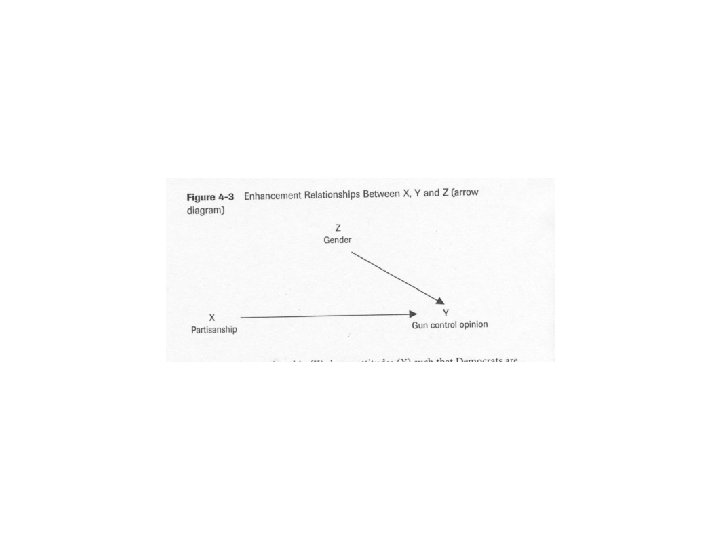
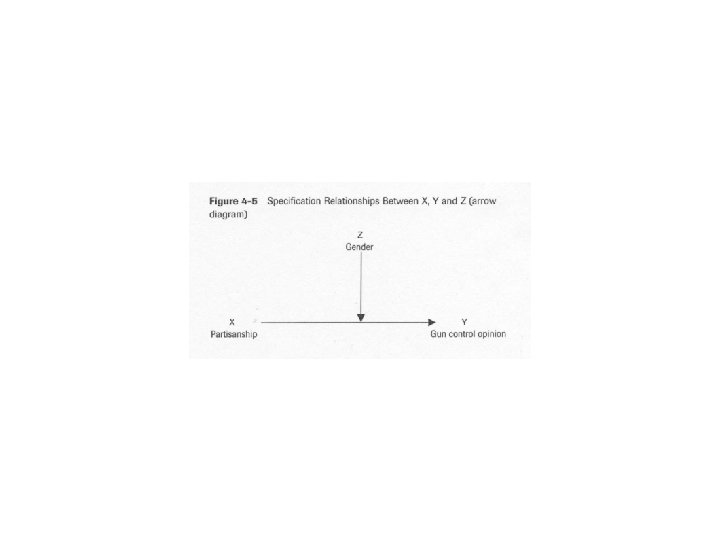
Examining Relationship between Y and X, Controlling for a Rival Cause Z Potential Outcomes: Spurious relationship—Y a function of Z and not X Enhancement relationship—Y a function of both X and Z Specification relationship—i. e. , control variable (Z) specifies or defines conditions under which X affects Y [also known as “interaction”]
- Slides: 25