
The Arms Race MAD and the Space Race


- Slides: 36
The Arms Race, MAD, and the Space Race IB History of the Americas
Frayer Model: Bell Ringer Mutually Assured Destruction (MAD)
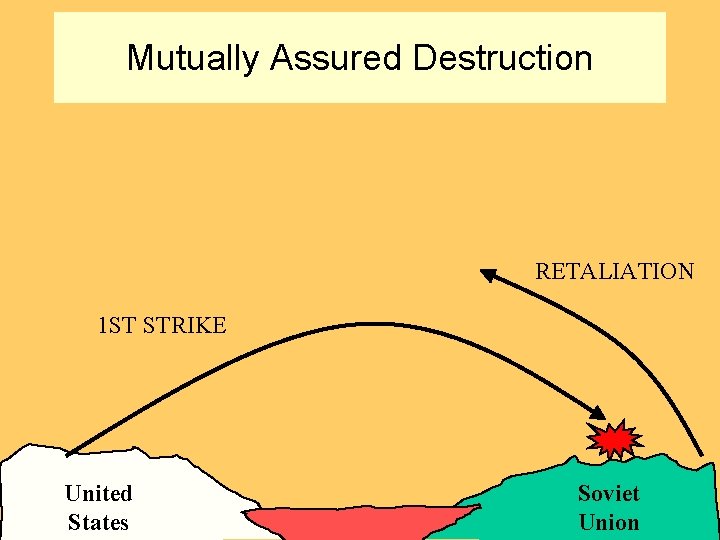
Mutually Assured Destruction RETALIATION 1 ST STRIKE United States Soviet Union
Destructive Capabilities • 1979 estimates by the US Office of Technology Assessment – One small nuclear weapon exploded over Detroit or Leningrad would kill 400, 000 people immediately – Full-scale nuclear would kill over 100 million Americans and 75 million Soviets within 30 days • The American deaths alone would approximately equal the 9/11 terrorist attacks every day for 55 years.
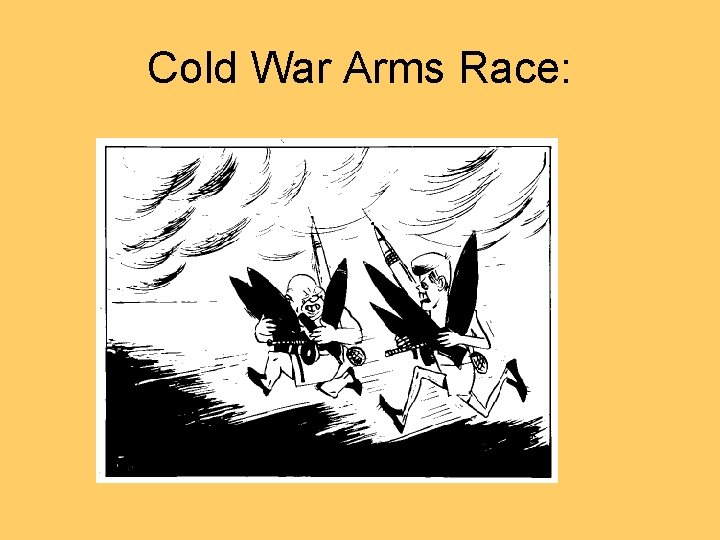
Cold War Arms Race:
Cold War Arms Race: • “You cannot simultaneously prevent and prepare for war. " --Albert Einstein
Cold War Arms Race: • "I know not with what weapons World War III will be fought, but World War IV will be fought with sticks and stones. " -- Albert Einstein
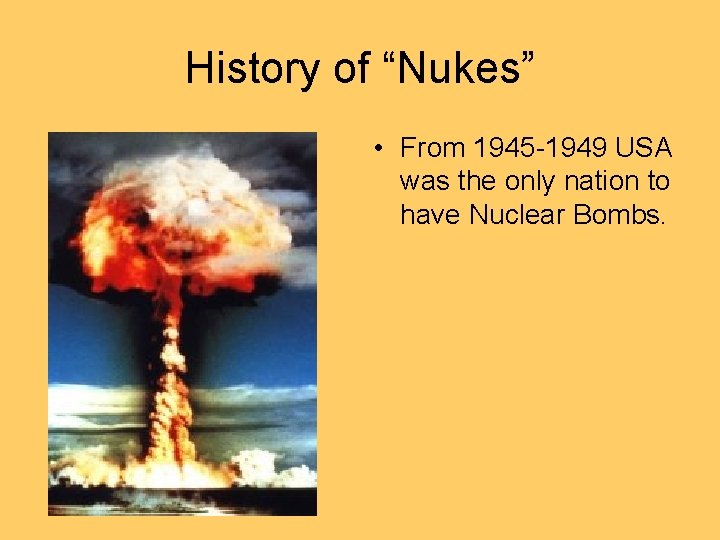
History of “Nukes” • From 1945 -1949 USA was the only nation to have Nuclear Bombs.
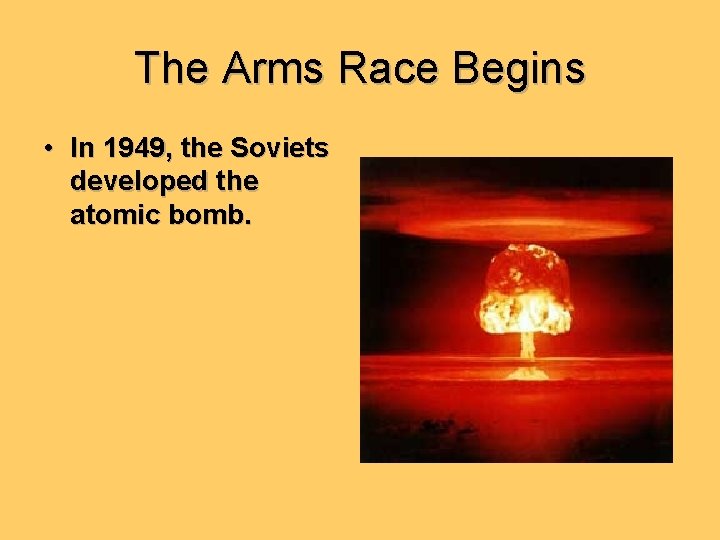
The Arms Race Begins • In 1949, the Soviets developed the atomic bomb.
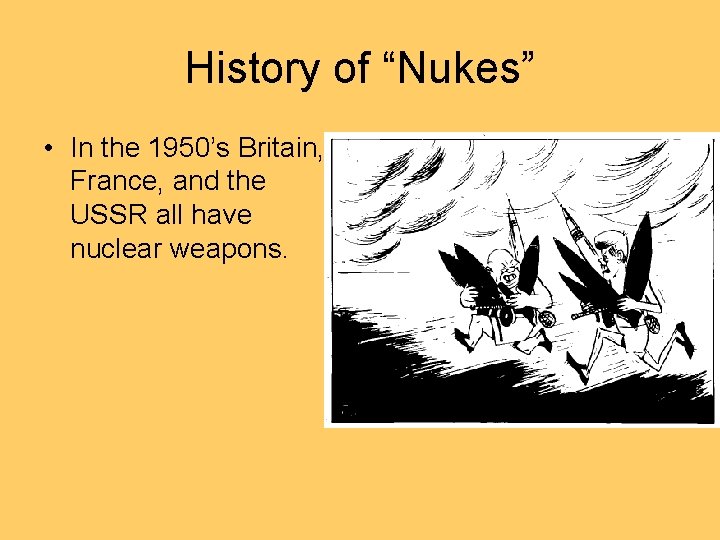
History of “Nukes” • In the 1950’s Britain, France, and the USSR all have nuclear weapons.
Nuclear Holocaust • World leaders realize the clash between the superpowers could destroy mankind.
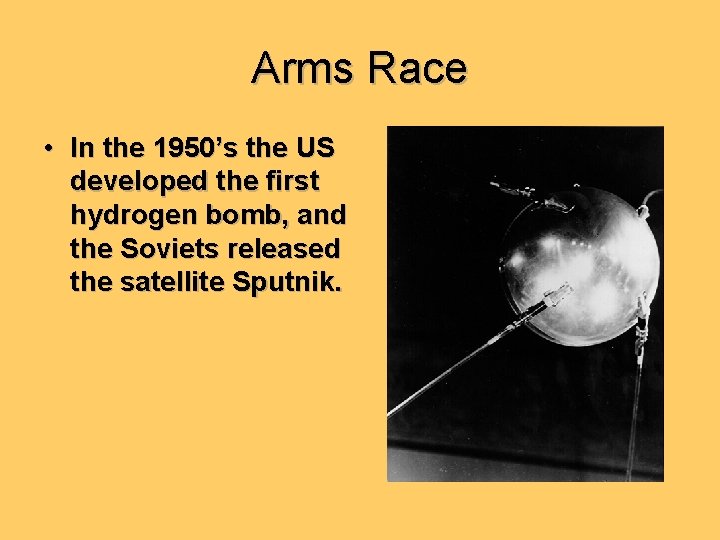
Arms Race • In the 1950’s the US developed the first hydrogen bomb, and the Soviets released the satellite Sputnik.
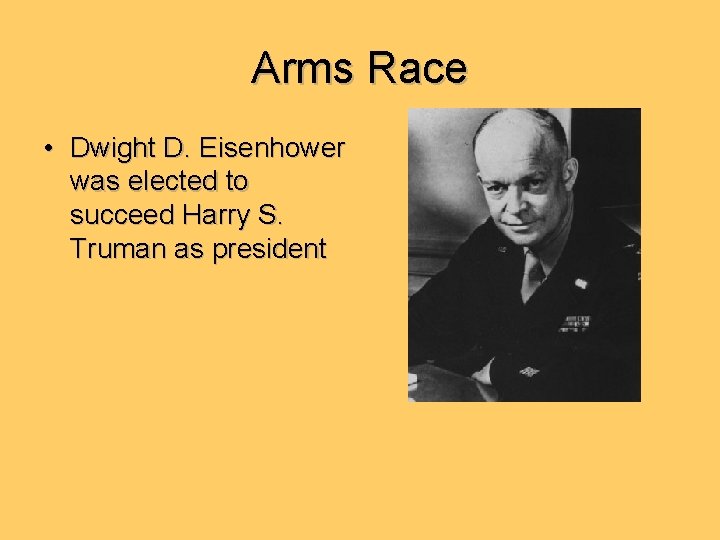
Arms Race • Dwight D. Eisenhower was elected to succeed Harry S. Truman as president
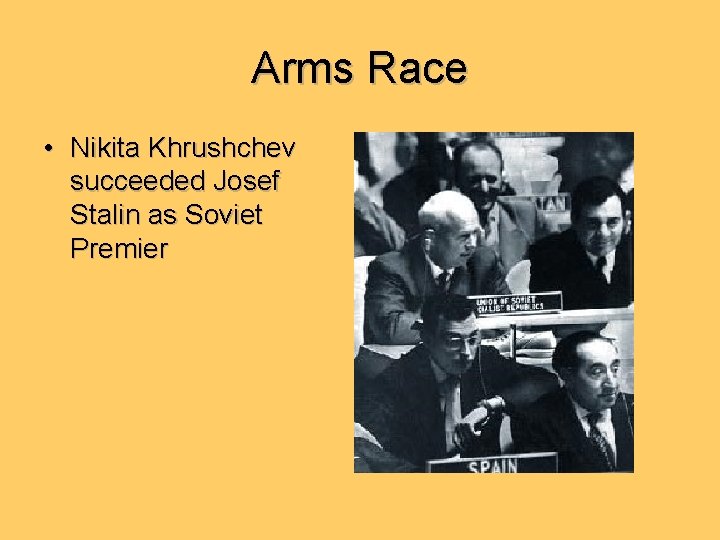
Arms Race • Nikita Khrushchev succeeded Josef Stalin as Soviet Premier
Arms race • In 1957, the launch of the satellite Sputnik into space drastically changes the arms race
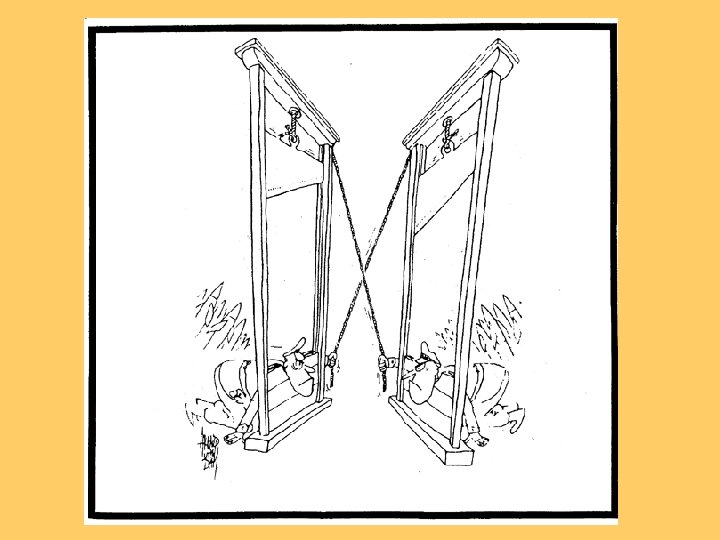
The arms race begins…. • Both countries began developing their weapons so as to be able to ‘outgun’ their opponents. This meant: • developing more powerful weapons • Having more of one weapon than the other side • WHY NUCLEAR WEAPONS? • Cheaper than having a large army • They were a deterrent. The idea was to have so many missiles that they could not all be destroyed. If one side attacked then it knew that the other could retaliate. This was known as MAD – MUTUAL ASSURED DESTRUCTION. • For some the Arms Race was a test of the strengths of Capitalism v communism
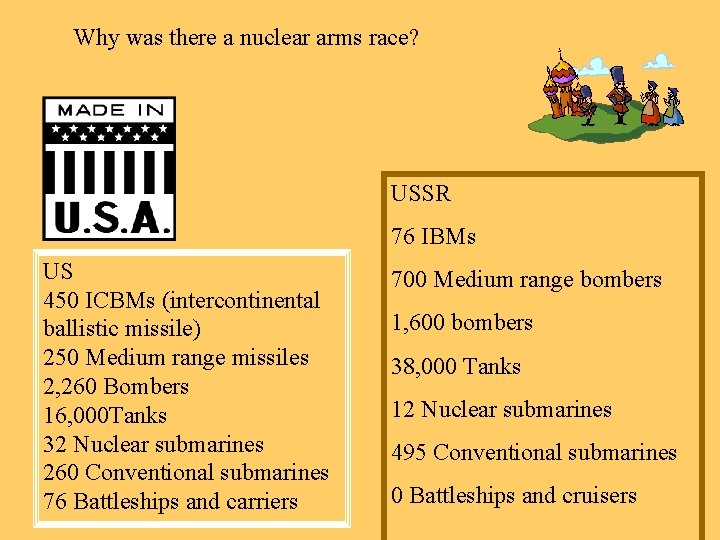
Why was there a nuclear arms race? USSR 76 IBMs US 450 ICBMs (intercontinental ballistic missile) 250 Medium range missiles 2, 260 Bombers 16, 000 Tanks 32 Nuclear submarines 260 Conventional submarines 76 Battleships and carriers 700 Medium range bombers 1, 600 bombers 38, 000 Tanks 12 Nuclear submarines 495 Conventional submarines 0 Battleships and cruisers
THE SPACE RACE
What was the space race? • The space race was a race between the United States and the Soviet Union to explore outer space. • Many Americans felt that it would be dangerous to lose this race. • They realized that if the Soviets could work or travel in space, they could easily spy on or attack the United States.
The serious side was…. • That a rocket that could launch a satellite could also launch a nuclear warhead at a target. • So space developments led to rapid advances in nuclear weapons. • By 1960 each side had the nuclear capability to destroy the earth • In 1961 Yuri Gagarin, a Soviet cosmonaut was the first man to orbit the earth – the Soviets had the lead. For Khrushchev it wa a triumph for communism
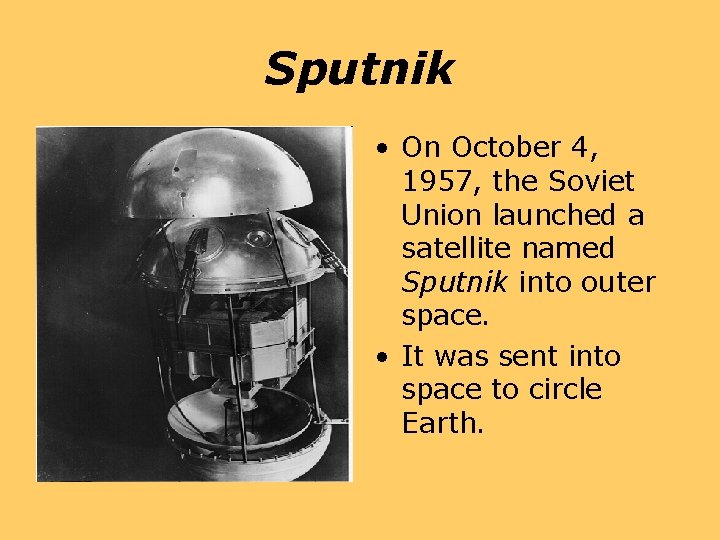
Sputnik • On October 4, 1957, the Soviet Union launched a satellite named Sputnik into outer space. • It was sent into space to circle Earth.
Khrushchev said ‘ The Sputniks prove that communism has won the competition between communist and capitalist countries. The economy, science, culture and the creative genius of people in all areas of life develop better and faster under communism. ’
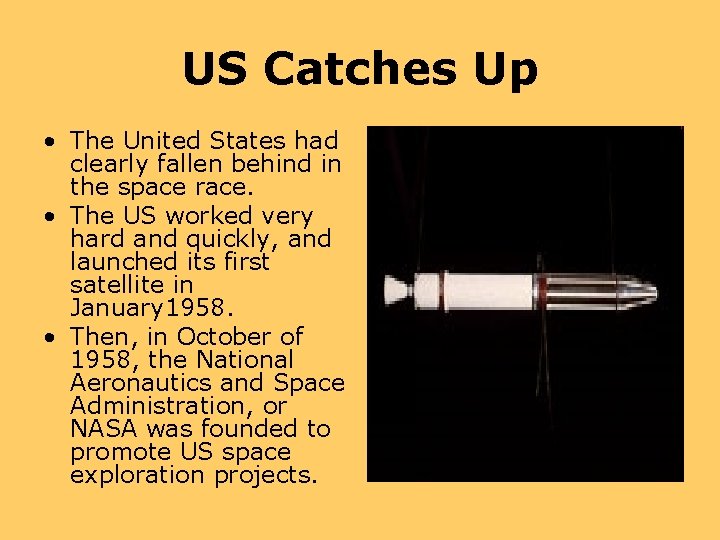
US Catches Up • The United States had clearly fallen behind in the space race. • The US worked very hard and quickly, and launched its first satellite in January 1958. • Then, in October of 1958, the National Aeronautics and Space Administration, or NASA was founded to promote US space exploration projects.
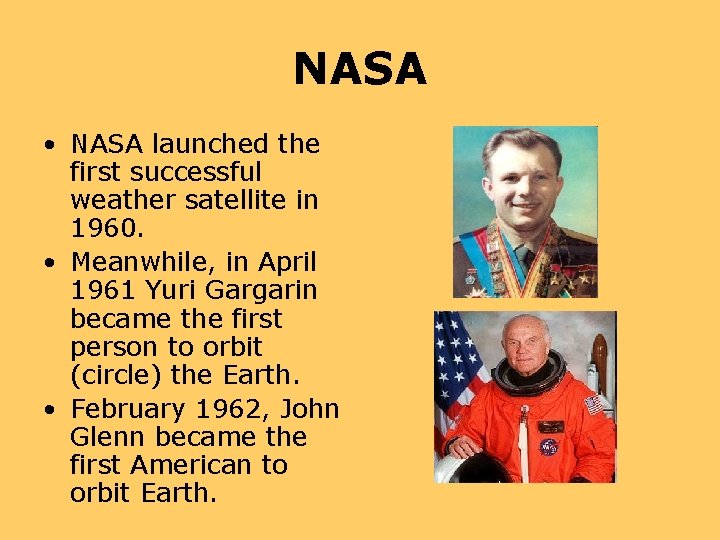
NASA • NASA launched the first successful weather satellite in 1960. • Meanwhile, in April 1961 Yuri Gargarin became the first person to orbit (circle) the Earth. • February 1962, John Glenn became the first American to orbit Earth.
President Kennedy’s Address • On 21 May, 1961 President Kennedy made a famous speech in which he announced an ambitious plan to put a man on the moon by the end of the decade – The Apollo Program was launched https: //www. youtube. com/watch? v=kw. Fv. Jog 2 d. Mw
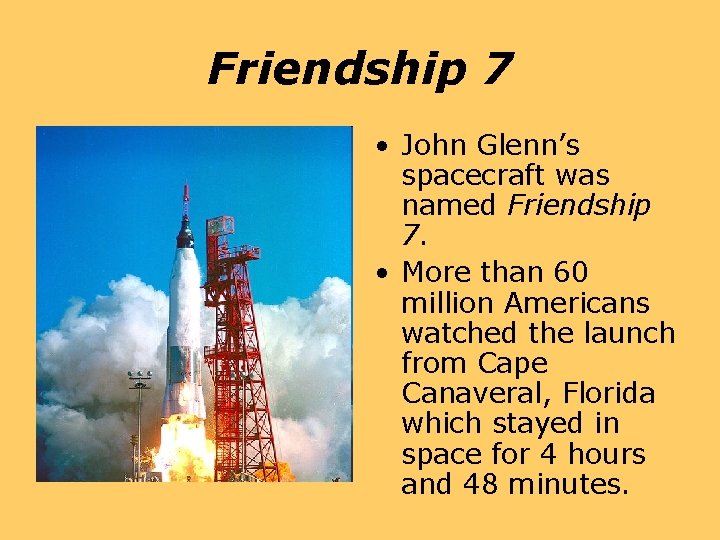
Friendship 7 • John Glenn’s spacecraft was named Friendship 7. • More than 60 million Americans watched the launch from Cape Canaveral, Florida which stayed in space for 4 hours and 48 minutes.
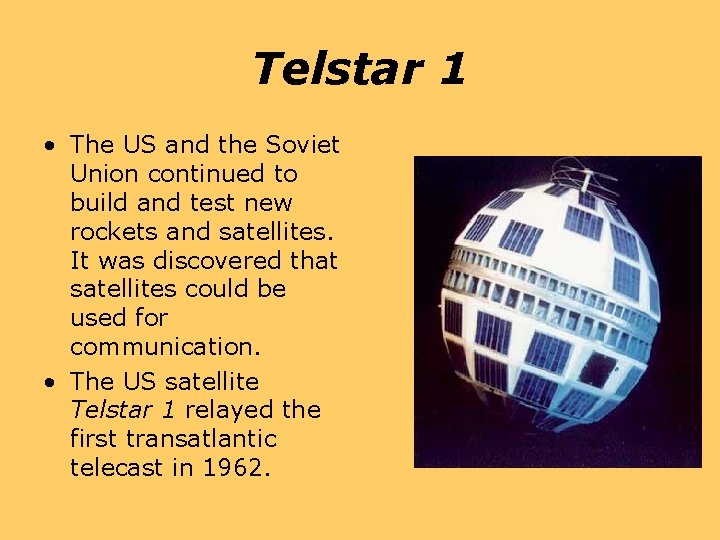
Telstar 1 • The US and the Soviet Union continued to build and test new rockets and satellites. It was discovered that satellites could be used for communication. • The US satellite Telstar 1 relayed the first transatlantic telecast in 1962.
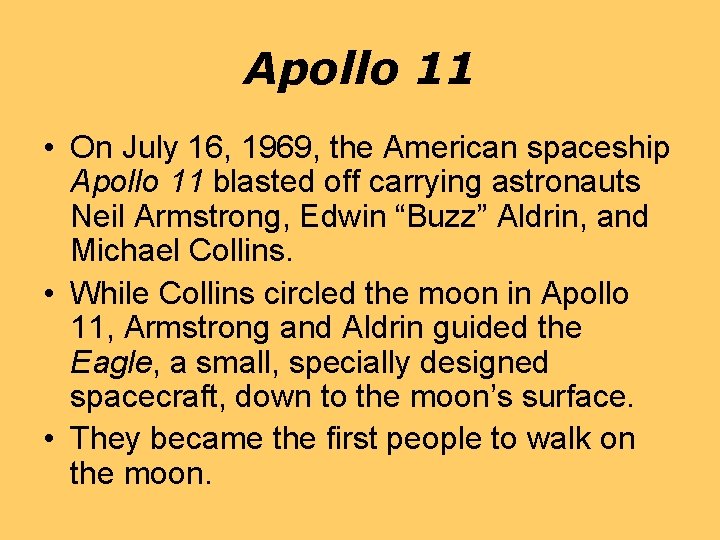
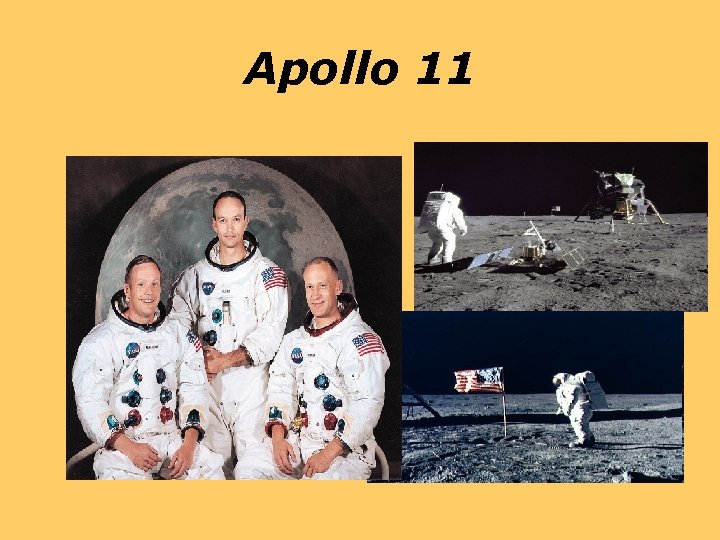
Apollo 11 • On July 16, 1969, the American spaceship Apollo 11 blasted off carrying astronauts Neil Armstrong, Edwin “Buzz” Aldrin, and Michael Collins. • While Collins circled the moon in Apollo 11, Armstrong and Aldrin guided the Eagle, a small, specially designed spacecraft, down to the moon’s surface. • They became the first people to walk on the moon.
Apollo 11
US Takes the Lead • With the success of Apollo 11, the United States had taken the lead in the space race. • The space race continued until the collapse of the Soviet Union, but space exploration continues today. • The International Space Station is an orbiting station on which American and astronauts from former Soviet countries now explore space as friends.
The failure of disarmament • Both sides hoped for arms reductions to cut defence spending • After Stalin’s death East-West relations had improved • USSR proposed: – reduction of armed forces – Eventual abolition of atomic weapons – International inspections to supervise this
The USA…. • Wanted strong inspection system • Proposed ‘open skies’ – openly photograph each others sites from planes • USSR rejected this • USA rejected initial USSR proposals • Stalemate
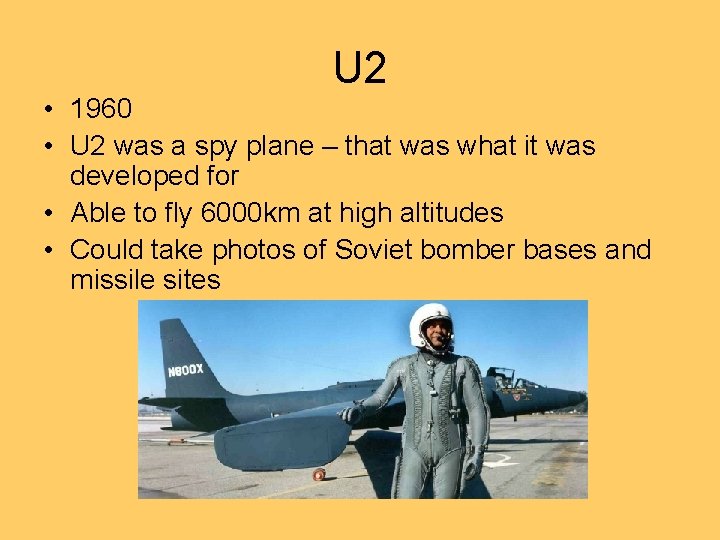
U 2 • 1960 • U 2 was a spy plane – that was what it was developed for • Able to fly 6000 km at high altitudes • Could take photos of Soviet bomber bases and missile sites
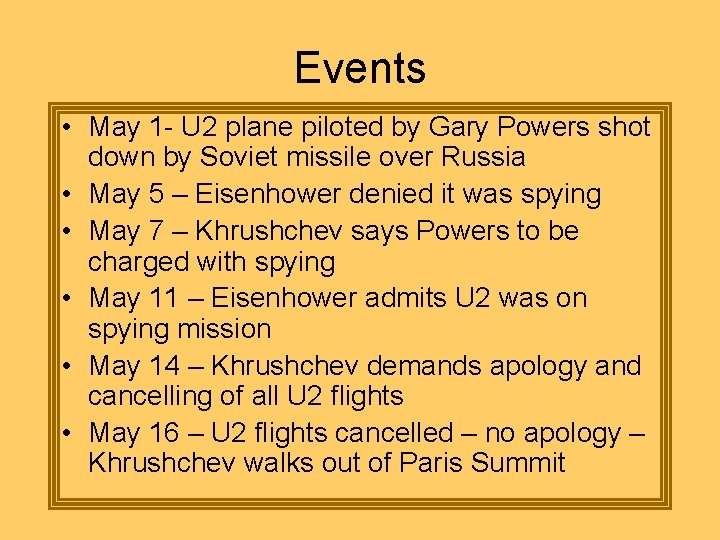
Events • May 1 - U 2 plane piloted by Gary Powers shot down by Soviet missile over Russia • May 5 – Eisenhower denied it was spying • May 7 – Khrushchev says Powers to be charged with spying • May 11 – Eisenhower admits U 2 was on spying mission • May 14 – Khrushchev demands apology and cancelling of all U 2 flights • May 16 – U 2 flights cancelled – no apology – Khrushchev walks out of Paris Summit
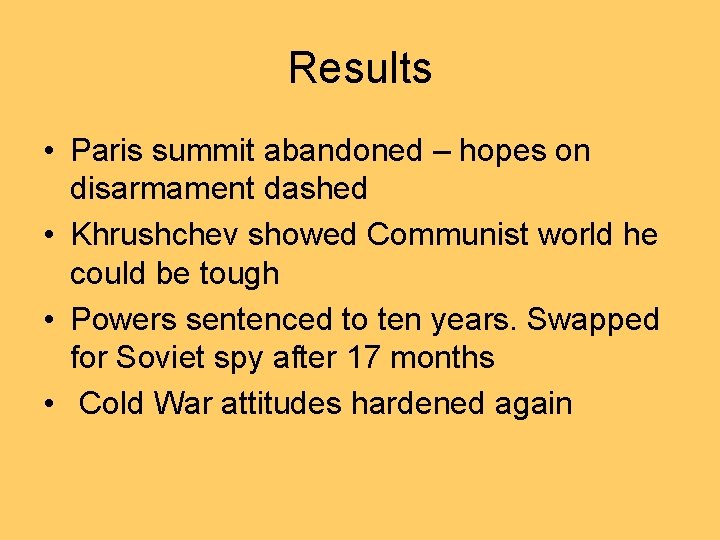
Results • Paris summit abandoned – hopes on disarmament dashed • Khrushchev showed Communist world he could be tough • Powers sentenced to ten years. Swapped for Soviet spy after 17 months • Cold War attitudes hardened again