
The Architecture of Sleep n What is consciousness

- Slides: 54
The Architecture of Sleep n What is consciousness, and how does it function? n Why do we sleep – 3 theories n What is biological rhythm of our sleep? n How does sleep loss effect us?
Theories of the Purpose of Sleep Restoration: the body wears out during and sleep is necessary to put it back in shape n Protection: sleep emerged in evolution as an adaptations to preserve energy and protect during the time of day when there is considerable danger. n Growth: During sleep the pituitary gland releases growth hormone. n
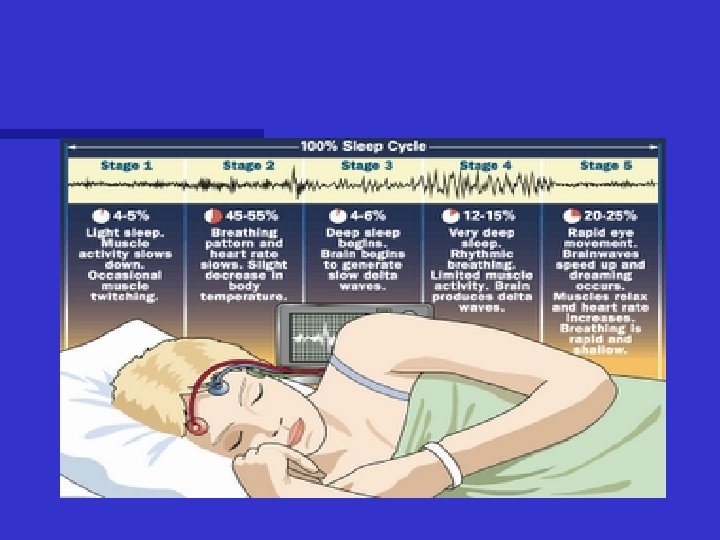
Stages of Sleep Awake and alert through Stage 2 (slide 13) n Stage 3 through REM Sleep (slide 16) n Methods of recording sleep and characteristics of the five stages (stages 1 through 4, or non -REM [NREM] and REM sleep). The typical EEG patterns are superimposed over the sleeper’s image. n
Sleep Deprivation Site Symptoms of sleep deprivation Common symptoms of sleep deprivation include: • tiredness , irritability, edginess , inability to tolerate stress problems with concentration and memory , behavioral, learning or social problems frequent infections , blurred vision , vague discomfort , alterations in appetite , activity intolerance It must be noted that many of these symptoms can be related to disabling conditions. This overlap of symptoms may make it difficult to determine if they are caused by sleep deprivation or the disability. Some suggestions to help you determine the cause of your sleep deprivation include talking to your health care provider, and keeping a log (that contains signs and symptoms, situations affecting your sleep, medications, diet, etc
Sleep Deprivation Record Breakers Until recently, most sleep research tested the limits of how long people can stay up and the short term effects of sleep deprivation. n Notorious cases of record-setters include disc jockey Peter Tripp who in 1959 stayed up for more than eight days as a promotional stunt. After a few days, he began to hallucinate, seeing kittens, mice, and cobwebs. He also became paranoid, insisting that an electrician had dropped a hot electrode into his shoe. n Six years later, high school student Randy Gardner attempted to break the Guinness Book of World Records for the longest time awake -- 260 hours. And after 11 days without sleep he suffered no hallucinations or paranoia and no psychotic symptoms. •
Randy Gardner’s Sleep Experience Gardner's symptoms that Ross reported included: n n n n n Day 2: Difficulty focusing eyes and signs of astereognosis (difficulty recognizing objects only by touch). Day 3: Moodiness, some signs of ataxia (inability to repeat simple tongue twisters). Day 4: Irritability and uncooperative attitude, memory lapses and difficulty concentrating. Gardner's first hallucination was that a street sign was a person, followed by a delusional episode in which he imagined that he was a famous black football player. Day 5: More hallucinations (e. g. , seeing a path extending from the room in front of him down through a quiet forest). These were sometimes described as "hypnagogic reveries" since Gardner recognized, at least after a short while, that the visions were illusionary in nature. Day 6: Speech slowing and difficulty naming common objects. Day 7 and 8: Irritability, speech slurring and increased memory lapses. Day 9: Episodes of fragmented thinking; frequently beginning, but not finishing, his sentences. Day 10: Paranoia focused on a radio show host who Gardner felt was trying to make him appear foolish because he ws having difficulty remembering some details about his vigil. Day 11: Expressionless appearance, speech slurred and without intonation; had to be encouraged to talk to get him to respond at all. His attention span was very short and his mental abilities were diminished. In a serial sevens test, where the respondent starts with the number 100 and proceeds downward by subtracting seven each time, Gardner got back to 65 (only five subtractions) and then stopped. When asked why he had stopped he claimed that he couldn't remember what he was supposed to be doing.
How do sleeping pills work? Most sleeping pills are closely related to the drugs that are given for anxiety to help people feel calmer (sedatives). Drugs prescribed as sedatives will help you sleep if taken at night, while sleeping pills will sedate you if taken during the day. Generally speaking, the short-acting drugs are those that are prescribed as sleeping tablets, and the longer-acting are prescribed for anxiety. Sleeping drugs are more likely to be effective in cases where the difficulty getting to sleep or staying asleep (insomnia) is shortlived. They are less helpful when the insomnia has been going on for a long time. No sleeping pills should be used for longterm treatment .
Artificial Stimulants Caffeine blocks the effect of adenosine, a chemical in our brains that induces sleep. Caffeine withdrawal can produce several side effects. Headaches Irritability Nervousness Restlessness Tiredness Caffeine, by any measure, is the world’s most popular drug, easily surpassing nicotine and alcohol, ” according to Bennett Alan Weinberg and Bonnie K. Bealer (The World of Caffeine, Rutledge: 2001). Unlike other drugs, however, caffeine is an unregulated, easily accessible, normal part of life. Every day in America, 85 percent of us use caffeine. Caffeine has become so popular because it serves as a stimulant. It increases metabolism, raises blood pressure and heart rate, and accelerates breathing. It also can offset the effects of sleep deprivation. In other words, it wakes you up Research suggests that caffeine blocks the effect of adenosine, a chemical in our brains that induces sleep. As a result, when we drink caffeine we are unable to become as tired or sleepy as we would otherwise, and we have difficulty falling asleep 38% of nighttime caffeinated beverage drinkers report awaking frequently during the night a few times a week or more (compared with 33% of those who do not drink caffeinated beverages at night); and 27% of nighttime caffeinated beverage drinkers (versus 15% of those who do not drink caffeinated beverages at night) experienced daytime sleepiness that interfered with their daily activities a few days a week or more.
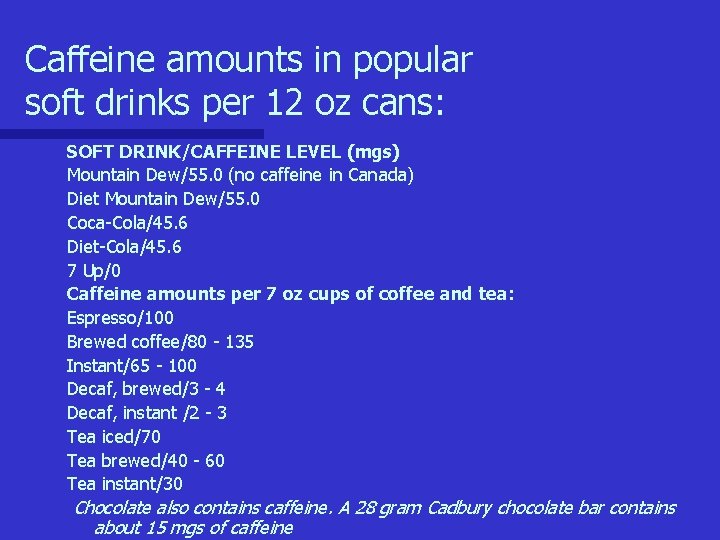
Caffeine amounts in popular soft drinks per 12 oz cans: SOFT DRINK/CAFFEINE LEVEL (mgs) Mountain Dew/55. 0 (no caffeine in Canada) Diet Mountain Dew/55. 0 Coca-Cola/45. 6 Diet-Cola/45. 6 7 Up/0 Caffeine amounts per 7 oz cups of coffee and tea: Espresso/100 Brewed coffee/80 - 135 Instant/65 - 100 Decaf, brewed/3 - 4 Decaf, instant /2 - 3 Tea iced/70 Tea brewed/40 - 60 Tea instant/30 Chocolate also contains caffeine. A 28 gram Cadbury chocolate bar contains about 15 mgs of caffeine
How Does Sleep Contribute to All of These Things? Sleep architecture follows a pattern of alternating REM (rapid eye movement) and NREM (non-rapid eye movement) sleep throughout a typical night in a cycle that repeats itself about every 90 minutes.
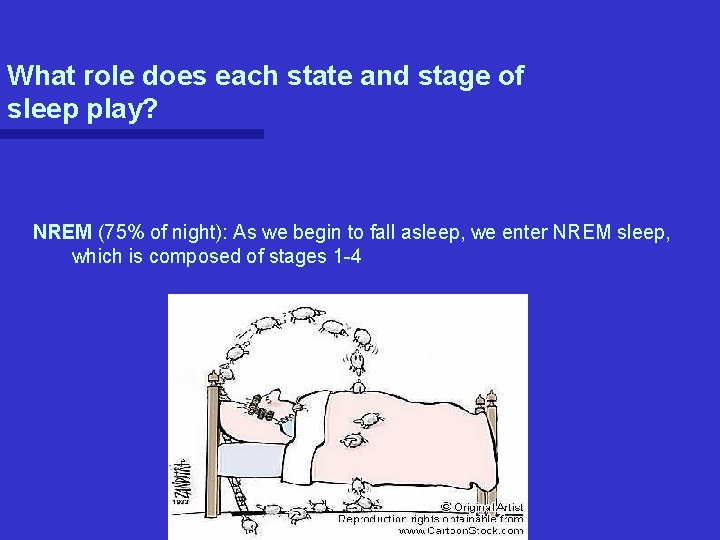
What role does each state and stage of sleep play? NREM (75% of night): As we begin to fall asleep, we enter NREM sleep, which is composed of stages 1 -4
Stage 1 • Between being awake and falling asleep • Light sleep • temperature and blood pressure drop • Shift to alpha waves • muscles relax • hypnagogic possible • images occur • easily awakened
What is a myoclonic jerk? n This term denotes a common experience with sudden contractions of the big body muscles while falling asleep. This mostly causes a feeling of stumbling, falling or similar and subsequently waking up again n ". . . you're heart rate gets very slow, and your breathing slows down quicker than normal. You brain may interpret this as your body dying, so it sends an electrical pulse to your muscles. Like a jump start. This is similar to a Night Terror, when you wake up absolutely terrified about something, but have no idea why. . "
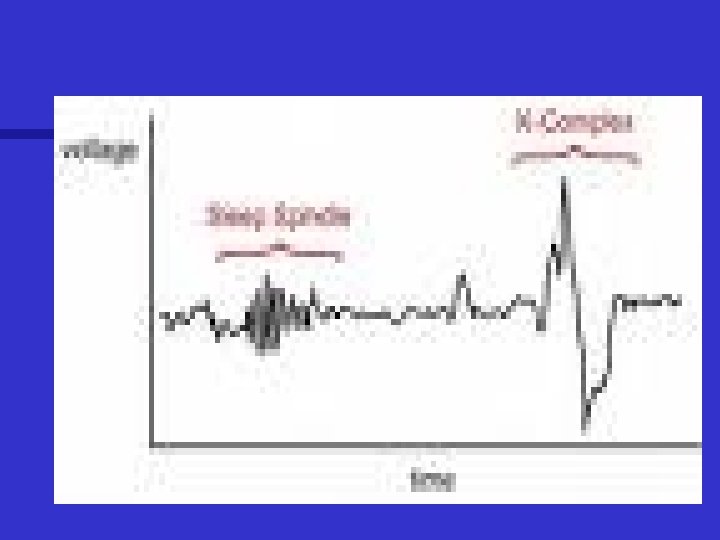
Stage 2 * Onset of sleep * Becoming disengaged from surroundings * Breathing and heart rate are regular • Body temperature drops (so sleeping in a cool room is helpful) • Slower eye movement • Sleep spindles and K-complex • If aroused you’ll say. . who me? Asleep?
Stages 3 and 4 … slower larger delta waves…in stage 4 delta waves increase 50& * Deepest and most restorative sleep * Blood pressure drops, heart rates slows • Breathing becomes slower * Muscles are relaxed, no eye movement, hard to wake up * Blood supply to muscles increases * Tissue growth and repair occurs * Energy is restored * Hormones are released, such as: Growth hormone, essential for growth and development, including muscle development
REM (25% of night): First occurs about 90 minutes after falling asleep and recurs about every 90 minutes, getting longer later in the night * Provides energy to brain and body, blood pressure rises, heart and respiration increase * Supports daytime performance * Brain is active and dreams occur * Eyes dart back and forth * Body becomes immobile and relaxed, as muscles are turned off
In addition, levels of the hormone cortisol dip at bed time and increase over the night to promote alertness in morning. Sleep helps us thrive by contributing to a healthy immune system, and can also balance our appetites by helping to regulate levels of the hormones ghrelin and leptin, which play a role in our feelings of hunger and fullness. So when we’re sleep deprived, we may feel the need to eat more, which can lead to weight gain. The one-third of our lives that we spend sleeping, far from being “unproductive, ” plays a direct role in how full, energetic and successful the other two-thirds of our lives can be.
Sleep Disorders Bruxism Sleep Apnea Insomnia Restless Leg Syndrome Night Terrors Sleep Walking Periodic Limb Movement Bed Wetting
Bruxis Sleep bruxism, also known as nocturnal tooth grinding, is the medical term for clenching or grinding teeth during sleep estimated that 8% of adults grind their teeth at night and a study shows that more than a third of parents report symptoms of bruxism in their children.
Causes factors as: anxiety stress alcohol consumption cigarette smoking caffeine sleep apnea snoring and excessive daytime sleepiness
Symptoms of sleep bruxism include: Worn down teeth Headaches Earaches Sore gums, teeth, jaw, and face
Sleep Apnea Breathing is Briefly and repeatedly interrupted during sleep n sleep apnea refers to a breathing pause that lasts at least ten seconds n Obstructive sleep apnea occurs when the muscles in the back of the throat fail to keep the airway open, despite efforts to breathe. Another form of sleep apnea is central sleep apnea, in which the brain fails to properly control breathing during sleep. Obstructive sleep apnea is far more common than central sleep apnea. n
Continued…. n Obstructive sleep apnea, or simply sleep apnea, can cause fragmented sleep and low blood oxygen levels. For people with sleep apnea, the combination of disturbed sleep and oxygen starvation may lead to hypertension, heart disease and mood and memory problems n Sleep apnea also increases the risk of automobile crashes. Sleep apnea can be life-threatening and you should consult your doctor immediately if you feel you may suffer from it.
Symptoms n n n n Chronic snoring is a strong indicator of sleep apnea they may suffer from daytime sleeplessness other symptoms such as difficulty concentrating depression, irritability, sexual dysfunction, learning and memory difficulties falling asleep while at work, on the phone, or driving Left untreated, symptoms of sleep apnea can include: – disturbed sleep, – excessive sleepiness during the day – high blood pressure, – heart attack, congestive heart failure, – cardiac arrhythmia, – stroke – depression.
Insomnia, which is Latin for "no sleep, " is the inability to fall asleep or remain asleep. n Insomnia is also used to describe the condition of waking up not feeling restored or refreshed n insomnia refers to the inability to get the amount of sleep you as an individual need to wake up feeling rested. n people experience chronic-intermittent insomnia, which means difficulty sleeping for a few nights, followed by a few nights of adequate sleep before the problem returns. n
Insomnia Half of all those who have experienced insomnia blame the problem on stress and worry n The prevalence of insomnia is higher among older people and women n n Some medications can lead to insomnia, including those taken for: • • colds and allergies high blood pressure heart disease thyroid disease birth control asthma pain medications depression (especially SSRI antidepressants)
Insomnia Continued Some common sleep disorders such as restless legs syndrome and sleep apnea can also lead to insomnia. n Sleep is as essential as diet and exercise. Inadequate sleep can result in fatigue, depression, concentration problems, illness and injury. n Symptoms of insomnia include: n • • difficulty falling asleep waking up frequently during the night difficulty returning to sleep waking up too early in the morning unrefreshing sleep daytime sleepiness difficulty concentrating irritability
Treatment n bedtime routines or the bedroom itself may become linked with anxiety for a person who is experiencing insomnia because they dread the thought of another sleepless night. n Some examples of behavioral treatments are: n • • • Stimulus Control Therapy: creating a sleep environment that promotes sleep Cognitive Therapy: learning to develop positive thoughts and beliefs about sleep Sleep Restriction: following a program that limits time in bed in order to get to sleep and stay asleep throughout the night Relaxation techniques, such as yoga, meditation, and guided imagery may be especially helpful in preparing the body to sleep. Exercise, done early in the day, can also be helpful in reducing stress and promoting deeper sleep.
Sleeping Pills n A sedative is a substance that depresses the central nervous system, resulting in calmness, relaxation, reduction of anxiety, sleepiness, and slowed breathing, as well as slurred speech, staggering walk, poor judgment, and slow, uncertain reflexes. Sedatives may be referred to as tranquilizers, depressants, anxiolytics, soporifics, sleeping pills, downers, or sedativehypnotics. Sedatives can be abused to produce an overlycalming effect (alcohol being the classic and most common sedating drug). At high doses or when they are abused, many of these drugs can cause unconsciousness and even death.
Restless Leg Syndrome n n n Restless Legs Syndrome (RLS) is a neurologic sensorimotor disorder that is characterized by an overwhelming urge to move the legs when they are at rest. Symptoms of RLS are most severe in the evening and nighttime hours and can profoundly disrupt a patient's sleep and daily life. RLS affects approximately 10% of adults in the U. S. Researchers believe that RLS is commonly unrecognized or misdiagnosed as insomnia or other neurological, muscular or orthopedic condition. More than 80 percent of people with RLS also suffer from a condition know as periodic limb movement disorder (PLMD). Characteristics of PLMD include involuntary leg twitching or jerking movements during sleep that occur repeatedly throughout the night and result in disrupted sleep.
Treatment n Requip® (ropinirole hydrochloride) that is commonly used to treat Parkinson disease was given FDA approval at lower doses for the treatment of moderate-to-severe primary RLS n Mirapex® was also approved by the FDA for the treatment of moderate-to-severe primary RLS
Night Terrors n The sleep disorder of night terrors typically occurs in children aged 3 -12 years, with a peak onset in children aged 3½ years. n Night terrors are distinctly different from the much more common nightmares, which occur during REM sleep. Night terrors are characterized by frequent recurrent episodes of intense crying and fear during sleep, with difficulty arousing the child. Night terrors are frightening episodes that disrupt family life. n
Causes Night terrors may be caused by the following: • Stressful life events • Fever • Sleep deprivation • Medications that affect the central nervous system (the brain)
Night Terrors Symptoms • In addition to frequent recurrent episodes of intense crying and fear during sleep, with difficulty arousing the child, children with night terrors may also experience the following: • • • Increase breathing Sweating Increase heart rate
Sleep Walking n n n is a disorder characterized by complicated actions that result in walking during sleep. Sleepwalking behavior can range from simply getting out of bed and walking around the room to driving a car. Sleepwalking usually occurs during the slow-wave stages of non -rapid eye movement (NREM) sleep (stages of sleep in which eye movement does not take place; for details of stages of sleep see Sleep: Understanding the Basics. ). Persons affected with this disorder usually have their eyes wide open in a stare. Sleepwalking occurs most commonly in middle childhood and preadolescence, with a peak incidence in children aged 11 -12 years. Can last through adulthood
Causes: • • • schedules Fever stress magnesium deficiency alcohol intoxication can trigger sleepwalking sedative/hypnotics narcoleptics (drugs used to treat psychosis) minor tranquilizers stimulants antihistamines
Symptoms Episodes range from quiet walking about the room to agitated running or attempts to"escape. " Typically, the eyes are open with a glassy, staring appearance as the person quietly roams the house. • • On questioning, responses are slow or absent. If the person is returned to bed without awakening, the person usually does not remember the event. Older children, who may awaken more easily at the end of an episode, often are embarrassed by the behavior (especially if it was inappropriate). • Sleepwalking is not associated with previous sleep problems, sleeping alone in a room or with others, achluophobia (fear of the dark), or anger outbursts. • Some studies suggest that children who sleepwalk may have been more restless sleepers when aged 4 -5 years, and more restless with more frequent awakenings during the first year of life.
Periodic limb movement disorder repetitive cramping or jerking of the legs during sleep. • It is the only movement disorder that occurs only during sleep, and it is sometimes called periodic leg (or limb) movements during sleep • "Periodic" refers to the fact that the movements are repetitive and rhythmic, occurring about every 20 -40 seconds • PLMD is also considered a sleep disorder, because the movements often disrupt sleep and lead to daytime sleepiness. •
Causes Actually no known cause • Has been linked with abnormal nerve travel from brain to limbs • There are secondary reason like diabetes, spinal cord injuries, tumors sleep apnea • Drug withdrawal • Linked with Restless Leg Syndrome Treatment: • Medication that with relaxes the muscles • Or allows the patients to sleep through it •
Nocturnal Enuresis Medical term for wetting the bed There are both primary and secondary forms of bedwetting primary bedwetting, the child has never had nighttime control over urination The secondary form is less common and refers to bedwetting that occurs after the child has been dry during sleep for 6 or more months Secondary bedwetting is usually caused by psychological stress may be the result of an underlying medical condition such as constipation or urinary tract obstruction
Symptoms n Bedwetting may occur at any point during the night but usually occurs during the first few hours of sleep n Occasional bedwetting for children over the age of 5 is not uncommon but if it happens more often than 2 -3 times per month, parents should consult their pediatrician.
Treatment • • Establishing a regular bedtime routine that includes going to the bathroom Waking your child during the night before he/she typically wets the bed and taking him/her to the bathroom Developing a reward system to encourage your child, such as stickers for dry nights Talking to your child about the advantages of potty-training, such as not having to wear diapers and becoming a "big kid" Limiting beverages in the evening - even those last minute water requests Using a "bell-and-pad" which incorporates an alarm that goes off whenever your child's pajamas or bed become wet during an accident. These systems teach your child to eventually wake up before the bedwetting occurs Last resort contact physician for medication
Tips for good Sleep 1. Maintain a regular bed and wake time schedule including weekends. Our sleep-wake cycle is regulated by a "circadian clock" in our brain and the body's need to balance both sleep time and wake time. A regular waking time in the morning strengthens the circadian function and can help with sleep onset at night. That is also why it is important to keep a regular bedtime and waketime, even on the weekends when there is the temptation to sleep-in.
Establish a regular, relaxing bedtime routine such as soaking in a hot bath or hot tub and then reading a book or listening to soothing music. A relaxing, routine activity right before bedtime conducted away from bright lights helps separate your sleep time from activities that can cause excitement, stress or anxiety which can make it more difficult to fall asleep, get sound and deep sleep or remain asleep. Avoid arousing activities before bedtime like working, paying bills, engaging in competitive games or family problem-solving. Some studies suggest that soaking in hot water (such as a hot tub or bath) before retiring to bed can ease the transition into deeper sleep, but it should be done early enough that you are no longer sweating or over-heated. If you are unable to avoid tension and stress, it may be helpful to learn relaxation therapy from a trained professional. Finally, avoid exposure to bright before bedtime because it signals the neurons that help control the sleep-wake cycle that it is time to awaken, not to sleep.
Create a sleep-conducive environment that is dark, quiet, comfortable and cool. Design your sleep environment to establish the conditions you need for sleep – cool, quiet, dark, comfortable and free of interruptions. Also make your bedroom reflective of the value you place on sleep. Check your room for noise or other distractions, including a bed partner's sleep disruptions such as snoring, light, and a dry or hot environment. Consider using blackout curtains, eye shades, ear plugs, "white noise, " humidifiers, fans and other devices.
. Use your bedroom only for sleep It is best to take work materials, computers and televisions out of the sleeping environment. Use your bed only for sleep to strengthen the association between bed and sleep. If you associate a particular activity or item with anxiety about sleeping, omit it from your bedtime routine. For example, if looking at a bedroom clock makes you anxious about how much time you have before you must get up, move the clock out of sight. Do not engage in activities that cause you anxiety and prevent you from sleeping.
Exercise regularly. It is best to complete your workout at least a few hours before bedtime. In general, exercising regularly makes it easier to fall asleep and contributes to sounder sleep. n exercising sporadically or right before going to bed will make falling asleep more difficult. In addition to making us more alert, our body temperature rises during exercise, and takes as much as 6 hours to begin to drop. n A cooler body temperature is associated with sleep onset. . . Finish your exercise at least 3 hours before bedtime. Late afternoon exercise is the perfect way to help you fall asleep at night. n
Avoid caffeine (e. g. coffee, tea, soft drinks, chocolate) close to bedtime. • • Caffeine is a stimulant, which means it can produce an alerting effect. Caffeine products, such as coffee, tea, colas and chocolate, remain in the body on average from 3 to 5 hours, but they can affect some people up to 12 hours later. Even if you do not think caffeine affects you, it may be disrupting and changing the quality of your sleep. Avoiding caffeine within 6 -8 hours of going to bed can help improve sleep quality.
Finish eating at least 2 -3 hours before your regular bedtime. Eating or drinking too much may make you less comfortable when settling down for bed. n It is best to avoid a heavy meal too close to bedtime. Also, spicy foods may cause heartburn, which leads to difficulty falling asleep and discomfort during the night. n Try to restrict fluids close to bedtime to prevent nighttime awakenings to go to the bathroom, though some people find milk or herbal, non-caffeinated teas to be soothing and a helpful part of a bedtime routine. n
Avoid nicotine (e. g. cigarettes, tobacco products). Used close to bedtime, it can lead to poor sleep. • • • Nicotine is also a stimulant. Smoking before bed makes it more difficult to fall asleep. When smokers go to sleep, they experience withdrawal symptoms from nicotine, which also cause sleep problems. Nicotine can cause difficulty falling asleep, problems waking in the morning, and may also cause nightmares. Difficulty sleeping is just one more reason to quit smoking. And never smoke in bed or when sleepy!
Avoid alcohol close to bedtime. Although many people think of alcohol as a sedative, it actually disrupts sleep, causing nighttime awakenings. Consuming alcohol leads to a night of less restful sleep.