
The Architecture of Open Education in the United
- Slides: 19
The Architecture of Open Education in the United States Adnan Qayyum Athabasca University Canadian Network for Innovation in Education Monday April 19, 2021
What are the types of open education in the U. S. ? Agenda What are the different uses of the term open education? What is the architecture of open education in the U. S. ?
Study background Center for Open Education Research (Germany) Researched open education architecture in 8 countries (Australia, Canada, China, India, Germany, Spain, South Africa, United States)
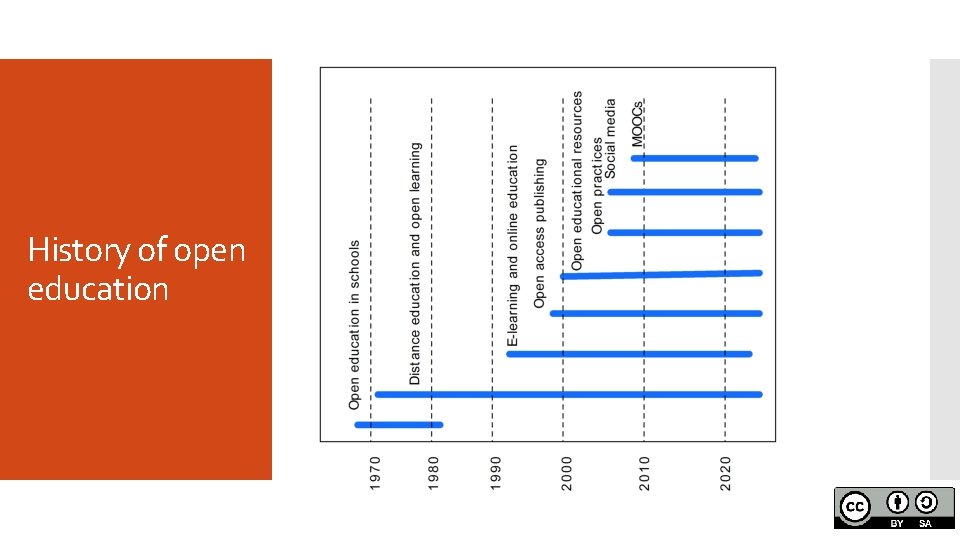
1. Open education in schools 2. Open and distance education learning Uses of open education 3. E-learning and online education 4. Open access publishing 5. Open educational resources 6. Open practices 7. Social media 8. Massive open online courses Source: Based on Weller, M. , Jordan, K. , De. Vries, I. , & Rolfe, V. (2018). Mapping the Open Education Landscape. Open Praxis. 10(2)
History of open education
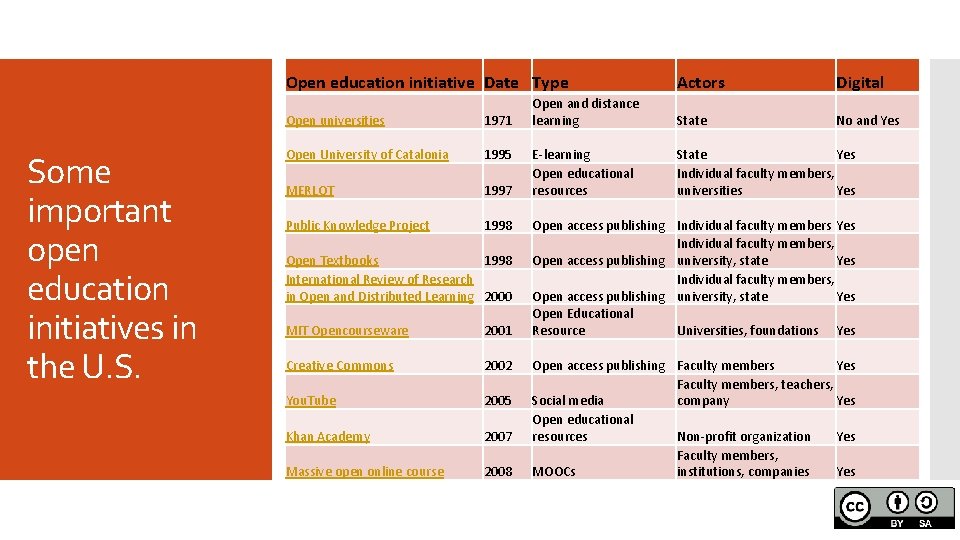
Open education initiative Date Type Some important open education initiatives in the U. S. Open universities 1971 Open University of Catalonia 1995 MERLOT 1997 Public Knowledge Project 1998 Open Textbooks 1998 International Review of Research in Open and Distributed Learning 2000 MIT Opencourseware 2001 Creative Commons 2002 You. Tube 2005 Khan Academy 2007 Massive open online course 2008 Actors Digital Open and distance learning State No and Yes E-learning Open educational resources State Yes Individual faculty members, universities Yes Open access publishing Individual faculty members Yes Individual faculty members, Open access publishing university, state Yes Open Educational Resource Universities, foundations Yes Open access publishing Faculty members Yes Faculty members, teachers, Social media company Yes Open educational resources Non-profit organization Yes Faculty members, MOOCs institutions, companies Yes
David Wiley’s 5 Rs of openness 1. Retain – the right to make, own, and control copies of the content 2. Reuse – the right to use the content in a wide range of ways (e. g. , in a class, in a study group, on a website, in a video) Two meanings of openness 3. Revise – the right to adapt, adjust, modify, or alter the content itself (e. g. , translate the content into another language) 4. Remix – the right to combine the original or revised content with other open content to create something new (e. g. , incorporate the content into a mashup) 5. Redistribute – the right to share copies of the original content, your revisions, or your remixes with others (e. g. , give a copy of the content to a friend) Used within the OER community
Openness is used to refer to educational access Two meanings of openness 1. physical access to course content, instruction, and assessment via technology-based delivery methods 2. institutional access via open admissions and prioritizing nontraditional learners 3. temporal access through flexible studies, part-time studies, and self-paced studies 4. financial access through substantially lower costs than other education options
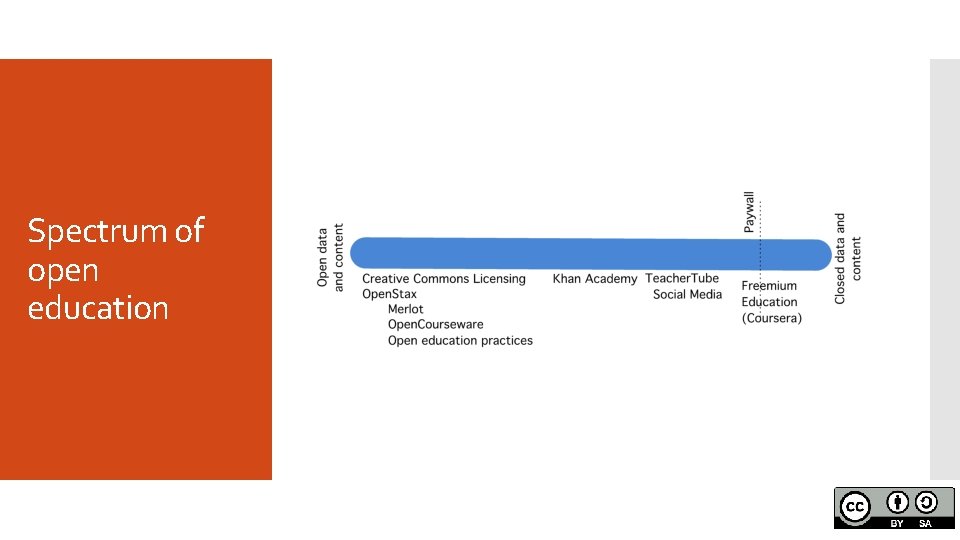
Spectrum of open education
Openness for them focuses on access, not the 5 Rs Bootcamps Reducing the financial risk for students Companies are coming Finding the business model for MOOCs Formal certificates and statements of participation Individual tutoring during the MOOC SPOCs - Small Private Online Courses based on MOOCs that are tailored for employees as part of a professional training Remedial courses Offering credit points in MOOCs
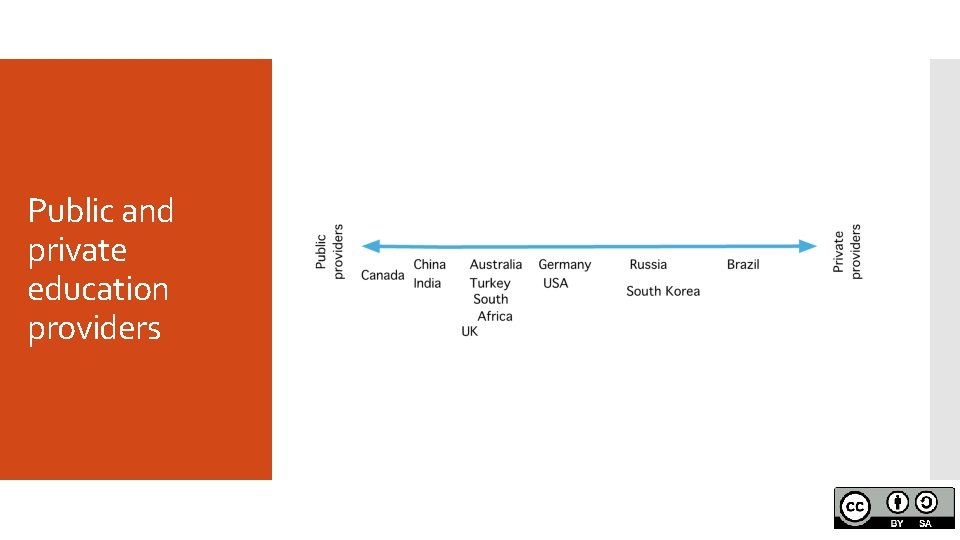
Public and private education providers
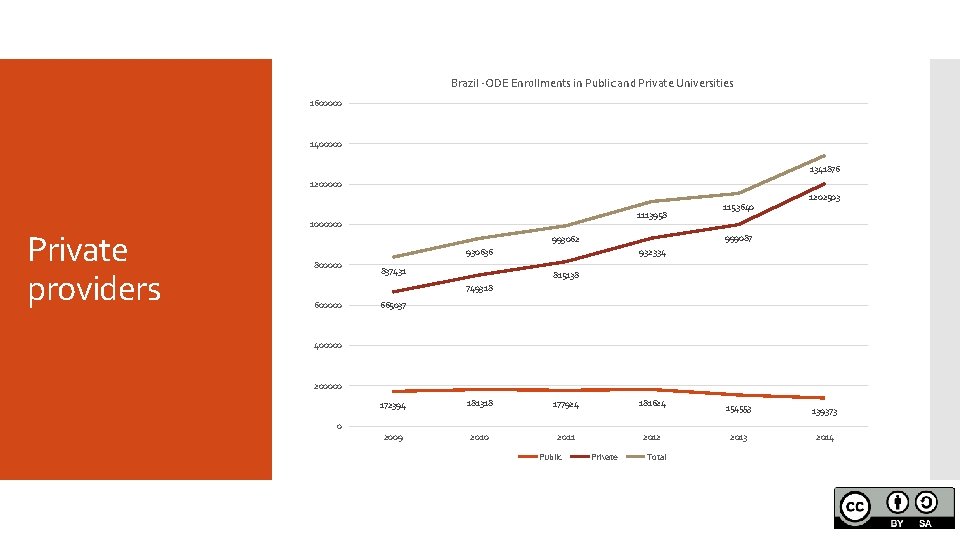
Brazil -ODE Enrollments in Public and Private Universities 1600000 1400000 1341876 1200000 Private providers 1113958 1000000 837431 1202503 999087 993062 932334 930636 800000 1153640 815138 749318 600000 665037 400000 200000 0 172394 181318 177924 181624 2009 2010 2011 2012 Public Private Total 154553 139373 2014
Design and plan of open education is affected by the United States education landscape Architecture of open education in the U. S. Structure of education States -50 states Decision-makers Decentralized by states, institutions, and markets Infrastructure of open education Initiatives are highly decentralized Collaboration but not national coordination
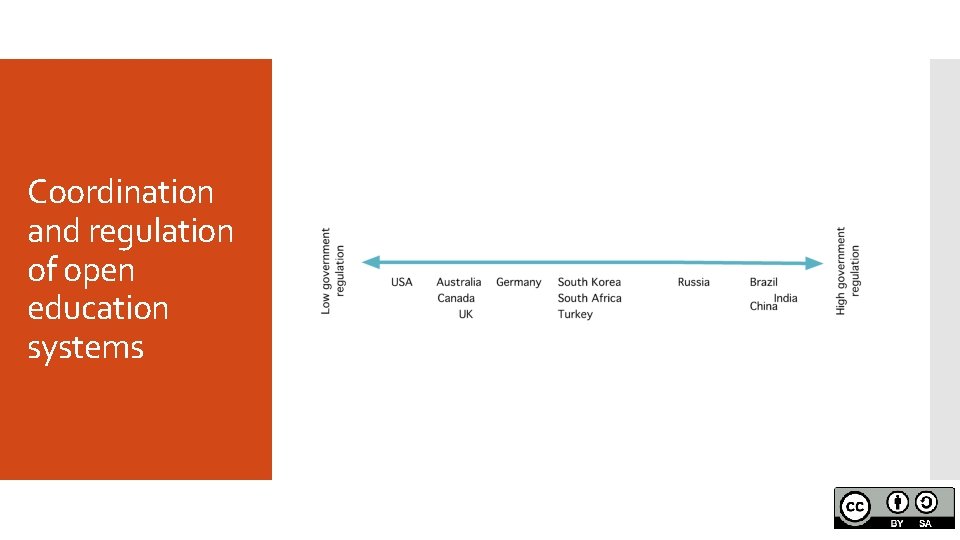
Coordination and regulation of open education systems
In U. S. higher ed, in-person teaching fell from 96% to 14% in Fall 2020 (compared to Fall 2019) (N=3232) Proportion of online teaching went from 34% to 71% Awareness of OER –jumped to 49% in 2020 compared to 44% in 2019 (and 25% in 2015) OER use during the pandemic Use of OER stayed about the same 15% in 2020 compared to 14% in 2019 for required course materials 22% in 2020 compared to 23% in 2019 for supplemental materials OER use has grown year over year 5% to 15% for required course materials 15 t 0 22% for supplemental materials from 2015 -2020 OER is used mainly in introductory courses OER textbooks have a higher slightly higher satisfaction (89%) rating than non-OER texts (85%) Source: Seaman, J. E. & Seaman, J. (2021). Digital Texts in the Time of Covid.
Openness can work Success stories Creative Commons licensing Open textbook initiatives Openstax California Open access journals
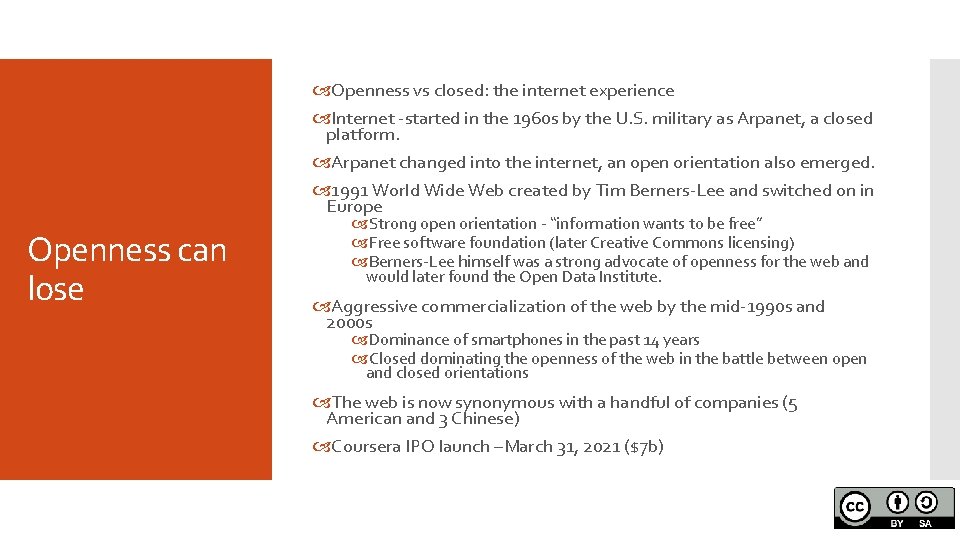
Openness vs closed: the internet experience Internet -started in the 1960 s by the U. S. military as Arpanet, a closed platform. Arpanet changed into the internet, an open orientation also emerged. 1991 World Wide Web created by Tim Berners-Lee and switched on in Europe Openness can lose Strong open orientation - “information wants to be free” Free software foundation (later Creative Commons licensing) Berners-Lee himself was a strong advocate of openness for the web and would later found the Open Data Institute. Aggressive commercialization of the web by the mid-1990 s and 2000 s Dominance of smartphones in the past 14 years Closed dominating the openness of the web in the battle between open and closed orientations The web is now synonymous with a handful of companies (5 American and 3 Chinese) Coursera IPO launch –March 31, 2021 ($7 b)
Thanks aqayyum@athabascau. ca
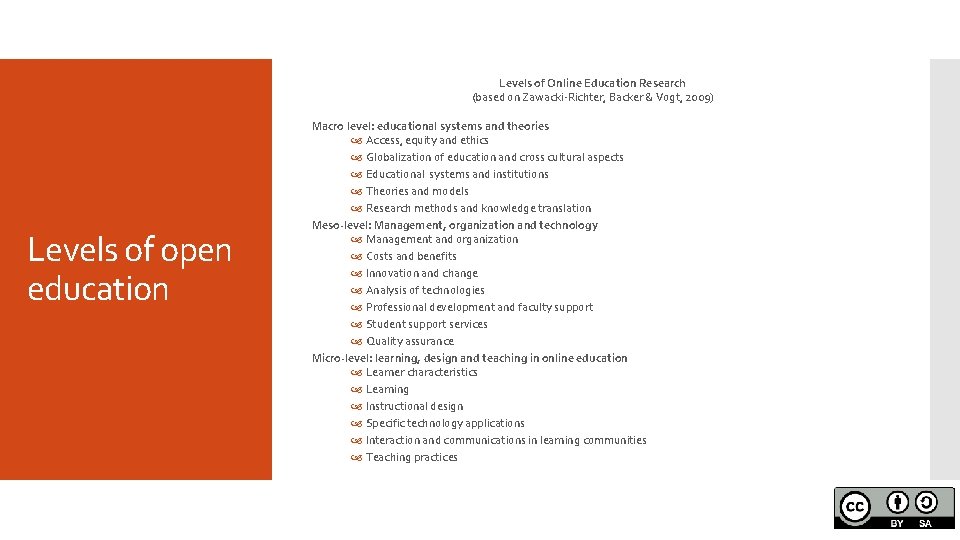
Levels of Online Education Research (based on Zawacki-Richter, Backer & Vogt, 2009) Levels of open education Macro level: educational systems and theories Access, equity and ethics Globalization of education and cross cultural aspects Educational systems and institutions Theories and models Research methods and knowledge translation Meso-level: Management, organization and technology Management and organization Costs and benefits Innovation and change Analysis of technologies Professional development and faculty support Student support services Quality assurance Micro-level: learning, design and teaching in online education Learner characteristics Learning Instructional design Specific technology applications Interaction and communications in learning communities Teaching practices