
The ArabIsraeli Conflict Introduction and Historical Background Ancient
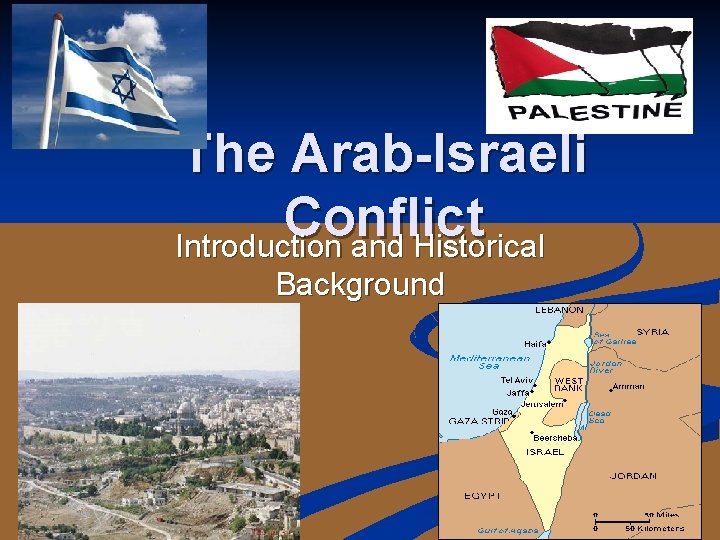
The Arab-Israeli Conflict Introduction and Historical Background
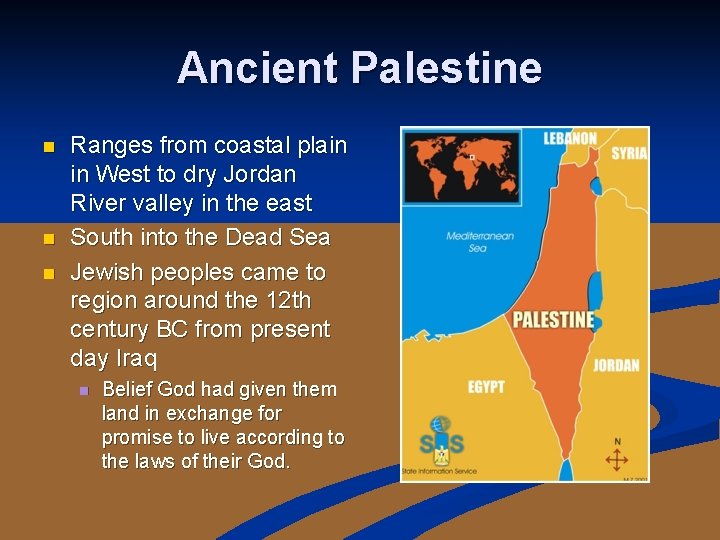
Ancient Palestine n n n Ranges from coastal plain in West to dry Jordan River valley in the east South into the Dead Sea Jewish peoples came to region around the 12 th century BC from present day Iraq n Belief God had given them land in exchange for promise to live according to the laws of their God.

Ancient Palestine n Palestinians, called Philistines at the time, were of Greek origin and settled their around the same time.
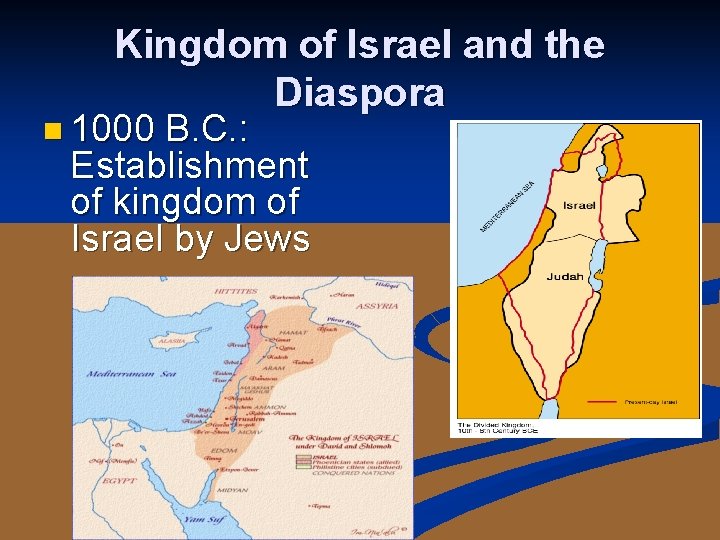
Kingdom of Israel and the Diaspora n 1000 B. C. : Establishment of kingdom of Israel by Jews
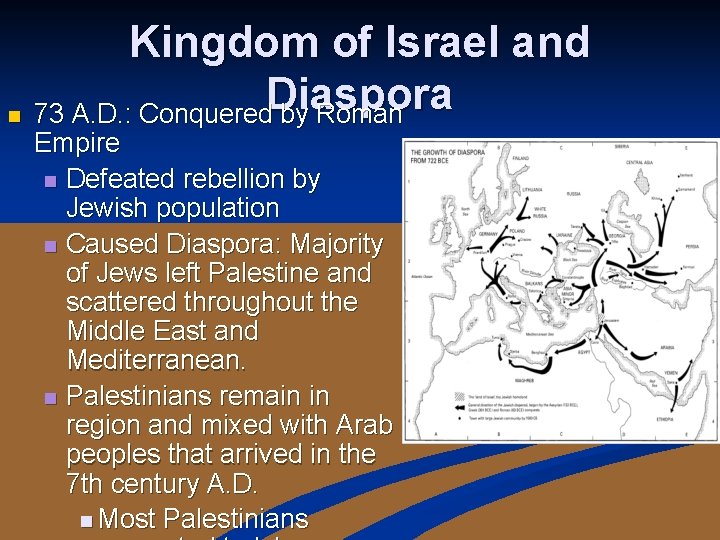
Kingdom of Israel and Diaspora n 73 A. D. : Conquered by Roman Empire n Defeated rebellion by Jewish population n Caused Diaspora: Majority of Jews left Palestine and scattered throughout the Middle East and Mediterranean. n Palestinians remain in region and mixed with Arab peoples that arrived in the 7 th century A. D. n Most Palestinians
Zionism n Most Jews dreamed of a return to their ancestral homeland after the Diaspora.
Zionism n 19 th century: European Jews organize and plan move back to Palestine n Movement known as Zionism (Zion is a hill of great religious and historical importance for Jews in their holiest city, Jerusalem) n Result of anti-Semitism in Western Europe and pogroms, or attacks, in Eastern Europe n Goal = creation of a secular (nonreligious) Jewish state in Palestine
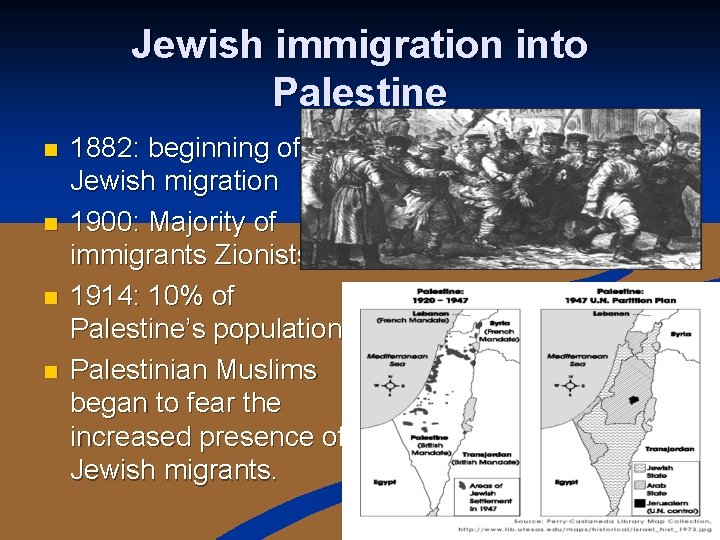
Jewish immigration into Palestine n n 1882: beginning of Jewish migration 1900: Majority of immigrants Zionists 1914: 10% of Palestine’s population Palestinian Muslims began to fear the increased presence of Jewish migrants.
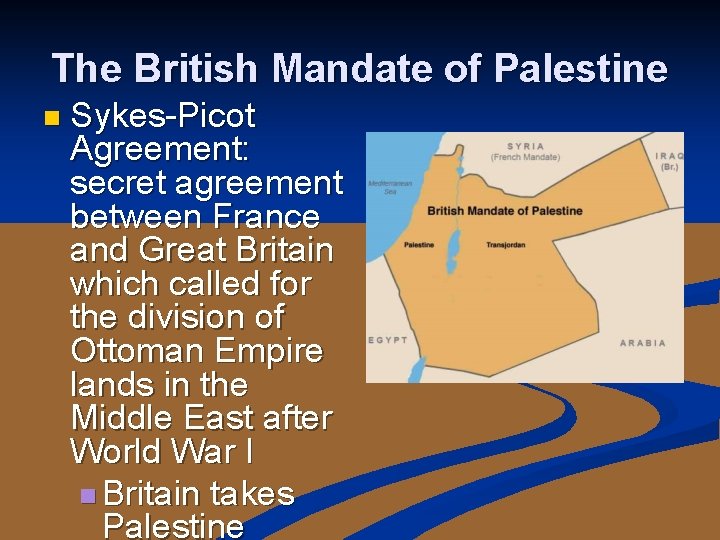
The British Mandate of Palestine n Sykes-Picot Agreement: secret agreement between France and Great Britain which called for the division of Ottoman Empire lands in the Middle East after World War I n Britain takes Palestine
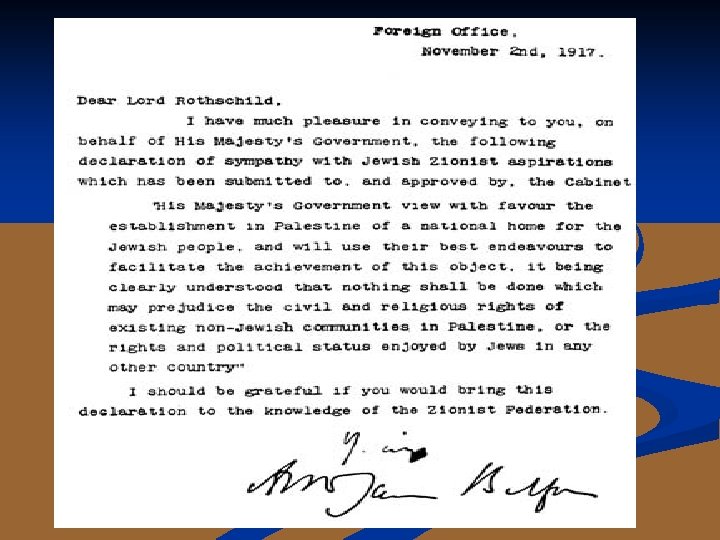
The British Mandate of Palestine n Balfour Declaration (1917): expressed British support for the “establishment in Palestine of a National Home for the Jewish people. ” Did not consult Palestinian Arabs, about 85% of population n Seen as diplomatic victory for Zionism n n After WWI, Britain took control of Palestine through a mandate (similar to a colony) without consultation with Palestinian Arabs
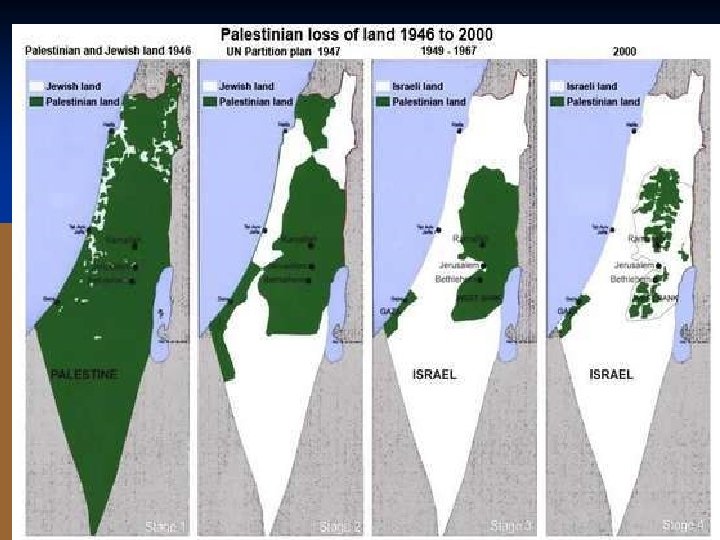
Increasing Arab-Jewish Tensions n n n Initially most Jewish immigrants were poor but as they settled the land formed collective communities their situation improved. These settlements, however, displaced Arabs from their land forced them to move to overcrowded cities and become increasingly poor. n All of this led to increasing pressure in the region and on the British to change the policy Britain decided to maintain its policy of allowing Jewish migration
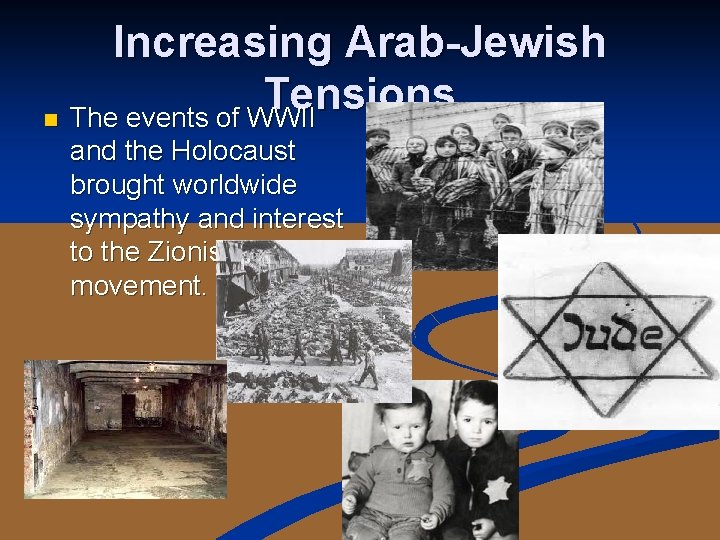
Increasing Arab-Jewish Tensions n The events of WWII and the Holocaust brought worldwide sympathy and interest to the Zionist movement.
- Slides: 15