
The Approach to the Patient with PAD Questions






- Slides: 39
The Approach to the Patient with PAD: Questions to ask, Exams to Perform Ido Weinberg, MD FSVM Medical Director, VASCORE Massachusetts General Hospital Assistant Professor of Medicine Harvard Medical School
Disclosures • None relevant
A Man Limps into Clinic • 55 year old man • Complains of right thigh pain with walking • The pain is burning in nature • Can this be PAD?
A Brief History of PAD
Symptoms – Key Characteristics • Symptom location • Symptom start • Symptom aggravation • Symptoms improvement • Time to resolution BMJ. 2003 Mar 15; 326(7389): 584 -8
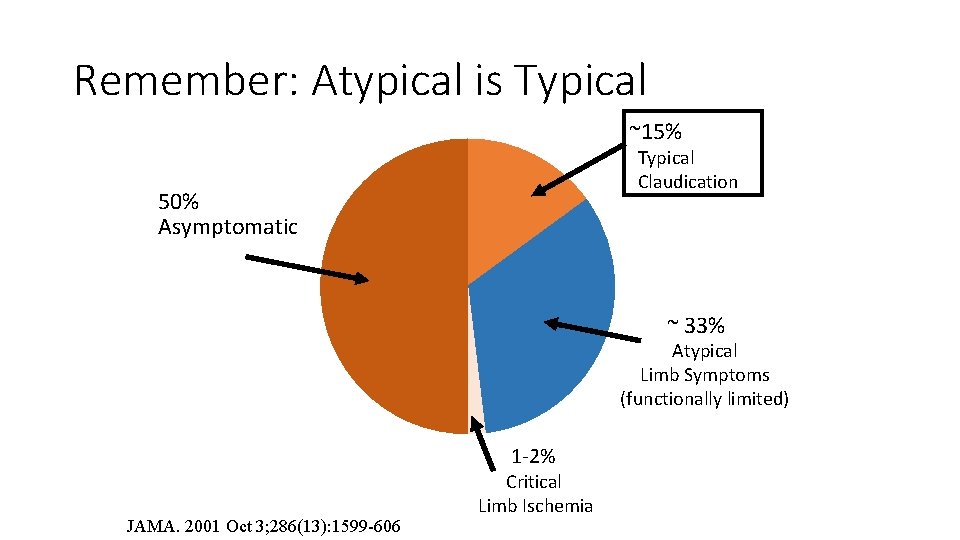
Remember: Atypical is Typical ~15% Typical Claudication 50% Asymptomatic ~ 33% Atypical Limb Symptoms (functionally limited) 1 -2% JAMA. 2001 Oct 3; 286(13): 1599 -606 Critical Limb Ischemia
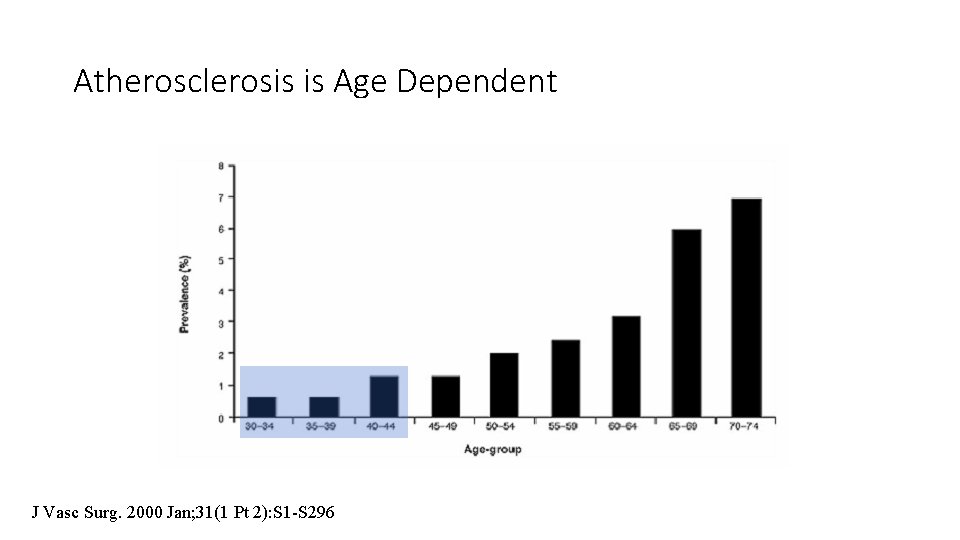
Atherosclerosis is Age Dependent J Vasc Surg. 2000 Jan; 31(1 Pt 2): S 1 -S 296
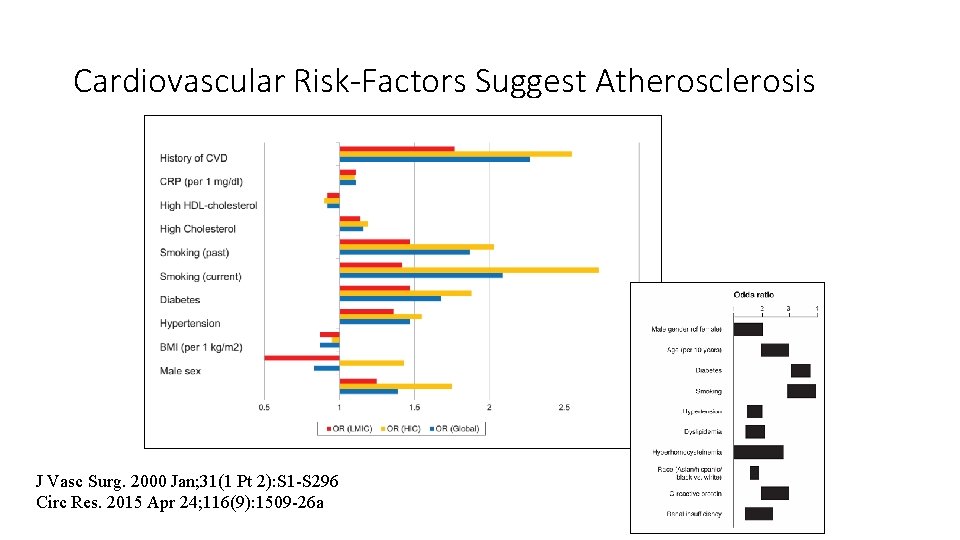
Cardiovascular Risk-Factors Suggest Atherosclerosis J Vasc Surg. 2000 Jan; 31(1 Pt 2): S 1 -S 296 Circ Res. 2015 Apr 24; 116(9): 1509 -26 a
Pulse Examination Tips
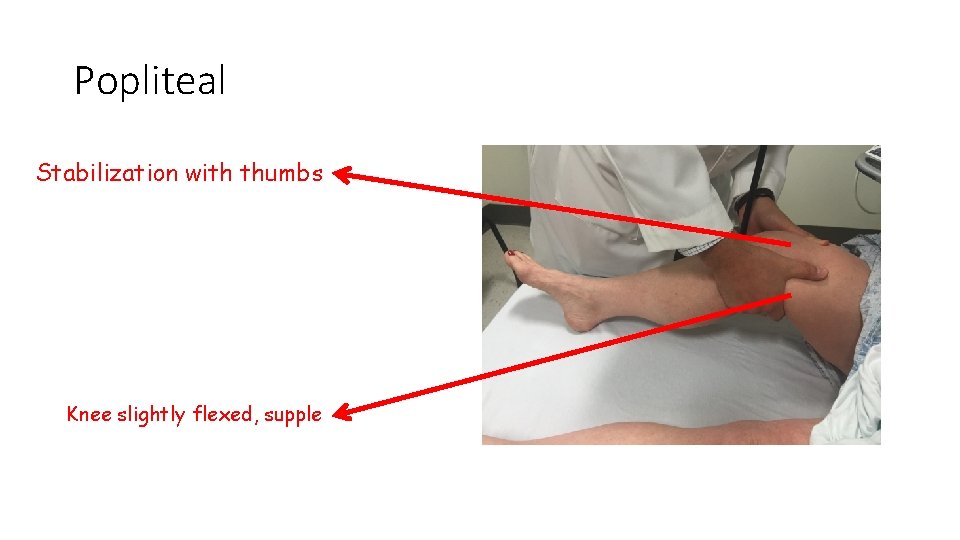
Popliteal Stabilization with thumbs Knee slightly flexed, supple
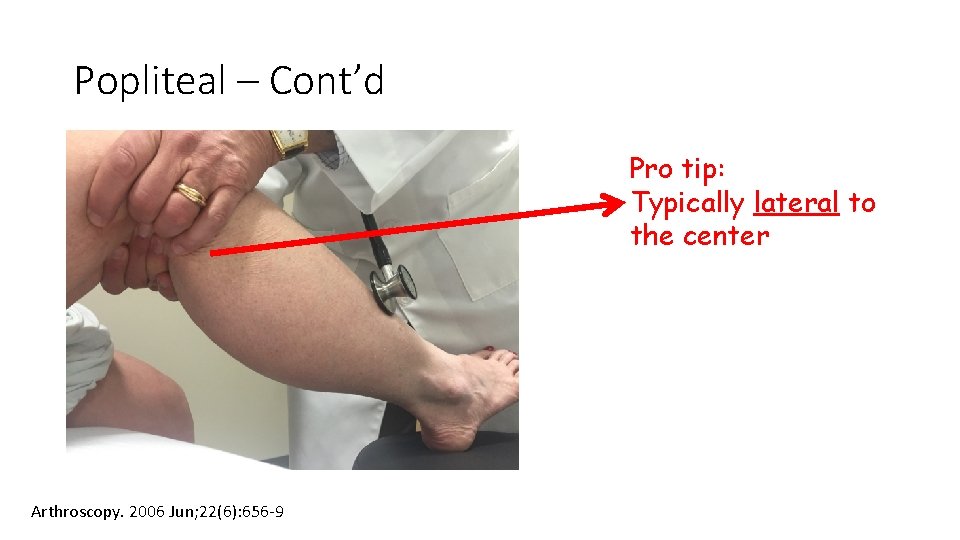
Popliteal – Cont’d Pro tip: Typically lateral to the center Arthroscopy. 2006 Jun; 22(6): 656 -9
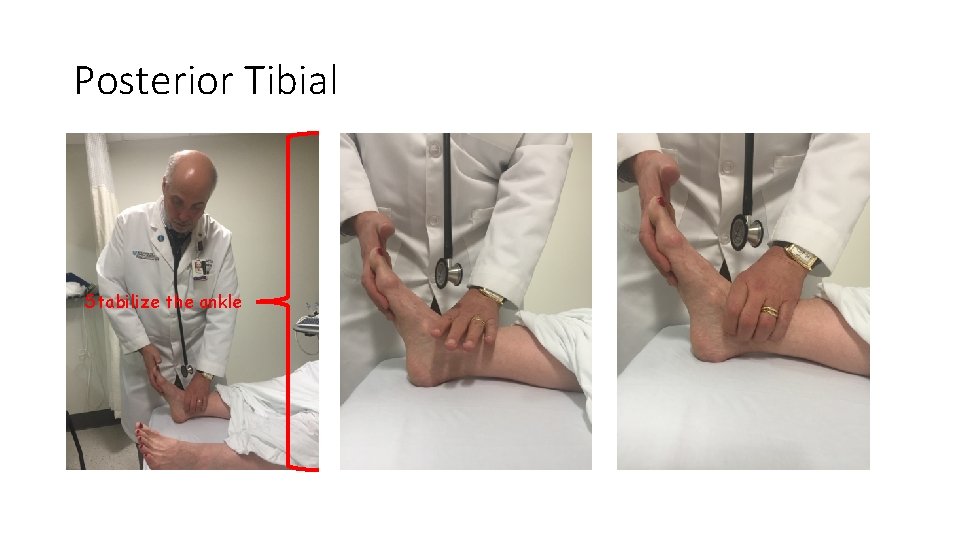
Posterior Tibial Stabilize the ankle
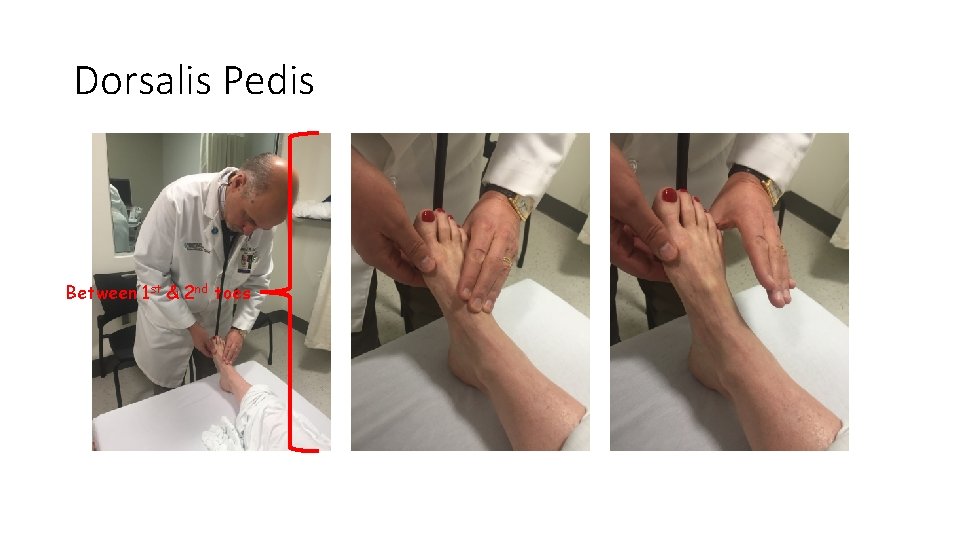
Dorsalis Pedis Between 1 st & 2 nd toes
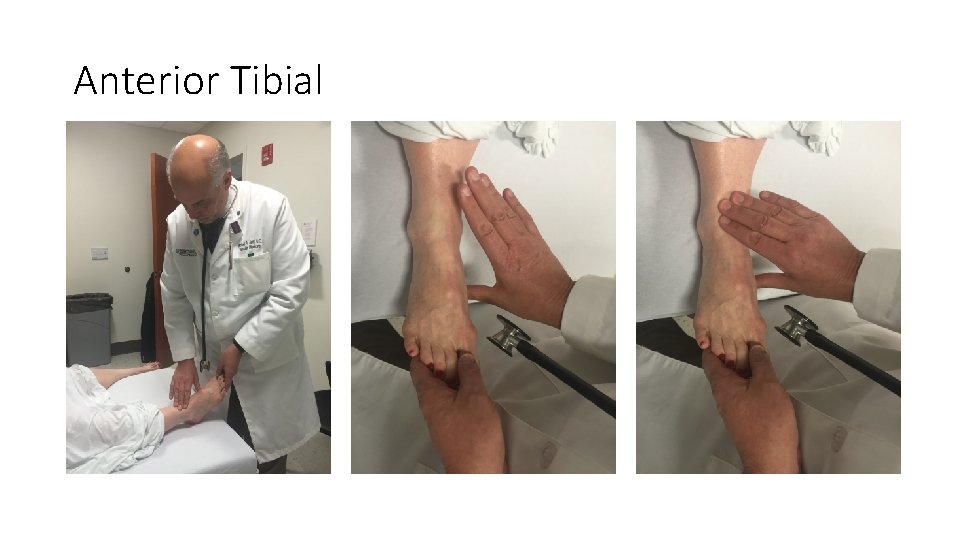
Anterior Tibial
Beyond the Pulse
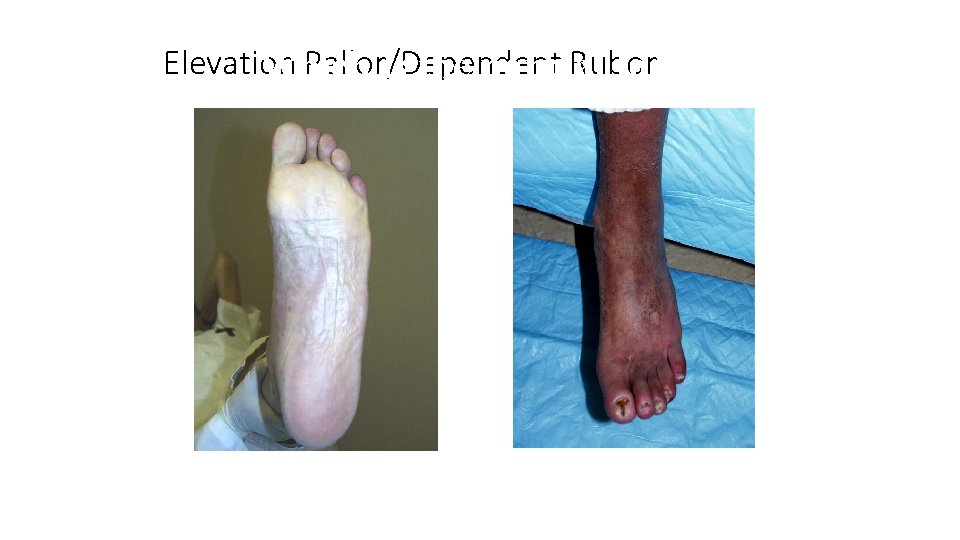
Elevation Pallor/Dependent Rubor Which is the normal foot?
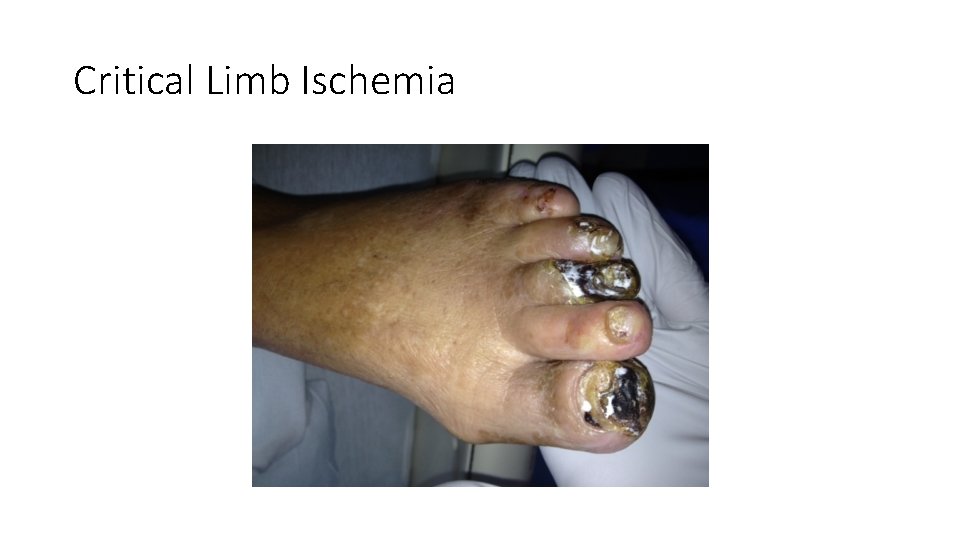
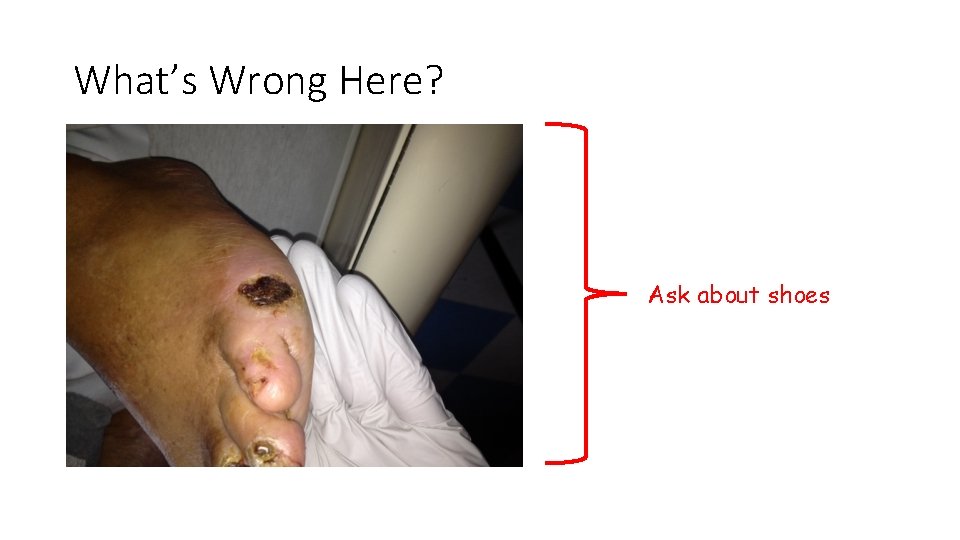
Critical Limb Ischemia
What’s Wrong Here? Ask about shoes
Vascular Laboratory Diagnosis and Surveillance of PAD Circulation. 2013 Aug 13; 128(7): 749 -57
Mr. P. • 64 y/o M • Right calf cramping when he walks for 2 blocks. • Relieved after 3 minutes of rest • Reproducible • You suspect PAD • How will you confirm the diagnosis?
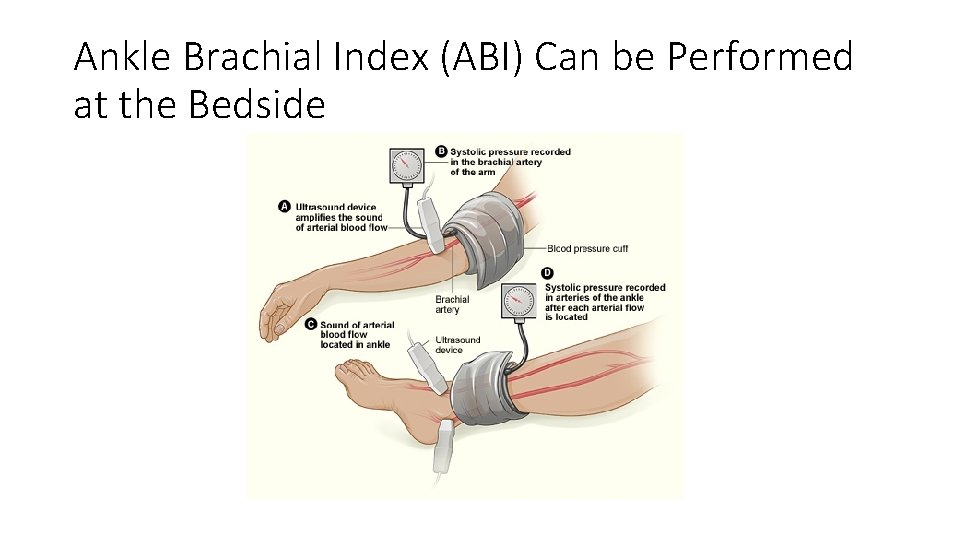
Ankle Brachial Index (ABI) Can be Performed at the Bedside
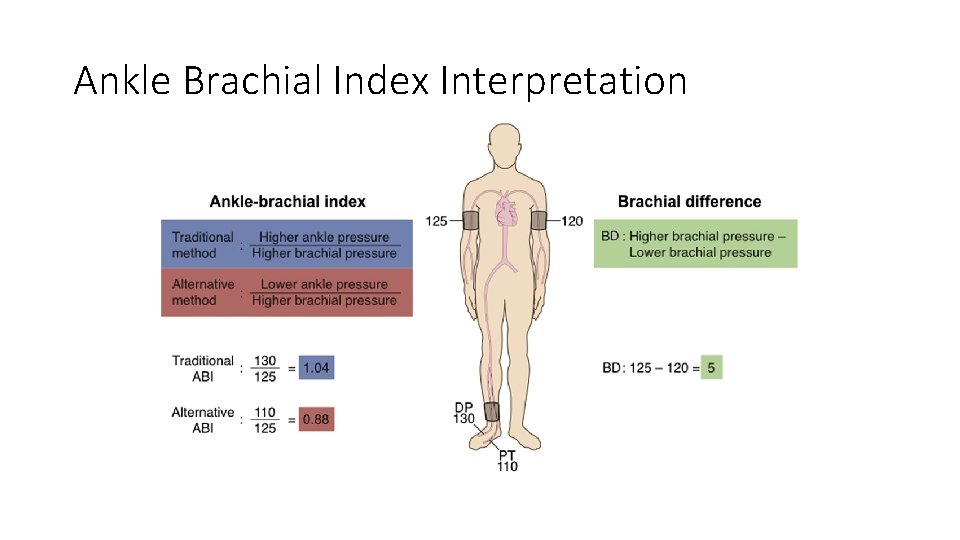
Ankle Brachial Index Interpretation
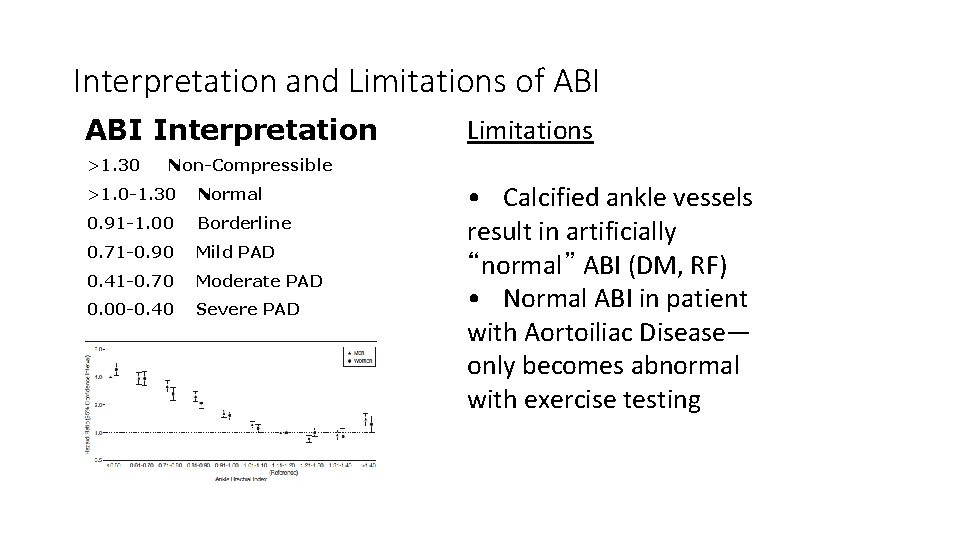
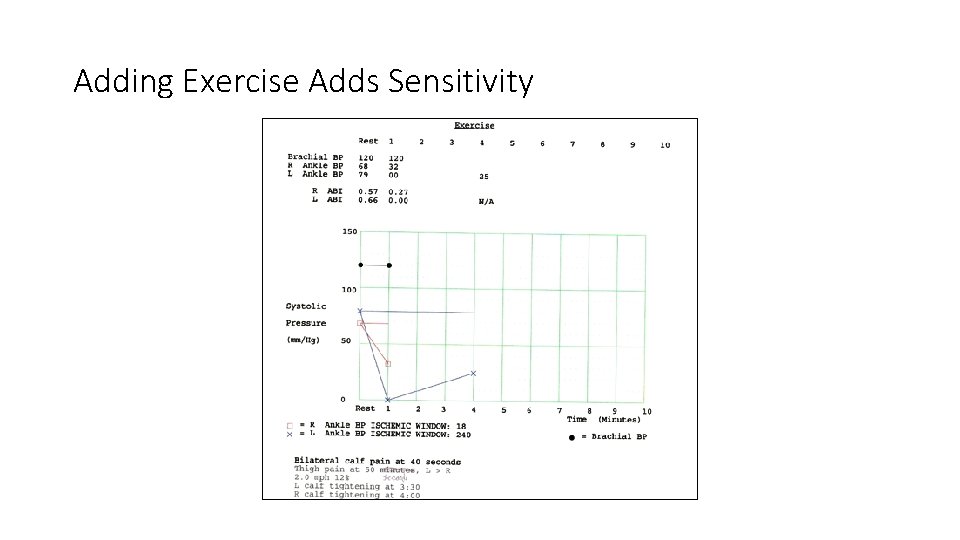
Interpretation and Limitations of ABI Interpretation >1. 30 Limitations Non-Compressible >1. 0 -1. 30 Normal 0. 91 -1. 00 Borderline 0. 71 -0. 90 Mild PAD 0. 41 -0. 70 Moderate PAD 0. 00 -0. 40 Severe PAD JAMA 2008; 300: 197 -208 • Calcified ankle vessels result in artificially “normal” ABI (DM, RF) • Normal ABI in patient with Aortoiliac Disease— only becomes abnormal with exercise testing
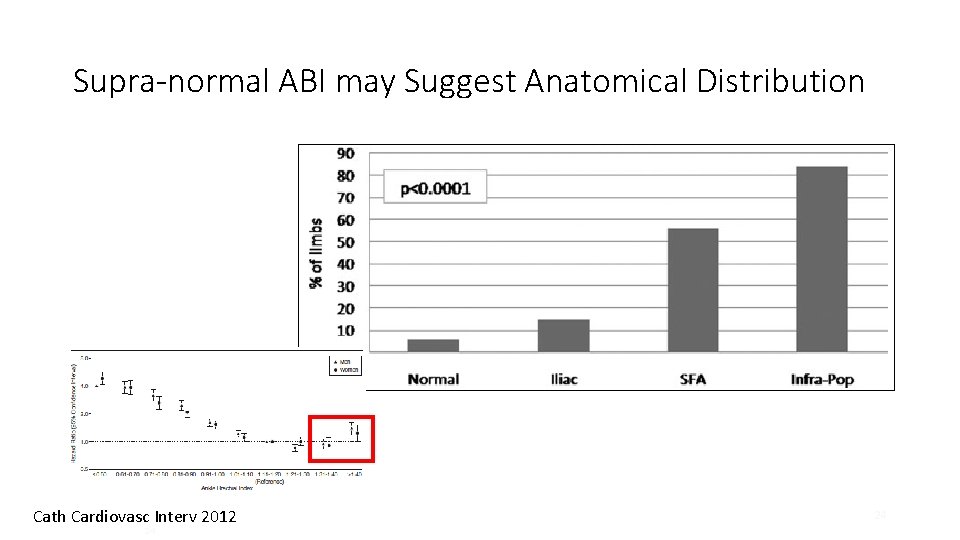
Supra-normal ABI may Suggest Anatomical Distribution Cath Cardiovasc Interv 2012 24 24
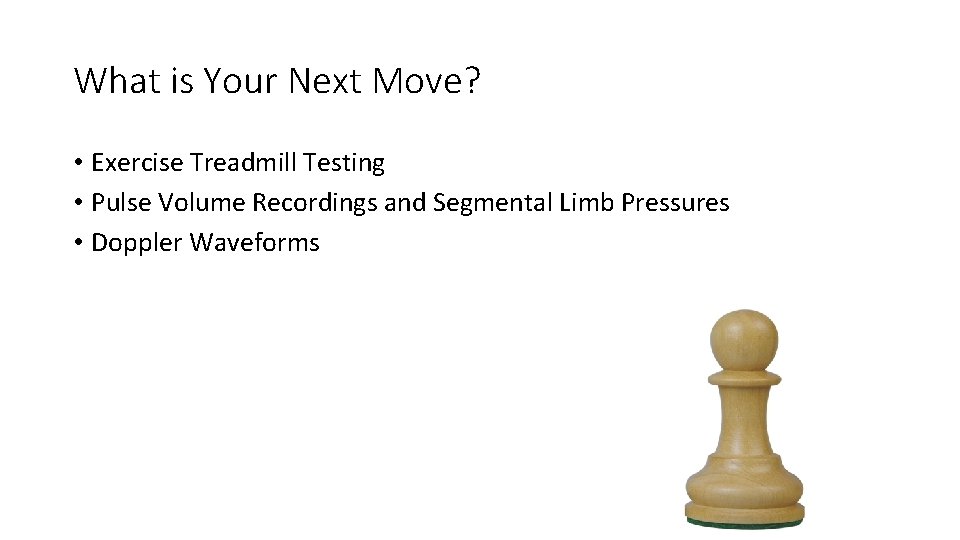
What is Your Next Move? • Exercise Treadmill Testing • Pulse Volume Recordings and Segmental Limb Pressures • Doppler Waveforms
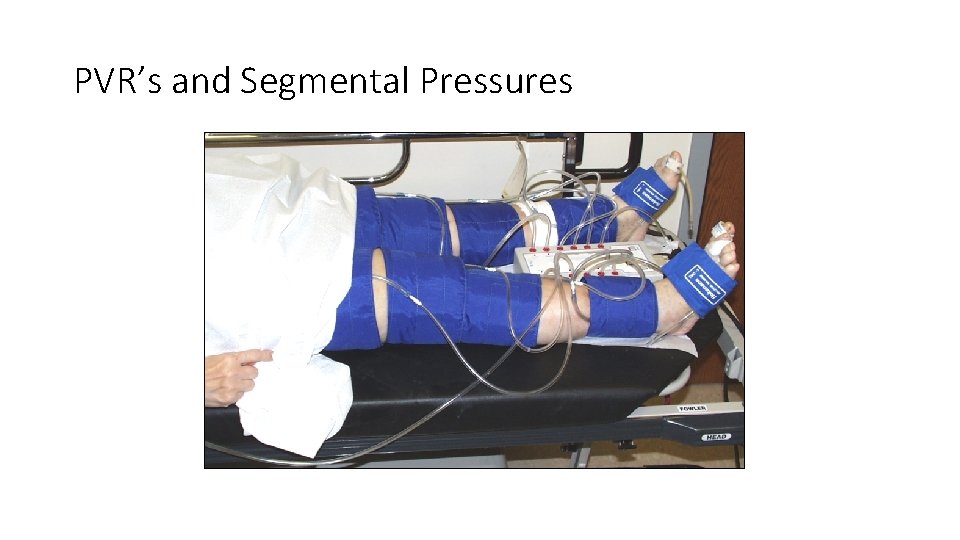
PVR’s and Segmental Pressures
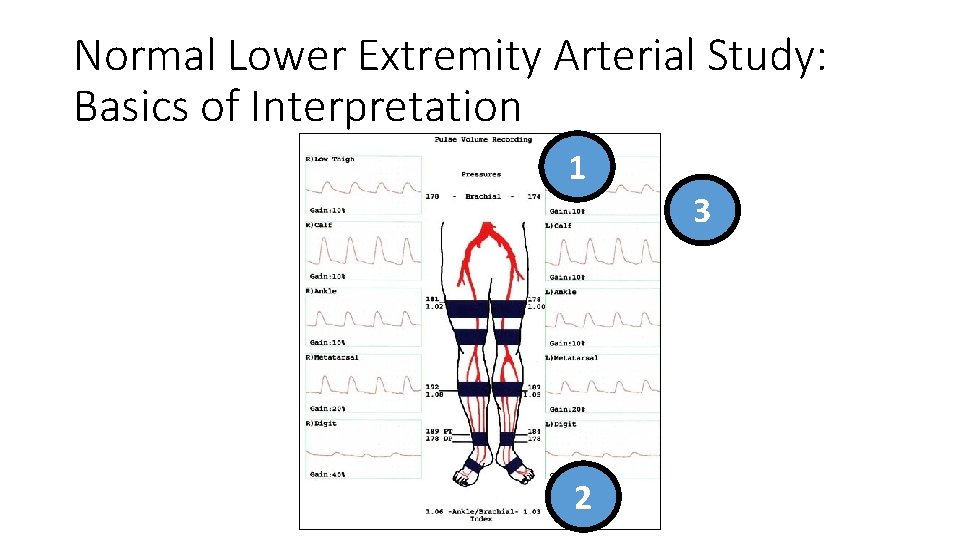
Normal Lower Extremity Arterial Study: Basics of Interpretation 1 2 3
Adding Exercise Adds Sensitivity
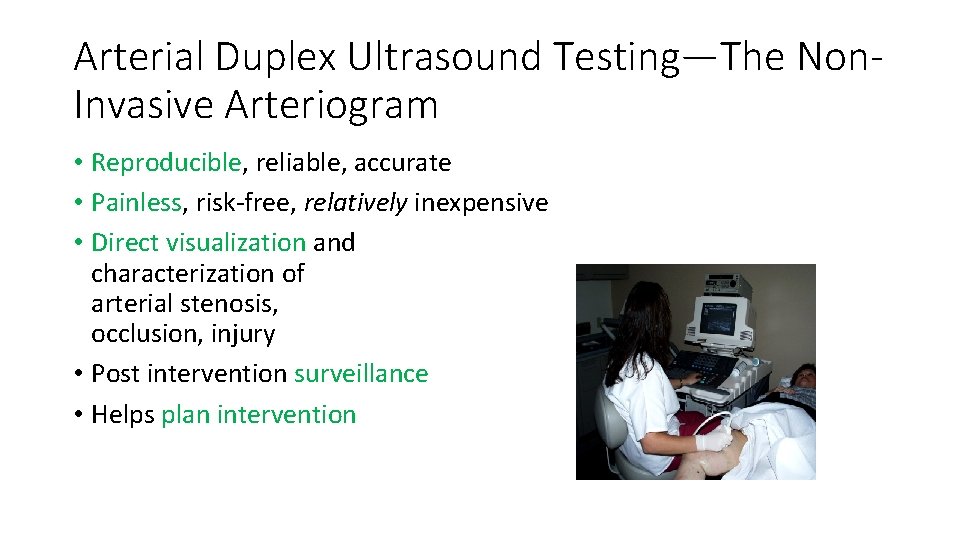
Arterial Duplex Ultrasound Testing—The Non. Invasive Arteriogram • Reproducible, reliable, accurate • Painless, risk-free, relatively inexpensive • Direct visualization and characterization of arterial stenosis, occlusion, injury • Post intervention surveillance • Helps plan intervention
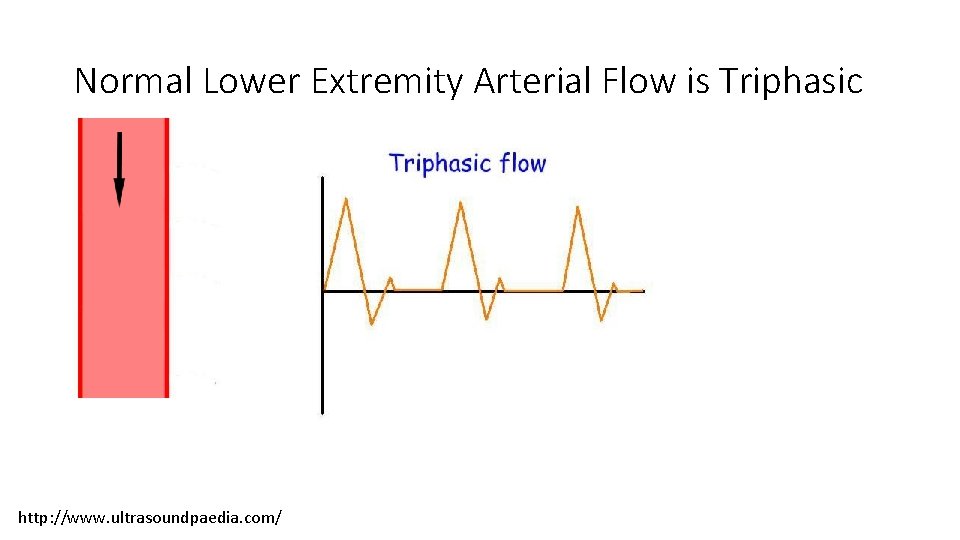
Normal Lower Extremity Arterial Flow is Triphasic http: //www. ultrasoundpaedia. com/
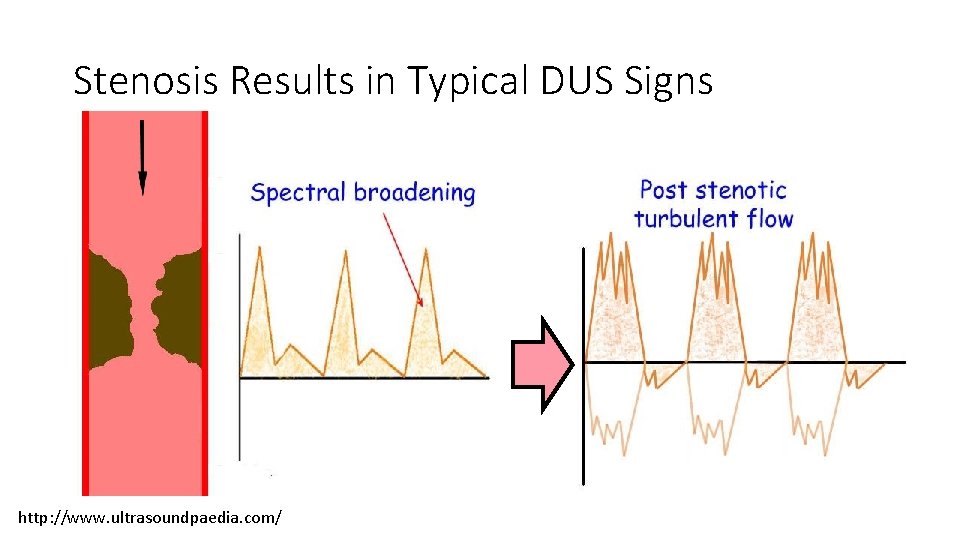
Stenosis Results in Typical DUS Signs http: //www. ultrasoundpaedia. com/
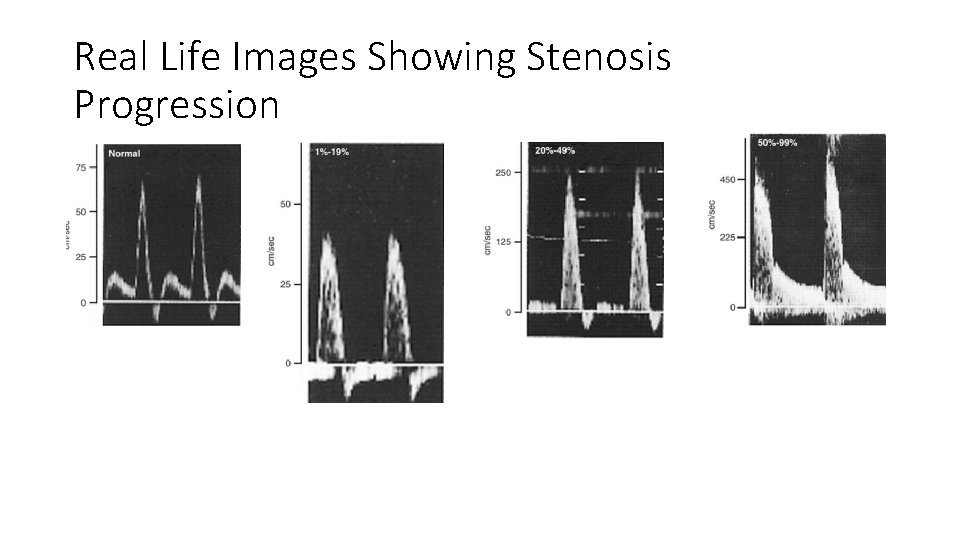
Real Life Images Showing Stenosis Progression
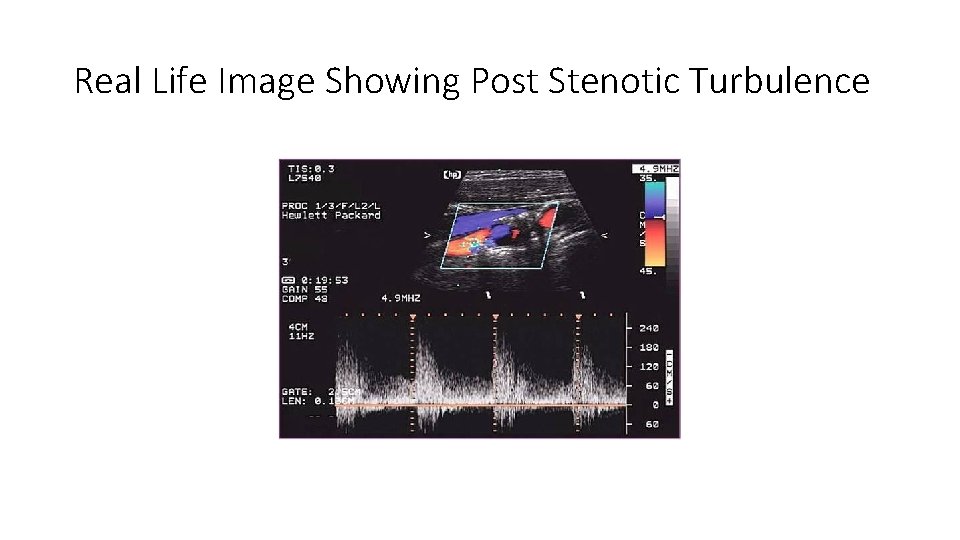
Real Life Image Showing Post Stenotic Turbulence
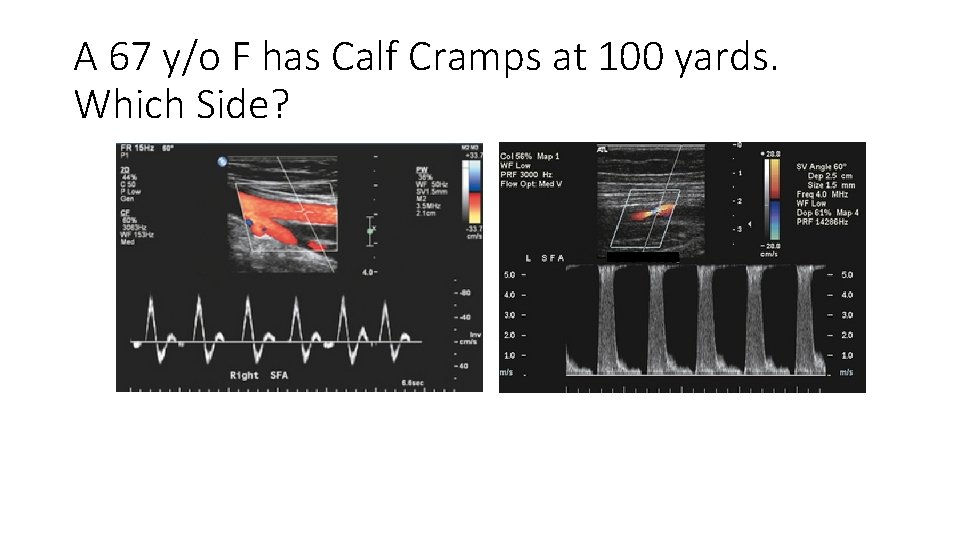
A 67 y/o F has Calf Cramps at 100 yards. Which Side?
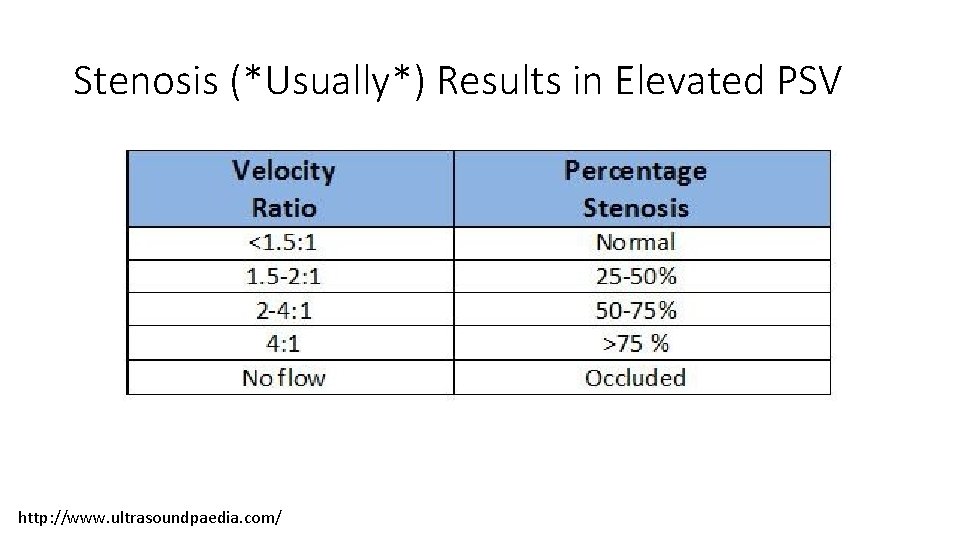
Stenosis (*Usually*) Results in Elevated PSV http: //www. ultrasoundpaedia. com/
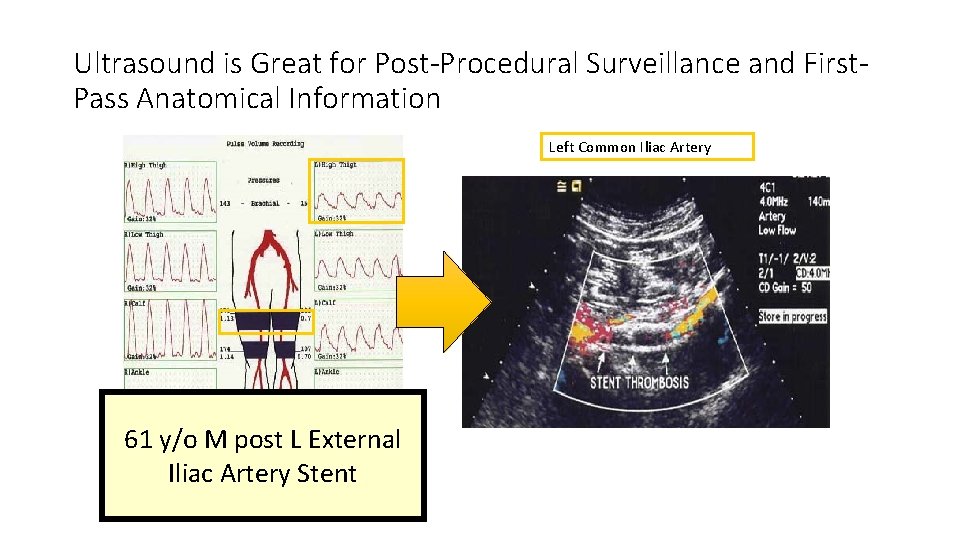
Ultrasound is Great for Post-Procedural Surveillance and First. Pass Anatomical Information Left Common Iliac Artery 61 y/o M post L External Iliac Artery Stent
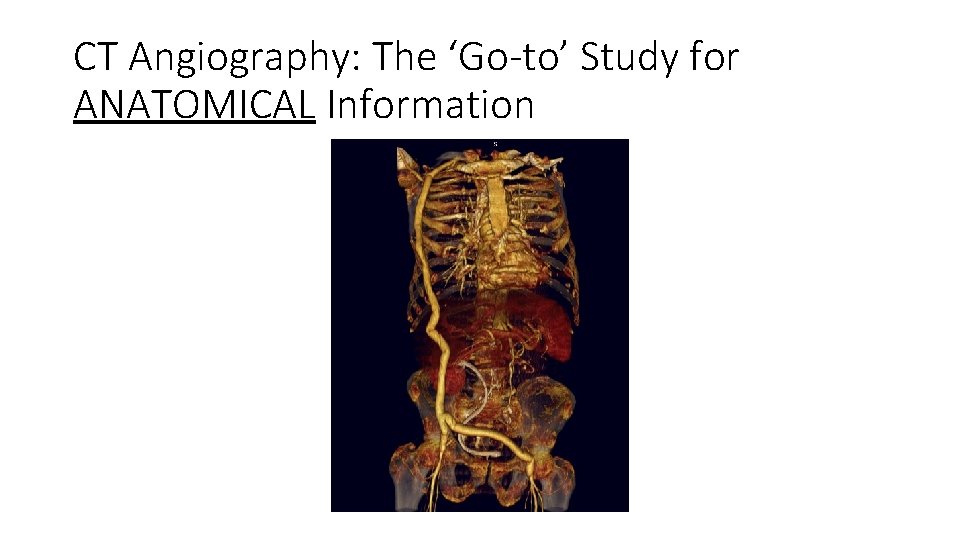
CT Angiography: The ‘Go-to’ Study for ANATOMICAL Information
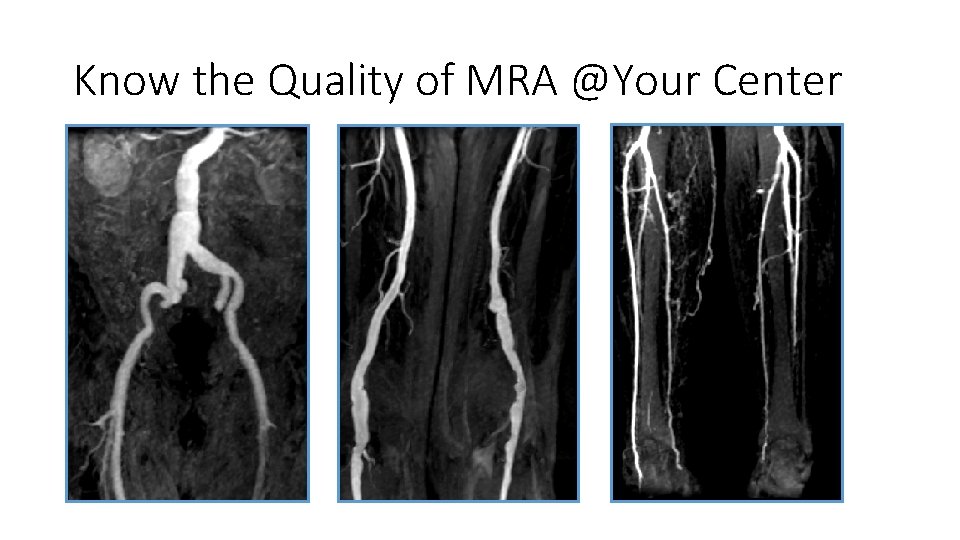
Know the Quality of MRA @Your Center
@Angiologist