
The application of realtime distraction monitoring to driver
- Slides: 8
The application of real-time distraction monitoring to driver safety systems Matthew R. Smith Gerald J. Witt Debi L. Bakowski January 25, 2007
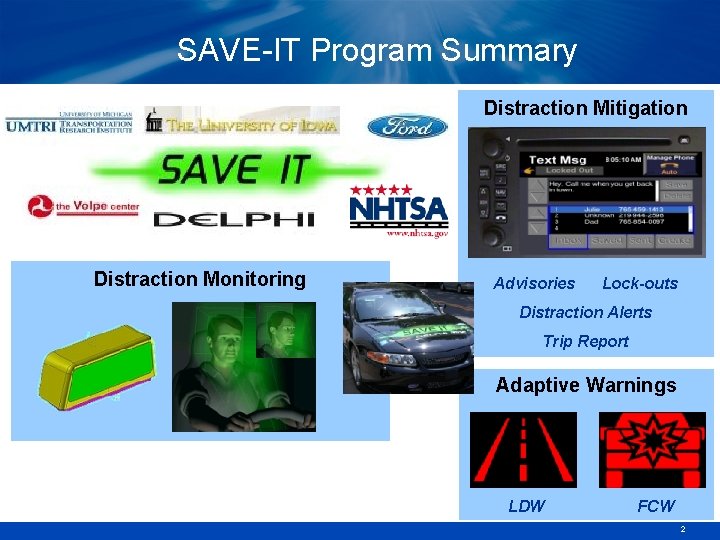
SAVE-IT Program Summary Distraction Mitigation Distraction Monitoring Advisories Lock-outs Distraction Alerts Trip Report Adaptive Warnings LDW FCW 2
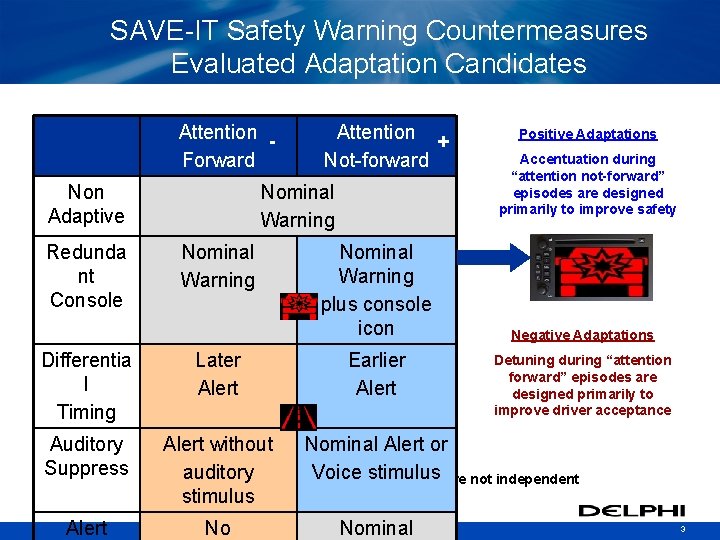
SAVE-IT Safety Warning Countermeasures Evaluated Adaptation Candidates Attention Forward Non Adaptive Redunda nt Console Differentia l Timing Auditory Suppress Alert Attention + Not-forward Nominal Warning Later Alert Nominal Warning plus console icon Earlier Alert Positive Adaptations Accentuation during “attention not-forward” episodes are designed primarily to improve safety Negative Adaptations Detuning during “attention forward” episodes are designed primarily to improve driver acceptance Alert without Nominal Alert or auditory stimulus are not independent Note: Safety benefit and. Voice driver acceptance stimulus No Nominal 3
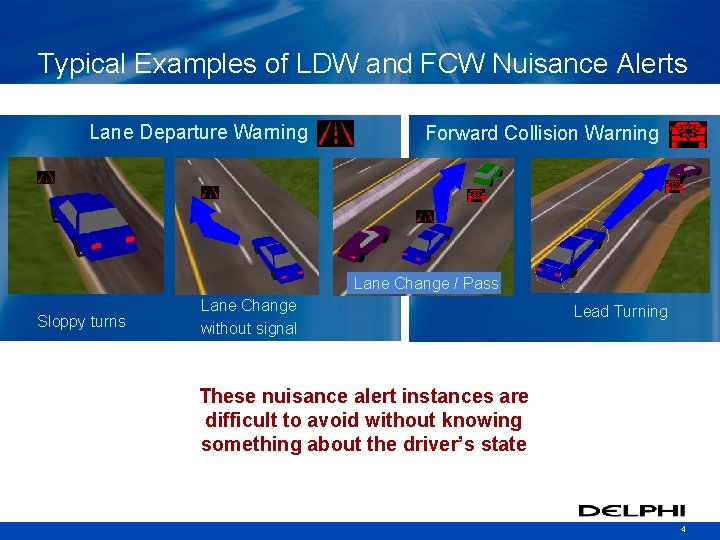
Typical Examples of LDW and FCW Nuisance Alerts Lane Departure Warning Forward Collision Warning ` Lane Change / Pass Sloppy turns Lane Change without signal Lead Turning These nuisance alert instances are difficult to avoid without knowing something about the driver’s state 4
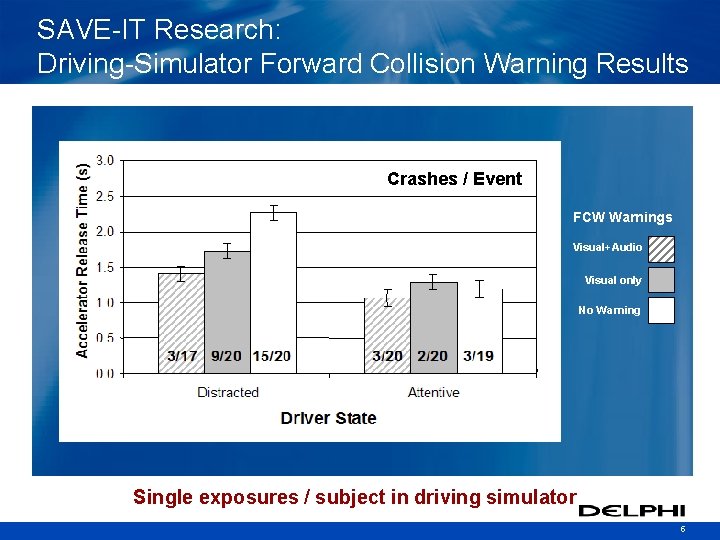
SAVE-IT Research: Driving-Simulator Forward Collision Warning Results Crashes / Event FCW Warnings Visual+Audio Visual only No Warning Single exposures / subject in driving simulator 5
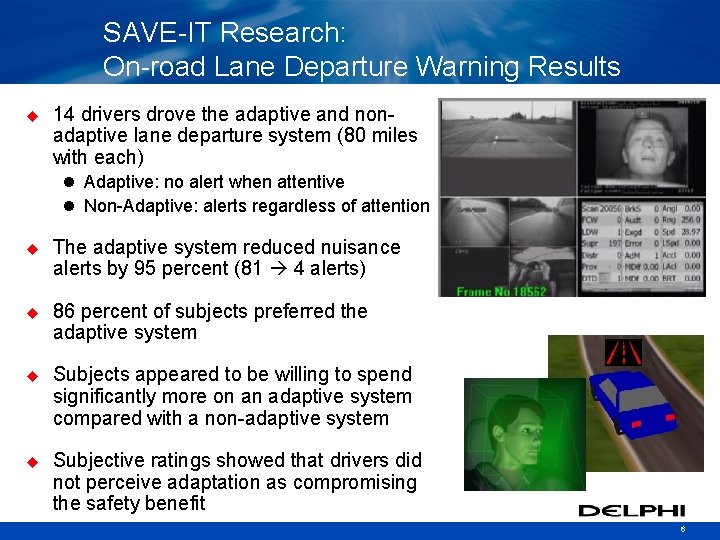
SAVE-IT Research: On-road Lane Departure Warning Results u 14 drivers drove the adaptive and nonadaptive lane departure system (80 miles with each) l Adaptive: no alert when attentive l Non-Adaptive: alerts regardless of attention u The adaptive system reduced nuisance alerts by 95 percent (81 4 alerts) u 86 percent of subjects preferred the adaptive system u Subjects appeared to be willing to spend significantly more on an adaptive system compared with a non-adaptive system u Subjective ratings showed that drivers did not perceive adaptation as compromising the safety benefit 6
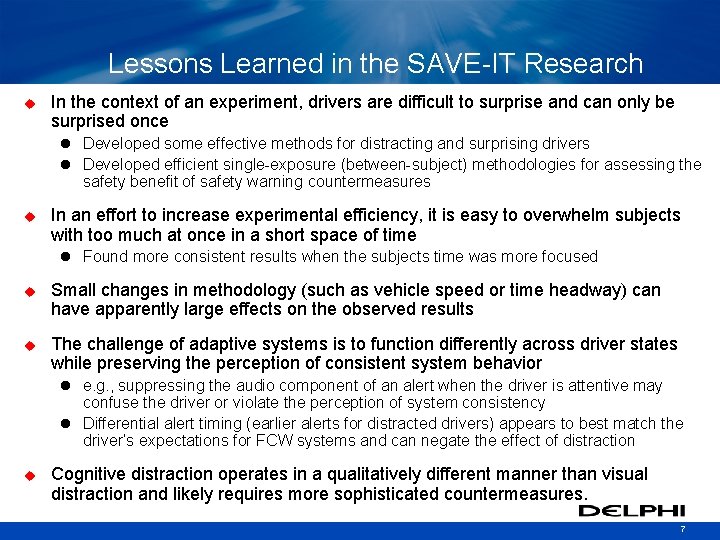
Lessons Learned in the SAVE-IT Research u In the context of an experiment, drivers are difficult to surprise and can only be surprised once l Developed some effective methods for distracting and surprising drivers l Developed efficient single-exposure (between-subject) methodologies for assessing the safety benefit of safety warning countermeasures u In an effort to increase experimental efficiency, it is easy to overwhelm subjects with too much at once in a short space of time l Found more consistent results when the subjects time was more focused u Small changes in methodology (such as vehicle speed or time headway) can have apparently large effects on the observed results u The challenge of adaptive systems is to function differently across driver states while preserving the perception of consistent system behavior l e. g. , suppressing the audio component of an alert when the driver is attentive may confuse the driver or violate the perception of system consistency l Differential alert timing (earlier alerts for distracted drivers) appears to best match the driver’s expectations for FCW systems and can negate the effect of distraction u Cognitive distraction operates in a qualitatively different manner than visual distraction and likely requires more sophisticated countermeasures. 7
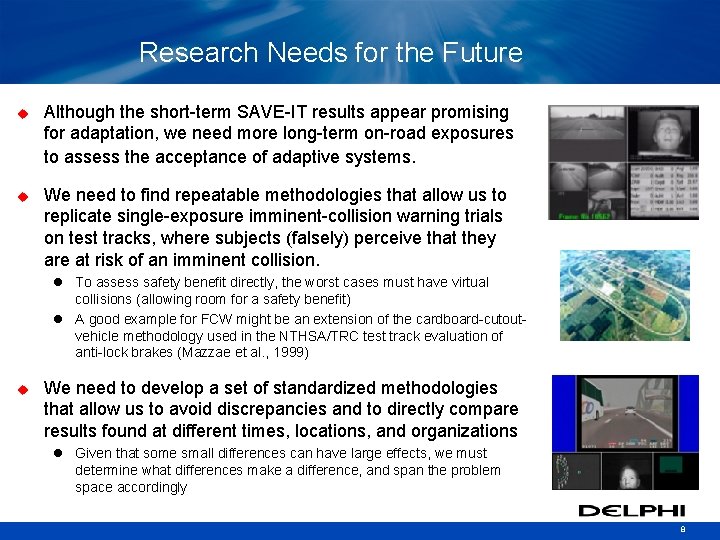
Research Needs for the Future u Although the short-term SAVE-IT results appear promising for adaptation, we need more long-term on-road exposures to assess the acceptance of adaptive systems. u We need to find repeatable methodologies that allow us to replicate single-exposure imminent-collision warning trials on test tracks, where subjects (falsely) perceive that they are at risk of an imminent collision. l To assess safety benefit directly, the worst cases must have virtual collisions (allowing room for a safety benefit) l A good example for FCW might be an extension of the cardboard-cutoutvehicle methodology used in the NTHSA/TRC test track evaluation of anti-lock brakes (Mazzae et al. , 1999) u We need to develop a set of standardized methodologies that allow us to avoid discrepancies and to directly compare results found at different times, locations, and organizations l Given that some small differences can have large effects, we must determine what differences make a difference, and span the problem space accordingly 8