
The Anishinabek Education System FIRST NATION DIRECTORS OF
The Anishinabek Education System FIRST NATION DIRECTORS OF EDUCATION NATIONAL FORUM 2019
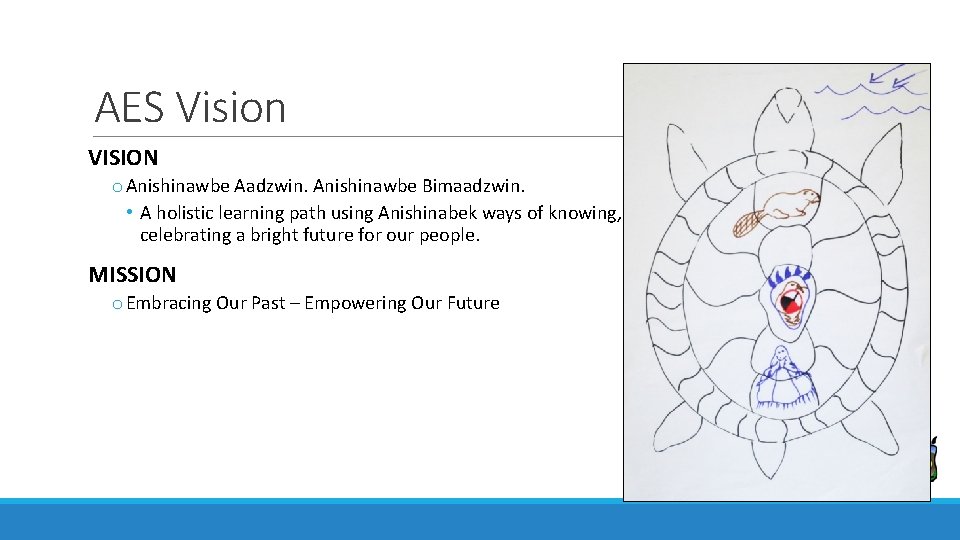
AES Vision VISION o Anishinawbe Aadzwin. Anishinawbe Bimaadzwin. • A holistic learning path using Anishinabek ways of knowing, celebrating a bright future for our people. MISSION o Embracing Our Past – Empowering Our Future
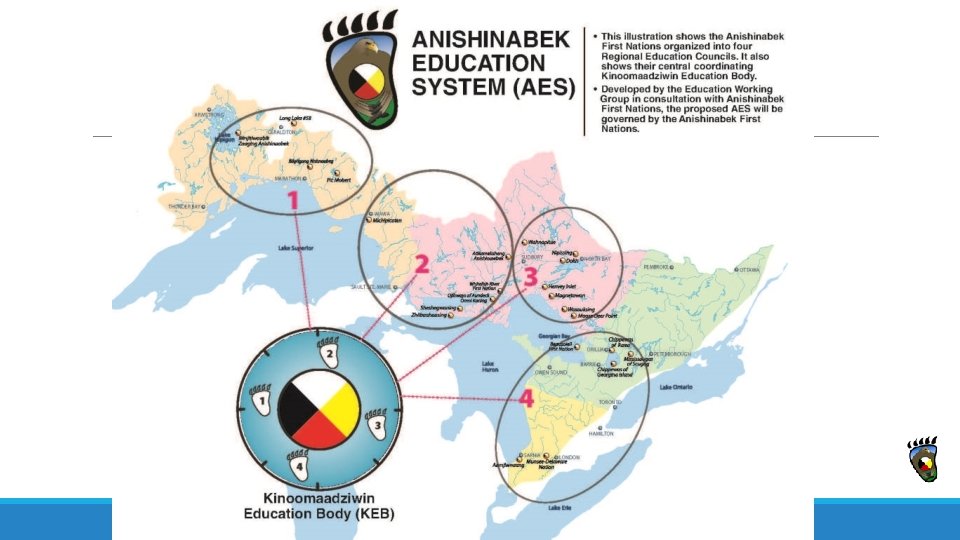
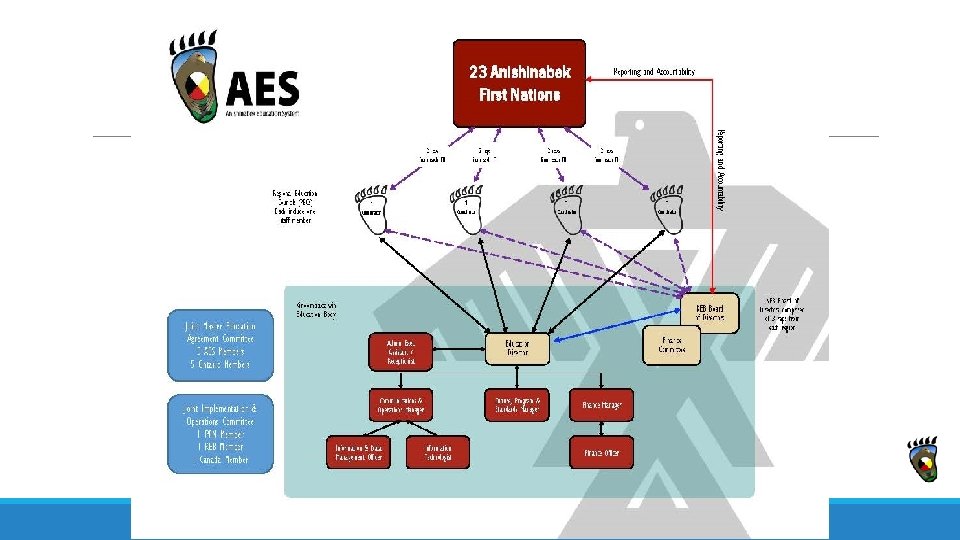
Established as a self-governing entity under the Anishinabek Nation Education Agreement Act Kinoomaadziwin Education Body Central body that administers funds received to operate the Anishinabek Education System Governed by a Board of Directors elected by the First Nations
Benefits of the AES Culturally appropriate Anishinaabe education Full control of Anishinabek education Minister of Indigenous Services has no authority over the Anishinabek Education System First Nations have full authority to determine priorities and expenditure of education funds The fiscal transfer is grant funding Increased student success
Benefits of the AES No changes to the ANEA or funding levels unless agreed to by the First Nations Negotiated price index and volume adjustors Discretionary funding (FNSSP, New Paths, Special Education) becomes core funding Federal investments in education may be included in selfgovernment Transfer Payment (General Funding Increase) May request additional funding for extraordinary circumstances, new programs and additional parties Own Source Revenue is not a factor in determining Education Transfer Payments New funding investments from the Province of Ontario
Challenges of the AES First Nations have to work together to: ◦ make decisions on education governance funding allocations (not program and services funding) ◦ identify educational priorities and how to address those priorities ◦ create system structures that reflect and respect First Nation jurisdiction ◦ secure sufficient funding to support the implementation of the AES vision of education
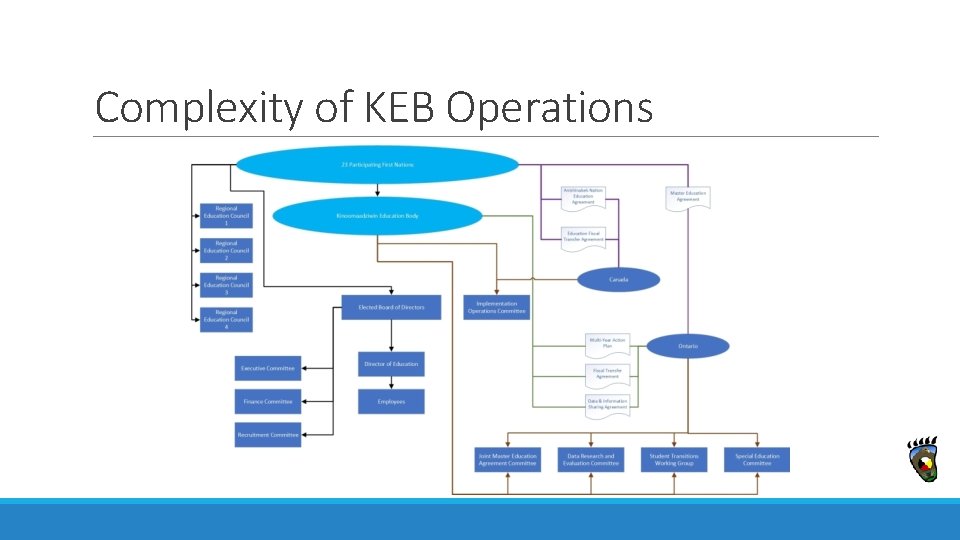
Complexity of KEB Operations
Overall Guiding Principles ANISHINABEK HAVE THE INHERENT RIGHT TO EDUCATE OUR CHILDREN ANISHINAABE EDUCATION IS BASED ON ANISHINAABE INTELLECTUAL, HOLISTIC KNOWLEDGE ANISHINAABE EDUCATION ENSURES THE PRESERVATION AND ONGOING DEVELOPMENT OF ANISHINABEK ANISHINAABE EDUCATION DEVELOPED BY ANISHINABEK WILL INCREASE STUDENT SUCCESS AND WELL-BEING
Education Goals Develop and operate a separate parallel publicly funded education system for the Anishinabek First Nations Negotiate educational partnerships and other arrangements to ensure the availability of educational programs and services to support the success and well-being of Anishinabek Students
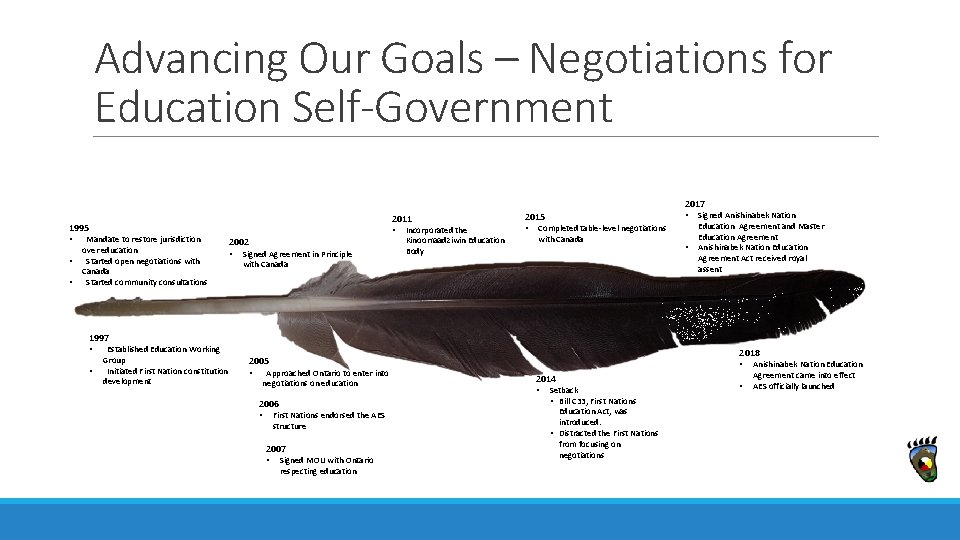
Advancing Our Goals – Negotiations for Education Self-Government 1995 • Mandate to restore jurisdiction • • over education Started open negotiations with Canada Started community consultations 2011 • Incorporated the 2002 • Signed Agreement in Principle Kinoomaadziwin Education Body 2015 • Completed table-level negotiations with Canada 1997 • Established Education Working • Group Initiated First Nation constitution development 2005 • Approached Ontario to enter into negotiations on education 2006 • First Nations endorsed the AES structure 2007 • Signed MOU with Ontario respecting education 2017 • Signed Anishinabek Nation • Education Agreement and Master Education Agreement Anishinabek Nation Education Agreement Act received royal assent 2018 • Anishinabek Nation Education 2014 • Setback • Bill C 33, First Nations Education Act, was introduced. • Distracted the First Nations from focusing on negotiations • Agreement came into effect AES officially launched
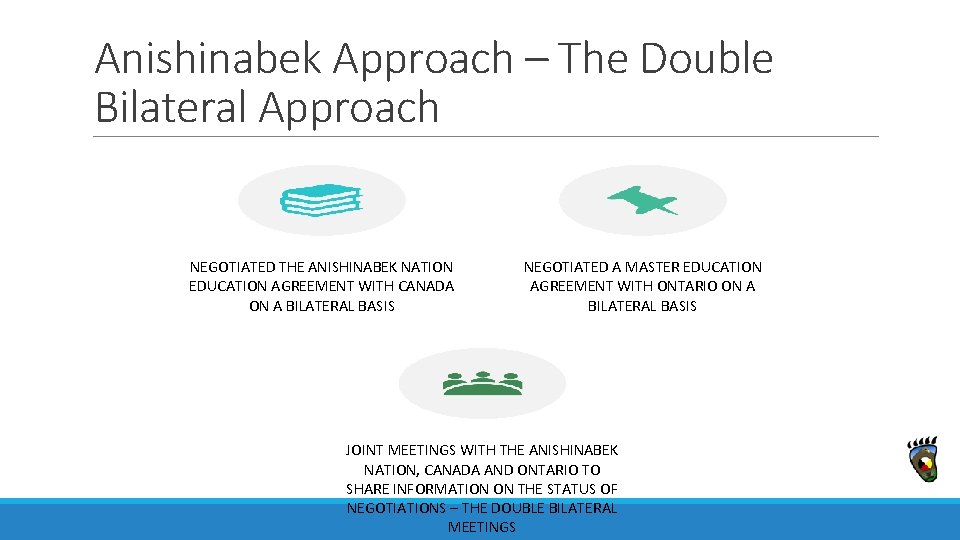
Anishinabek Approach – The Double Bilateral Approach NEGOTIATED THE ANISHINABEK NATION EDUCATION AGREEMENT WITH CANADA ON A BILATERAL BASIS NEGOTIATED A MASTER EDUCATION AGREEMENT WITH ONTARIO ON A BILATERAL BASIS JOINT MEETINGS WITH THE ANISHINABEK NATION, CANADA AND ONTARIO TO SHARE INFORMATION ON THE STATUS OF NEGOTIATIONS – THE DOUBLE BILATERAL MEETINGS
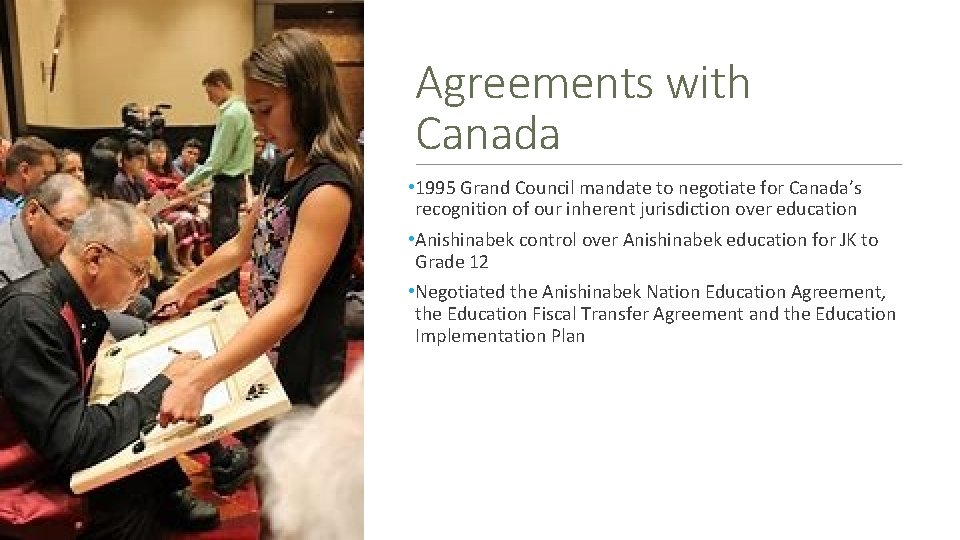
Agreements with Canada • 1995 Grand Council mandate to negotiate for Canada’s recognition of our inherent jurisdiction over education • Anishinabek control over Anishinabek education for JK to Grade 12 • Negotiated the Anishinabek Nation Education Agreement, the Education Fiscal Transfer Agreement and the Education Implementation Plan
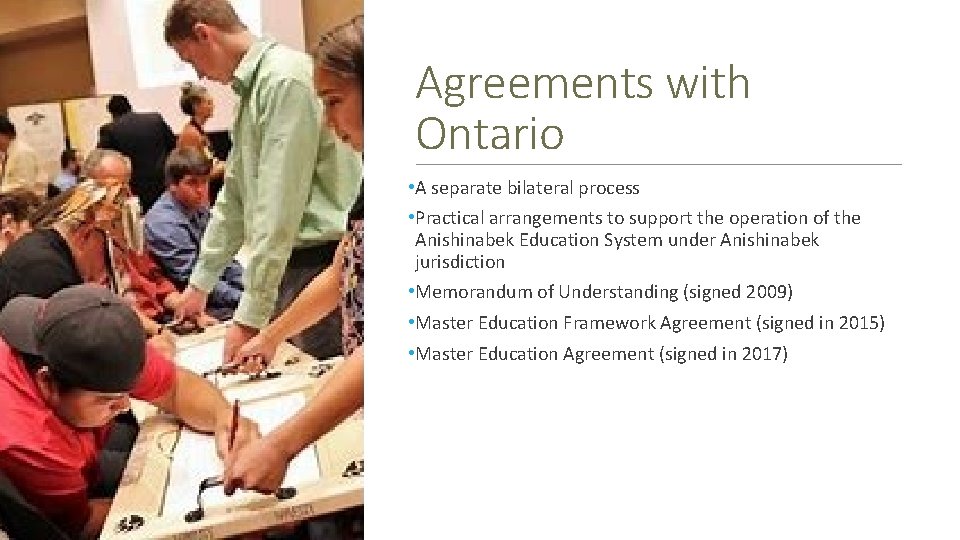
Agreements with Ontario • A separate bilateral process • Practical arrangements to support the operation of the Anishinabek Education System under Anishinabek jurisdiction • Memorandum of Understanding (signed 2009) • Master Education Framework Agreement (signed in 2015) • Master Education Agreement (signed in 2017)
Strategic Plan to Establish the AES • Grand Council Resolution (2013) • First Nation representative board of directors of the Kinoomaadzawin Education Body established and responsible for implementing the Strategic Plan (2013): ◦ Establish partnerships ◦ Support discussions with Ontario ◦ Education Communications
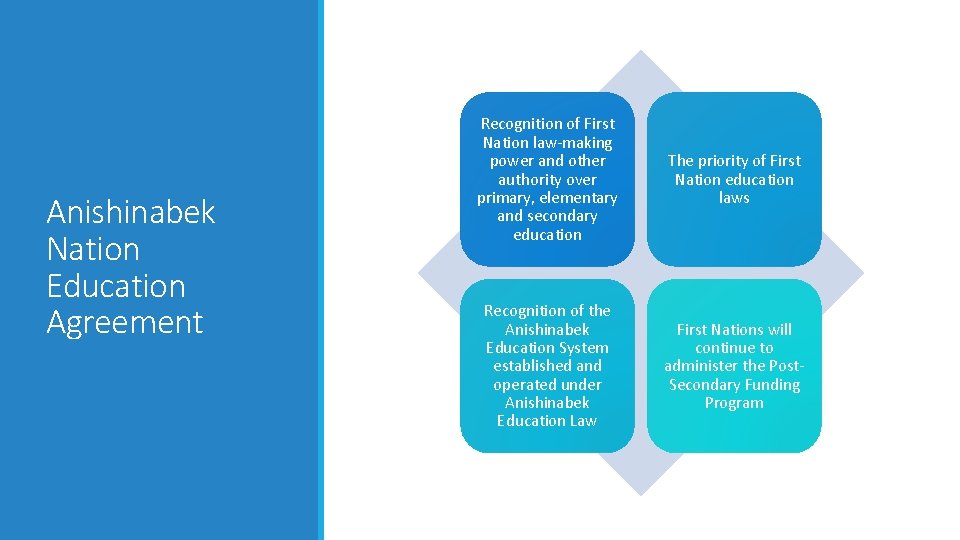
Anishinabek Nation Education Agreement Recognition of First Nation law-making power and other authority over primary, elementary and secondary education The priority of First Nation education laws Recognition of the Anishinabek Education System established and operated under Anishinabek Education Law First Nations will continue to administer the Post- Secondary Funding Program
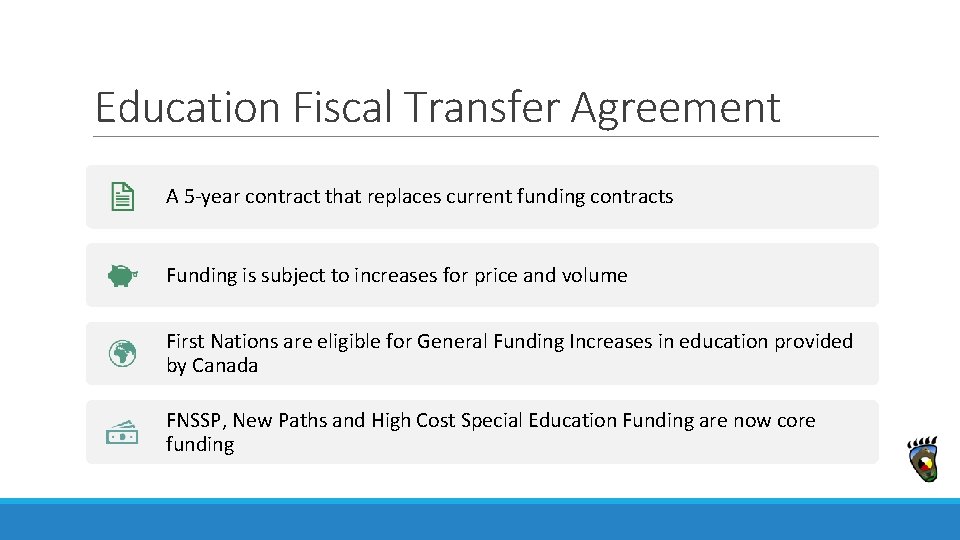
Education Fiscal Transfer Agreement A 5 -year contract that replaces current funding contracts Funding is subject to increases for price and volume First Nations are eligible for General Funding Increases in education provided by Canada FNSSP, New Paths and High Cost Special Education Funding are now core funding
Bill C-61 Legislation to enact the Anishinabek Education Agreement
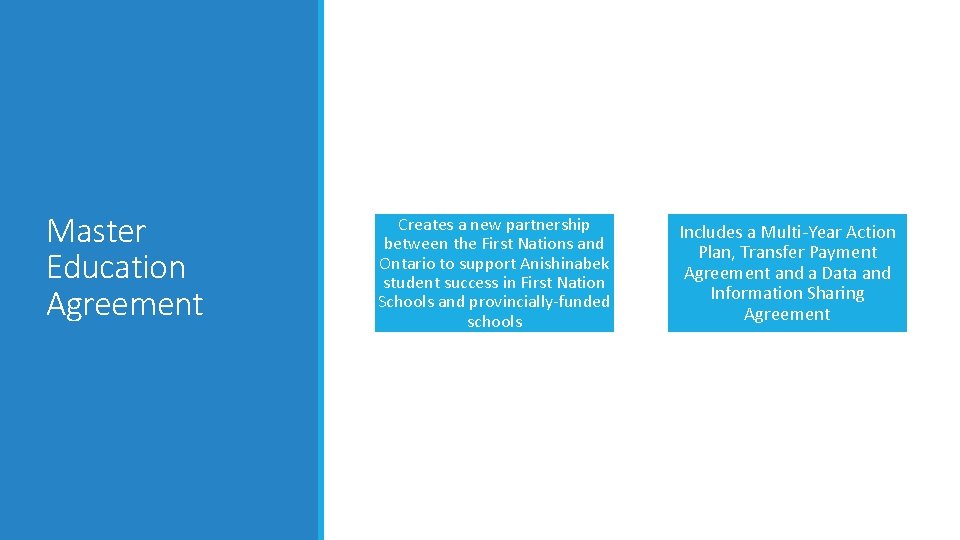
Master Education Agreement Creates a new partnership between the First Nations and Ontario to support Anishinabek student success in First Nation Schools and provincially-funded schools Includes a Multi-Year Action Plan, Transfer Payment Agreement and a Data and Information Sharing Agreement
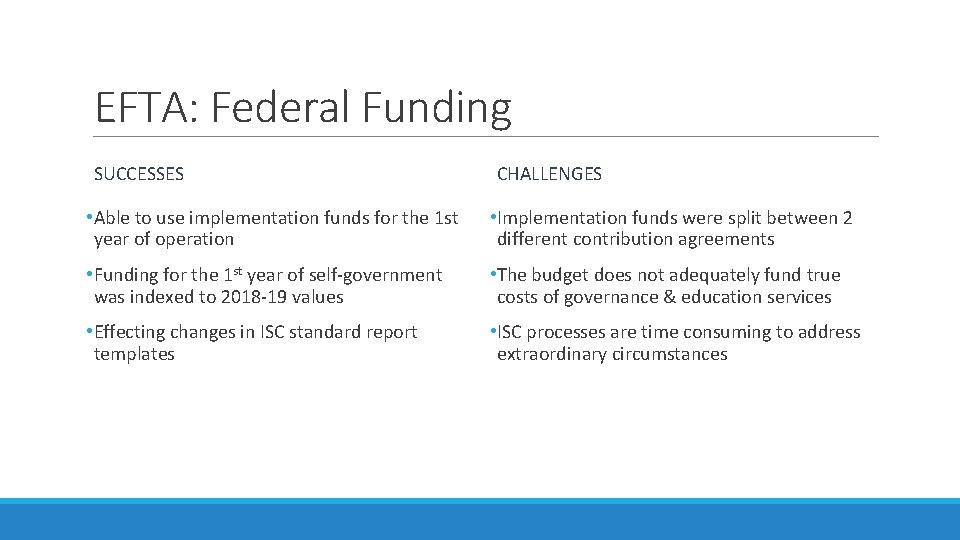
EFTA: Federal Funding SUCCESSES CHALLENGES • Able to use implementation funds for the 1 st year of operation • Implementation funds were split between 2 different contribution agreements • Funding for the 1 st year of self-government was indexed to 2018 -19 values • The budget does not adequately fund true costs of governance & education services • Effecting changes in ISC standard report templates • ISC processes are time consuming to address extraordinary circumstances
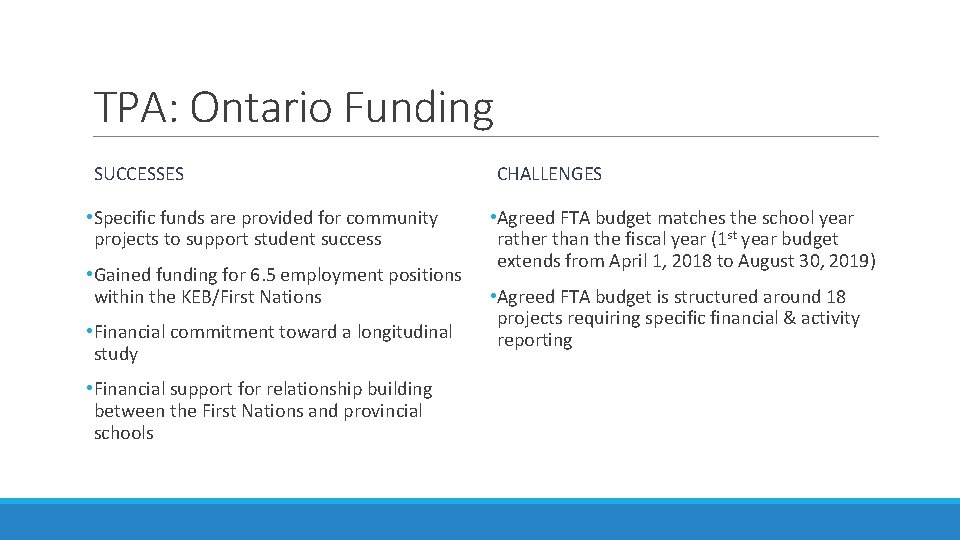
TPA: Ontario Funding SUCCESSES • Specific funds are provided for community projects to support student success • Gained funding for 6. 5 employment positions within the KEB/First Nations • Financial commitment toward a longitudinal study • Financial support for relationship building between the First Nations and provincial schools CHALLENGES • Agreed FTA budget matches the school year rather than the fiscal year (1 st year budget extends from April 1, 2018 to August 30, 2019) • Agreed FTA budget is structured around 18 projects requiring specific financial & activity reporting
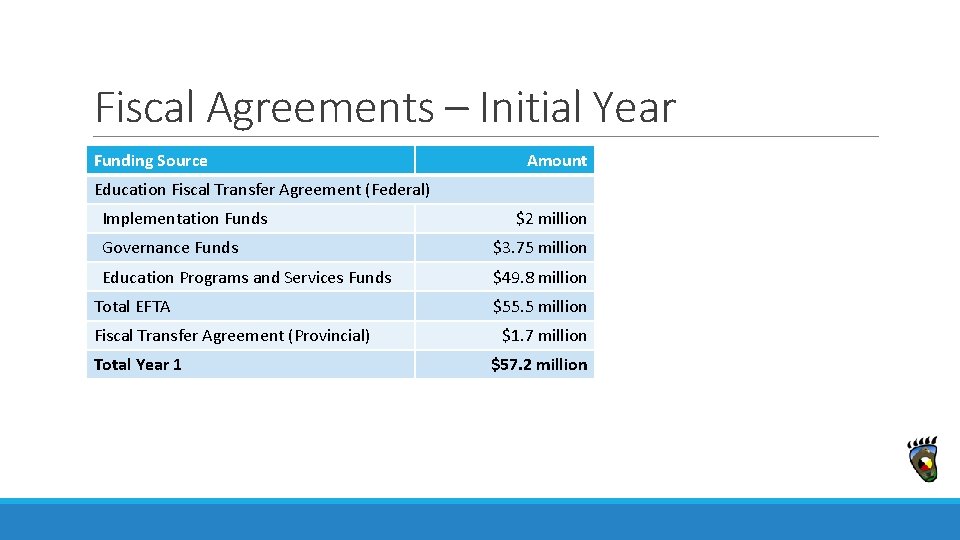
Fiscal Agreements – Initial Year Funding Source Amount Education Fiscal Transfer Agreement (Federal) Implementation Funds $2 million Governance Funds $3. 75 million Education Programs and Services Funds $49. 8 million Total EFTA $55. 5 million Fiscal Transfer Agreement (Provincial) Total Year 1 $1. 7 million $57. 2 million
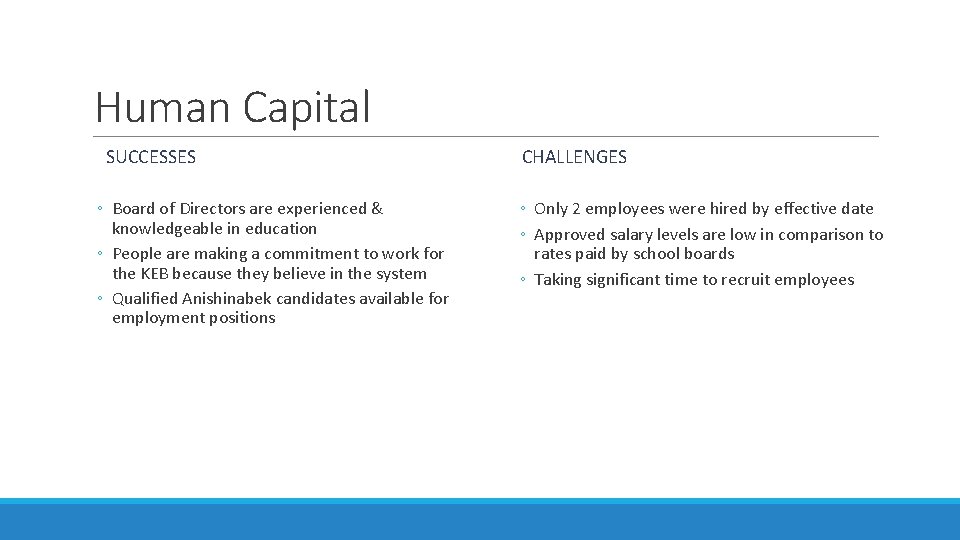
Human Capital SUCCESSES ◦ Board of Directors are experienced & knowledgeable in education ◦ People are making a commitment to work for the KEB because they believe in the system ◦ Qualified Anishinabek candidates available for employment positions CHALLENGES ◦ Only 2 employees were hired by effective date ◦ Approved salary levels are low in comparison to rates paid by school boards ◦ Taking significant time to recruit employees
Lessons Learned – Human Capital • Hire full complement of staff prior to implementation of the system to ensure effective and efficient operations • Offer salaries and benefits comparable to similar positions in other education systems • Orientation and on-going training are required on the new education system • Required work place technology should be available and operational in advance of staffing positions
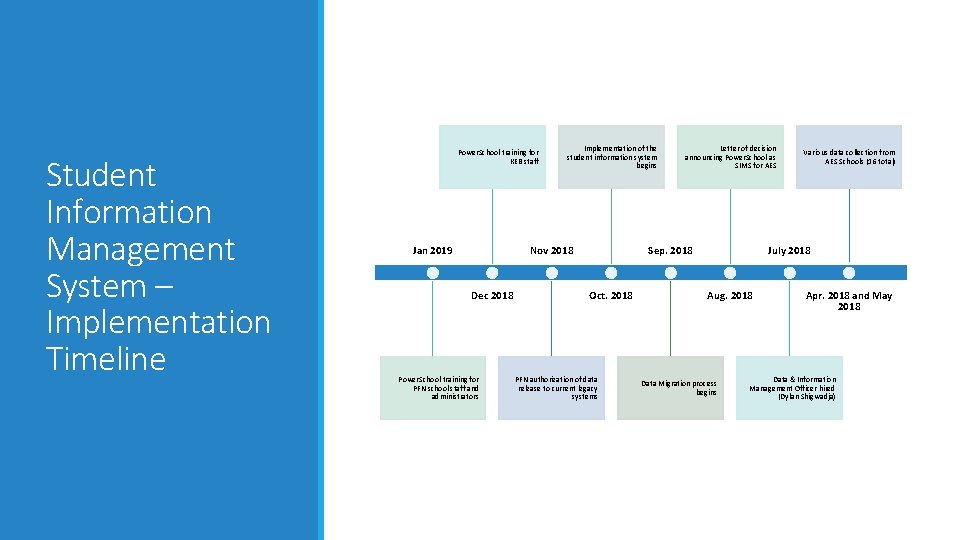
Student Information Management System – Implementation Timeline Power. School training for KEB staff Jan 2019 Implementation of the student information system begins Nov 2018 Dec 2018 Power. School training for PFN school staff and administrators Letter of decision announcing Power. School as SIMS for AES Sep. 2018 Oct. 2018 PFN authorization of data release to current legacy systems Various data collection from AES Schools (16 total) July 2018 Aug. 2018 Data Migration process begins Apr. 2018 and May 2018 Data & Information Management Officer hired (Dylan Shigwadja)
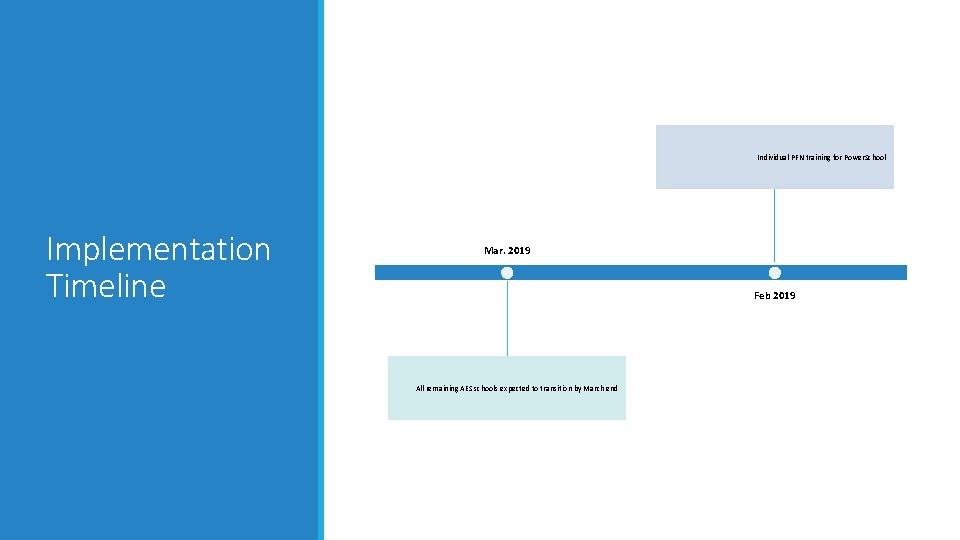
Individual PFN training for Power. School Implementation Timeline Mar. 2019 Feb 2019 All remaining AES schools expected to transition by March end

Information System SUCCESSES • Technology has significantly advanced since the start of EFTA negotiations. Some costs are significantly lower, i. e. teleconference, video conferencing, student information management system • The Master Education Agreement provides for the assignment of an OEN to each First Nation student CHALLENGES • The First Nations expected that the AES student information management system would be operational April 1 st • The 23 First Nations are not operating on the same information management system platforms • Data & Information Sharing Agreement outlines how student data, from the provincial system, will be shared within the AES • The student data for those who attend provincial schools are maintained on school board information management systems • Access to IT support from external providers
Lessons Learned – Information System • It takes significant time to secure the requisite approvals to allow for the sharing and use of student data and information • Securing privacy of student data and information is complicated and requires focused attention • Implementation of a common student information management system among the First Nation will take time • Collection of student data and information is important for decision-making on investments in education as well as assessing and reporting on student success and achievement
Banking SUCCESSES • Great relationship with the RBC • Signing authorities and staff worked within existing limitations to meet banking requirements • Adapted internal processes to address challenges CHALLENGES • Bank signatories are spread across Northern Ontario • Transfers to First Nations are significant • Did not fully understand the online banking requirements & limitations
Lessons Learned - Banking • Need a strong relationship with account manager at your financial institution • Set up & training on online banking system is crucial • Effective controls over electronic funds transfer are important

Communications The development of a communications strategy has started. Until this strategy is approved by the board, the following is taking place: ◦ Development of KEB website ◦ Twitter Account ◦ Facebook Account ◦ Signage and Posters ◦ Board Communiqués ◦ Monthly Newsletter to 23 PFNs
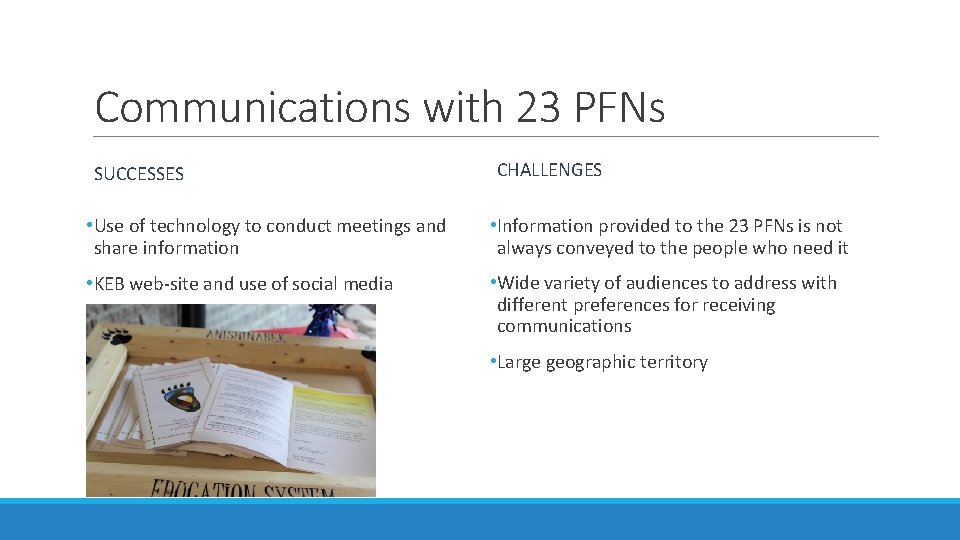
Communications with 23 PFNs SUCCESSES CHALLENGES • Use of technology to conduct meetings and share information • Information provided to the 23 PFNs is not always conveyed to the people who need it • KEB web-site and use of social media • Wide variety of audiences to address with different preferences for receiving communications • Large geographic territory
Lessons Learned - Communications • Meet personally with each First Nation • Important to repeat the same message to the PFNs to ensure the information gets to the right people • Need to reach political leadership, education staff and parents
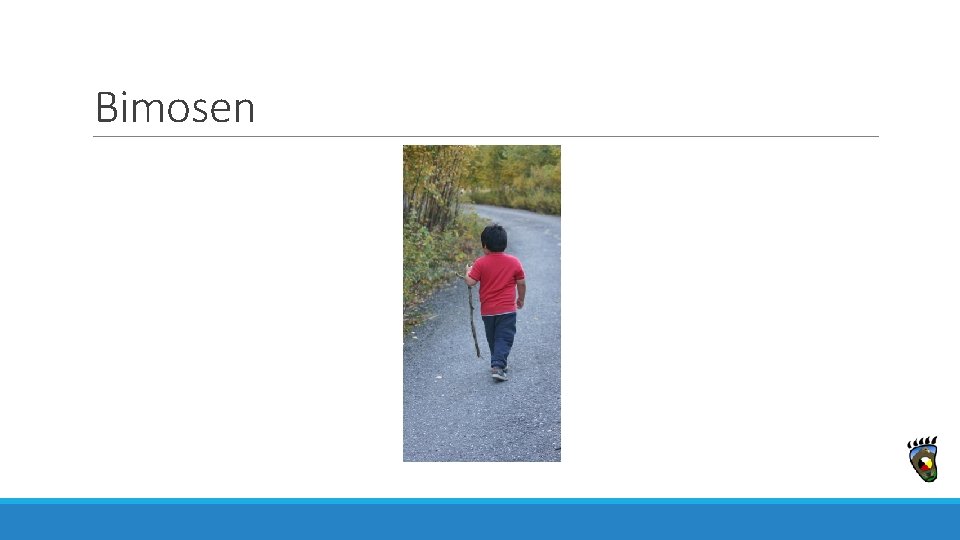
Bimosen
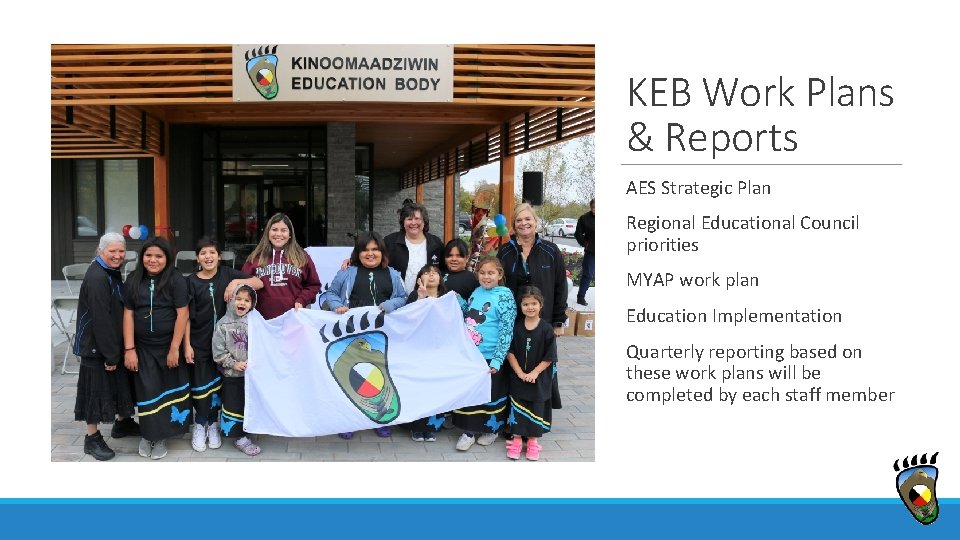
KEB Work Plans & Reports AES Strategic Plan Regional Educational Council priorities MYAP work plan Education Implementation Quarterly reporting based on these work plans will be completed by each staff member

Niigaan Gdizhaami Youth Forum The 4 th Annual Niigaan Gdizhaami – We are Moving Forward Together Forum will be held in February 2019 in Toronto The 2 nd forum that Anishinabek youth formally participate in with representatives from the 23 Anishinabek First Nations, EDU and Ontario District School Boards.
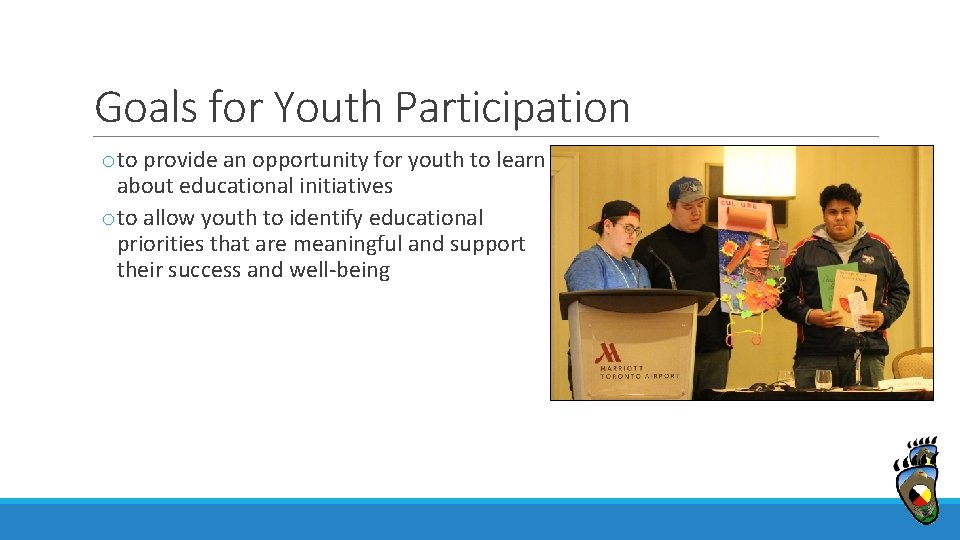
Goals for Youth Participation oto provide an opportunity for youth to learn about educational initiatives oto allow youth to identify educational priorities that are meaningful and support their success and well-being
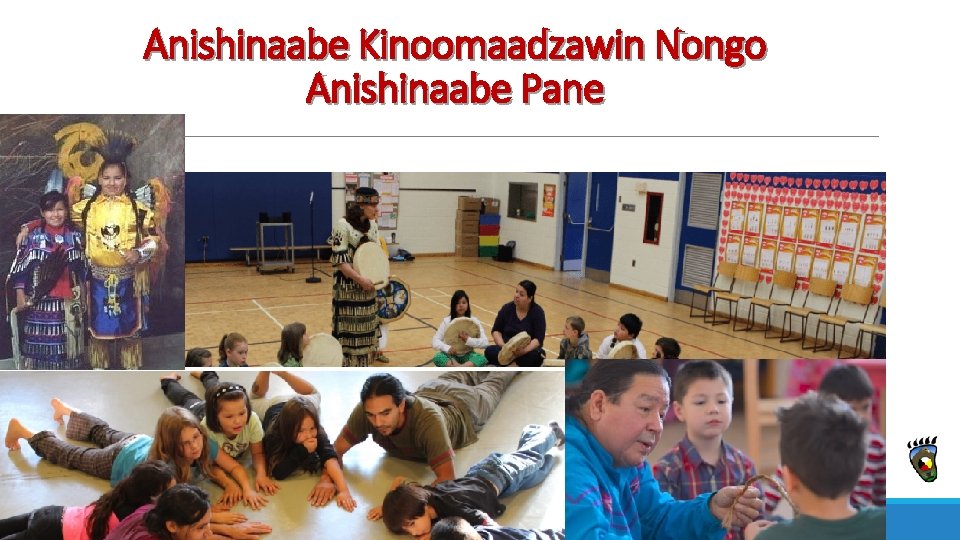
Anishinaabe Kinoomaadzawin Nongo Anishinaabe Pane
- Slides: 39