
The Anglo Saxon Epic Hero Beowulfs Inner Child
The Anglo Saxon Epic Hero Beowulf’s Inner Child
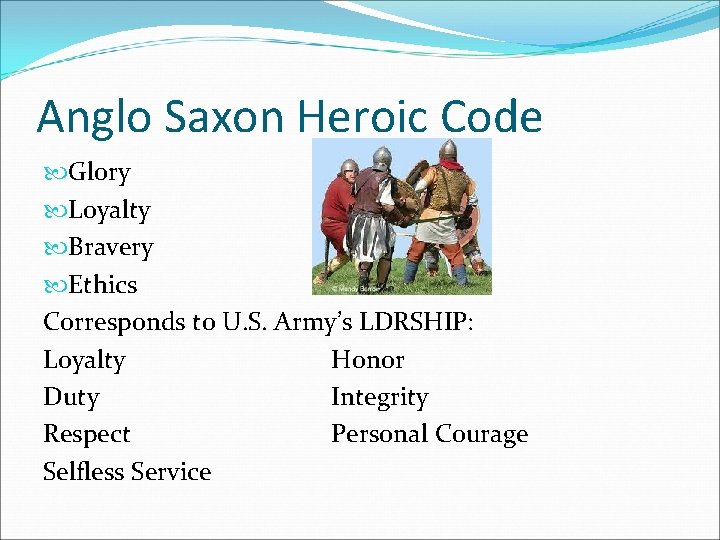
Anglo Saxon Heroic Code Glory Loyalty Bravery Ethics Corresponds to U. S. Army’s LDRSHIP: Loyalty Honor Duty Integrity Respect Personal Courage Selfless Service
Symbolism in Beowulf Light vs. Dark Good vs. Evil Hand-to-hand combat as spiritual battle Christian symbolism abounds: descent into hell, allusion to Grendel as descendant of Cain, dragon as representative of elemental evil (Christian symbolism inserted into tale by well-meaning 8 th-century monk)
Core Anglo-Saxon Values Loyalty to thane, or tribal leader Thane gives gifts to his people for heroic deeds; in this way maintains loyalty and unity Boasting and feasting are integral to Anglo-Saxon society No concept of an afterlife – glory is to be attained through great accomplishment in life; immortality gained through repetition of hero’s story Scop, or storyteller, valued as keeper of oral tradition Concept of wyrd, or fate, as determiner of destiny
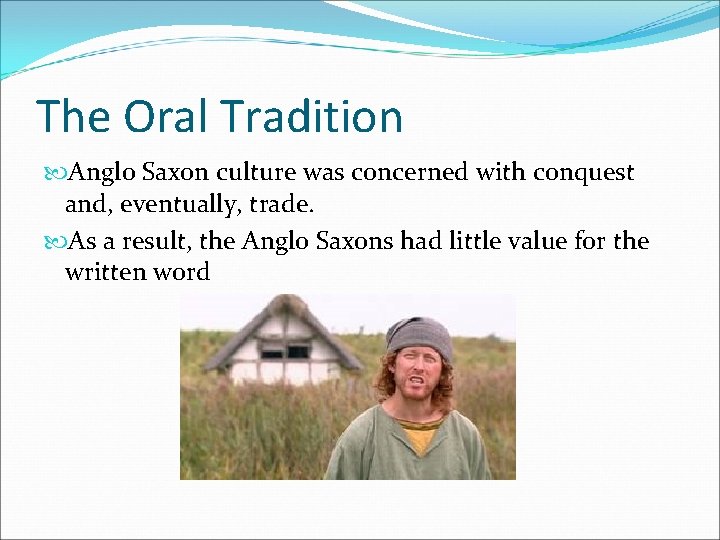
The Oral Tradition Anglo Saxon culture was concerned with conquest and, eventually, trade. As a result, the Anglo Saxons had little value for the written word
Anglo-Saxon Poetry: An Oral Tradition 1. Alliteration Anglo-Saxon poetry is alliterative rather than rhyming. Alliteration refers to repeating identical consonants, particularly in stressed syllables. For example: “There Théoden fell, Thengling mighty. ” “The elder warrior, unwounded, sinks down. ” The underlined portions of text are alliterations. The general rules in Anglo-Saxon poetry are that all vowels alliterate each other, and that alliteration always occurs on a stressed syllable.
Kennings Anglo-Saxon poetry uses kennings, which are descriptive names usually comprised of two nouns, i. e. , “whale road” to describe the sea. In short, a kenning replaces more bland nouns with evocative impressions. For example, rather than using the word “blood, ” the kenning “wound-dew” is more suggestive.
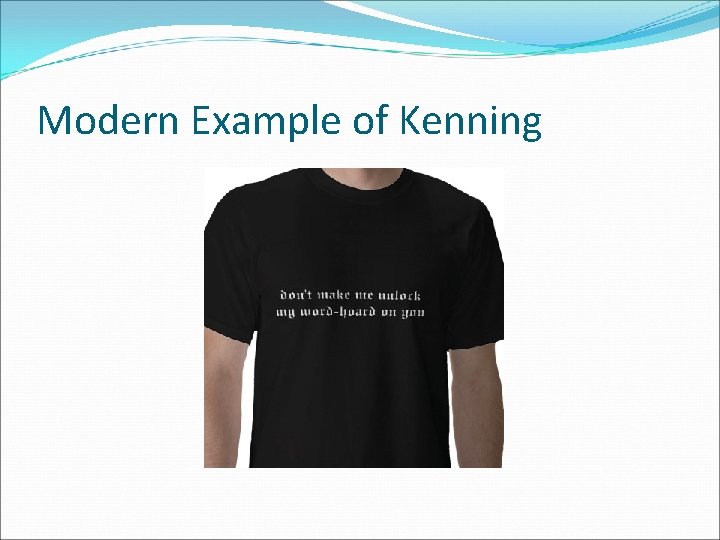
Modern Example of Kenning
Formula Part of the formula for Anglo Saxon poetry was careful description of persons and their roles in society. a. Example: Wiglaf, the son of Weahston, spoke true words. b. Example: The guard spoke when he sat on his horse, a fearless officer. Caesuras, or intentional pauses in the middle of a line: “There Théoden fell, || Thengling mighty. ” “The elder warrior, unwounded, sinks down
Common Themes The following are some of the most common themes or subjects mentioned in Anglo-Saxon poetry; even if not particularly appropriate to the poem’s main story, these words or ideas will often appear in the poetry: Battle, warriors; seas; storms; ravens; eagles; wolves; death, dying; fate, destiny; nobles, rulers; weapons and armor.
- Slides: 10