
The and Elements Principles of Art The Elements
- Slides: 24
The and Elements Principles of Art
The Elements of Art The building blocks or ingredients of art.
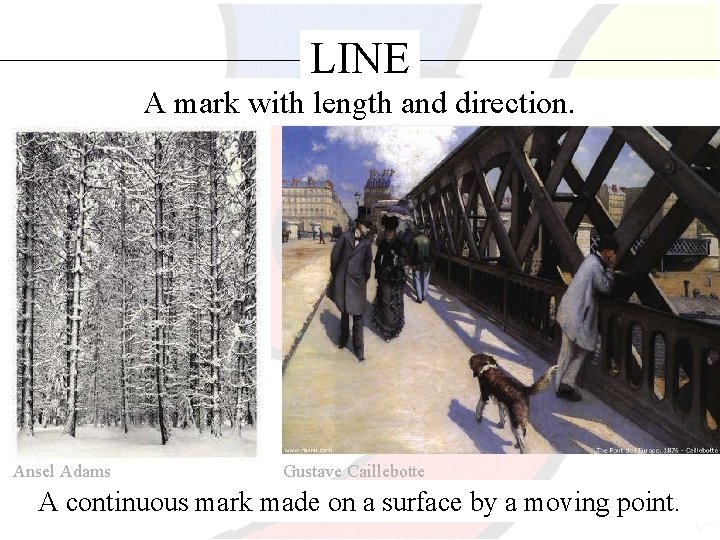
LINE A mark with length and direction. Ansel Adams Gustave Caillebotte A continuous mark made on a surface by a moving point.
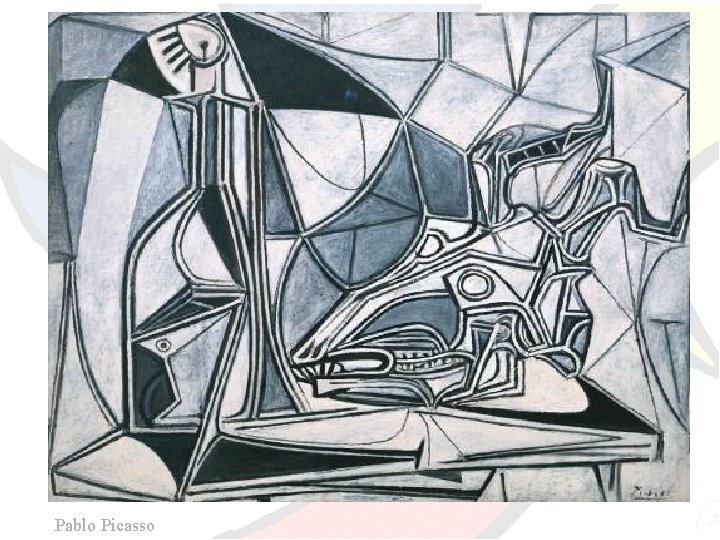
Pablo Picasso
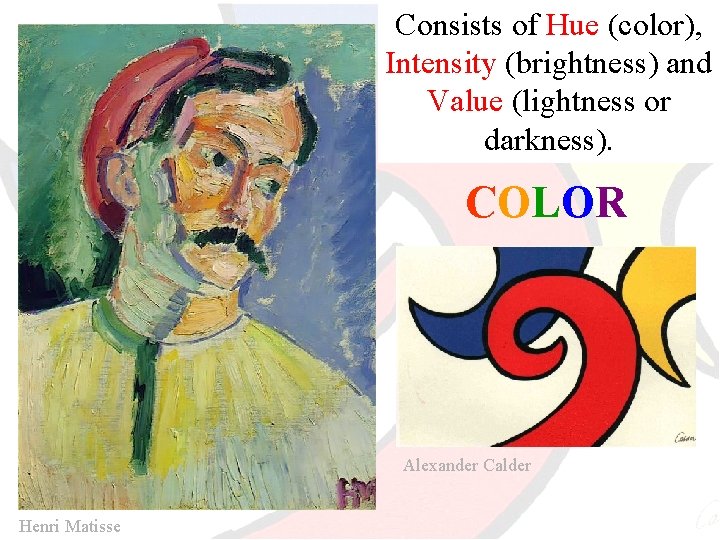
Consists of Hue (color), Intensity (brightness) and Value (lightness or darkness). COLOR Alexander Calder Henri Matisse
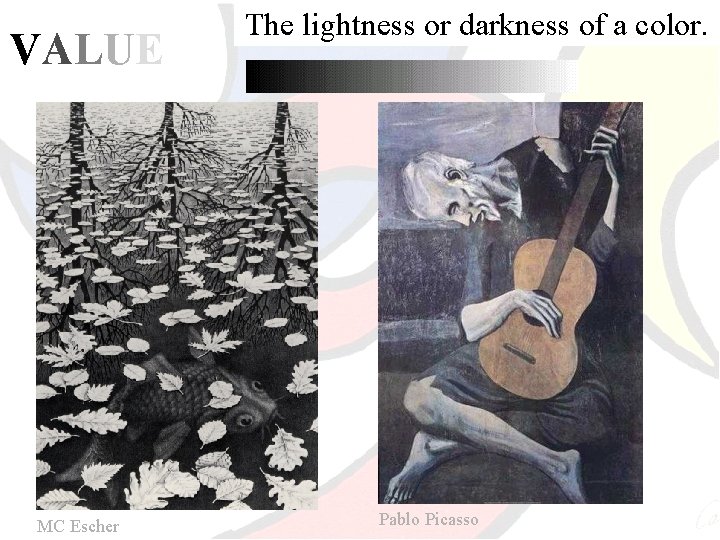
VALUE MC Escher The lightness or darkness of a color. Pablo Picasso
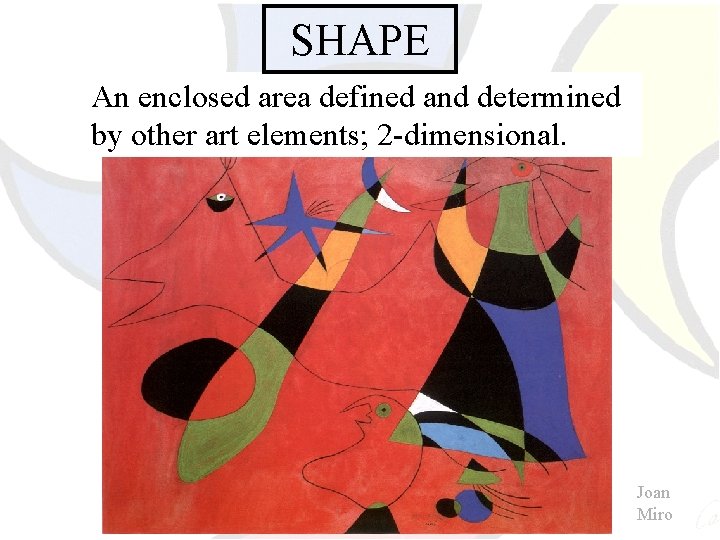
SHAPE An enclosed area defined and determined by other art elements; 2 -dimensional. Joan Miro
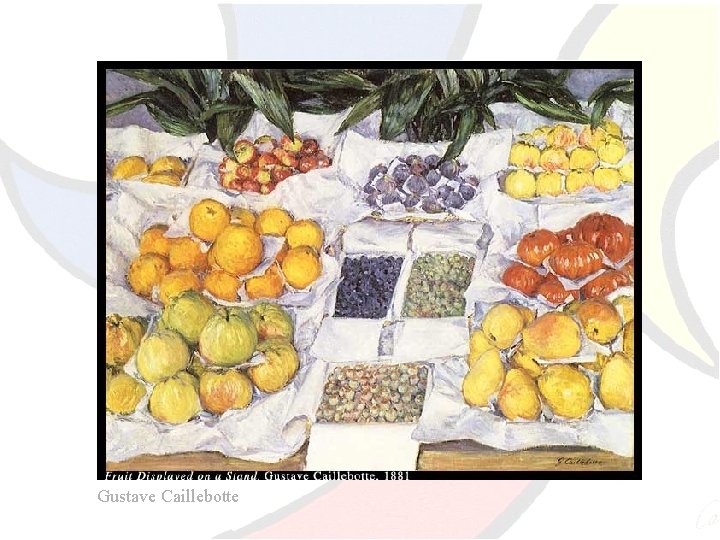
Gustave Caillebotte
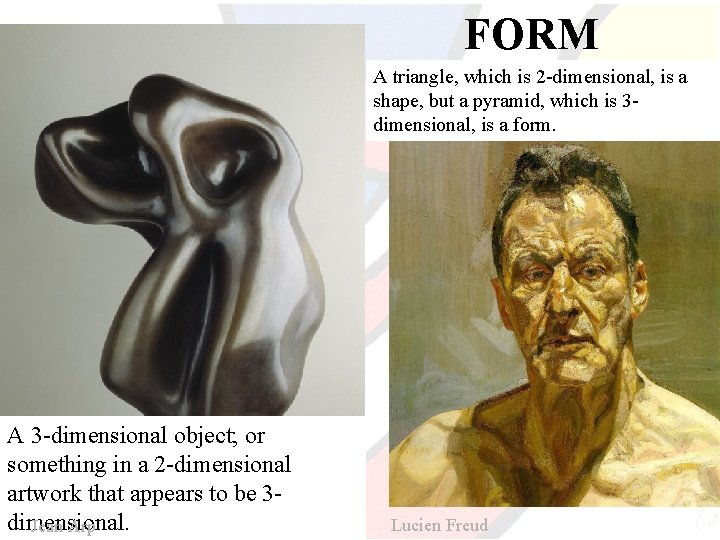
FORM A triangle, which is 2 -dimensional, is a shape, but a pyramid, which is 3 dimensional, is a form. A 3 -dimensional object; or something in a 2 -dimensional artwork that appears to be 3 dimensional. Jean Arp Lucien Freud
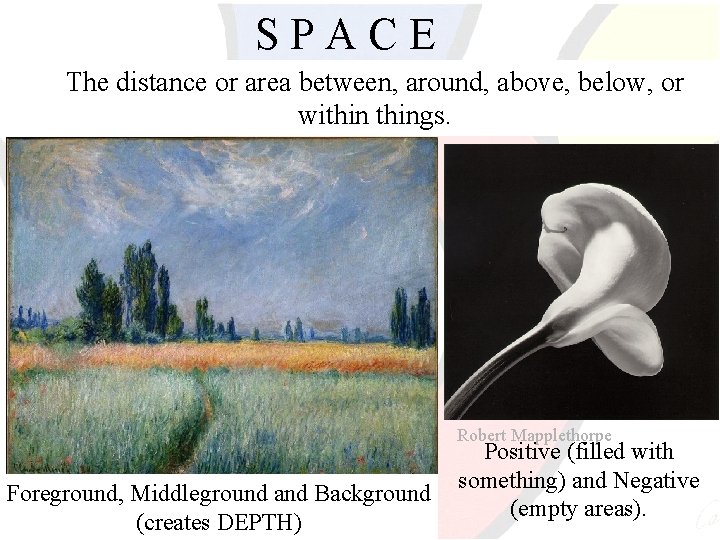
SPACE The distance or area between, around, above, below, or withings. Robert Mapplethorpe Foreground, Claude Monet Middleground and Background (creates DEPTH) Positive (filled with something) and Negative (empty areas).
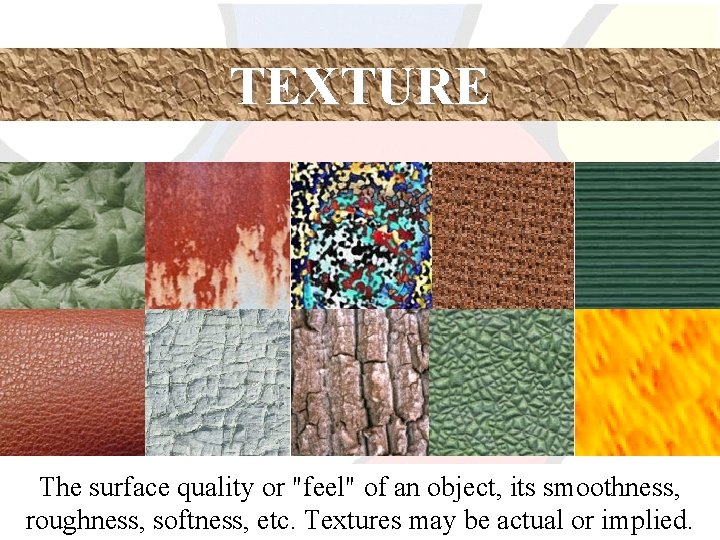
TEXTURE The surface quality or "feel" of an object, its smoothness, roughness, softness, etc. Textures may be actual or implied.
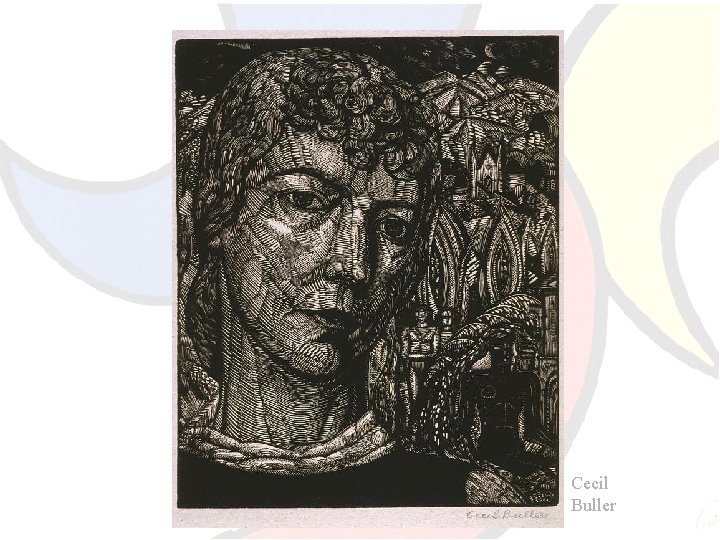
Cecil Buller
The Principles of Art What we use to organize the Elements of Art, or the tools to make art.
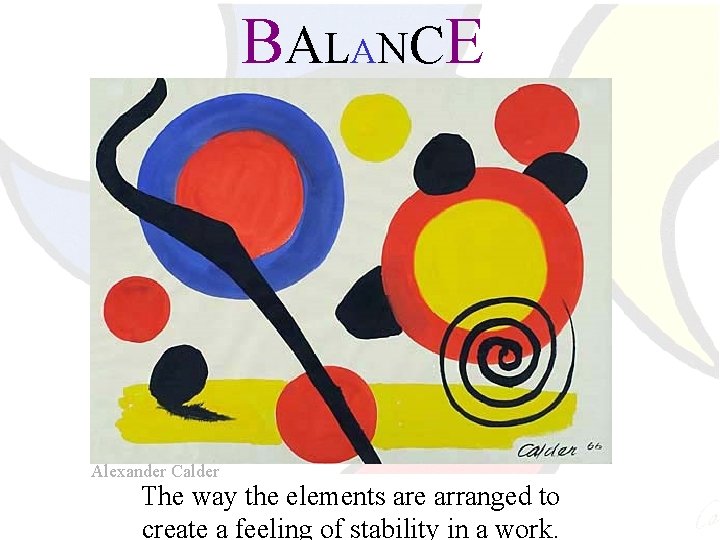
B A L ANC E Alexander Calder The way the elements are arranged to create a feeling of stability in a work.
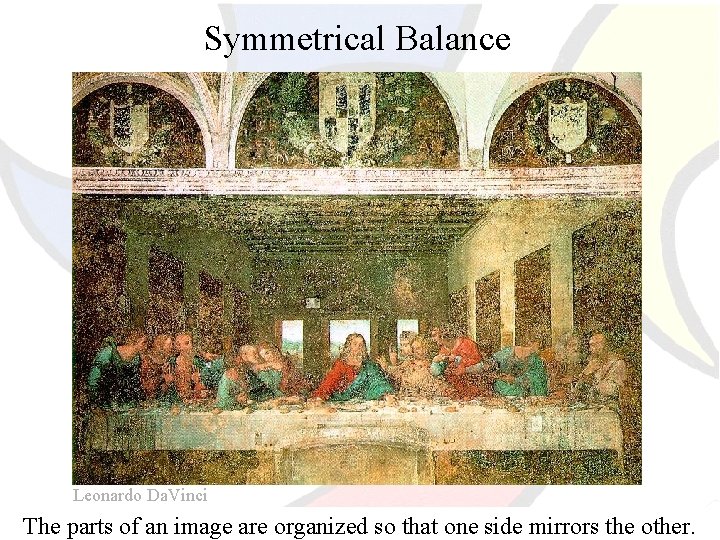
Symmetrical Balance Leonardo Da. Vinci The parts of an image are organized so that one side mirrors the other.
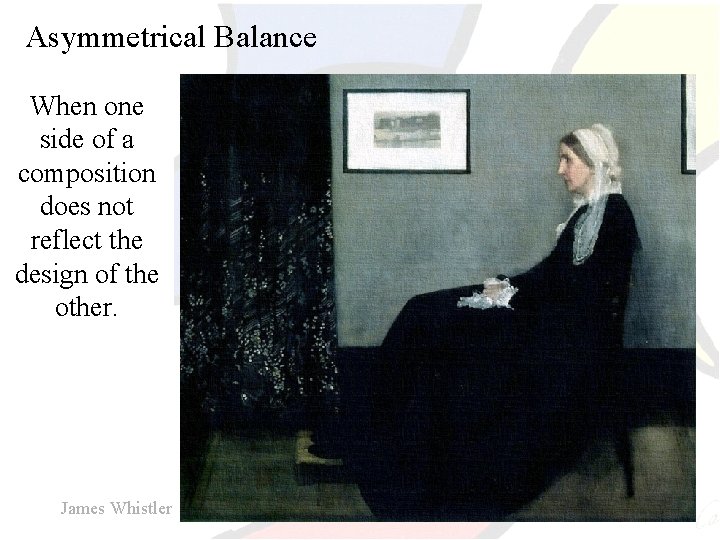
Asymmetrical Balance When one side of a composition does not reflect the design of the other. James Whistler
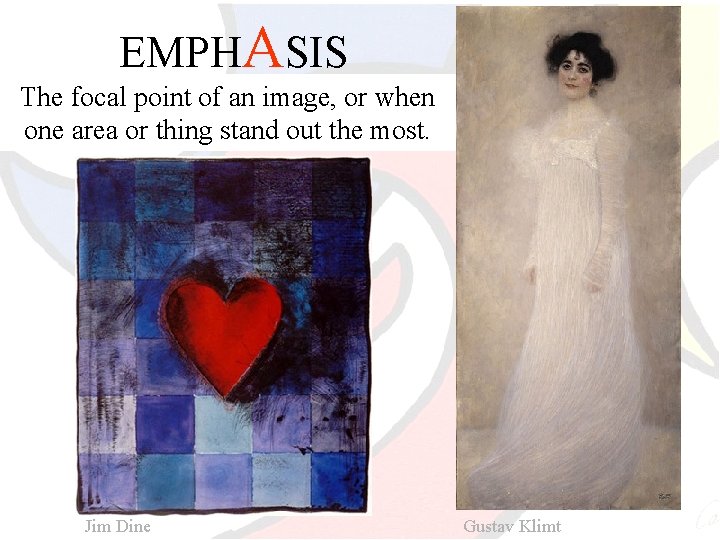
EMPHASIS The focal point of an image, or when one area or thing stand out the most. Jim Dine Gustav Klimt
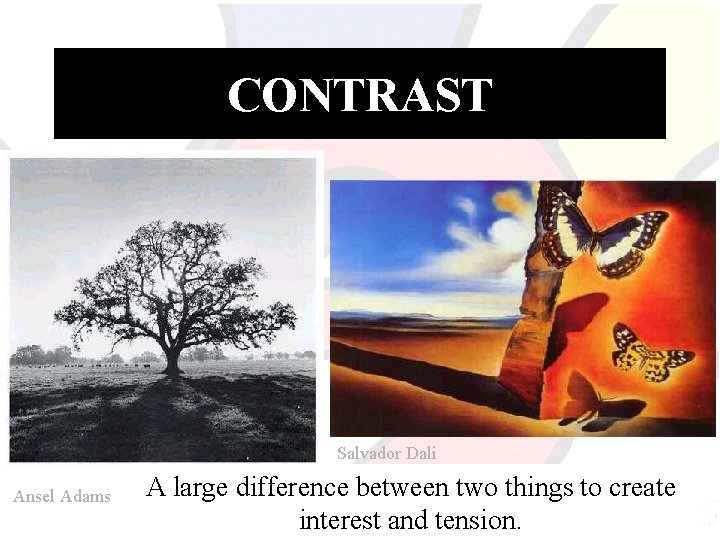
CONTRAST Salvador Dali Ansel Adams A large difference between two things to create interest and tension.
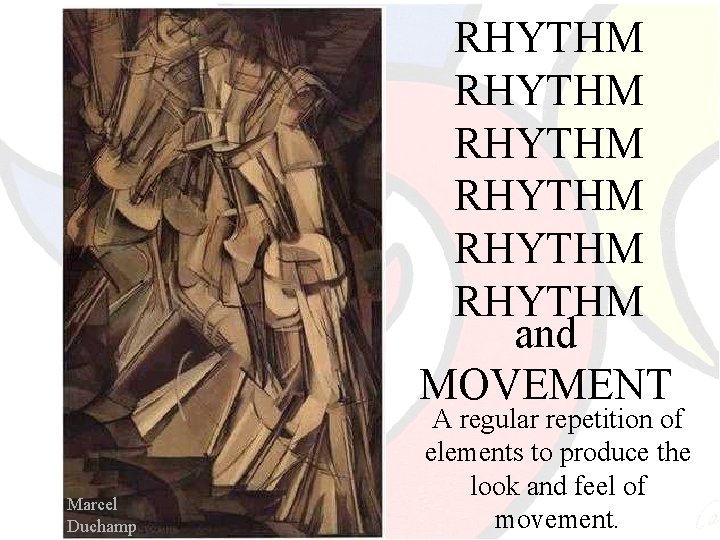
RHYTHM RHYTHM and MOVEMENT Marcel Duchamp A regular repetition of elements to produce the look and feel of movement.
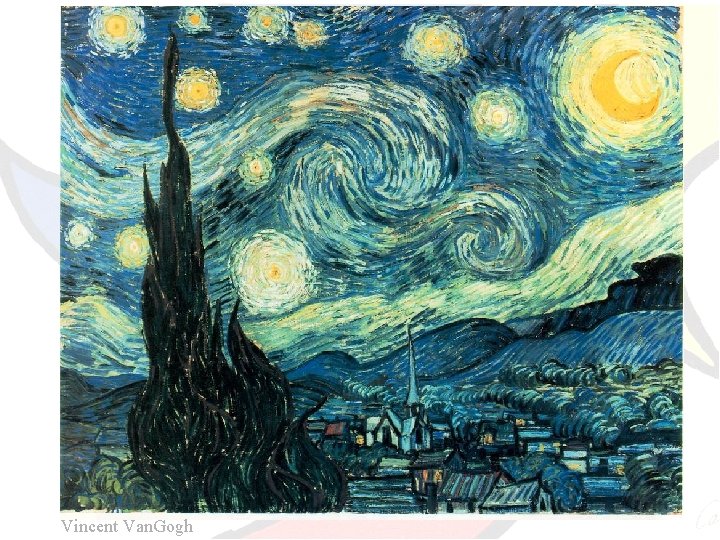
Vincent Van. Gogh
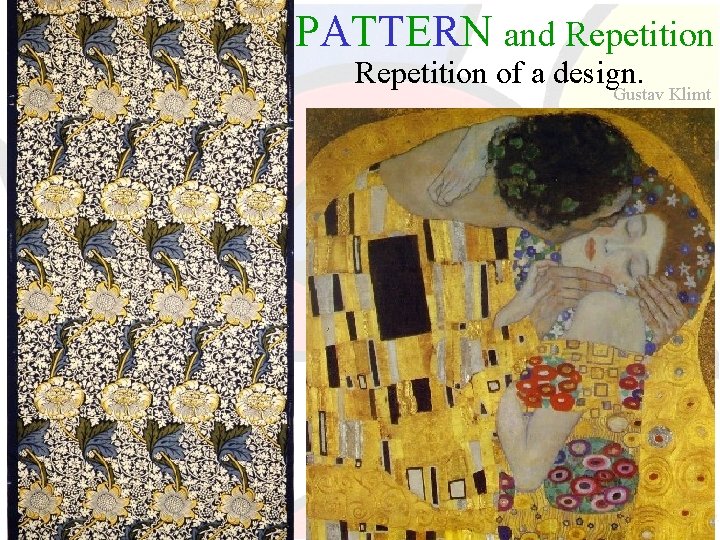
PATTERN and Repetition of a design. Gustav Klimt
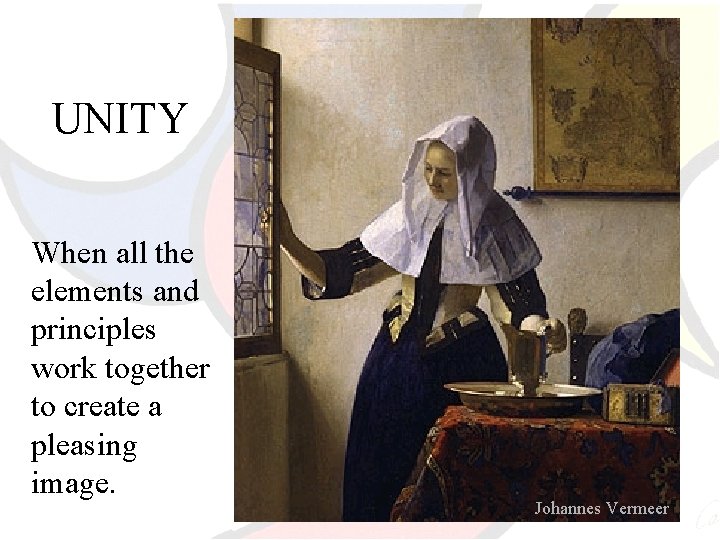
UNITY When all the elements and principles work together to create a pleasing image. Johannes Vermeer
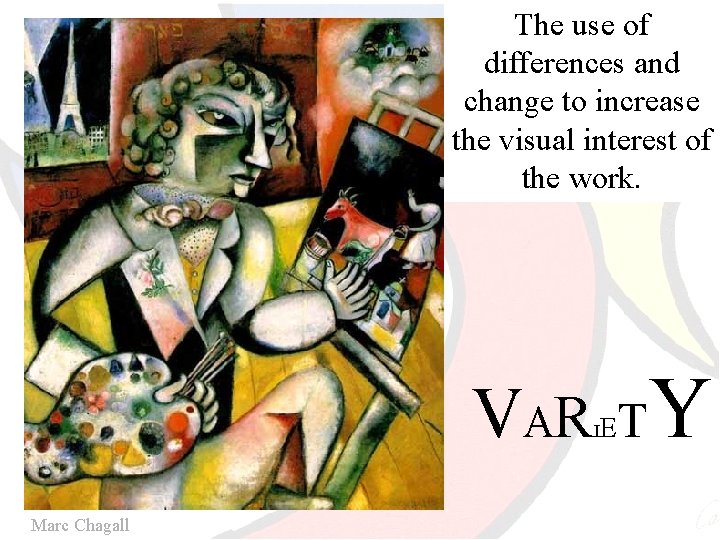
The use of differences and change to increase the visual interest of the work. V AR Marc Chagall IE T Y
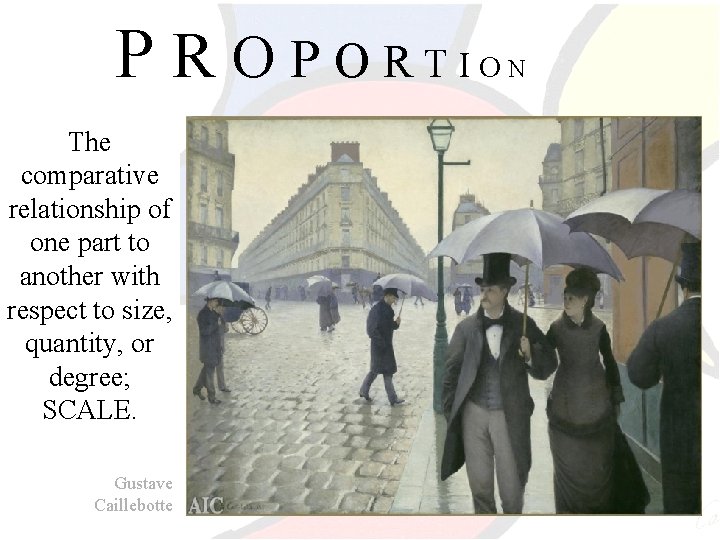
P R O P O RTIO The comparative relationship of one part to another with respect to size, quantity, or degree; SCALE. Gustave Caillebotte N