
The Ancient World 500 BCE 700 BCE Greek
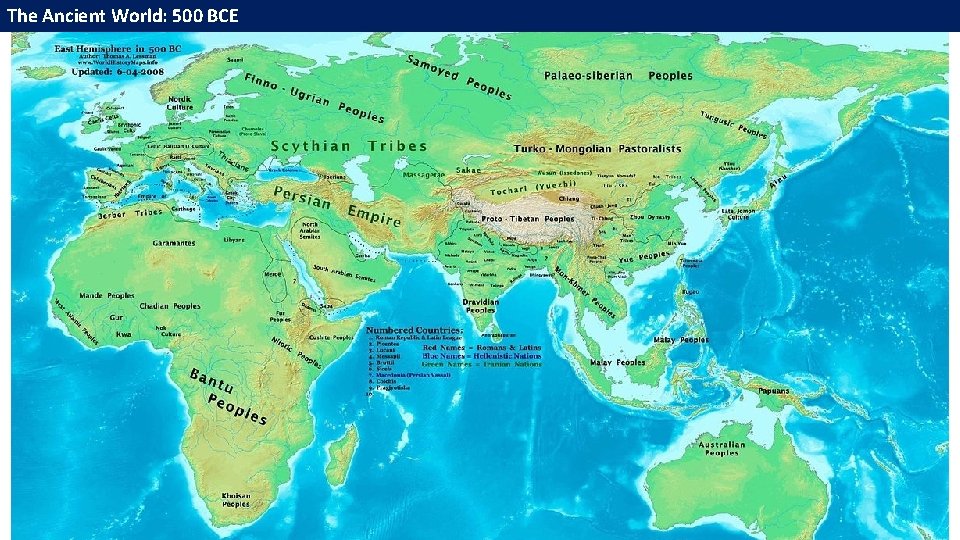
The Ancient World: 500 BCE


700 BCE – Greek Kingdoms • Greece was divided into several independent and often warring kingdoms • Each king’s power was supported by an army made up of part-time hoplite soldiers • Hoplites were farmers, merchants, and artisans
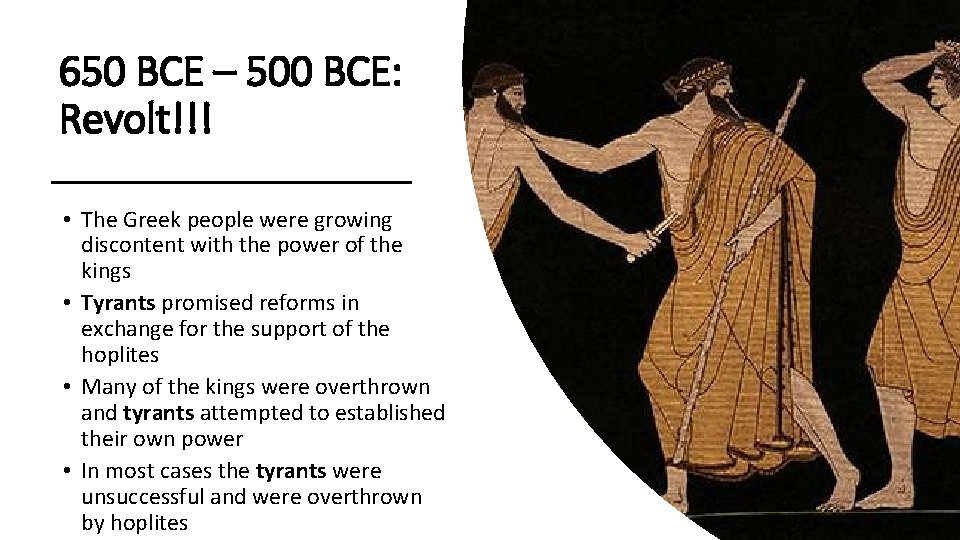
650 BCE – 500 BCE: Revolt!!! • The Greek people were growing discontent with the power of the kings • Tyrants promised reforms in exchange for the support of the hoplites • Many of the kings were overthrown and tyrants attempted to established their own power • In most cases the tyrants were unsuccessful and were overthrown by hoplites
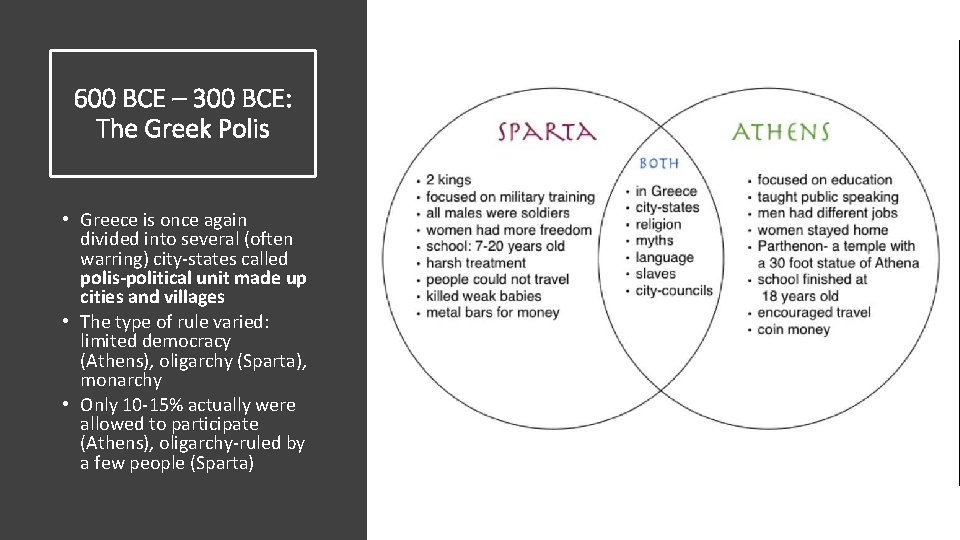
600 BCE – 300 BCE: The Greek Polis • Greece is once again divided into several (often warring) city-states called polis-political unit made up cities and villages • The type of rule varied: limited democracy (Athens), oligarchy (Sparta), monarchy • Only 10 -15% actually were allowed to participate (Athens), oligarchy-ruled by a few people (Sparta)
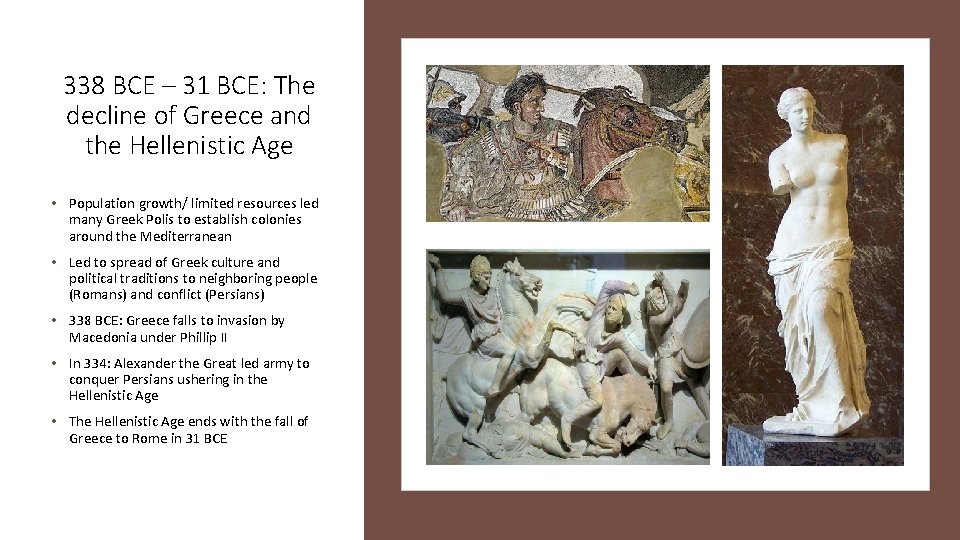
338 BCE – 31 BCE: The decline of Greece and the Hellenistic Age • Population growth/ limited resources led many Greek Polis to establish colonies around the Mediterranean • Led to spread of Greek culture and political traditions to neighboring people (Romans) and conflict (Persians) • 338 BCE: Greece falls to invasion by Macedonia under Phillip II • In 334: Alexander the Great led army to conquer Persians ushering in the Hellenistic Age • The Hellenistic Age ends with the fall of Greece to Rome in 31 BCE
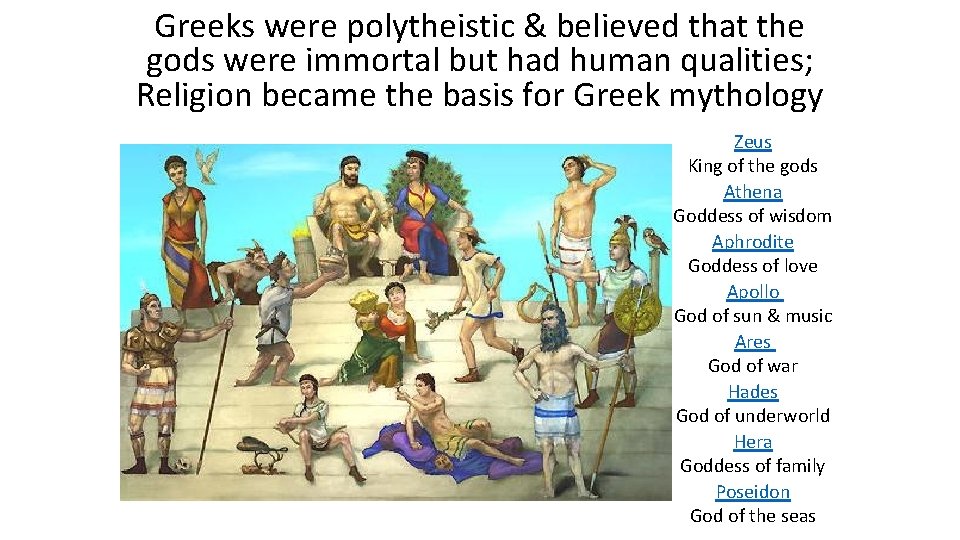
Greeks were polytheistic & believed that the gods were immortal but had human qualities; Religion became the basis for Greek mythology Zeus King of the gods Athena Goddess of wisdom Aphrodite Goddess of love Apollo God of sun & music Ares God of war Hades God of underworld Hera Goddess of family Poseidon God of the seas
- Slides: 7