
THE ANCIENT POUNCING TECHNIQUE Made with the contribution
THE ANCIENT POUNCING TECHNIQUE Made with the contribution of the Umbria Region
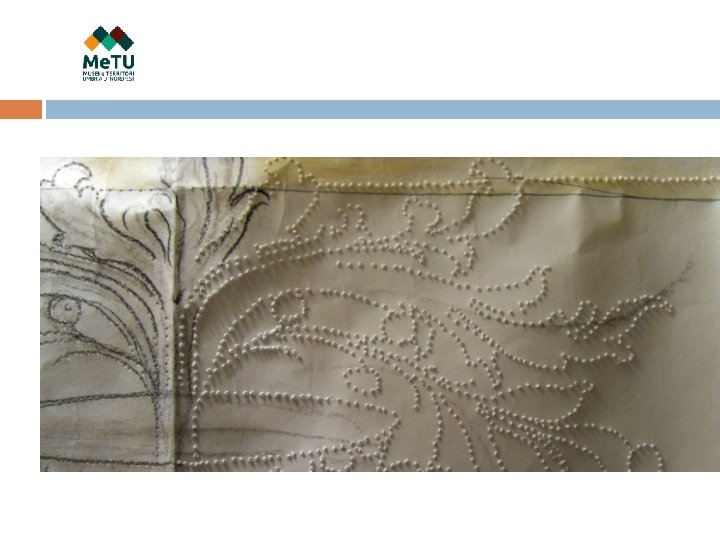
Pouncingis a method of transferring a preparatorydrawing for a painting from paper to anothersurface, suchaspanel painting, canvas, plaster, glass windows and ceramic. In the "pouncing" process, theportrayalis first drawn life-size on a preparatorycardboard. The contours of the drawing are denselypierced with a needle or other point, whichisthenplaced on the surface to be drawn. Successivelythe pierced parts are dabbed on with charcoal, graphite or sanguine
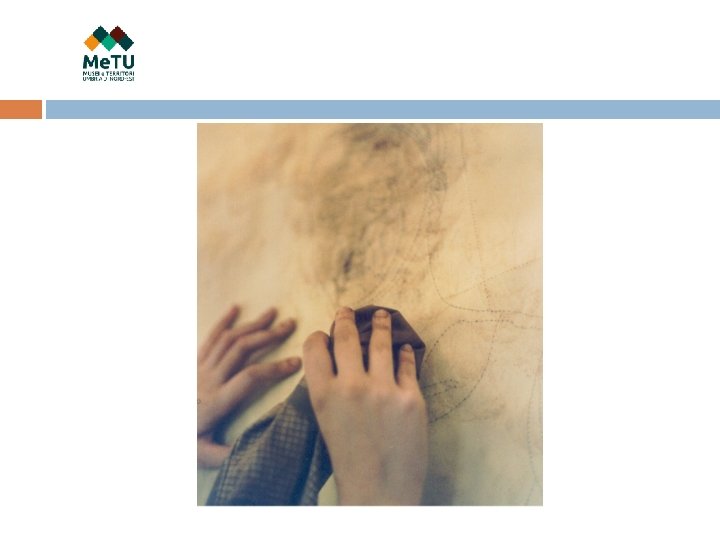
The most common methodinvolveslaying semitransparent paper over the original image, thentracingalong the lines of the image by creatingprickedmarks on the top sheet of paper. Thispounceddrawing made of prickedholesislaid over a new workingsurface. A powdersuchaschalk, graphite or pastelisforcedthrough the holes to leave an outline on the workingsurfacebelow, thustransferring the image. The powderisapplied by beingplacedinto a small bag of thinfabricsuchascheesecloth, thendabbedonto the prickedholes of the pounceddrawing.
Pouncinghasbeen a common technique for centuries, used to create copies of portraits and other works thatwould be finishedas oil paintings, engravings, and so on. Itwasused in many fields, including for the decoration of ceramics and porcelain for mass production or to facilitate thosewhocouldnotdraw.
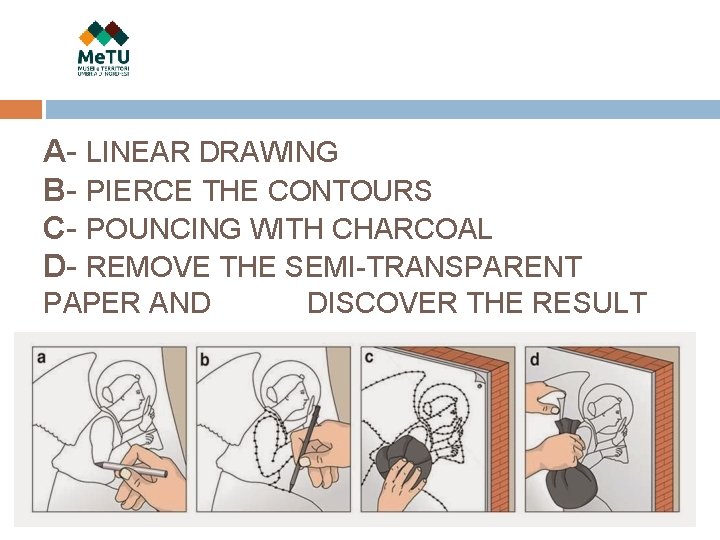
A- LINEAR DRAWING B- PIERCE THE CONTOURS C- POUNCING WITH CHARCOAL D- REMOVE THE SEMI-TRANSPARENT PAPER AND DISCOVER THE RESULT
VIDEO TUTORIAL
Made with the contribution of the Umbria Region
- Slides: 9