
The Ancient Egyptian Religious Tradition Moment of Prayer
- Slides: 18
The Ancient Egyptian Religious Tradition Moment of Prayer
Objectives • To learn more about the history and basic facts regarding the Ancient Egyptian religious tradition • Gain a better introspection into belief system and life of the Egyptian religion • Set up the foundation for Creation Myths and Egyptian Myths
Introduction • Most of the archeological remains that survive from Ancient Egypt is mostly religious in nature; mostly funerary in character (pyramids, tombs, etc. ) • The Egyptians consciously aimed at permanence in their tombs; which is shown by the phrase “house of eternity; ” the pyramid seemed to achieve this endurance
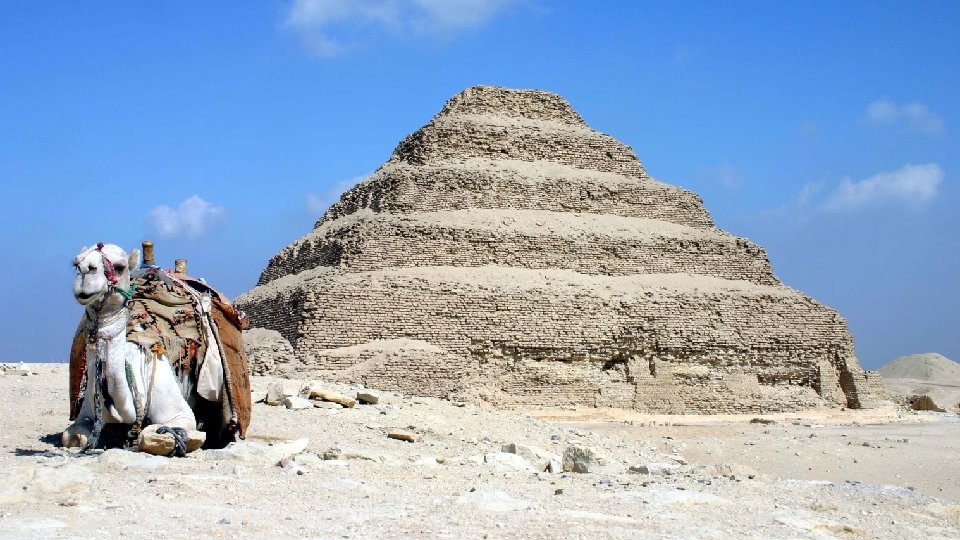
Introduction • Step Pyramid of Djoser; the first pyramid dating from 2700 BCE; planned by his architect Imhotep, it is the first large stone building in history • The main idea for the pyramid was to be a steppingstone to heaven/the sun; in the 4 th Dynasty, pyramids began to take on their current design • Pyramids were used to securely preserve the dead king, both physically and spiritually
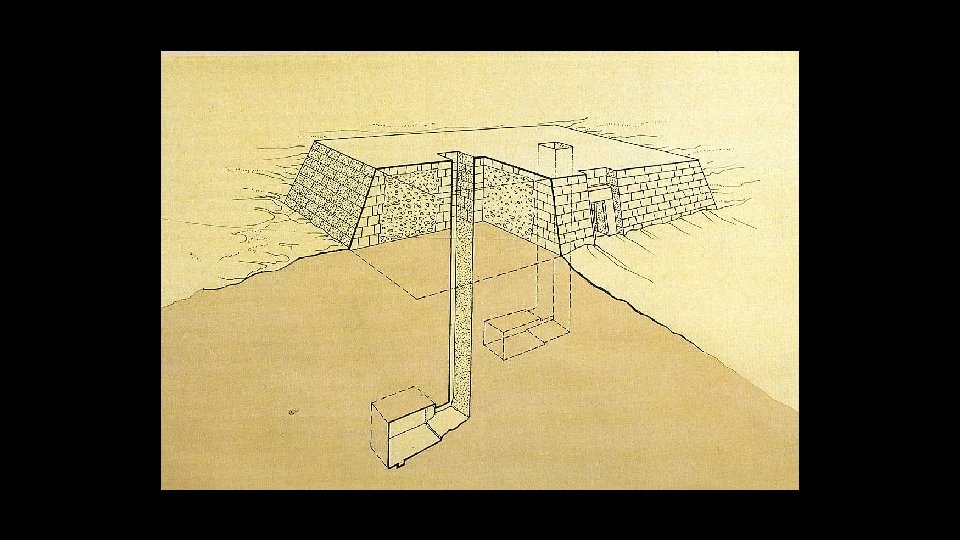
Introduction • Mastaba: structures used for burial before pyramids; Arabic word for “bench”
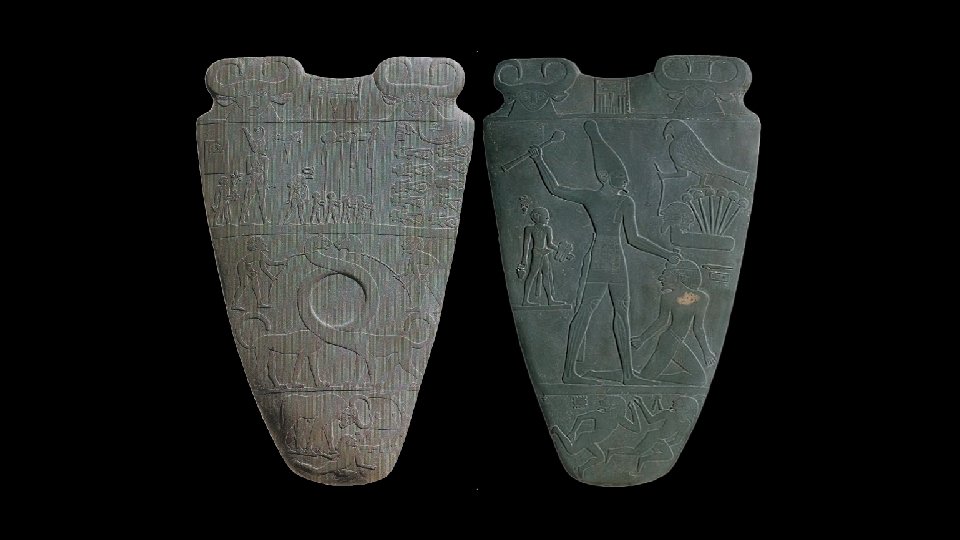
Writing • The most significant advancement made at the beginning of the historic era (3000 BCE) • Narmer Palette: shows the hieroglyphic script
Writing • Writing was important for religious rituals and assisted in recording data and communication • Spells: written on papyrus and recited by priests in the temple; also written on stones in tombs along with the name of the deceased person; ensured their good fortune in the afterlife
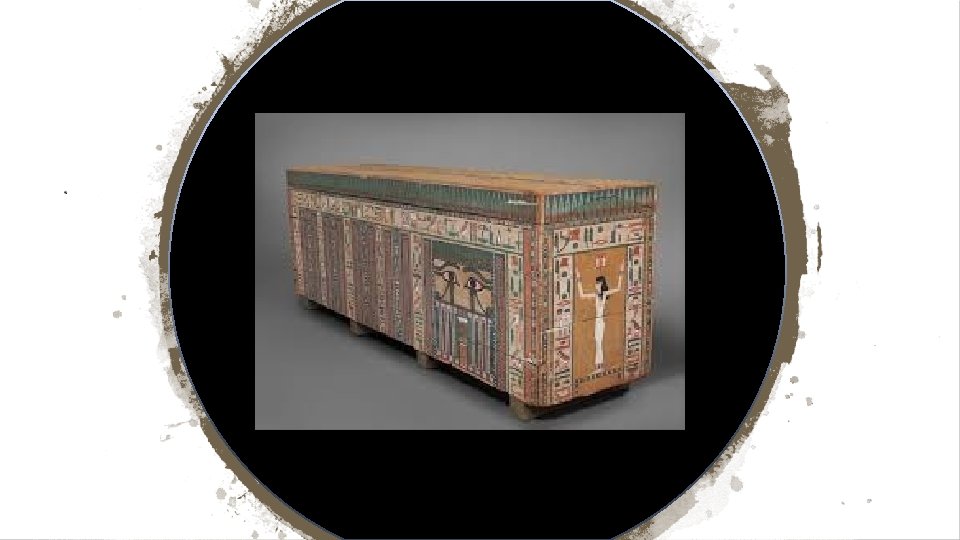
Writing: Sacred Texts and Scriptures • The Pyramid Texts: hieroglyphic writings dealing with the king’s future life after death; displays considerable evidence from theology, ritual, and myth • The Coffin Texts: writings on sarcophagi, usually wood, popular from the collapse of the Old Kingdom to the end of the Middle Kingdom • The Book of the Dead: a book of spells/incantations for magical protection during the final judgement in the Underworld • Other Texts: hymns to the gods and mythological tales (such as The Contending of Horus and Seth)
Bell Ringer • Do we have anything in common with the Ancient Egyptians? What qualities and values do both cultures share? Are there any religious similarities between their beliefs and yours?
History • The Egyptian religion can be traced back to its prehistoric origins to as early as 4000 BCE • The last temple of the goddess Isis was closed on the island of Philae in the middle of the 6 th Century CE
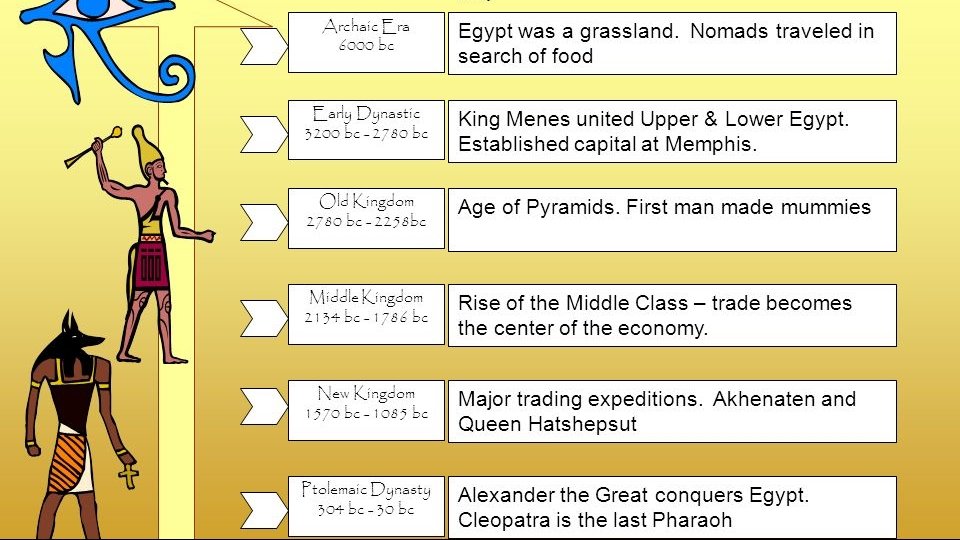
History • Menes: the first king to stabilize the Upper and Lower Egyptian Kingdoms into one centralized monarchy; capitol at Memphis • Old Kingdom (2686 -2181 BCE) • Middle Kingdom (2050 -1786 BCE): capitol changed to Thebes • Hyksos: conquerors from Syria and Palestine; known as the “Shepherd-Kings, ” ruled for 100 years; identity unknown; possibly the Israelites • New Kingdom (1570 -1070 BCE)
History • The Late Dynastic Period: several changes in the ruling class; 6 th Century BCE saw a conscious revival of ancient glories in both religion and art • In spite of this renaissance, Egypt was militarily weak and in 525 BCE fell to the onslaught of the Persian Empire • The Persian yoke was thrown off for a time, but the conquest of Egypt by Alexander the Great in 332 BCE meant the end of Egyptian independence
History • Sarapis: new cult, heavily influenced by the Greeks; based on the foundation of Egyptian myths (Osiris and Isis) • Rome: when Egypt became a province in 30 BCE, the temples were put under government control • Byzantine Rule (395 -640 CE): Christianity had become firmly rooted in Egypt, and the ancient Egyptian religion was directly under attack; the older religion may have influenced Christian monasticism, along with Judaism and Gnosticism in Alexandria