
The American War of Independence and the War


- Slides: 31
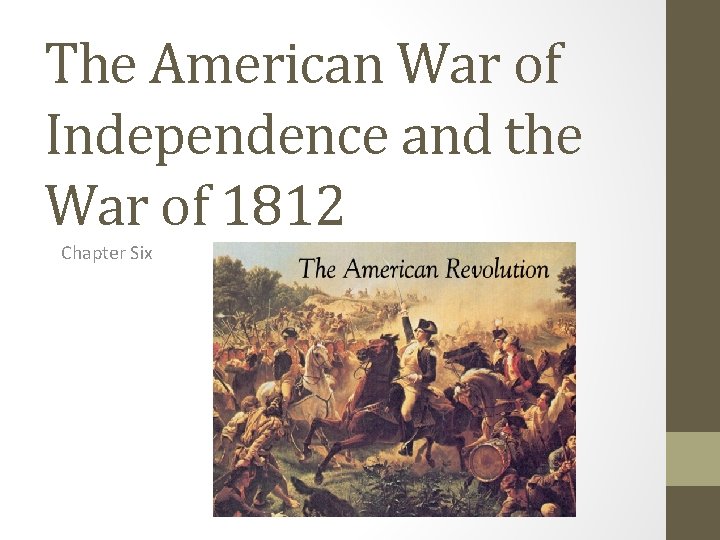
The American War of Independence and the War of 1812 Chapter Six
We’re in a Revolution Style
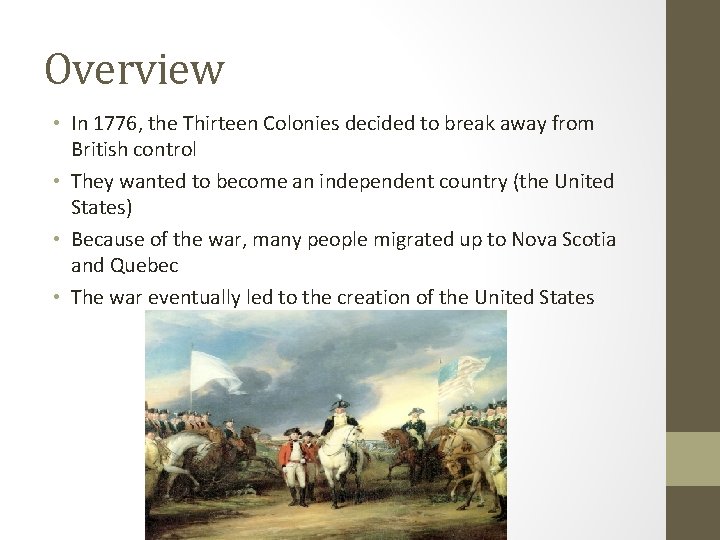
Overview • In 1776, the Thirteen Colonies decided to break away from British control • They wanted to become an independent country (the United States) • Because of the war, many people migrated up to Nova Scotia and Quebec • The war eventually led to the creation of the United States
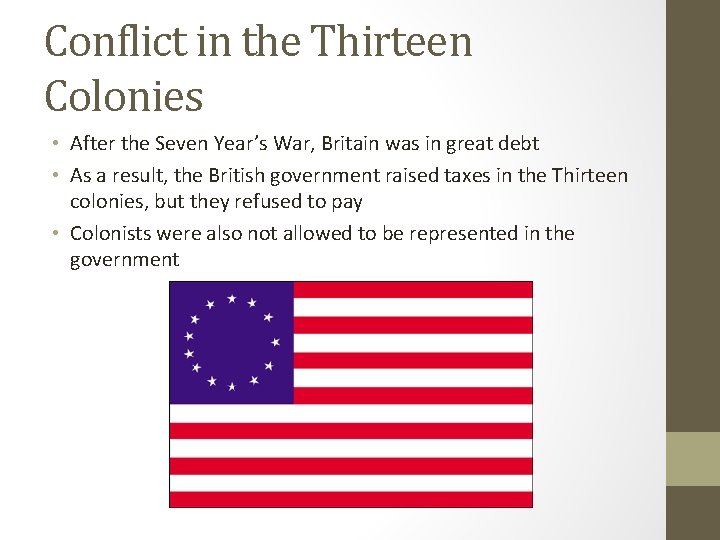
Conflict in the Thirteen Colonies • After the Seven Year’s War, Britain was in great debt • As a result, the British government raised taxes in the Thirteen colonies, but they refused to pay • Colonists were also not allowed to be represented in the government
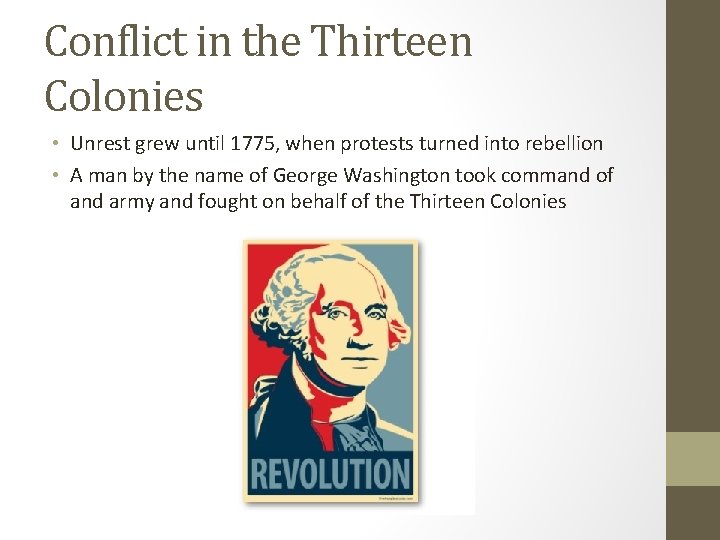
Conflict in the Thirteen Colonies • Unrest grew until 1775, when protests turned into rebellion • A man by the name of George Washington took command of and army and fought on behalf of the Thirteen Colonies
What was being in the Army like?
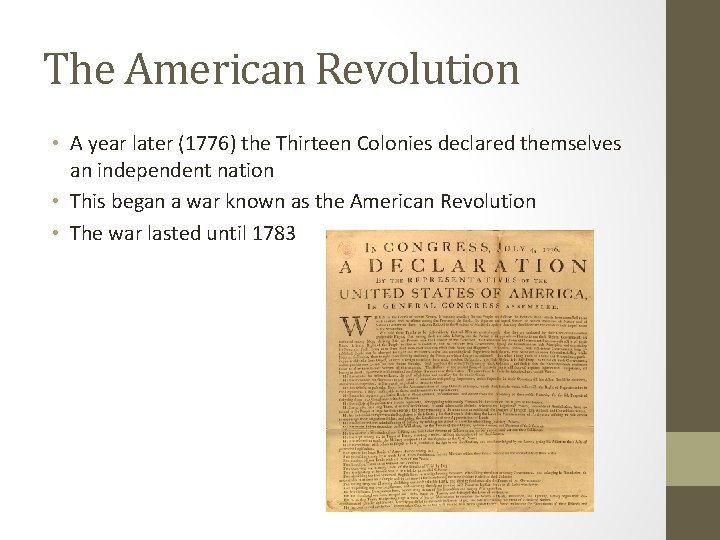
The American Revolution • A year later (1776) the Thirteen Colonies declared themselves an independent nation • This began a war known as the American Revolution • The war lasted until 1783
The Declaration of Independence
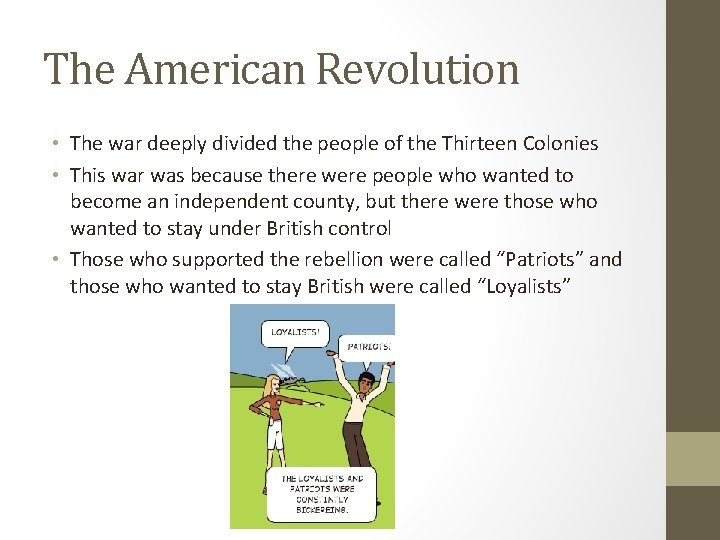
The American Revolution • The war deeply divided the people of the Thirteen Colonies • This war was because there were people who wanted to become an independent county, but there were those who wanted to stay under British control • Those who supported the rebellion were called “Patriots” and those who wanted to stay British were called “Loyalists”
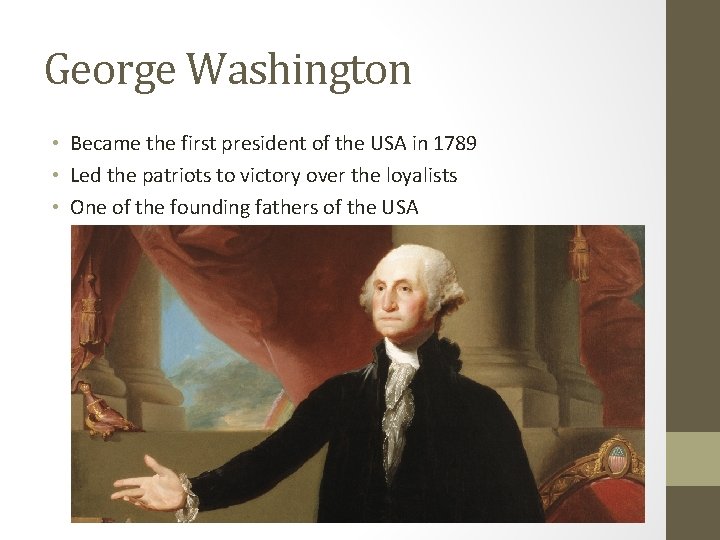
George Washington • Became the first president of the USA in 1789 • Led the patriots to victory over the loyalists • One of the founding fathers of the USA
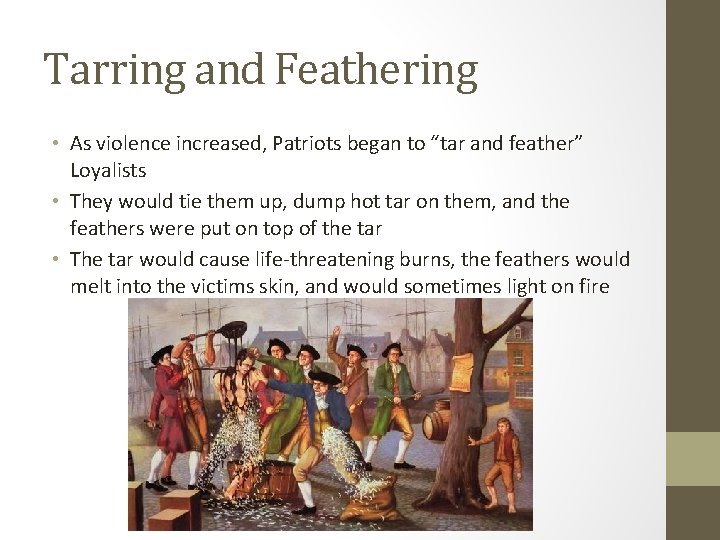
Tarring and Feathering • As violence increased, Patriots began to “tar and feather” Loyalists • They would tie them up, dump hot tar on them, and the feathers were put on top of the tar • The tar would cause life-threatening burns, the feathers would melt into the victims skin, and would sometimes light on fire
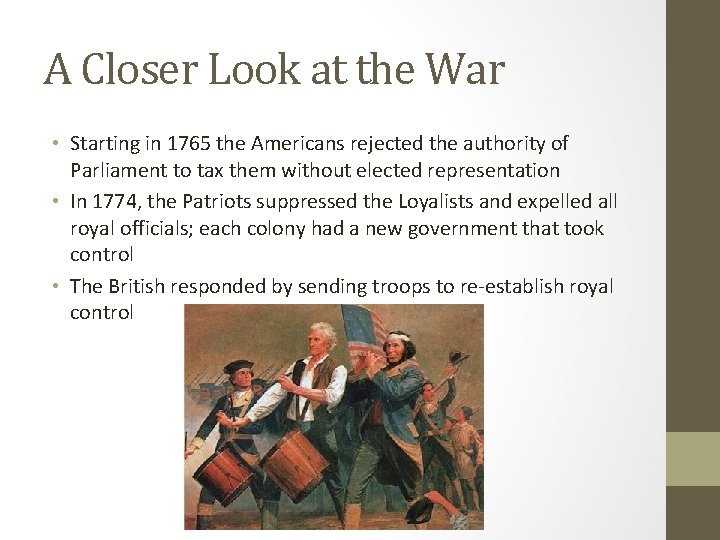
A Closer Look at the War • Starting in 1765 the Americans rejected the authority of Parliament to tax them without elected representation • In 1774, the Patriots suppressed the Loyalists and expelled all royal officials; each colony had a new government that took control • The British responded by sending troops to re-establish royal control
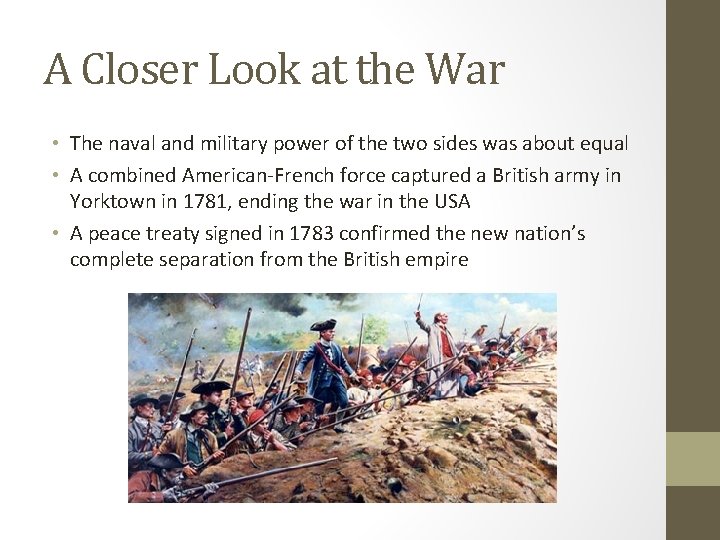
A Closer Look at the War • The naval and military power of the two sides was about equal • A combined American-French force captured a British army in Yorktown in 1781, ending the war in the USA • A peace treaty signed in 1783 confirmed the new nation’s complete separation from the British empire
King George III
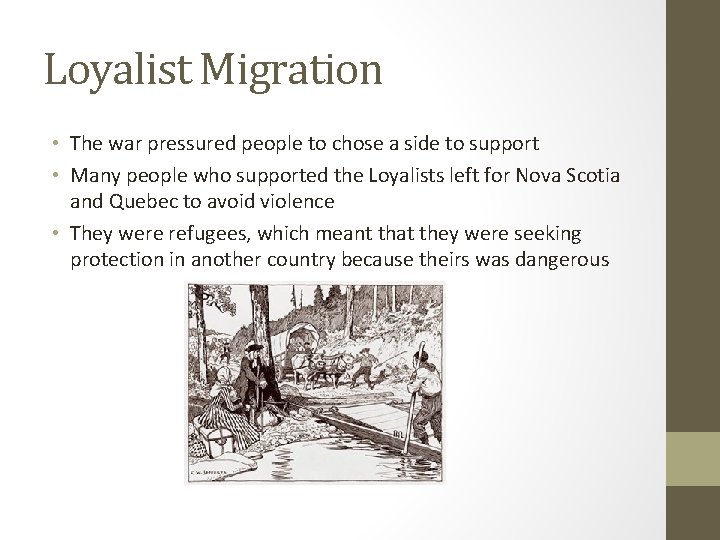
Loyalist Migration • The war pressured people to chose a side to support • Many people who supported the Loyalists left for Nova Scotia and Quebec to avoid violence • They were refugees, which meant that they were seeking protection in another country because theirs was dangerous
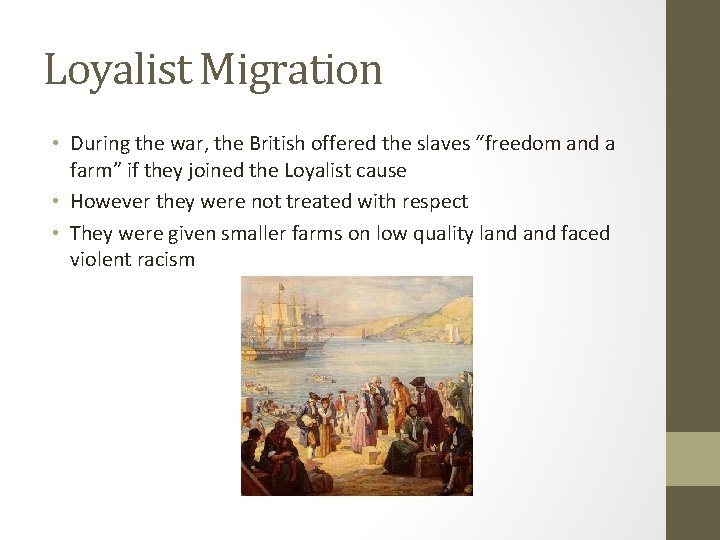
Loyalist Migration • During the war, the British offered the slaves “freedom and a farm” if they joined the Loyalist cause • However they were not treated with respect • They were given smaller farms on low quality land faced violent racism
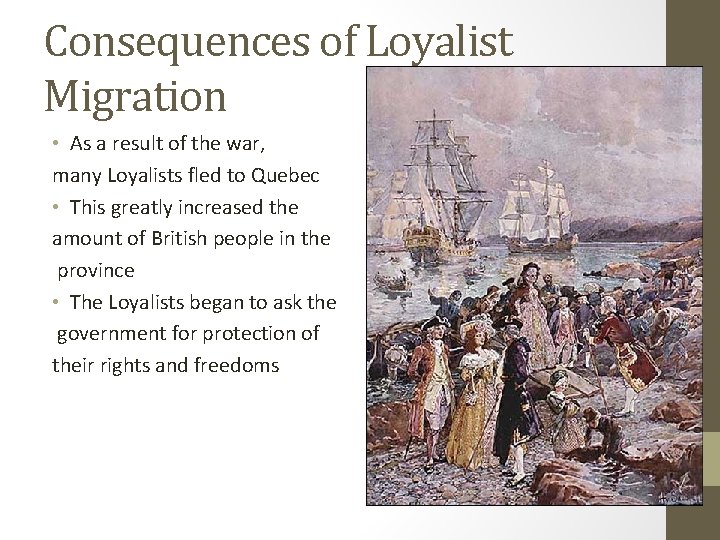
Consequences of Loyalist Migration • As a result of the war, many Loyalists fled to Quebec • This greatly increased the amount of British people in the province • The Loyalists began to ask the government for protection of their rights and freedoms
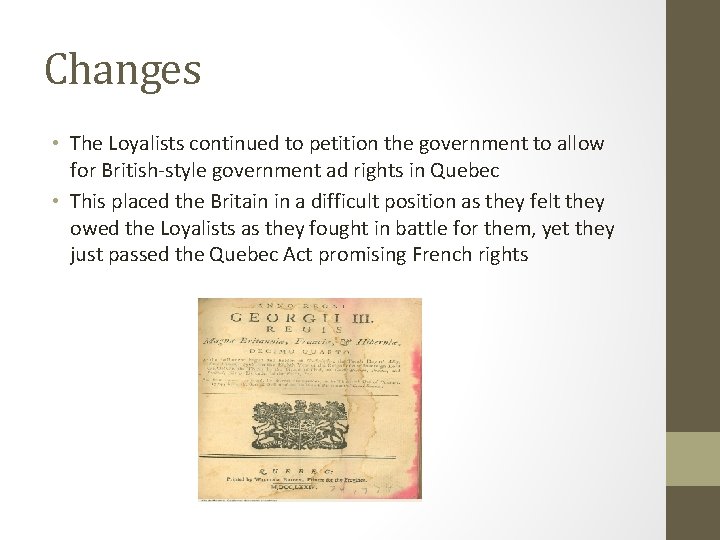
Changes • The Loyalists continued to petition the government to allow for British-style government ad rights in Quebec • This placed the Britain in a difficult position as they felt they owed the Loyalists as they fought in battle for them, yet they just passed the Quebec Act promising French rights
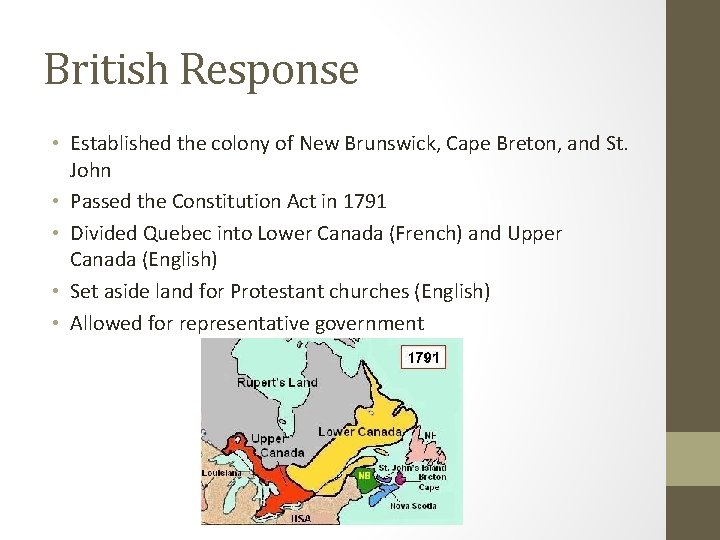
British Response • Established the colony of New Brunswick, Cape Breton, and St. John • Passed the Constitution Act in 1791 • Divided Quebec into Lower Canada (French) and Upper Canada (English) • Set aside land for Protestant churches (English) • Allowed for representative government
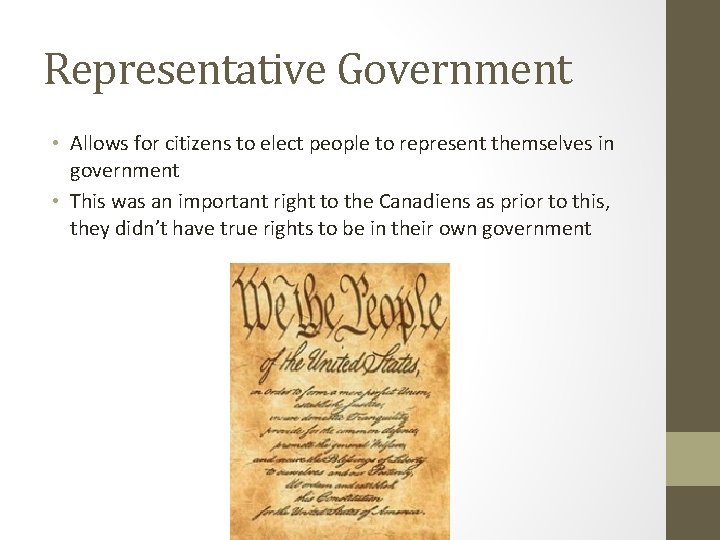
Representative Government • Allows for citizens to elect people to represent themselves in government • This was an important right to the Canadiens as prior to this, they didn’t have true rights to be in their own government
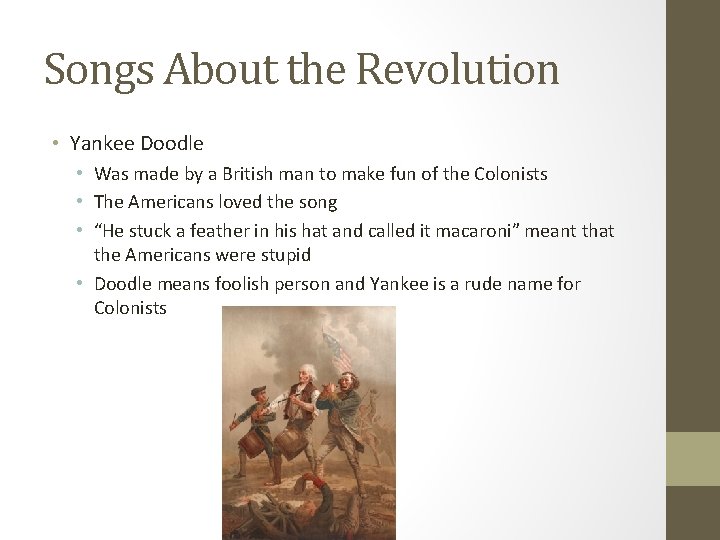
Songs About the Revolution • Yankee Doodle • Was made by a British man to make fun of the Colonists • The Americans loved the song • “He stuck a feather in his hat and called it macaroni” meant that the Americans were stupid • Doodle means foolish person and Yankee is a rude name for Colonists
Yankee Doodle
The War of 1812
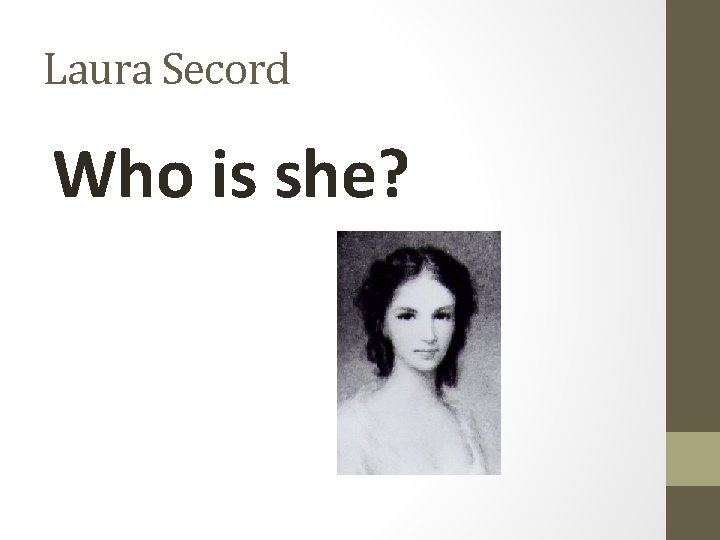
Laura Secord Who is she?
Laura Secord People often argue about whether Laura Secord actually helped in the war of 1812, or if her story was just made up. Your Task: Read a small passage on Laura Secord and decide for yourself! You may do some other research on an IPad as well Fill in the graphic organizer and write a short persuasive paragraph about your findings.
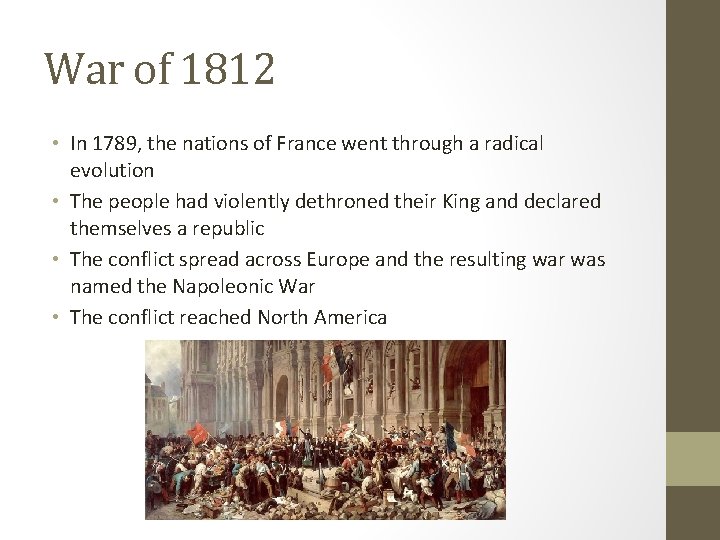
War of 1812 • In 1789, the nations of France went through a radical evolution • The people had violently dethroned their King and declared themselves a republic • The conflict spread across Europe and the resulting war was named the Napoleonic War • The conflict reached North America
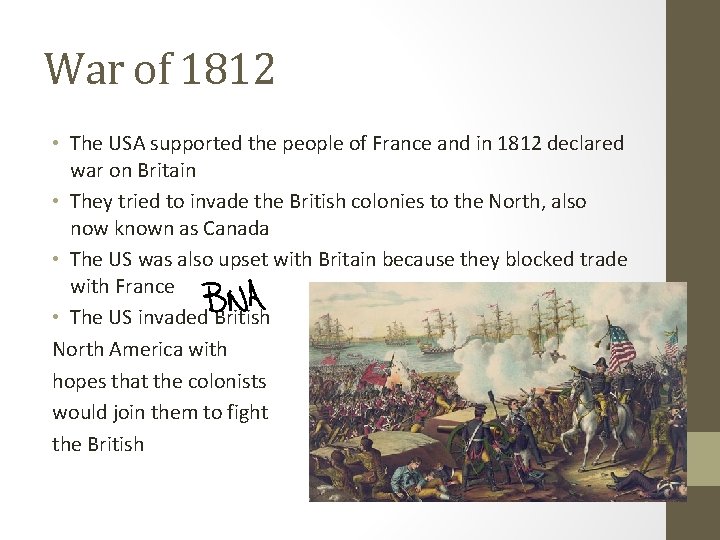
War of 1812 • The USA supported the people of France and in 1812 declared war on Britain • They tried to invade the British colonies to the North, also now known as Canada • The US was also upset with Britain because they blocked trade with France • The US invaded British North America with hopes that the colonists would join them to fight the British
Songs of the War (American Perspective)
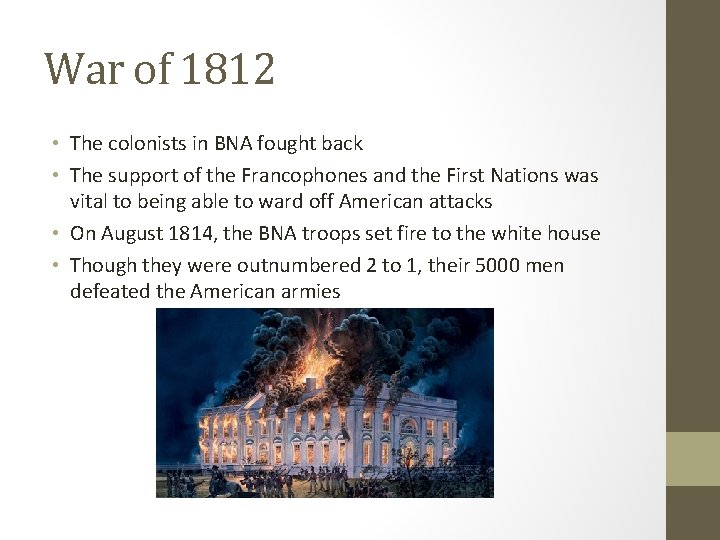
War of 1812 • The colonists in BNA fought back • The support of the Francophones and the First Nations was vital to being able to ward off American attacks • On August 1814, the BNA troops set fire to the white house • Though they were outnumbered 2 to 1, their 5000 men defeated the American armies
Songs of the War (Canadian Perspective)
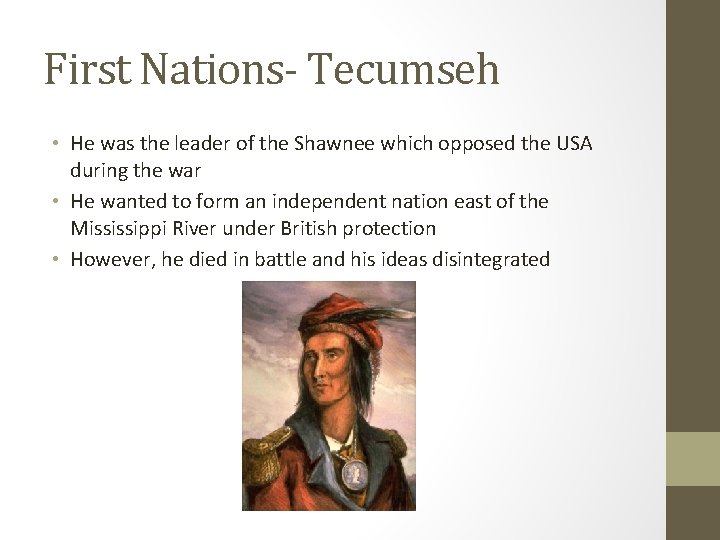
First Nations- Tecumseh • He was the leader of the Shawnee which opposed the USA during the war • He wanted to form an independent nation east of the Mississippi River under British protection • However, he died in battle and his ideas disintegrated