
THE AMERICAN REVOLUTION French and Indian War Ends
- Slides: 67
THE AMERICAN REVOLUTION
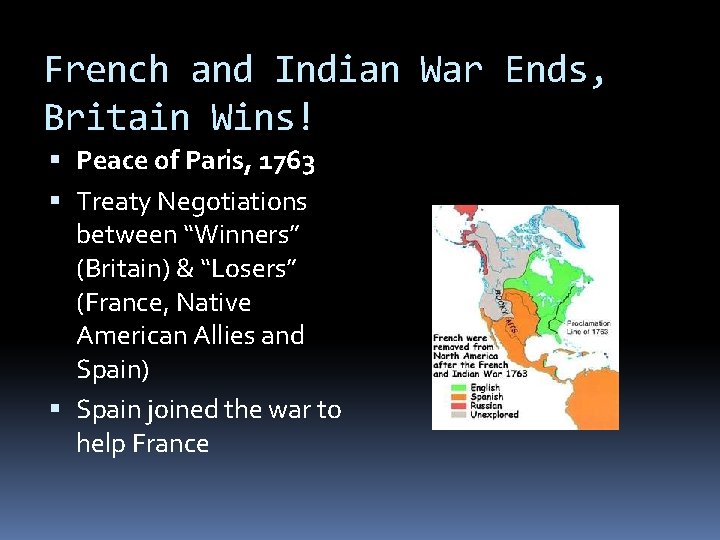
French and Indian War Ends, Britain Wins! Peace of Paris, 1763 Treaty Negotiations between “Winners” (Britain) & “Losers” (France, Native American Allies and Spain) Spain joined the war to help France
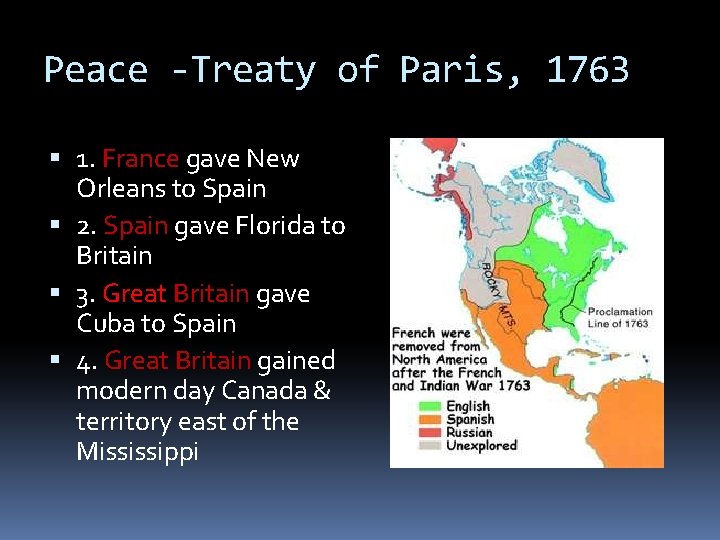
Peace -Treaty of Paris, 1763 1. France gave New Orleans to Spain 2. Spain gave Florida to Britain 3. Great Britain gave Cuba to Spain 4. Great Britain gained modern day Canada & territory east of the Mississippi
As a Result… 1. Great Britain became dominant colonial power north America 2. “American” Colonists proud they defeated French! 3. Great Britain left in debt
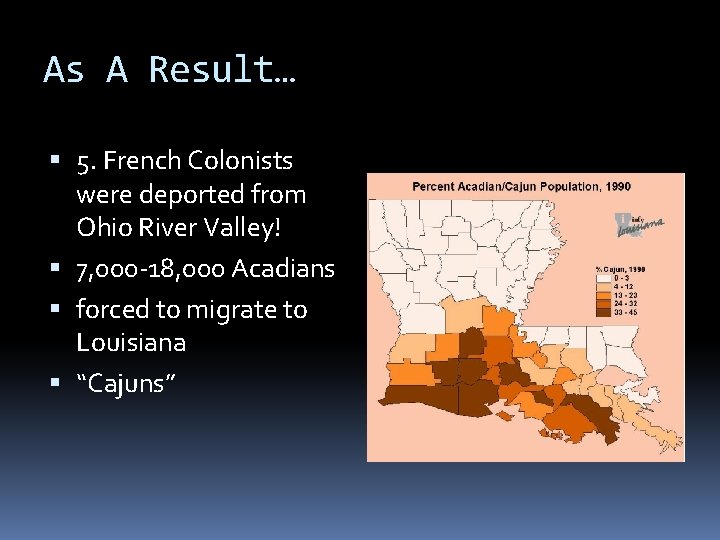
As A Result… 5. French Colonists were deported from Ohio River Valley! 7, 000 -18, 000 Acadians forced to migrate to Louisiana “Cajuns”
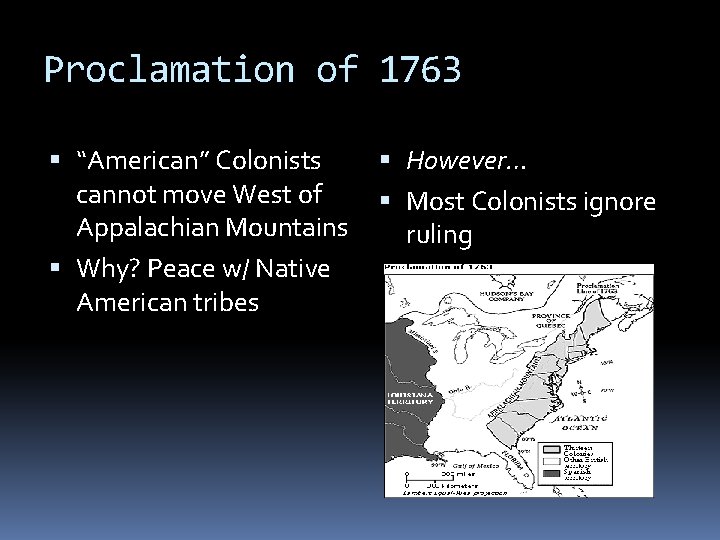
Proclamation of 1763 “American” Colonists cannot move West of Appalachian Mountains Why? Peace w/ Native American tribes However… Most Colonists ignore ruling
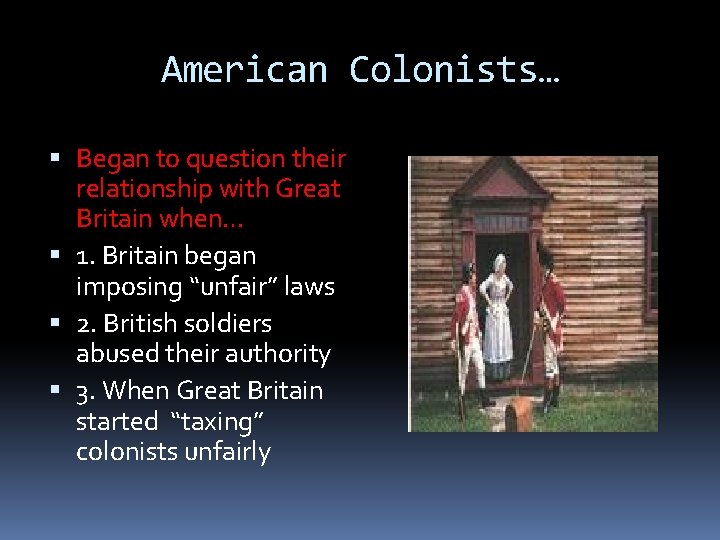
American Colonists… Began to question their relationship with Great Britain when… 1. Britain began imposing “unfair” laws 2. British soldiers abused their authority 3. When Great Britain started “taxing” colonists unfairly
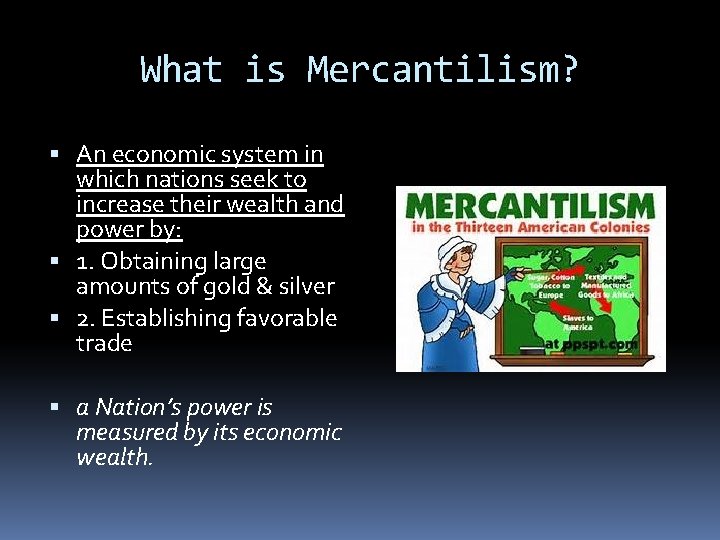
What is Mercantilism? An economic system in which nations seek to increase their wealth and power by: 1. Obtaining large amounts of gold & silver 2. Establishing favorable trade a Nation’s power is measured by its economic wealth.
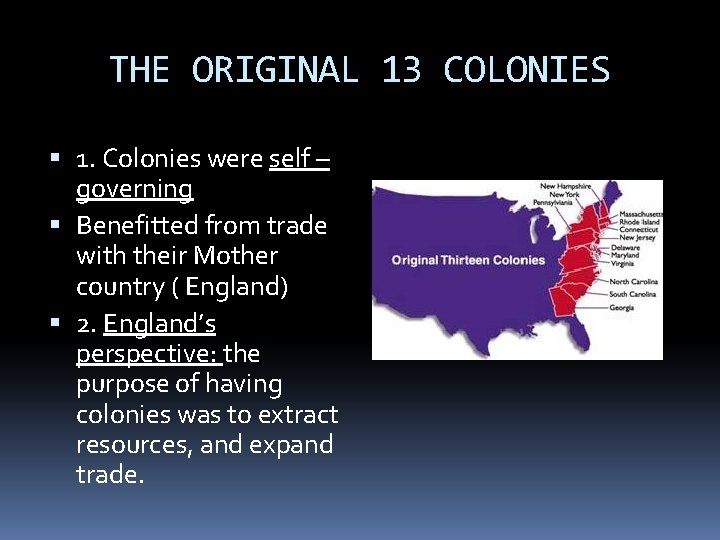
THE ORIGINAL 13 COLONIES 1. Colonies were self – governing Benefitted from trade with their Mother country ( England) 2. England’s perspective: the purpose of having colonies was to extract resources, and expand trade.
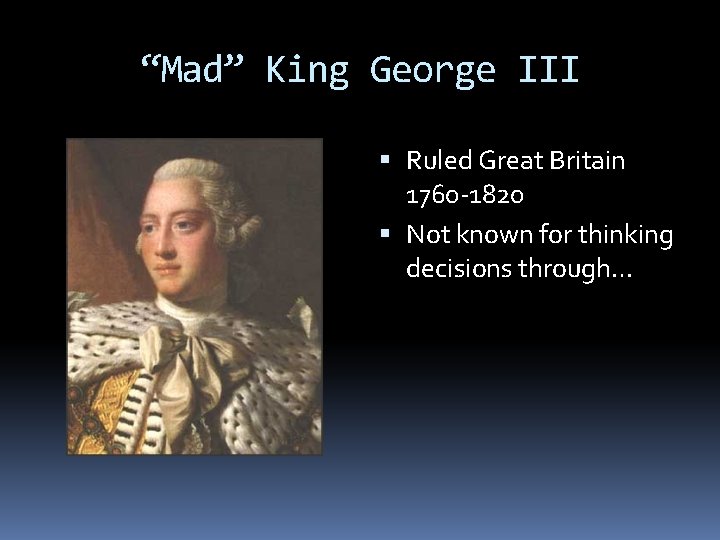
“Mad” King George III Ruled Great Britain 1760 -1820 Not known for thinking decisions through…
King George III https: //www. youtube. com/watch? v=lh. FKB 03 6 gy. M
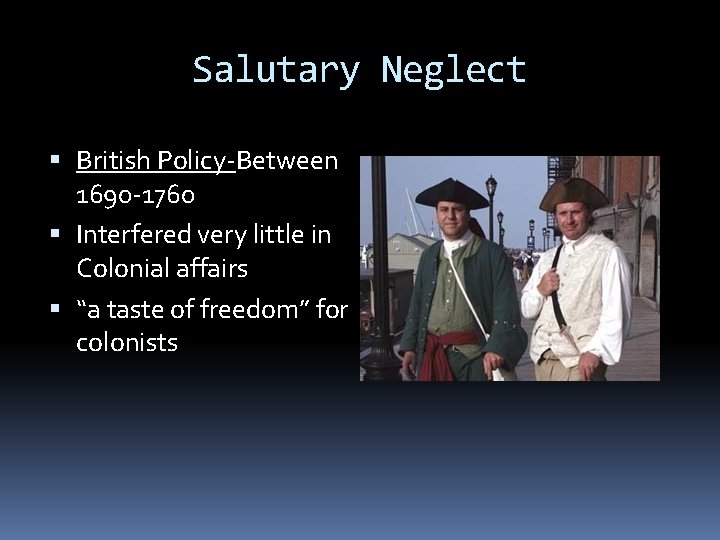
Salutary Neglect British Policy-Between 1690 -1760 Interfered very little in Colonial affairs “a taste of freedom” for colonists
Great Britain was In Debt… After the French & Indian War How Does a Government…Raise $ to pay off debts? TAXES ! !
Causes of American Revolution https: //www. youtube. com/watch? v=tfnrd. WY m. Zus
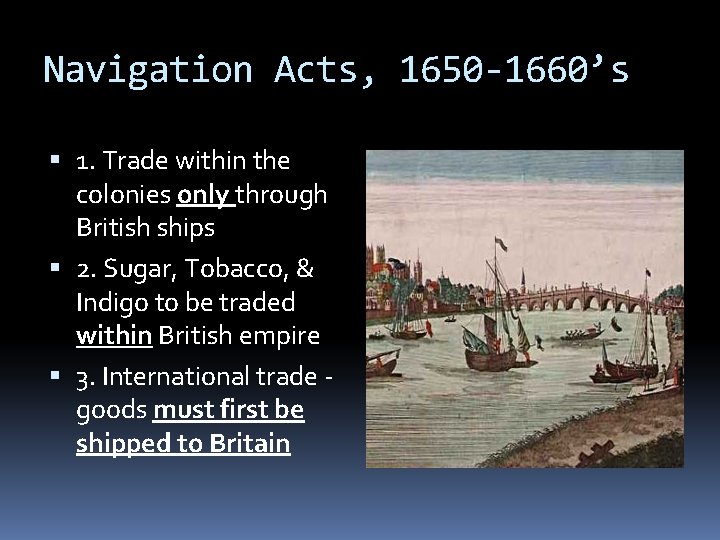
Navigation Acts, 1650 -1660’s 1. Trade within the colonies only through British ships 2. Sugar, Tobacco, & Indigo to be traded within British empire 3. International trade goods must first be shipped to Britain
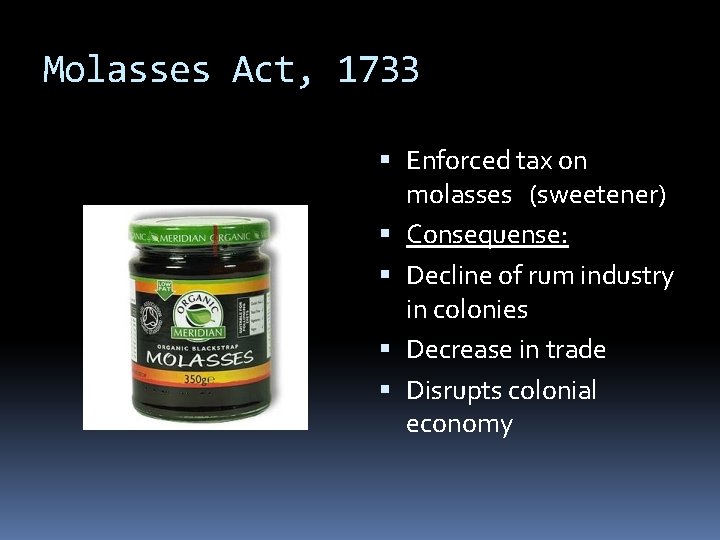
Molasses Act, 1733 Enforced tax on molasses (sweetener) Consequense: Decline of rum industry in colonies Decrease in trade Disrupts colonial economy
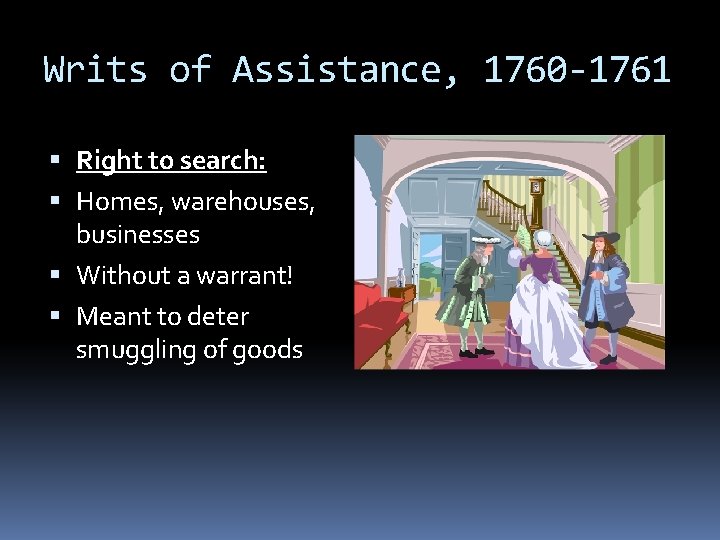
Writs of Assistance, 1760 -1761 Right to search: Homes, warehouses, businesses Without a warrant! Meant to deter smuggling of goods
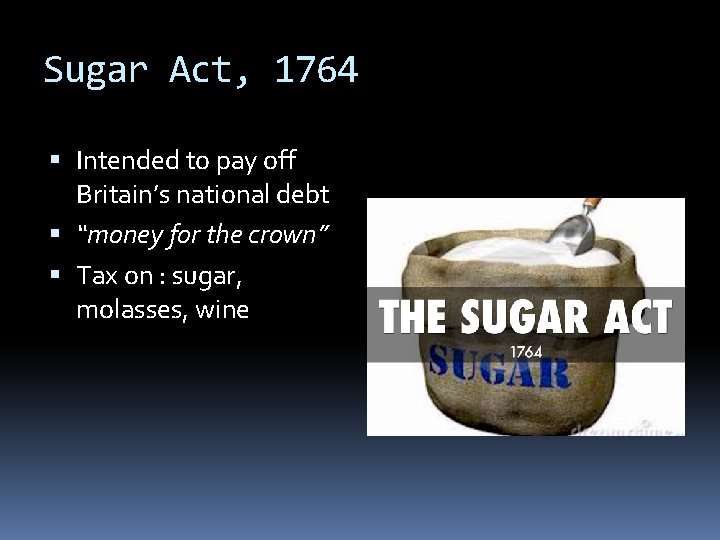
Sugar Act, 1764 Intended to pay off Britain’s national debt “money for the crown” Tax on : sugar, molasses, wine
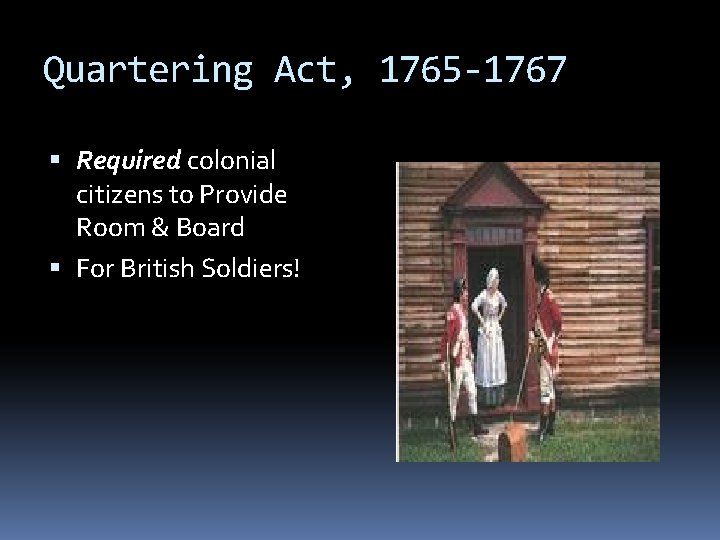
Quartering Act, 1765 -1767 Required colonial citizens to Provide Room & Board For British Soldiers!
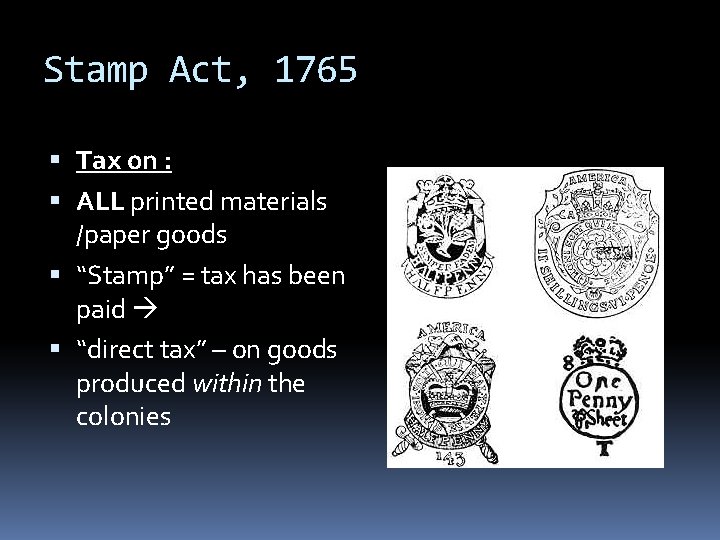
Stamp Act, 1765 Tax on : ALL printed materials /paper goods “Stamp” = tax has been paid “direct tax” – on goods produced within the colonies
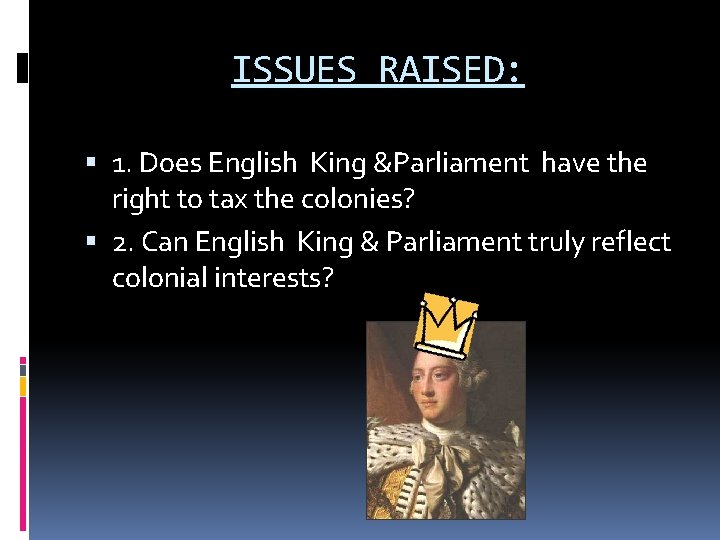
ISSUES RAISED: 1. Does English King &Parliament have the right to tax the colonies? 2. Can English King & Parliament truly reflect colonial interests?
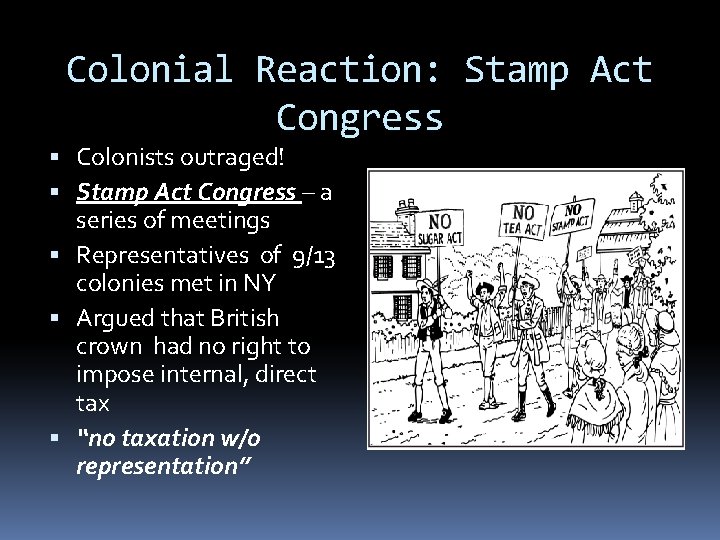
Colonial Reaction: Stamp Act Congress Colonists outraged! Stamp Act Congress – a series of meetings Representatives of 9/13 colonies met in NY Argued that British crown had no right to impose internal, direct tax “no taxation w/o representation”
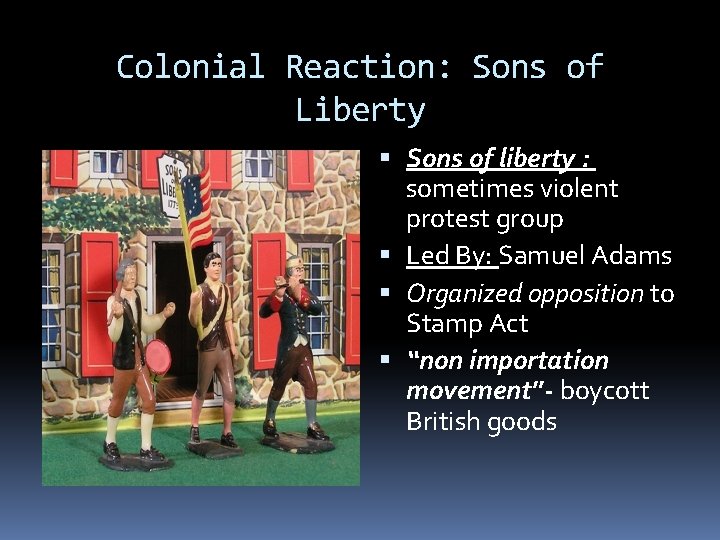
Colonial Reaction: Sons of Liberty Sons of liberty : sometimes violent protest group Led By: Samuel Adams Organized opposition to Stamp Act “non importation movement”- boycott British goods
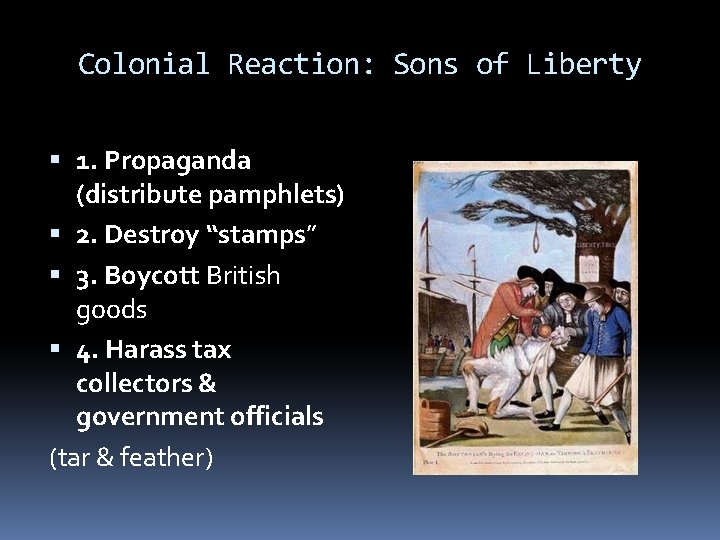
Colonial Reaction: Sons of Liberty 1. Propaganda (distribute pamphlets) 2. Destroy “stamps” 3. Boycott British goods 4. Harass tax collectors & government officials (tar & feather)
Colonial Reaction: Sons of Liberty http: //www. history. com/topics/americanrevolution/american-revolutionhistory/videos/sons-of-liberty
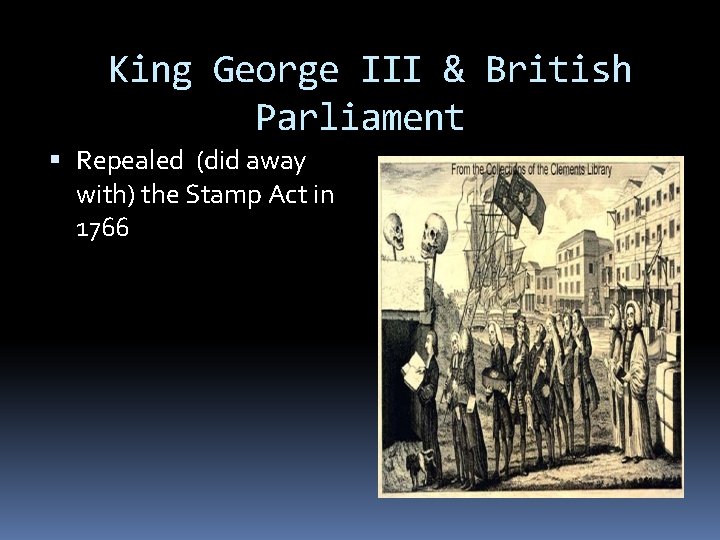
King George III & British Parliament Repealed (did away with) the Stamp Act in 1766
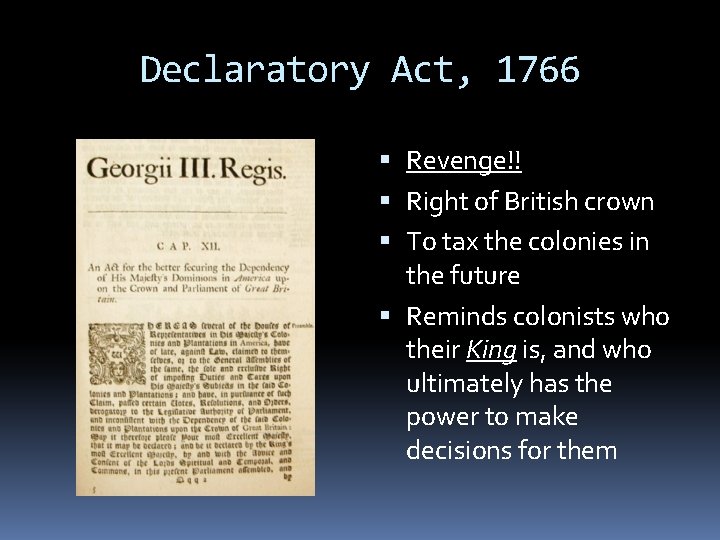
Declaratory Act, 1766 Revenge!! Right of British crown To tax the colonies in the future Reminds colonists who their King is, and who ultimately has the power to make decisions for them
Townshend Act, 1767 Import taxes on : glass, paper, tea, lead, dyes for paint Also known as the “ Revenue Act”
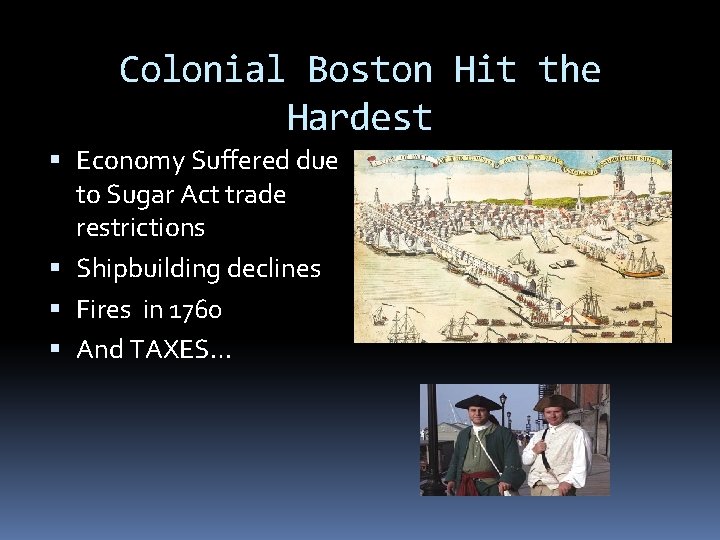
Colonial Boston Hit the Hardest Economy Suffered due to Sugar Act trade restrictions Shipbuilding declines Fires in 1760 And TAXES…
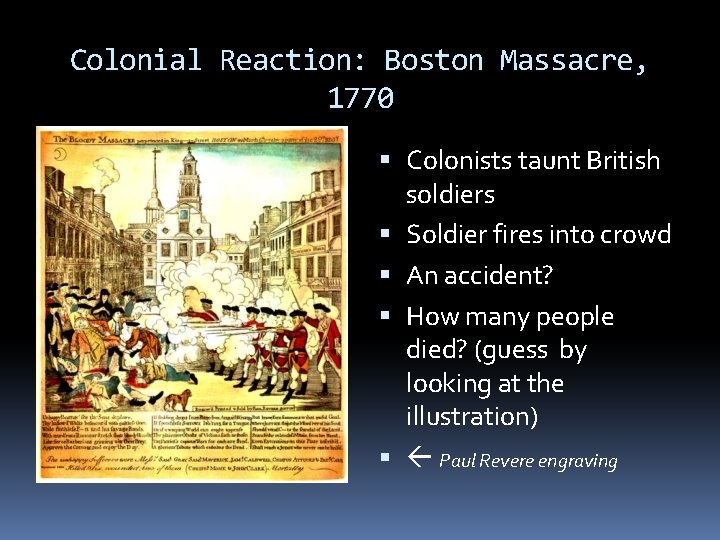
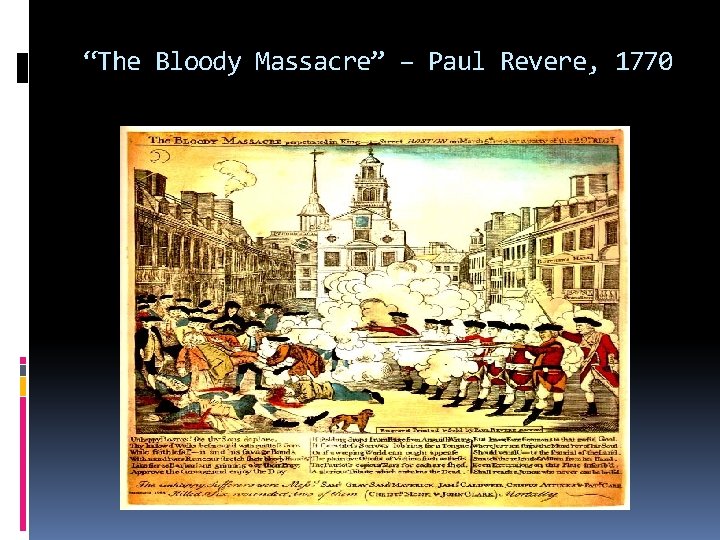
Colonial Reaction: Boston Massacre, 1770 Colonists taunt British soldiers Soldier fires into crowd An accident? How many people died? (guess by looking at the illustration) Paul Revere engraving
“The Bloody Massacre” – Paul Revere, 1770
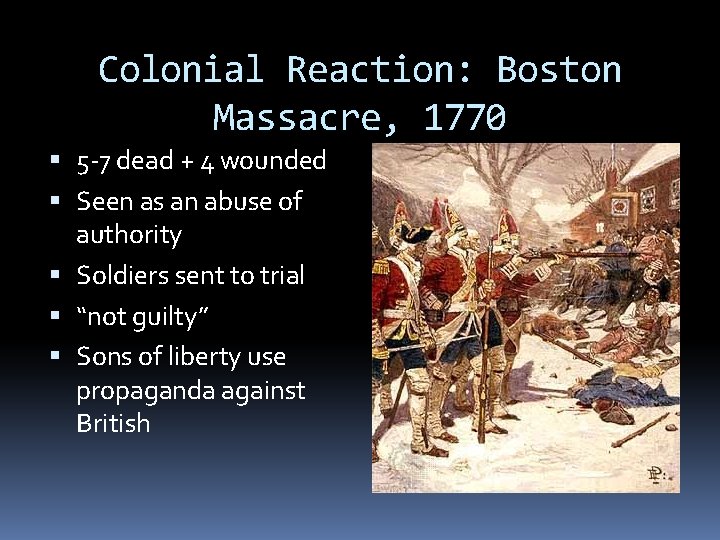
Colonial Reaction: Boston Massacre, 1770 5 -7 dead + 4 wounded Seen as an abuse of authority Soldiers sent to trial “not guilty” Sons of liberty use propaganda against British
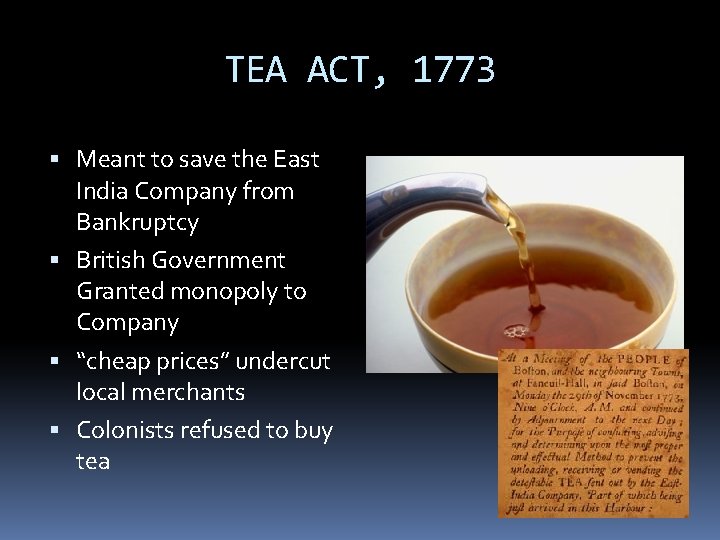
TEA ACT, 1773 Meant to save the East India Company from Bankruptcy British Government Granted monopoly to Company “cheap prices” undercut local merchants Colonists refused to buy tea
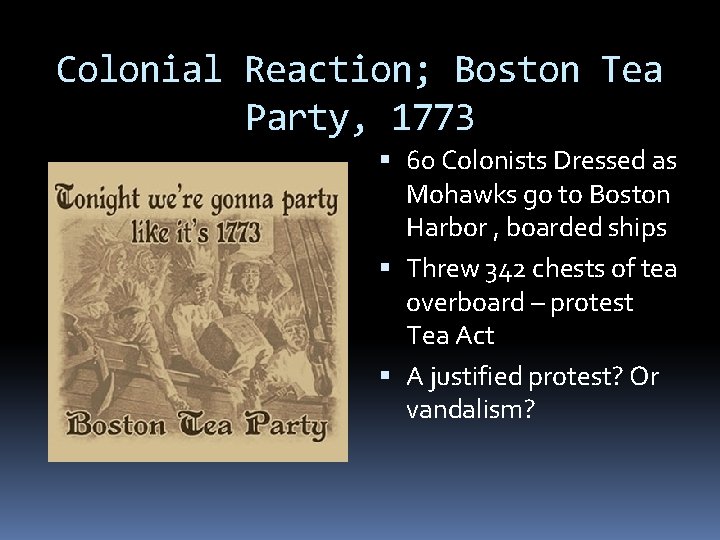
Colonial Reaction; Boston Tea Party, 1773 60 Colonists Dressed as Mohawks go to Boston Harbor , boarded ships Threw 342 chests of tea overboard – protest Tea Act A justified protest? Or vandalism?
British Response to Boston Tea Party Coercive/Intolerable Acts, 1773: Boston Harbor is closed Boston Loses charter (right to self govern) Martial Law established Quartering act reinforced
Colonial Reaction; First Continental Congress, 1774 Colonial Representatives … 1. Urged colonies to build military reserves 2. “Declaration of Rights & Grievances” sent to King of England 3. Boycott committees 4. Agree to meet again May 1775 if grievances had not been addressed by the crown
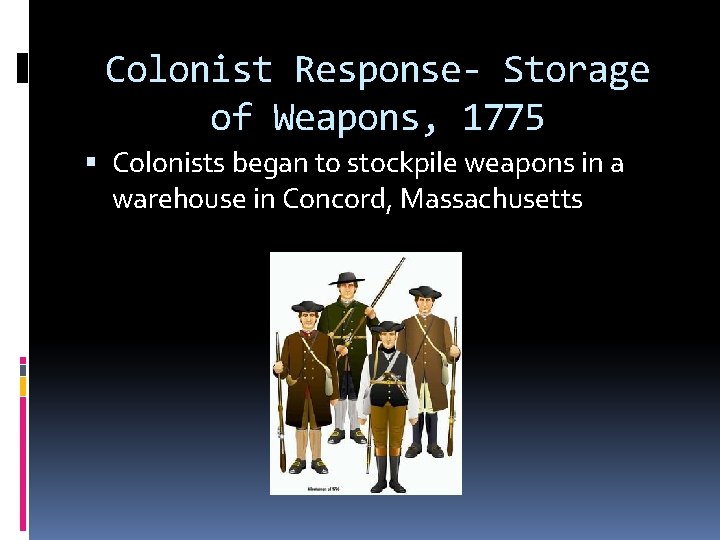
Colonist Response- Storage of Weapons, 1775 Colonists began to stockpile weapons in a warehouse in Concord, Massachusetts
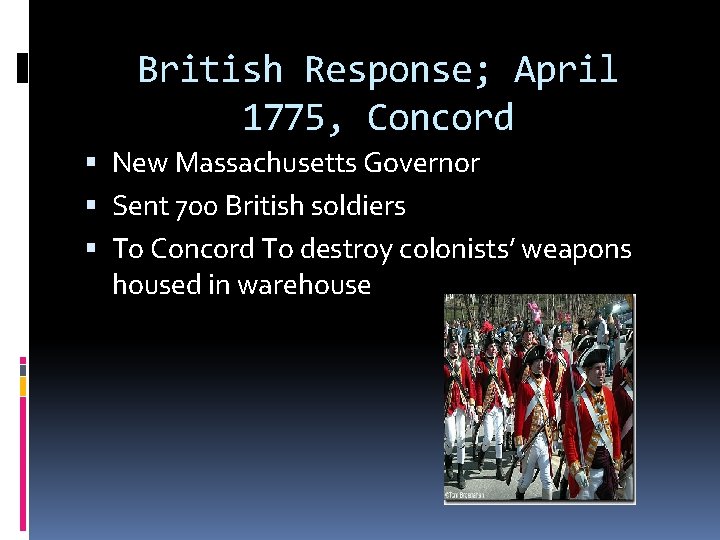
British Response; April 1775, Concord New Massachusetts Governor Sent 700 British soldiers To Concord To destroy colonists’ weapons housed in warehouse
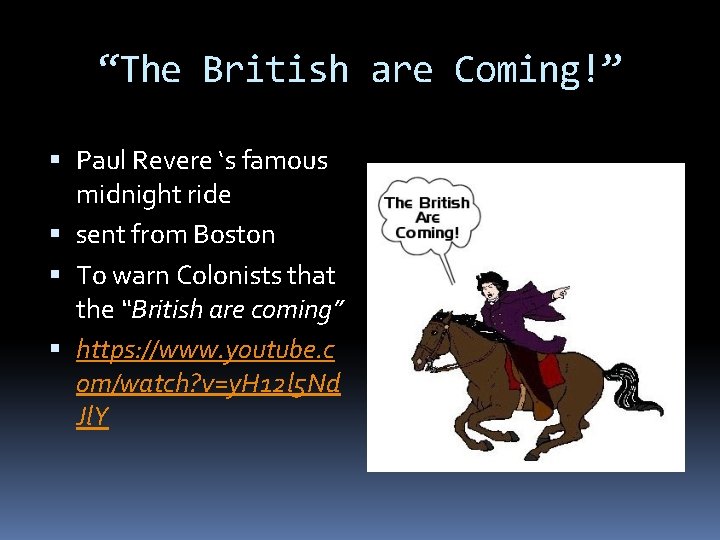
“The British are Coming!” Paul Revere ‘s famous midnight ride sent from Boston To warn Colonists that the “British are coming” https: //www. youtube. c om/watch? v=y. H 12 l 5 Nd Jl. Y
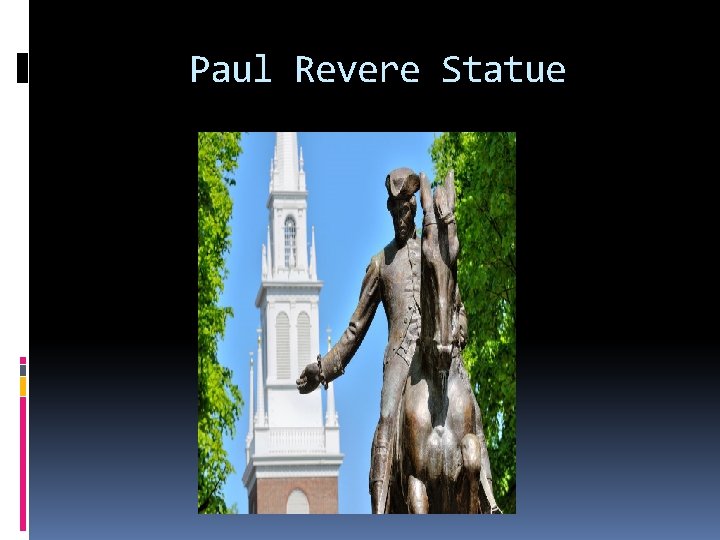
Paul Revere Statue
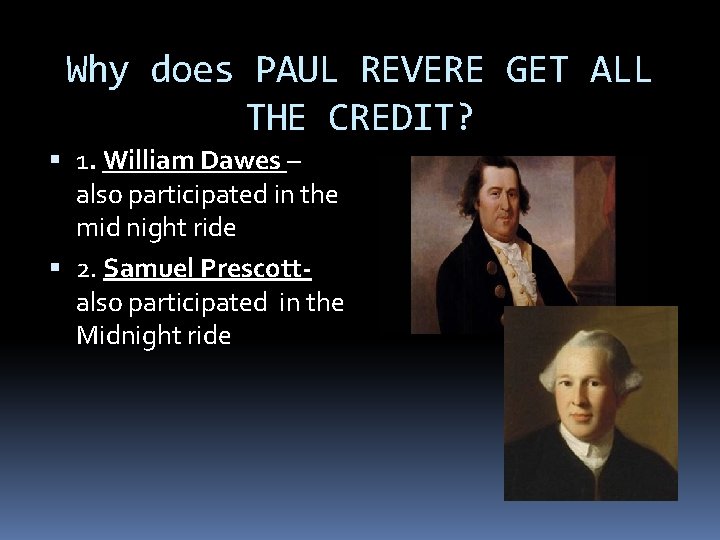
Why does PAUL REVERE GET ALL THE CREDIT? 1. William Dawes – also participated in the mid night ride 2. Samuel Prescottalso participated in the Midnight ride
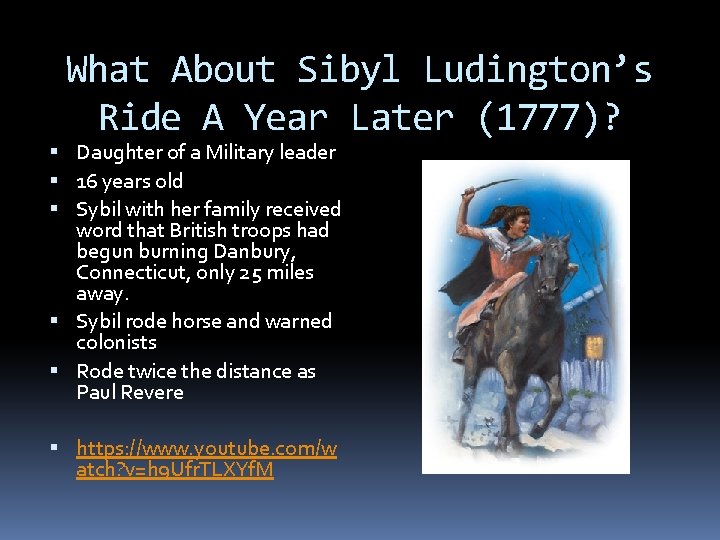
What About Sibyl Ludington’s Ride A Year Later (1777)? Daughter of a Military leader 16 years old Sybil with her family received word that British troops had begun burning Danbury, Connecticut, only 25 miles away. Sybil rode horse and warned colonists Rode twice the distance as Paul Revere https: //www. youtube. com/w atch? v=h 9 Ufr. TLXYf. M
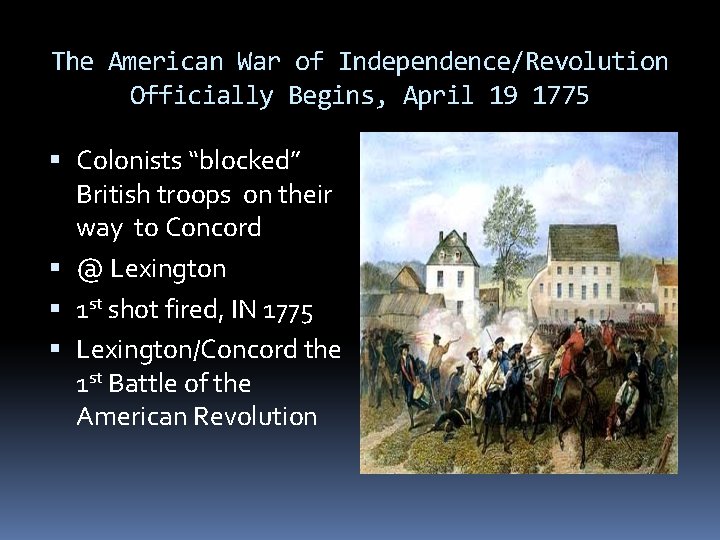
The American War of Independence/Revolution Officially Begins, April 19 1775 Colonists “blocked” British troops on their way to Concord @ Lexington 1 st shot fired, IN 1775 Lexington/Concord the 1 st Battle of the American Revolution
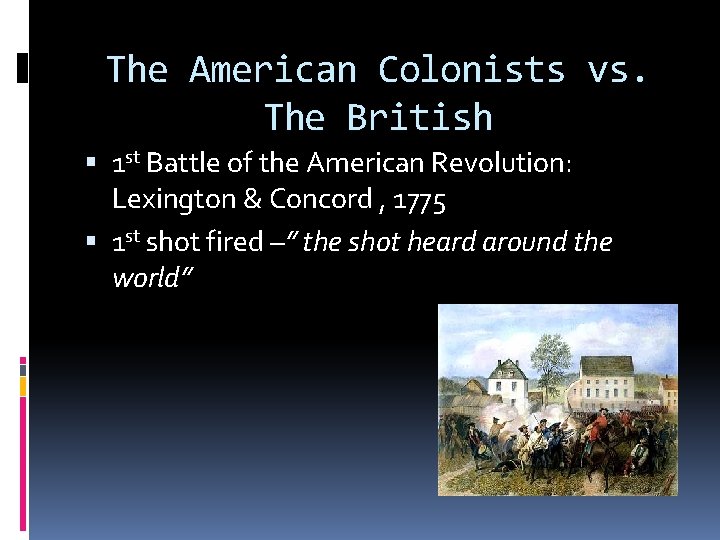
The American Colonists vs. The British 1 st Battle of the American Revolution: Lexington & Concord , 1775 1 st shot fired –” the shot heard around the world”
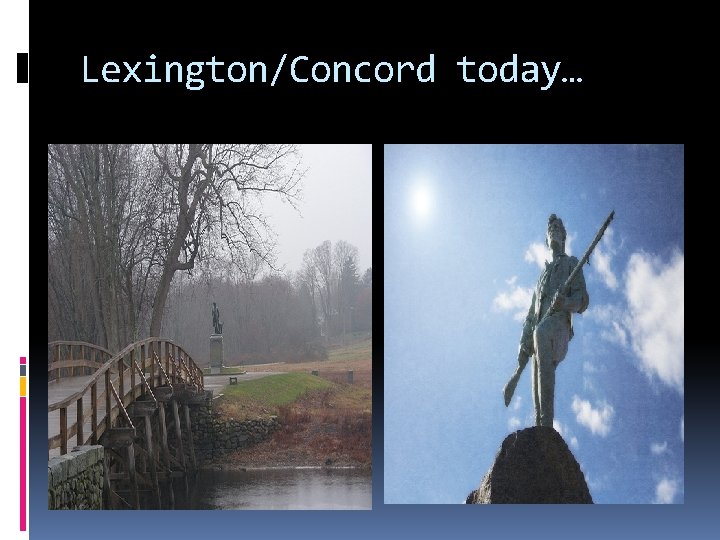
Lexington/Concord today…
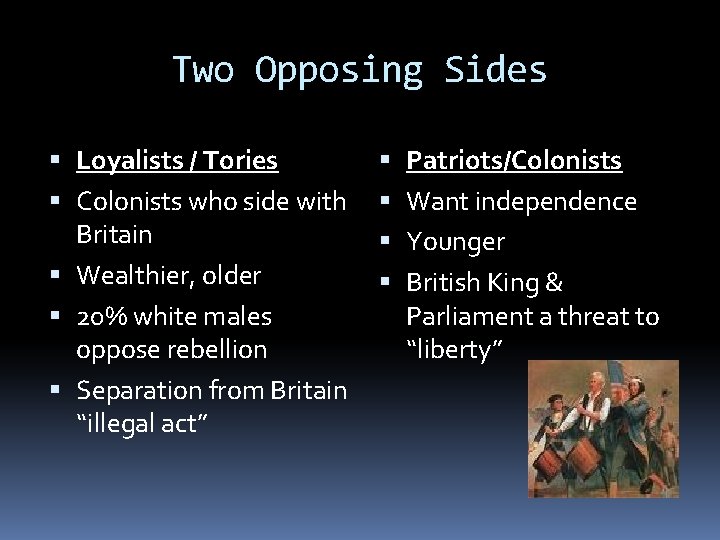
Two Opposing Sides Loyalists / Tories Colonists who side with Britain Wealthier, older 20% white males oppose rebellion Separation from Britain “illegal act” Patriots/Colonists Want independence Younger British King & Parliament a threat to “liberty”
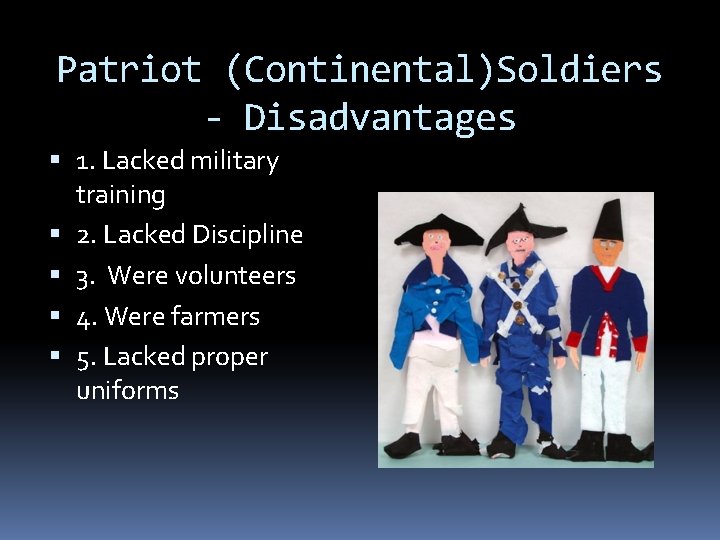
Patriot (Continental)Soldiers - Disadvantages 1. Lacked military training 2. Lacked Discipline 3. Were volunteers 4. Were farmers 5. Lacked proper uniforms
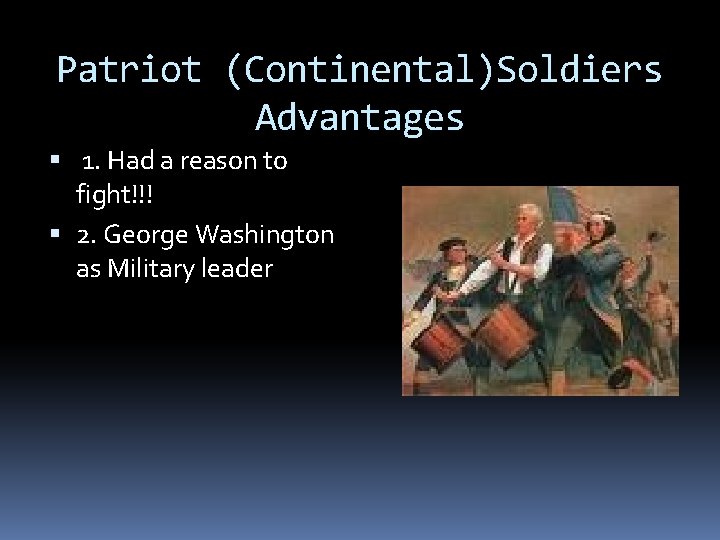
Patriot (Continental)Soldiers Advantages 1. Had a reason to fight!!! 2. George Washington as Military leader
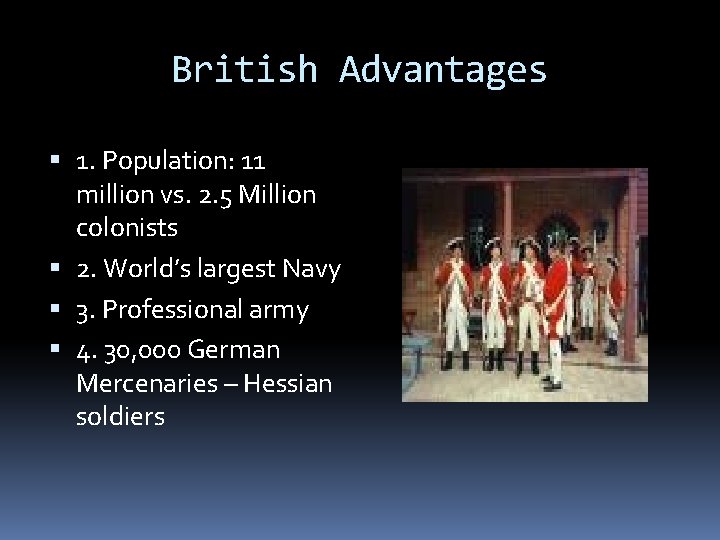
British Advantages 1. Population: 11 million vs. 2. 5 Million colonists 2. World’s largest Navy 3. Professional army 4. 30, 000 German Mercenaries – Hessian soldiers
British Disadvantages 1. Decline of navy (budget cuts, desertion) 2. Had to import supplies from Britain 3. British debt increase = taxes
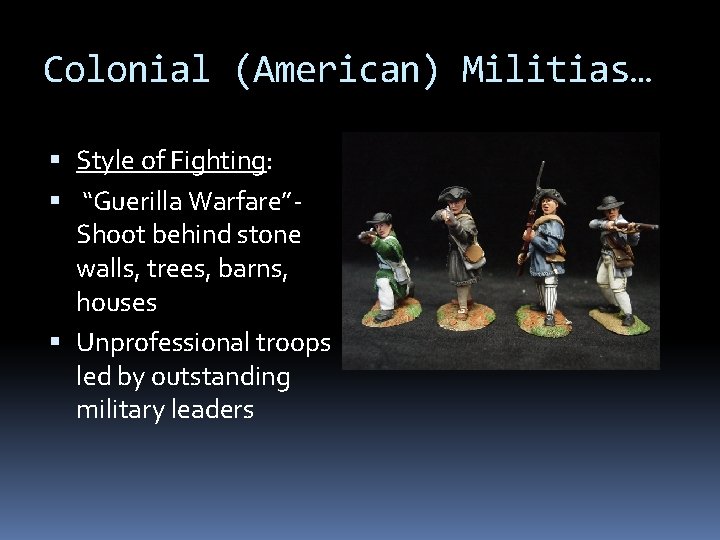
Colonial (American) Militias… Style of Fighting: “Guerilla Warfare”Shoot behind stone walls, trees, barns, houses Unprofessional troops led by outstanding military leaders
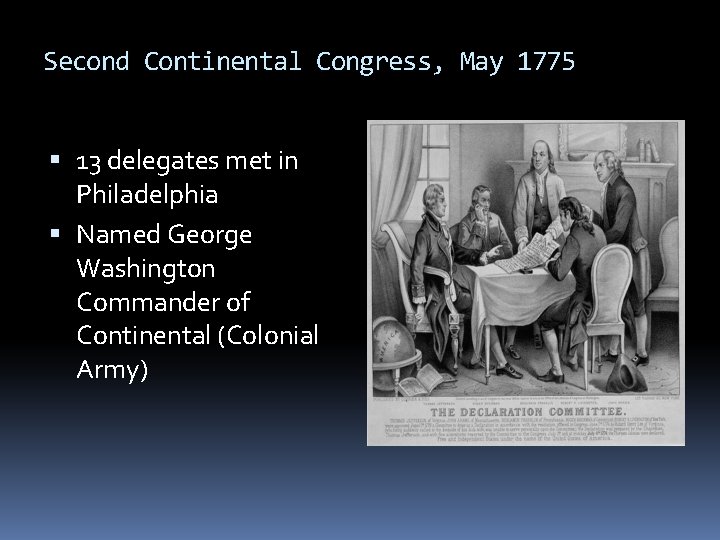
Second Continental Congress, May 1775 13 delegates met in Philadelphia Named George Washington Commander of Continental (Colonial Army)
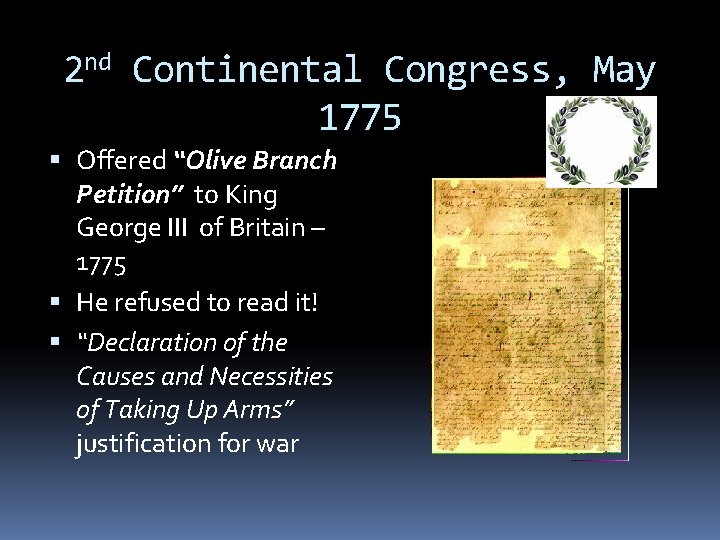
2 nd Continental Congress, May 1775 Offered “Olive Branch Petition” to King George III of Britain – 1775 He refused to read it! “Declaration of the Causes and Necessities of Taking Up Arms” justification for war
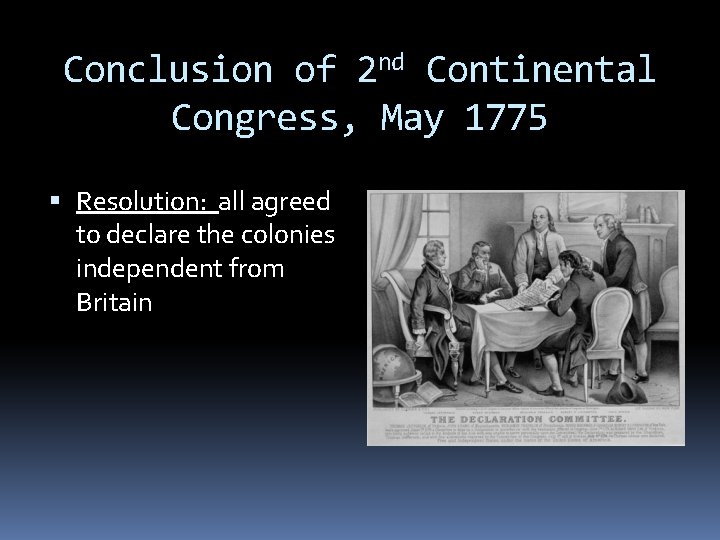
Conclusion of 2 nd Continental Congress, May 1775 Resolution: all agreed to declare the colonies independent from Britain
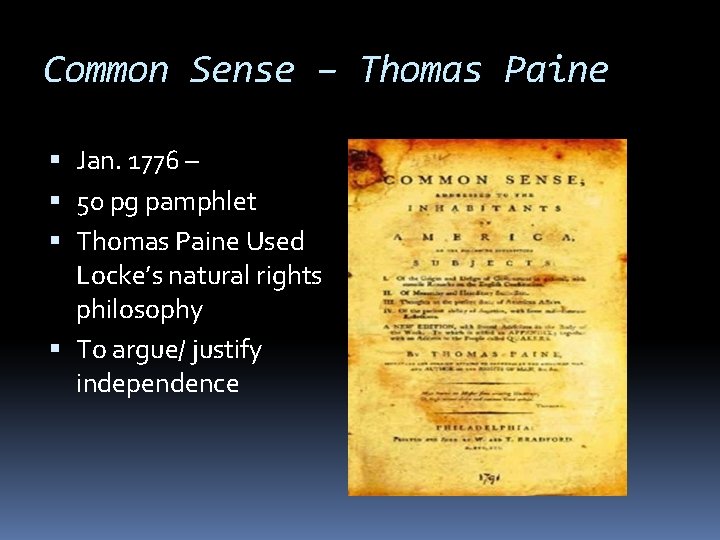
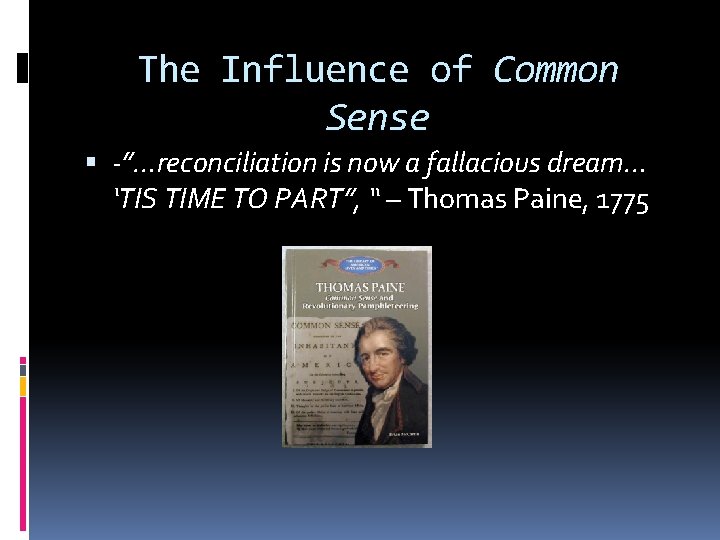
Common Sense – Thomas Paine Jan. 1776 – 50 pg pamphlet Thomas Paine Used Locke’s natural rights philosophy To argue/ justify independence
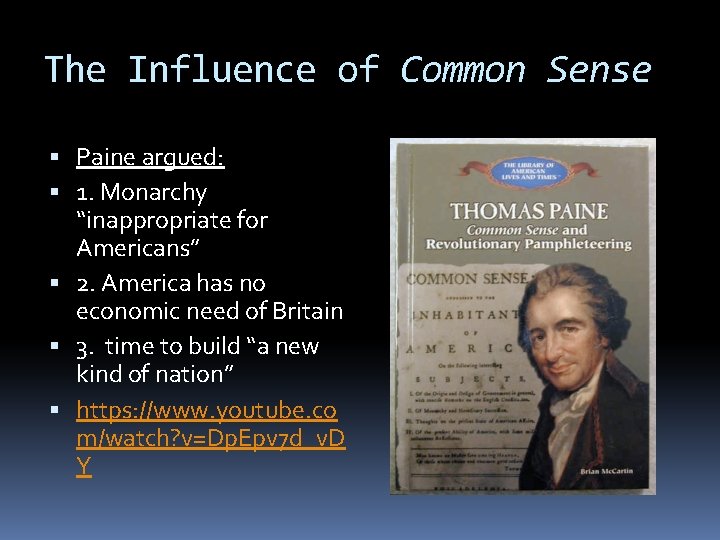
The Influence of Common Sense Paine argued: 1. Monarchy “inappropriate for Americans” 2. America has no economic need of Britain 3. time to build “a new kind of nation” https: //www. youtube. co m/watch? v=Dp. Epv 7 d_v. D Y
The Influence of Common Sense -”…reconciliation is now a fallacious dream… ‘TIS TIME TO PART”, “ – Thomas Paine, 1775
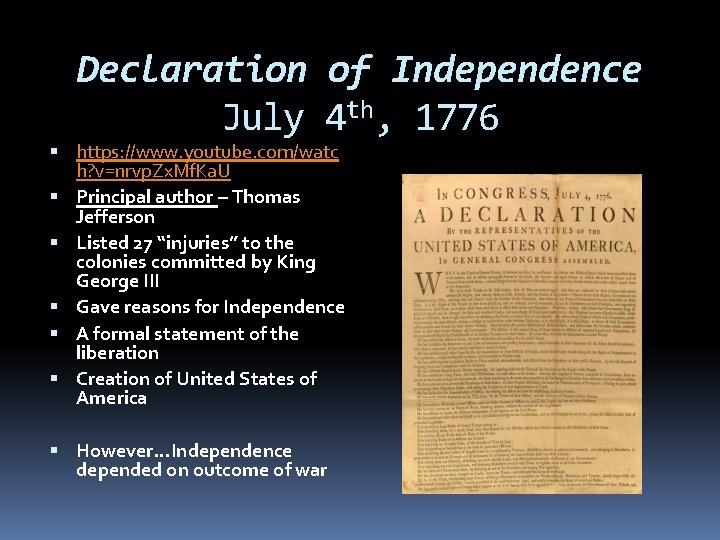
Declaration of Independence July 4 th, 1776 https: //www. youtube. com/watc h? v=nrvp. Zx. Mf. Ka. U Principal author – Thomas Jefferson Listed 27 “injuries” to the colonies committed by King George III Gave reasons for Independence A formal statement of the liberation Creation of United States of America However…Independence depended on outcome of war
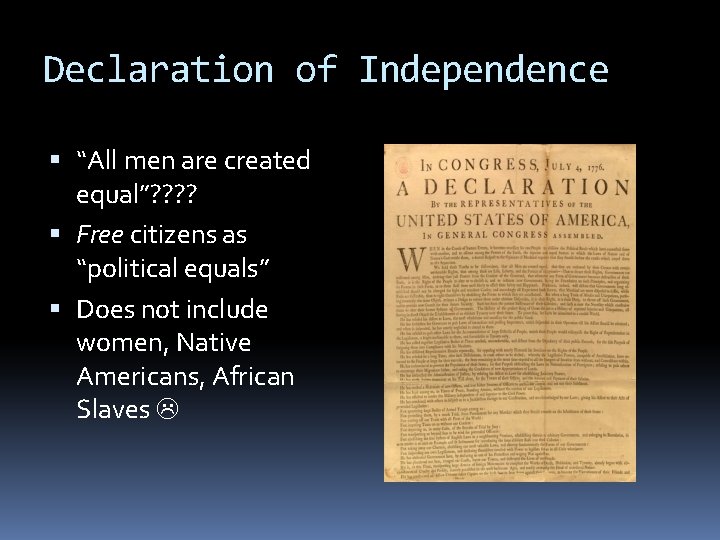
Declaration of Independence “All men are created equal”? ? Free citizens as “political equals” Does not include women, Native Americans, African Slaves
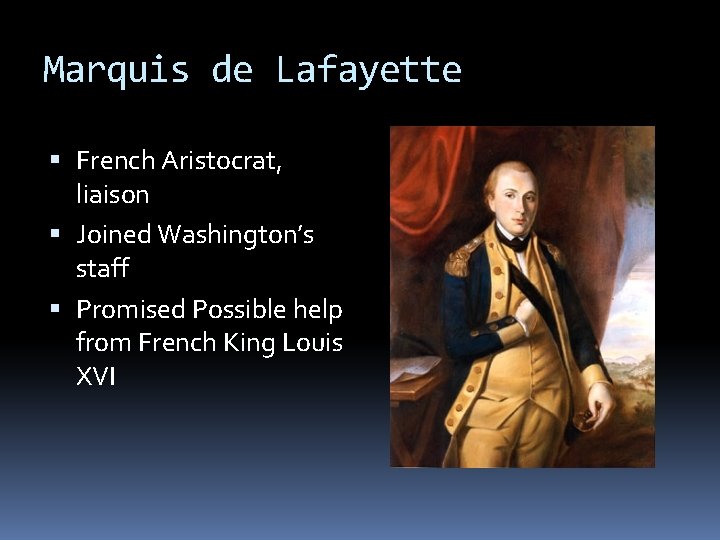
Marquis de Lafayette French Aristocrat, liaison Joined Washington’s staff Promised Possible help from French King Louis XVI
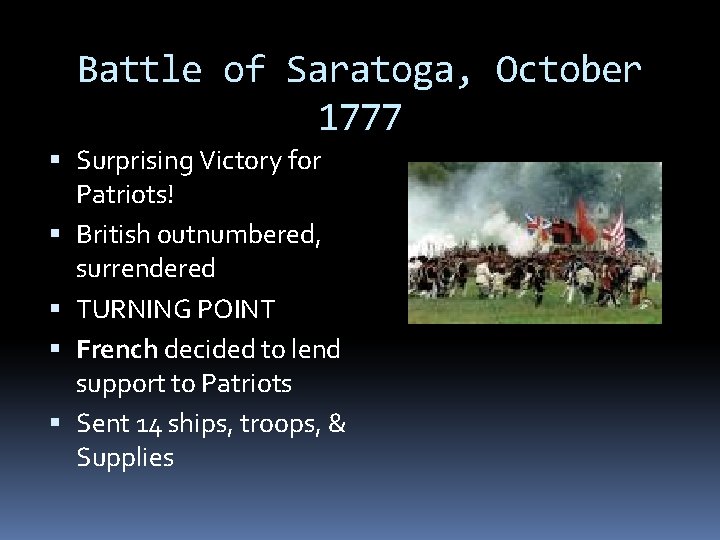
Battle of Saratoga, October 1777 Surprising Victory for Patriots! British outnumbered, surrendered TURNING POINT French decided to lend support to Patriots Sent 14 ships, troops, & Supplies
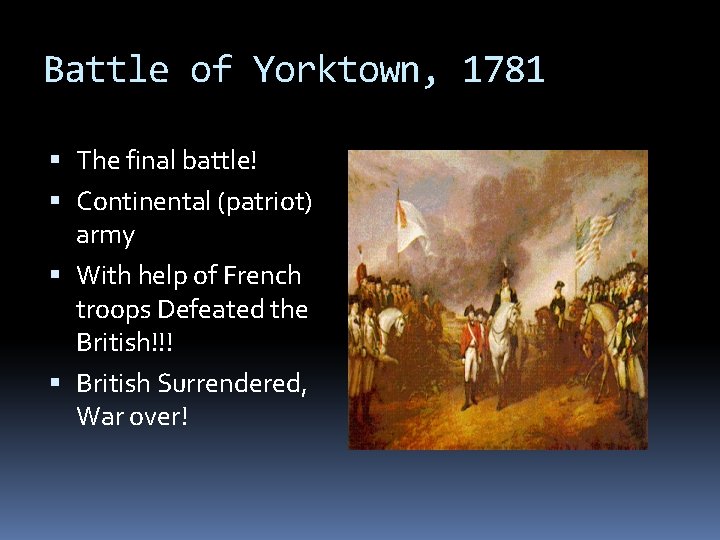
Battle of Yorktown, 1781 The final battle! Continental (patriot) army With help of French troops Defeated the British!!! British Surrendered, War over!
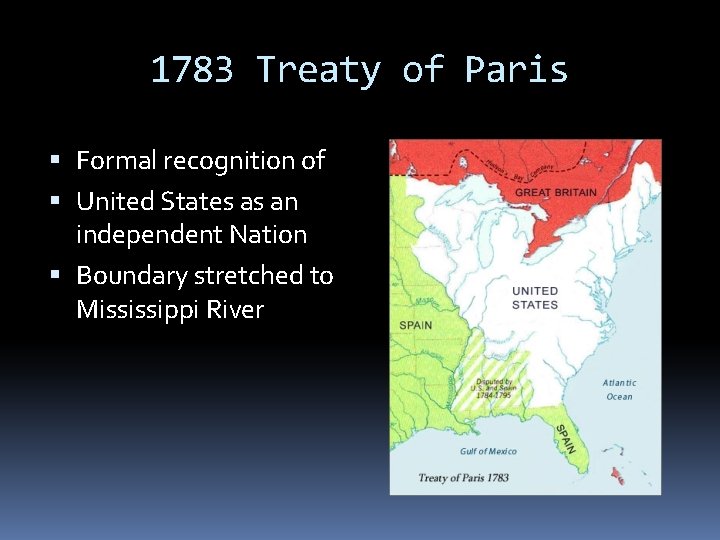
1783 Treaty of Paris Formal recognition of United States as an independent Nation Boundary stretched to Mississippi River
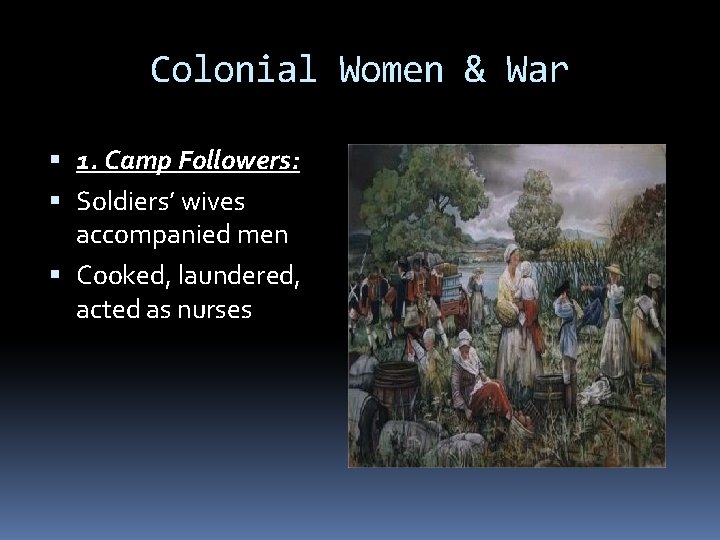
Colonial Women & War 1. Camp Followers: Soldiers’ wives accompanied men Cooked, laundered, acted as nurses
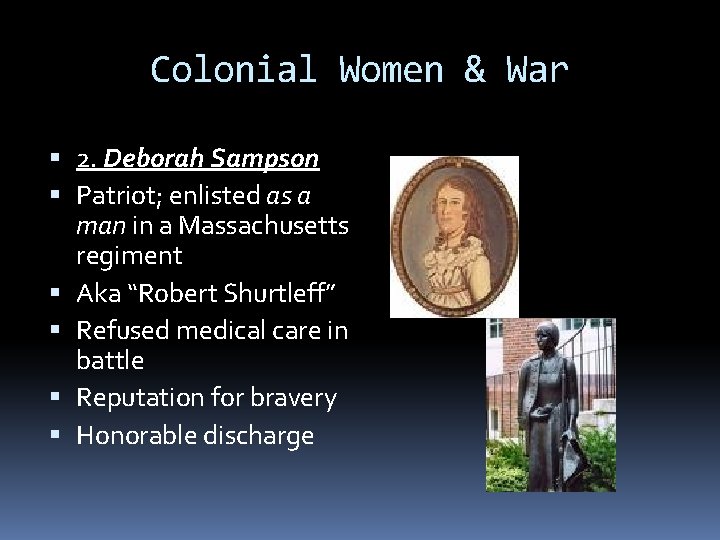
Colonial Women & War 2. Deborah Sampson Patriot; enlisted as a man in a Massachusetts regiment Aka “Robert Shurtleff” Refused medical care in battle Reputation for bravery Honorable discharge
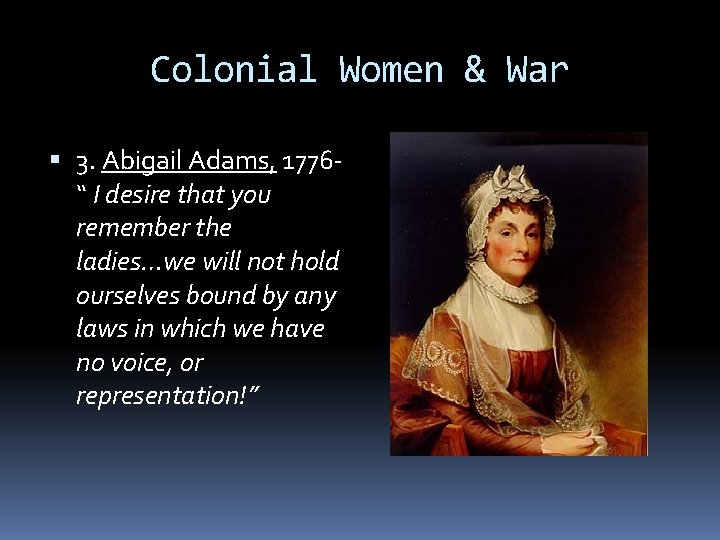
Colonial Women & War 3. Abigail Adams, 1776“ I desire that you remember the ladies…we will not hold ourselves bound by any laws in which we have no voice, or representation!”
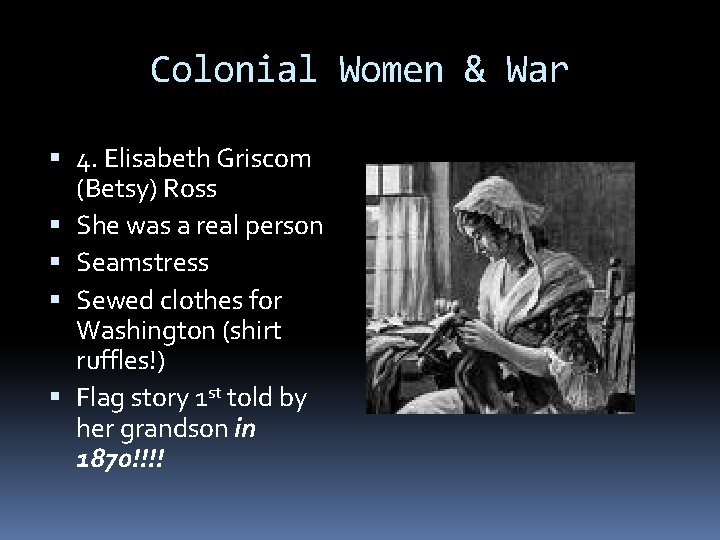
Colonial Women & War 4. Elisabeth Griscom (Betsy) Ross She was a real person Seamstress Sewed clothes for Washington (shirt ruffles!) Flag story 1 st told by her grandson in 1870!!!!