
The American Revolution Chapter 5 Section 4 The
- Slides: 18
The American Revolution Chapter 5 Section 4 The War Begins https: //www. youtube. com/watch? v=Icae. Up. AHal. Y
Chapter 5 Section 4 The War Begins Objectives Identify the issues facing the Second Continental Congress. Describe the differences between Patriots and Loyalists. Identify the Olive Branch Petition, and explain why it failed. Explain Hill. the significance of the Battle of Bunker
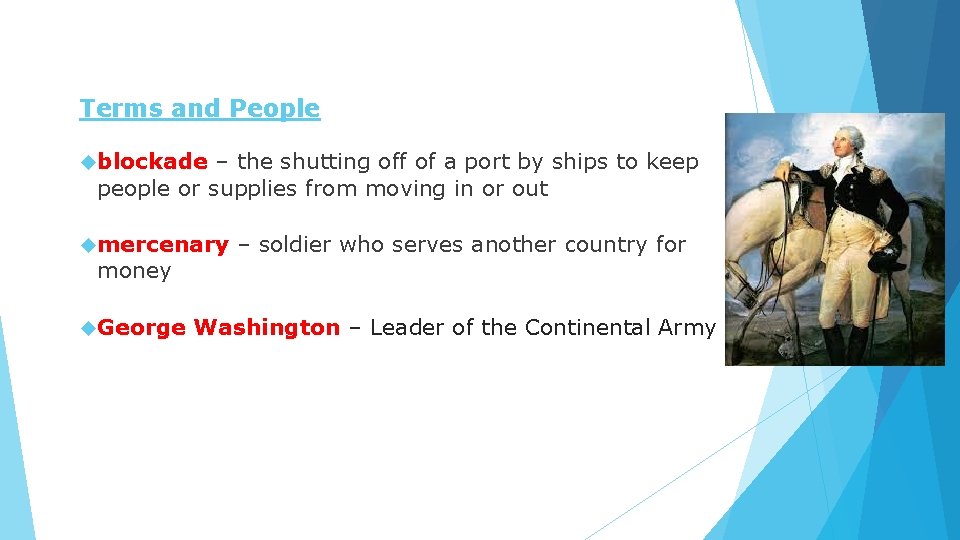
Terms and People blockade – the shutting off of a port by ships to keep people or supplies from moving in or out mercenary money George – soldier who serves another country for Washington – Leader of the Continental Army
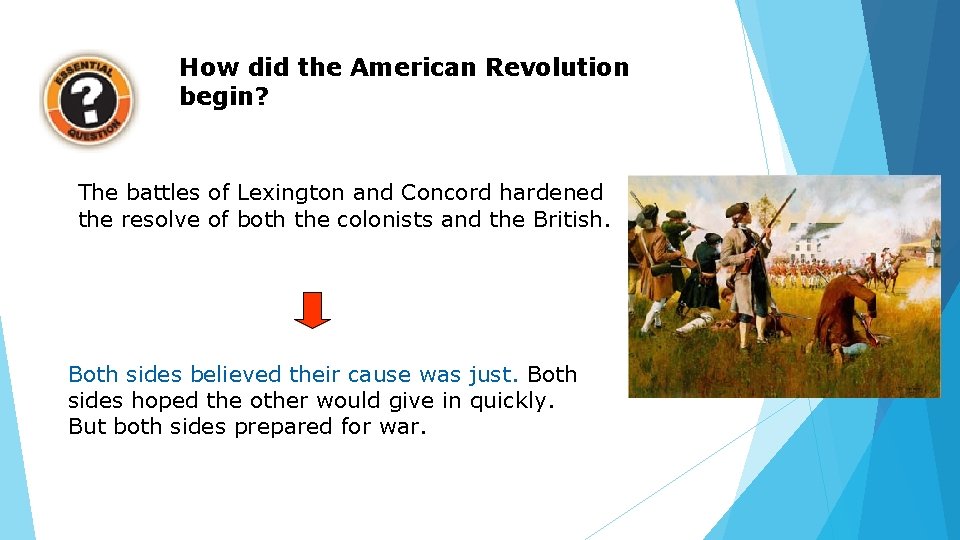
How did the American Revolution begin? The battles of Lexington and Concord hardened the resolve of both the colonists and the British. Both sides believed their cause was just. Both sides hoped the other would give in quickly. But both sides prepared for war.
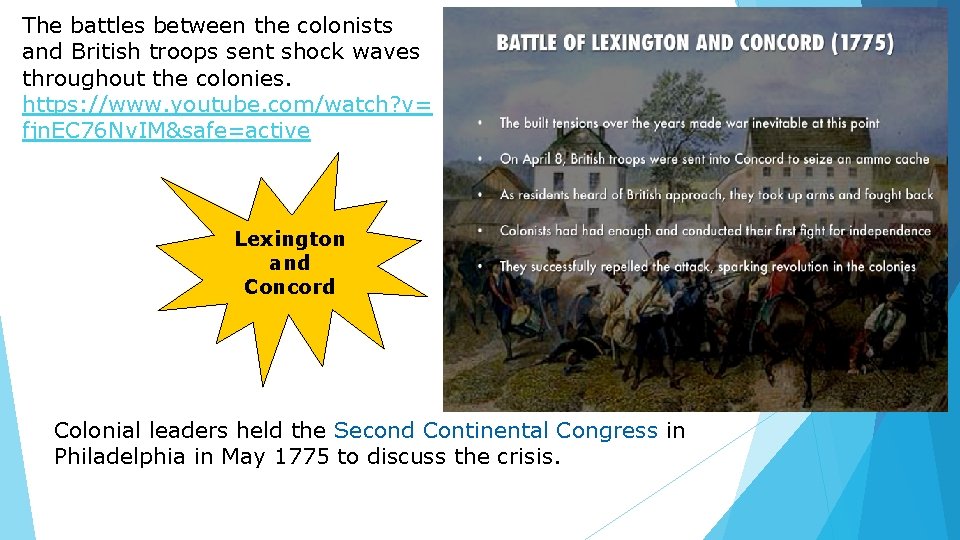
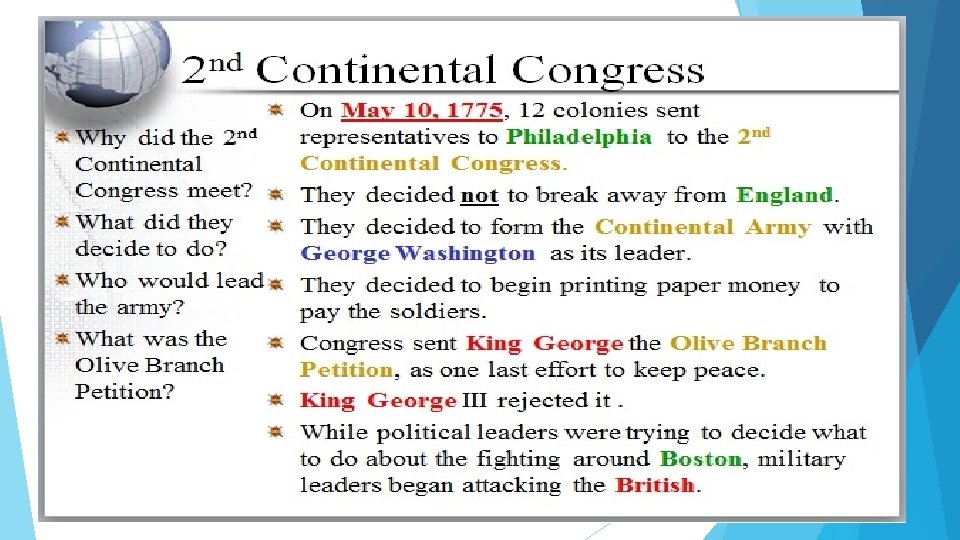
The battles between the colonists and British troops sent shock waves throughout the colonies. https: //www. youtube. com/watch? v= fjn. EC 76 Nv. IM&safe=active Lexington and Concord Colonial leaders held the Second Continental Congress in Philadelphia in May 1775 to discuss the crisis.
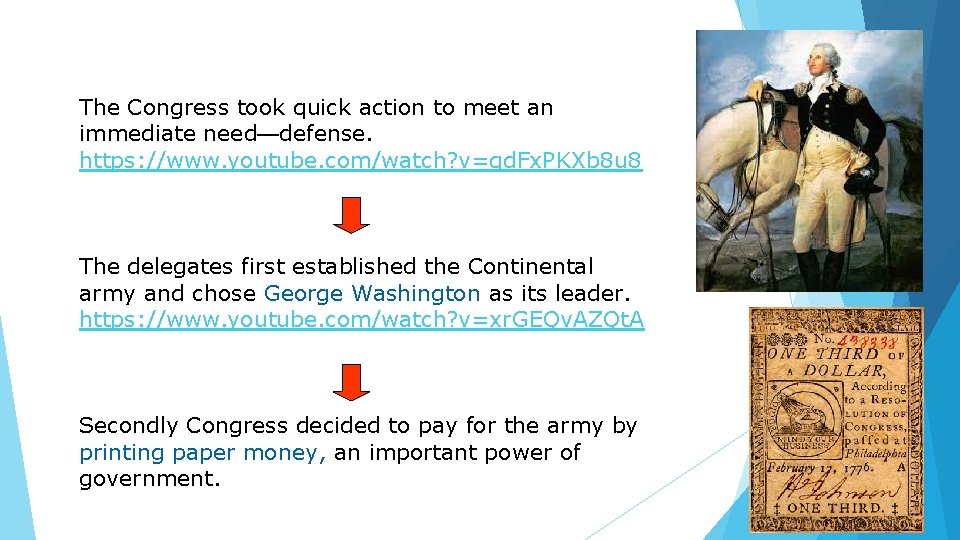
The Congress took quick action to meet an immediate need—defense. https: //www. youtube. com/watch? v=qd. Fx. PKXb 8 u 8 The delegates first established the Continental army and chose George Washington as its leader. https: //www. youtube. com/watch? v=xr. GEQv. AZQt. A Secondly Congress decided to pay for the army by printing paper money, an important power of government.
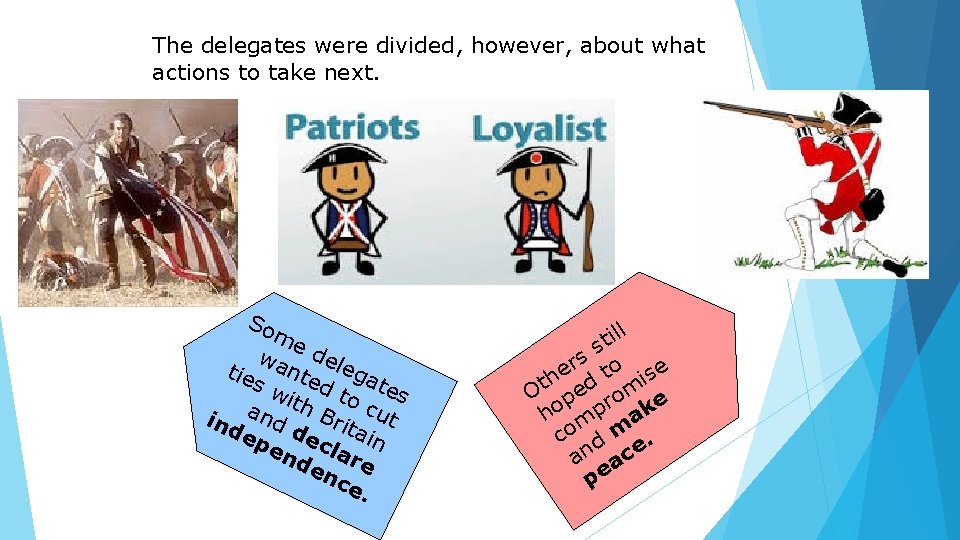
The delegates were divided, however, about what actions to take next. So me wa dele n tie s w ted gate ith to c s a Bri ut ind nd ep dec tain en lar de e nc e. ill t s s r to e e s i h Ot ped rom e ho mp ak co d m. an ace pe
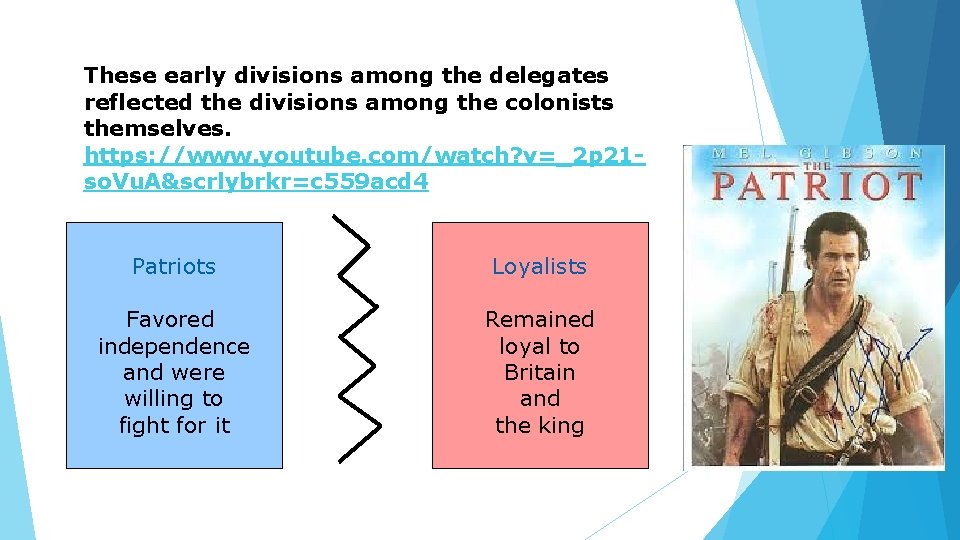
These early divisions among the delegates reflected the divisions among the colonists themselves. https: //www. youtube. com/watch? v=_2 p 21 so. Vu. A&scrlybrkr=c 559 acd 4 Patriots Loyalists Favored independence and were willing to fight for it Remained loyal to Britain and the king
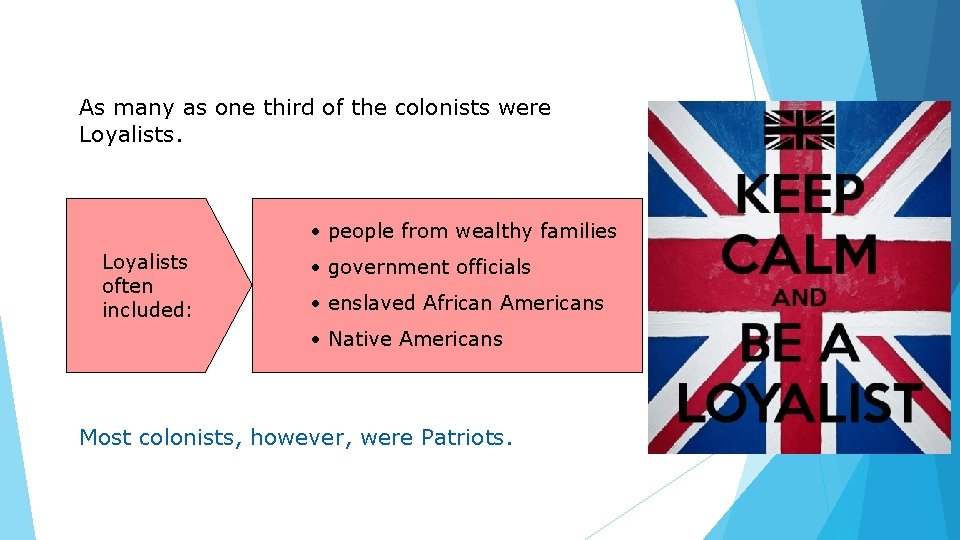
As many as one third of the colonists were Loyalists. • people from wealthy families Loyalists often included: • government officials • enslaved African Americans • Native Americans Most colonists, however, were Patriots.
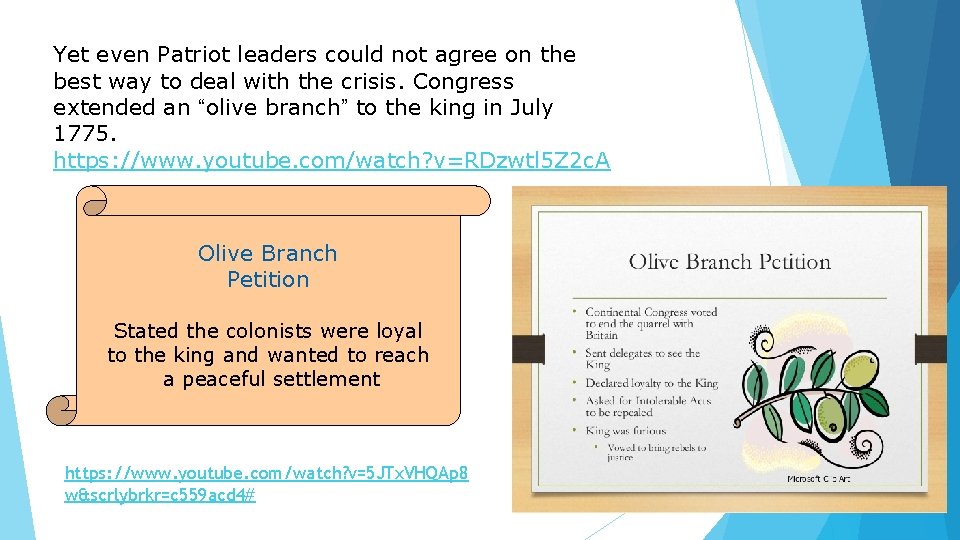
Yet even Patriot leaders could not agree on the best way to deal with the crisis. Congress extended an “olive branch” to the king in July 1775. https: //www. youtube. com/watch? v=RDzwtl 5 Z 2 c. A Olive Branch Petition Stated the colonists were loyal to the king and wanted to reach a peaceful settlement https: //www. youtube. com/watch? v=5 JTx. VHQAp 8 w&scrlybrkr=c 559 acd 4#
That same month Congress also issued a warning. Declaration of the Causes and Necessities of Taking Up Arms Stated the colonists were ready to die for their cause
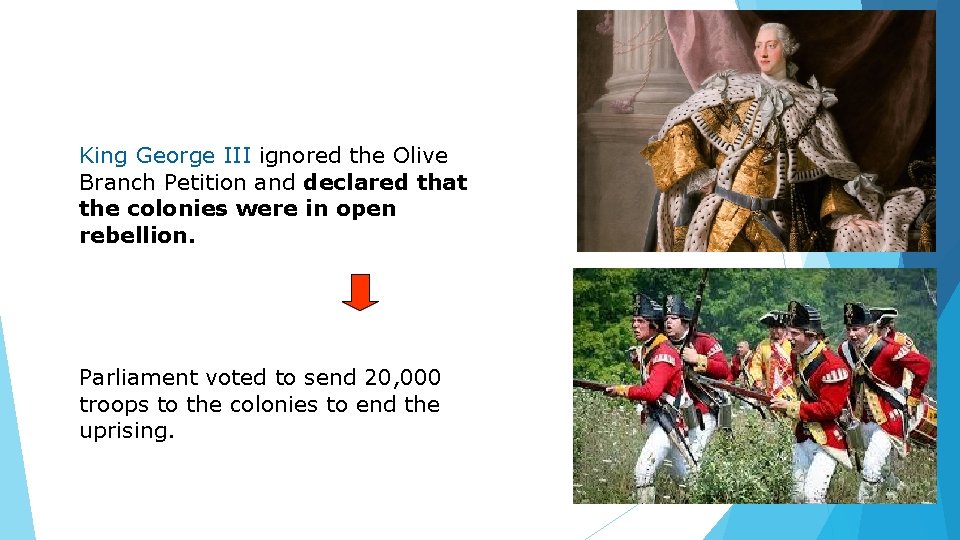
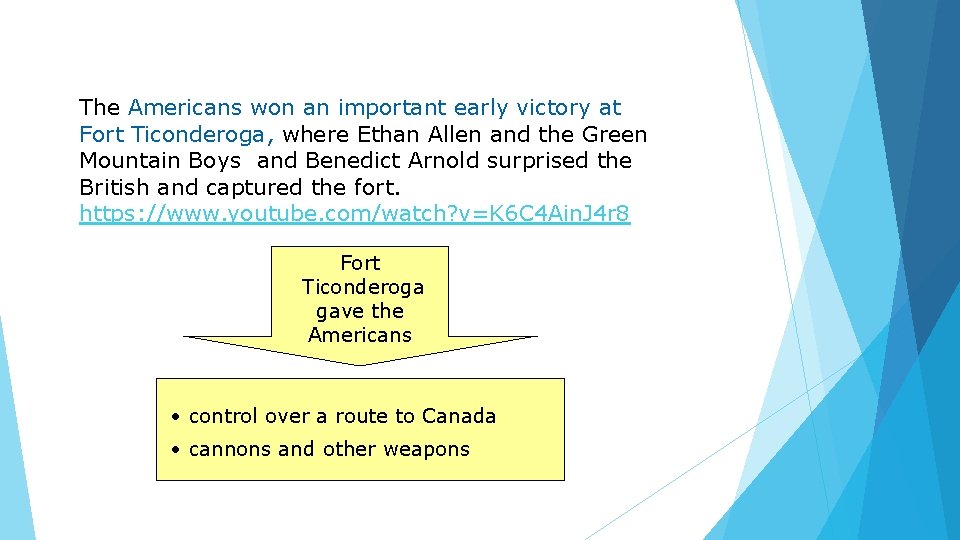
King George III ignored the Olive Branch Petition and declared that the colonies were in open rebellion. Parliament voted to send 20, 000 troops to the colonies to end the uprising.
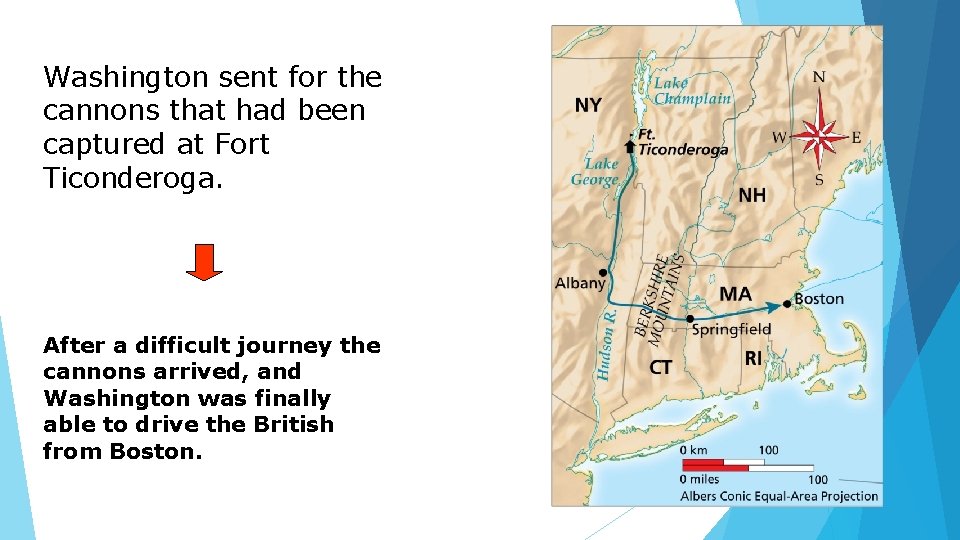
The Americans won an important early victory at Fort Ticonderoga, where Ethan Allen and the Green Mountain Boys and Benedict Arnold surprised the British and captured the fort. https: //www. youtube. com/watch? v=K 6 C 4 Ain. J 4 r 8 Fort Ticonderoga gave the Americans • control over a route to Canada • cannons and other weapons
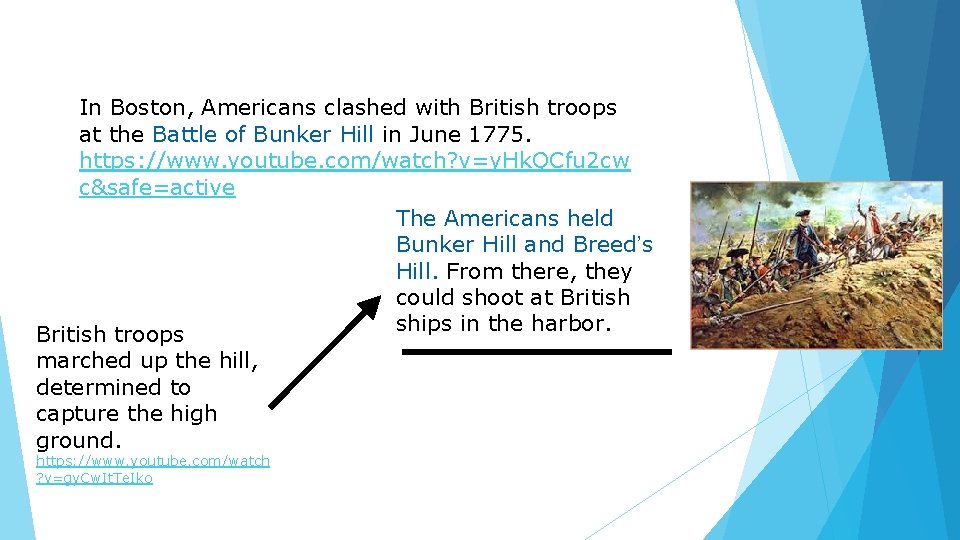
In Boston, Americans clashed with British troops at the Battle of Bunker Hill in June 1775. https: //www. youtube. com/watch? v=y. Hk. QCfu 2 cw c&safe=active The Americans held Bunker Hill and Breed’s Hill. From there, they could shoot at British ships in the harbor. British troops marched up the hill, determined to capture the high ground. https: //www. youtube. com/watch ? v=gy. Cw. It. Te. Iko
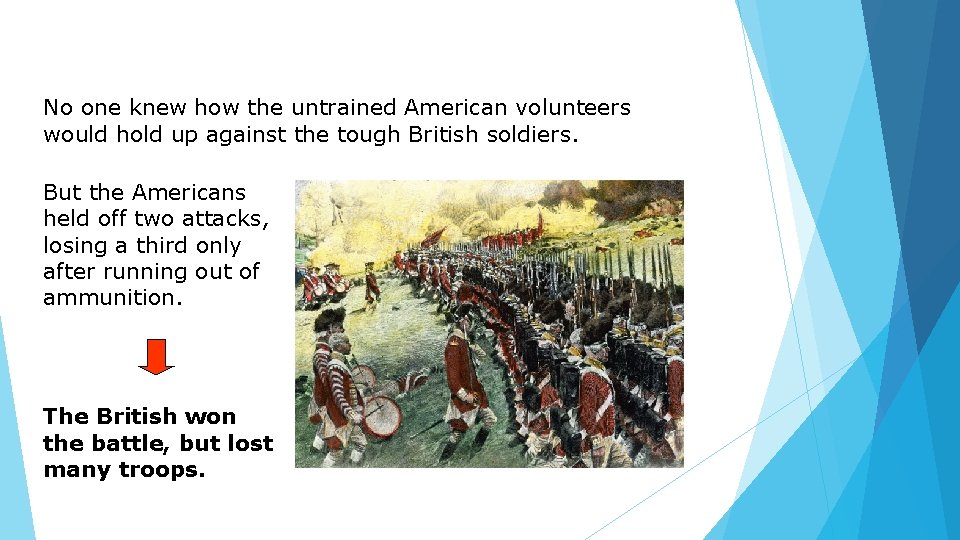
No one knew how the untrained American volunteers would hold up against the tough British soldiers. But the Americans held off two attacks, losing a third only after running out of ammunition. The British won the battle, but lost many troops.
Washington sent for the cannons that had been captured at Fort Ticonderoga. After a difficult journey the cannons arrived, and Washington was finally able to drive the British from Boston.
Despite these early American victories, the British still held many advantages. • They controlled the most powerful navy in the world. • They hired mercenaries to help fight. After a failed invasion of Canada, the Americans knew they were facing a long and difficult struggle.