
The American Revolution 1775 1783 The Combatants Tale
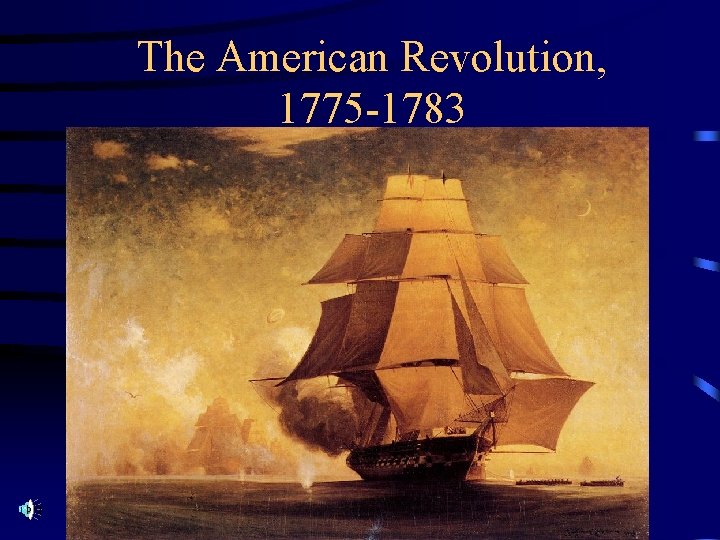
The American Revolution, 1775 -1783
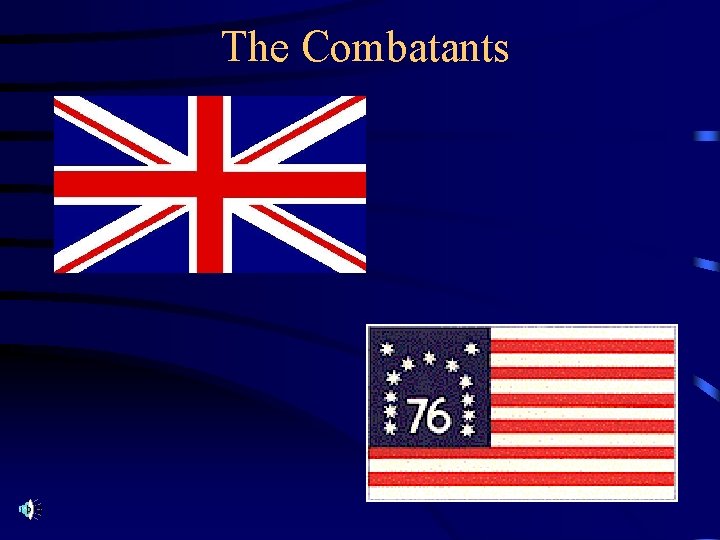
The Combatants
Tale of the Tape • British Advantages – Army of regulars – Top Navy – 30, 000 Hessians – 50, 000 American loyalists – Money and supplies
Tale of the Tape • American Advantages – 3, 000 miles of ocean – Home Turf – Fighting for independence – Leadership – Training in F&I War – Possible French assistance
First Continental Congress • First C. C. convened in Phil. in ‘ 74 – Statement of grievances to King – Made preparations in MA for fighting – Agreed not to consume British goods – Agreed to meet again in ‘ 75
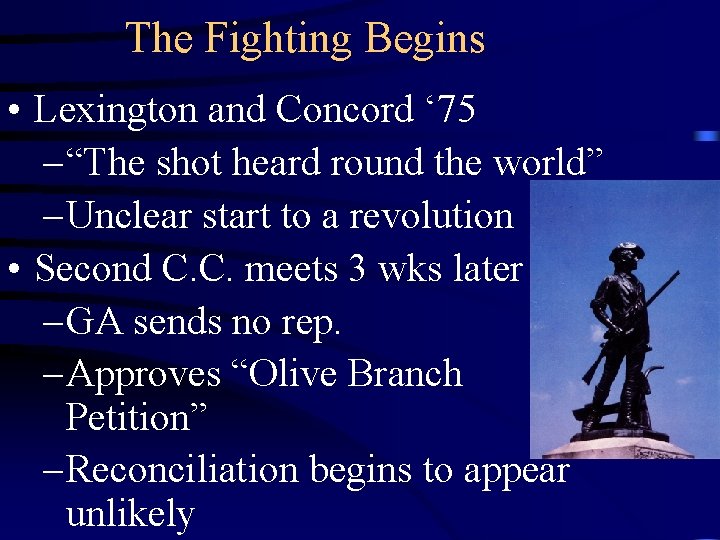
The Fighting Begins • Lexington and Concord ‘ 75 – “The shot heard round the world” – Unclear start to a revolution • Second C. C. meets 3 wks later – GA sends no rep. – Approves “Olive Branch Petition” – Reconciliation begins to appear unlikely
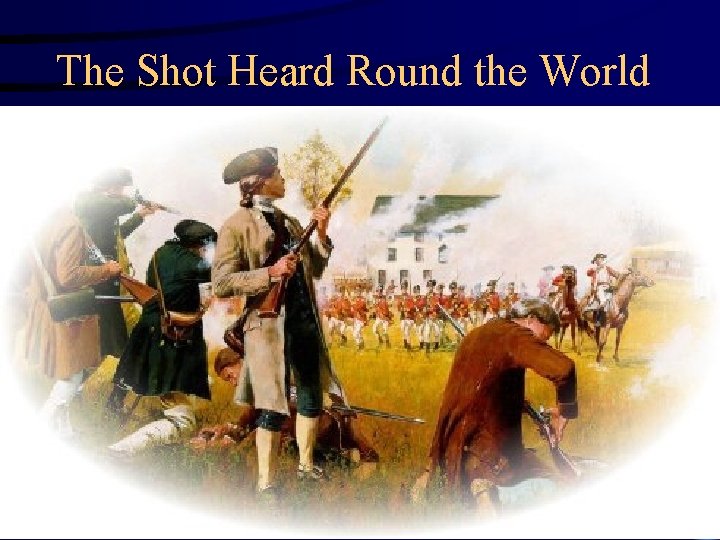
The Shot Heard Round the World
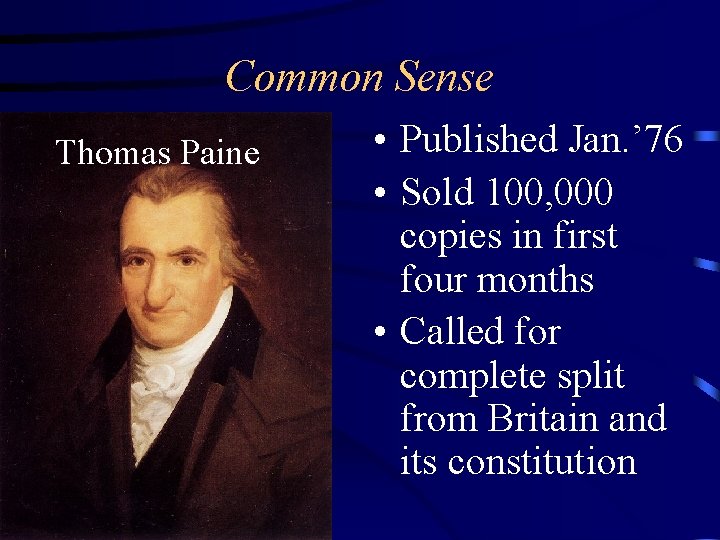
Common Sense Thomas Paine • Published Jan. ’ 76 • Sold 100, 000 copies in first four months • Called for complete split from Britain and its constitution
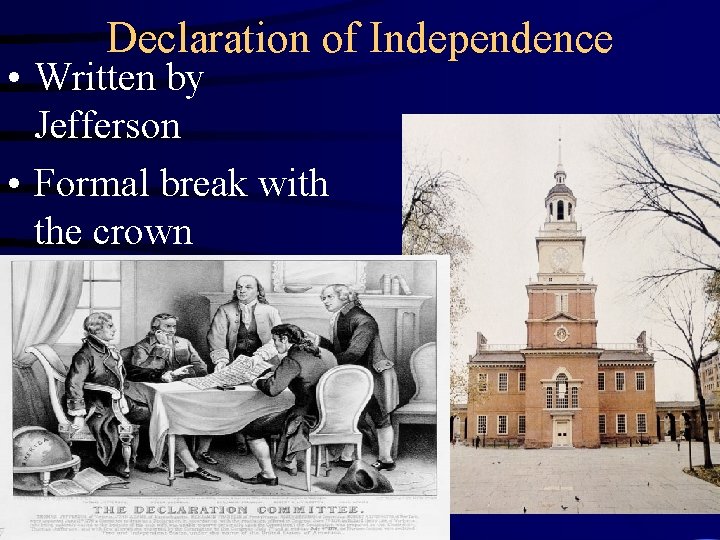
Declaration of Independence • Written by Jefferson • Formal break with the crown
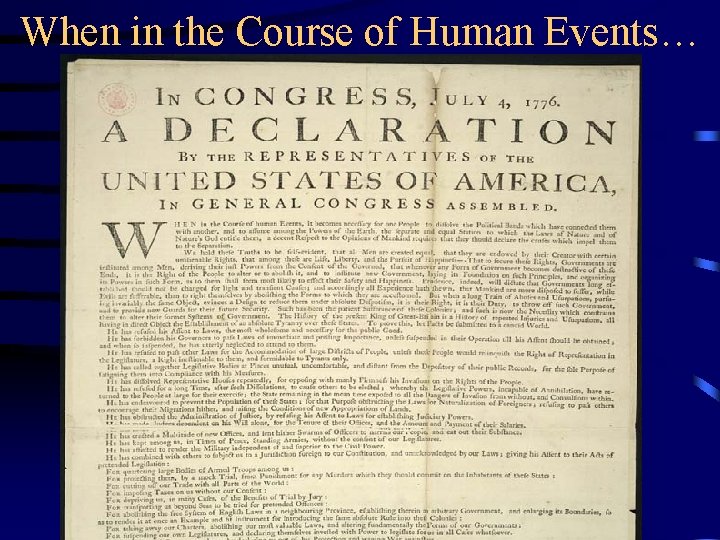
When in the Course of Human Events…
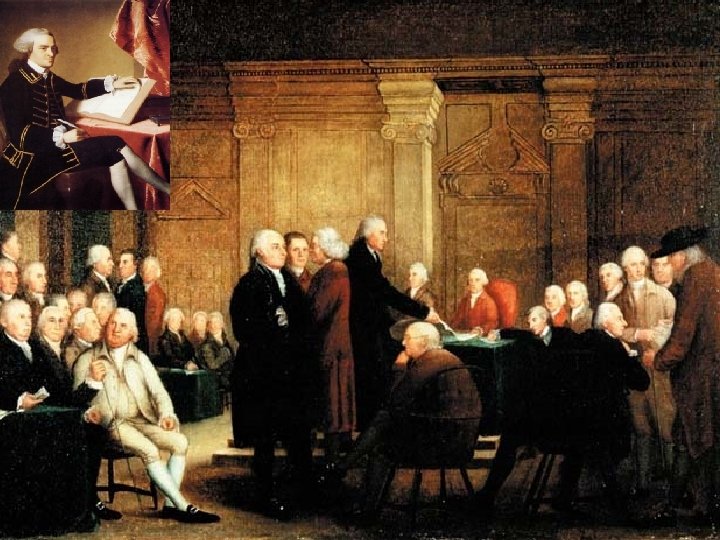
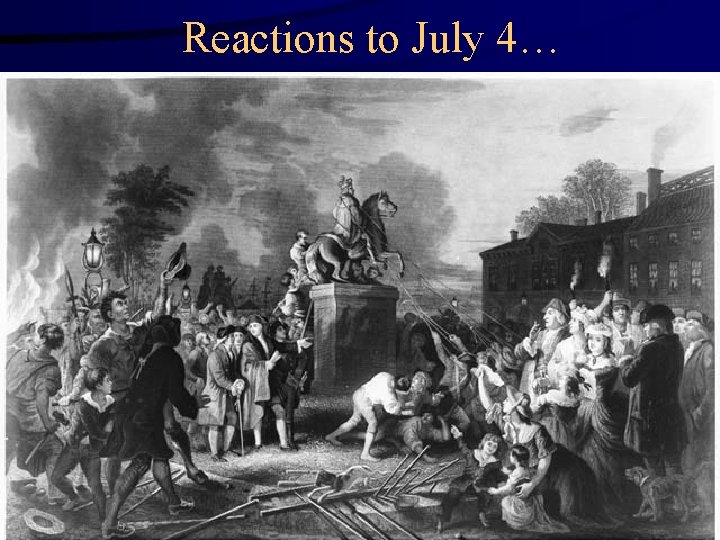
Reactions to July 4…
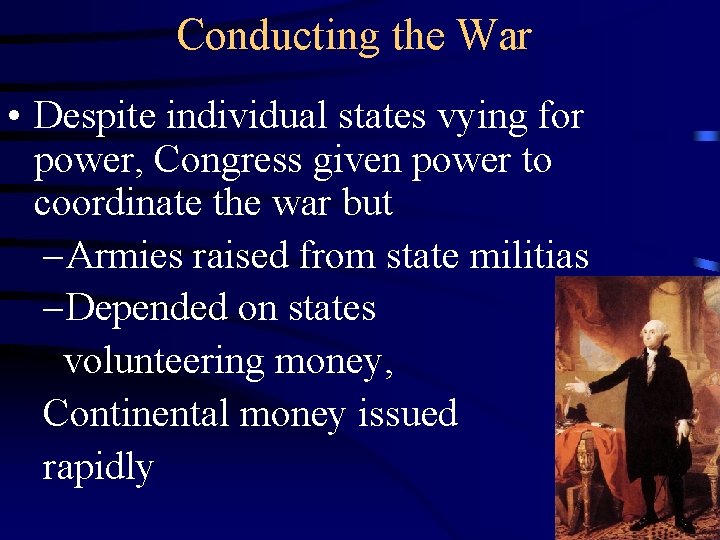
Conducting the War • Despite individual states vying for power, Congress given power to coordinate the war but – Armies raised from state militias – Depended on states volunteering money, Continental money issued rapidly
Phase I: New England ’ 75 -’ 76 • British driven from Mass (Bunker Hill) • Invasion of British Canada – Quebec assualted – Arnold and Montgomery led • No Canadian revolution • British realize the scope of the revolution
Phase II: The Mid-Atlantic ’ 76 -’ 78 • Over 30, 000 British regulars arrive in New York under Howe (not a fighter) • Success in upstate NY for Burgoyne at first • Washington attacks during winter with limited success • Saratoga – Turning point – Outnumbered Burgoyne forced to surrender
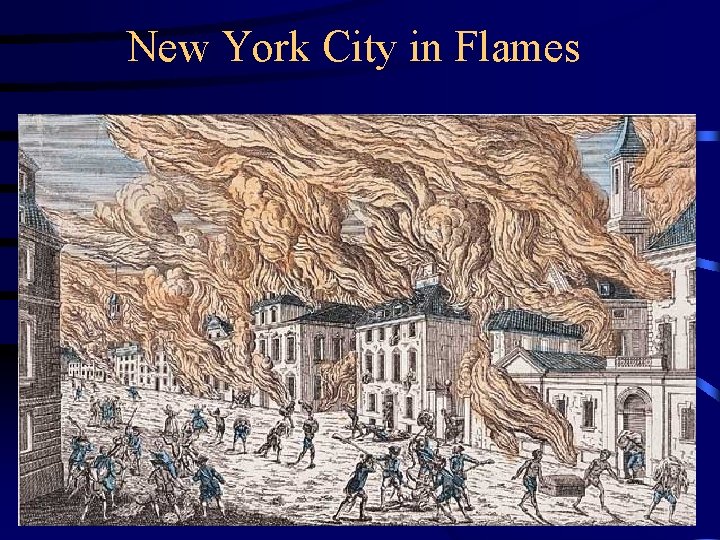
New York City in Flames
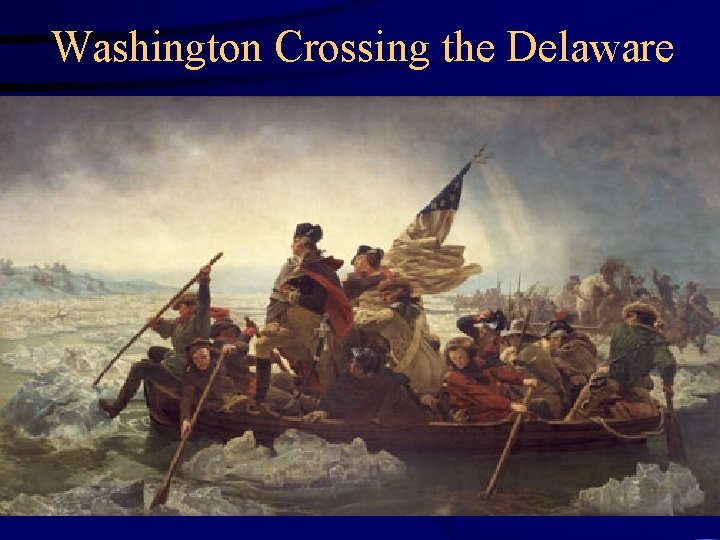
Washington Crossing the Delaware
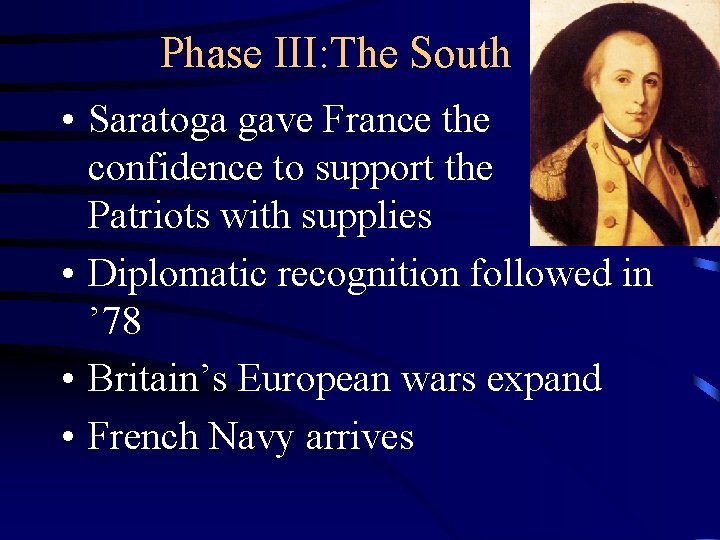
Phase III: The South • Saratoga gave France the confidence to support the Patriots with supplies • Diplomatic recognition followed in ’ 78 • Britain’s European wars expand • French Navy arrives
Phase III: The South (cont. ) • Britain hoped to rely on Loyalists in the south for support • Military commitment by Britain decreases • Yorktown marks last major battle – Cornwallis cornered between land sea – French-American army surround British
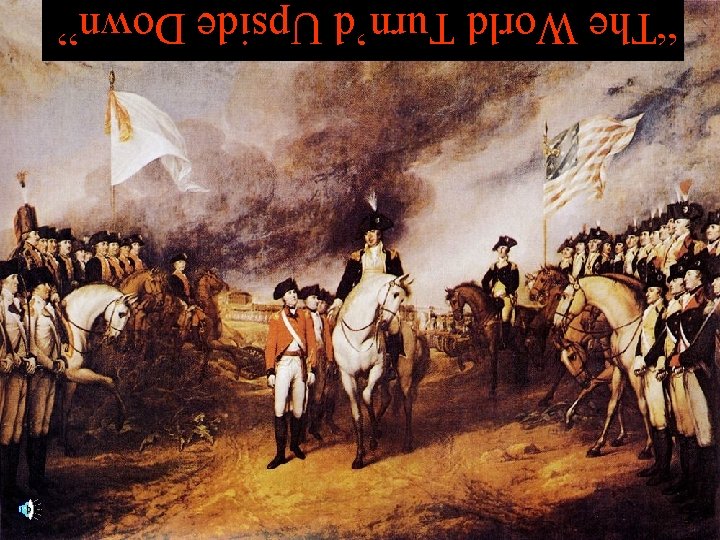
“The World Turn’d Upside Down”
War and Society • Loyalists harassed – Left behind property and estates – Many moved to Canada or Britain • Native-Americans generally opposed the Rev. • Mixed bag for African-Americans
War and Economy • Eco. suffered at first – Trade with Britain cut off – No protection at sea • Eco. diversified by the 1780 s – New trading partners – Formation of navy – Some industry forms
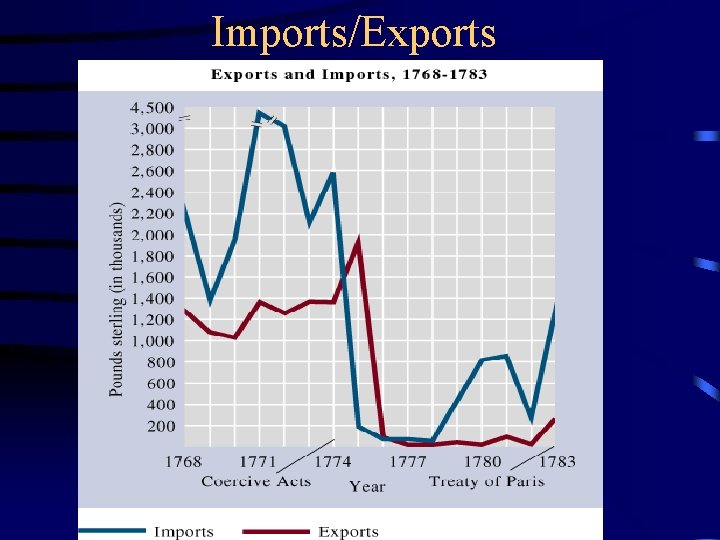
Imports/Exports
Articles of Confederation (’ 81 -’ 89 • Fed. Gov’t consisted of a unicameral Congress (9 out of 13 votes to pass a law) • 13 out of 13 to amend • Rep. frequently absent • Could not tax or raise armies • Northwest Ordinance a success • Shays’ Rebellion shows weaknesses
Treaty of Paris of 1783 • US bordered by Mississippi, Canada, Atlantic, and Florida • Diplomatic recog. by British • British promise to evacuate Ohio Valley • US promises to pay debts
State Constitutions • Guiding principle: Do the opposite of Britain • Republicanism • CN & RI simply changed their colonial charters • Limited executive branch • Most had bicameral legislatures • Property req. for voting
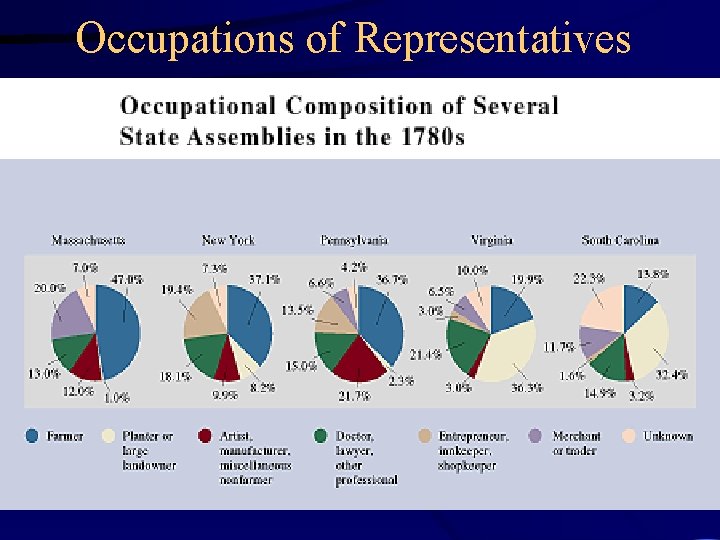
Occupations of Representatives
Toleration and Slavery • Where it was not used, usually abolished • SC and GA refused to halt slave trade • Sep. of Church and State (Statute of Relig. Freedom by Thomas Jefferson of VA)
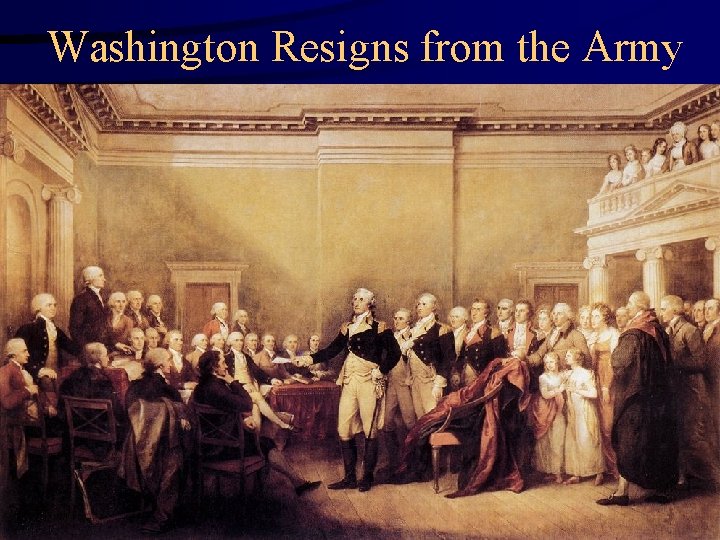
Washington Resigns from the Army
- Slides: 29