
THE AMERICAN FRONTIER Westward Expansion and Native Americans


- Slides: 15
THE AMERICAN FRONTIER Westward Expansion and Native Americans
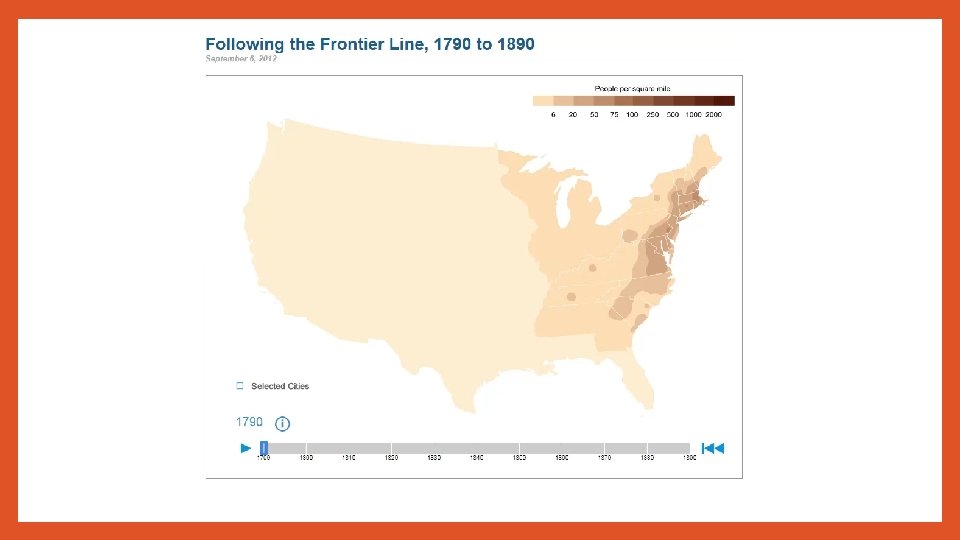
The Settlement of the Frontier • Frontier- the line separating areas of settlement from “unsettled” wilderness territory. • • Line between where Native Americans live and where Americans had settled. Since the arrival of the colonist, the “frontier” has shifted westward.
PREDICT WHAT OBSTACLES AMERICANS WILL FACE AS THEY CONTINUE TO MIGRATE WEST.
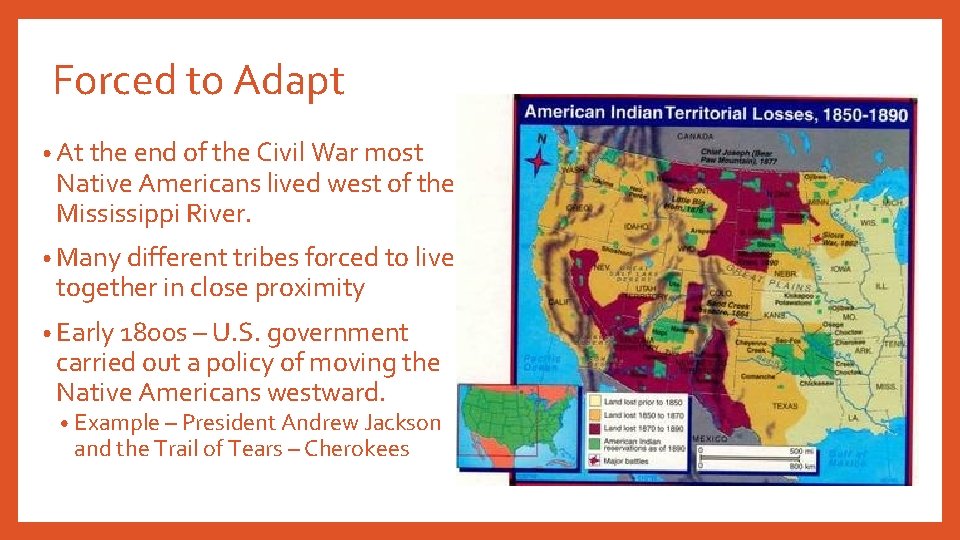
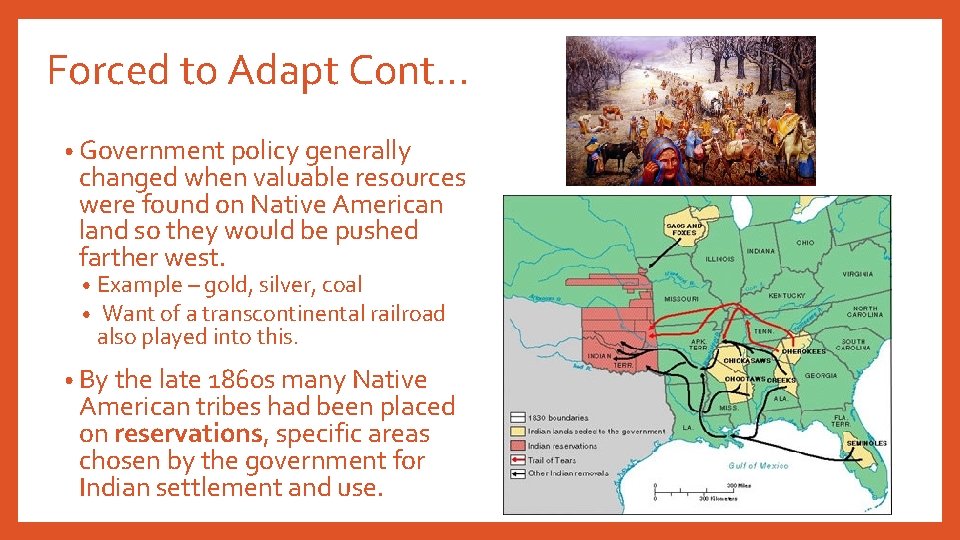
Forced to Adapt • At the end of the Civil War most Native Americans lived west of the Mississippi River. • Many different tribes forced to live together in close proximity • Early 1800 s – U. S. government carried out a policy of moving the Native Americans westward. • Example – President Andrew Jackson and the Trail of Tears – Cherokees
Forced to Adapt Cont… • Government policy generally changed when valuable resources were found on Native American land so they would be pushed farther west. • Example – gold, silver, coal • Want of a transcontinental railroad also played into this. • By the late 1860 s many Native American tribes had been placed on reservations, specific areas chosen by the government for Indian settlement and use.
PULL Factors of Westward Expansion 1. Abundant and cheap land 2. Discovery of valuable minerals 3. Dream of creating an intercontinental rail system 4. Manifest Destiny PUSH Factors of Westward Expansion 1. Overcrowding in the cities 2. Abolition of slavery 3. Religious and ethnic persecution
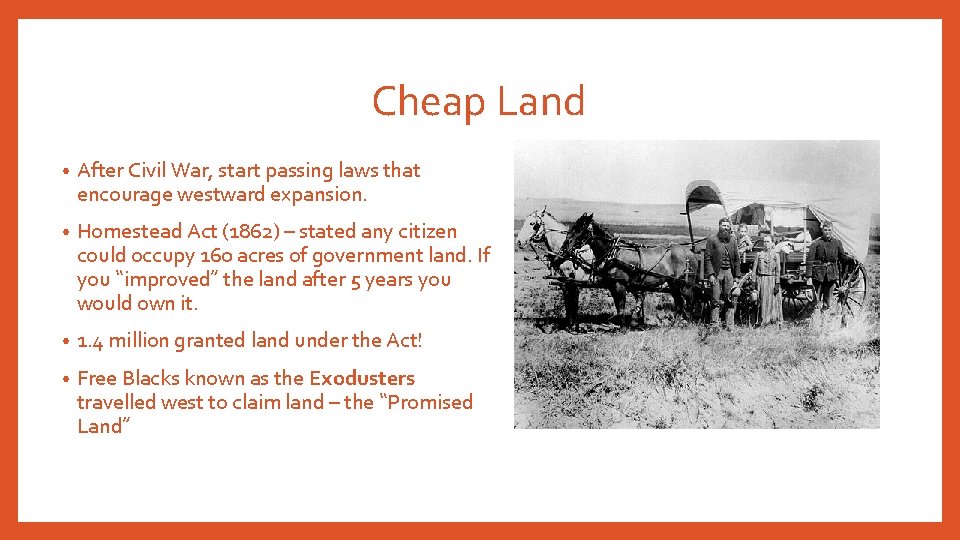
Cheap Land • After Civil War, start passing laws that encourage westward expansion. • Homestead Act (1862) – stated any citizen could occupy 160 acres of government land. If you “improved” the land after 5 years you would own it. • 1. 4 million granted land under the Act! • Free Blacks known as the Exodusters travelled west to claim land – the “Promised Land”
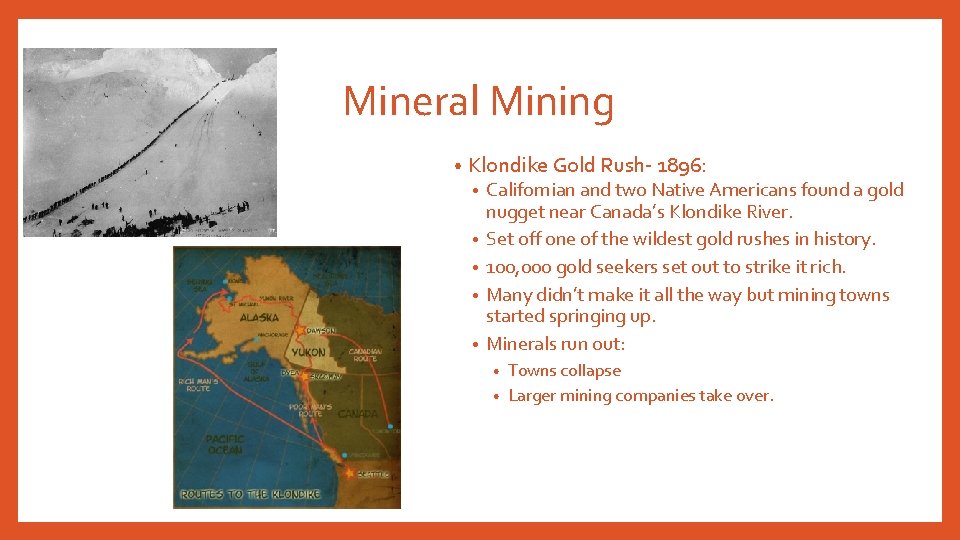
Mineral Mining • Klondike Gold Rush- 1896: • • • Californian and two Native Americans found a gold nugget near Canada’s Klondike River. Set off one of the wildest gold rushes in history. 100, 000 gold seekers set out to strike it rich. Many didn’t make it all the way but mining towns started springing up. Minerals run out: Towns collapse • Larger mining companies take over. •
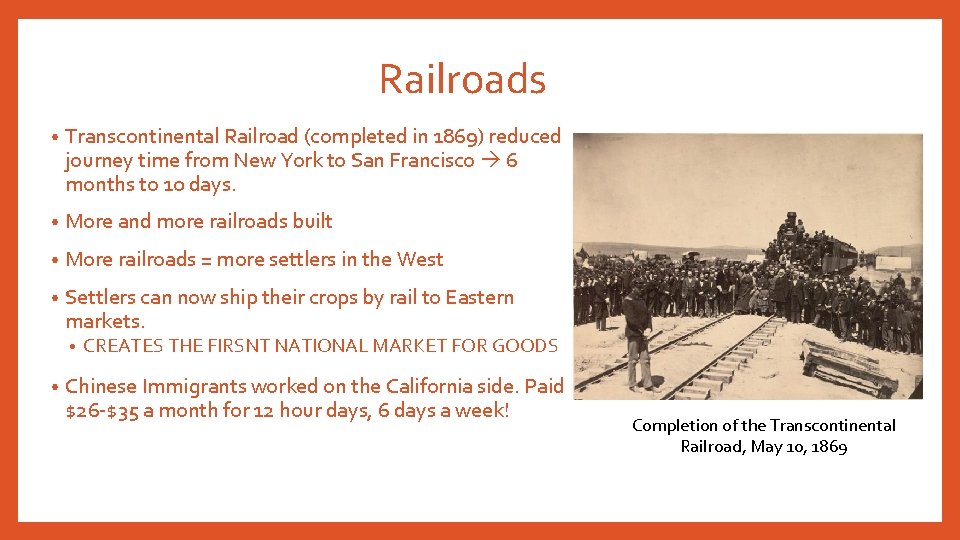
Railroads • Transcontinental Railroad (completed in 1869) reduced journey time from New York to San Francisco 6 months to 10 days. • More and more railroads built • More railroads = more settlers in the West • Settlers can now ship their crops by rail to Eastern markets. • • CREATES THE FIRSNT NATIONAL MARKET FOR GOODS Chinese Immigrants worked on the California side. Paid $26 -$35 a month for 12 hour days, 6 days a week! Completion of the Transcontinental Railroad, May 10, 1869
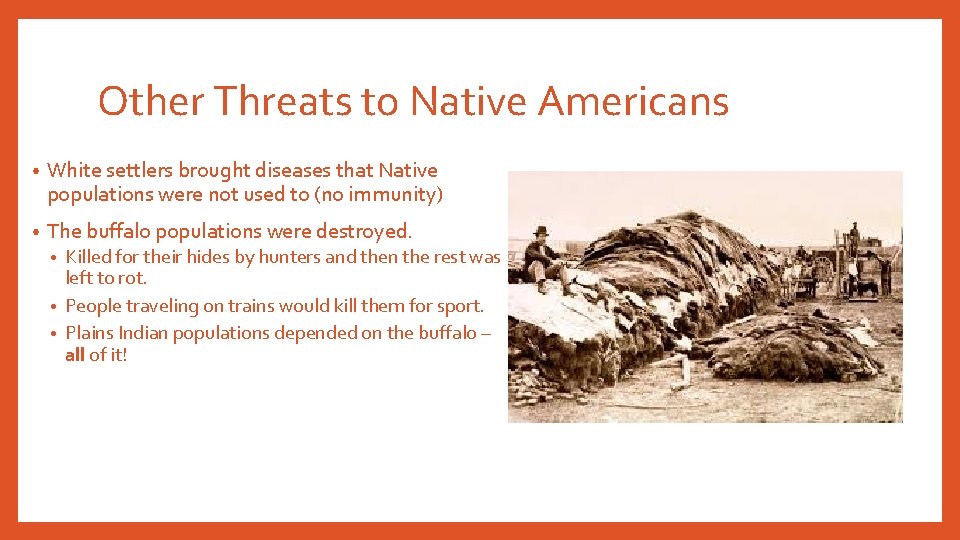
Other Threats to Native Americans • White settlers brought diseases that Native populations were not used to (no immunity) • The buffalo populations were destroyed. Killed for their hides by hunters and then the rest was left to rot. • People traveling on trains would kill them for sport. • Plains Indian populations depended on the buffalo – all of it! •
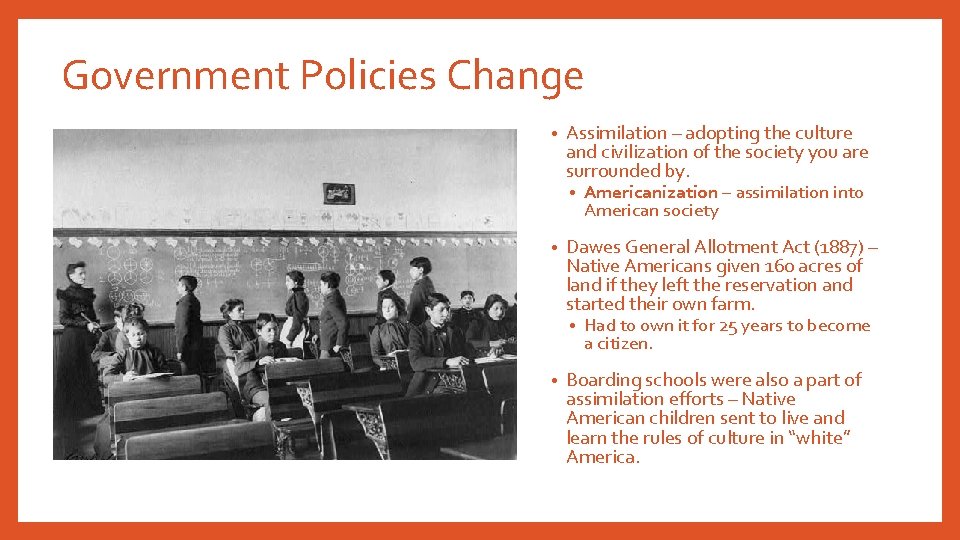
Government Policies Change • Assimilation – adopting the culture and civilization of the society you are surrounded by. • • Dawes General Allotment Act (1887) – Native Americans given 160 acres of land if they left the reservation and started their own farm. • • Americanization – assimilation into American society Had to own it for 25 years to become a citizen. Boarding schools were also a part of assimilation efforts – Native American children sent to live and learn the rules of culture in “white” America.
HOW DO WE SEE ASSIMILATION OCCURRING TODAY?
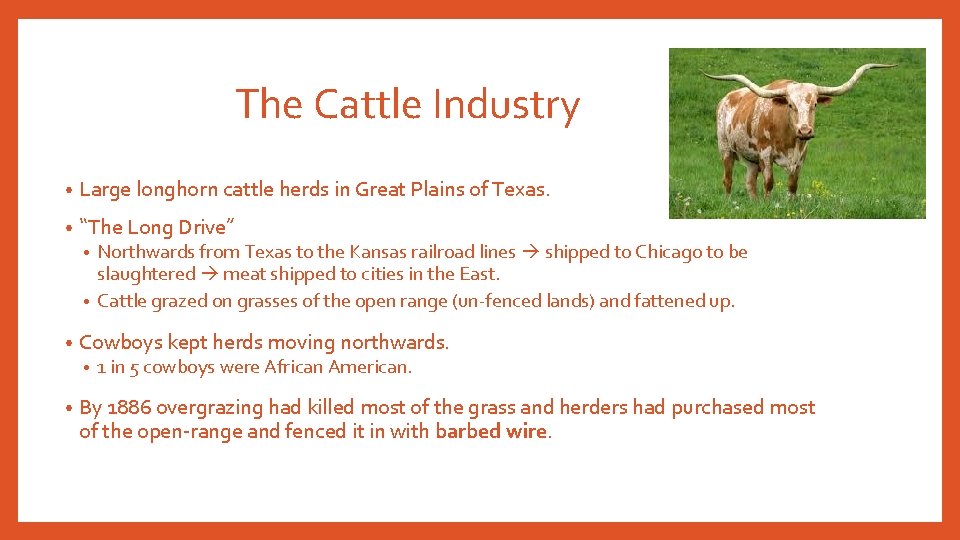
The Cattle Industry • Large longhorn cattle herds in Great Plains of Texas. • “The Long Drive” Northwards from Texas to the Kansas railroad lines shipped to Chicago to be slaughtered meat shipped to cities in the East. • Cattle grazed on grasses of the open range (un-fenced lands) and fattened up. • • Cowboys kept herds moving northwards. • • 1 in 5 cowboys were African American. By 1886 overgrazing had killed most of the grass and herders had purchased most of the open-range and fenced it in with barbed wire.
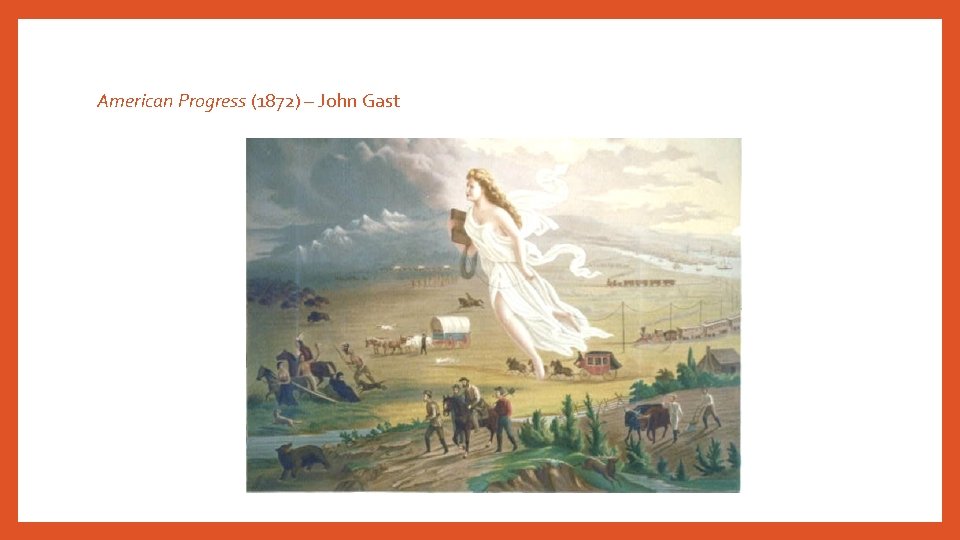
American Progress (1872) – John Gast