
The Amazon Network Initiative Conserving the Legacy of
- Slides: 21
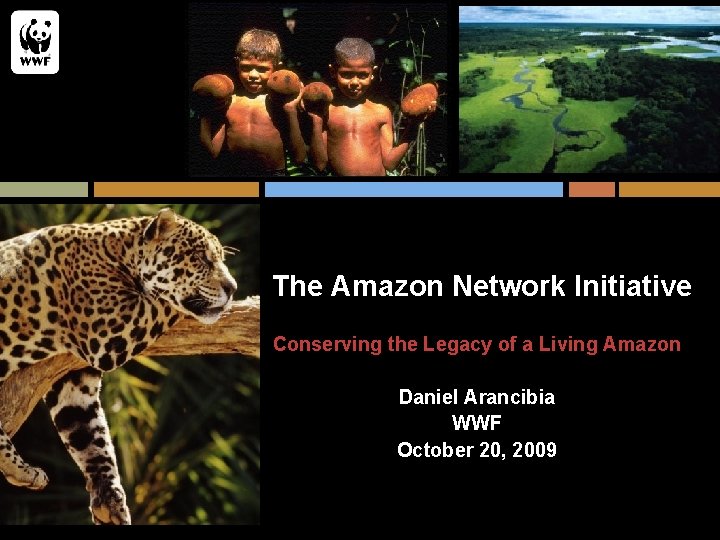
The Amazon Network Initiative Conserving the Legacy of a Living Amazon Daniel Arancibia WWF October 20, 2009
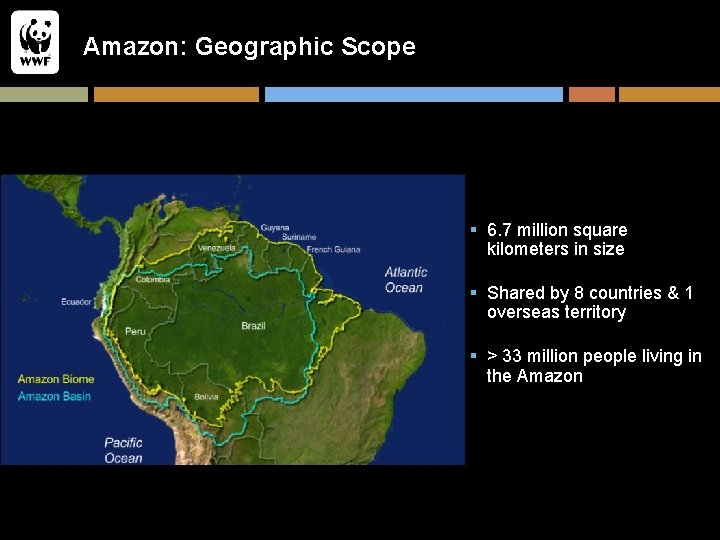
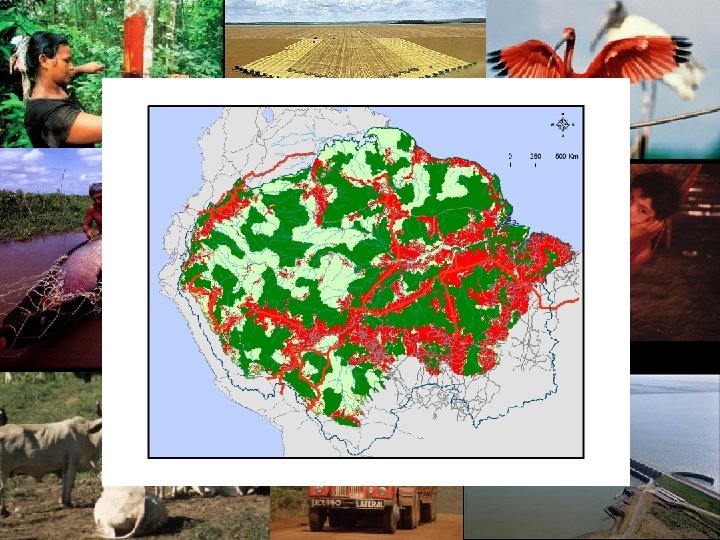
Amazon: Geographic Scope § 6. 7 million square kilometers in size § Shared by 8 countries & 1 overseas territory § > 33 million people living in the Amazon
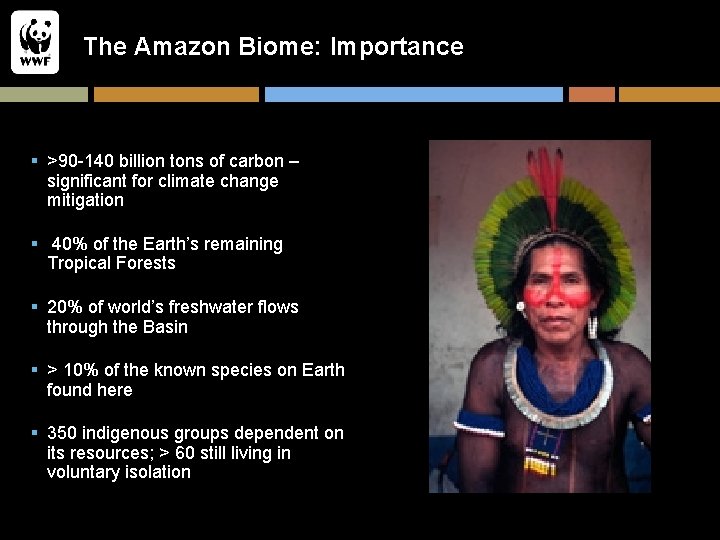
The Amazon Biome: Importance § >90 -140 billion tons of carbon – significant for climate change mitigation § 40% of the Earth’s remaining Tropical Forests § 20% of world’s freshwater flows through the Basin § > 10% of the known species on Earth found here § 350 indigenous groups dependent on its resources; > 60 still living in voluntary isolation
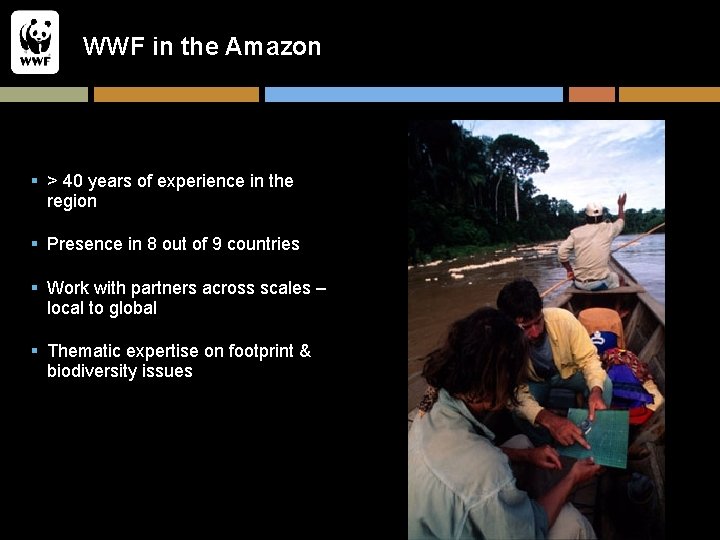
WWF in the Amazon § > 40 years of experience in the region § Presence in 8 out of 9 countries § Work with partners across scales – local to global § Thematic expertise on footprint & biodiversity issues
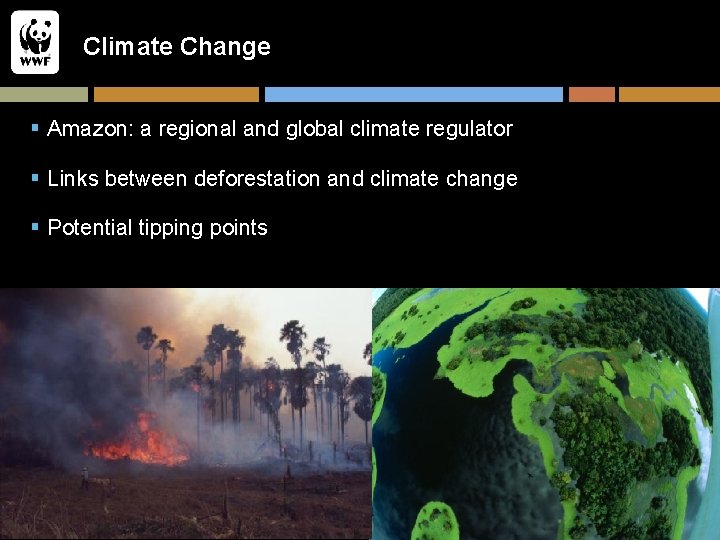
Climate Change § Amazon: a regional and global climate regulator § Links between deforestation and climate change § Potential tipping points
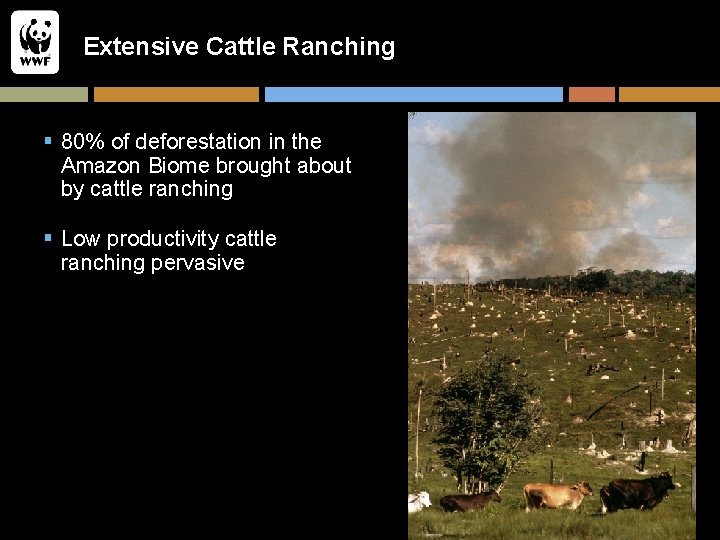
Extensive Cattle Ranching § 80% of deforestation in the Amazon Biome brought about by cattle ranching § Low productivity cattle ranching pervasive
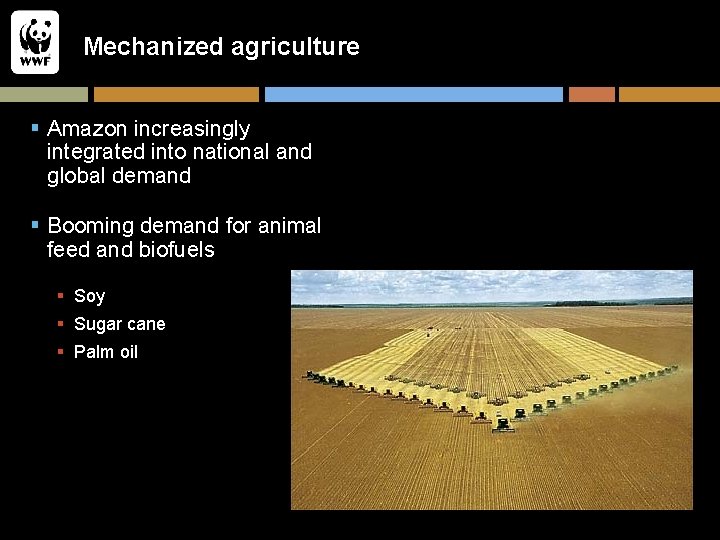
Mechanized agriculture § Amazon increasingly integrated into national and global demand § Booming demand for animal feed and biofuels § Soy § Sugar cane § Palm oil
Drivers of change in the Amazon § Market demand for agro-commodities and energy § Transport infrastructure § Amazon as critical provider of ecosystem goods & services not factored into development paradigm § Comparatively low economic value of natural ecosystems § Opportunistic land use
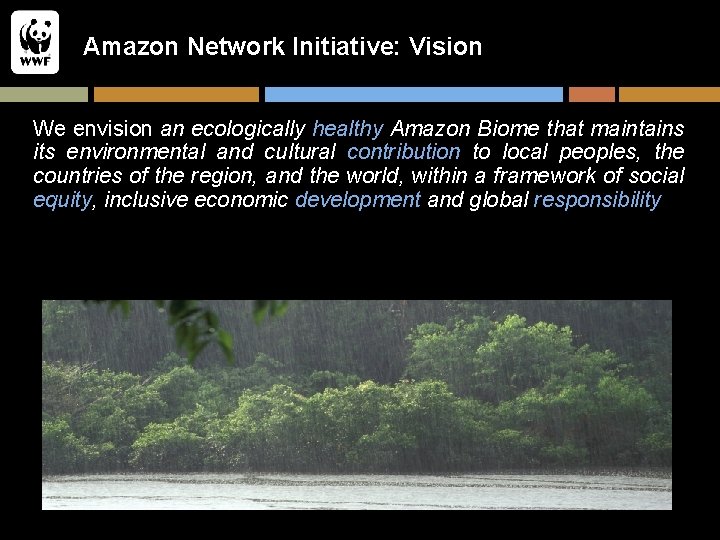
Amazon Network Initiative: Vision We envision an ecologically healthy Amazon Biome that maintains its environmental and cultural contribution to local peoples, the countries of the region, and the world, within a framework of social equity, inclusive economic development and global responsibility
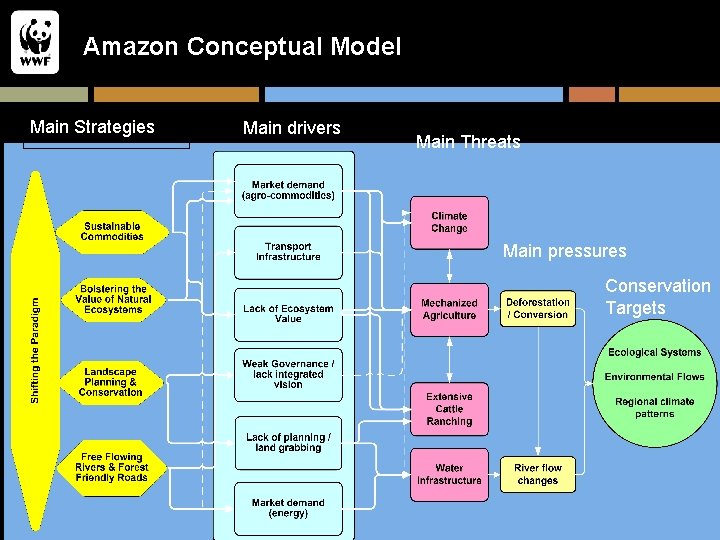
Amazon Conceptual Model Main Strategies Main drivers Main Threats Main pressures Conservation Targets
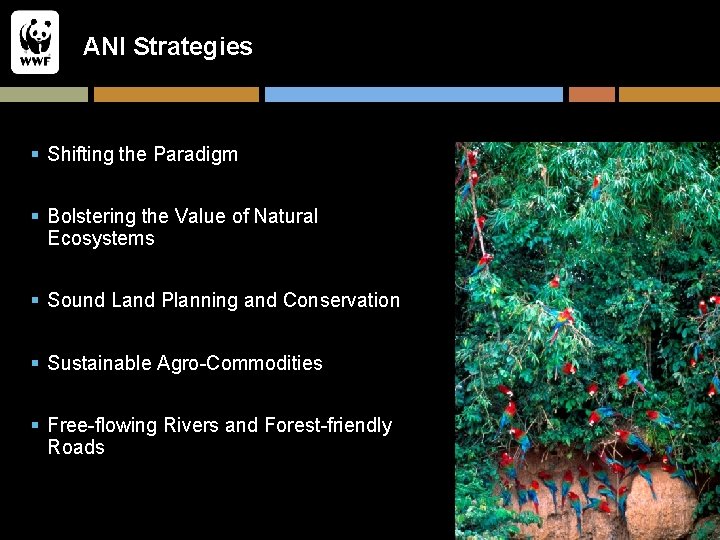
ANI Strategies § Shifting the Paradigm § Bolstering the Value of Natural Ecosystems § Sound Land Planning and Conservation § Sustainable Agro-Commodities § Free-flowing Rivers and Forest-friendly Roads 33
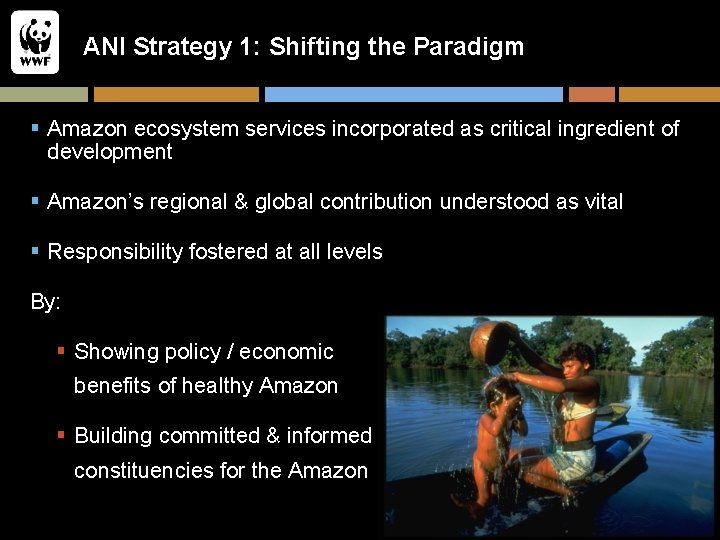
ANI Strategy 1: Shifting the Paradigm § Amazon ecosystem services incorporated as critical ingredient of development § Amazon’s regional & global contribution understood as vital § Responsibility fostered at all levels By: § Showing policy / economic benefits of healthy Amazon § Building committed & informed constituencies for the Amazon 34
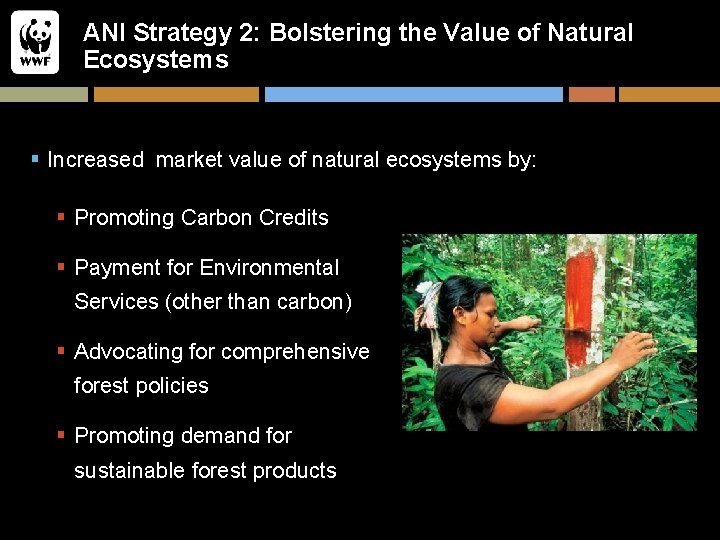
ANI Strategy 2: Bolstering the Value of Natural Ecosystems § Increased market value of natural ecosystems by: § Promoting Carbon Credits § Payment for Environmental Services (other than carbon) § Advocating for comprehensive forest policies § Promoting demand for sustainable forest products 35
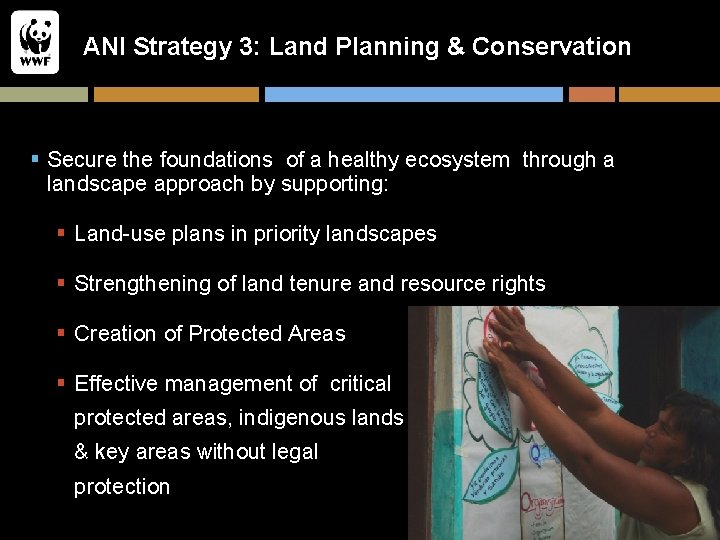
ANI Strategy 3: Land Planning & Conservation § Secure the foundations of a healthy ecosystem through a landscape approach by supporting: § Land-use plans in priority landscapes § Strengthening of land tenure and resource rights § Creation of Protected Areas § Effective management of critical protected areas, indigenous lands & key areas without legal protection 36
ANI Strategy 4: Sustainable Agro-Commodities § Influence markets to signal need for improved performance through : § Adoption of socio-environmental standards & better management practices § Designation of “go” vs. “no-go” zones 37
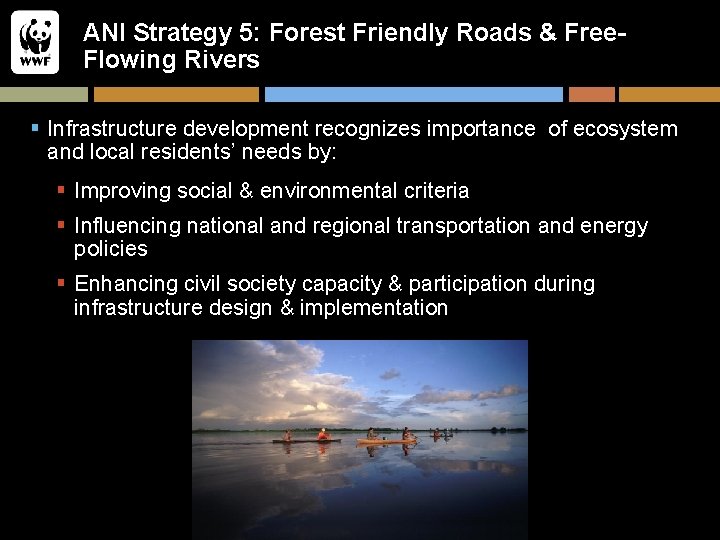
ANI Strategy 5: Forest Friendly Roads & Free. Flowing Rivers § Infrastructure development recognizes importance of ecosystem and local residents’ needs by: § Improving social & environmental criteria § Influencing national and regional transportation and energy policies § Enhancing civil society capacity & participation during infrastructure design & implementation 38
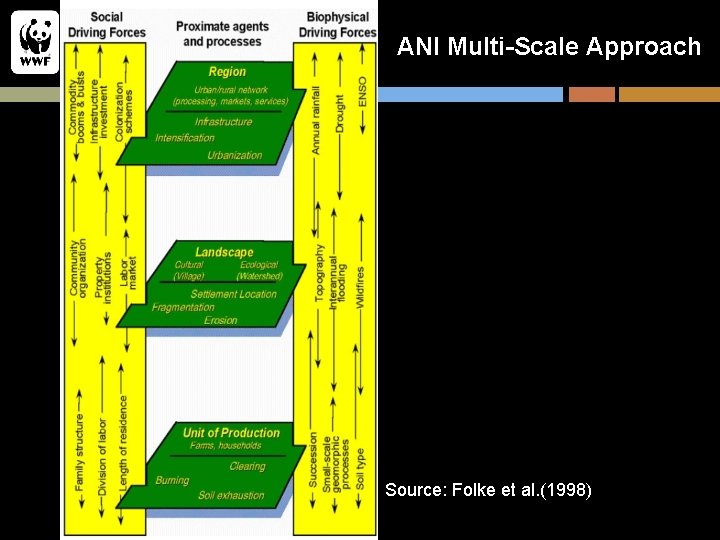
ANI Multi-Scale Approach Source: Folke et al. (1998)
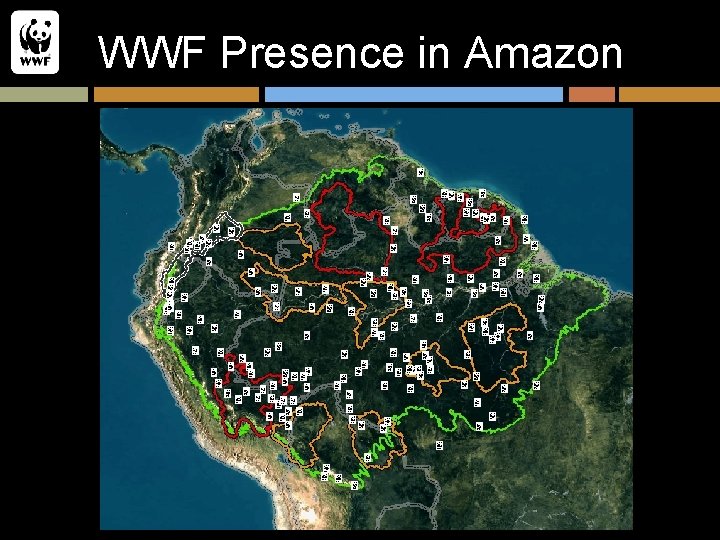
WWF Presence in Amazon
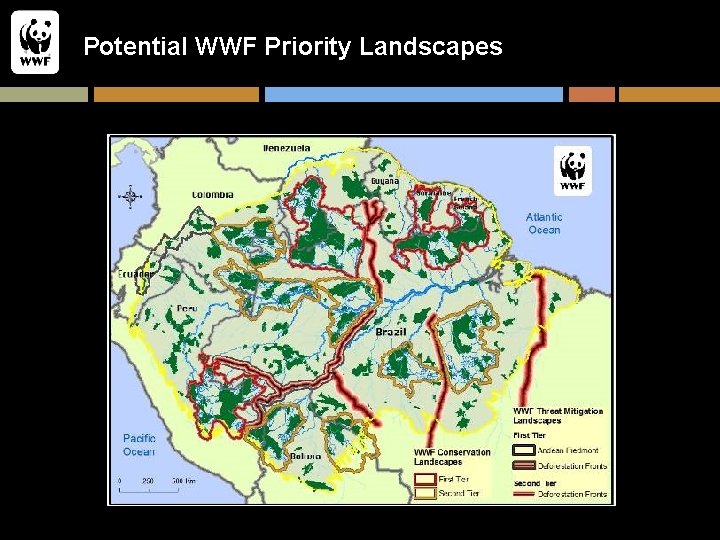
Potential WWF Priority Landscapes 44
Thank You