
The Allied Response Main Idea The early years
- Slides: 36
The Allied Response Main Idea The early years of World War II went poorly for the Allies. But after the United States joined the war, the Allies soon recovered and began making gains against the Axis. Reading Focus • In what ways were Americans involved in the early years of the war? • How did the Allies make gains in North Africa? • What was the turning point in the Soviet Union? • What was the turning point in the Pacific?
Early American Involvement The Battle of the Atlantic • Control of the ocean was important • Food and equipment for England USSR was shipped • Germany relied on U-boats • Inflicted great damage to shipping • U. S. offered military aid • Provided ships and military escorts for British convoys • October 1941—USS Reuben James; first U. S. Navy ship sunk by Germany
American Home Front • U. S. entered war two months later (Pearl Harbor) • Enormous task of mobilization; men and women volunteered for service • Factories converted; “victory gardens” planted; scrap drives and recycling to collect materials • Some negative effects of patriotism • Japanese Americans placed in internment camps
Winning the Atlantic With U. S. officially at war, German U-boats in American waters • Tried to destroy American merchant ships – Hundreds of ships lost to German subs – After 1943, Allies able to fight back more effectively • Allied factories at full production – Large numbers of ships and planes – More firepower helped locate and destroy U-boats – Key German code system broken • Losses dropped sharply – Vital supply line to Great Britain and Soviet Union kept open – Atlantic belonged to Allies – Makes a cross channel invasion possible
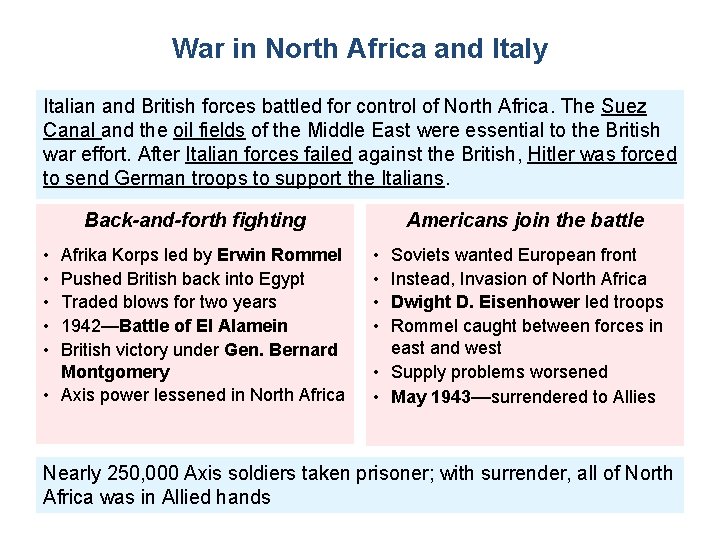
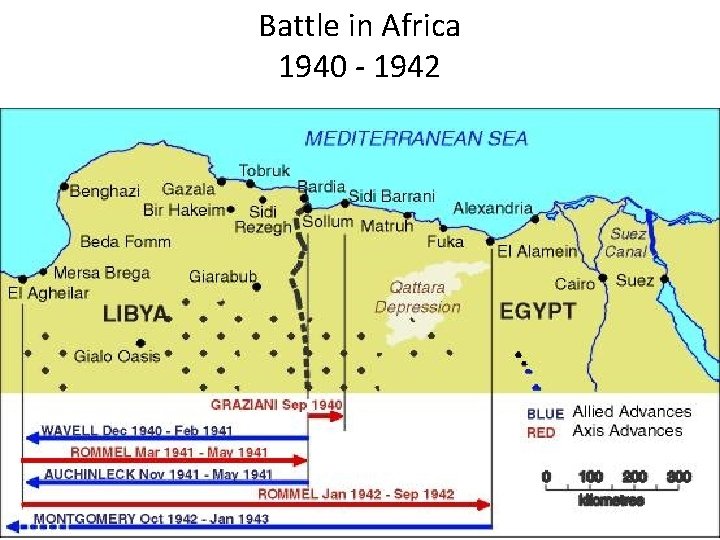
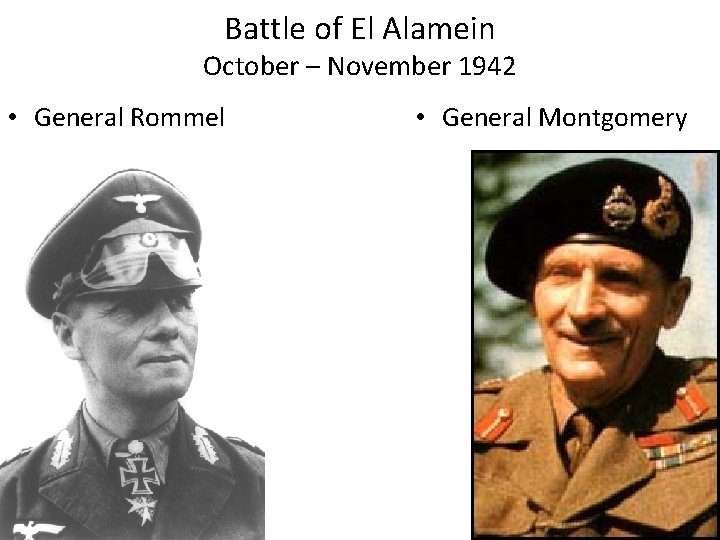
War in North Africa and Italy Italian and British forces battled for control of North Africa. The Suez Canal and the oil fields of the Middle East were essential to the British war effort. After Italian forces failed against the British, Hitler was forced to send German troops to support the Italians. Back-and-forth fighting • • • Afrika Korps led by Erwin Rommel Pushed British back into Egypt Traded blows for two years 1942—Battle of El Alamein British victory under Gen. Bernard Montgomery • Axis power lessened in North Africa Americans join the battle • • Soviets wanted European front Instead, Invasion of North Africa Dwight D. Eisenhower led troops Rommel caught between forces in east and west • Supply problems worsened • May 1943—surrendered to Allies Nearly 250, 000 Axis soldiers taken prisoner; with surrender, all of North Africa was in Allied hands
Battle in Africa 1940 - 1942
Battle of El Alamein October – November 1942 • General Rommel • General Montgomery
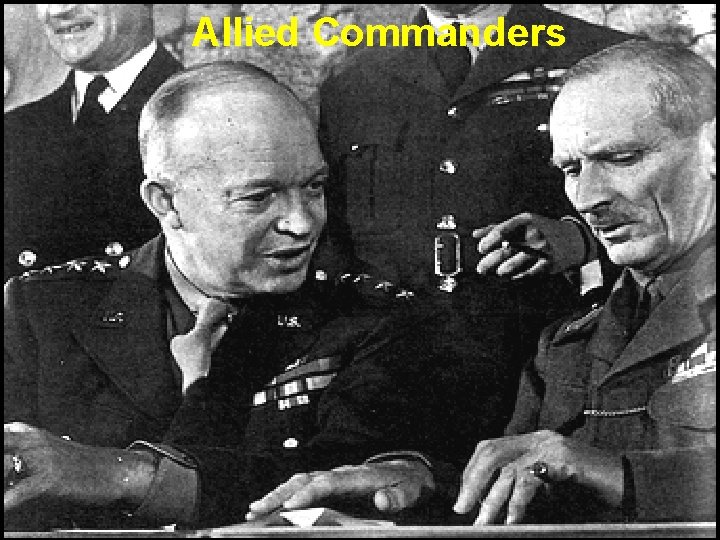
Allied Commanders
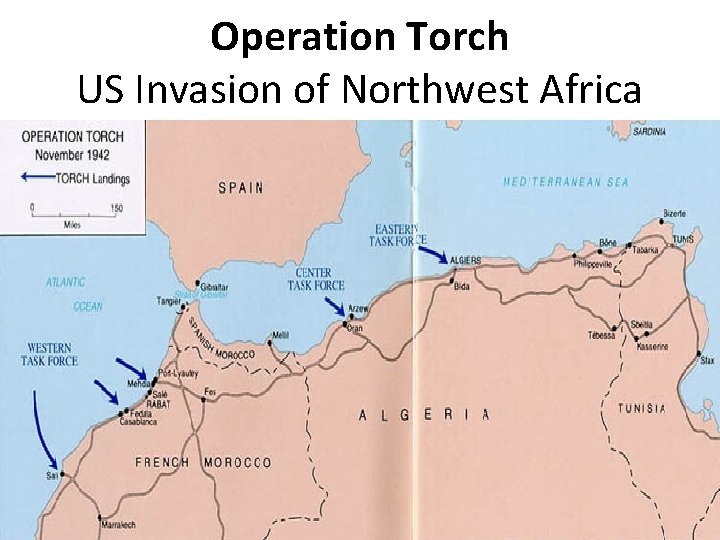
Operation Torch US Invasion of Northwest Africa
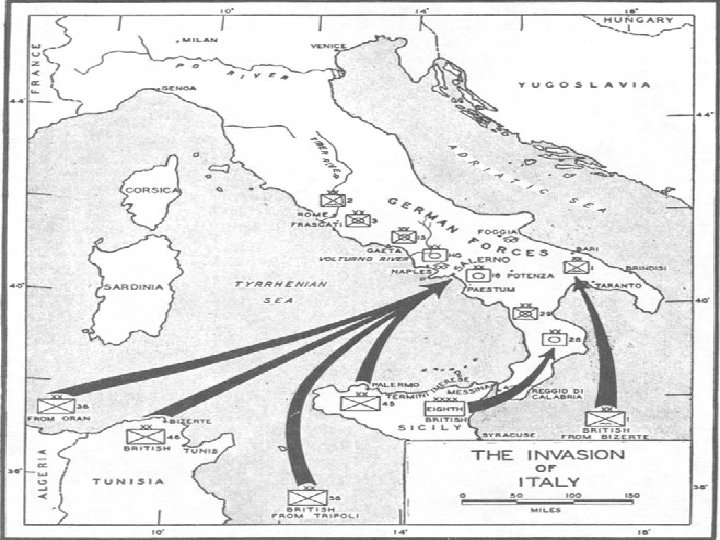
Italy • Did not satisfy Stalin’s desire for a second front • Churchill’s desire to strike at the “weak under-belly” of the Nazi Empire • Notions of protecting British imperialism (Africa and Middle East) • Did result in the fall of Mussolini
Fighting in Italy • July 1943, Allied soldiers landed on the island of Sicily – Weak Italian resistance – Benito Mussolini forced from power • Allies capture Sicily – Made plans to invade the Italian mainland – Hitler tried to protect against the Allied march through Italy • September 1943 – Allies move into southern Italy – Strong German resistance as troops moved north – Bloody fighting continued for months
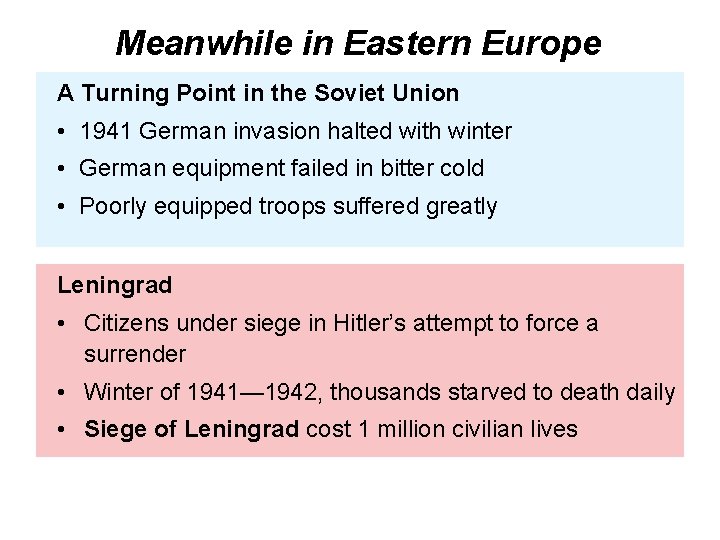
Meanwhile in Eastern Europe A Turning Point in the Soviet Union • 1941 German invasion halted with winter • German equipment failed in bitter cold • Poorly equipped troops suffered greatly Leningrad • Citizens under siege in Hitler’s attempt to force a surrender • Winter of 1941— 1942, thousands starved to death daily • Siege of Leningrad cost 1 million civilian lives
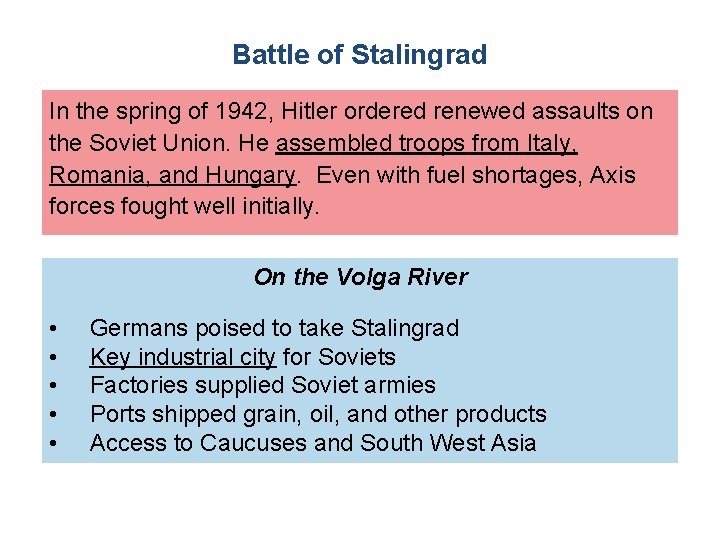
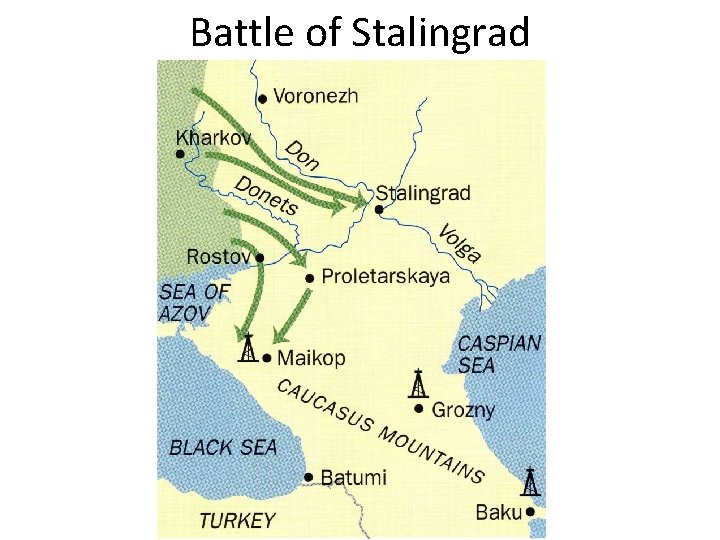
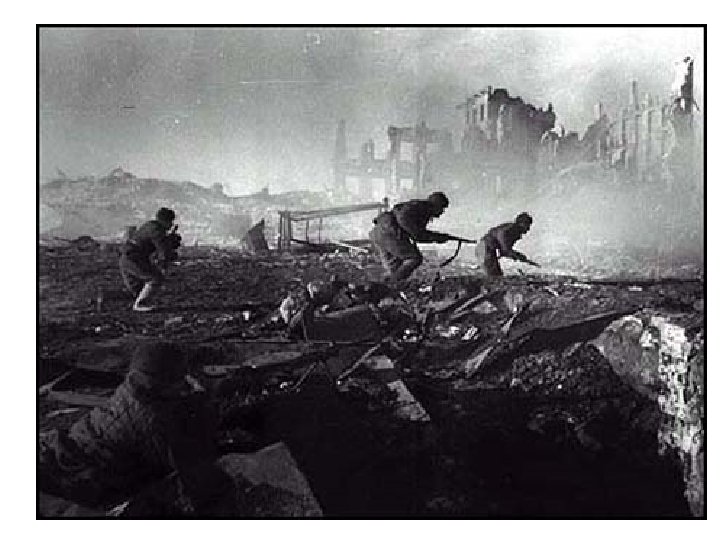
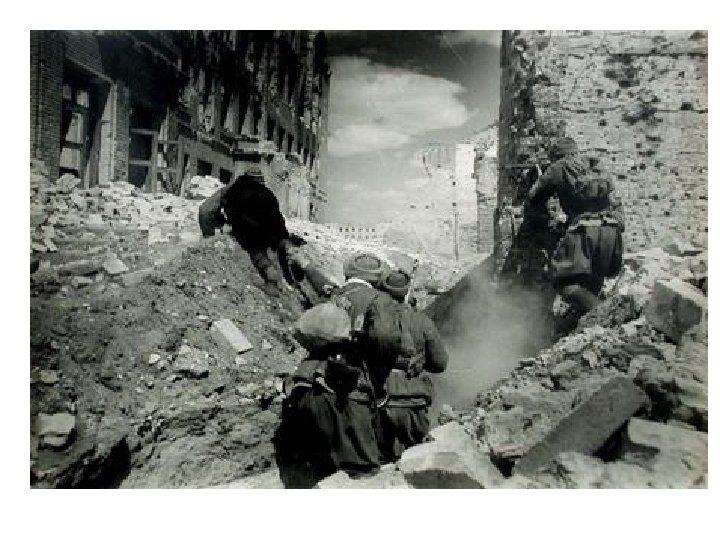
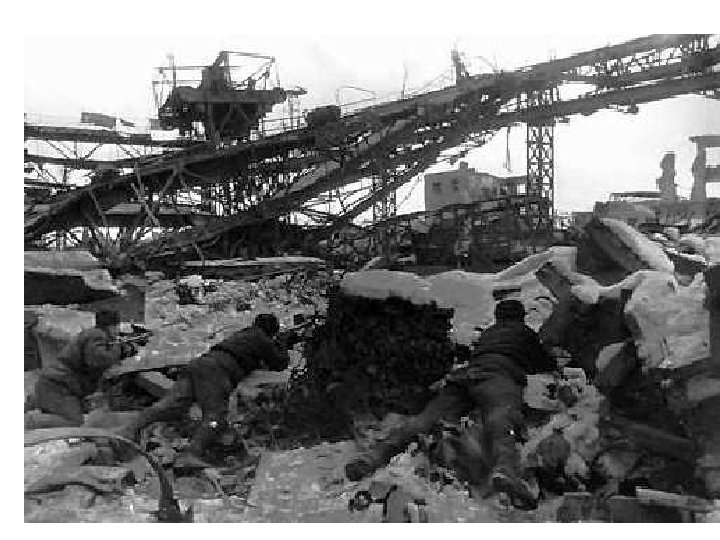
Battle of Stalingrad In the spring of 1942, Hitler ordered renewed assaults on the Soviet Union. He assembled troops from Italy, Romania, and Hungary. Even with fuel shortages, Axis forces fought well initially. On the Volga River • • • Germans poised to take Stalingrad Key industrial city for Soviets Factories supplied Soviet armies Ports shipped grain, oil, and other products Access to Caucuses and South West Asia
Battle of Stalingrad
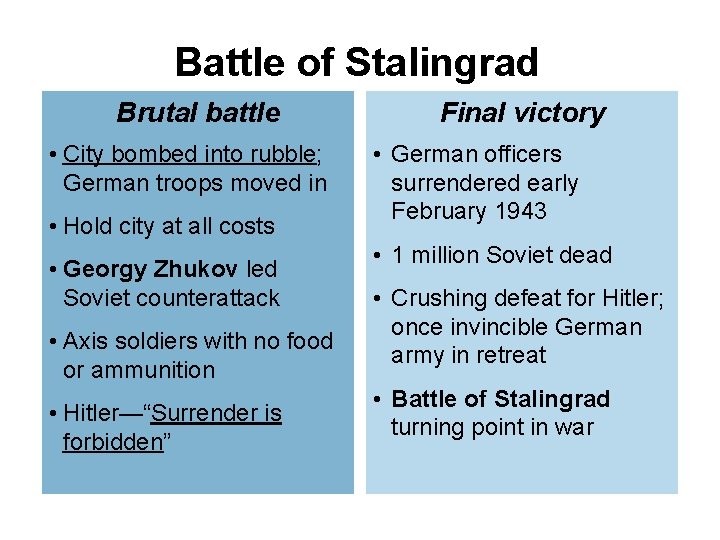
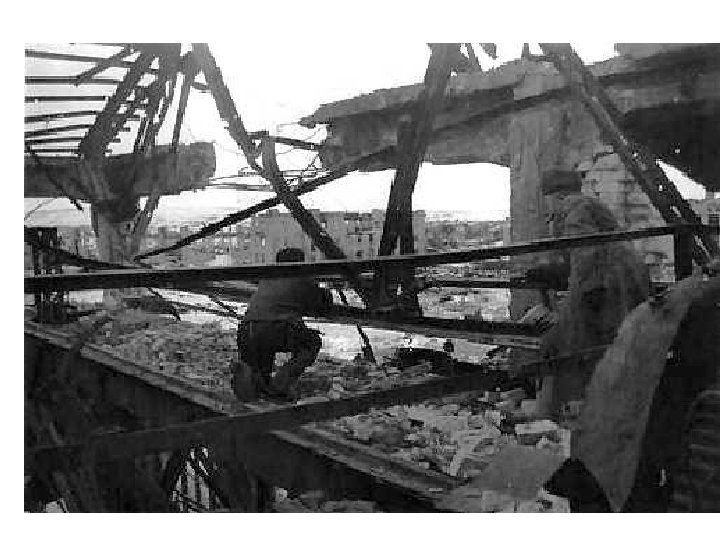
Battle of Stalingrad Brutal battle • City bombed into rubble; German troops moved in • Hold city at all costs • Georgy Zhukov led Soviet counterattack • Axis soldiers with no food or ammunition • Hitler—“Surrender is forbidden” Final victory • German officers surrendered early February 1943 • 1 million Soviet dead • Crushing defeat for Hitler; once invincible German army in retreat • Battle of Stalingrad turning point in war
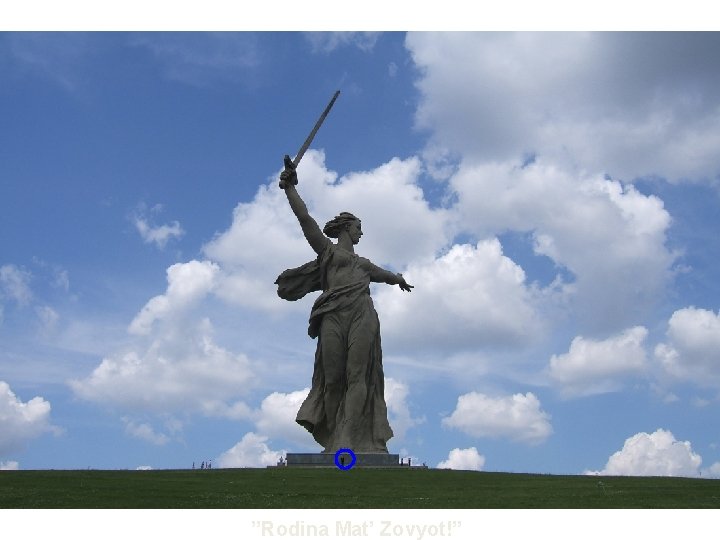
”Rodina Mat’ Zovyot!”
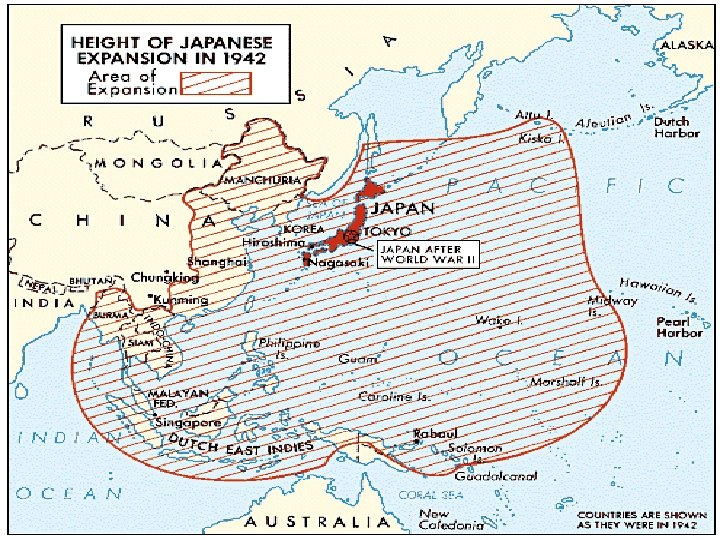
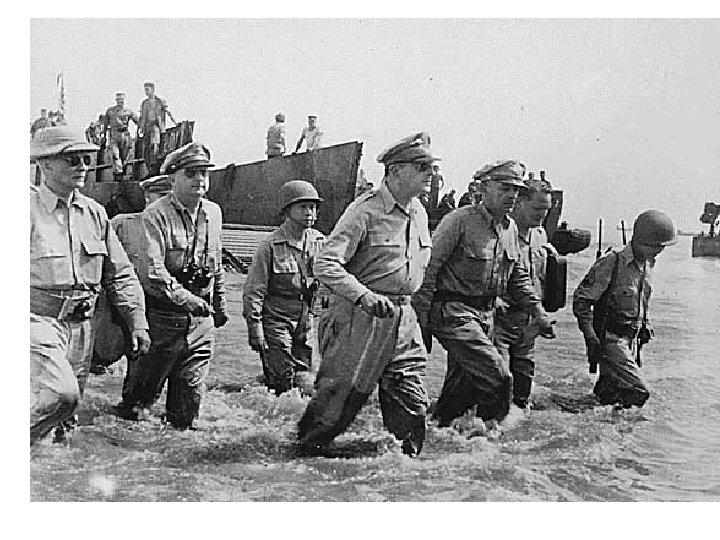
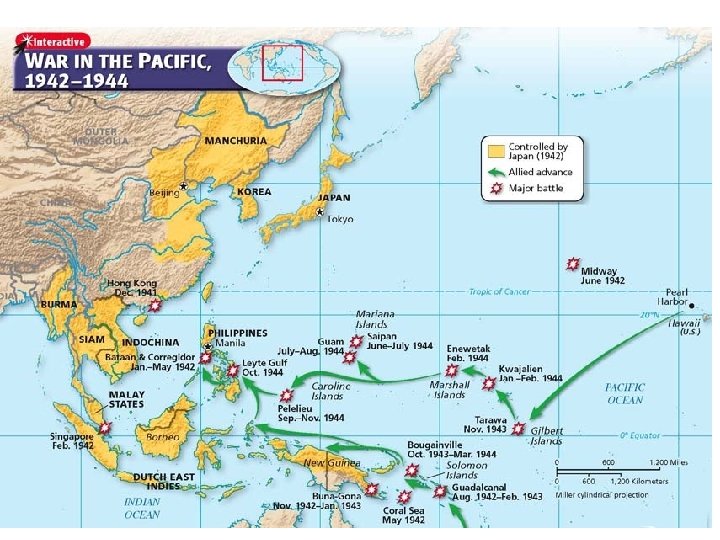
Meanwhile in the Pacific It wasn’t just Pearl Harbor that was attacked. • Three Pacific Fleet aircraft carriers undamaged – Air power provided support for Allied ground and naval forces – Japanese navy still ruled the seas – Allies focused on Europe • Vital territory fell to Japanese – Singapore, Hong Kong, Burma, Malaya and strategic islands – Target —U. S. held Philippines – U. S. general Douglas Mac. Arthur led doomed defense – Americans surrendered in April 1942 • Bataan Death March – Forced march of 70, 000 American and Filipino prisoners – Brutal violence, tropical heat, and lack of food or water – Many survivors perished in inhumane prison camps
The Allies Strike Back in the Pacific • • Doolittle Bombs Tokyo Battle of the Coral Sea Battle of Midway Battle of Guadalcanal
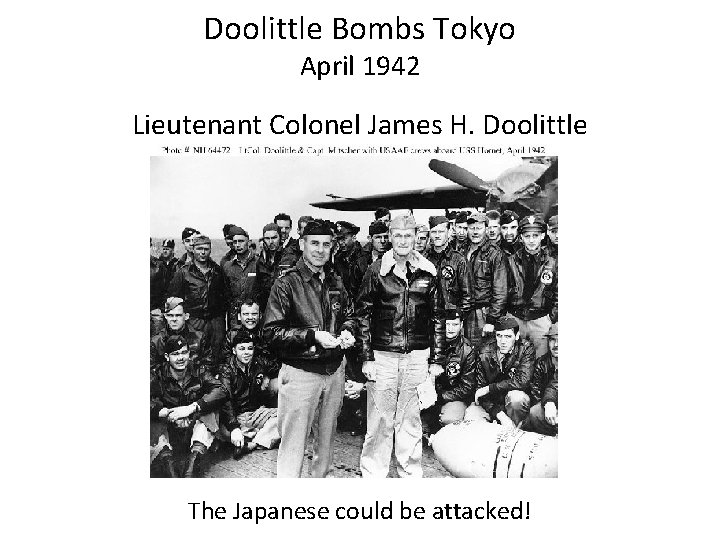
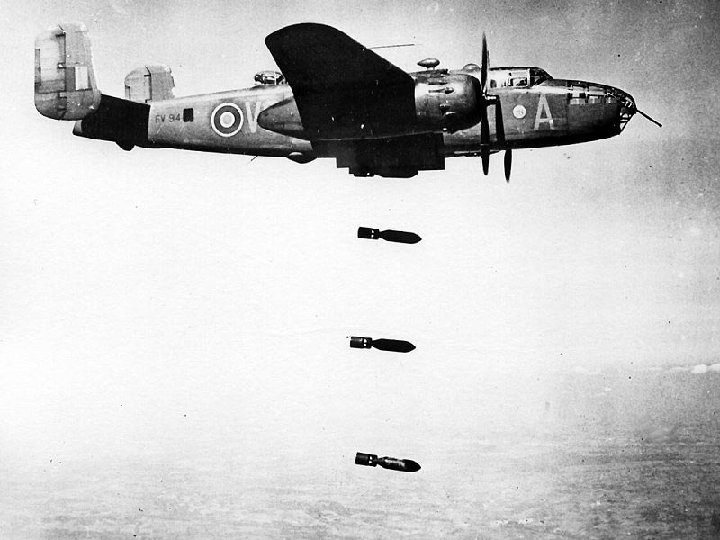
Doolittle Bombs Tokyo April 1942 Lieutenant Colonel James H. Doolittle The Japanese could be attacked!
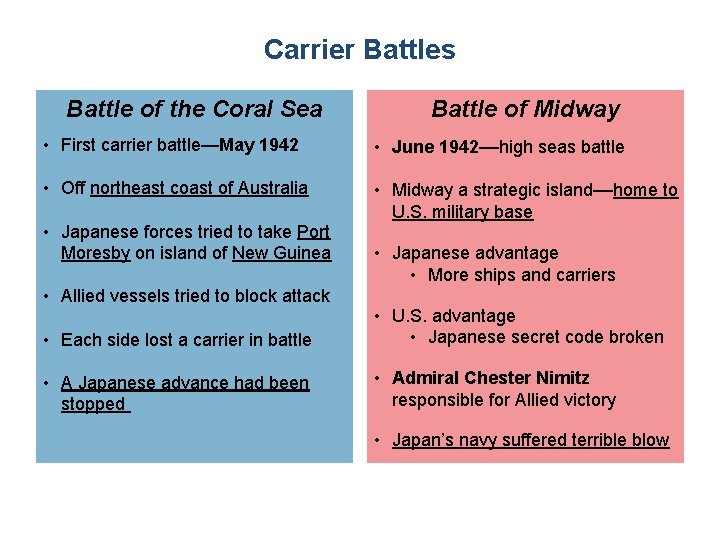
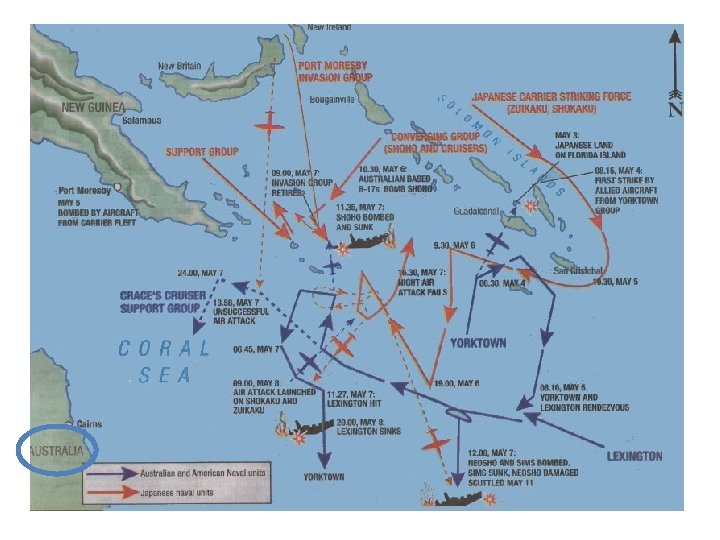
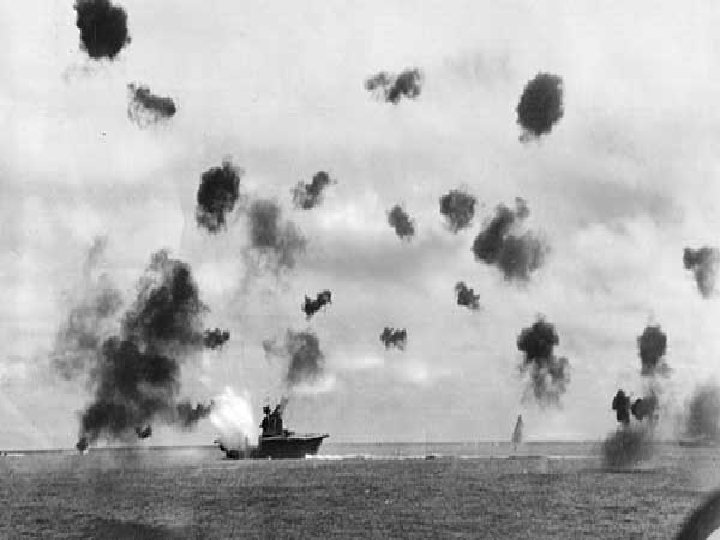
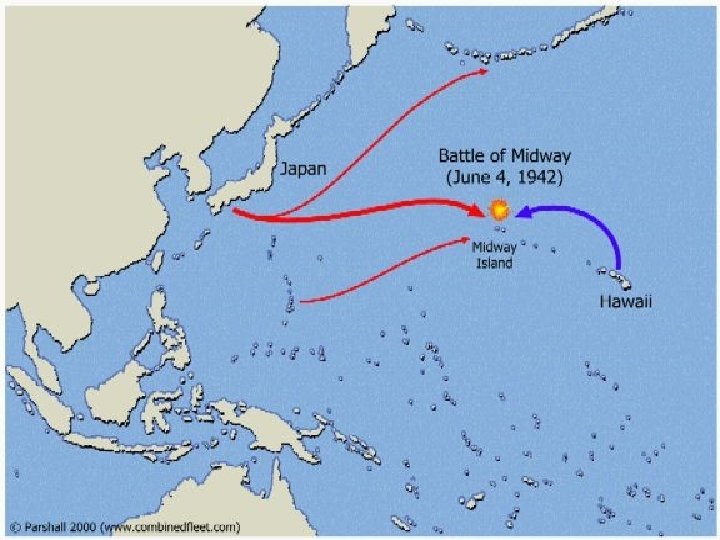
Carrier Battles Battle of the Coral Sea Battle of Midway • First carrier battle—May 1942 • June 1942—high seas battle • Off northeast coast of Australia • Midway a strategic island—home to U. S. military base • Japanese forces tried to take Port Moresby on island of New Guinea • Allied vessels tried to block attack • Japanese advantage • More ships and carriers • Each side lost a carrier in battle • U. S. advantage • Japanese secret code broken • A Japanese advance had been stopped • Admiral Chester Nimitz responsible for Allied victory • Japan’s navy suffered terrible blow
Midway • The outcome shifted the naval balance in the Pacific: – It marked the end of Japan’s initiative on the high seas – Henceforth the Imperial Navy would largely be on the defensive – Pearl Harbor was secured for the United States
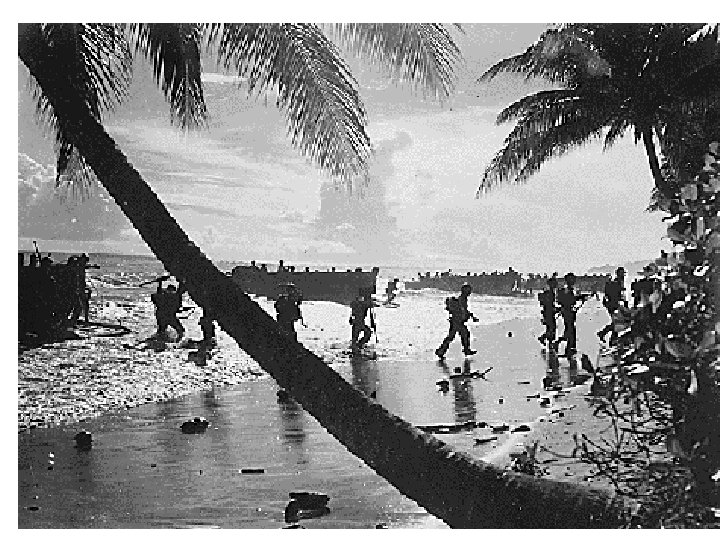
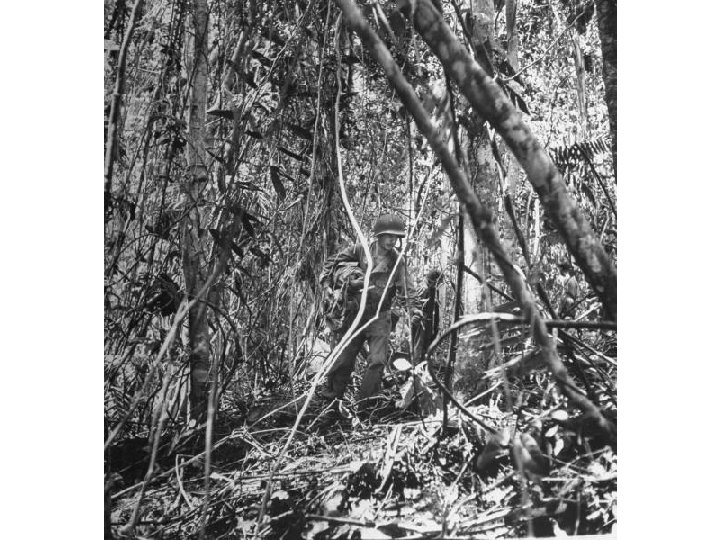
Island Hopping Balance of power changed • • • Japanese lost sea advantage after Midway Allies developed island-hopping strategy Skipped over strongholds and captured weaker targets Captured islands used as bases for next attacks Bypassed Japanese strongholds cut off from outside supplies Guadalcanal • Allied invasion of island late 1942 • Brutal and vicious fighting shaped the nature of combat between Japanese and Americans • Jungle environment • First defeat of Japan on land • Marked a shift in momentum and initiative to the United States Leyte Gulf • • • Allies captured more islands By 1944 back at Philippines Largest naval battle First major use of kamikazes Battle of Leyte Gulf—Allied victory Japan’s naval power virtually destroyed