
The all both adverb du Using du for
The “all” & “both” adverb: 都 (dōu)
Using 都 (dōu) for "All"
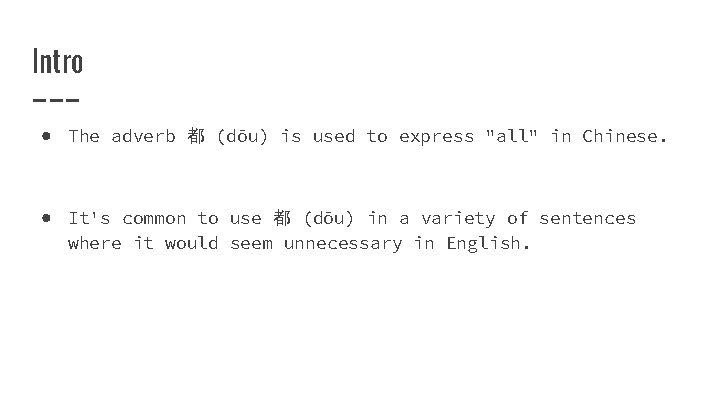
Intro ● The adverb 都 (dōu) is used to express "all" in Chinese. ● It's common to use 都 (dōu) in a variety of sentences where it would seem unnecessary in English.
![都 (dōu) for "All" ● Sentence structure: ○ Subj. + 都 + [Verb Phrase]](http://slidetodoc.com/presentation_image_h2/d16ea2329d1313aa5cb069c9300daed3/image-4.jpg "都 (dōu) for \"All\" ● Sentence structure: ○ Subj. + 都 + [Verb Phrase]")
都 (dōu) for "All" ● Sentence structure: ○ Subj. + 都 + [Verb Phrase] ● Remember that 都 (dōu) appears after the subject. ● A common mistake learners make is to put 都 (dōu) at the beginning of the sentence (as "all" often appears there in English). ● This isn't good Chinese - make sure you put 都 (dōu) after the subject and before the verb.
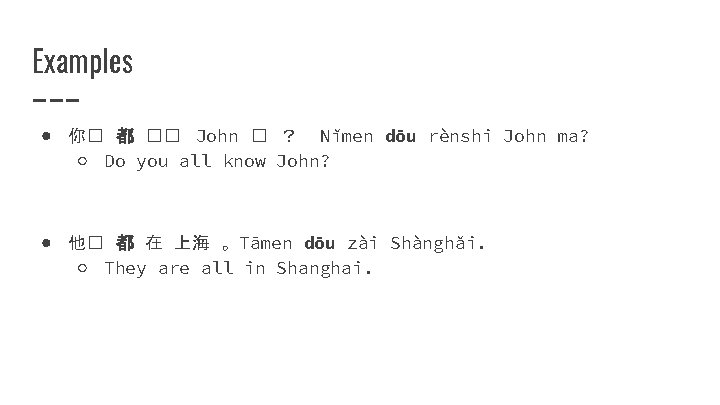
Examples ● 你� 都 �� John � ? Nǐmen dōu rènshi John ma? ○ Do you all know John? ● 他� 都 在 上海 。Tāmen dōu zài Shànghǎi. ○ They are all in Shanghai.
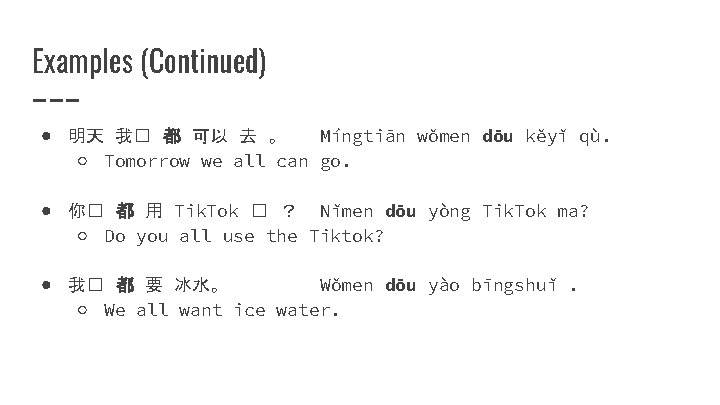
Examples (Continued) ● 明天 我� 都 可以 去 。 Míngtiān wǒmen dōu kěyǐ qù. ○ Tomorrow we all can go. ● 你� 都 用 Tik. Tok � ? Nǐmen dōu yòng Tik. Tok ma? ○ Do you all use the Tiktok? ● 我� 都 要 冰水。 Wǒmen dōu yào bīngshuǐ. ○ We all want ice water.
Using 都 (dōu) for "Both"
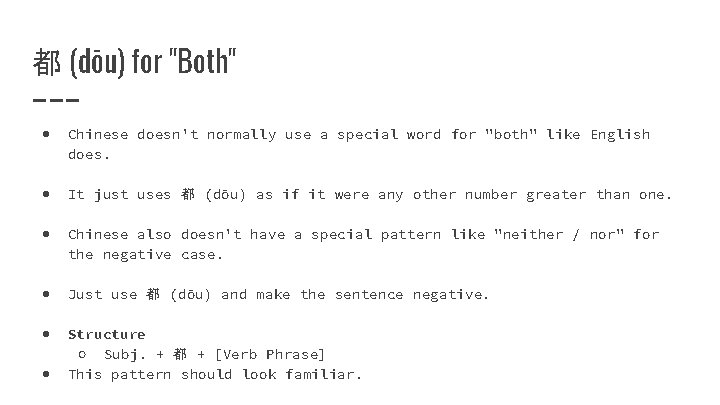
都 (dōu) for "Both" ● Chinese doesn't normally use a special word for "both" like English does. ● It just uses 都 (dōu) as if it were any other number greater than one. ● Chinese also doesn't have a special pattern like "neither / nor" for the negative case. ● Just use 都 (dōu) and make the sentence negative. ● Structure ○ Subj. + 都 + [Verb Phrase] This pattern should look familiar. ●
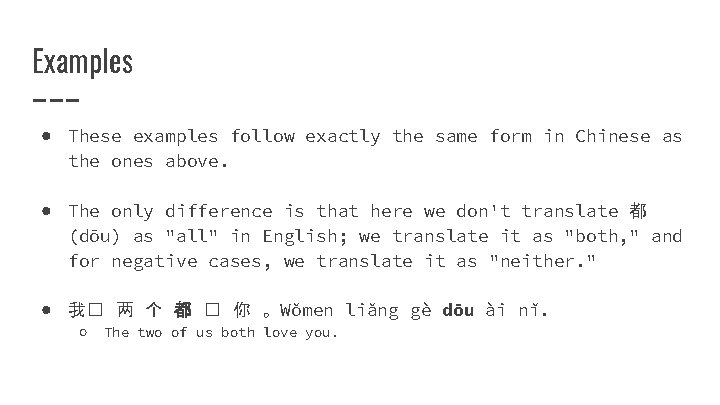
Examples ● These examples follow exactly the same form in Chinese as the ones above. ● The only difference is that here we don't translate 都 (dōu) as "all" in English; we translate it as "both, " and for negative cases, we translate it as "neither. " ● 我� 两 个 都 � 你 。Wǒmen liǎng gè dōu ài nǐ. ○ The two of us both love you.
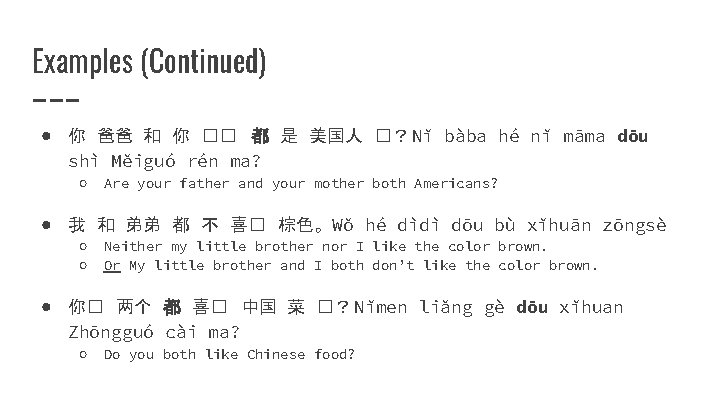
Examples (Continued) ● 你 爸爸 和 你 �� 都 是 美国人 �? Nǐ bàba hé nǐ māma dōu shì Měiguó rén ma? ○ Are your father and your mother both Americans? ● 我 和 弟弟 都 不 喜� 棕色。Wǒ hé dìdì dōu bù xǐhuān zōngsè ○ ○ Neither my little brother nor I like the color brown. Or My little brother and I both don’t like the color brown. ● 你� 两个 都 喜� 中国 菜 �? Nǐmen liǎng gè dōu xǐhuan Zhōngguó cài ma? ○ Do you both like Chinese food?
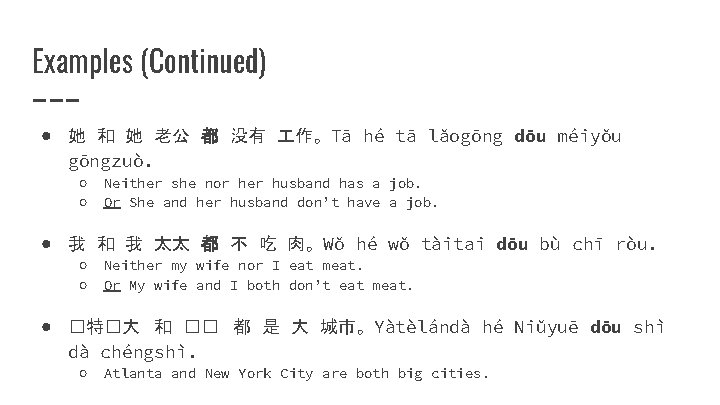
Examples (Continued) ● 她 和 她 老公 都 没有 作。Tā hé tā lǎogōng dōu méiyǒu gōngzuò. ○ ○ Neither she nor her husband has a job. Or She and her husband don’t have a job. ● 我 和 我 太太 都 不 吃 肉。Wǒ hé wǒ tàitai dōu bù chī ròu. ○ ○ Neither my wife nor I eat meat. Or My wife and I both don’t eat meat. ● �特�大 和 �� 都 是 大 城市。Yàtèlándà hé Niǔyuē dōu shì dà chéngshì. ○ Atlanta and New York City are both big cities.

Nǐmen dōu yǒu wèntí ma?
- Slides: 12