
THE AGRICULTURAL REVOLUTION Outline The enclosure movement Improvements

- Slides: 29
THE AGRICULTURAL REVOLUTION
Outline • The enclosure movement • Improvements in crops and cattle • Mechanisation • Role of the gentry • Conclusion
Introduction Britain in 1800 • Could feed most of its population • Was a predominantly agricultural country ØAgr = 1/3 of the total labour force + 1/3 of the national income
THE ENCLOSURE MOVEMENT
Definition • Open fields were enclosed with fences and hedges • Wastelands and commons were reclaimed (i. e. enclosed and sold)
Chronology • ≈ 1780 -1815 • 1801: General Enclosure Act (but in fact, the process was largely complete by then).
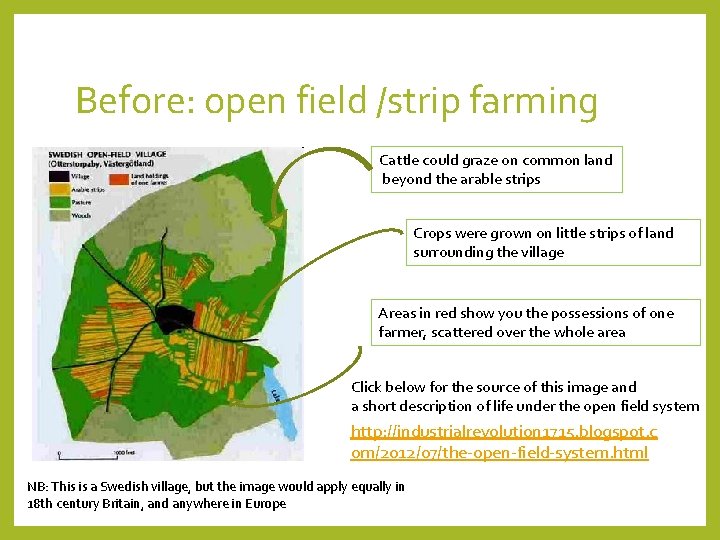
Before: open field /strip farming Cattle could graze on common land beyond the arable strips Crops were grown on little strips of land surrounding the village Areas in red show you the possessions of one farmer, scattered over the whole area Click below for the source of this image and a short description of life under the open field system http: //industrialrevolution 1715. blogspot. c om/2012/07/the-open-field-system. html NB: This is a Swedish village, but the image would apply equally in 18 th century Britain, and anywhere in Europe
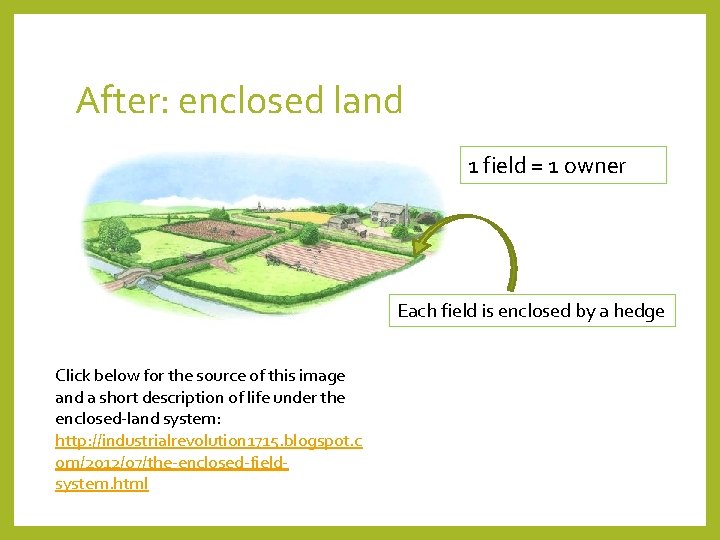
After: enclosed land 1 field = 1 owner Each field is enclosed by a hedge Click below for the source of this image and a short description of life under the enclosed-land system: http: //industrialrevolution 1715. blogspot. c om/2012/07/the-enclosed-fieldsystem. html
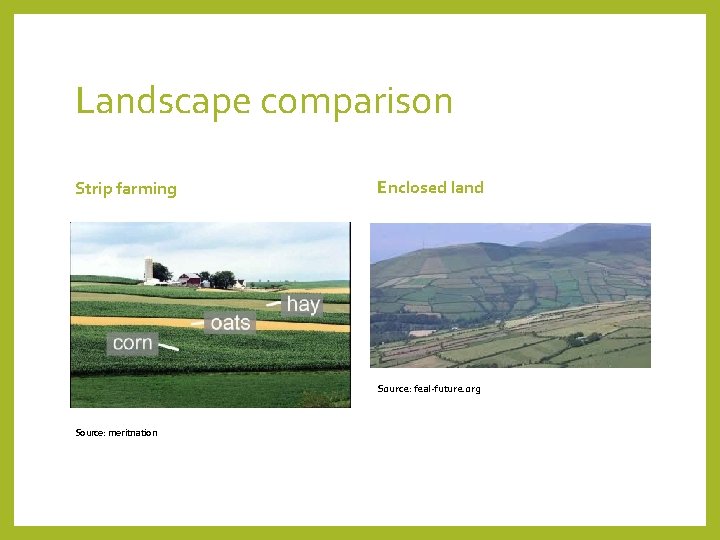
Landscape comparison Strip farming Enclosed land Source: feal-future. org Source: meritnation
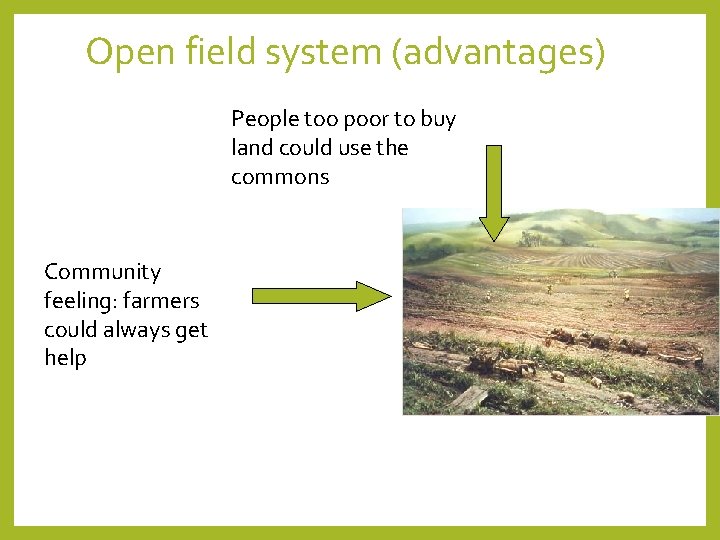
Open field system (advantages) People too poor to buy land could use the commons Community feeling: farmers could always get help
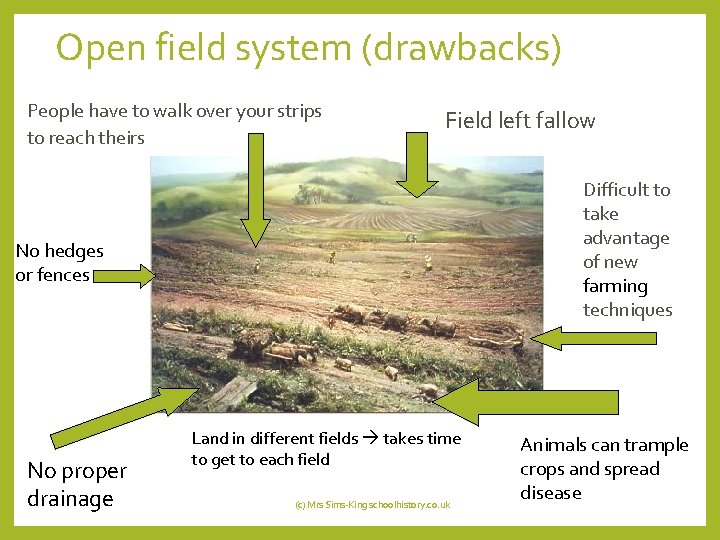
Open field system (drawbacks) People have to walk over your strips to reach theirs Field left fallow Difficult to take advantage of new farming techniques No hedges or fences No proper drainage Land in different fields takes time to get to each field (c) Mrs Sims-King schoolhistory. co. uk Animals can trample crops and spread disease
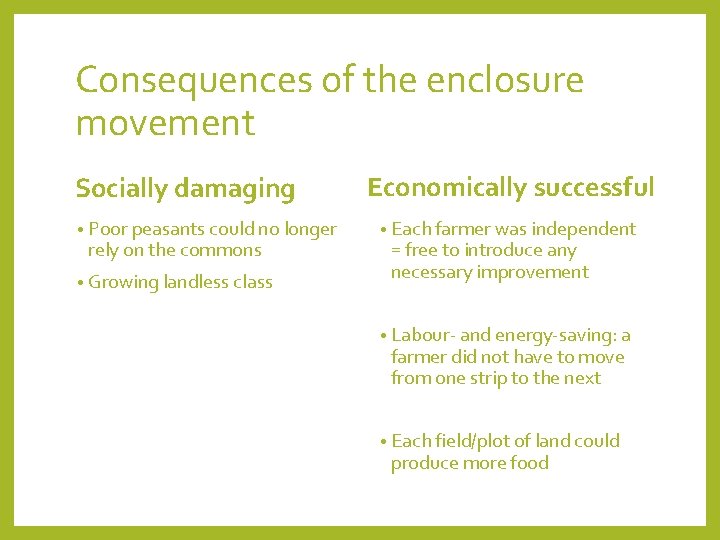
Consequences of the enclosure movement Socially damaging • Poor peasants could no longer rely on the commons • Growing landless class Economically successful • Each farmer was independent = free to introduce any necessary improvement • Labour- and energy-saving: a farmer did not have to move from one strip to the next • Each field/plot of land could produce more food
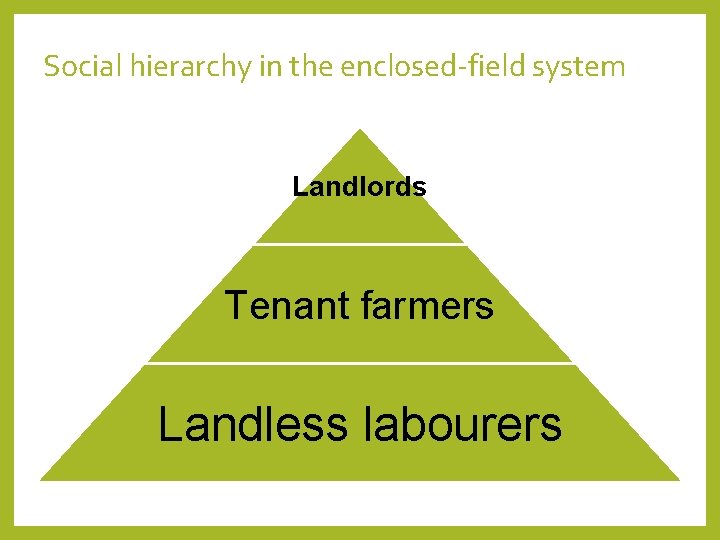
Social hierarchy in the enclosed-field system Landlords Tenant farmers Landless labourers
IMPROVEMENTS IN CROPS AND CATTLE
Improvement in crops and cattle • Introduction of new crops • Crop rotation • New breeds of animals
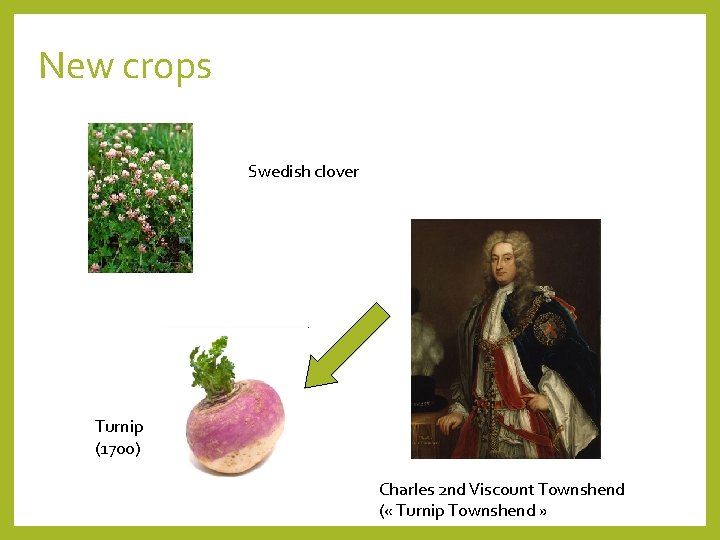
New crops Swedish clover Turnip (1700) Charles 2 nd Viscount Townshend ( « Turnip Townshend »
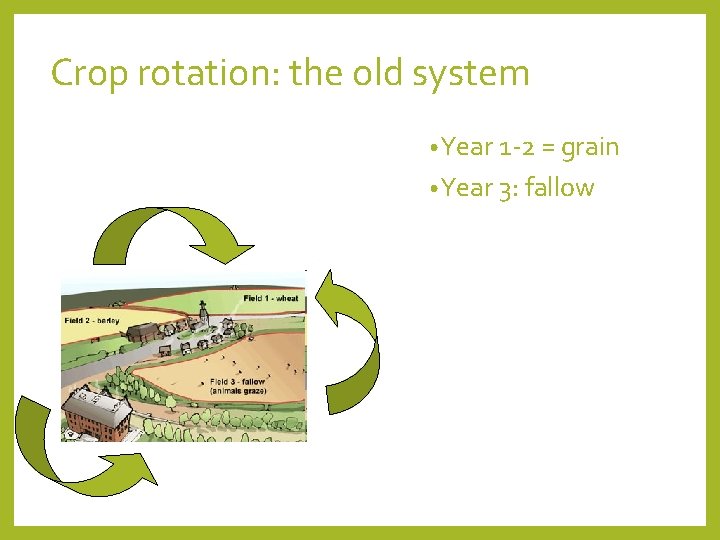
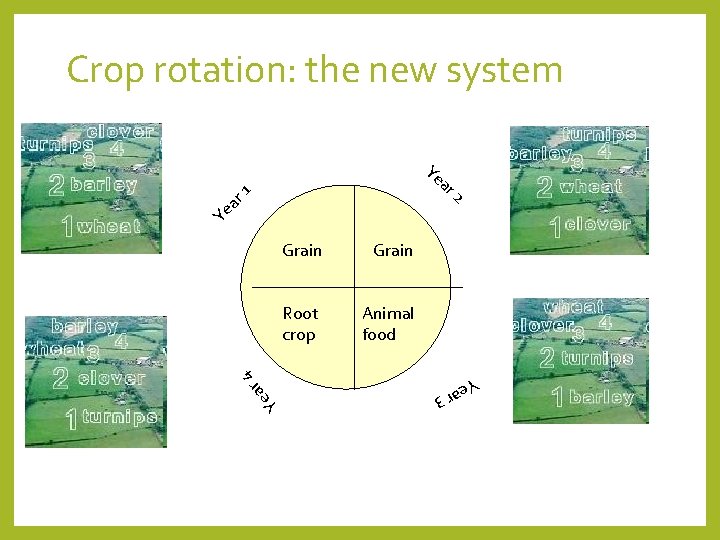
Crop rotation: the old system • Year 1 -2 = grain • Year 3: fallow
Crop rotation: the new system Ye 2 Ye ar 1 ar Animal food Ye 4 ar Root crop r 3 Grain a Ye Grain
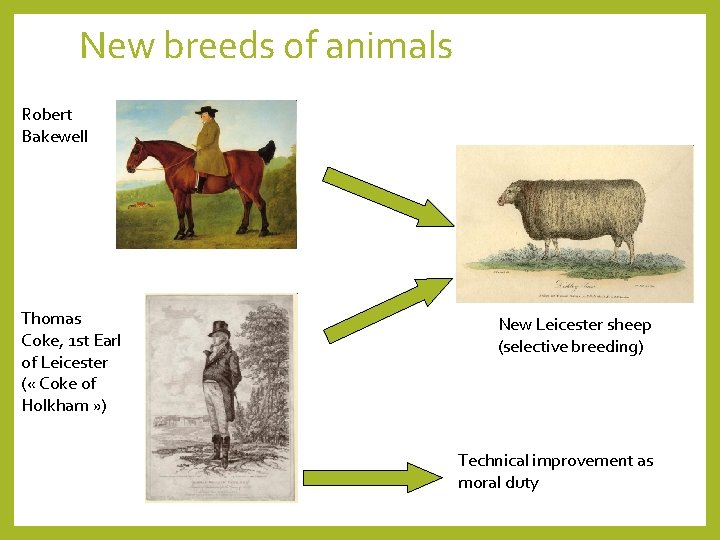
New breeds of animals Robert Bakewell Thomas Coke, 1 st Earl of Leicester ( « Coke of Holkham » ) New Leicester sheep (selective breeding) Technical improvement as moral duty
MECHANISATION
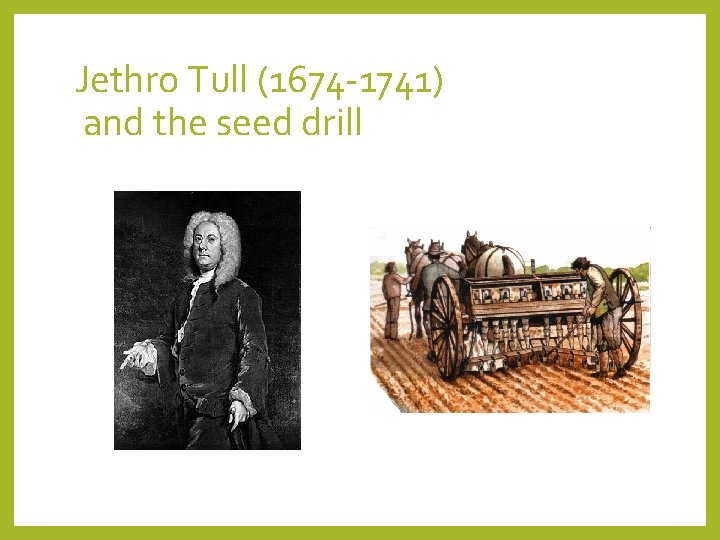
Jethro Tull (1674 -1741) and the seed drill
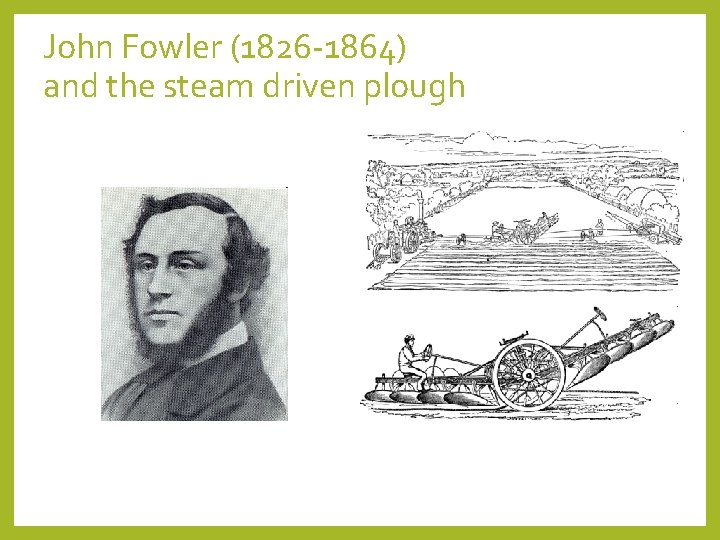
John Fowler (1826 -1864) and the steam driven plough
Resistance movements: the Swing riots (1830 -1831) • « Captain Swing » : a fictitious identity • Destruction of agricultural machinery • Arson (in particular haystacks) • Demands for food, beer or money contributions • 600 rioters imprisoned, 500 sentenced to transportation, 19 executed.
THE ROLE OF THE GENTRY
The role of the aristocracy/gentry • Landowners were sensitive to new ideas • They increasingly managed their estates themselves • They were willing to experiment (improvement was fashionable) • They had money ( investment)
Spreading ideas • 1660: Royal Society (Philosophical Transactions) • 1798: Board of Agriculture Popularized new methods of farming Landlords were the only class with enough education/social standards to take part in these societies.
CONCLUSION
Consequences of the agricultural revolution • http: //www. bbc. co. uk/history/british/empire_seapower/agricultural _revolution_01. shtml (written by Pr mark Overton, University of Leicester) • The land could produce more • By 1850, only 22% of the workforce in agriculture (smallest proportion in the world)
A farm market economy • Farmers no longer worked to feed their family ØMarket gardening for towns and cities ØExports ØFeeding the army (up to the Napoleonic wars) • Farming became profitable and subjected to the laws of the market. • BUT British agriculture was never as outstanding as industry