
The Agricultural Revolution Neolithic Agricultural Revolution Started about

The Agricultural Revolution
Neolithic / Agricultural Revolution �Started about 12, 000 years ago �Deliberate cultivation of plants �Domestication of animals - deliberate breeding of animals �Too many people for hunting + gathering
Agricultural Beginnings �Happened independently in several regions �All happened 12, 000 -4, 000 years ago �Scholars still debate today as “why” this occurred �Women probably began agriculture Men domesticated animals �Population increase created a need for innovation New technology – sickles, baskets
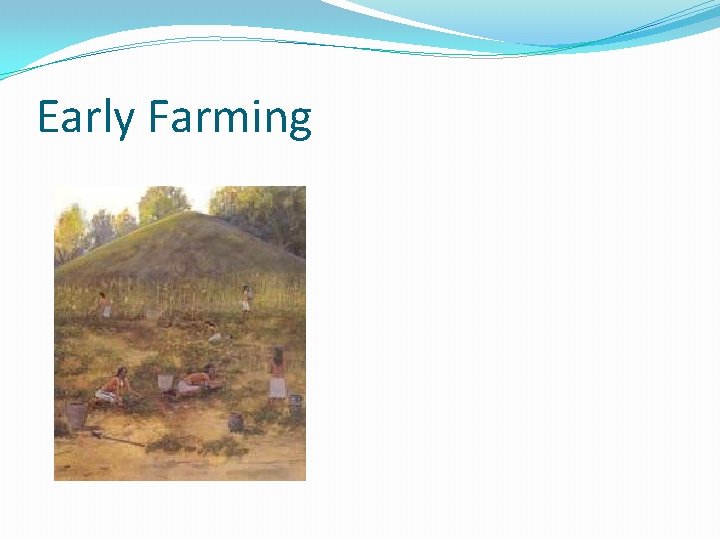
Early Farming
The Fertile Crescent �First to have a “full” agricultural revolution - several plants and animals domesticated - large population �New Technology - mud bricks, monuments and shrines, more elaborate burials, more sophisticated tools
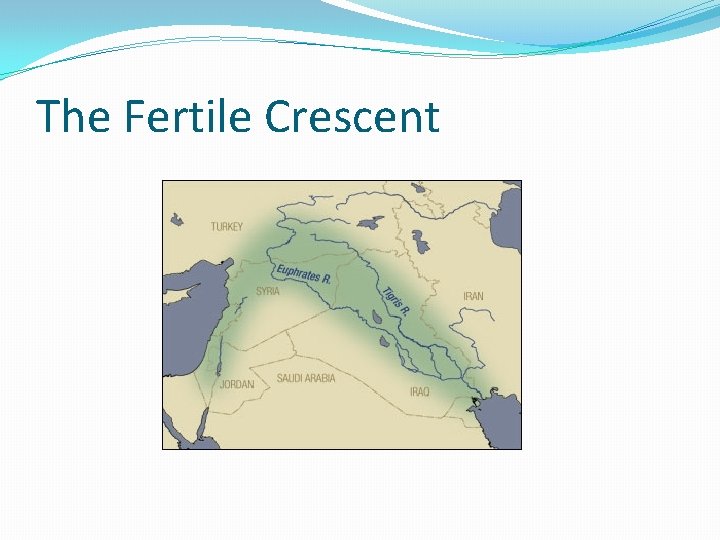
The Fertile Crescent
Eastern Sahara (Sudan) �More hospitable climate 10, 000 -5, 000 years ago �First domestication of cattle �Africa was the only place to domesticate animals before plants �Less production of agriculture compared to Middle East - yams, oil palm trees, okra, and the kola nut in West Africa
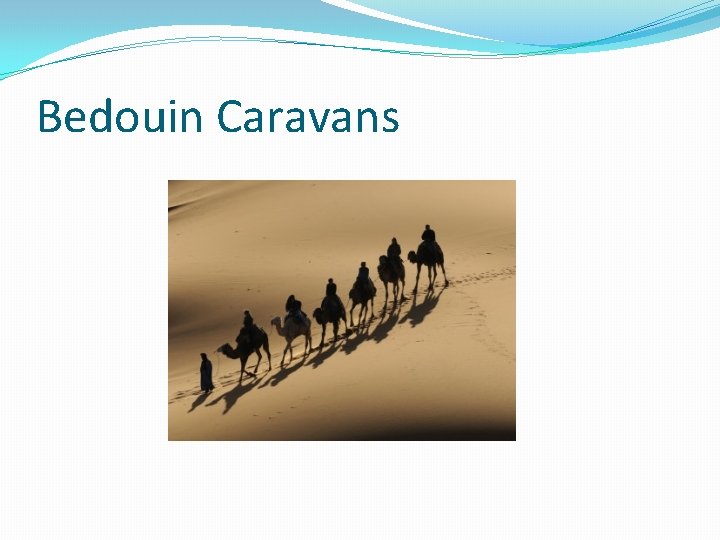
Bedouin Caravans
The Americas �Absence of animals available for domestication - only animal domesticated - llama/alpaca - lack of protein, manure, power of large animals �Agricultural revolution in Americas – 3500 years ago �Cultural diffusion was more difficult in Americas North/South as opposed to East/West travel
The Culture of Agriculture �Population - 10, 000 years ago: around 6 million - 5, 000 years ago: around 50 million - Year 1 CE: around 250 million people - Today: 6. 2 Billion �Didn’t improve quality of life for most people - Harder Work, longer hours - epidemics: living close to animals - famine: dependence on 1 or 2 crops �Technology: pots, textiles, eventually metallurgy
Pastoral Societies �Agriculture /difficult = more reliance on animals �Pastoral Nomads - Central Asia, Saharan Africa, Arabian Peninsula �Horses domesticated in Central Asia 4000 BCE �Camels allowed pastoralism in Asia/Africa �No pastoral societies emerged in Americas

Pastoral Nomads
Agricultural Village Societies �Çatalhüyük, in southern Turkey - dead buried under houses w/ items - men hunted, women worked in agriculture - no streets, people moved on roof tops �Usually organized by kinship groups �Sometimes modest social inequality
Chiefdoms �Inherit positions of power �Seldom use force to maintain rule �Collected tribute and redistributed to the people �Chiefs had religious and secular power - organized for war, economic controls, solve internal disputes
- Slides: 14