
The Aggregate Effects of Health Insurance Evidence from


- Slides: 35
The Aggregate Effects of Health Insurance: Evidence from The Introduction of Medicare
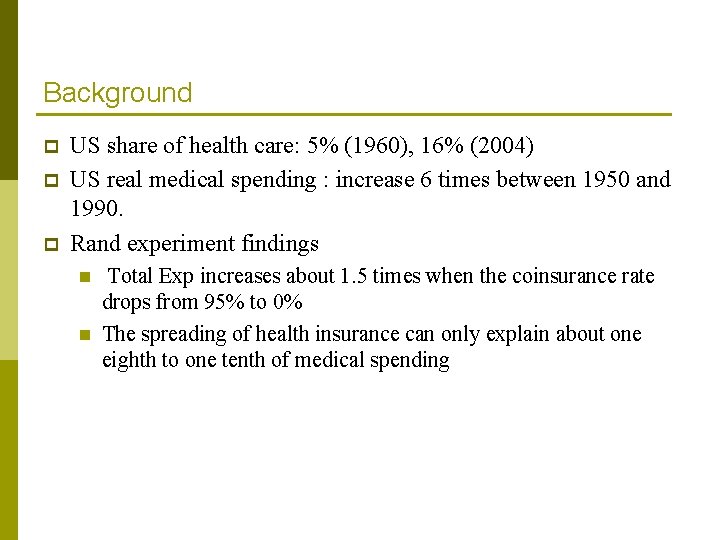
Background p p p US share of health care: 5% (1960), 16% (2004) US real medical spending : increase 6 times between 1950 and 1990. Rand experiment findings n n Total Exp increases about 1. 5 times when the coinsurance rate drops from 95% to 0% The spreading of health insurance can only explain about one eighth to one tenth of medical spending
Research Question p How important is the role of health insurance in explaining the growth of medical spending? p Explore the impact as a result of Medicare, established in 1965, the single and largest change in health insurance coverage in U. S.
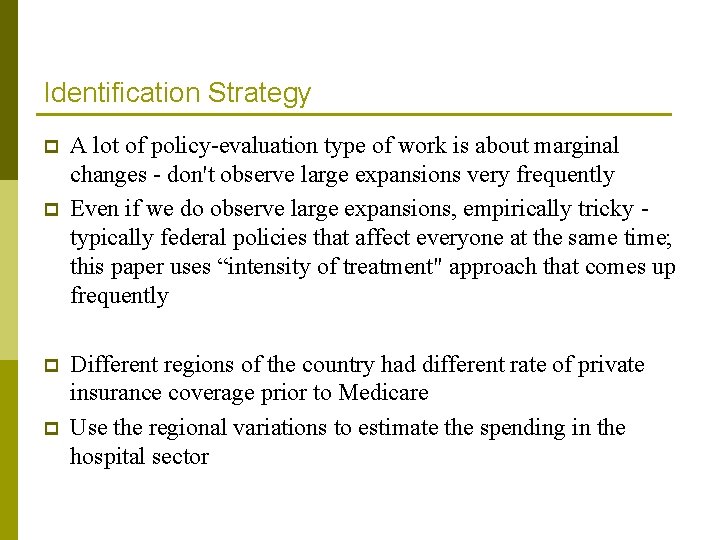
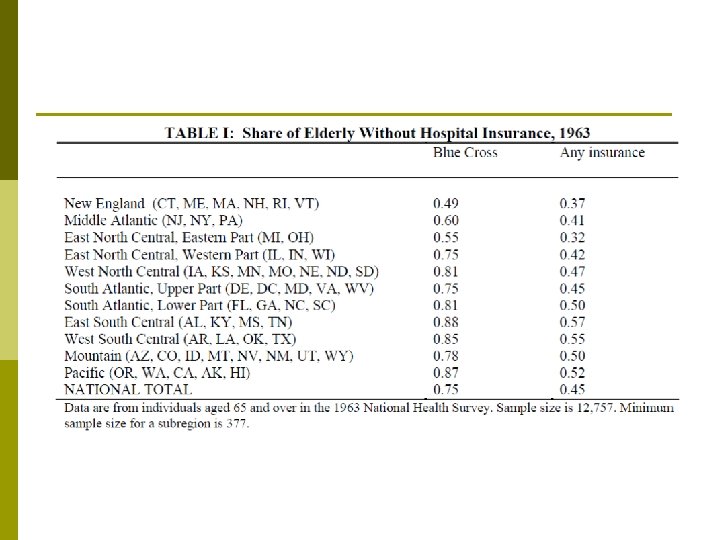
Identification Strategy p p A lot of policy-evaluation type of work is about marginal changes - don't observe large expansions very frequently Even if we do observe large expansions, empirically tricky typically federal policies that affect everyone at the same time; this paper uses “intensity of treatment" approach that comes up frequently Different regions of the country had different rate of private insurance coverage prior to Medicare Use the regional variations to estimate the spending in the hospital sector
Basic set-up p p Medicare introduced in 1965; intuitively (and according to Arrow) would think that this generates a large shock in demand, since out of pocket prices go down Hard to evaluate the magnitude of effects Paper's insight: prior to 1965, a lot of seniors had some form of insurance (e. g. Blue Cross Blue Shield) - hence, for areas where there were a lot of these people, the introduction of Medicare should have less demand expansion effect Will not capture any income effects on previously insured
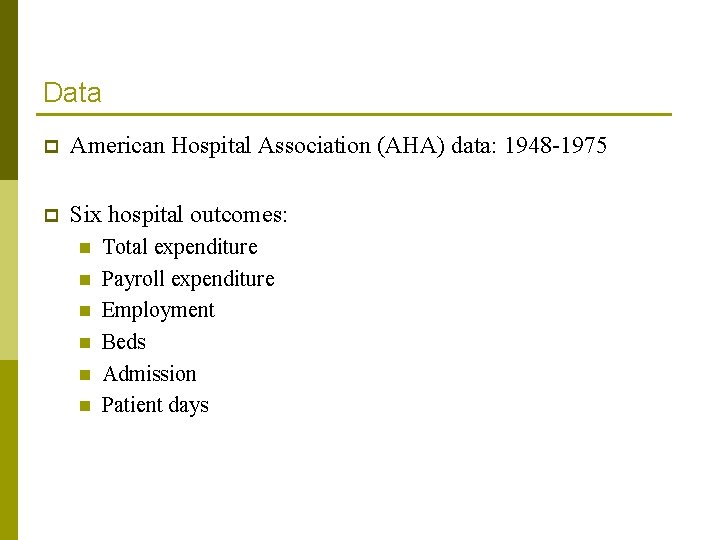
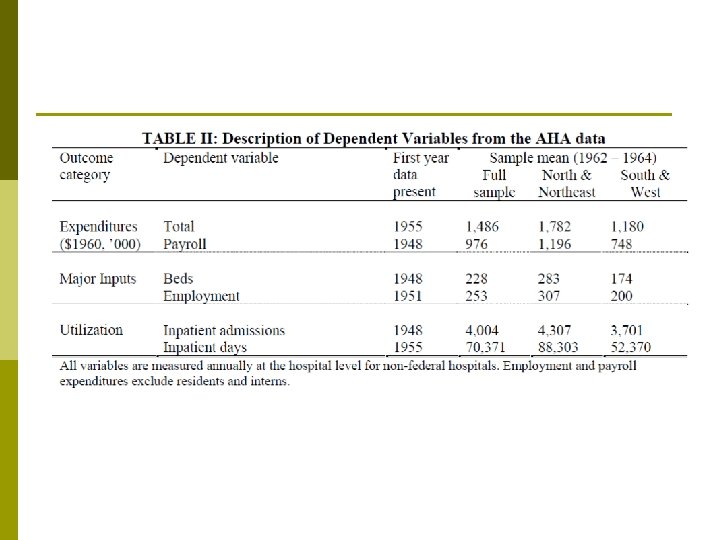
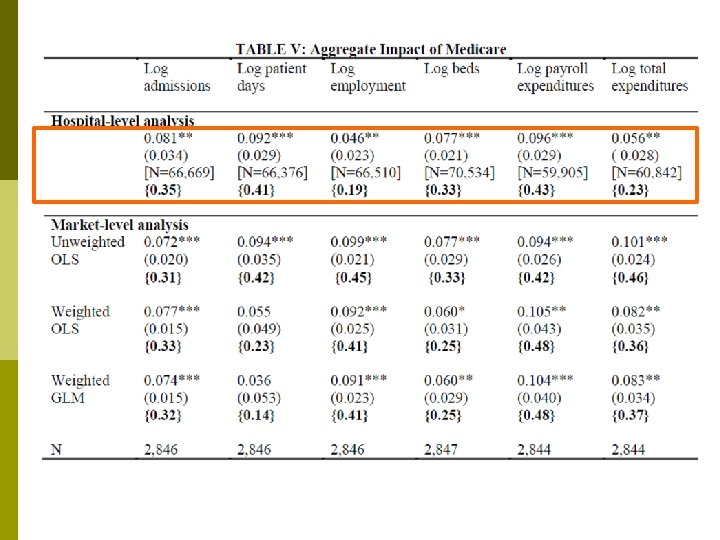
Data p American Hospital Association (AHA) data: 1948 -1975 p Six hospital outcomes: n n n Total expenditure Payroll expenditure Employment Beds Admission Patient days
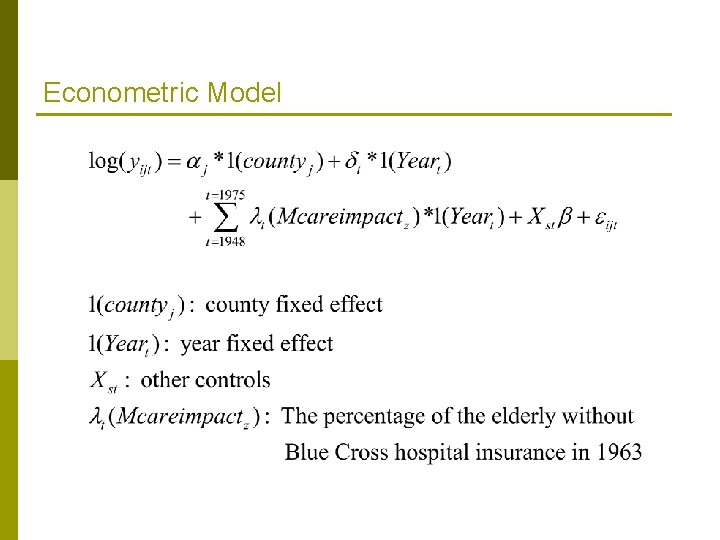
Econometric Model
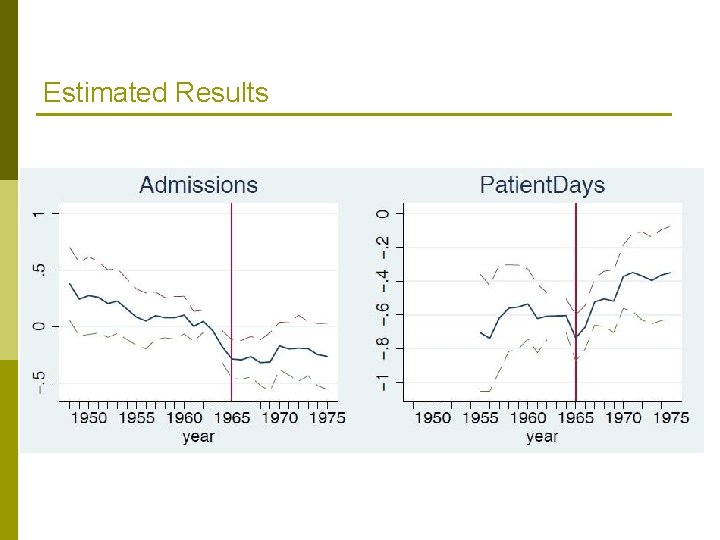
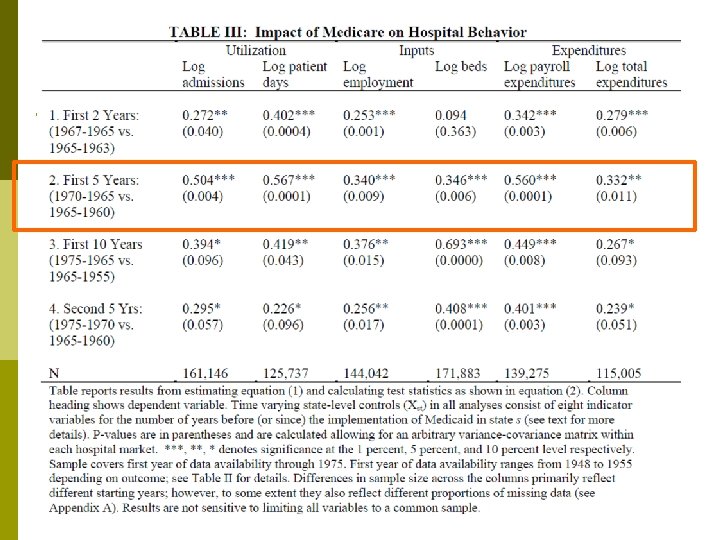
Estimated Results
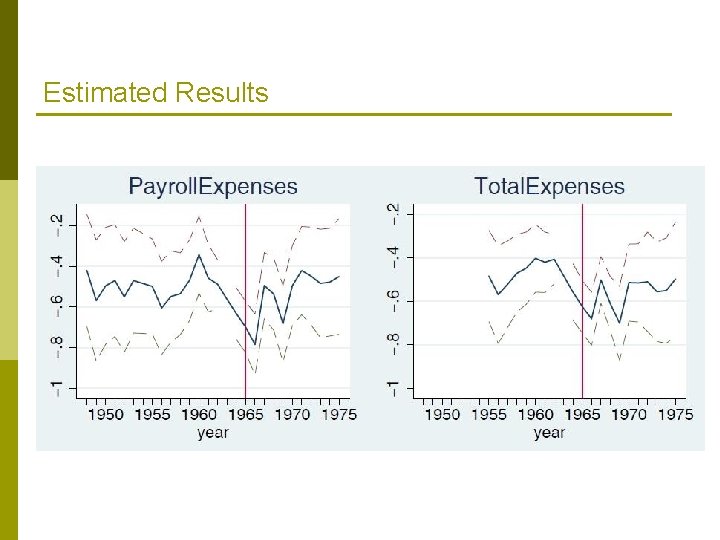
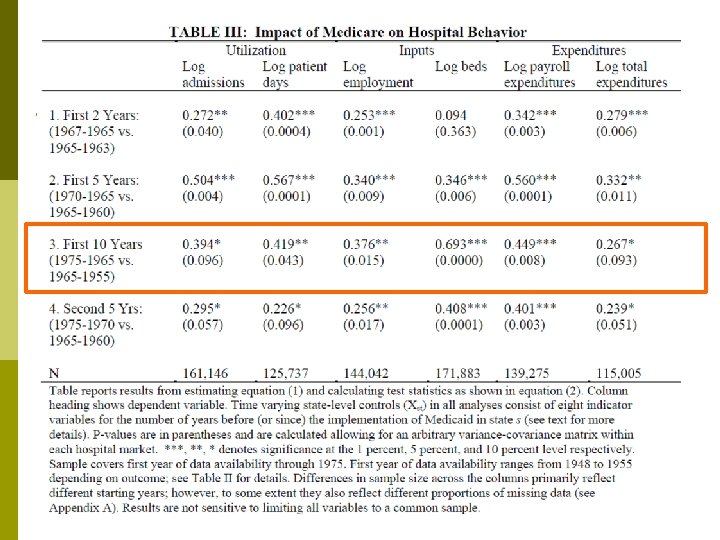
Estimated Results
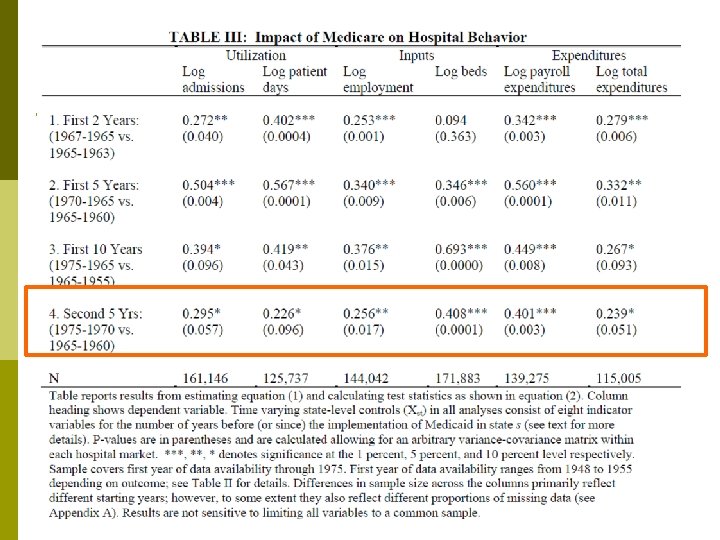
Estimated Results
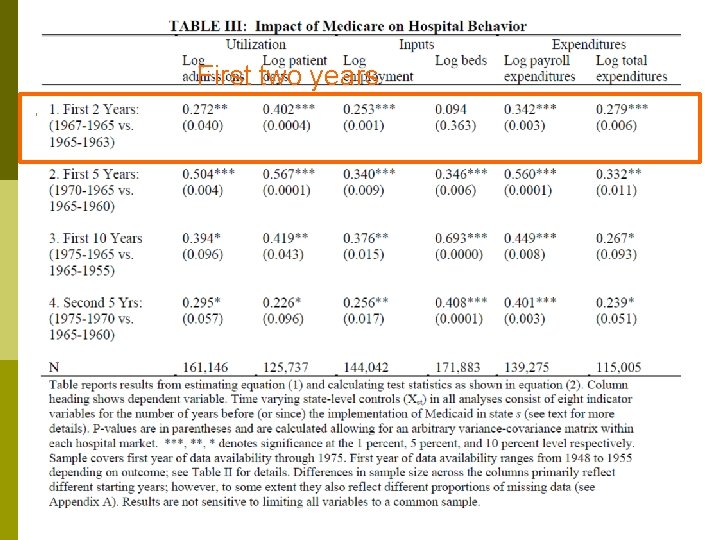
First two years
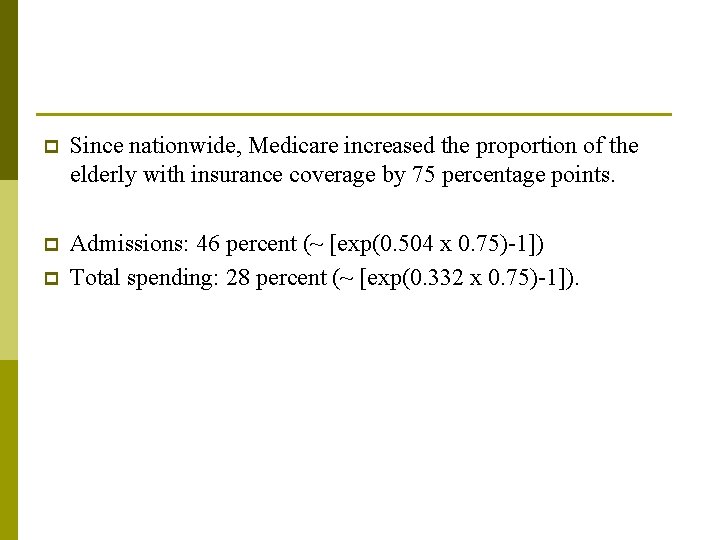
p Since nationwide, Medicare increased the proportion of the elderly with insurance coverage by 75 percentage points. p Admissions: 46 percent (~ [exp(0. 504 x 0. 75)-1]) Total spending: 28 percent (~ [exp(0. 332 x 0. 75)-1]). p
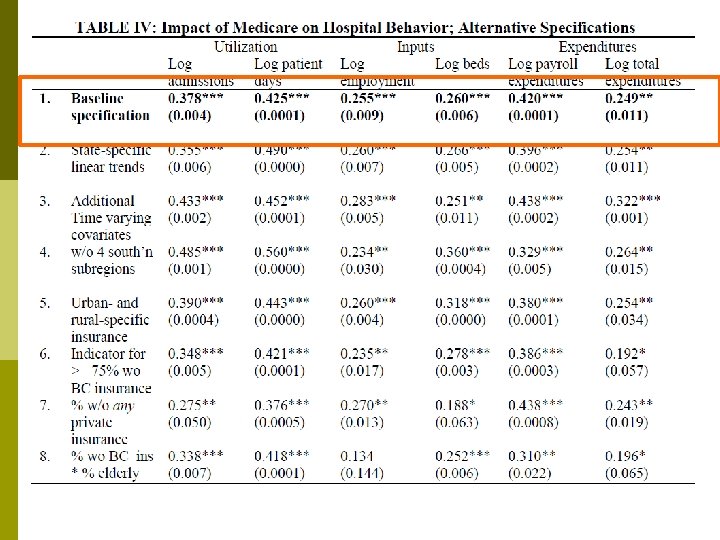
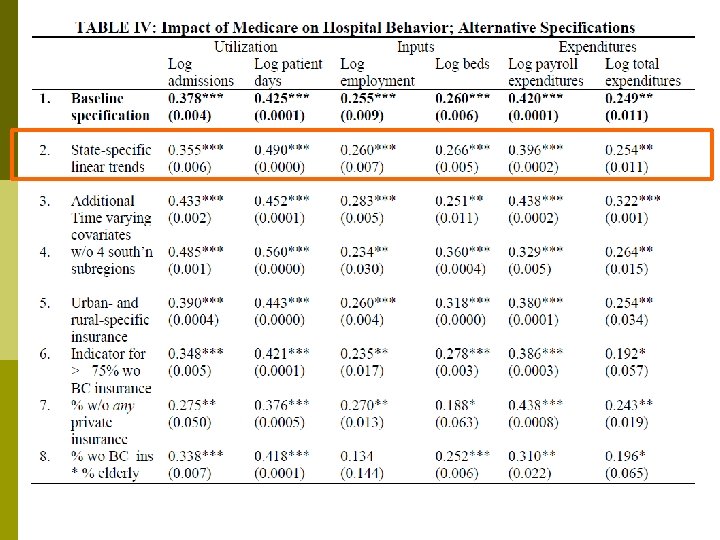
Robustness Checks
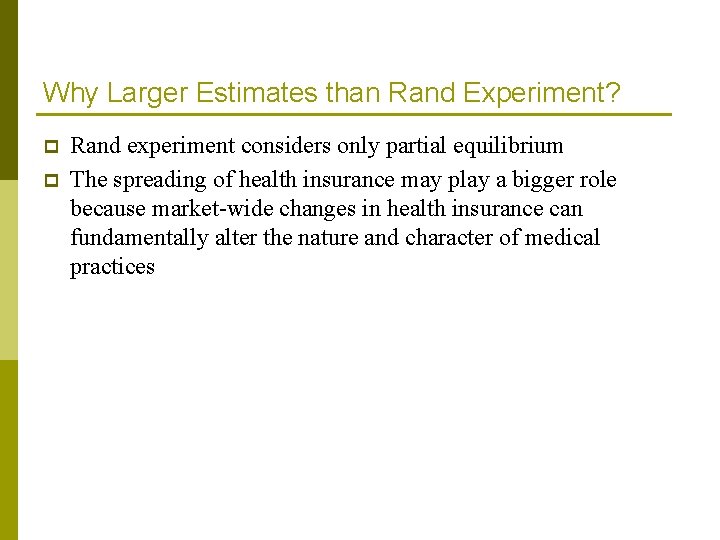
Why Larger Estimates than Rand Experiment? p p Rand experiment considers only partial equilibrium The spreading of health insurance may play a bigger role because market-wide changes in health insurance can fundamentally alter the nature and character of medical practices
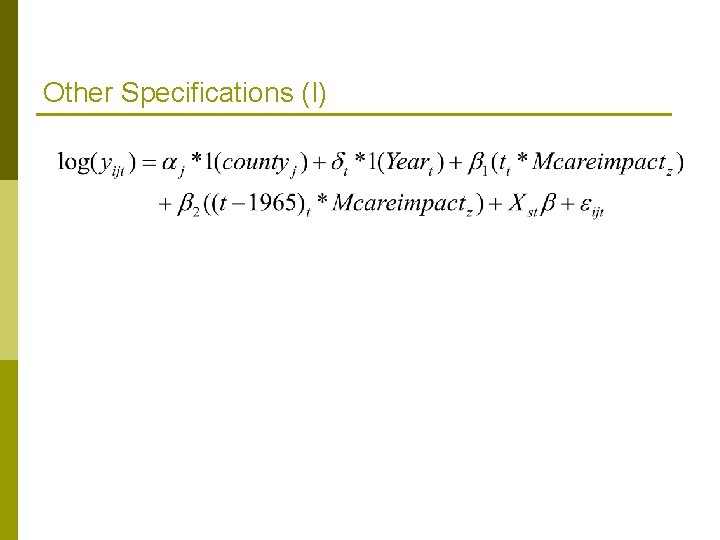
Other Specifications (I)
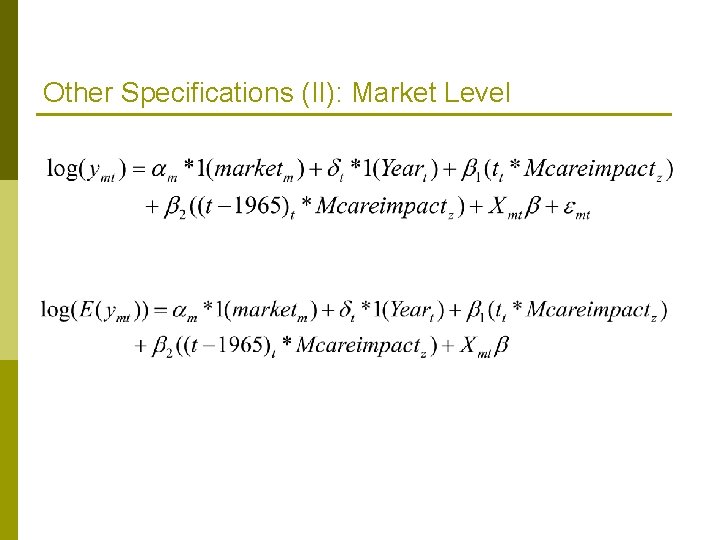
Other Specifications (II): Market Level
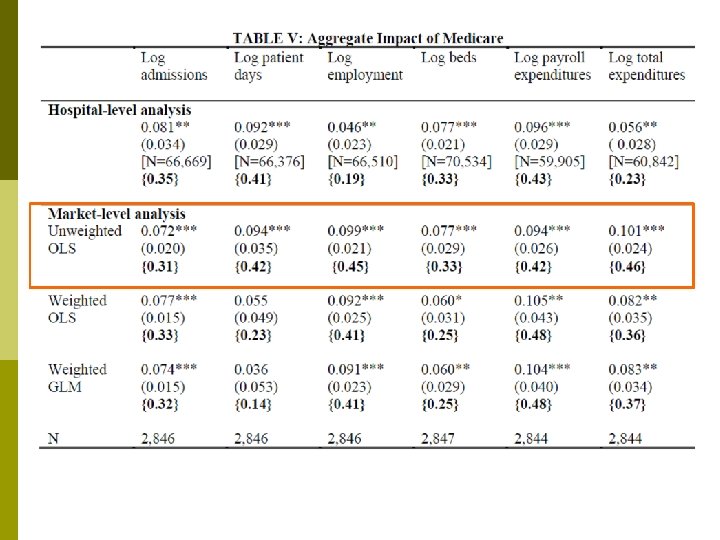
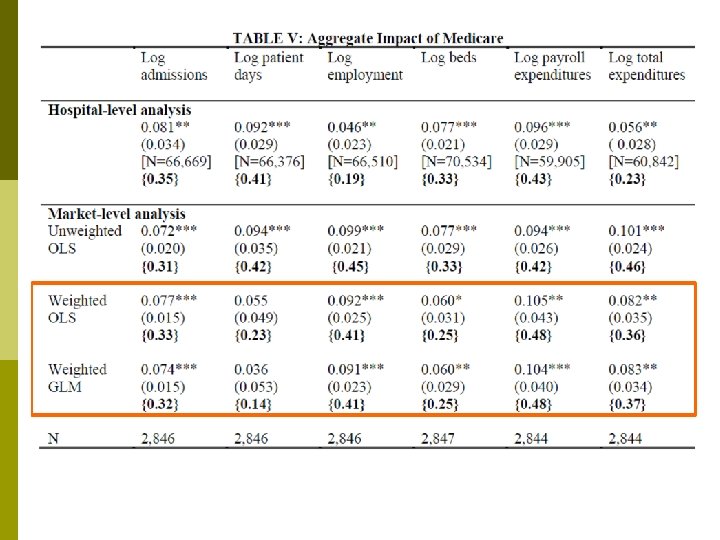
p The Medicare impact is even larger when measured at the market level than hospital level p Total expenditure: 37 percent (~ [exp(0. 083 x 5 x 0. 75)-1])
Partial Equilibrium v. s. General Equilibrium p The earlier estimates is about six to seven times larger than RIE would suggest
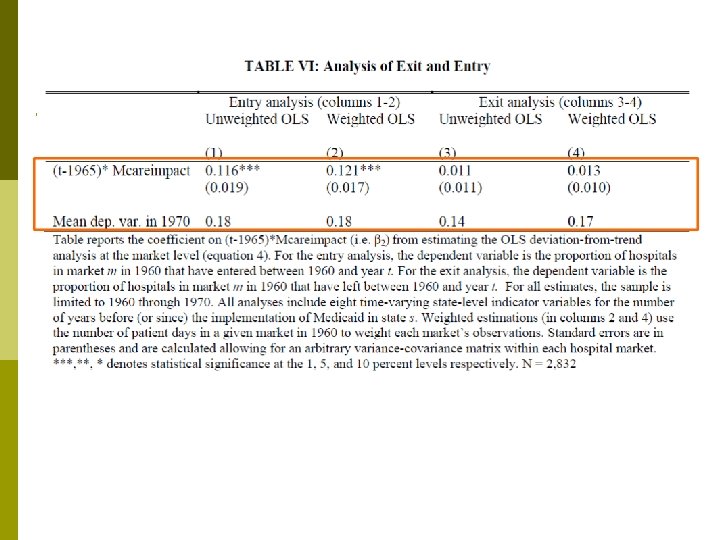
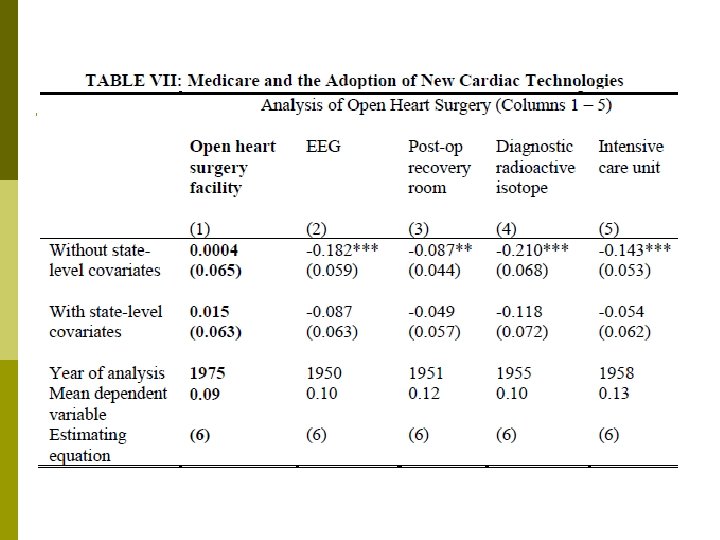
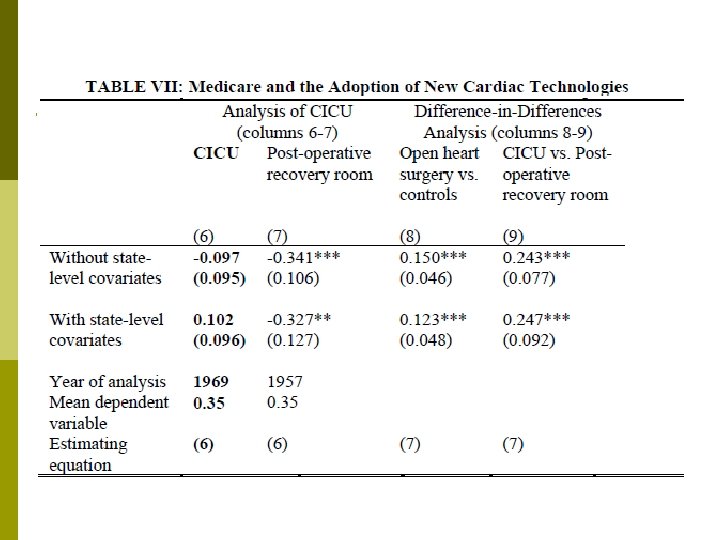
Fixed Effect Hypothesis p Aggregate changes in health insurance may sufficiently change the nature and magnitude of the market demand for health care that alter the incentives for hospitals to incur the fixed costs of entering the market or of adopting new practice styles. p Entry and exit Adoption of new technology p
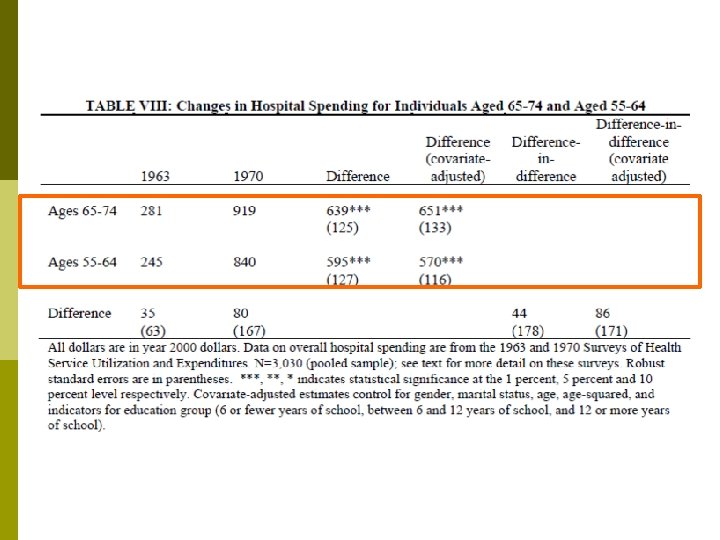
Spillover Hypothesis p Change in insurance of one set of patients can have spillover effects on other patients
fdfff