
The Age of Shogun Japanese History 1600 1868
- Slides: 25
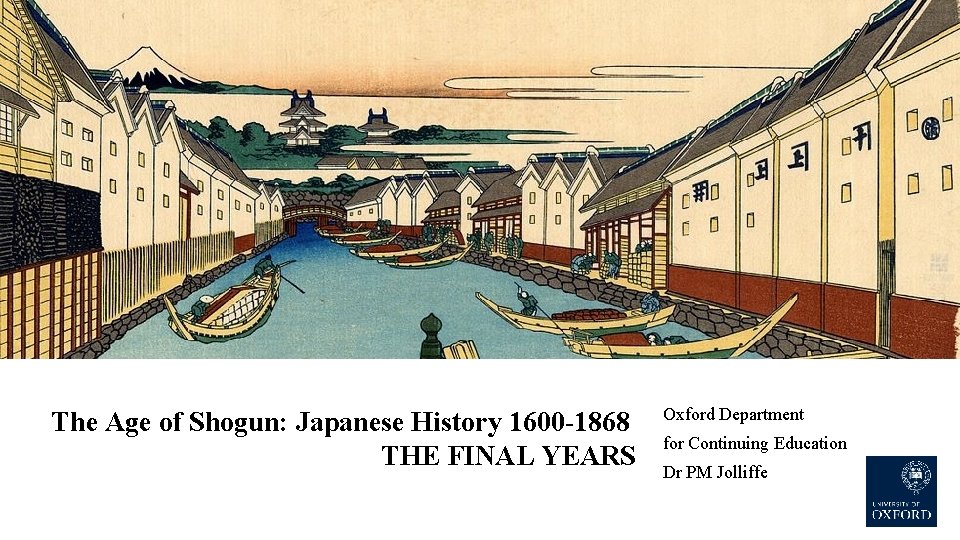
The Age of Shogun: Japanese History 1600 -1868 THE FINAL YEARS Oxford Department for Continuing Education Dr PM Jolliffe
Three main reasons for decline of Tokugawa rule • Economic difficulties • Foreign pressure • Intellectual opposition
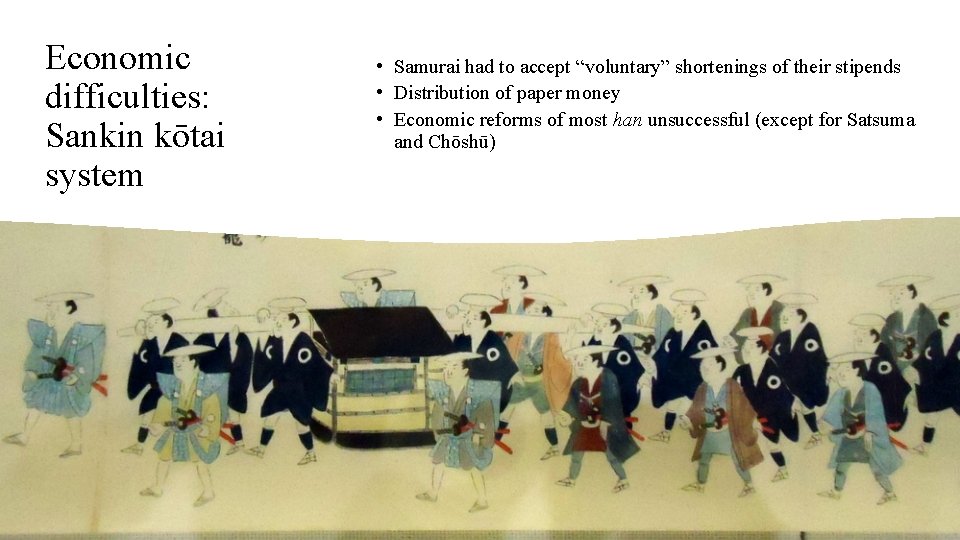
Economic difficulties: Sankin kōtai system • Samurai had to accept “voluntary” shortenings of their stipends • Distribution of paper money • Economic reforms of most han unsuccessful (except for Satsuma and Chōshū)
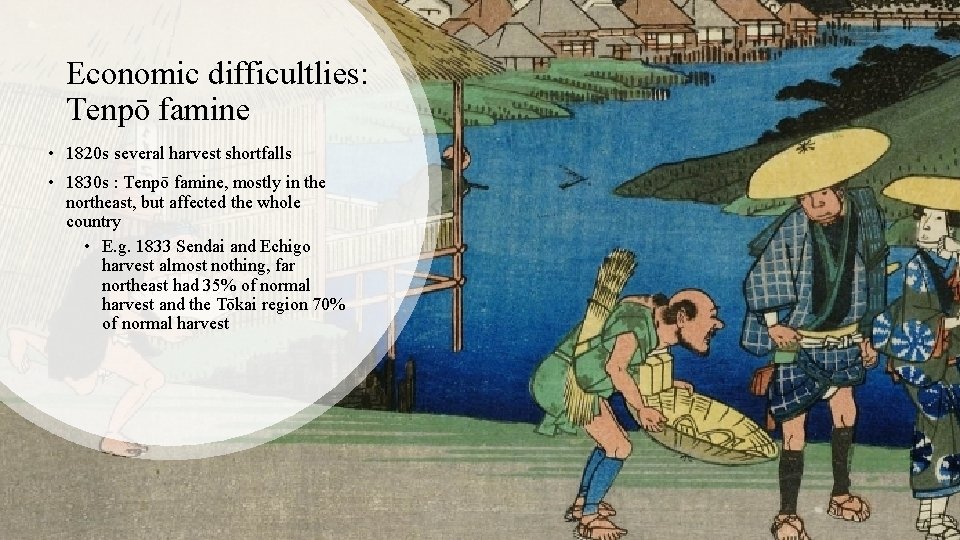
Economic difficultlies: Tenpō famine • 1820 s several harvest shortfalls • 1830 s : Tenpō famine, mostly in the northeast, but affected the whole country • E. g. 1833 Sendai and Echigo harvest almost nothing, far northeast had 35% of normal harvest and the Tōkai region 70% of normal harvest
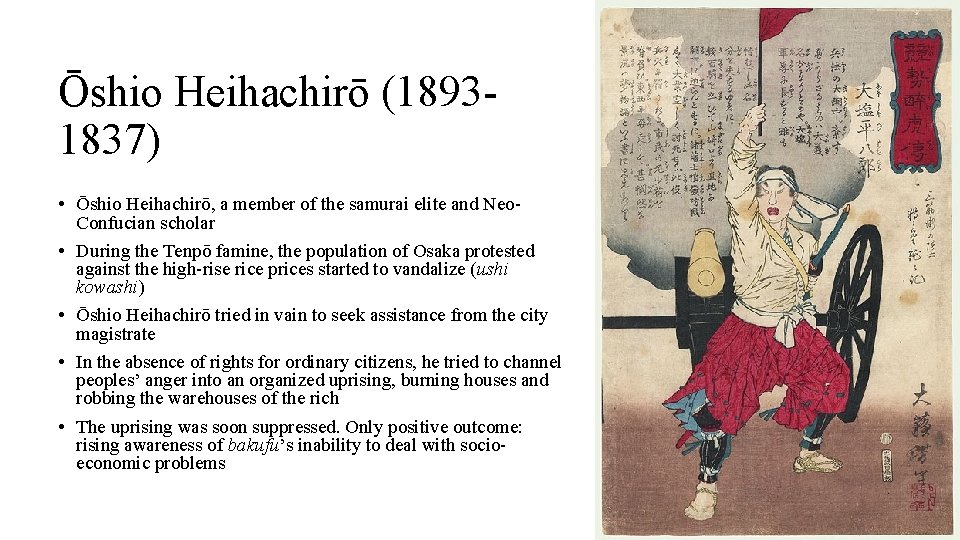
Ōshio Heihachirō (18931837) • Ōshio Heihachirō, a member of the samurai elite and Neo. Confucian scholar • During the Tenpō famine, the population of Osaka protested against the high-rise rice prices started to vandalize (ushi kowashi) • Ōshio Heihachirō tried in vain to seek assistance from the city magistrate • In the absence of rights for ordinary citizens, he tried to channel peoples’ anger into an organized uprising, burning houses and robbing the warehouses of the rich • The uprising was soon suppressed. Only positive outcome: rising awareness of bakufu’s inability to deal with socioeconomic problems
• In 1778 Maurice August von Benyowsky escaped Russian imprisonment via Japan • 1792 Laxman and first Russian expedition arrives in Nemuro • As a consequence: first costal defence mechanisms in the North Foreign pressure • Some Japanese intellectuals argue for trade with Russian Empire • 1804 Russian embassy under Rezanov arrives in Nagasaki • Rezanov’s officers pillage villages on Kurile islands • 1811 Golovnin arrives on the Kurile islands • 1819 arrival of a British ship asking for help • 1837 and 1846 US American ships tried unsuccessfully to establish contact with Japan
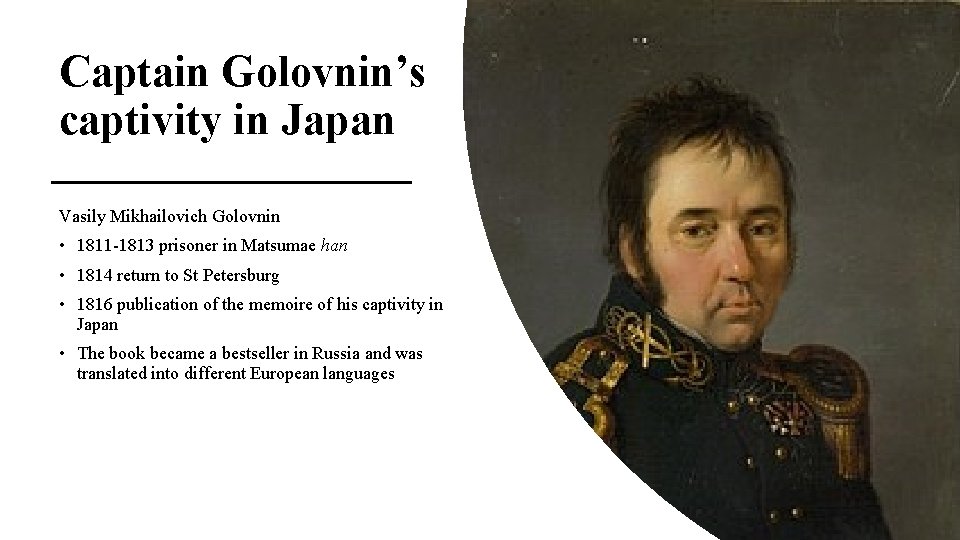
Captain Golovnin’s captivity in Japan Vasily Mikhailovich Golovnin • 1811 -1813 prisoner in Matsumae han • 1814 return to St Petersburg • 1816 publication of the memoire of his captivity in Japan • The book became a bestseller in Russia and was translated into different European languages
Crosscultural empathy: the general population “When we passed through villages, the inhabitants flocked from all sides to look at us: but to the honour of the Japanese it ought to be observed, that not one of them treated us with anything like derision or mockery; they all seemed to commiserate us, and some of the women even shed tears whilst they presented us with something to eat or drink. Such was the expression of feeling among a people whom enlightened Europe has regarded as barbarians”
Crosscultural empathy: The guards • A guard who “was extremely kind, and never quitted us without saying something consolatory, and even giving us a present. We afterwards learnt that his brother had been lost on board of a vessel some time ago. The idea he might, probably, be doomed to suffer a fate similar to ours, in some distant land, induced him to sympathize with us and pay particular attention to our wants” • Another guard who “presented the most striking example of humanity”
Crosscultural empathy • “We, indeed, through this treatment extremely severe; yet, it must nevertheless be acknowledged, that the Japanese laws respecting criminals are far more human those of most, I might perhaps say of all, European nations” • “to the honour of the Japanese, I must declare, that many of them treated us with great kindness, and did all they could to afford us consolation”
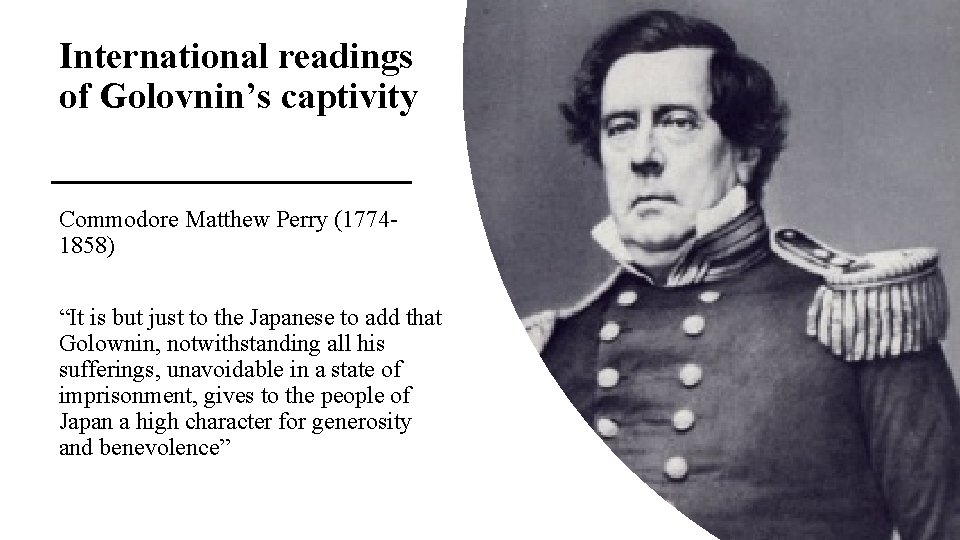
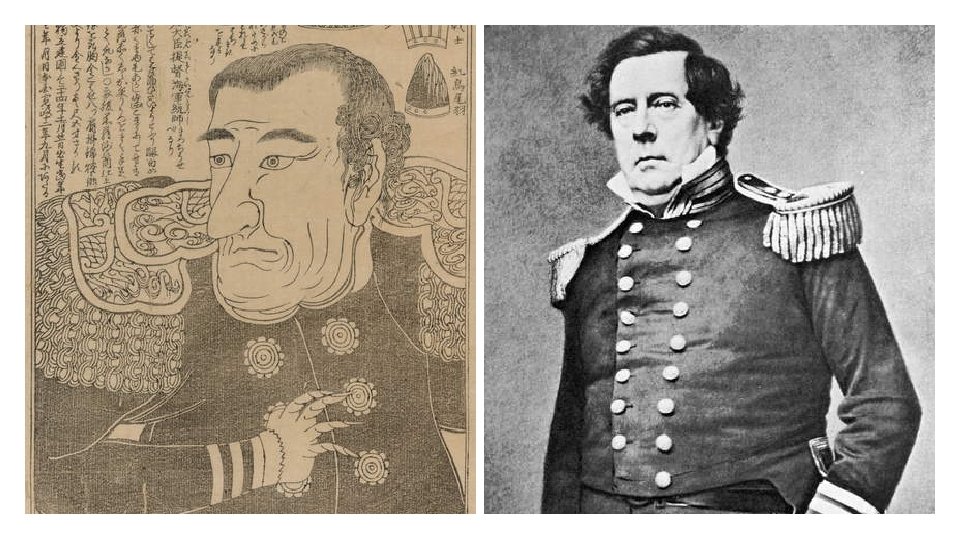
International readings of Golovnin’s captivity Commodore Matthew Perry (17741858) “It is but just to the Japanese to add that Golownin, notwithstanding all his sufferings, unavoidable in a state of imprisonment, gives to the people of Japan a high character for generosity and benevolence”
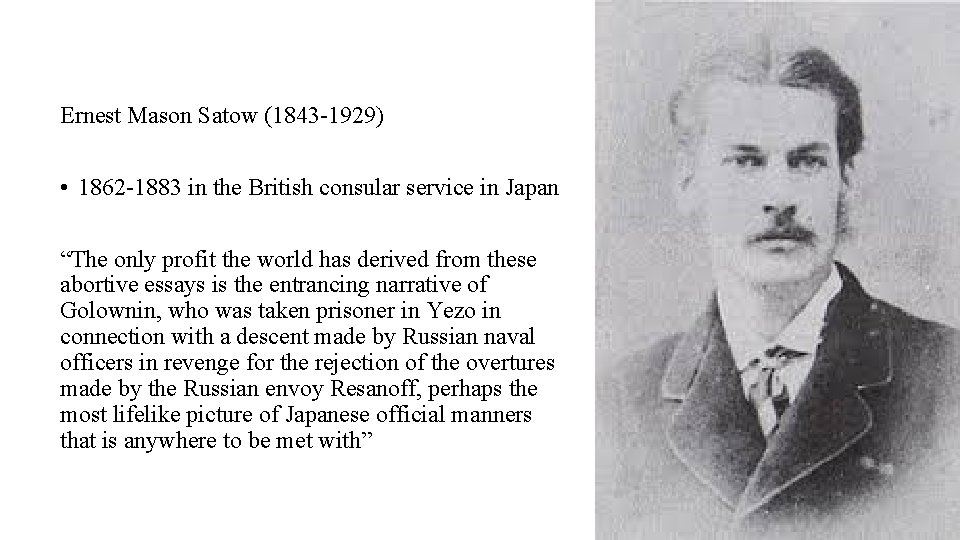
Ernest Mason Satow (1843 -1929) • 1862 -1883 in the British consular service in Japan “The only profit the world has derived from these abortive essays is the entrancing narrative of Golownin, who was taken prisoner in Yezo in connection with a descent made by Russian naval officers in revenge for the rejection of the overtures made by the Russian envoy Resanoff, perhaps the most lifelike picture of Japanese official manners that is anywhere to be met with”
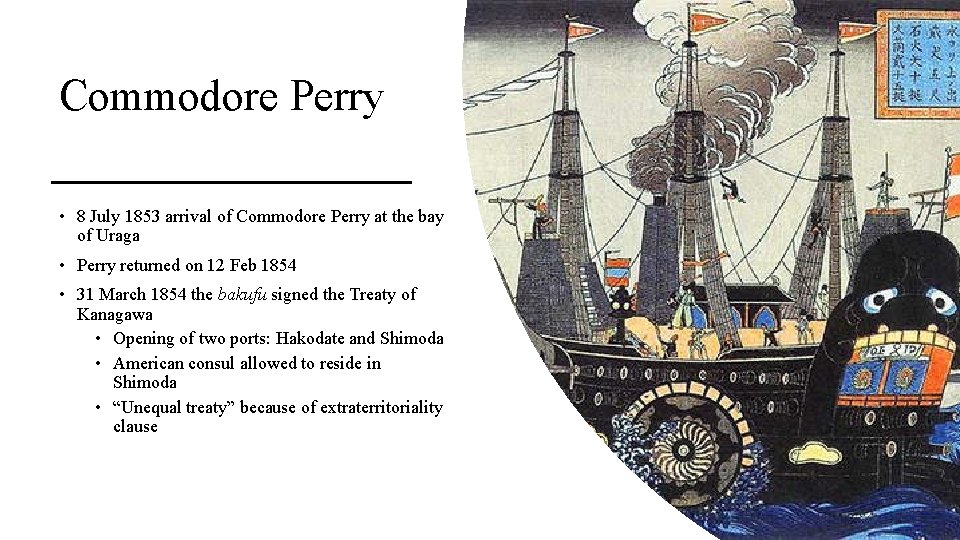
Commodore Perry • 8 July 1853 arrival of Commodore Perry at the bay of Uraga • Perry returned on 12 Feb 1854 • 31 March 1854 the bakufu signed the Treaty of Kanagawa • Opening of two ports: Hakodate and Shimoda • American consul allowed to reside in Shimoda • “Unequal treaty” because of extraterritoriality clause
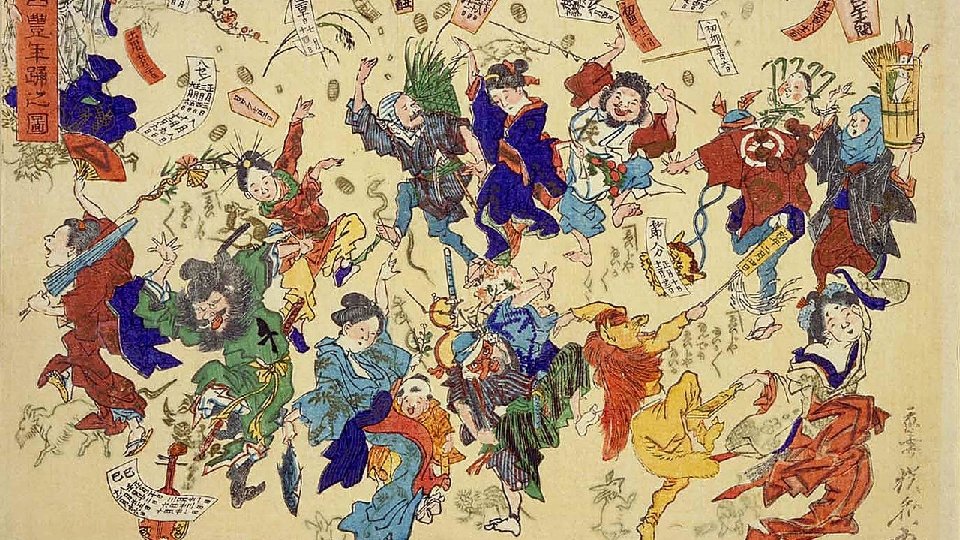
Intellectual and political opposition • Kokugaku and the idea of fukko 復古 (restoration of the political society before antiquity) • Mito School and the idea of chūkō 中興 (“regeneration” of politics and return to a perfect moral order) • Commoners’ opposition and the idea of yo naoshi 世直し(world renewal)
Kokugaku • Studied Japanese classics, such as Kojiki and Manyōshū to discern true character of “the Japanese” • Wanted to replace Buddhism and Confucianism with Shintoism • Criticised the bakufu for not revering the Emperor enough • Hirata Atsutane (1776 -1843) turned Kokugaku into a political movement that vehemently asked for the restoration of the Emperor combined with primacy of Shinto
• Named after Mito han, seat of one of the three principal Tokugawa families • “Sonnō jōi” 尊王攘夷, Mito School • shishi (radicale samurai) attacks on foreigners • 1863 bakufu had to adopt an antiforeign policy, yet British, French, US American and Dutch ships moved with superior weapons against shishi armies of Chōshū and Satsuma • 1865 Emperor reconfirmed the Treaty of Kanagawa
• Farmers looked for slavation in new religious movements such as • The Kurozumi Sect (1814) Commoners’ opposition • Founded by Kurozumi Munetada, promoting the healing power of sun godess Amaterasu • The Tenri Sect (1850 s) • Founded by Nakayama Miki who had healing powers and held religious services These sects promised paradise in this world, therefore the name yonaoshi 世直し (world renewal)
Ee janai ka
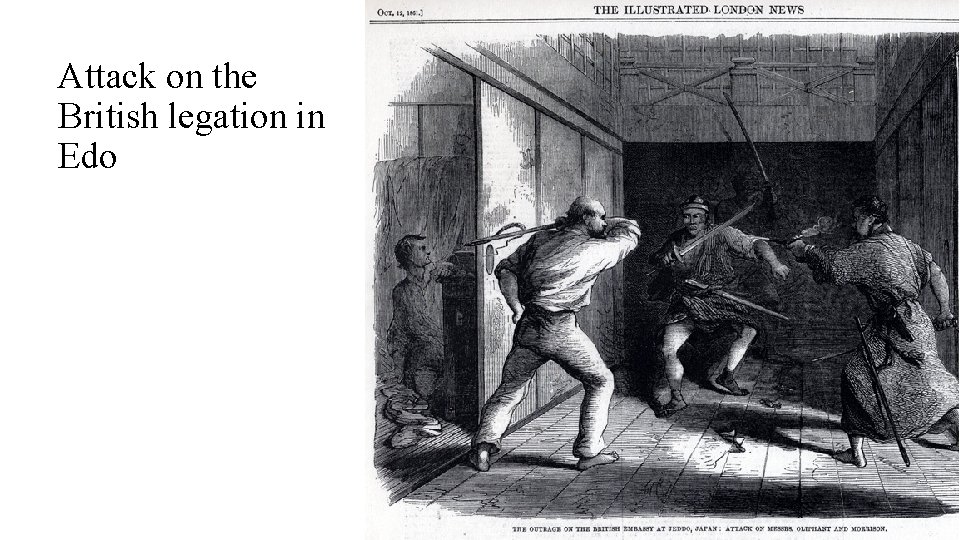
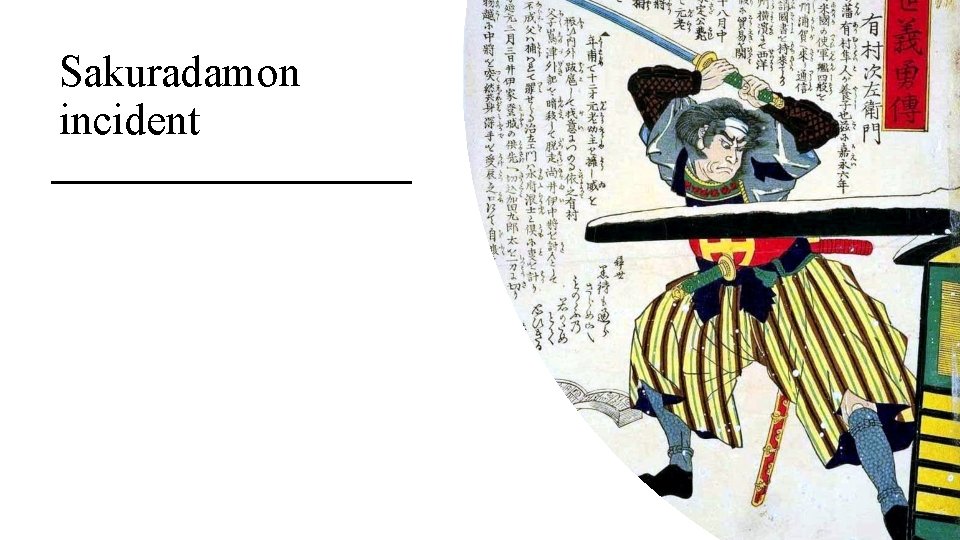
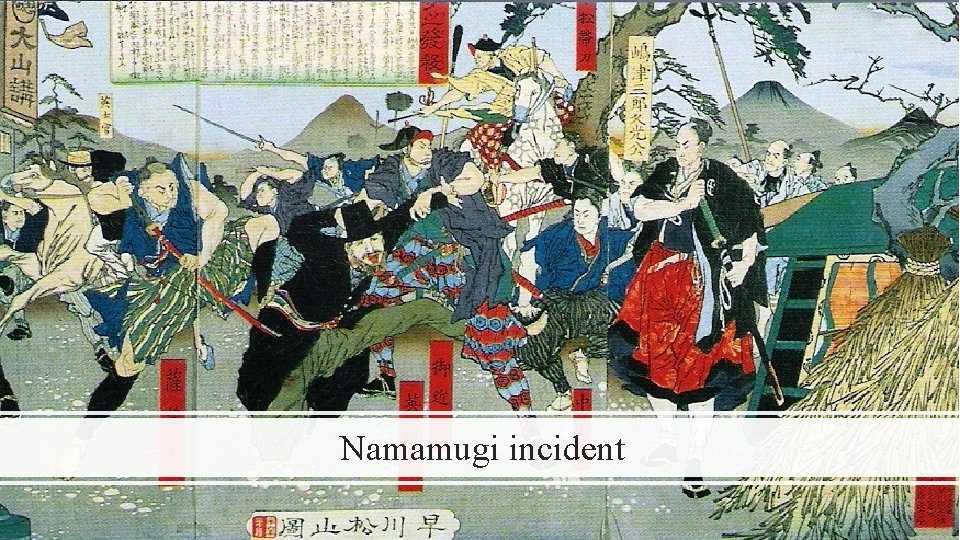
Anti-foreign violence • 1859, a Russian sailor was cut to pieces in the streets of Yokohama • Sakuradamon Incident of 1860: Assassination of Tairū Ii Naosuke • Attack on British legation 1861 • Namamugi incident (“Richardson Affair”) of 1862 : killing of Charles Lennox Richardson and wounding of three other Englishmen • Torching of US legation in 1863
Attack on the British legation in Edo
Sakuradamon incident
Namamugi incident
The end of the Tokugawa shogunate • Bakufu ready to cooperate with Emperor, but not to yield power to Satsuma and Chōshū • 1860 s kōbu gattai (Union of Court and bakufu) policy • 1862 the marriage of the 14 th shogun Iemochi with Princess Kazu • 3 rd January 1868 troops of the anti-bakufu coalition entered shogunal palace and solemnly declared the restoration of the Emperor and the abolishment of the office of Shogun • Tokugawa Yoshinobu retired and the Tokugawa reign of more than 250 years had come to an end • 1868 -1869 civil war between Tokugawa loyalists and Imperial forces (Boshin War)