
The Age of Revolution What is the difference

- Slides: 31
The Age of Revolution What is the difference between REBELLION and REVOLUTION?
Revolutions vs. Rebellion Revolution: rapid and sometimes violent change of the social and political order Rebellion : open, armed, and usually unsuccessful defiance of or resistance to an established government
Definitions & Synonyms government = state, political institutions, authorities, parliament, monarchs, sovereigns, etc. individuals = people = the public = the population, Third Estate, etc.
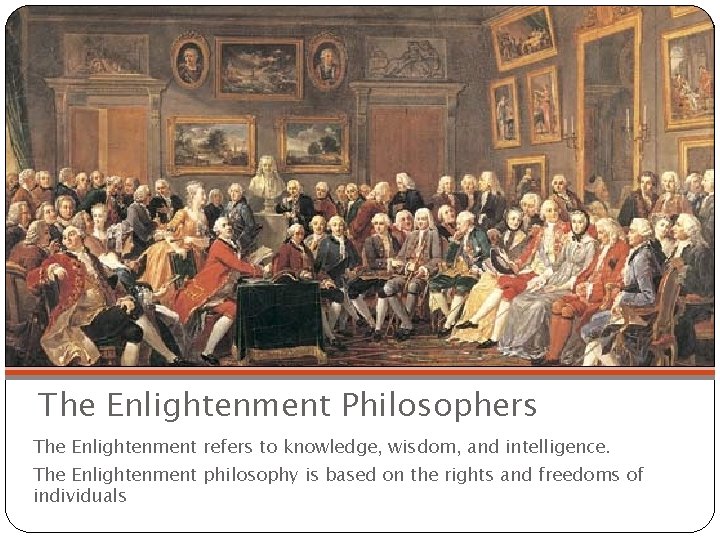
The Enlightenment Philosophers The Enlightenment refers to knowledge, wisdom, and intelligence. The Enlightenment philosophy is based on the rights and freedoms of individuals
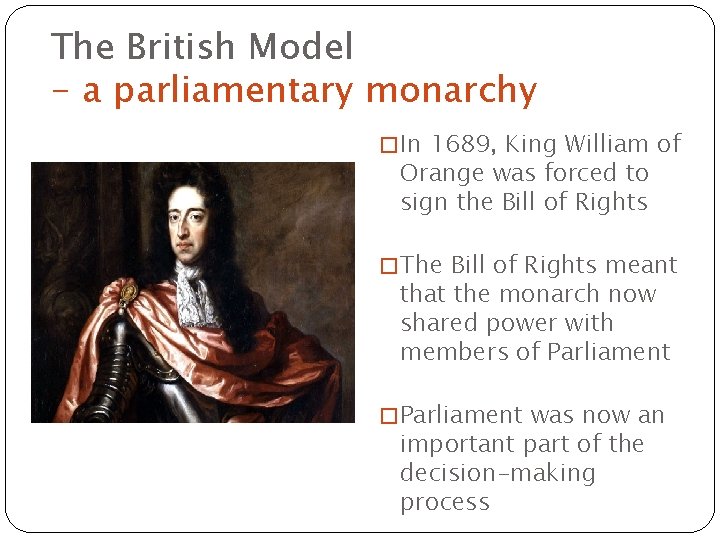
The British Model - a parliamentary monarchy � In 1689, King William of Orange was forced to sign the Bill of Rights � The Bill of Rights meant that the monarch now shared power with members of Parliament � Parliament was now an important part of the decision-making process
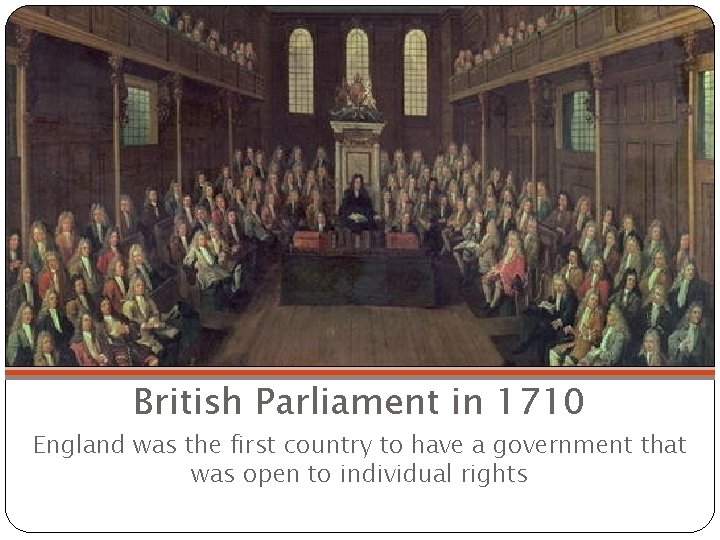
British Parliament in 1710 England was the first country to have a government that was open to individual rights
John Locke �Fundamental Rights �People are born free and equal �Their fundamental (natural) rights are the right to life, the right to freedom, and the right to own property �People should share power with the state and the state should respect their rights
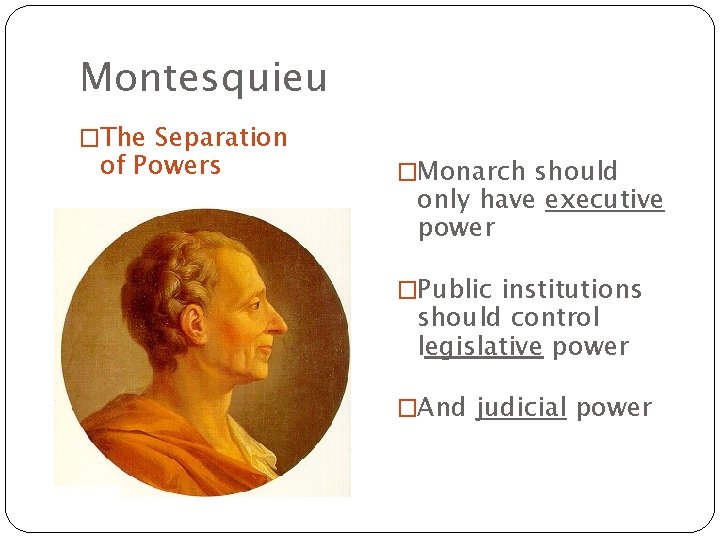
Montesquieu �The Separation of Powers �Monarch should only have executive power �Public institutions should control legislative power �And judicial power
The Powers (continued) �Executive power: Making sure the chosen laws are clear and followed. �Legislative power: group of people in parliament who make the laws and vote on which ones will be implemented (used) �Judicial power: making sure justice is served by use of the courts, police force, etc.
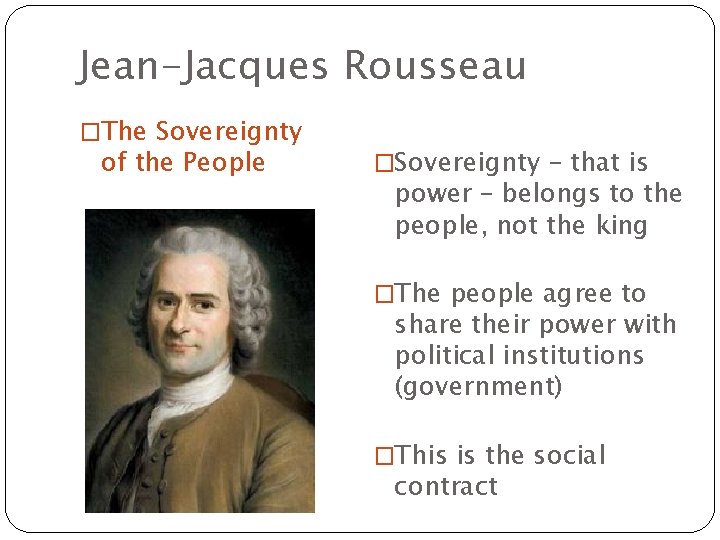
Jean-Jacques Rousseau �The Sovereignty of the People �Sovereignty – that is power – belongs to the people, not the king �The people agree to share their power with political institutions (government) �This is the social contract
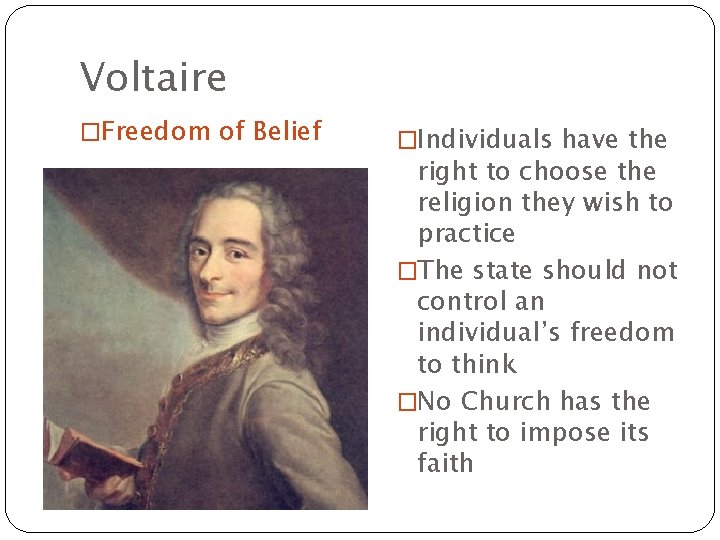
Voltaire �Freedom of Belief �Individuals have the right to choose the religion they wish to practice �The state should not control an individual’s freedom to think �No Church has the right to impose its faith
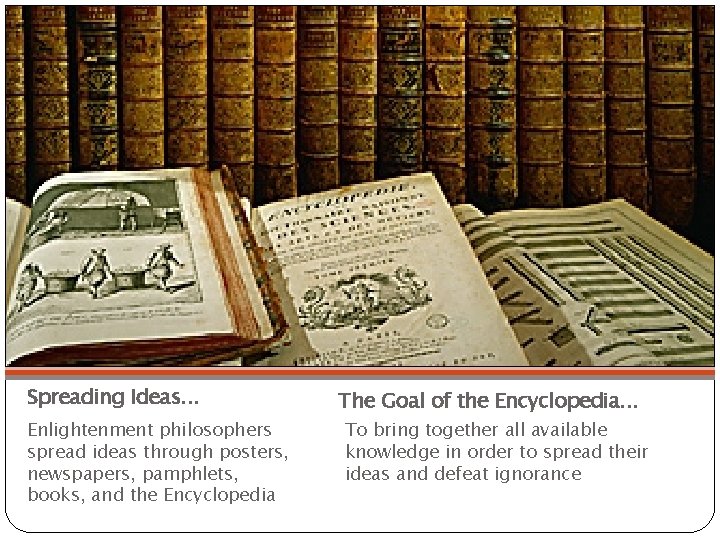
Spreading Ideas. . . Enlightenment philosophers spread ideas through posters, newspapers, pamphlets, books, and the Encyclopedia The Goal of the Encyclopedia. . . To bring together all available knowledge in order to spread their ideas and defeat ignorance
Consequences For the Sovereigns • They affirmed their power with reforms that satisfied the people • They tried to implement some reforms based on Enlightenment ideas such as religious tolerance, making education accessible to all, modernizing the courts and the government
Consequences For the People • They supported the political and social ideas of the philosophers • They became aware of their rights • They started to challenge authorities and power structures • Their demands would soon lead to the American and French Revolutions
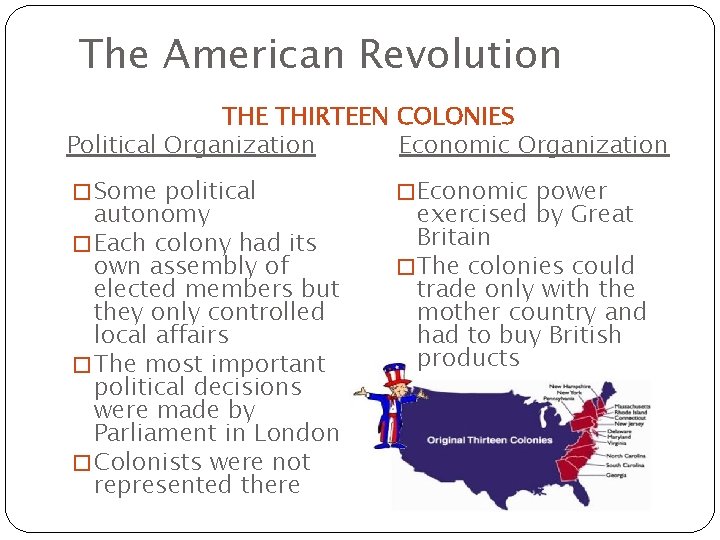
The American Revolution THE THIRTEEN COLONIES Political Organization Economic Organization � Some political autonomy � Each colony had its own assembly of elected members but they only controlled local affairs � The most important political decisions were made by Parliament in London � Colonists were not represented there � Economic power exercised by Great Britain � The colonies could trade only with the mother country and had to buy British products
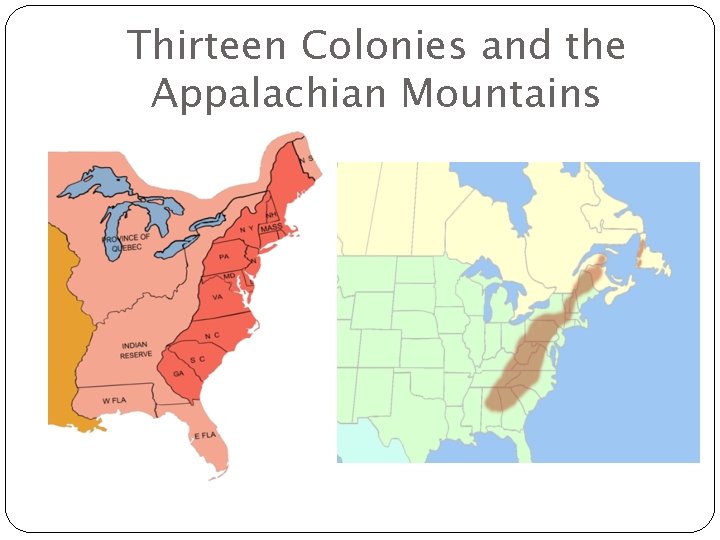
Great Britain’s Demands • Taxes were imposed on colonists so that Britain could pay off its war debt • Colonists were not allowed to settle west of the Appalachian Mountains because Great Britain had set this territory aside for Natives • Great Britain increased its presence in the colonies to make sure people respected its decisions
Thirteen Colonies and the Appalachian Mountains
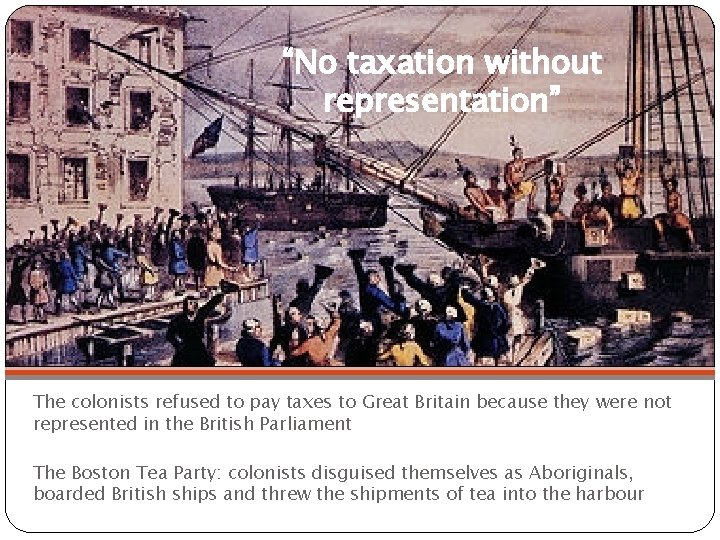
“No taxation without representation” The colonists refused to pay taxes to Great Britain because they were not represented in the British Parliament The Boston Tea Party: colonists disguised themselves as Aboriginals, boarded British ships and threw the shipments of tea into the harbour
Declaration of Independence • Americans were no longer colonists • They became citizens of a free state that opposed all foreign authority • Great Britain rejected the document • This led to the outbreak of the American Revolution and creation of the United States of America
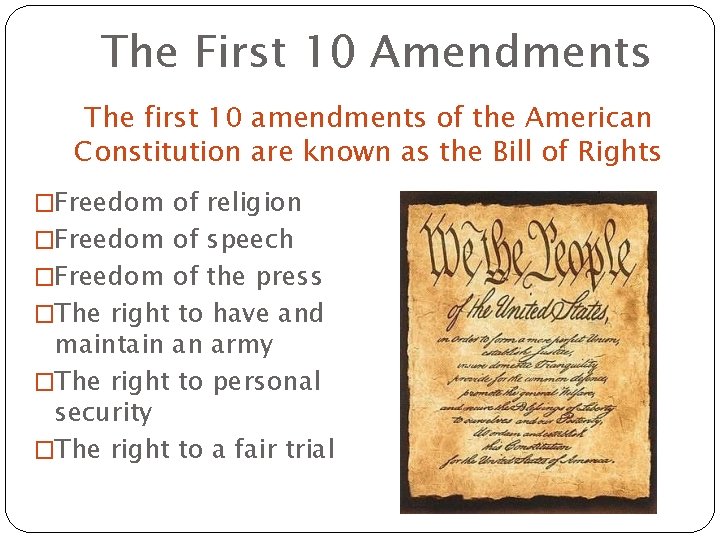
The First 10 Amendments The first 10 amendments of the American Constitution are known as the Bill of Rights �Freedom of religion �Freedom of speech �Freedom of the press �The right to have and maintain an army �The right to personal security �The right to a fair trial
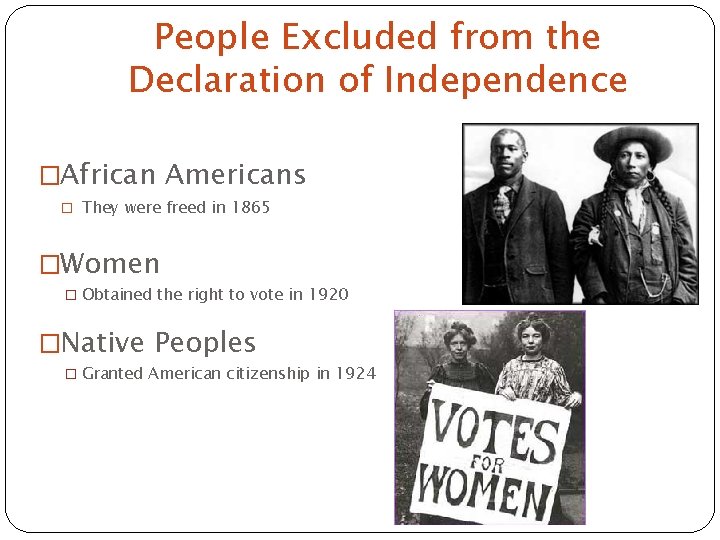
People Excluded from the Declaration of Independence �African Americans � They were freed in 1865 �Women � Obtained the right to vote in 1920 �Native Peoples � Granted American citizenship in 1924
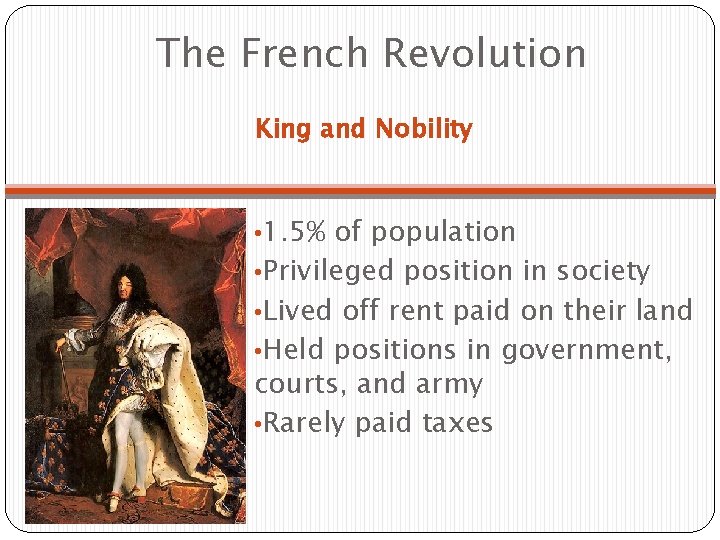
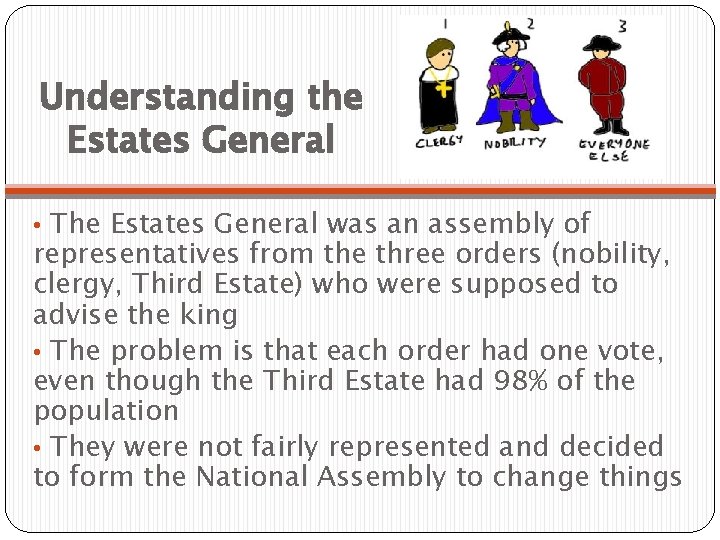
The French Revolution King and Nobility • 1. 5% of population • Privileged position in society • Lived off rent paid on their land • Held positions in government, courts, and army • Rarely paid taxes
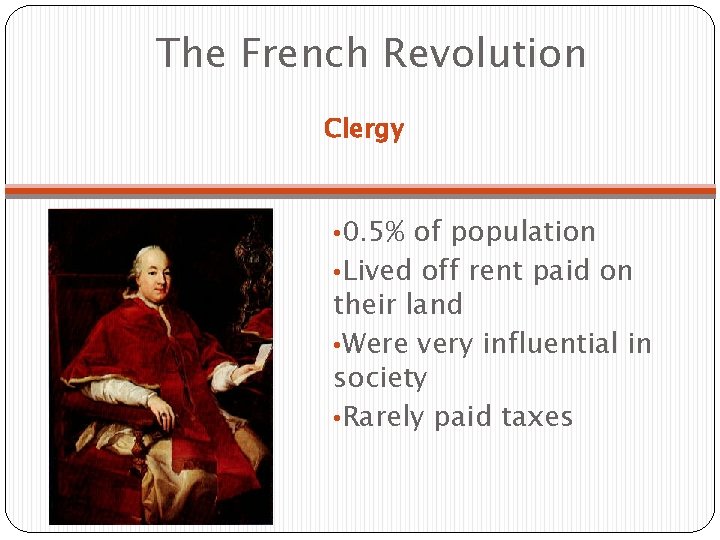
The French Revolution Clergy • 0. 5% of population • Lived off rent paid on their land • Were very influential in society • Rarely paid taxes
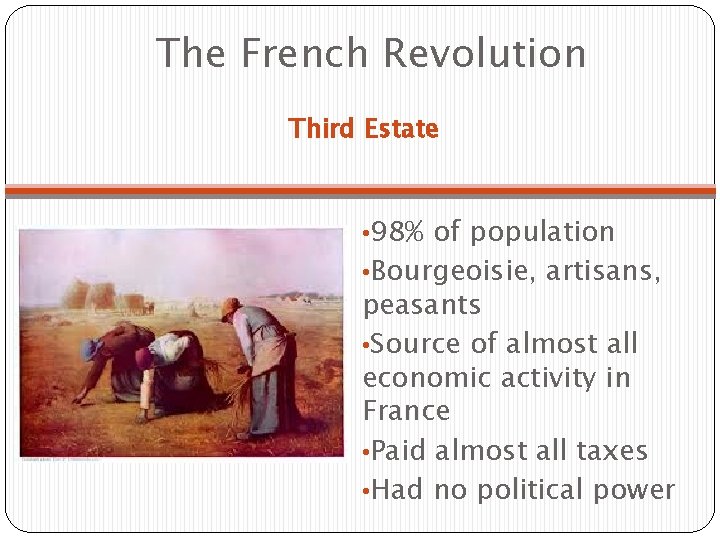
The French Revolution Third Estate • 98% of population • Bourgeoisie, artisans, peasants • Source of almost all economic activity in France • Paid almost all taxes • Had no political power
Meeting of the Estates General 1789 • In 1789, King Louis XVI wanted a solution to the economic crisis • France helped the U. S. gain its independence only a few years before and money was low • He wanted the nobility and clergy to contribute financially • The taxes paid by the Third Estate was no longer enough
Understanding the Estates General • The Estates General was an assembly of representatives from the three orders (nobility, clergy, Third Estate) who were supposed to advise the king • The problem is that each order had one vote, even though the Third Estate had 98% of the population • They were not fairly represented and decided to form the National Assembly to change things
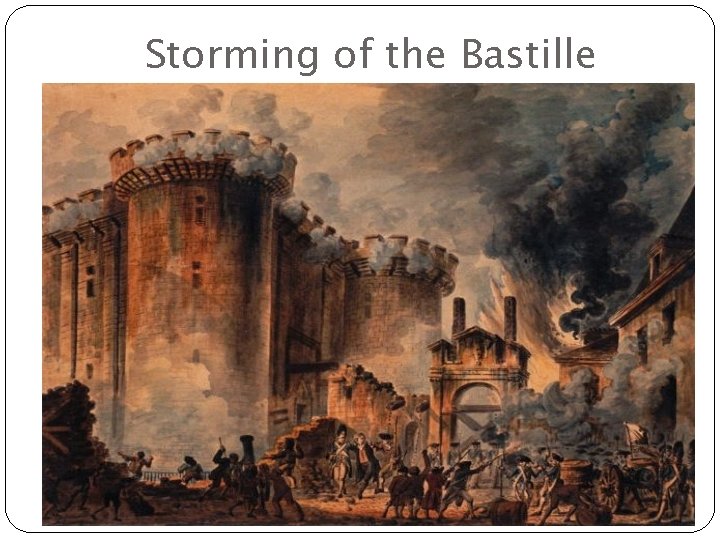
Storming of the Bastille
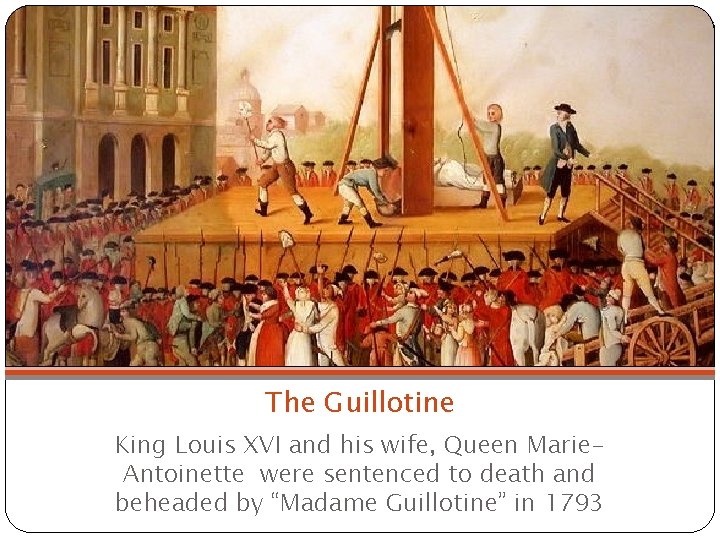
The Guillotine King Louis XVI and his wife, Queen Marie. Antoinette were sentenced to death and beheaded by “Madame Guillotine” in 1793
Declaration of the Rights of Man and the Citizen �Freedom and equality between men and before the law �The right to form political associations to protect the rights of man: the right to liberty, property, security, and resistance to oppression �The presumption of innocence �The right to freedom of speech and religion �The right to freely communicate ideas and opinions �The right to own property
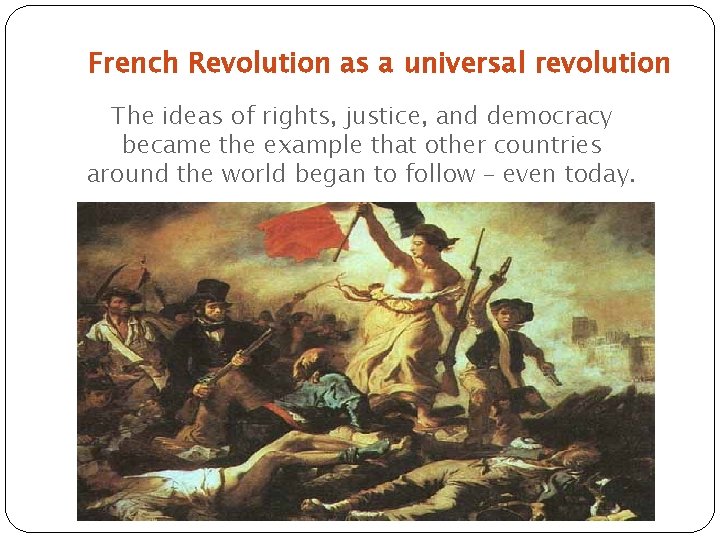
French Revolution as a universal revolution The ideas of rights, justice, and democracy became the example that other countries around the world began to follow – even today.
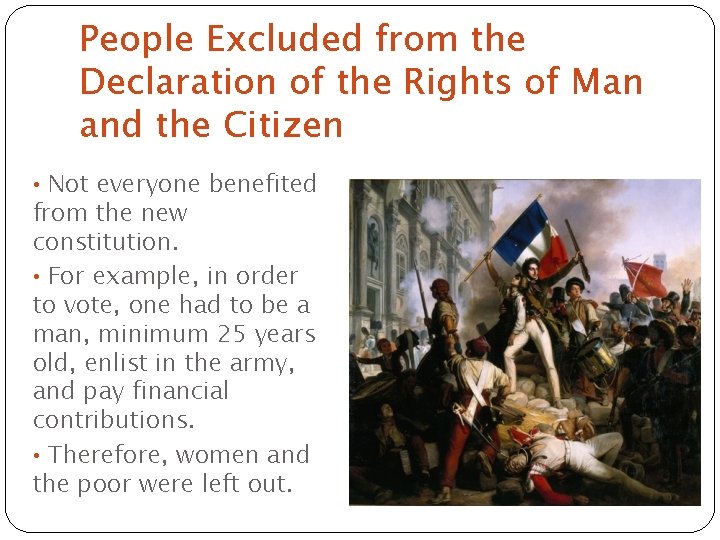
People Excluded from the Declaration of the Rights of Man and the Citizen • Not everyone benefited from the new constitution. • For example, in order to vote, one had to be a man, minimum 25 years old, enlist in the army, and pay financial contributions. • Therefore, women and the poor were left out.