
The Age of Jackson Election of 1824 Andrew

- Slides: 23
The Age of Jackson
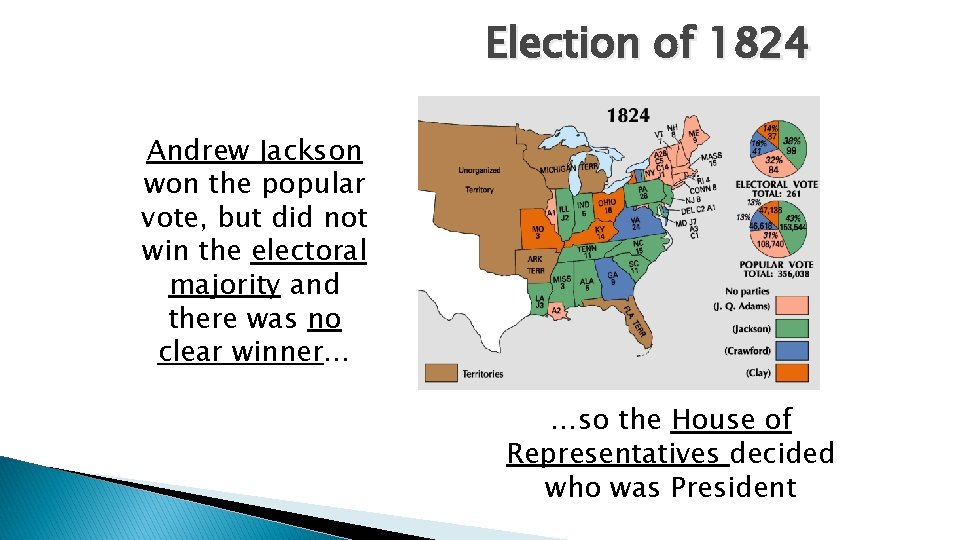
Election of 1824 Andrew Jackson won the popular vote, but did not win the electoral majority and there was no clear winner… …so the House of Representatives decided who was President
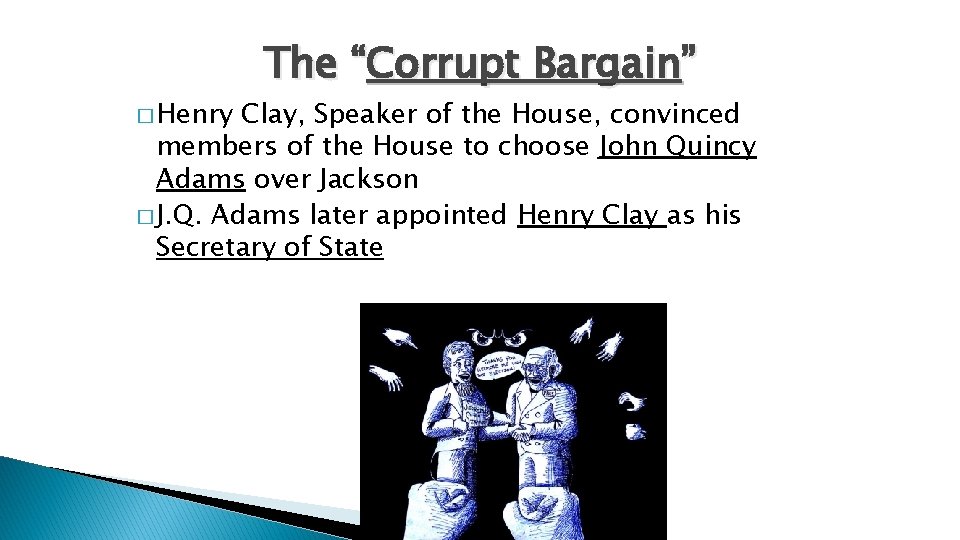
� Henry The “Corrupt Bargain” Clay, Speaker of the House, convinced members of the House to choose John Quincy Adams over Jackson � J. Q. Adams later appointed Henry Clay as his Secretary of State
Two Parties Emerge… Again �Democrats ◦ Supporters: �“Jacksonians”- supporters of Jackson �Lower class- “common man” �The Whig Party ◦ Supporters: �Industry/Big Business �Upper class
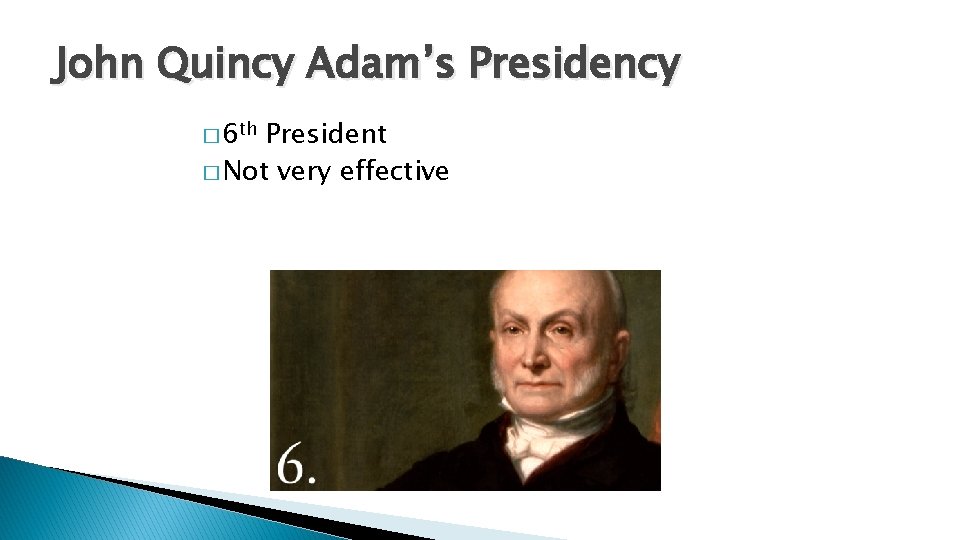
John Quincy Adam’s Presidency � 6 th President � Not very effective
Expansion of the Vote: The White Man’s Democracy � States eased voting requirements making it easier for people to vote and allowing more people to vote by getting rid of property requirements ◦ 1824 - 350, 000 people voted ◦ 1828 - 1, 000+ people voted ◦ Women and African Americans still unable to vote
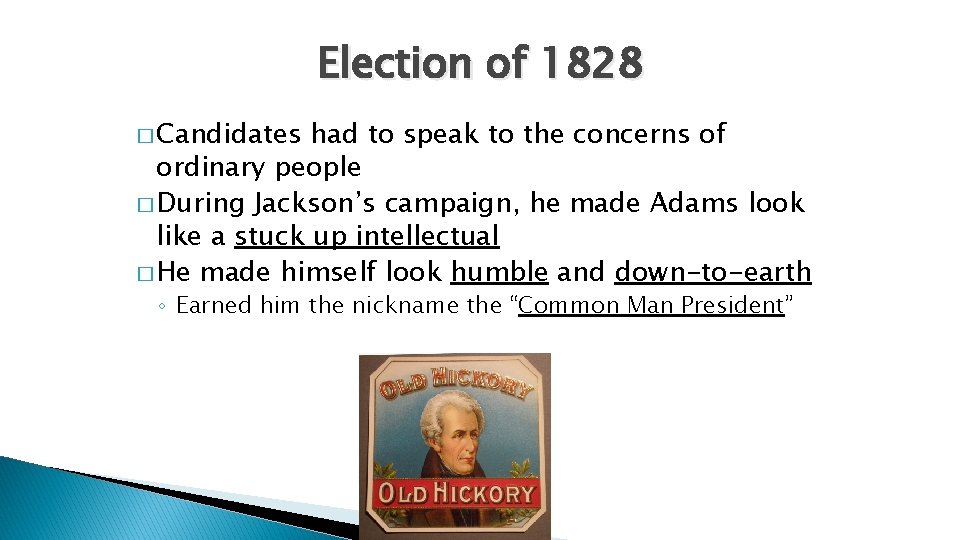
Election of 1828 � Candidates had to speak to the concerns of ordinary people � During Jackson’s campaign, he made Adams look like a stuck up intellectual � He made himself look humble and down-to-earth ◦ Earned him the nickname the “Common Man President”
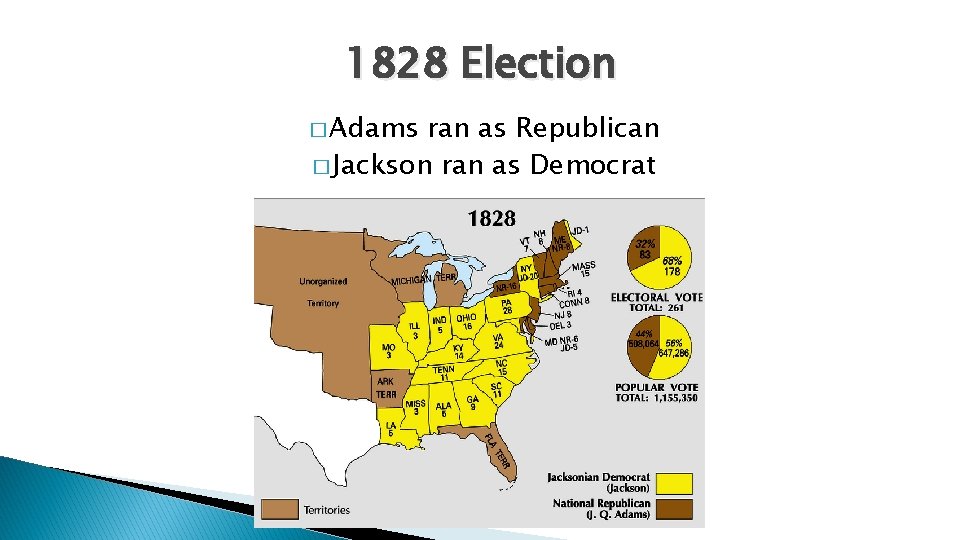
1828 Election � Adams ran as Republican � Jackson ran as Democrat
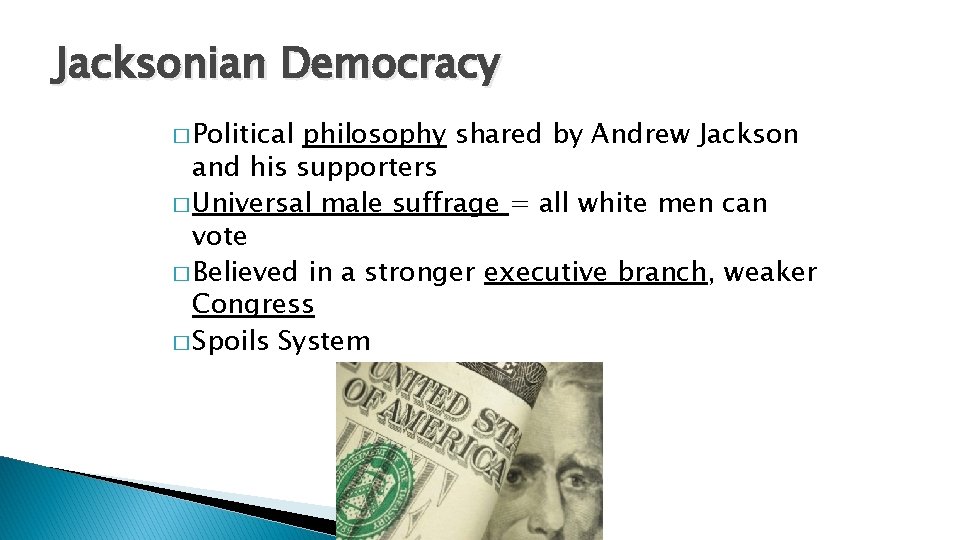
Jacksonian Democracy � Political philosophy shared by Andrew Jackson and his supporters � Universal male suffrage = all white men can vote � Believed in a stronger executive branch, weaker Congress � Spoils System
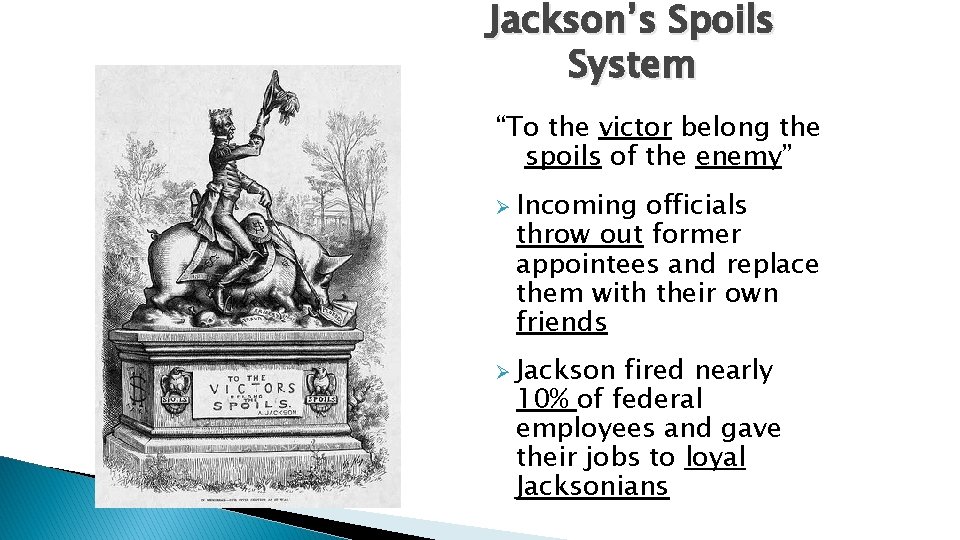
Jackson’s Spoils System “To the victor belong the spoils of the enemy” Ø Incoming officials throw out former appointees and replace them with their own friends Ø Jackson fired nearly 10% of federal employees and gave their jobs to loyal Jacksonians
Native American Relations � The Cherokee, Choctaw, Seminole, Creek, and Chickasaw tribes had begun to accept and adopt white culture ◦ Were referred to as the “five civilized tribes” � However, they lived in large areas of Georgia, North and South Carolina, Alabama, and Mississippi
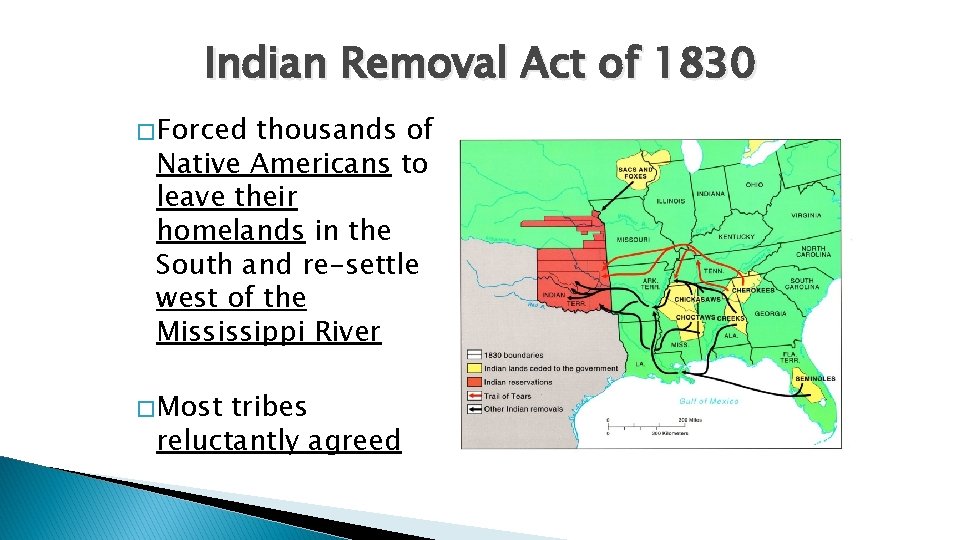
Indian Removal Act of 1830 � Forced thousands of Native Americans to leave their homelands in the South and re-settle west of the Mississippi River � Most tribes reluctantly agreed
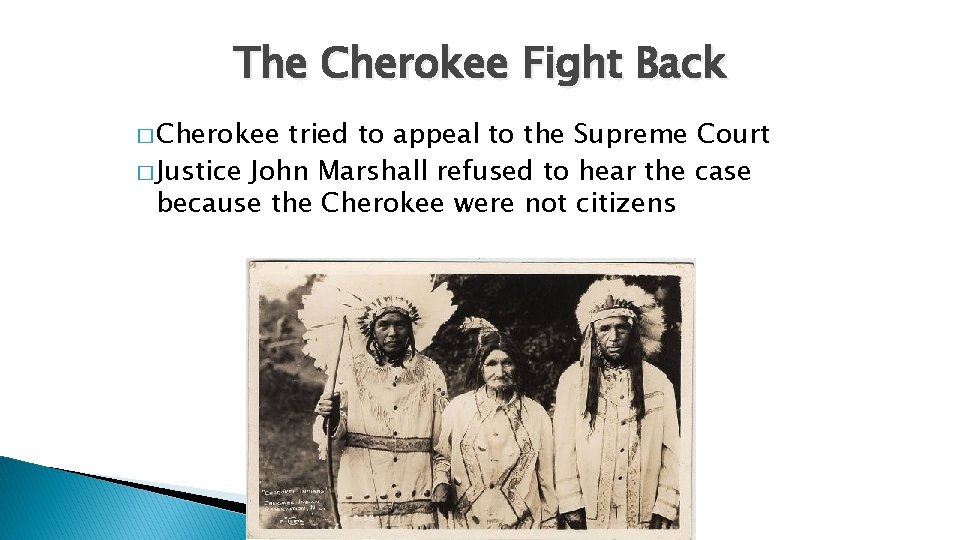
The Cherokee Fight Back � Cherokee tried to appeal to the Supreme Court � Justice John Marshall refused to hear the case because the Cherokee were not citizens
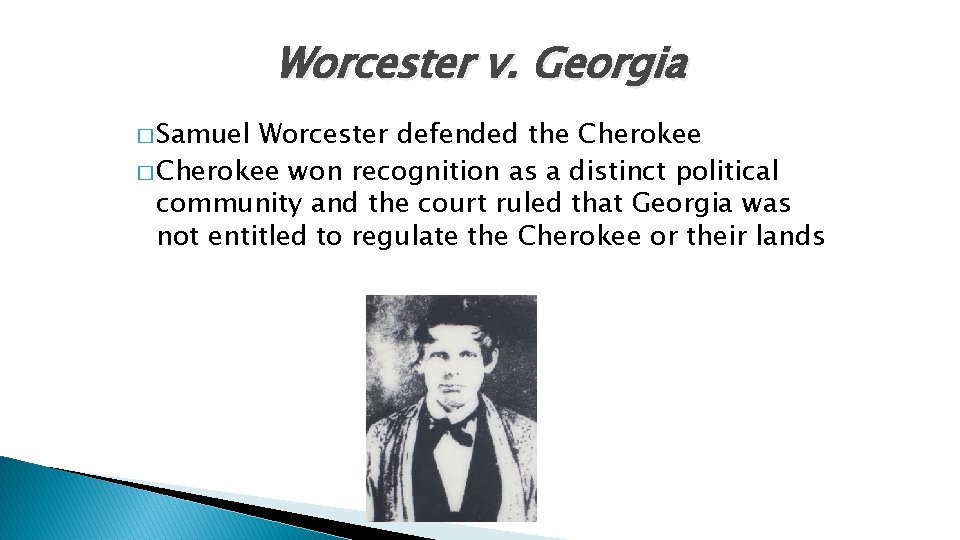
Worcester v. Georgia � Samuel Worcester defended the Cherokee � Cherokee won recognition as a distinct political community and the court ruled that Georgia was not entitled to regulate the Cherokee or their lands
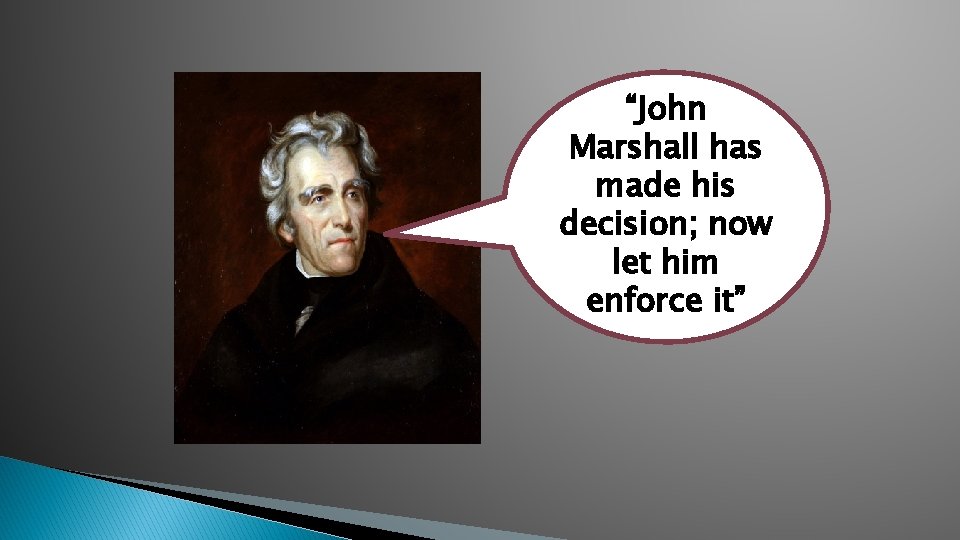
“John Marshall has made his decision; now let him enforce it”
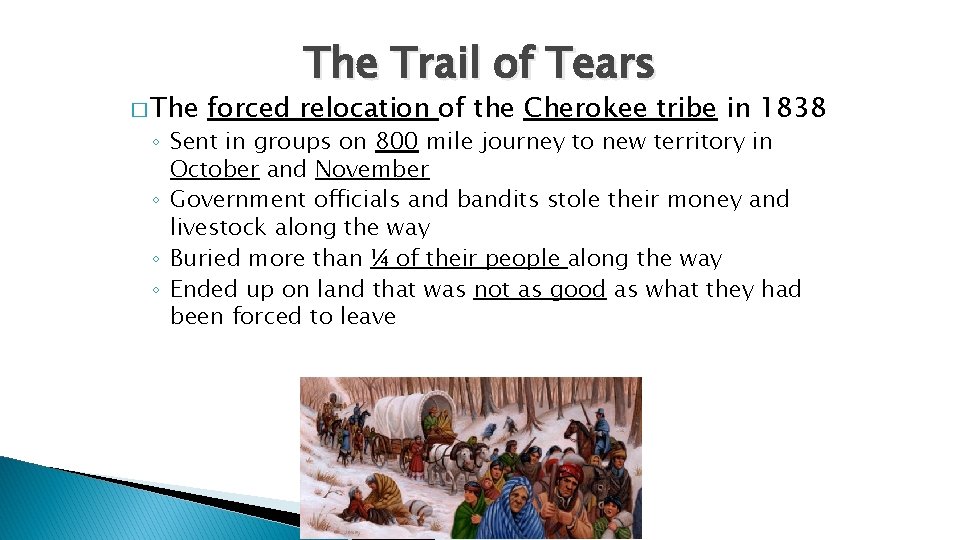
� The Trail of Tears forced relocation of the Cherokee tribe in 1838 ◦ Sent in groups on 800 mile journey to new territory in October and November ◦ Government officials and bandits stole their money and livestock along the way ◦ Buried more than ¼ of their people along the way ◦ Ended up on land that was not as good as what they had been forced to leave
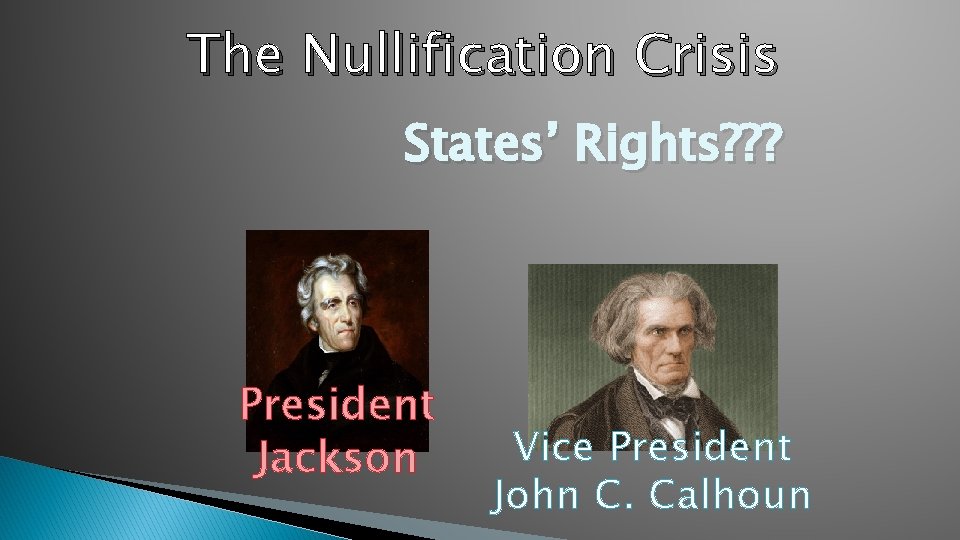
The Nullification Crisis States’ Rights? ? ? President Jackson Vice President John C. Calhoun
Tariffs Cause Problems � Tariff of 1816, that southern states had agreed to, had increased in 1824 and 1828 � From the point of view of the South, the North was getting rich at their expense � South Carolina was especially hard hit by effects of the tariff increases Federal tariffs raised prices for Southerners and made the North rich so tensions increased between the two regions.
The Nullification Theory �The Vice President, John C. Calhoun, who was from S. C. argued that states should have the right to nullify a federal law they felt was unconstitutional ◦ If the federal government refused to allow a state to nullify a federal law, that state should have the right to withdraw from the Union Calhoun ended up resigning as VP
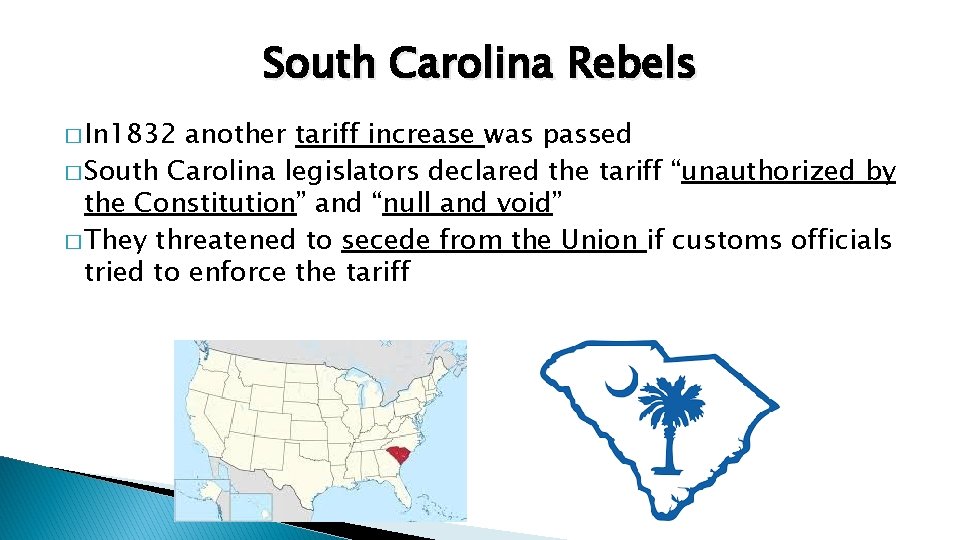
South Carolina Rebels � In 1832 another tariff increase was passed � South Carolina legislators declared the tariff “unauthorized by the Constitution” and “null and void” � They threatened to secede from the Union if customs officials tried to enforce the tariff
Jackson Attempts to Shut South Carolina Down � Declared S. C. ’s actions treasonous � Persuaded Congress to pass the Force Bill in 1833 ◦ Allowed the Federal government to use the Army and Navy against S. C. if state authorities did not allow customs officials to collect the tariffs
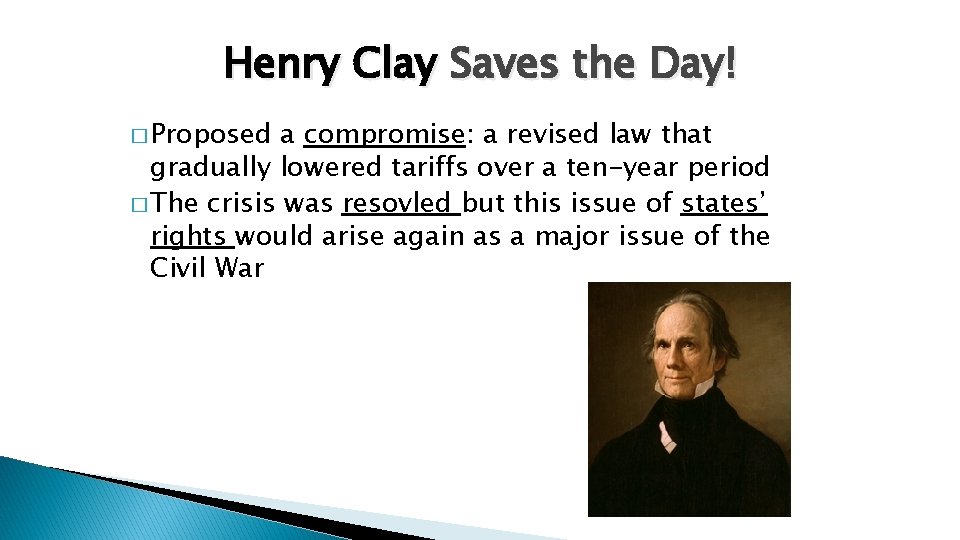
Henry Clay Saves the Day! � Proposed a compromise: a revised law that gradually lowered tariffs over a ten-year period � The crisis was resovled but this issue of states’ rights would arise again as a major issue of the Civil War
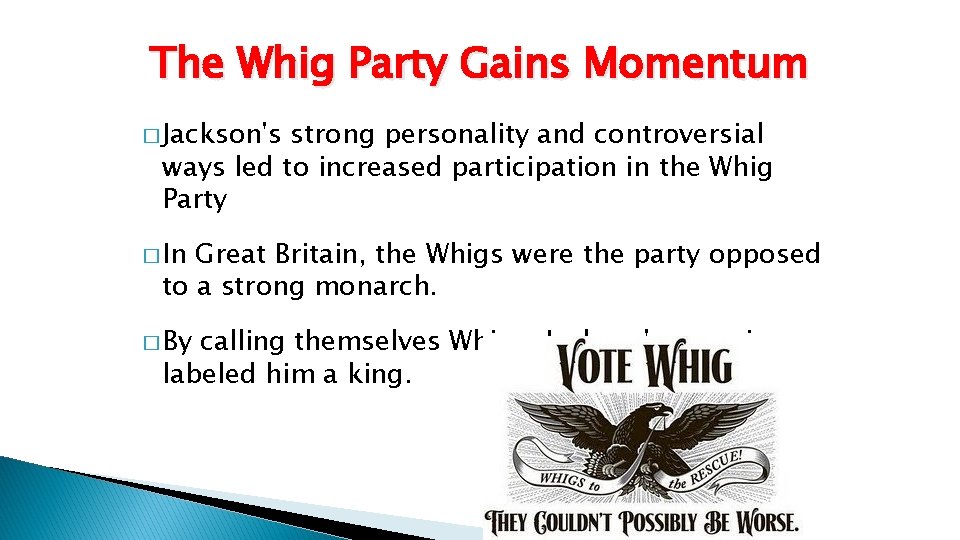
The Whig Party Gains Momentum � Jackson's strong personality and controversial ways led to increased participation in the Whig Party � In Great Britain, the Whigs were the party opposed to a strong monarch. � By calling themselves Whigs, Jackson's enemies labeled him a king.