
The Age of Imperialism 1750 1900 Background Imperialism
The Age of Imperialism 1750 -1900
Background Imperialism had existed since 1492. – Age of Exploration The New World, colonies in South Asia, coasts of China & Africa – Little European influence on lives in these areas European nations developed strong nations, militaries, and economies, thanks in part to industrialization.
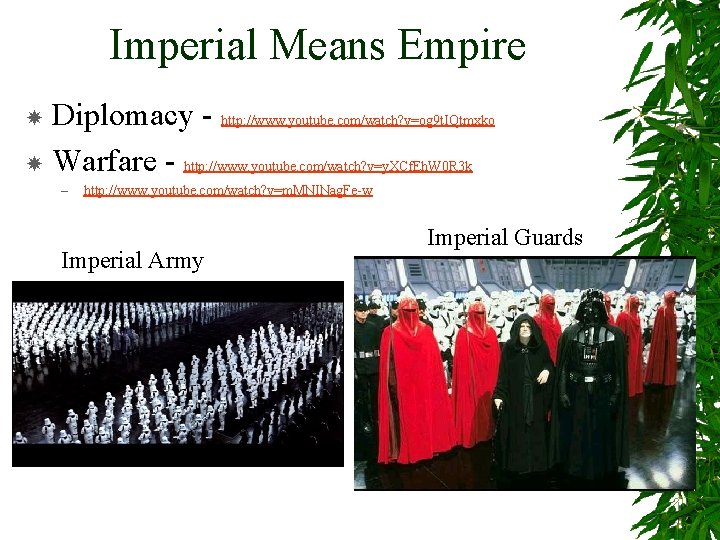
Imperial Means Empire Diplomacy - http: //www. youtube. com/watch? v=og 9 t. IQtmxko Warfare - http: //www. youtube. com/watch? v=y. XCf. Eh. W 0 R 3 k – http: //www. youtube. com/watch? v=m. MNINag. Fe-w Imperial Army Imperial Guards
“New Imperialism” a path of aggressive expansion due to Europe’s new economic and military strength due to it’s rapid industrialization – the need for natural resources (rubber, oil, manganese, palm oil) – the need for new markets to sell goods
Why take over other regions? Needed natural resources – Rubber, petroleum, manganese, palm oil Hoped for new markets Halt expansion of some countries Prestige in the world Help their “little brothers” – “Like children, they needed help & guidance” – Spread the blessings of the Western civilization Medicine, law, & the Christian religion
STOP and THINK!!! “The necessity that is upon us [is] to provide for our ever-growing population – either by opening new fields for emigration, or by providing work and employment …and to stimulate trade by finding new markets. ” Lord Lugard, The Rise of Our East African Empire Write this quote in your notes…Let’s analyze.
Political & Military Interests merchant and naval ships needed bases to re-supply – lands was taken to build these bases around the world Nationalism – rival nations like GB and Germany seized land to stop France’s expansion colonies were needed for national security ruling an empire increase global prestige (Hey, look how great we are!”)
Humanitarian Goals concern for “little brothers” – “Like children, they needed our help and guidance. ” duty to spread the “blessings” of western civilization belief of: – missionaries spread the Christian faith to the heathens – doctors my medicine is better than yours – colonial officials
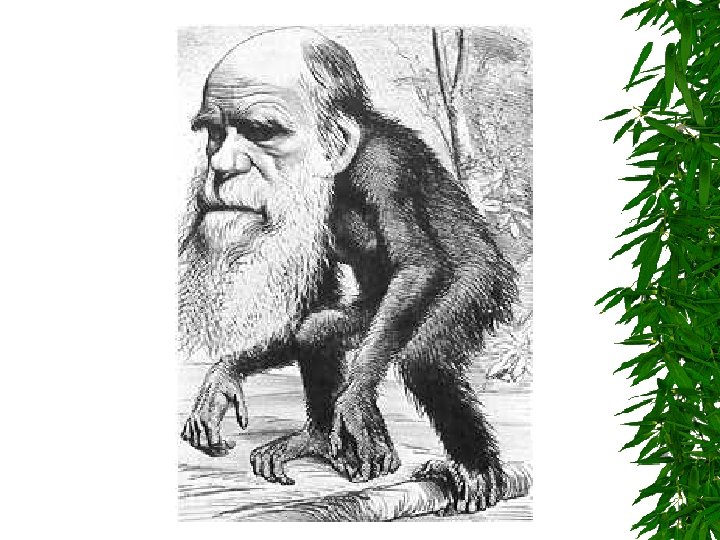
Social Darwinism (see p. 561) idea taken from Charles Darwin’s Origin of Species (1859) social theory of the time based on evolution & natural selection – “survival of the fittest” applied to social change – superiority = wealth & success – led to feelings of racial superiority among westerners non-Europeans – lower on scale cultural & physical development – did not have European technology – imperial conquest & destruction of weaker races natural “Nature’s way of improving the human race”
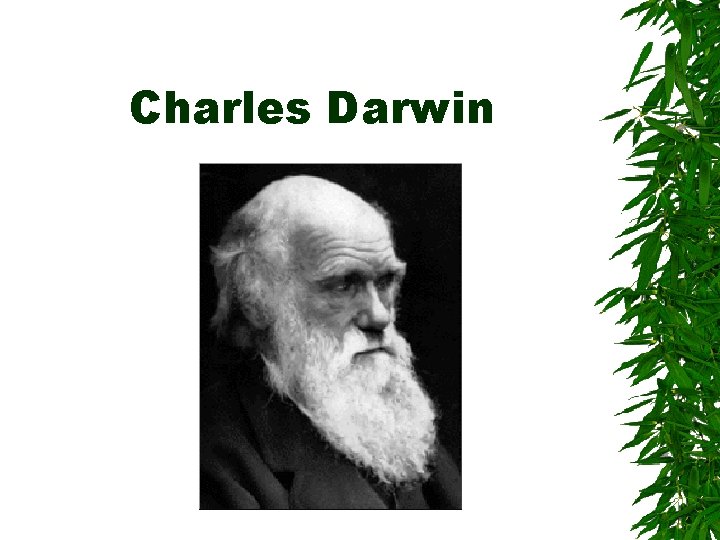
Charles Darwin
Weaknesses of Land-Based Empires decline of older civilizations – Ottoman Empire, Mughal India, Qing China internal wars & slave trade undermined established nations newer states couldn’t resist western imperialism
Western Advantages stronger economies well-organized government powerful armies & navies – superior weapons vs. outdated weapons – Maxim gun (1889) – 1 st automatic machine gun railroads & steamships – interior travel upstream – communications cure for malaria – disease caused by mosquitoes – invention of quinine as an anti-malarial
Let’s Begin With…
Africa Before Imperialism North Africa – under rule of declining Ottoman Empire West Africa – Islamic reform movement lead by Usman dan Fodio – jihad – to purify Islam – Asante kingdom traded with Europeans & Muslims East Africa – Mombasa & Kilwa traded goods (ivory, copper, slaves) for cloth and guns from India
Africa Before Imperialism Southern Africa – – in turmoil Shaka united Zulu tribes conquests set off migrations & wars (chaos) 1830 s: battled Boers for control The Slave Trade – early 1800 s, Europeans were outlawing transatlantic slave trade – eastern slave trade in M. E. & Asia still going strong – 1787: Sierra Leone (British) & Liberia (U. S. )set up as colonies former slaves – 1847: Liberia gains independence
Previous European Contact 1810 = only 10% land explored geography – coastal areas only (no interior exploration) – lack of navigable rivers – rapids & cataracts trade – lack of European control Steam ships and medicine change this!
Africa (in general) before Imperialism Divided into ethnic/ linguistic groups 1, 000 different languages Empires independent villages Rugged & diverse geography Trade networks
Interest in Africa Grows… Explorers – Mungo Park & Richard Burton – trade & profit Missionaries – David Livingstone – religious conversions – children in need of guidance Humanitarians – opposed slave trade Reporters/ Authors – Henry Stanley – search for adventure, mystery, excitement
STOP and THINK!!! “If it be friendship that you desire, then I am ready for it…but to be your subject, that I cannot be…I do not fall at your feet, for you are God’s creature just as I am. ” Chief Machemba, Letter in Swahili to German officer Herman von Wissman Write this quote in your notes. We’ll analyze the quote in class together.
Belgium’s in the Congo 1882 Claimed Congo River Valley – King Leopold II of Belgium – Motive? To free the slaves of course… – “A civilizing mission to carry the light ‘that for millions of men still plunged in barbarism will be the dawn of a better era. ” (King Leopold II) – Privately dreamed of conquest and profit (duh!) Other European nations see potential…
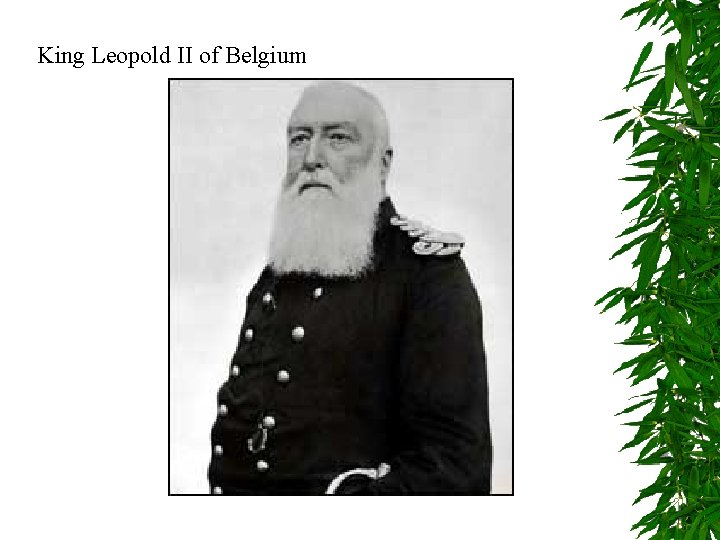
King Leopold II of Belgium
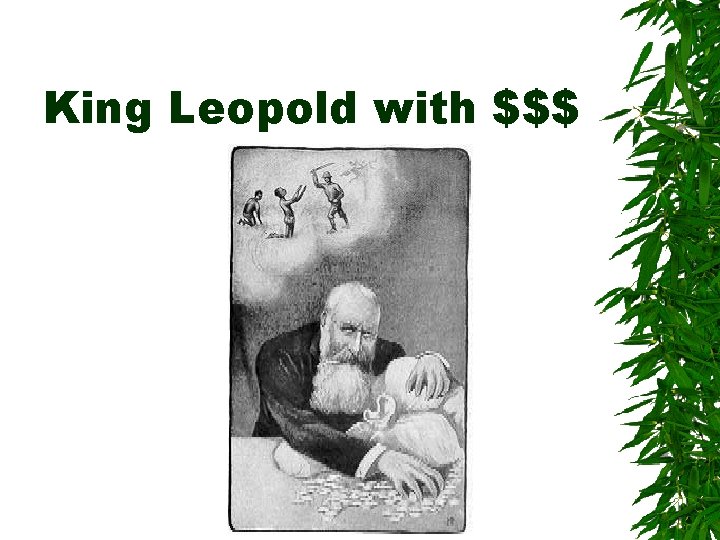
King Leopold with $$$
Leading to…
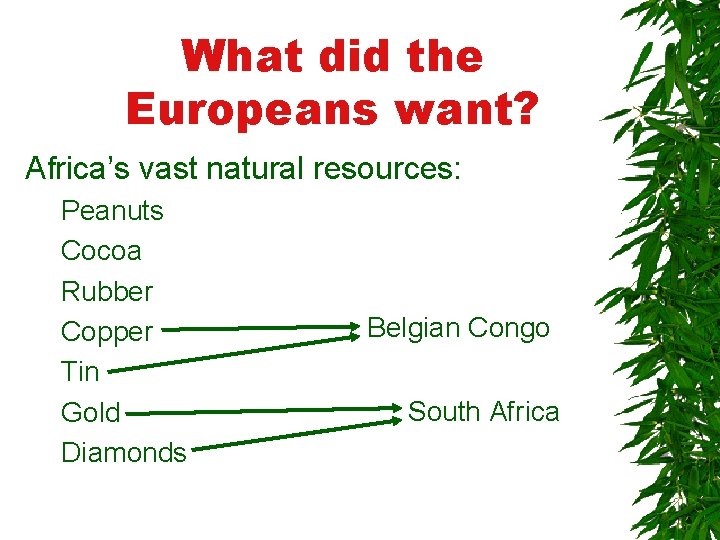
What did the Europeans want? Africa’s vast natural resources: Peanuts Cocoa Rubber Copper Tin Gold Diamonds Belgian Congo South Africa
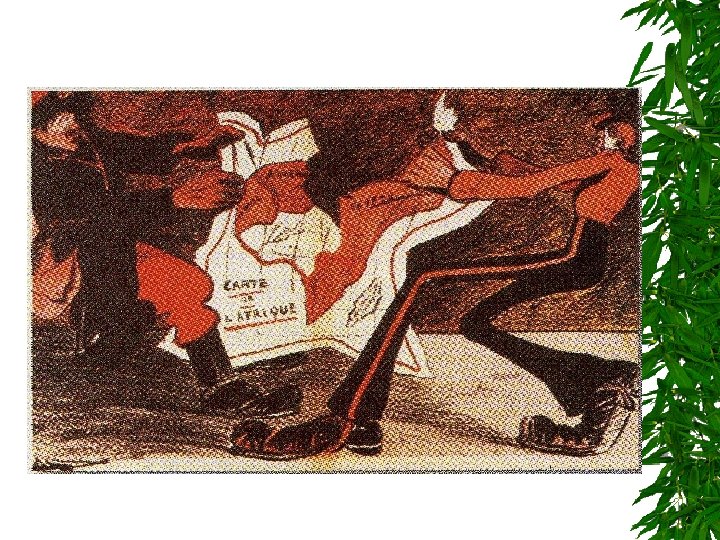
Berlin Conference (1884 – 1885) took place in Germany divided Africa among European nations recognized Leopold’s claim to Congo Free State – called for free trade on Congo & Niger rivers how to make a claim: – 1. notify nations – 2. set up a government – 3. show you could control an area redrew map of Africa w/ little thought on distribution of: – African ethnic/linguistic groups, patterns of settlement, or ethnic boundaries – later leads to a rise of nationalism in Africa
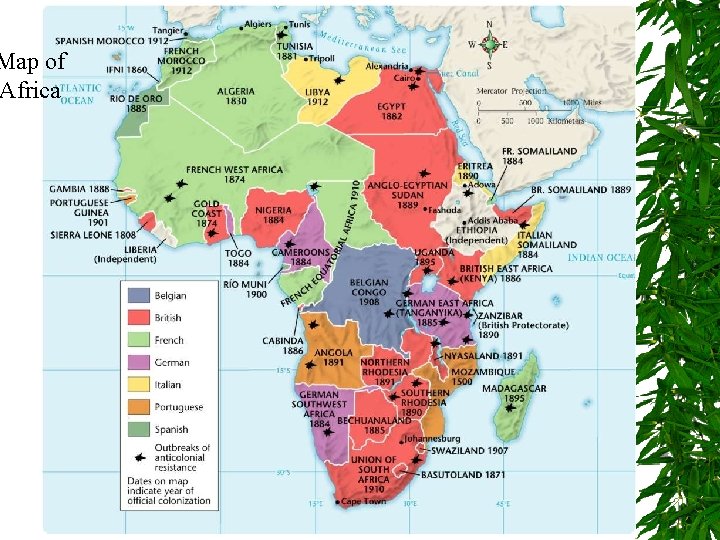
Map of Africa
STOP and THINK!!! Geography Skills 1. In which part of Africa were most of France’s colonies located? 2. Why was the exploration of Africa difficult? 3. How can you tell from the map that Africans did not willingly accept European domination? Write the questions in your notes. Be sure to answer the questions!
Britain’s Settler Colony and White Dominions West & East Africa, Egypt, & the Sudan Boer War (1899 – 1902) – fought the Boers (Dutch farmers) for southern Africa – acquired the Cape Colony from the Dutch in 1815 – many Boers fled British rule (went north & set up own republics) – late 1800 s: gold & diamonds discovered in Boer lands & Britain wanted it & they got it 1910: GB united the Cape Colony & former Boer republics into the Union of South Africa – new constitution set up govt. run by whites – based on complete racial segregation (apartheid) ends in 1993 with election of Nelson Mandela as president
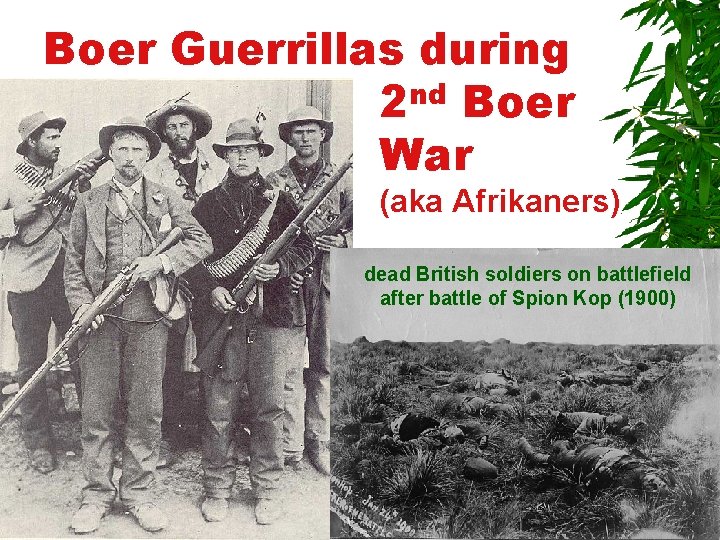
Boer Guerrillas during nd the 2 Boer War (aka Afrikaners) dead British soldiers on battlefield after battle of Spion Kop (1900)
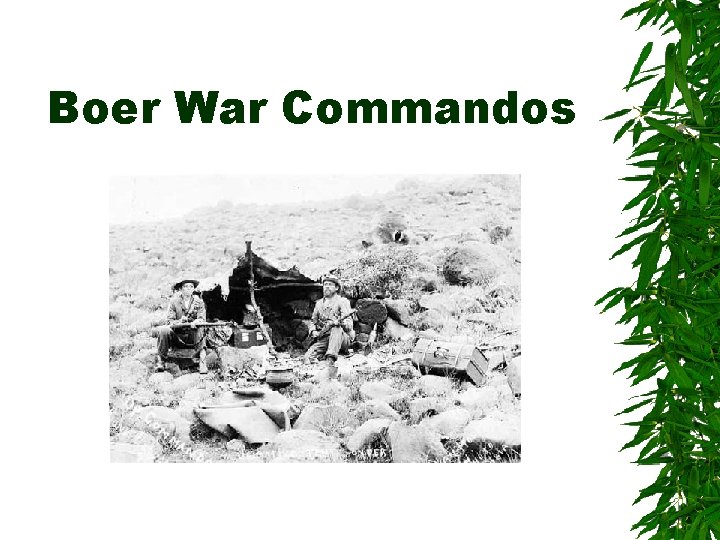
Boer War Commandos
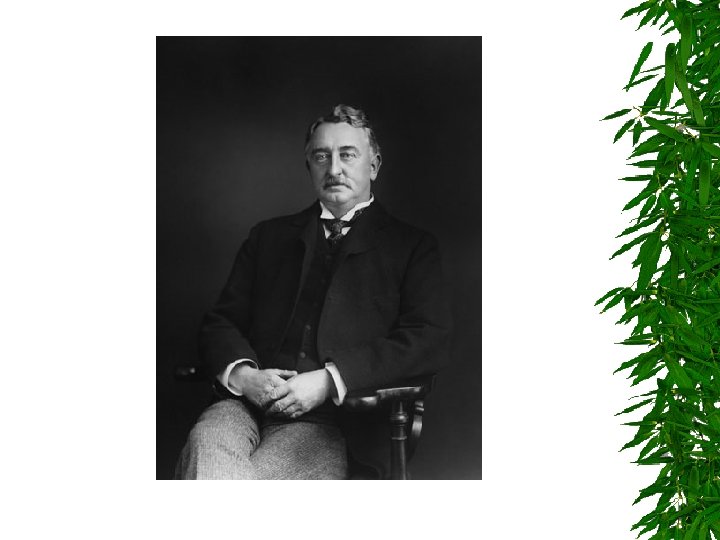
Cecil Rhodes (see p. 664) successful businessman – built a fortune in diamond fields (at 40, one of the richest men in the world) major supporter of British imperialism – “I want the power!” founder of Rhodesia (present-day Zambia & Zimbabwe) attended Oriel College, Oxford – Rhodes Scholar (scholarships funded by his estate) right & duty to bring technology & progress to “barbarian” lands – supported apartheid Goal? – “civilize” (aka “Westernize”) the colonies
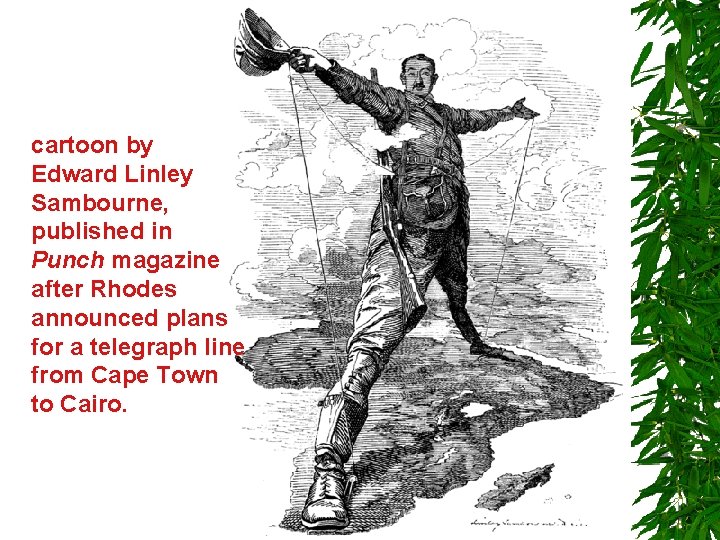
cartoon by Edward Linley Sambourne, published in Punch magazine after Rhodes announced plans for a telegraph line from Cape Town to Cairo.
P. S. A question for you… What major diamond mining corporation did Rhodes found?
That would be the De Beers company which today markets 40% of the world’s rough diamonds and at one time marketed 90%. Ever heard of a monopoly? What do we (the U. S. ) do to monopolies today?
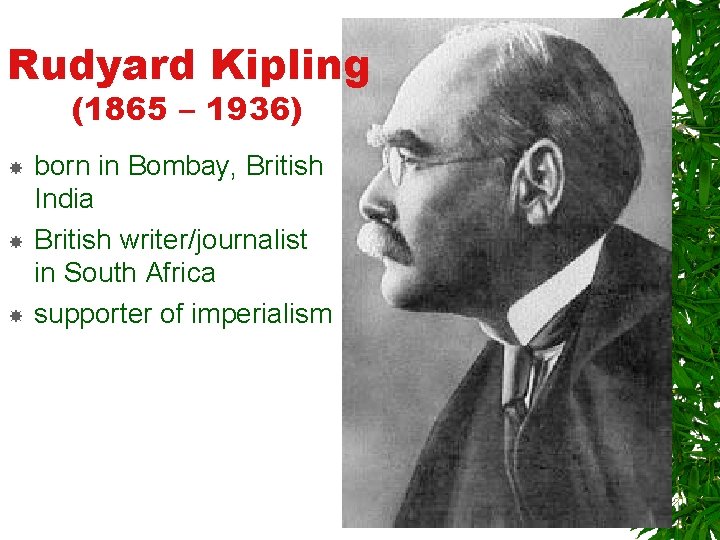
Rudyard Kipling (1865 – 1936) born in Bombay, British India British writer/journalist in South Africa supporter of imperialism
“White Man’s Burden” British journalist in South Africa Phrase used to indicate the “duty” of Europeans to westernize the rest of the world Based on ideas of inferiority of other ethnicities Product of racism
“The White Man’s Burden” “Take up the White Man’s burden Send forth the best ye breed Go bind your sons to exile To serve your captives’ need… Take up the White Man’s burden The savage wars of peace Fill full the mouth of Famine, And bid the sickness cease; And when your goal is nearest (The end for others sought) Watch sloth and heathen folly Bring all your hope to nought. - Rudyard Kipling Why did Kipling consider imperialism to be beneficial?
In 1907, he became the first Englishman to receive the noble peace prize for literature. Question: What famous story did Kipling write? Hint: Disney made this story into a film.
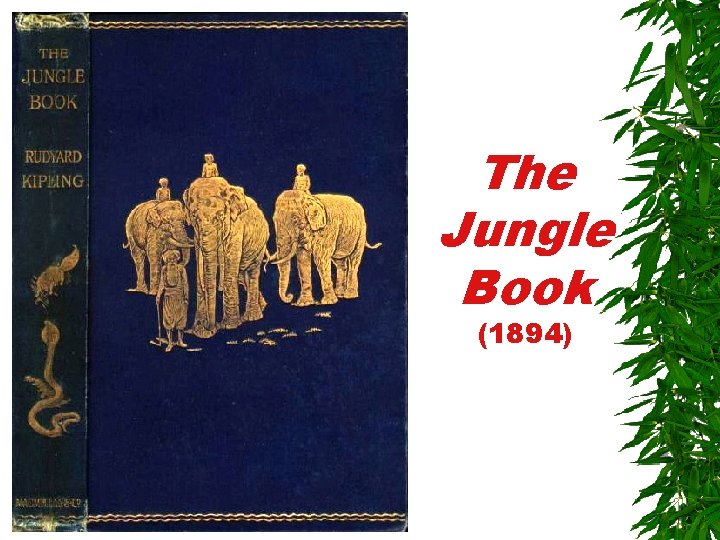
The Jungle Book (1894)
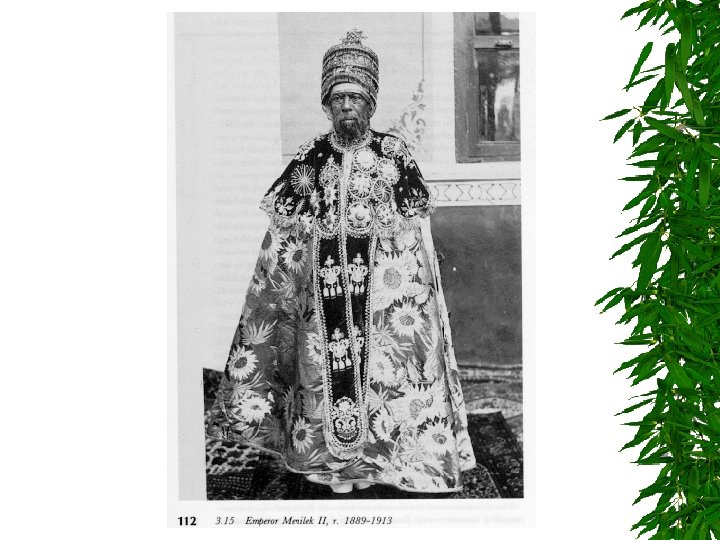
Ethiopia = Independence successfully resisted European colonization 1889: Emperor Menelik II – played Europeans against each other – bought modern weapons from France & Russia (paid for with ivory) – hired Europeans to train army modernized Ethiopia by hiring European experts to: – built modern roads & bridges – set up western school system
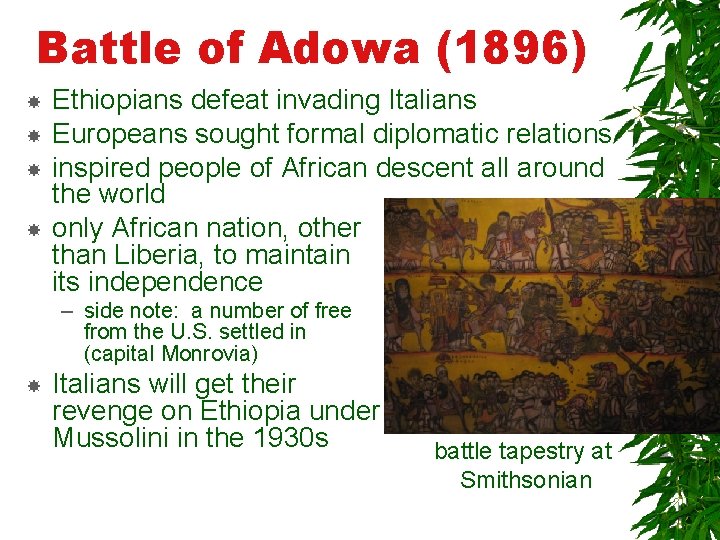
Battle of Adowa (1896) Ethiopians defeat invading Italians Europeans sought formal diplomatic relations inspired people of African descent all around the world only African nation, other than Liberia, to maintain its independence – side note: a number of free blacks from the U. S. settled in Liberia (capital Monrovia) Italians will get their revenge on Ethiopia under Mussolini in the 1930 s battle tapestry at Smithsonian
General effects of Imperialism in Africa: Africa becomes a continent of European colonies with its citizens second class to Europeans. In some cases, health care, education, and better agricultural methods came with the Europeans. Rich ores were mined and enriched European countries.
Did you know… The novel Heart of Darkness by Joseph Conrad is set in Africa during the Age of Imperialism. Marlowe, the narrator of the story, leaves England to seek adventure in Africa. Like others of this time, he is confident that European civilization benefits the people of Africa. But when he arrives at his company’s station near the mouth of the Congo, he is shocked by what he finds. Through their mining, industrialists have ravaged the countryside. Africans are chained together, working and dying so that Europeans can reap financial profits. All that matters to the imperialists is satisfaction of their personal greed.
Impact of Colonial Rule on Africa Positive: – – – – Reduced local warfare Improved sanitation Hospitals, schools Economic expansion Railroads, dams Telephone Telegraph lines Negative: – – – – Lost control of land Lost independence Spread of diseases Famines Loss of cultures Loss of identity Ongoing division of African societies
Now, on to …
The Muslim World before… 3 major empires – Mughals (India) led by Babur & Akbar (p. 269) – Ottomans (Middle East) led by Suleiman (p. 272) – Safavids (Iran) led by Shah Abbas the Great (p. 274) empires begin to decline – central government lost control over nobles, military, & guilds – widespread corruption – some Muslim scholars & religious leaders allied with the state, some helped to stir rebellions against the government there was no consistency among the leaders
European Threats Ottoman Empire – economic problems & corruption caused decay – lost many areas to revolts very multi-ethnic empire Greeks, Serbs, Bulgarians, & Romanians (Balkans) Arabia, Lebanon, Armenia (tried but suppressed) France had an eye for the territory – Egypt slipped out of Ottoman control – Bosporus & the Dardanelles Russia schemed to gain control (needed warm water ports & access to the Mediterranean Sea) Britain tried to thwart the attempt as it needed access to the Mediterranean Sea Germany wanted a RR from Berlin-to-Baghdad an example of something called geopolitics
What is Geopolitics? the interest in taking land for its strategic location or products Ottoman Empire – controlled access to Atlantic Ocean & the Mediterranean Sea Crimean War (1853 -1856) – peninsula on the Black Sea – war broke out when Russia tried to seize Ottoman lands along the Danube River – Ottomans, British, & French vs. Russia – ended in Russian defeat, showed the backwardness of the country
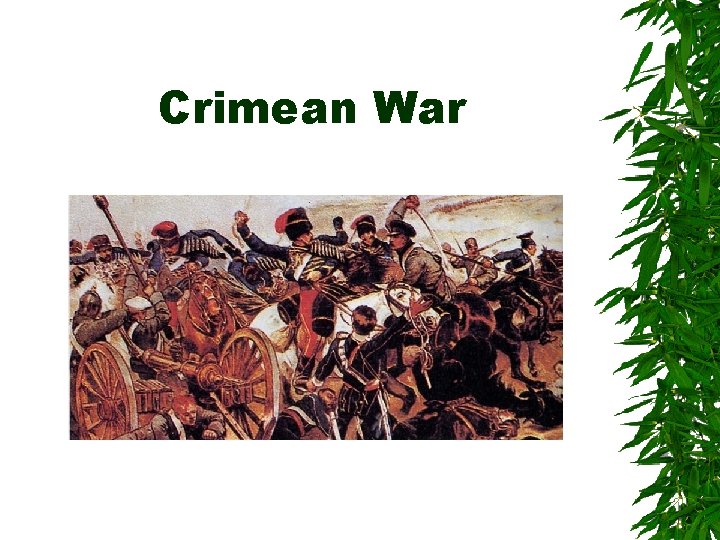
Crimean War
Efforts to Westernize Ottoman Empire reorganized the bureaucracy reorganized the system of tax collection built railroads improved education better medical care & farming techniques used European officers to train the military sent men to the West to study new sciences & technology – they came back with ideas about democracy & equality
Unfortunately, there were mixed blessings… adoption of western ideas about government increased tensions – officials objected changes inspired by a foreign culture – repressive sultans rejected reform & increased their power better living conditions population boom competition for land unrest & tension officials rejected Western ideas, tried to suppress their people
Young Turks 1889: liberals formed new movement reform was the only way to save empire 1908: overthrew Sultan Abdul Hamid II before reforms could be established, the Ottoman empire was drawn into WWI in 1914
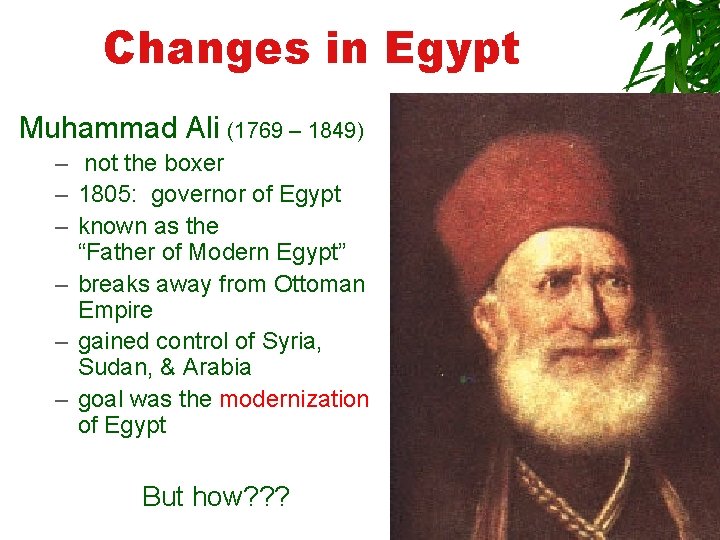
Changes in Egypt Muhammad Ali (1769 – 1849) – not the boxer – 1805: governor of Egypt – known as the “Father of Modern Egypt” – breaks away from Ottoman Empire – gained control of Syria, Sudan, & Arabia – goal was the modernization of Egypt But how? ? ?
Modernization of Egypt Improved tax collection Reorganized land system Irrigation projects to increase farm output Western military expert trained the army Participated in world trade (economy) – Expanded cotton production & encouraged the development of local industry Made Egypt a major Middle Eastern power
Suez Canal (1869) 100 -mile waterway that connects the Red Sea to the Mediterranean Sea – runs from Port Said in north to Gulf of Suez in south begun in 1859 by French entrepreneur, Ferdinand de Lesseps (Suez Canal Company) shortened sea route from Europe to S & E Asia French money, Egyptian labor (30, 000 people) part of Egypt’s modernization efforts – irrigation project, communication network – Egypt could not pay $450 million debt to France – ruler Ismail Pasha forced to sell shares in canal bought by British PM Benjamin Disraeli
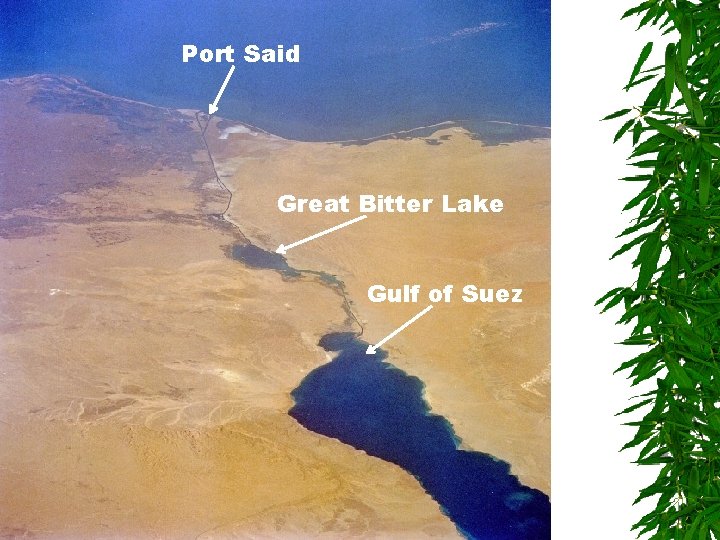
Port Said Great Bitter Lake Gulf of Suez
Significance of the Suez Canal 1875: Britain gained controlling interest in the canal & occupied Egypt faster British access (by sea) to African & Asian colonies – cut the journey from England to India by 4000 miles – “Lifeline of the Empire” Egypt becomes a British protectorate after a failed revolt by Egyptian nationalists in 1882 – governor of Egypt is still technically an official of the Ottoman Empire but follows British-dictated policies – Egypt continues to modernize, but nationalists are angry The canal is owned today by the Suez Canal Authority of the Arab Republic of Egypt.
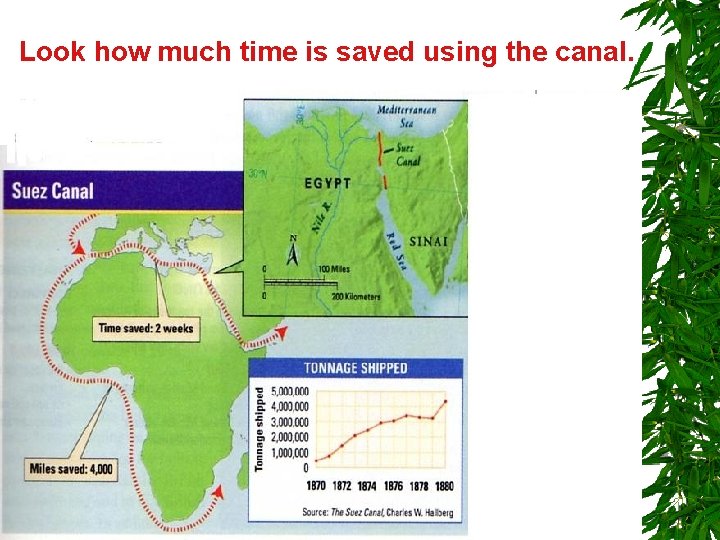
Look how much time is saved using the canal.

Next is….
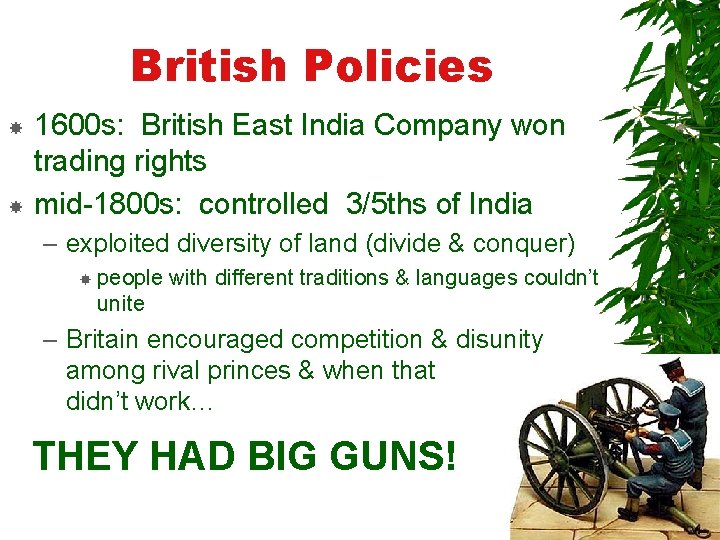
British Policies 1600 s: British East India Company won trading rights mid-1800 s: controlled 3/5 ths of India – exploited diversity of land (divide & conquer) people with different traditions & languages couldn’t unite – Britain encouraged competition & disunity among rival princes & when that didn’t work… THEY HAD BIG GUNS!
British East India Co. main goal was to make money & got very rich from it, but they did good things like: – they improved roads, preserved peace, & reduced robbery – introduced western education & law – converted Indians to Christianity (social Darwinism) – worked to end slavery & the caste system – outlawed sati to help improve status of women
Indian Revolt of 1857 Sepoy = an Indian soldier in British Colonial Army – could be a Hindu or a Muslim Indian – required to serve in any British territory overseas travel was an offense to religion for highcaste Hindus – resented religious presence of Christians – saw a Christian conspiracy to undermine faith Was this an attempt to force conversions?
Indian Revolt of 1857: new Enfield rifles were given to the sepoys cartridges sealed with beef/pork fat – had to bite off cartridge seal to use the bullet – Hindus = consider cow sacred – Muslims = do not eat pork 85 – 90% of sepoys refused to “load rifles” – the British did see their folly & ordered new cartridges but “the die was cast” soldiers sent home without pay or were jailed
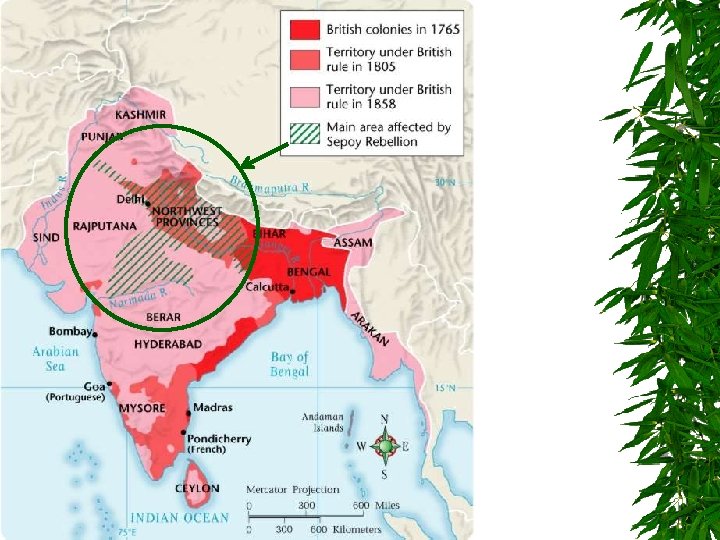
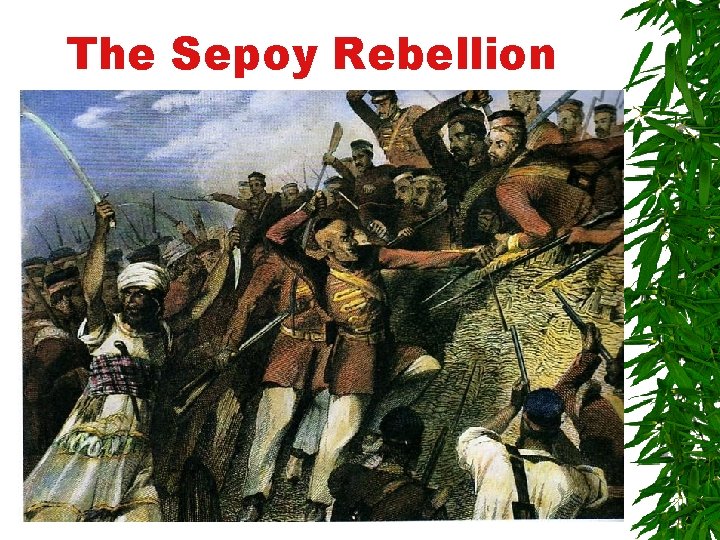
Indian Revolt of 1857 May 10, 1857: angry sepoys rebellion spreads through northern & central India some marched to Delhi, the old Mughal capital – wanted old ruler to take power again brutality occurs by both sides (teacher book, p. 632) – sepoys massacre British citizens in India – British retaliate by torching Indian villages & killing thousands of unarmed people the British defeat the rebels July 8, 1858: peace treaty signed
The Sepoy Rebellion
Aftermath of Indian Revolt of 1857 1858: Britain ends the rule of the BEIC - direct colonial rule begins increased troop presence in India – taxed Indians to pay costs (sound familiar? ) fueled racist attitudes of British increased distrust among colonizer & colonized India is at the mercy of the British crown
“Jewel in the Crown” India = most valuable of all Britain’s colonies major market & supplier of raw materials – for factories in England & elsewhere produced goods for British manufacturing – forced to buy cheap British finished goods railroad transport increased India’s economic value to Great Britain – tea, indigo, coffee, cotton, jute, opium Britain thought they were helping India – modernization = westernization of technology – civilizing effect = western culture (“It’s the best!”) REMEMBER: Everything favored the British!
Benefits of British Rule restored peace & order (for the most part) revised the legal system – promote justice regardless of class or caste transportation – built roads & railroads communication – telegraph lines & postal system India develops a sense of national unity wealthy send sons to British schools Indian landowners get rich from exporting cash crops
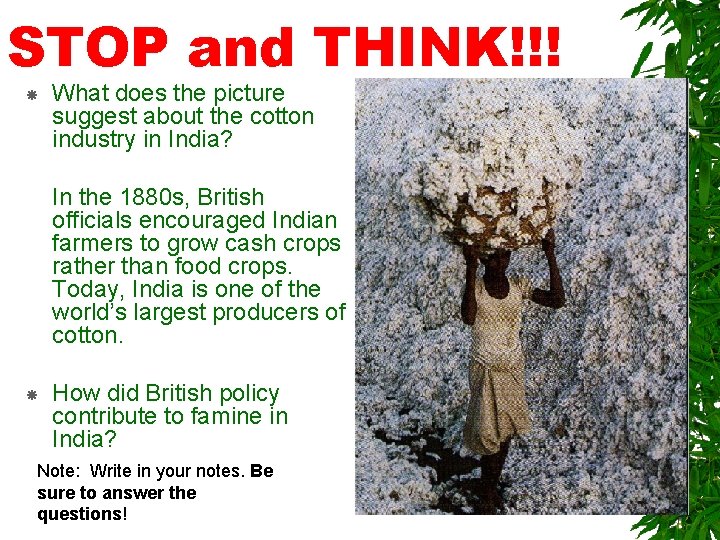
STOP and THINK!!! What does the picture suggest about the cotton industry in India? In the 1880 s, British officials encouraged Indian farmers to grow cash crops rather than food crops. Today, India is one of the world’s largest producers of cotton. How did British policy contribute to famine in India? Note: Write in your notes. Be sure to answer the questions!
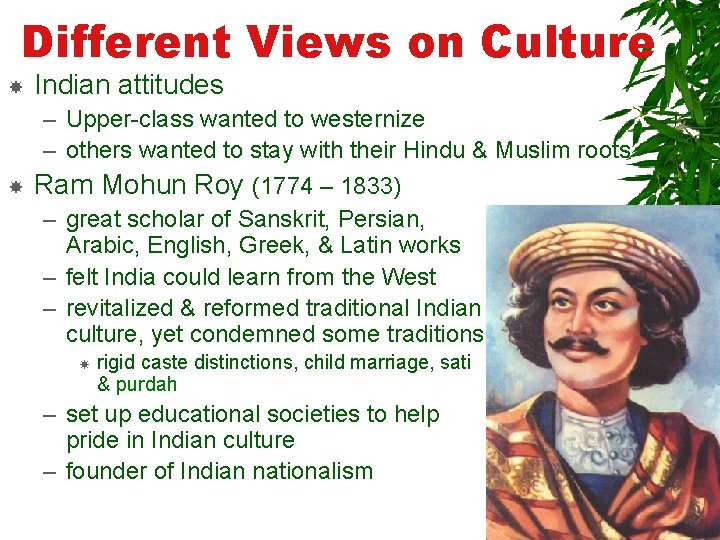
Different Views on Culture Indian attitudes – Upper-class wanted to westernize – others wanted to stay with their Hindu & Muslim roots Ram Mohun Roy (1774 – 1833) – great scholar of Sanskrit, Persian, Arabic, English, Greek, & Latin works – felt India could learn from the West – revitalized & reformed traditional Indian culture, yet condemned some traditions rigid caste distinctions, child marriage, sati & purdah – set up educational societies to help revive pride in Indian culture – founder of Indian nationalism
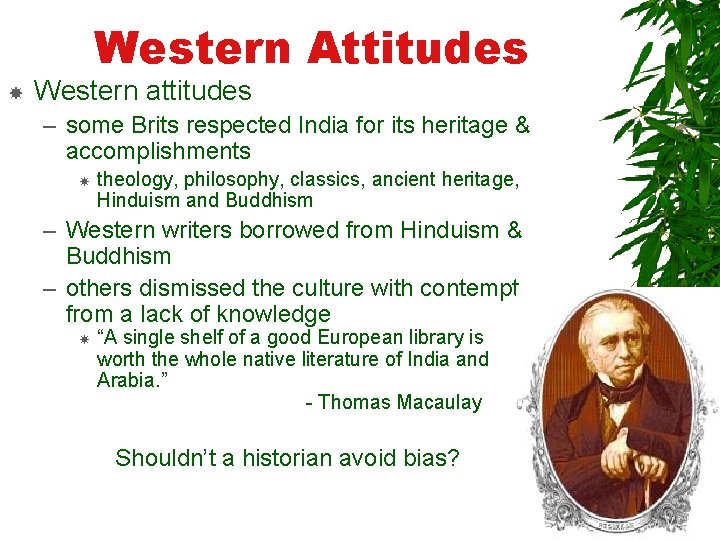
Western Attitudes Western attitudes – some Brits respected India for its heritage & accomplishments theology, philosophy, classics, ancient heritage, Hinduism and Buddhism – Western writers borrowed from Hinduism & Buddhism – others dismissed the culture with contempt from a lack of knowledge “A single shelf of a good European library is worth the whole native literature of India and Arabia. ” - Thomas Macaulay Shouldn’t a historian avoid bias?
Indian Nationalism a class of western-educated Indians emerges to lead a nationalist movement Indian National Congress (1885) – aka Congress party – professional & business leaders who believed in peaceful protest to gain their ends – called for greater democracy – wanted self-rule but supported Western-style modernization Muslim League (1906) – resented Hindu domination of the Congress party (INC) – worried about the oppression of Muslims – formed their own party to pursue their own goals supported a separate Muslim state (Pakistan)
Impact of Imperialism on India Positive: – – – – – 3 rd largest RR network modern economy modern road network telephone/telegraph lines dams, bridges, irrigation, canals sanitation/public health schools/colleges literacy increased ended local warfare Negative: – British = political & economic power – hurt Indian industry ex: hand-weaving – loss of autonomy – famines – loss of religious/ social customs – threat to way of life
Ch 25 – 5
Turn of Century China self-sufficient economy – food, mines, silks, cottons, fine porcelain – don’t need, or care, to trade with others healthy agricultural economy better nutrition HUGE population boom
The Trade Issue Canton System: placed strict limits on foreign traders – European merchants could only trade in southern China (Hong Kong, Macao, Canton) – China sold Europeans silk, porcelain, & tea – China received gold & silver China enjoyed a trade surplus – exporting more than it imported Europeans experienced a trade deficit – purchasing more from China than they sold to China (not good)
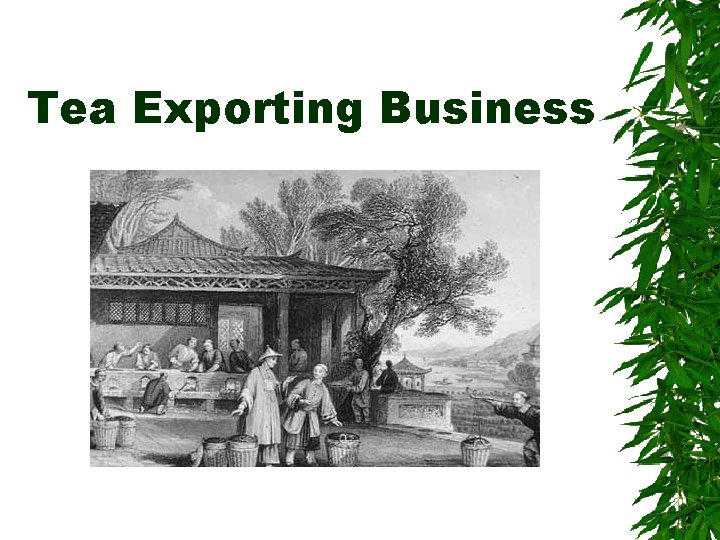
Tea Exporting Business
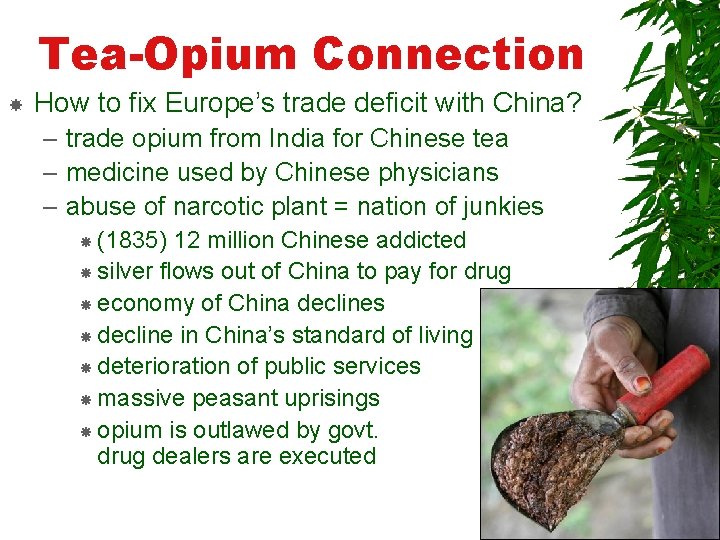
Tea-Opium Connection How to fix Europe’s trade deficit with China? – trade opium from India for Chinese tea – medicine used by Chinese physicians – abuse of narcotic plant = nation of junkies (1835) 12 million Chinese addicted silver flows out of China to pay for drug economy of China declines decline in China’s standard of living deterioration of public services massive peasant uprisings opium is outlawed by govt. drug dealers are executed &
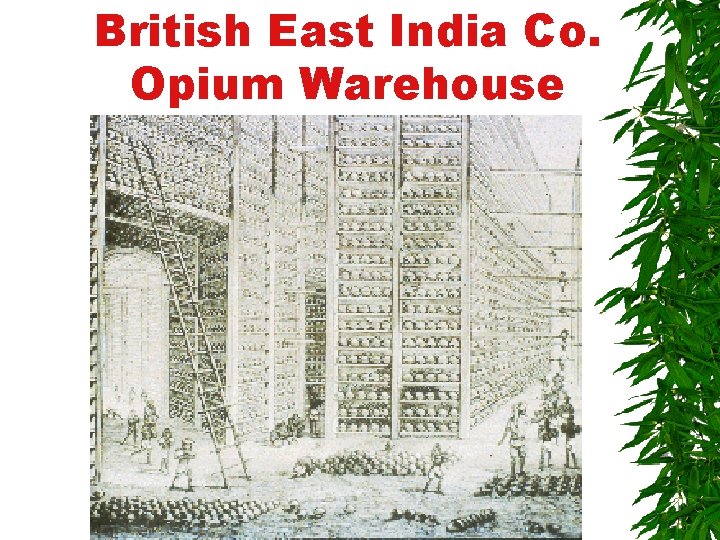
British East India Co. Opium Warehouse
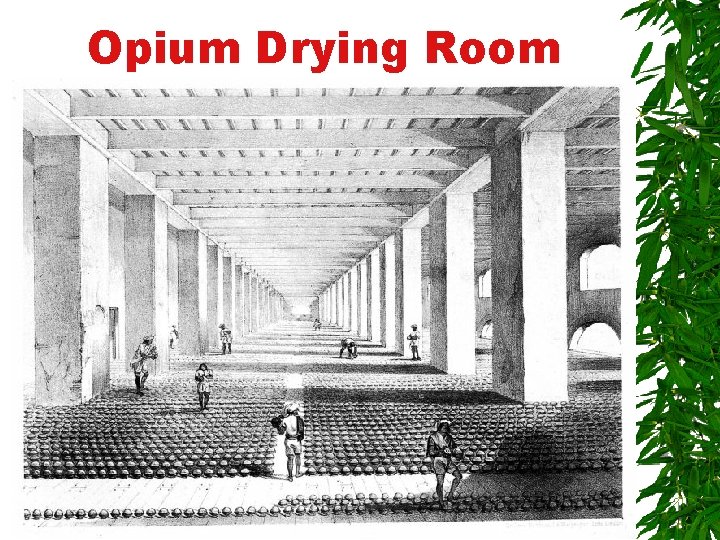
Opium Drying Room
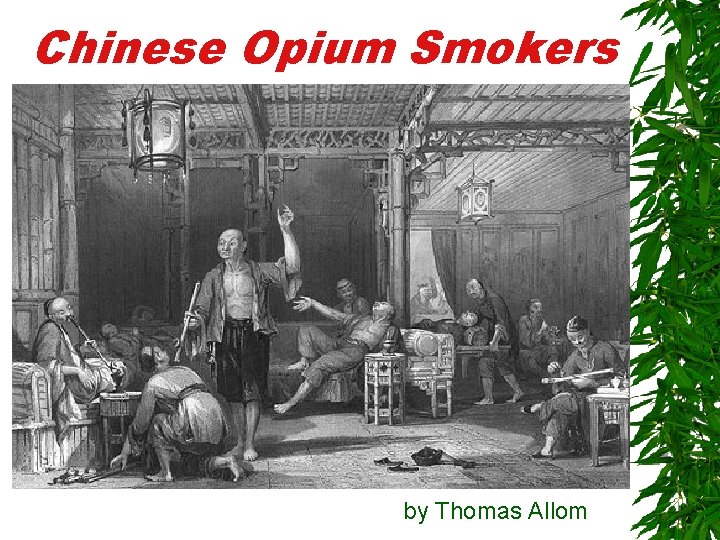
Chinese Opium Smokers by Thomas Allom
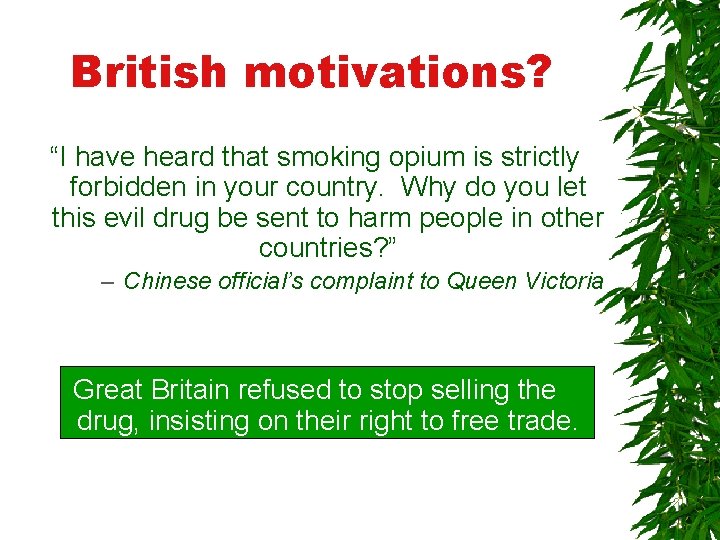
British motivations? “I have heard that smoking opium is strictly forbidden in your country. Why do you let this evil drug be sent to harm people in other countries? ” – Chinese official’s complaint to Queen Victoria Great Britain refused to stop selling the drug, insisting on their right to free trade.

Random Trivia Question… What famous British literary character, well-known for his mysterious sleuthing characteristics, also suffered from an opium addiction?
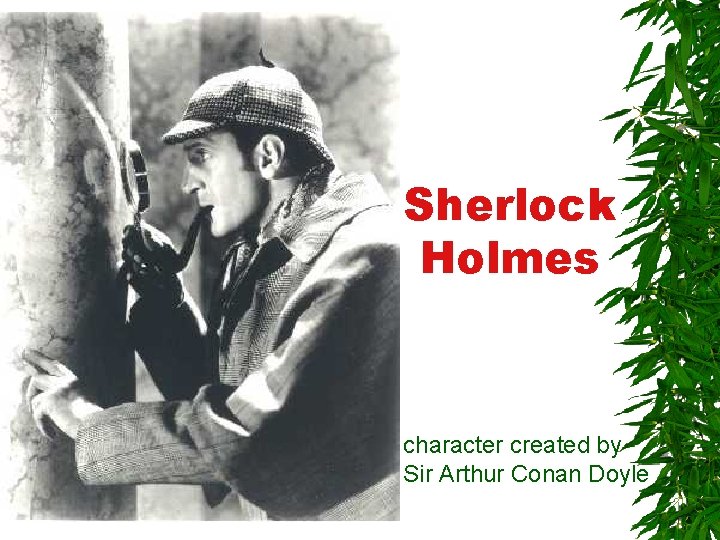
Sherlock Holmes character created by Sir Arthur Conan Doyle
Opium War (1839) began as a clash between British merchants & Chinese warships (Qing dynasty) mainly sea battles – Chinese outgunned by technologically advanced British navy (bigger, better guns) – Chinese had outdated weapons & fighting methods – results in an easy Chinese defeat – China forced to sign the treaty
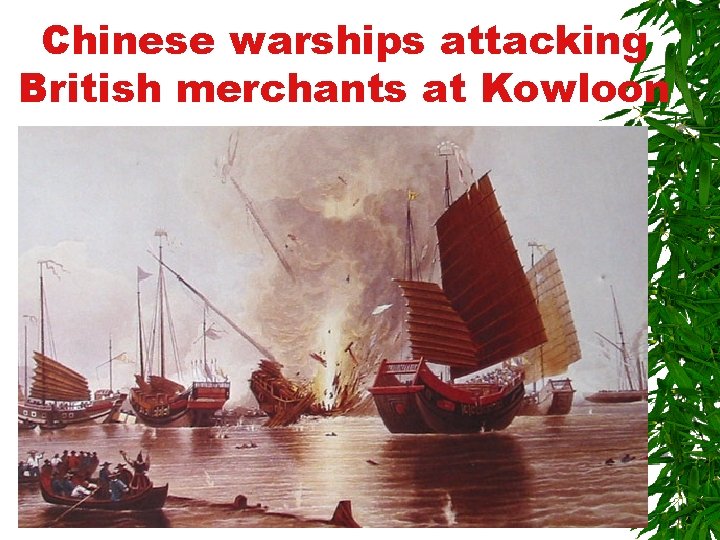
Chinese warships attacking British merchants at Kowloon
Treaty of Nanjing (1842) Britain receives an indemnity – payment for losses in the war ($21 million) $6 million silver for confiscated opium $3 million for debts owed the British $12 million for costs of war gave Britain Hong Kong in perpetuity 5 Chinese ports opened to foreign trade – Canton, Amoy, Foochow, Ningpo, & Shanghai extraterritoriality – exemption from foreign laws (Britain could trade with anyone they wished) – the right to live under British laws and be tried in their British courts first in a series of unequal treaties – more concessions made to Western powers – China opened up to more trade & missionaries
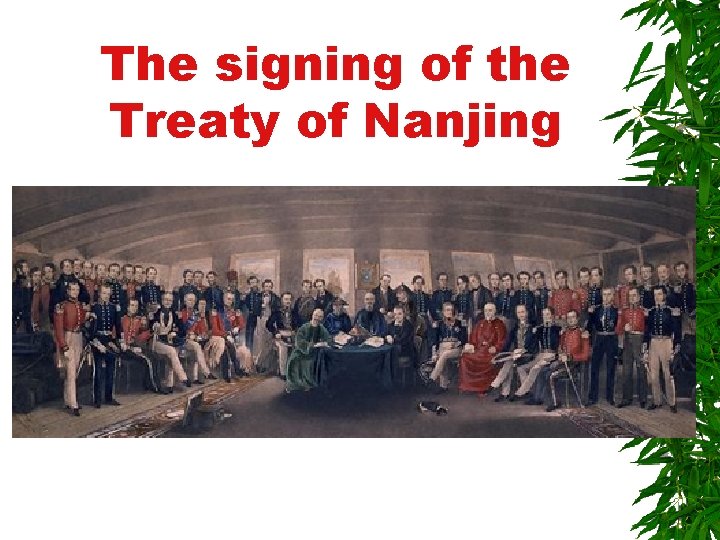
The signing of the Treaty of Nanjing
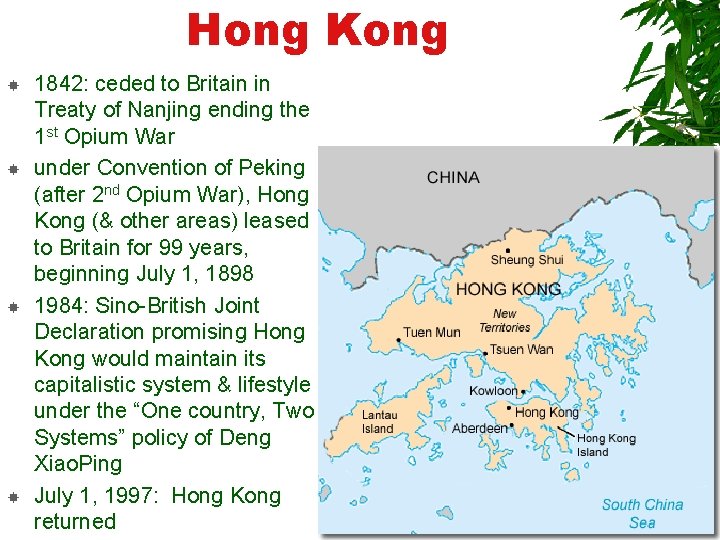
Hong Kong 1842: ceded to Britain in Treaty of Nanjing ending the 1 st Opium War under Convention of Peking (after 2 nd Opium War), Hong Kong (& other areas) leased to Britain for 99 years, beginning July 1, 1898 1984: Sino-British Joint Declaration promising Hong Kong would maintain its capitalistic system & lifestyle under the “One country, Two Systems” policy of Deng Xiao. Ping July 1, 1997: Hong Kong returned
HSBC Hong Kong and Shanghai Banking Corporation – Established in 1865 to finance the growing trade between China and Europe – The HSBC Group now comprises a large range of banks and financial service providers around the world.
Internal Problems 1800 s: Qing dynasty in decline irrigation systems & canals – poor maintenance – massive flooding of Huang He (destroyed farmland) population explosion – not enough food to feed people extravagant (expensive) court heavy taxation on people who had no money – tax evasion by rich government corruption – civil service system → a system of bribes?
Taiping Rebellion (1850 -1864) internal problems caused peasants to rebel considered the most devastating peasant revolt in history Hong Xiuquan (howng shyoo CHWAHN) – leader of the rebellion (claimed to be brother of Jesus Christ) – wanted to create a “heavenly kingdom of great peace” – the Taiping (tie PIHNG) – endorsed social ideas Chinese leaders saw as radical land reform, equality of men & women, community ownership of property – called for an end to the Qing dynasty (hated by Chinese peasants)
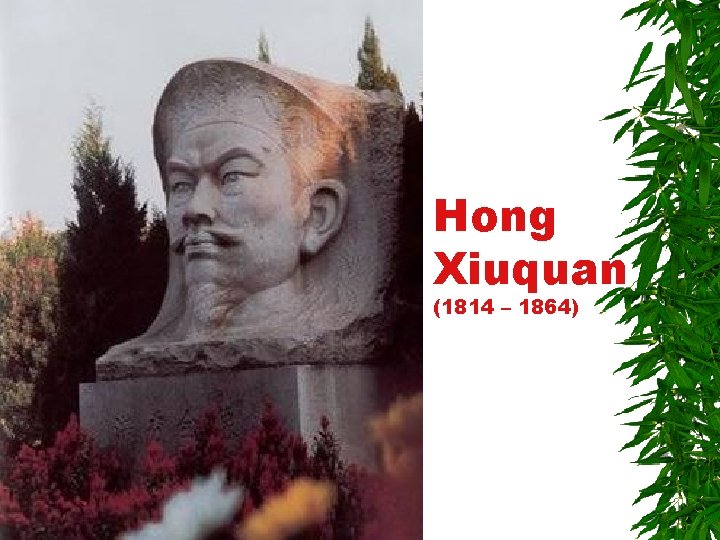
Hong Xiuquan (1814 – 1864)
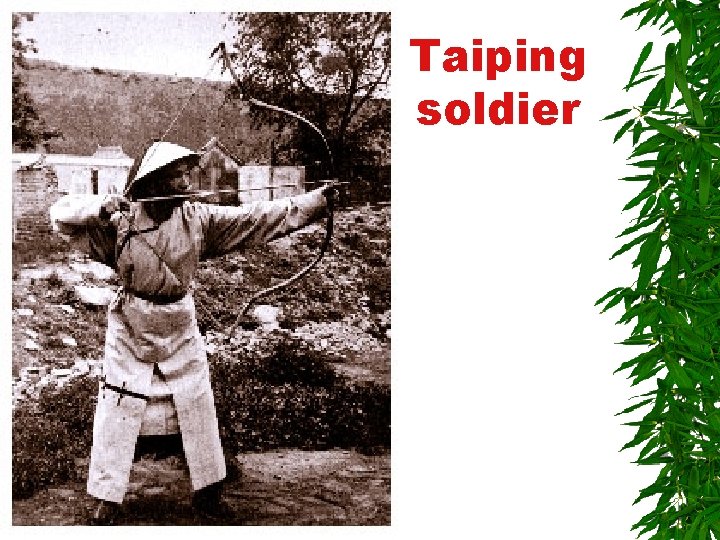
Taiping soldier
Taiping Rebellion, cont… rebels won large sections of China (held on to for 14 years) but… rebellion is crushed by aid from regional governors & generals ($ & better guns) EFFECTS: – estimated Chinese dead: 20 -30 million – Qing government survives, but shares power with regional commanders – Europeans still after China & trading rights – Russia seized lands in northern China (sneaky little Russians ☺)
What were the estimated figures for the Holocaust again? (Keep in mind, however, that the Taiping Rebellion was a civil matter. )
Self-Strengthening Movement (c. 1861 – 1895) imported western technology most important goal: development of military industries – built arsenal factories to produce weapons – shipyards/naval yards, railroads, mining, smallscale industry western works translated into Chinese – science, government, & the economy government did not support movement so little progress was made
Foreign Influence in China Sino-Japanese War (1894 -1895) revealed Chinese weaknesses western economic pressure forced China to open to foreign trade & spheres of influence – – British took the Yangzi River area French took the colony of Indochina Germany & Russia gained areas in northern China U. S. stayed out fearing European powers might shut out American merchants if they claimed territory Open Door Policy (1898) – China’s doors opened to all merchants on an equal basis – protected American trading rights – China protected from imperialism
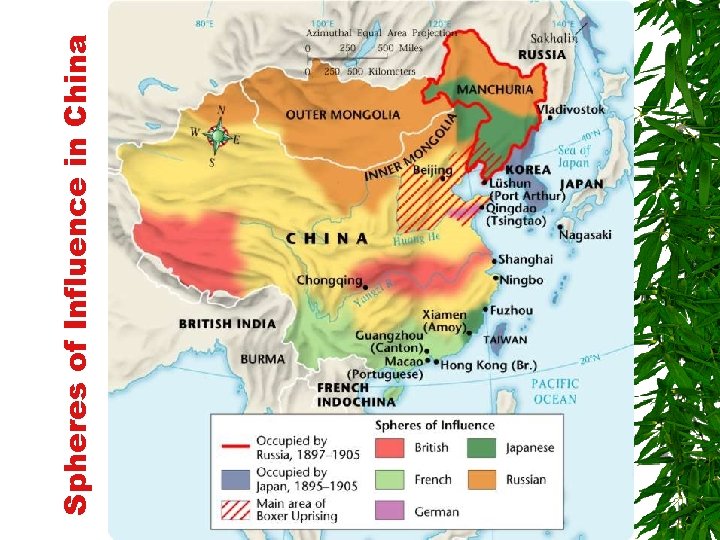
Spheres of Influence in China
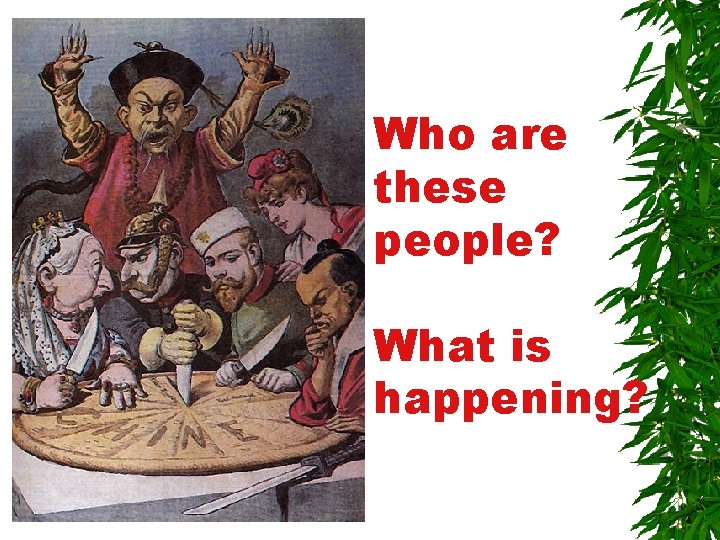
Who are these people? What is happening?
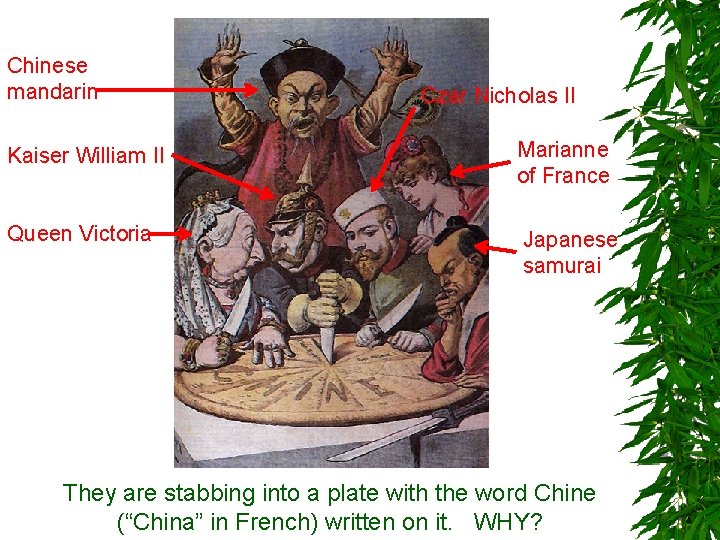
Chinese mandarin Czar Nicholas II Kaiser William II Marianne of France Queen Victoria Japanese samurai They are stabbing into a plate with the word Chine (“China” in French) written on it. WHY?
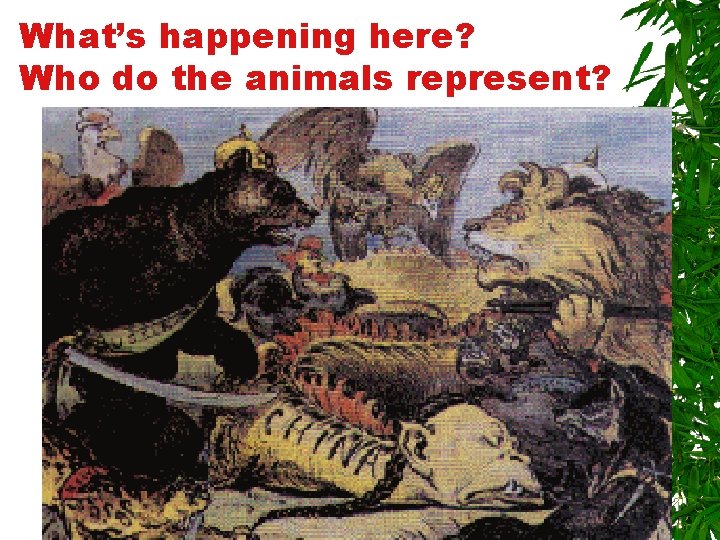
What’s happening here? Who do the animals represent?
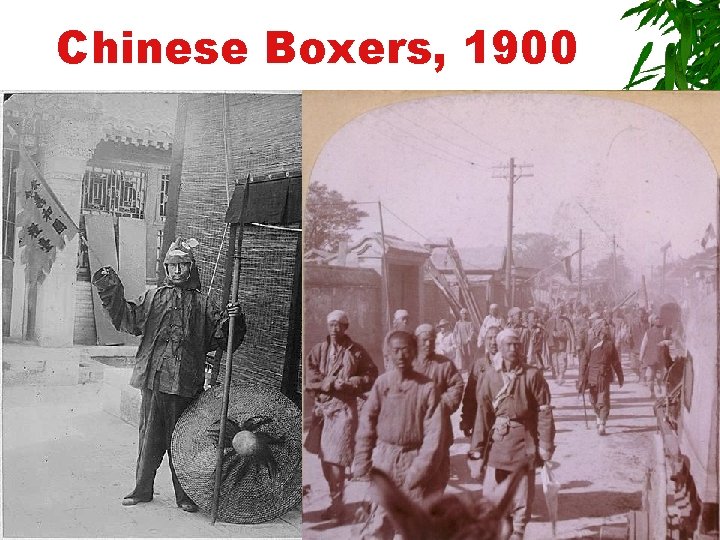
Boxer Rebellion (1900) campaign against foreign privileges in China (remember extraterritoriality? ) Righteous Harmonious Fists Boxers – secret society formed in 1899 – GOAL: “Death to the Foreign Devils” (slogan) drive foreigners out of China westerners were polluting their land with un-Chinese ways (customs), strange buildings & telegraph lines 1900: attacked foreigners across China FYI: The term “boxer” was given to the Chinese by Westerners who had watched the men train in martial arts.
Chinese Boxers, 1900
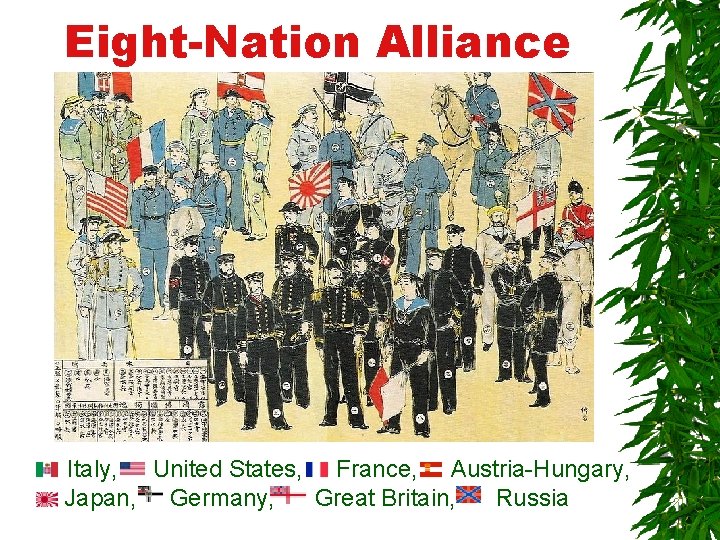
Boxer Rebellion cont… Eight-Nation Alliance – multinational force defeats Boxers – Western powers & Japan – rescued foreigners besieged in Beijing rebellion failed: – – – China forced to westernize admitted women to schools students sent abroad to study created government responsive to needs economic expansion mining, shipping, railroads, banking, cash crops – created a sense of Chinese nationalism
Eight-Nation Alliance Italy, United States, France, Austria-Hungary, Japan, Germany, Great Britain, Russia
Sun Yixian (1866 -1925) (soon yee SHAYAHN) supporter of a Chinese republic studied in the West organized the Revolutionary Alliance GOAL: to rebuild China on “Three Principles of the People” – 1. Nationalism free China from Western domination – 2. Democracy representative government – 3. Livelihood economic security for all Chinese 1911 -Sun Yixian becomes president of the new Chinese republic China spends next 37 years in chaos & war
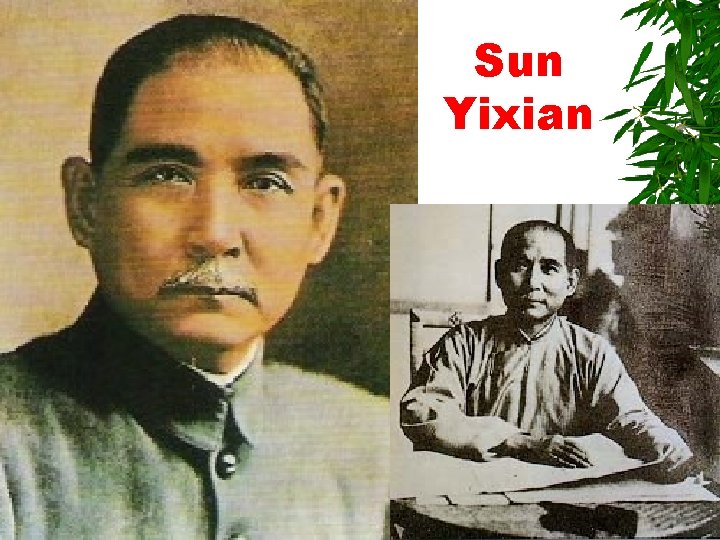
Sun Yixian
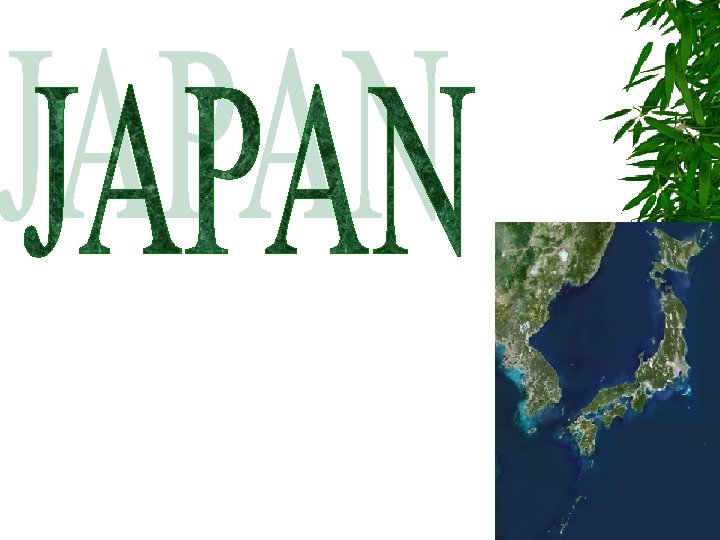
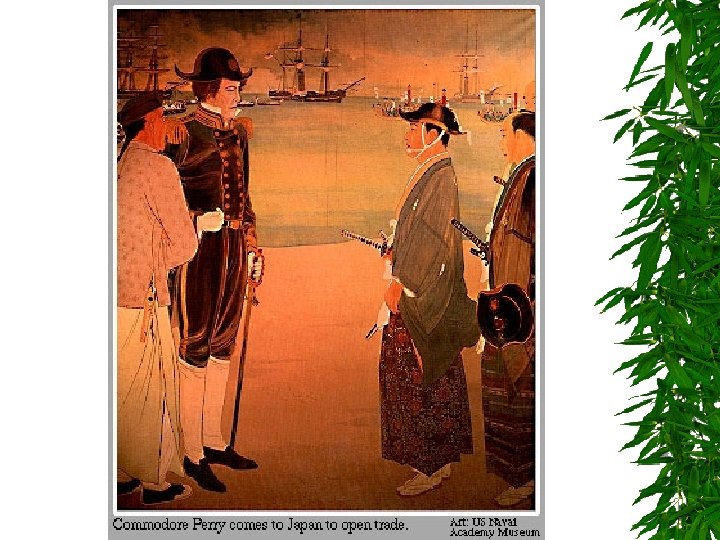
Commodore Matthew Perry arrived off Japanese coast on July 8, 1853 met by representatives of the Tokugawa shogunate – told to go to Nagasaki, where there was limited trade with the Dutch & was the only Japanese port open to foreigners at that time carried a letter from US president Fillmore threatening force if he was denied – Japan did not have the capability to defend itself against a naval bombardment, so they relented Japan must open ports to diplomatic & commercial exchange with the West
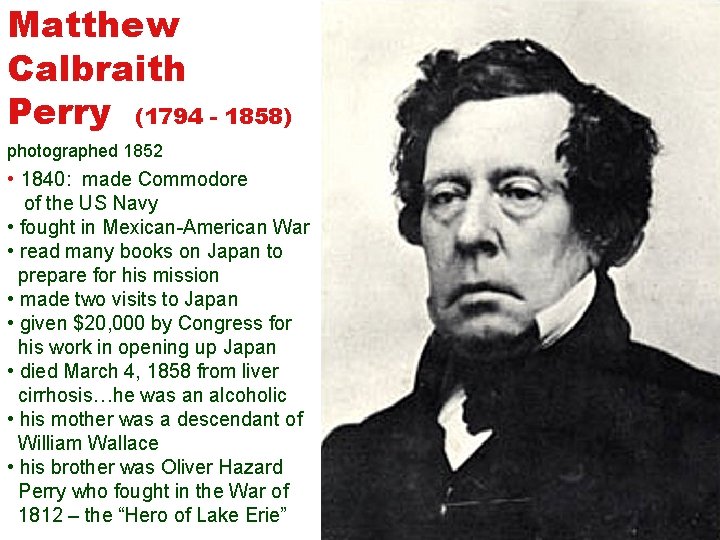
Matthew Calbraith Perry (1794 - 1858) photographed 1852 • 1840: made Commodore of the US Navy • fought in Mexican-American War • read many books on Japan to prepare for his mission • made two visits to Japan • given $20, 000 by Congress for his work in opening up Japan • died March 4, 1858 from liver cirrhosis…he was an alcoholic • his mother was a descendant of William Wallace • his brother was Oliver Hazard Perry who fought in the War of 1812 – the “Hero of Lake Erie”
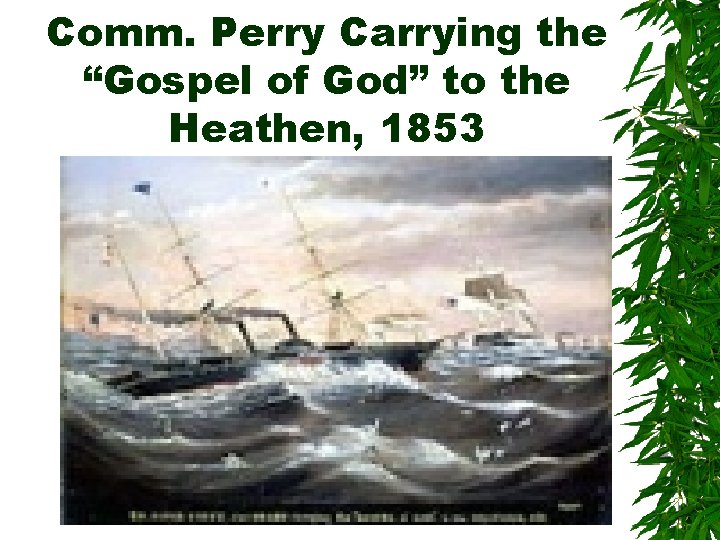
Comm. Perry Carrying the “Gospel of God” to the Heathen, 1853
Perry’s Visit cont… Treaty of Kanagawa (1854) – ended 200 years of virtual exclusion from foreign trade – “opened” two Japanese ports (Shimoda & Hakodate), to US trade – increased diplomatic relations with the U. S. unequal treaty forced on Japan by the superior strength of Perry’s navy followed by “Harris Treaty” (1858) – – allowed establishment of foreign concessions extraterritoriality foreigners minimal import taxes foreign goods “most favored nation” status marked the beginning of Japanese modernization
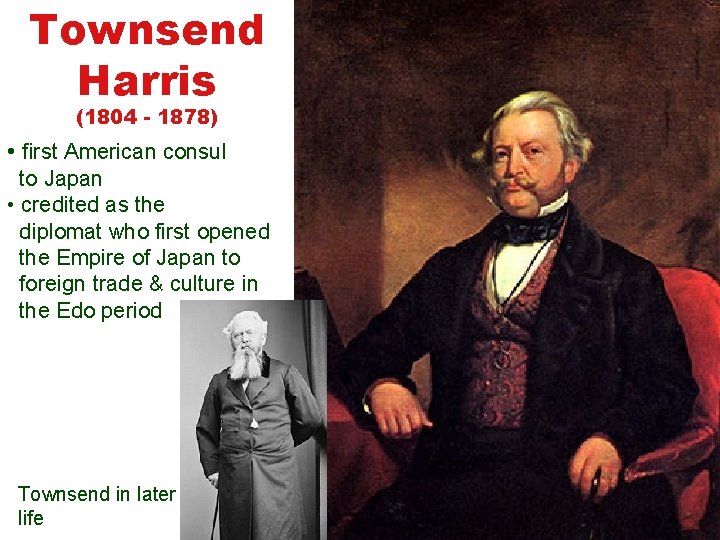
Townsend Harris (1804 - 1878) • first American consul to Japan • credited as the diplomat who first opened the Empire of Japan to foreign trade & culture in the Edo period Townsend in later life
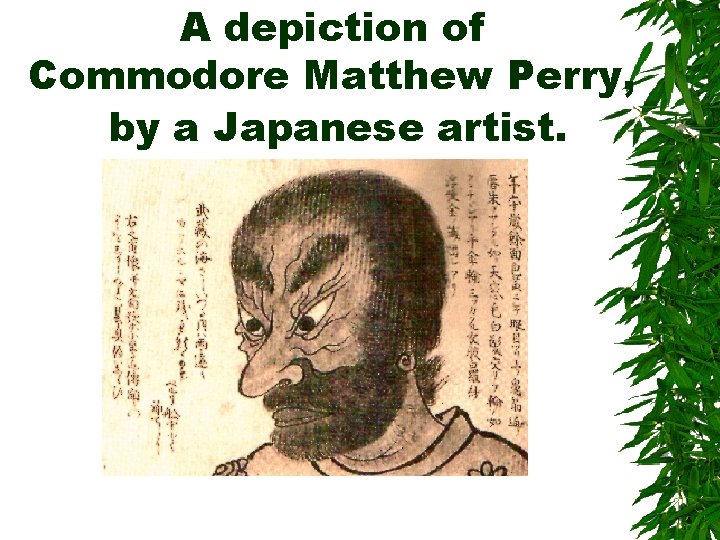
A depiction of Commodore Matthew Perry, by a Japanese artist.
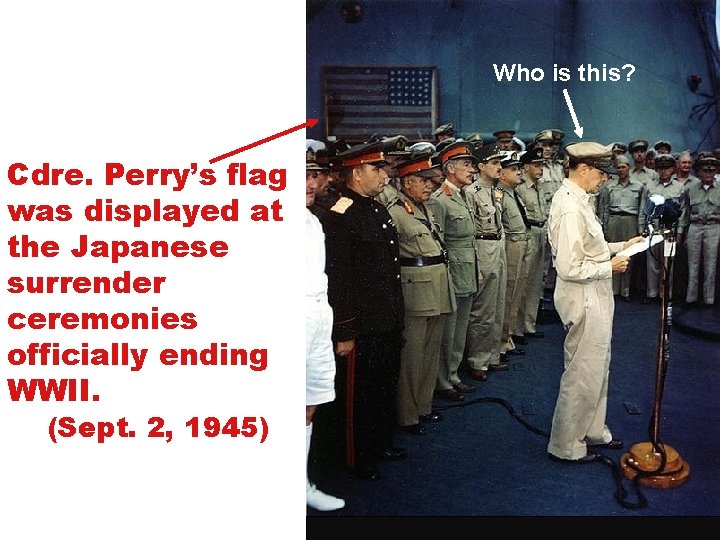
Who is this? Cdre. Perry’s flag was displayed at the Japanese surrender ceremonies officially ending WWII. (Sept. 2, 1945)
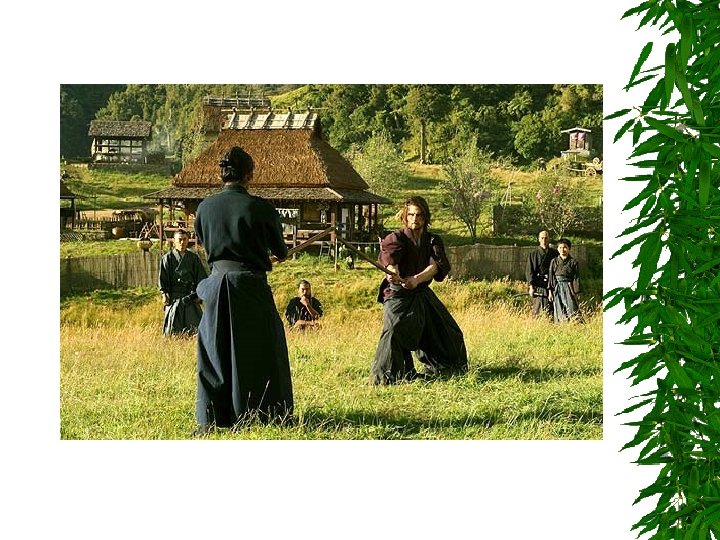
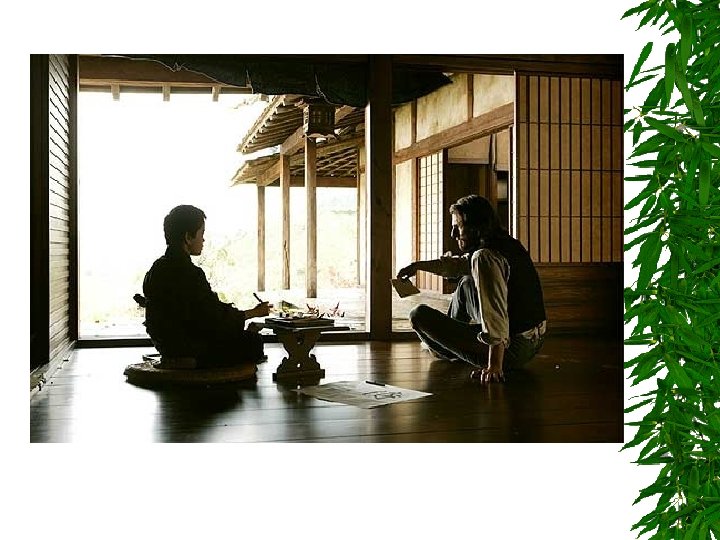
SAMURAI REVOLT 1867 -discontented daimyo & samurai led a revolt – removed shogun from power (November 9, 1867) – restored emperor to power 15 year-old Mutsuhito becomes Emperor Meiji on February 3, 1867 – moved the capital from Kyoto to Edo & renamed it Tokyo (“the eastern capital”) FYI: The movie, The Last Samurai, is loosely based on the samurai, Saigo Takamori, who led the last samurai rebellion in 1877.
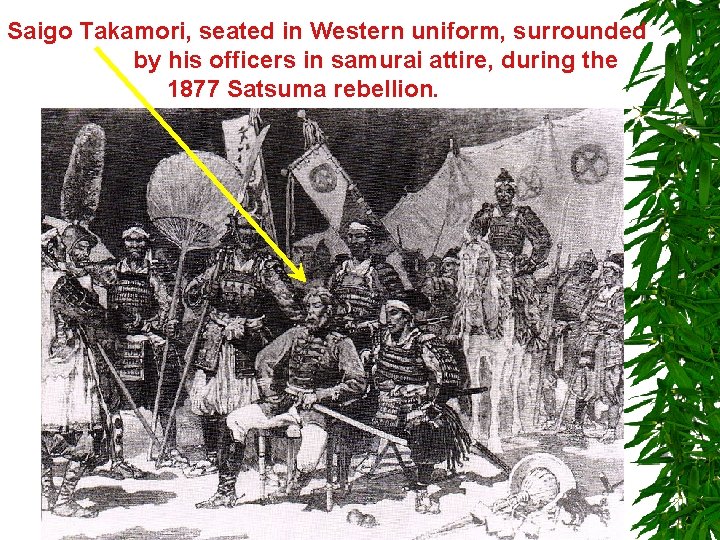
Saigo Takamori, seated in Western uniform, surrounded by his officers in samurai attire, during the 1877 Satsuma rebellion.
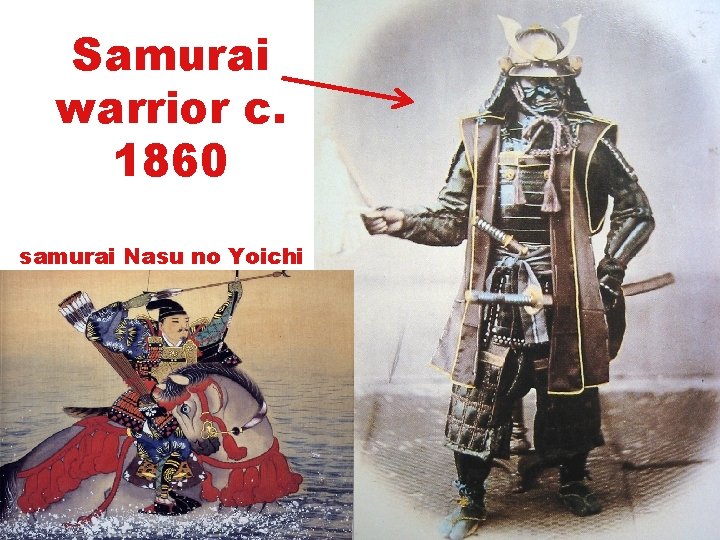
Samurai warrior c. 1860 samurai Nasu no Yoichi
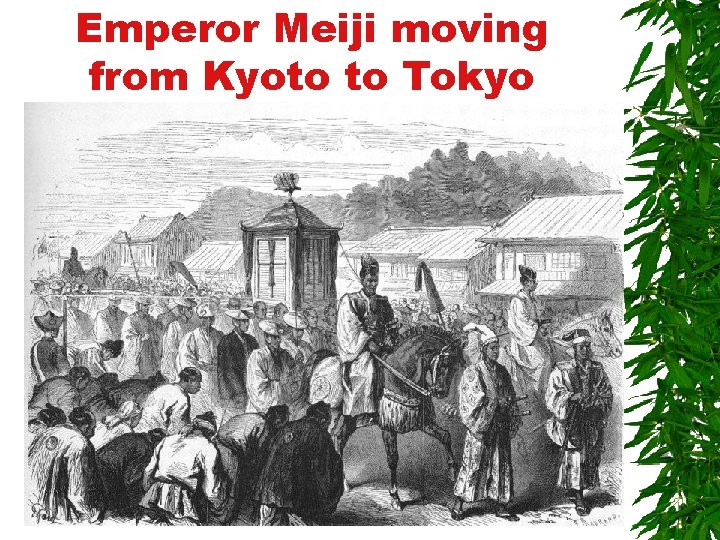
Emperor Meiji moving from Kyoto to Tokyo
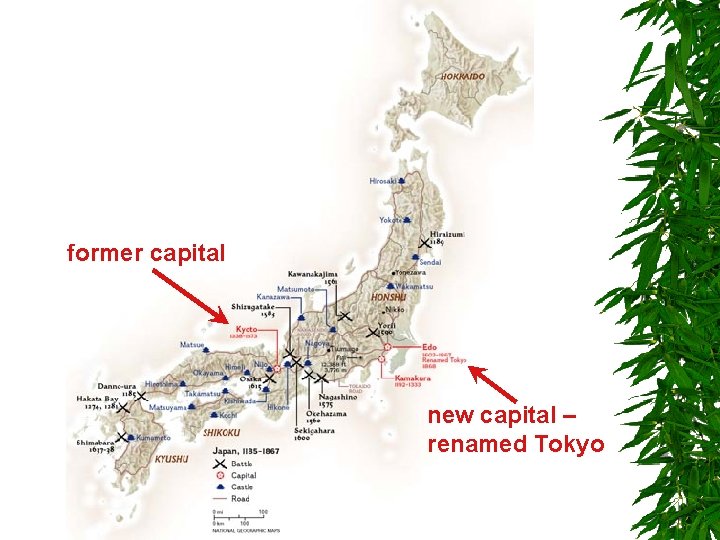
former capital new capital – renamed Tokyo
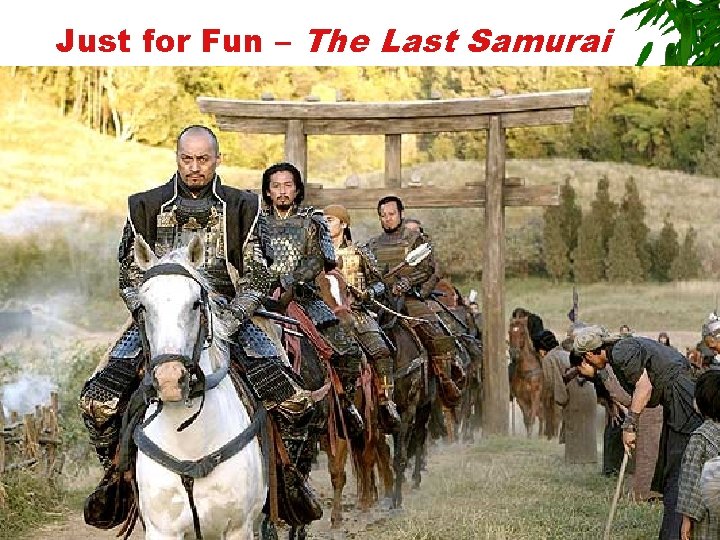
Just for Fun – The Last Samurai
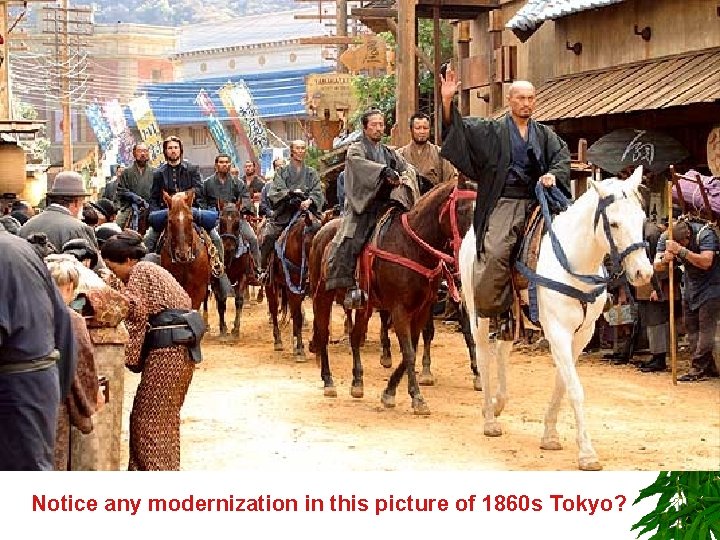
Notice any modernization in this picture of 1860 s Tokyo?
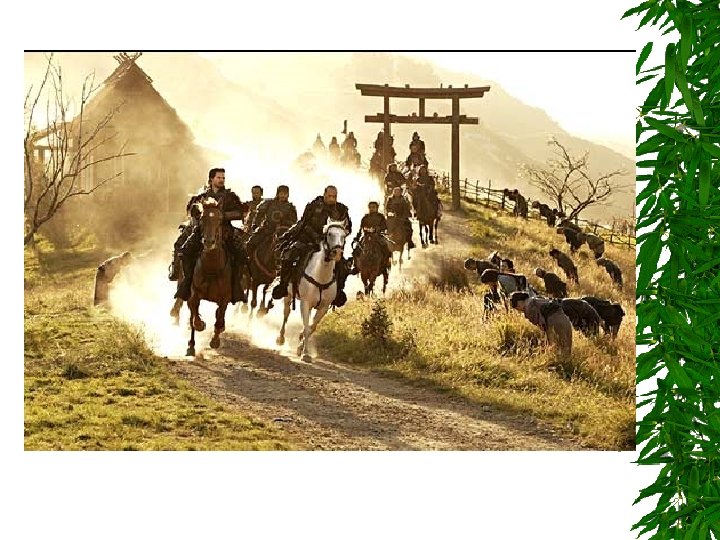
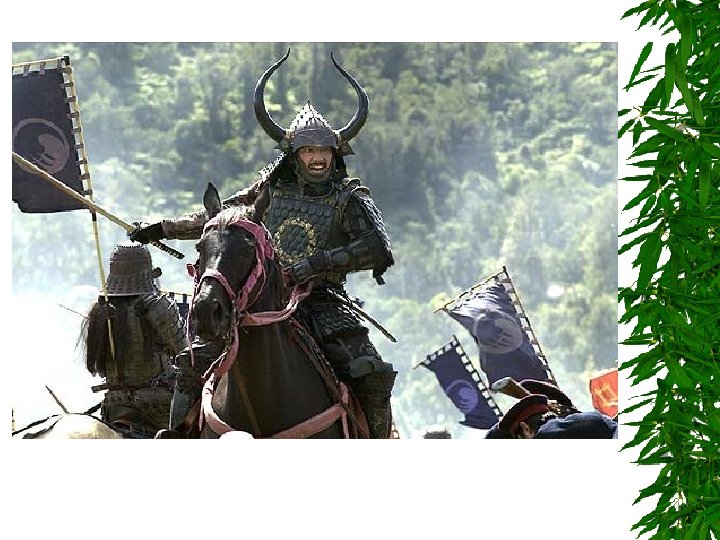
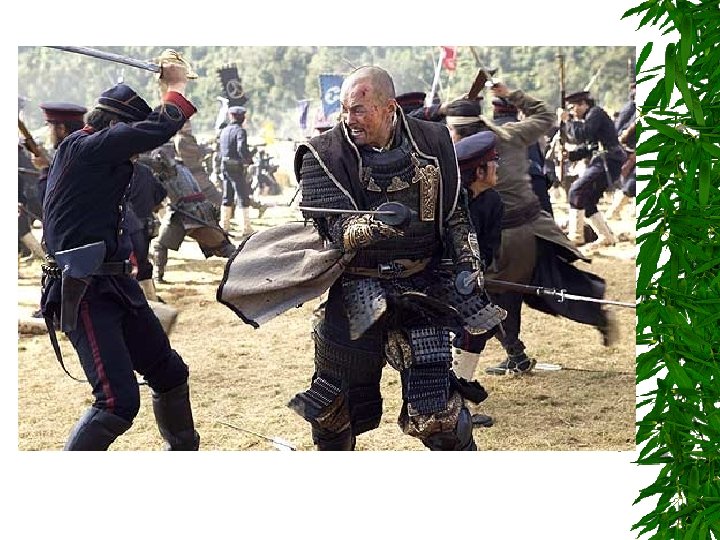
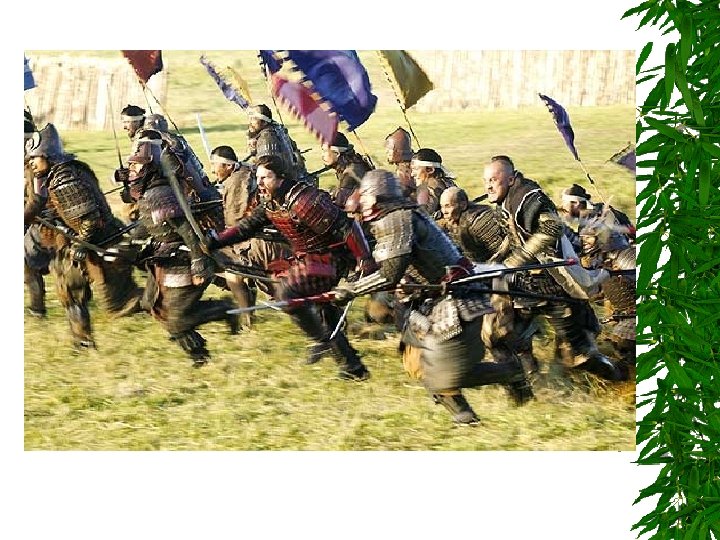
Japan followed the model of Western powers by industrializing and expanding its foreign influence.
Meiji Restoration (1868 – 1912) (MAY jee) ruled by Emperor Meiji (15 year-old Mutsuhito) – meiji = “enlightened rule” – “A rich country, a strong military” (motto) – focused on Japanese pride/nationalism opposed Western imperialism attempted to modernized Japan – thought by modernizing, they could rid themselves of unequal treaties
How to Modernize? learn foreign ways – set out to change image replaced old way of dressing with the western style emperor appeared publicly in western-style military uniforms modernize navy universal public education industrialize – by 1900 = as modern as Europeans shipbuilding weapons railroads factories
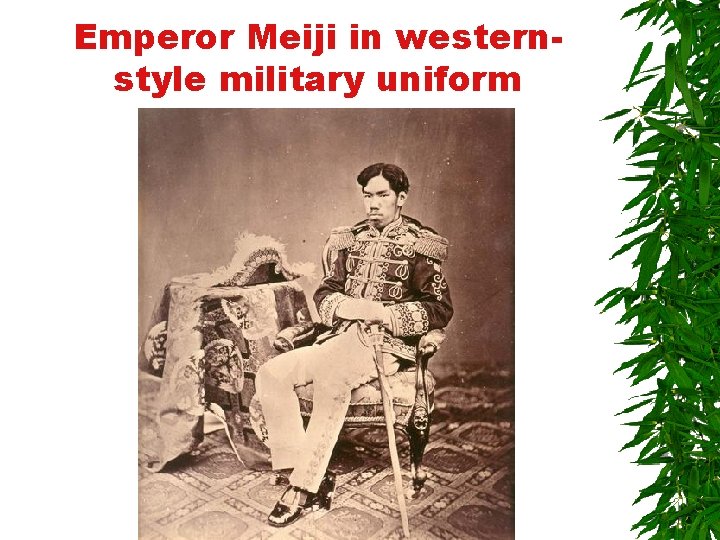
Emperor Meiji in westernstyle military uniform
Japanese Reforms Under the Meiji ended feudalism set up under the Kamakura shogunate in 1192 increased world trade based on a modern industrial economy introduction of capitalism a democratic constitution (German model) a national education system
Government Reform strong central government 1889: Meiji Constitution – based on German model – all citizens are equal before the law – granted the Emperor absolute power this is how the German constitution differs from the US Constitution created a Diet (legislature) – upper house appointed by the emperor from the peerage (royal family & hereditary peers) included a prime minister & cabinet (this cabinet did not answer to the Diet, but to the emperor only) – lower house elected to advise government – limited voting rights (<5% of adult male pop. w/ property could vote)
Government Reform, Part II department system (bureaucracy) – finance – army & navy – education ended samurai privileges (demise of feudalism) all men were subject to military service – formerly, only the samurai were warriors conscripted army with western technology
Economic Reforms business class used western methods banking system railroads, telegraphs, modernized ports created a postal system government built factories, then sold to wealthy business families – zaibatsu powerful banking & industrial families Kawasaki (Japan), Krupps (Germany), Rockefellers (U. S. )
Effects of the Economic Reforms: industry BOOMS!! silk manufacturing soars (modern machines) Japan becomes an industrial leader – shipyards – copper & coal mining – steel making population grows – peasants go to the cities looking for work (Heard of this before? )
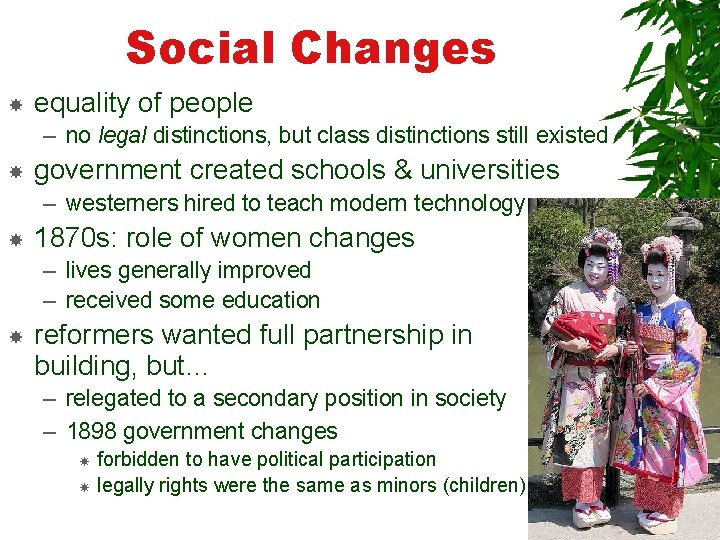
Social Changes equality of people – no legal distinctions, but class distinctions still existed government created schools & universities – westerners hired to teach modern technology 1870 s: role of women changes – lives generally improved – received some education reformers wanted full partnership in nationbuilding, but… – relegated to a secondary position in society – 1898 government changes forbidden to have political participation legally rights were the same as minors (children)
Social Changes, Part II Homogeneous society – A common culture and language that gave it a strong sense of identity – Helped Japan modernize – Also came from learning from the experiences of other societies (China)
Sino-Japanese War (1894 -1895) provoked by a dispute over control of Korea – Korea was considered an independent state, but… – China wanted to reassert influence 1894: Tonghak Rebellion – China sends in troops to suppress rebellion – Japan sees this as a violation of Convention of Tientsin Japan invaded Korea 1 st & then China – seized the royal palace, emperor, & occupied Seoul Japan won due to superior weapons April 17, 1895: Treaty of Shimonoseki – Korea becomes a Japanese protectorate – gains four ports in China & right to operate on Yangzi R. – receives Taiwan & Pescadores Islands joins the race (with Europeans) to create an empire
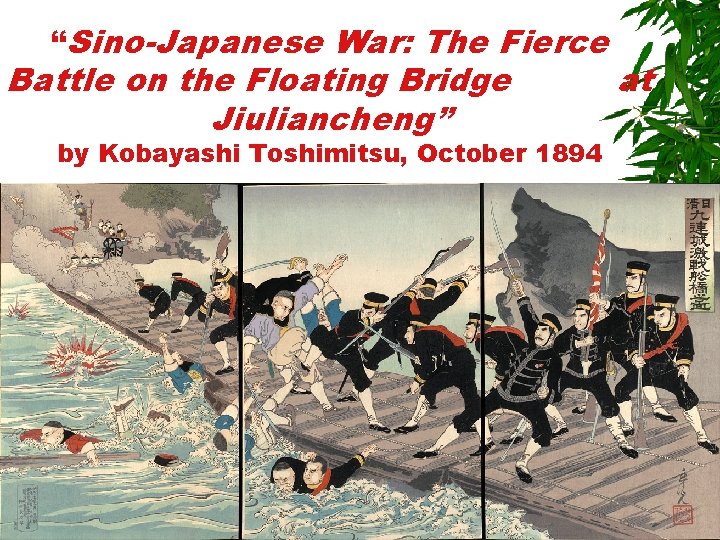
“Sino-Japanese War: The Fierce Battle on the Floating Bridge Jiuliancheng” by Kobayashi Toshimitsu, October 1894 at
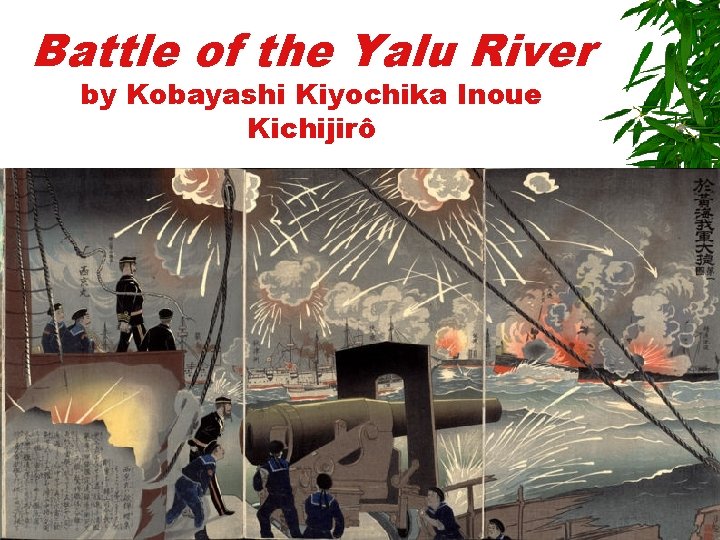
Battle of the Yalu River by Kobayashi Kiyochika Inoue Kichijirô
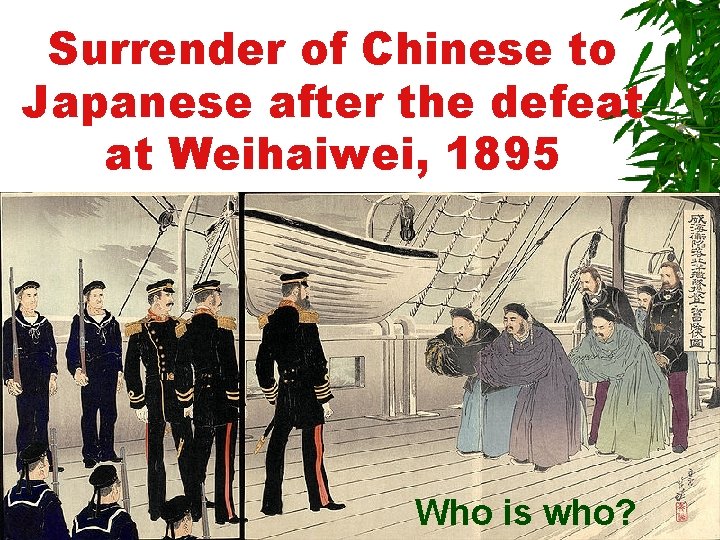
Surrender of Chinese to Japanese after the defeat at Weihaiwei, 1895 Who is who?
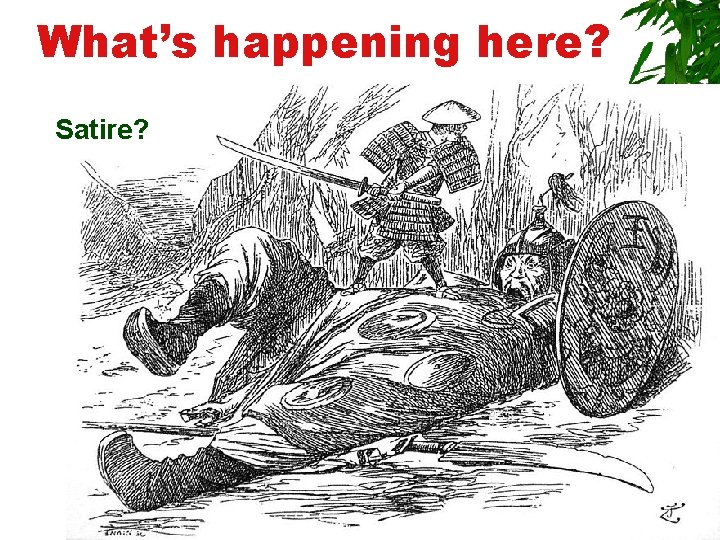
What’s happening here? Satire?
Russo-Japanese War (1904 - 1905) fought over rights in Manchuria & Korea Manchuria (land under China’s rule) – recognize Russian rights in Manchuria (they wanted a warm-water port at Port Arthur near Korea) if Russians would stay out of Korea – Russians refused (they are an imperialist nation after all) February 8, 1904: Japan declares war – attacked Russian troops to protect interests Russian was defeated – Pacific & Baltic fleets destroyed – numerous battle defeats on land & sea (Port Arthur, Manchuria, Yalu River)
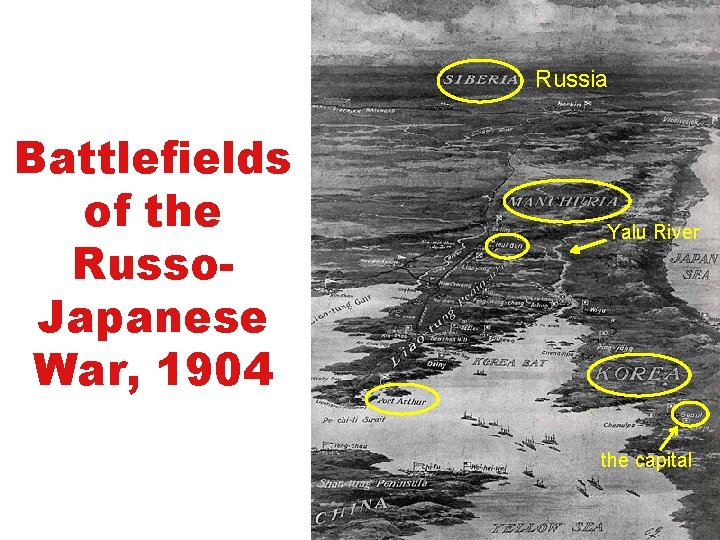
Russia Battlefields of the Russo. Japanese War, 1904 Yalu River the capital
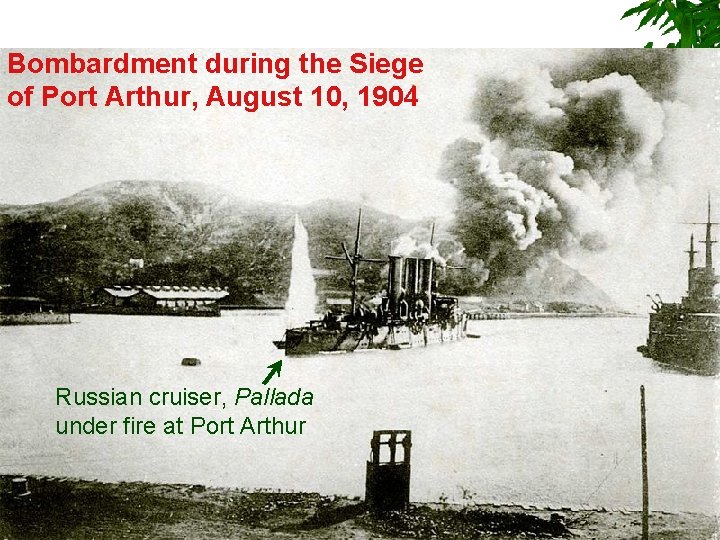
Bombardment during the Siege of Port Arthur, August 10, 1904 Russian cruiser, Pallada under fire at Port Arthur
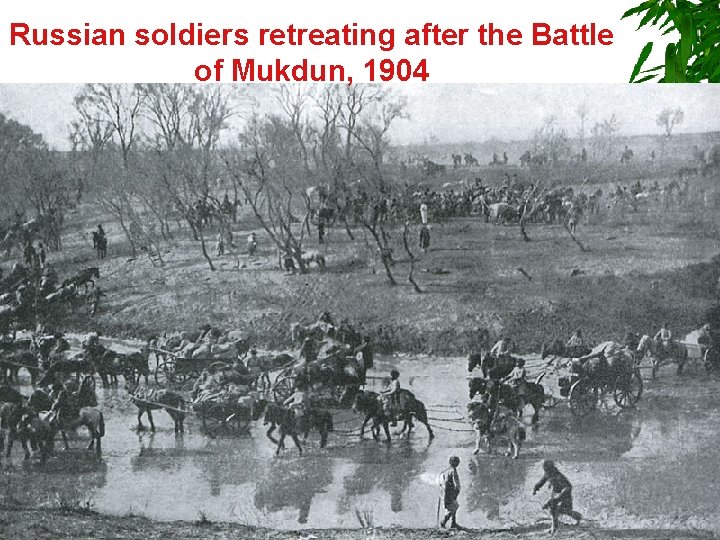
Russian soldiers retreating after the Battle of Mukdun, 1904
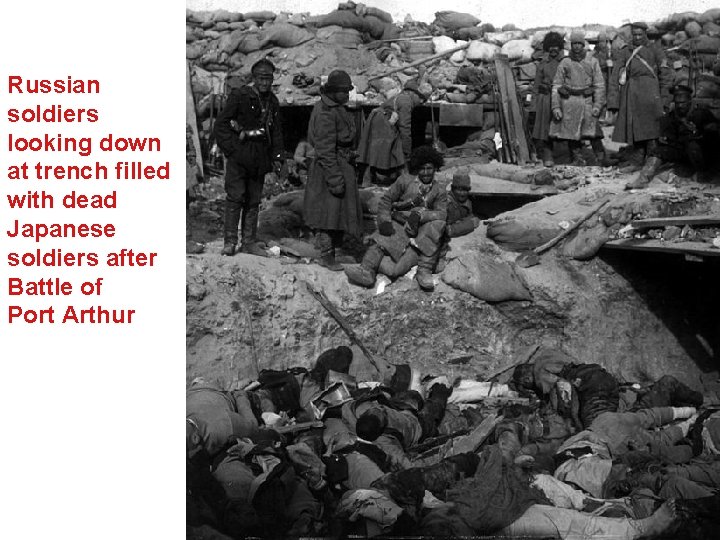
Russian soldiers looking down at trench filled with dead Japanese soldiers after Battle of Port Arthur
Treaty of Portsmouth signed September 5, 1905 first time in modern history an Asian power defeats a European power – both agree to leave Manchuria & give it back to China – Japan gets captured territories Liaodong Peninsula (Port Arthur & Talien) Russian rail system in southern Manchuria Sakhalin Island from Russia control of Korea (from an earlier treaty with the US: Taft Katsura Agreement, July 1905) 1 st time in modern history an Asian nation defeated a European power – fuels future ambitions of conquest
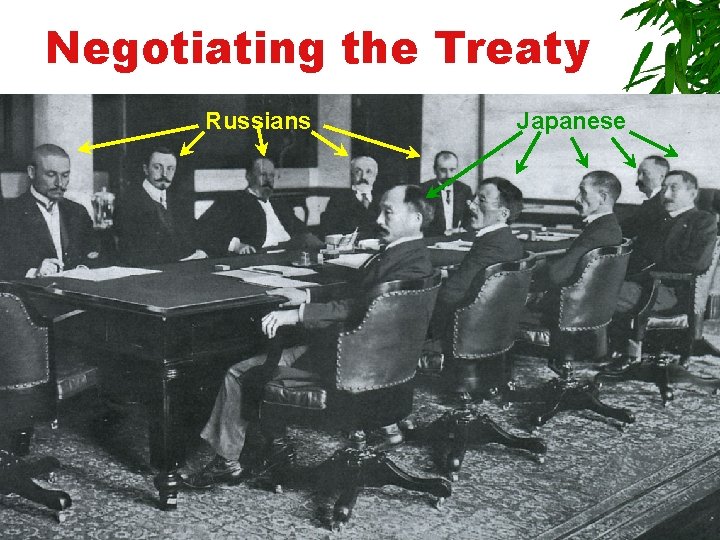
Negotiating the Treaty Russians Japanese
Random Trivia What US president mediated the Treaty of Portsmouth negotiations in 1905?
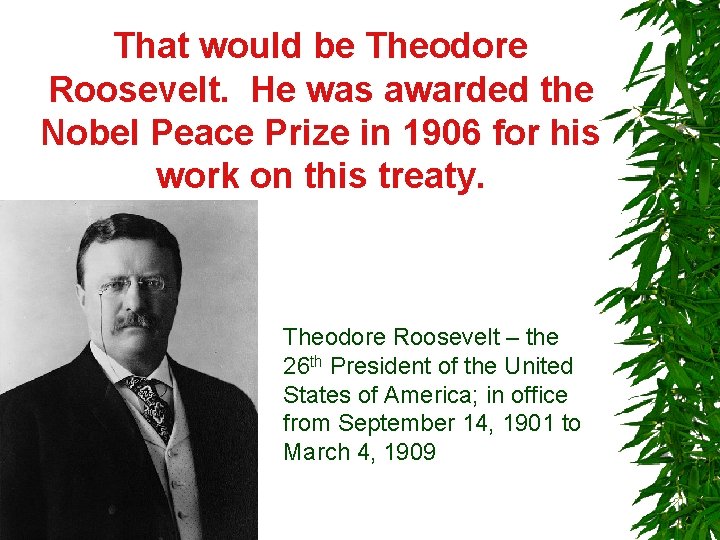
That would be Theodore Roosevelt. He was awarded the Nobel Peace Prize in 1906 for his work on this treaty. Theodore Roosevelt – the 26 th President of the United States of America; in office from September 14, 1901 to March 4, 1909
Japanese Aggression Korea = the “Hermit Kingdom” – interest of Russia, China, & Japan – forced to accept unequal treaties – initially becomes a Japanese protectorate but annexed to the Japanese empire in 1910 Japan modernizes Korea – Is this a European tactic? – harsh rule, set out to erase the Korean language – led to nationalistic movements in Korea March 1, 1919 (March First Movement)
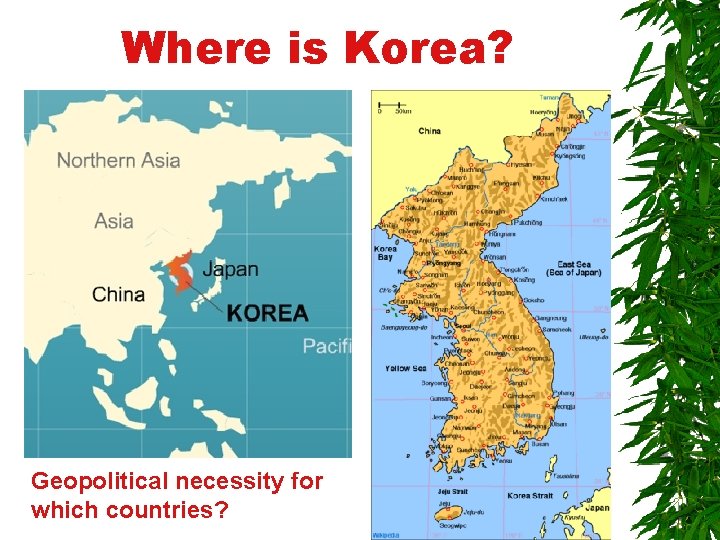
Where is Korea? Geopolitical necessity for which countries?
Transnational Businesses The global nature of trade and production contributed to the proliferation of large-scale transnational business – The United Fruit Company (Banana Republics) – The HSBC
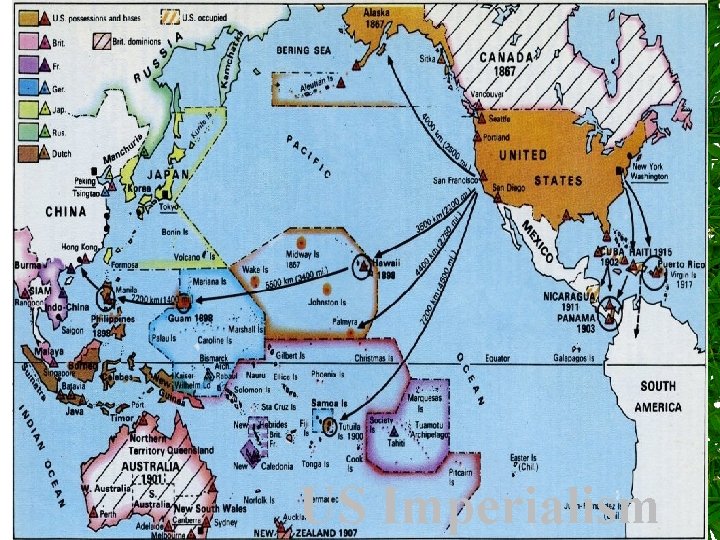
US Imperialism
- Slides: 166