
The Age of Exploration Part II The Spanish

- Slides: 12
The Age of Exploration Part II
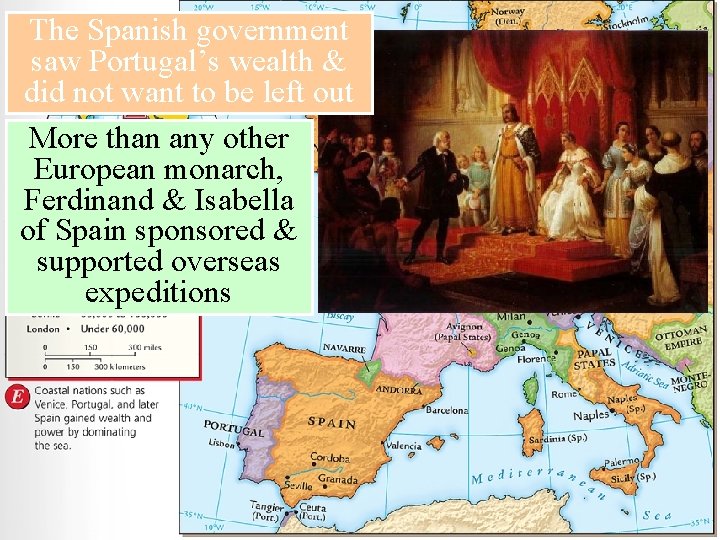
The Spanish government saw Portugal’s wealth & did not want to be left out More than any other European monarch, Ferdinand & Isabella of Spain sponsored & supported overseas expeditions
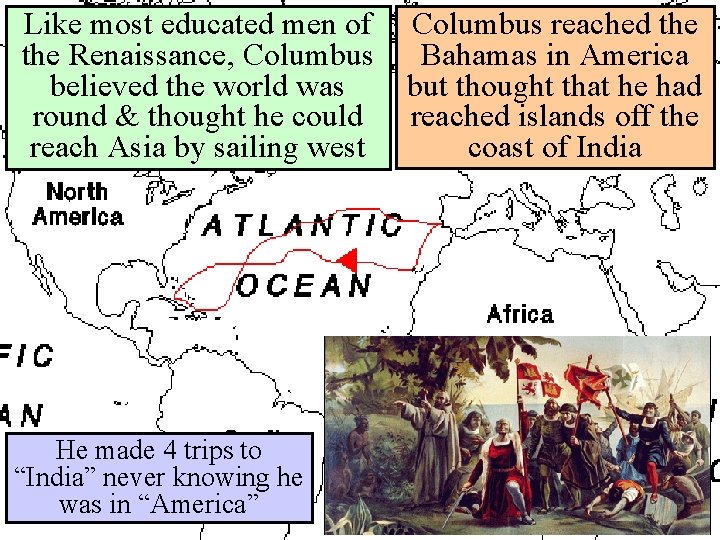
Like most educated men of the Renaissance, Columbus believed the world was round & thought he could reach Asia by sailing west He made 4 trips to “India” never knowing he was in “America” Columbus reached the Bahamas in America but thought that he had reached islands off the coast of India
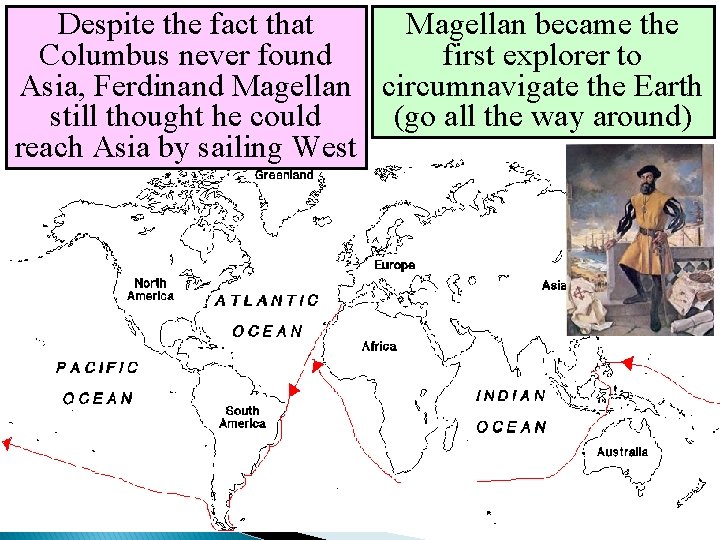
Despite the fact that Magellan became the Columbus never found first explorer to Asia, Ferdinand Magellan circumnavigate the Earth still thought he could (go all the way around) reach Asia by sailing West
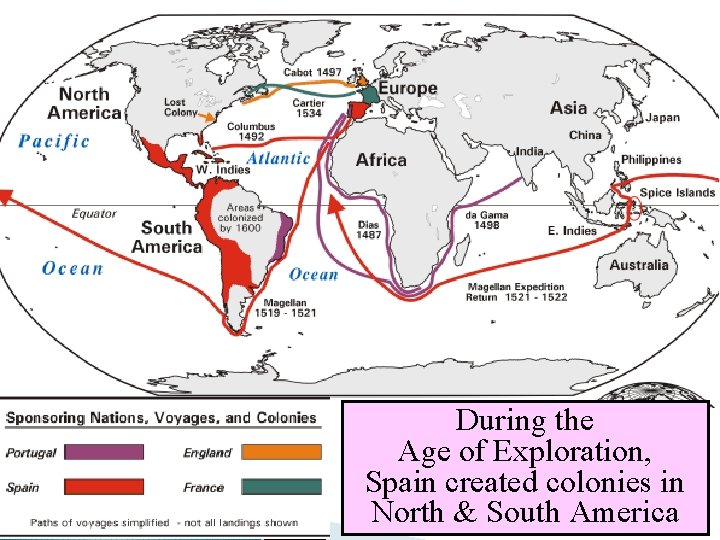
During the Age of Exploration, Spain created colonies in North & South America
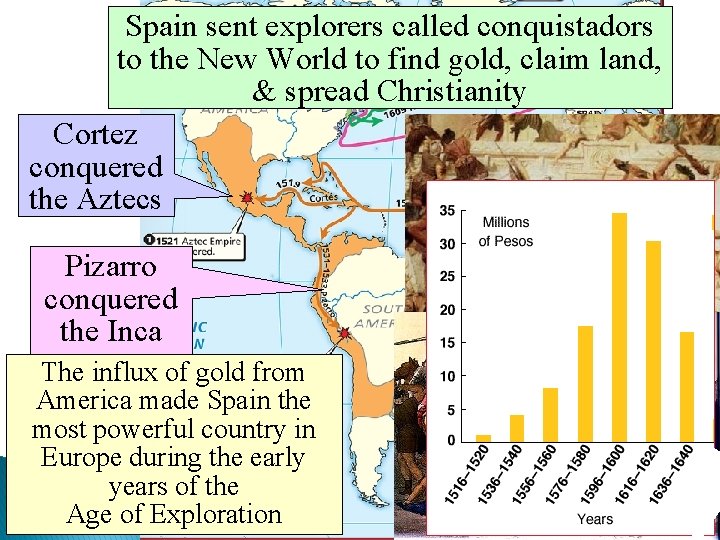
Spain sent explorers called conquistadors to the New World to find gold, claim land, & spread Christianity Cortez conquered the Aztecs Pizarro conquered the Inca The influx of gold from America made Spain the most powerful country in Europe during the early years of the Age of Exploration
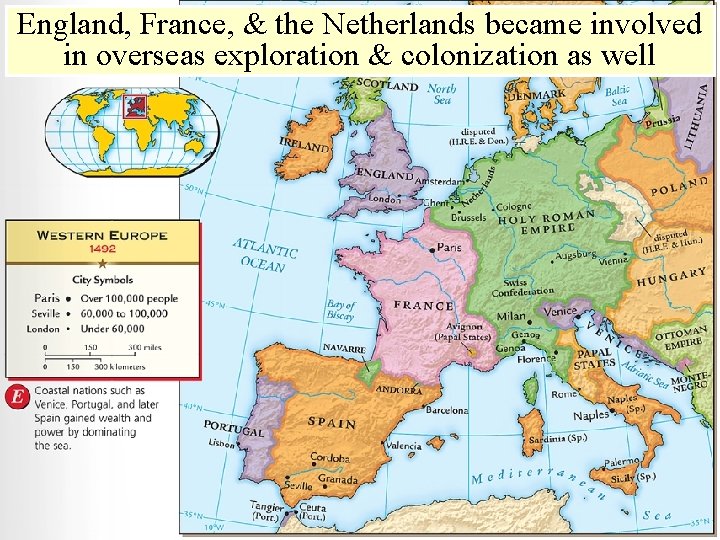
England, France, & the Netherlands became involved in overseas exploration & colonization as well
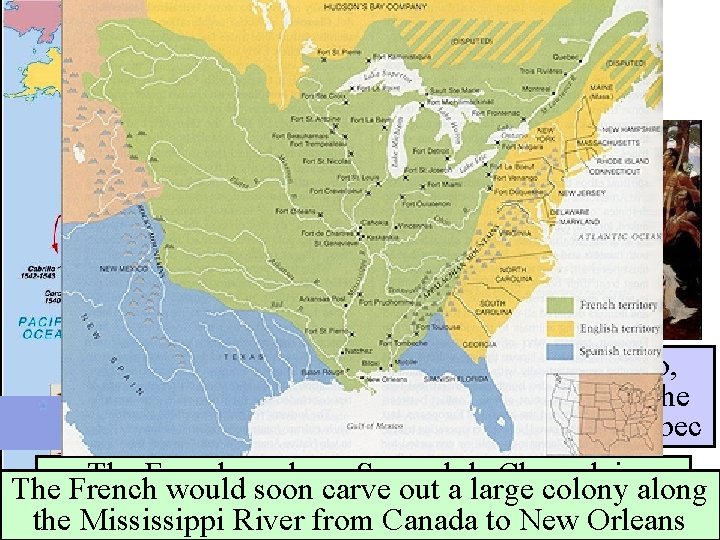
After failing to do so, Champlain founded the French colony of Quebec The French explorer Samuel de Champlain Thesearched French would soon carve out a large colony along Canada for a northwest passage to Asia the Mississippi River from Canada to New Orleans
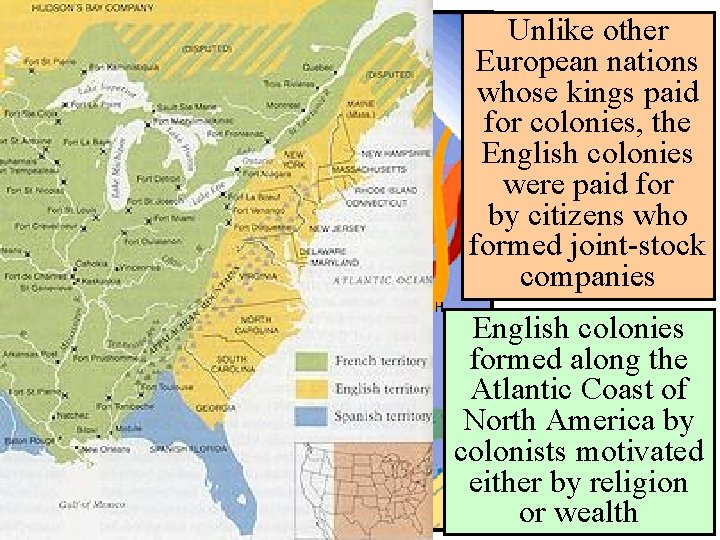
Unlike other European nations whose kings paid for colonies, the English colonies were paid for by citizens who formed joint-stock companies English colonies formed along the Atlantic Coast of North America by colonists motivated either by religion or wealth
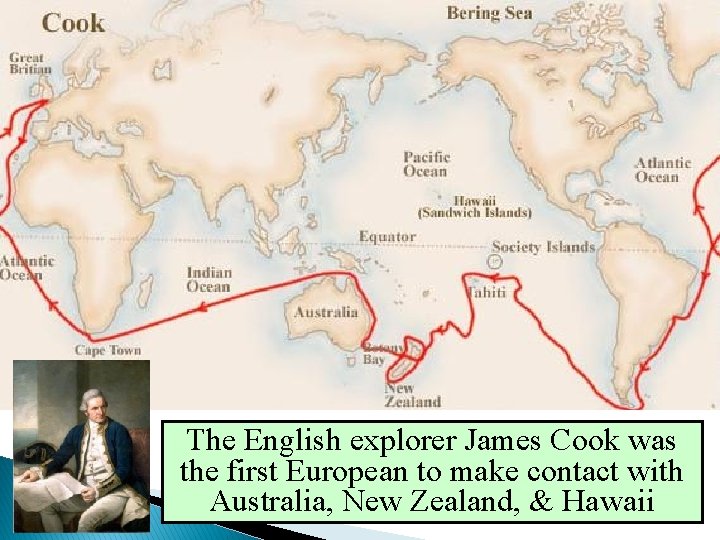
The English explorer James Cook was the first European to make contact with Australia, New Zealand, & Hawaii
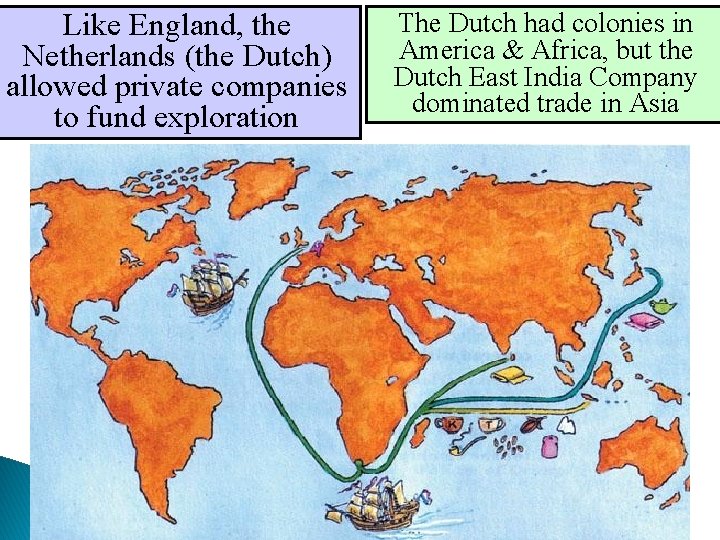
Like England, the Netherlands (the Dutch) allowed private companies to fund exploration The Dutch had colonies in America & Africa, but the Dutch East India Company dominated trade in Asia
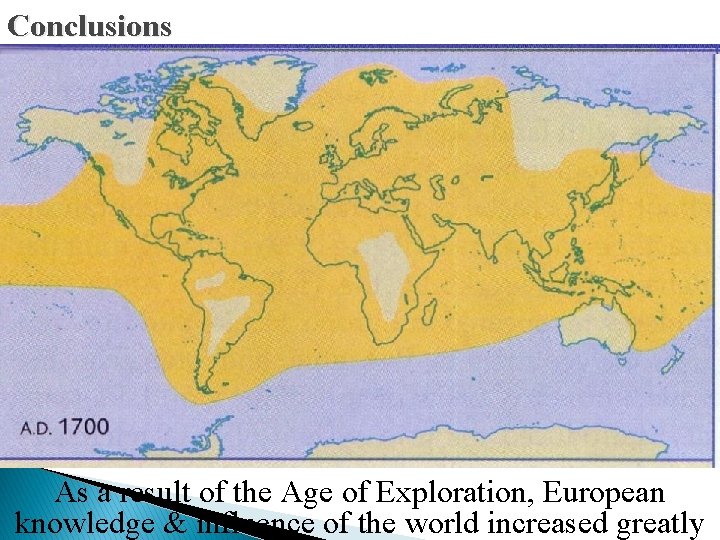
Conclusions As a result of the Age of Exploration, European knowledge & influence of the world increased greatly