
The Age of Exploration Early th 15 Century
- Slides: 38
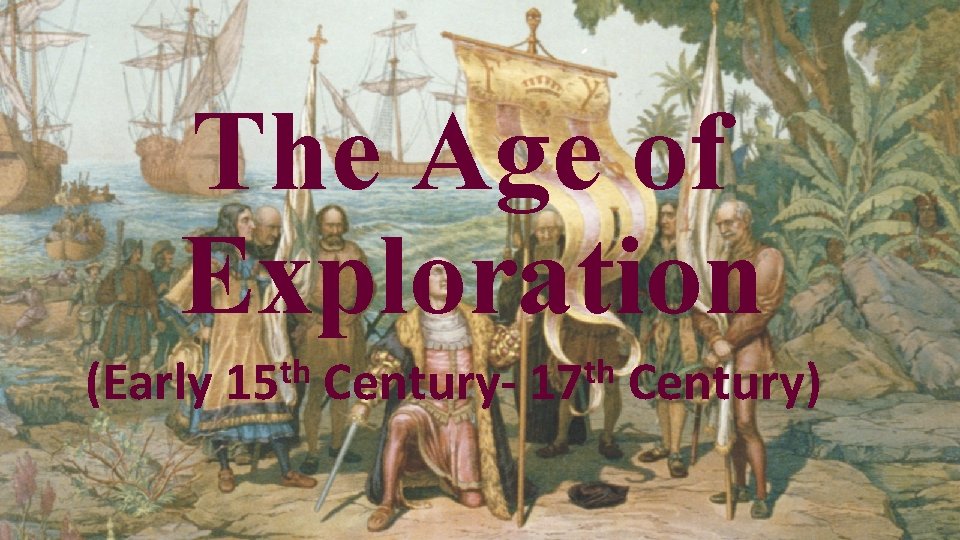
The Age of Exploration (Early th 15 Century- th 17 Century)
Exploration is… • The act of searching or traveling for the purpose of discovery. • Although exploration has existed as long as human beings, its peak is seen as being during the Age of Discovery when European navigators traveled around the world, discovering new lands and cultures.
Setting the Stage for Exploration: 1. Renaissance Attitudes 2. Protestant Reformation/Counter-Reformation 3. Absolute Monarchs Established in Europe 4. Technological Innovations 5. The Ineffectiveness and Expense of the Silk Road for Europeans
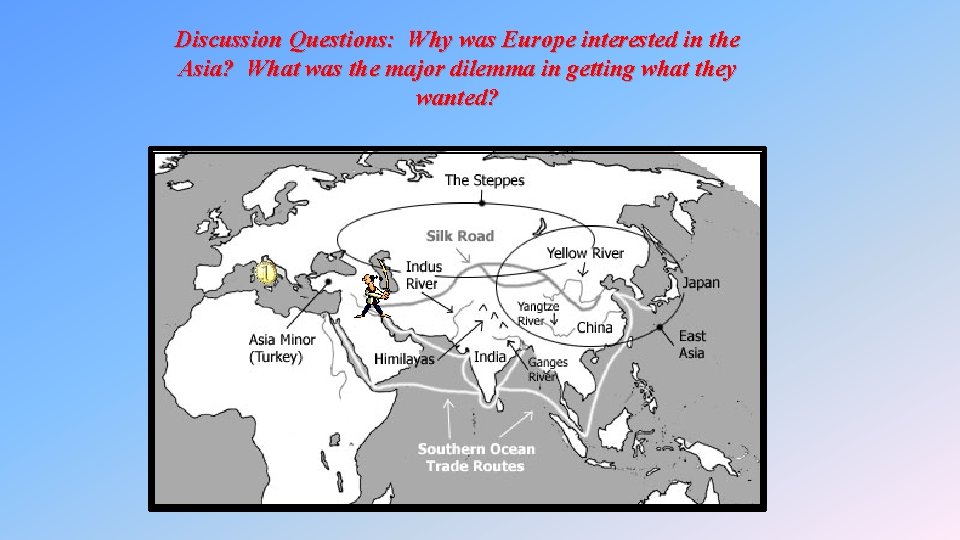
Discussion Questions: Why was Europe interested in the Asia? What was the major dilemma in getting what they wanted?
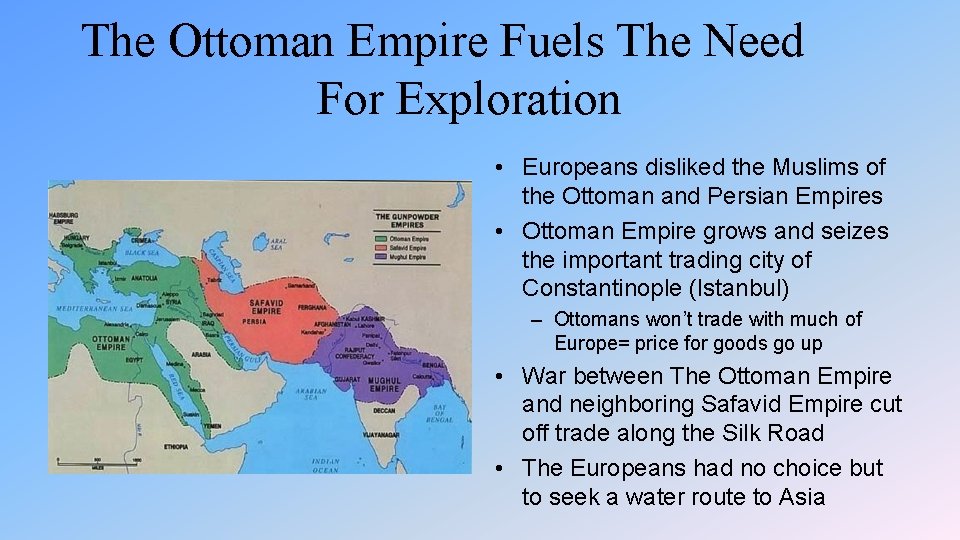
The Ottoman Empire Fuels The Need For Exploration • Europeans disliked the Muslims of the Ottoman and Persian Empires • Ottoman Empire grows and seizes the important trading city of Constantinople (Istanbul) – Ottomans won’t trade with much of Europe= price for goods go up • War between The Ottoman Empire and neighboring Safavid Empire cut off trade along the Silk Road • The Europeans had no choice but to seek a water route to Asia
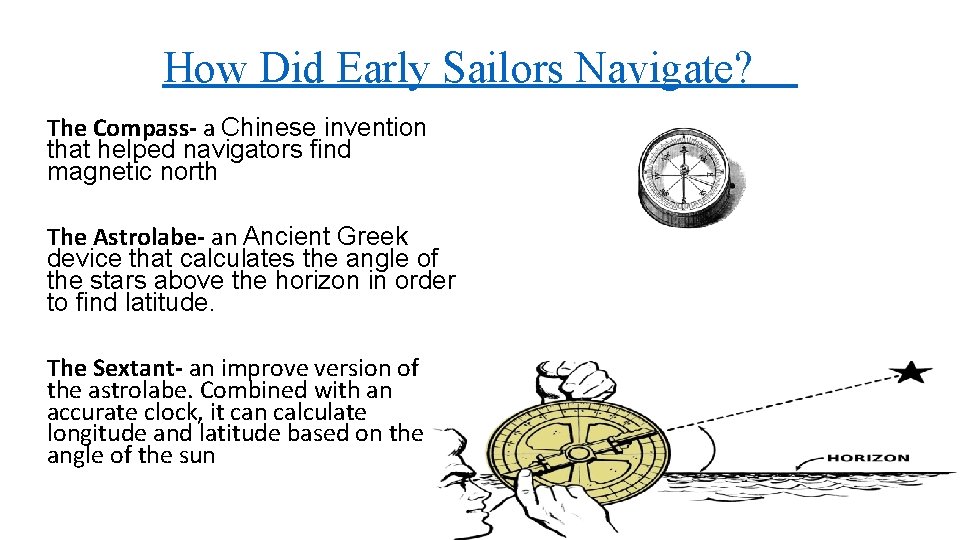
How Did Early Sailors Navigate? The Compass- a Chinese invention that helped navigators find magnetic north The Astrolabe- an Ancient Greek device that calculates the angle of the stars above the horizon in order to find latitude. The Sextant- an improve version of the astrolabe. Combined with an accurate clock, it can calculate longitude and latitude based on the angle of the sun
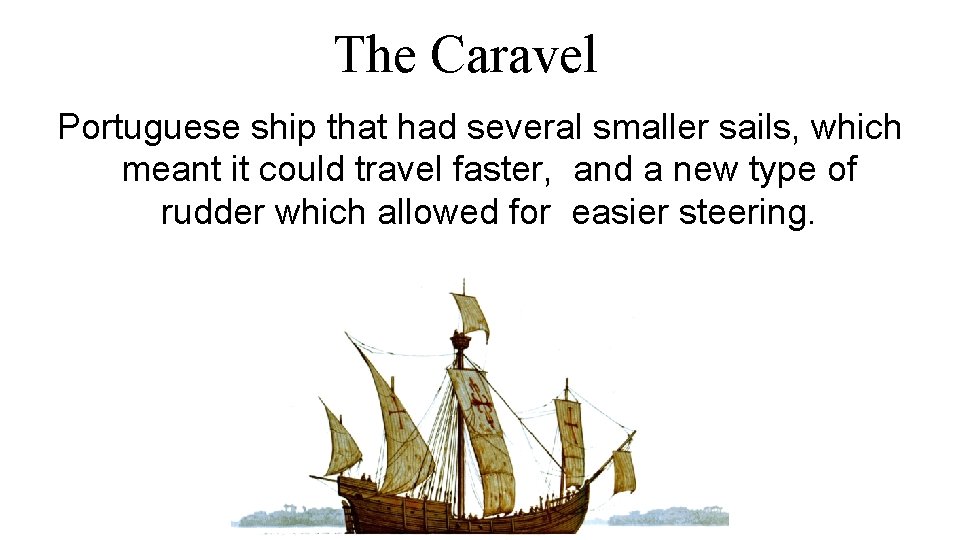
The Caravel Portuguese ship that had several smaller sails, which meant it could travel faster, and a new type of rudder which allowed for easier steering.
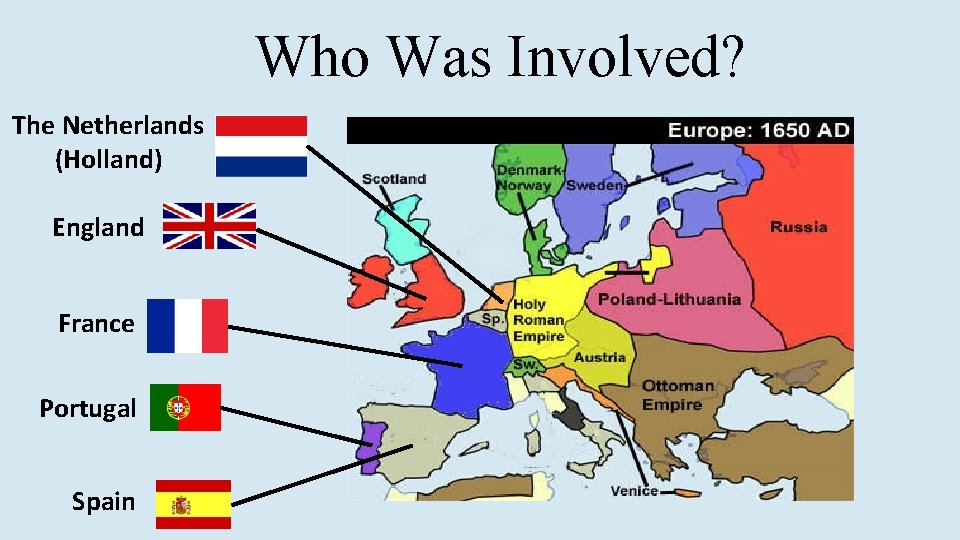
Who Was Involved? The Netherlands (Holland) England France Portugal Spain
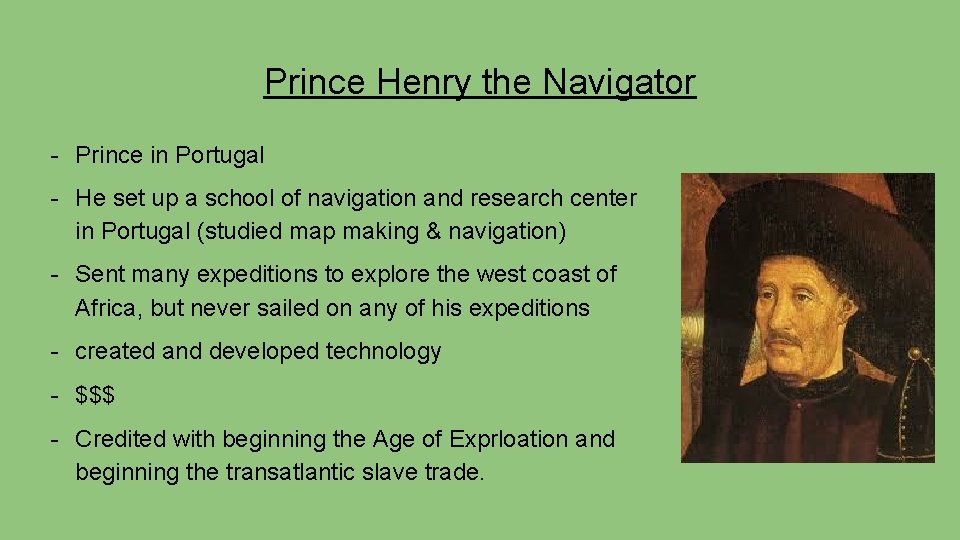
Prince Henry the Navigator - Prince in Portugal - He set up a school of navigation and research center in Portugal (studied map making & navigation) - Sent many expeditions to explore the west coast of Africa, but never sailed on any of his expeditions - created and developed technology - $$$ - Credited with beginning the Age of Exprloation and beginning the transatlantic slave trade.
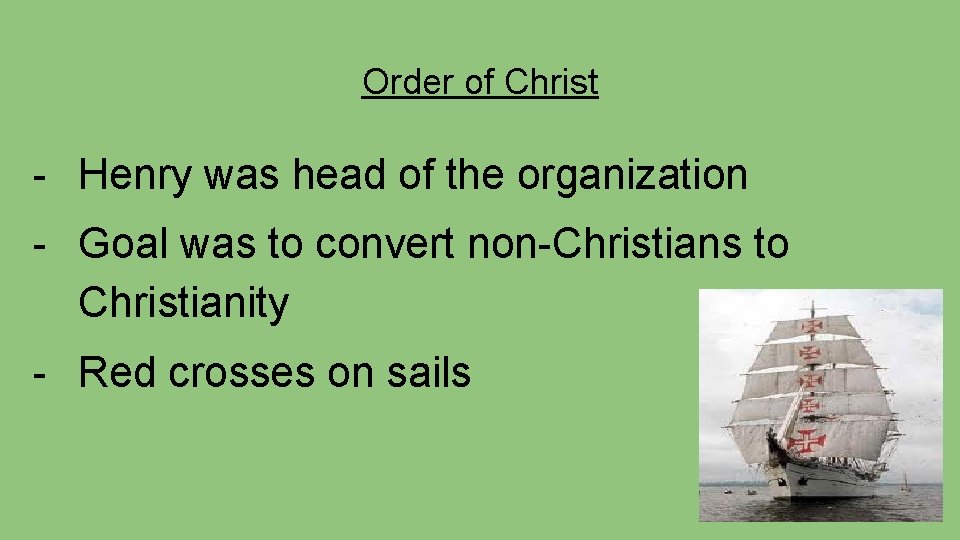
Order of Christ - Henry was head of the organization - Goal was to convert non-Christians to Christianity - Red crosses on sails
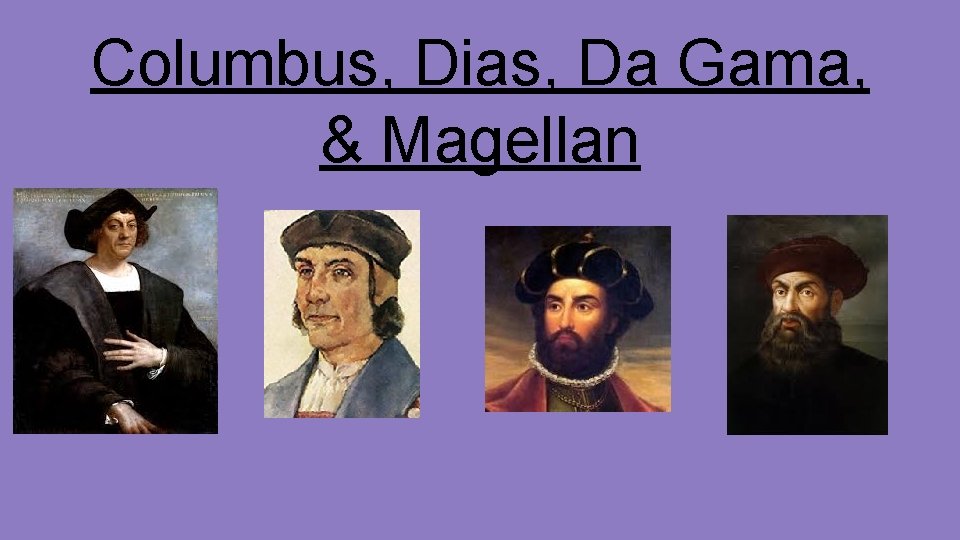
Columbus, Dias, Da Gama, & Magellan
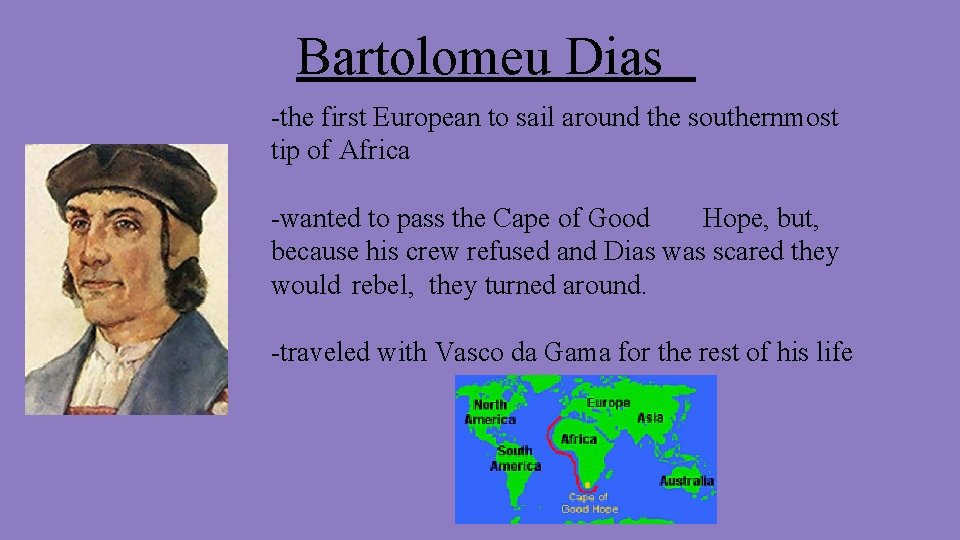
Bartolomeu Dias -the first European to sail around the southernmost tip of Africa -wanted to pass the Cape of Good Hope, but, because his crew refused and Dias was scared they would rebel, they turned around. -traveled with Vasco da Gama for the rest of his life
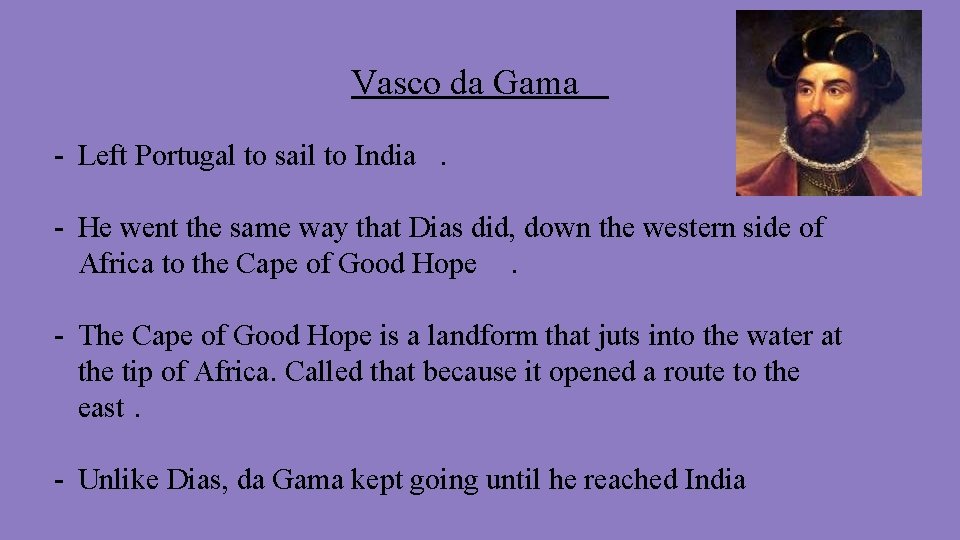
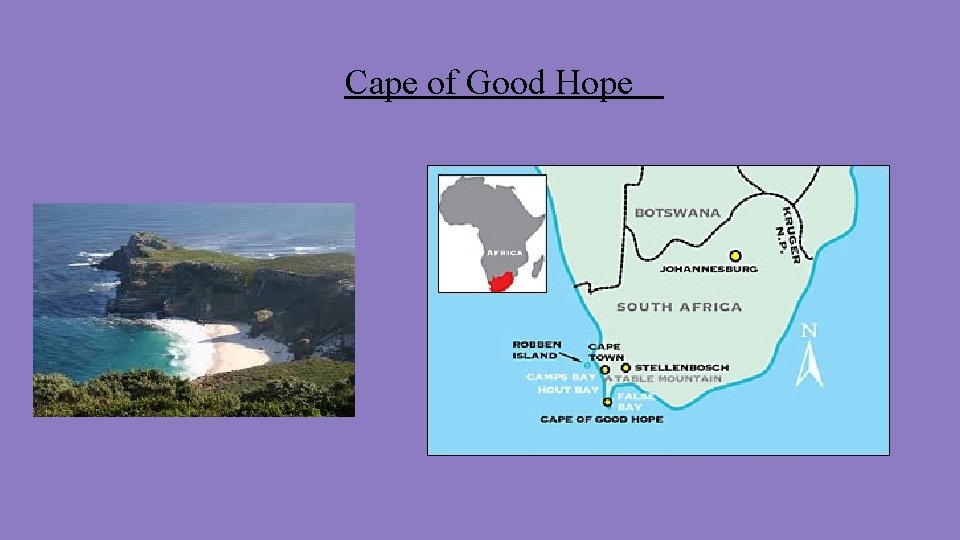
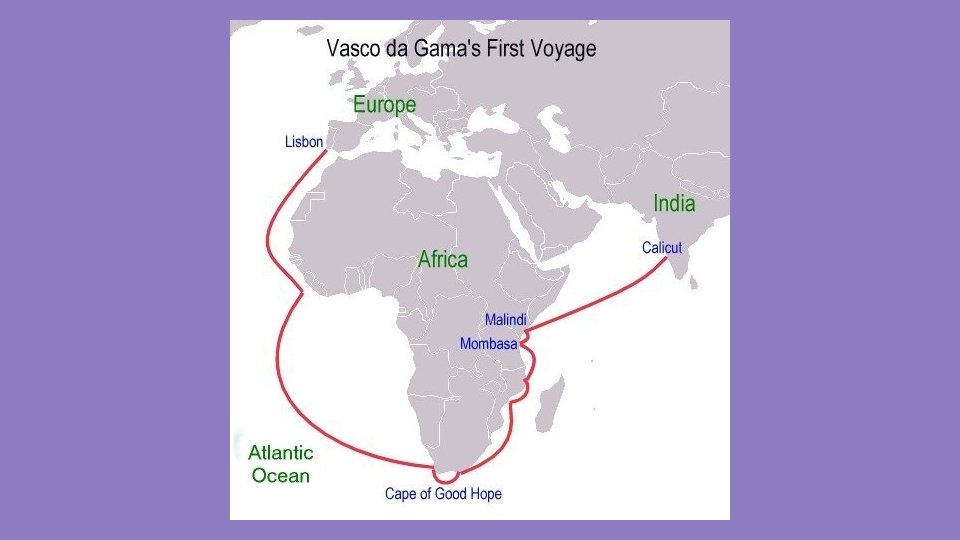
Vasco da Gama - Left Portugal to sail to India. - He went the same way that Dias did, down the western side of Africa to the Cape of Good Hope. - The Cape of Good Hope is a landform that juts into the water at the tip of Africa. Called that because it opened a route to the east. - Unlike Dias, da Gama kept going until he reached India
Cape of Good Hope
Da Gama Returns - At first, everything was okay in India, but then relations deteriorated. - Left on bad terms. - Took him TWO YEARS to get back to Portugal
Scurvy - Many of his sailors got scurvy: a disease caused by a lack of Vitamin C.
When He Got Back. . . - Treated as a king. - Three years later, da Gama went to India again. - He died there (on Christmas Eve)
Columbus - Spain paid for his trips. Wanted to find a shortcut to India by sailing west from Spain. Discovered North America for Europe. He landed near the Bahamas and continued to sail around Cuba and Haiti. Columbus mistook these lands for the island of Japan and mainland China and referred to the natives as “Indians ”. - Was not a very nice guy. - Kept 2 journals. - Died thinking he had found a western route to the Spice Islands.
Fun Facts about Columbus 1. Portugal, England, and France all turned him down, Spain took a long time and he was about to leave the country when he found out 2. He returned to Spain in chains in 1500 3. A lunar eclipse is thought to have saved him against natives 4. Even after Columbus died he continued to cross the Atlantic Ocean 5. When gold failed, he brought back natives as slaves for the Queen
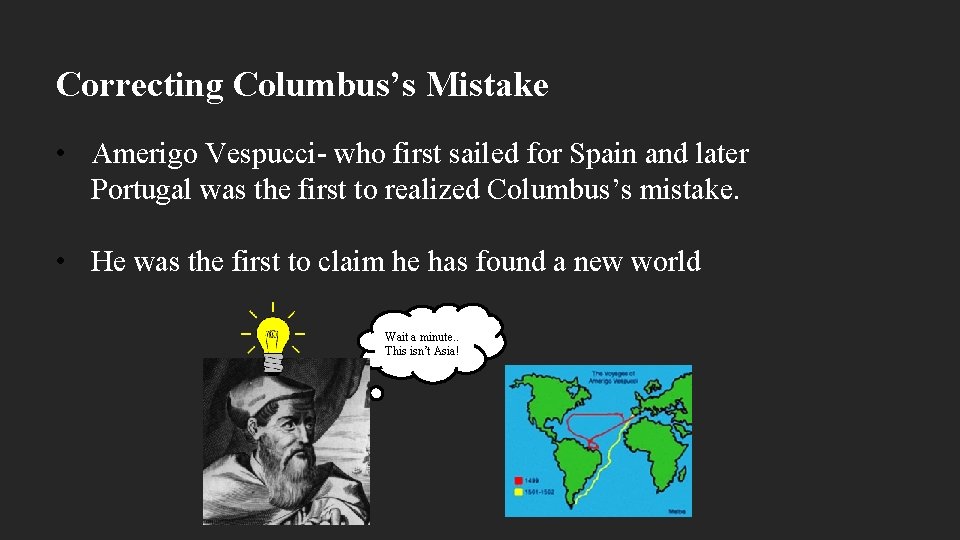
Correcting Columbus’s Mistake • Amerigo Vespucci- who first sailed for Spain and later Portugal was the first to realized Columbus’s mistake. • He was the first to claim he has found a new world Wait a minute. . This isn’t Asia!
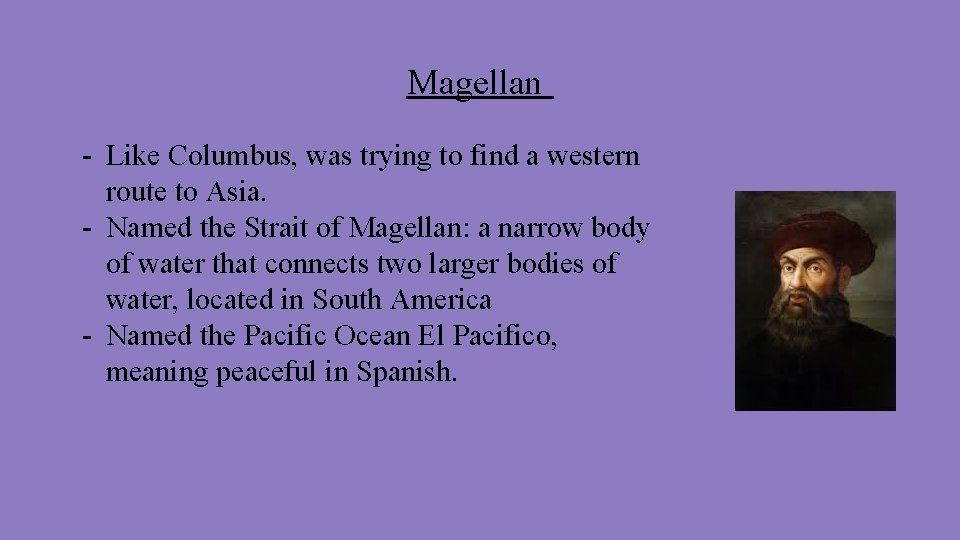
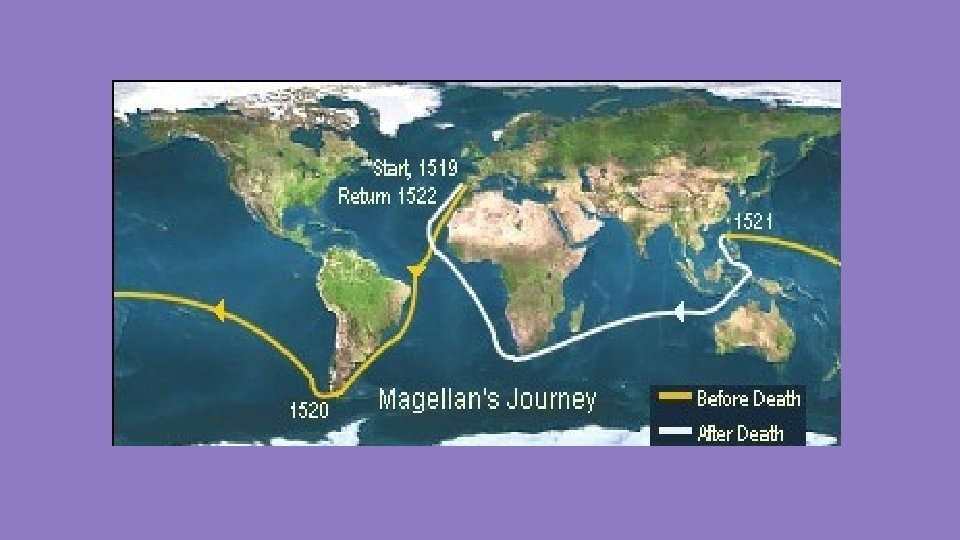
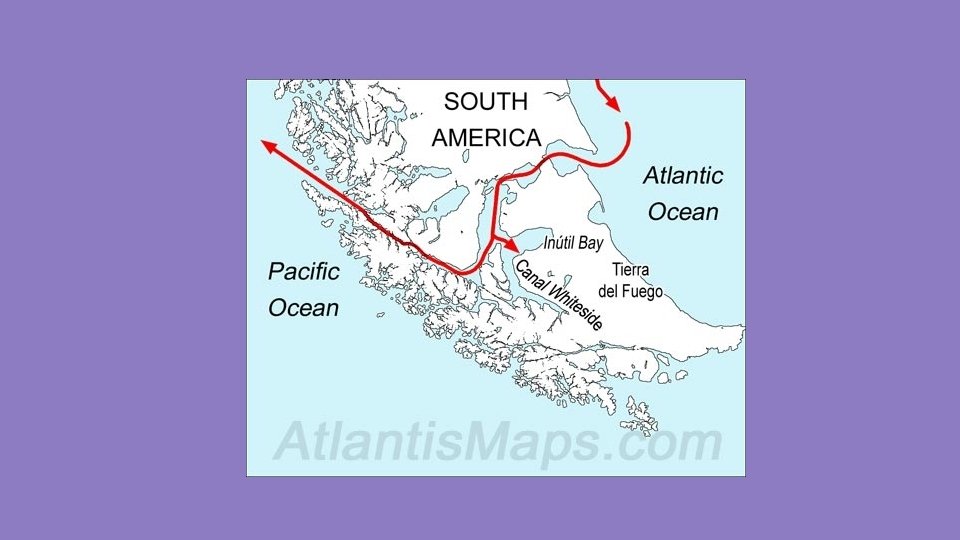
Magellan - Like Columbus, was trying to find a western route to Asia. - Named the Strait of Magellan: a narrow body of water that connects two larger bodies of water, located in South America - Named the Pacific Ocean El Pacifico, meaning peaceful in Spanish.
Magellan - Died in the Philippines by a poison spear, crew continued on. - Left with 5 ships, only 1 returned to Spain (one wrecked, one turned back in a storm, one was left in the Philippines, and one began leaking and was left in India). - Cargo of spices paid the cost of the entire trip (3 years).
A Day in the Life of a Sailor -Pay was terrible-on Columbus’ ship they made less than $10 per month in today’s money -Malnutrion was a huge issue: -Scurvy-rotted teeth, open sores, and sometimes mental breakdowns-most ships lost 50% of their crew to scurvy -hardtack=like a biscuit or cracker, it was usually infested with bugs and weevils but the sailors ate it anyway for extra protein
A Day in the Life of a Sailor -sailors only had 1 set of clothes for the entire journey and were almost never washed-they thought the dirt and grease would provide protection from the wind and rain -lack of fresh air below deck caused carbon monoxide poisoning-so they men slept out on the deck in hammocks -ships could be very cold but fires were only allowed in calm weather
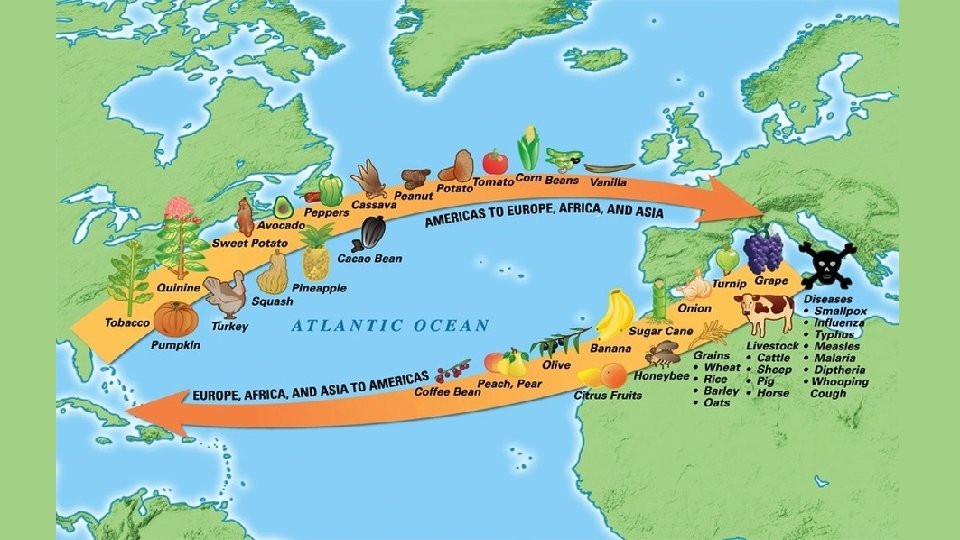
Columbian Exchange • Exchange or trading of goods across the Atlantic Ocean between the Old World and New World • Goods, technology, ideas, disease, and even people • New world=North and South America Old World= Asia, Europe, Africa
Columbian Exchange Motives: The 3 G’s Pocahontas What were some things that you saw in the video? Was there anything that was repeated? Is that important? Why?
Columbian Exchange Motives: The 3 G’s: GOLD-the explorers thought they would find tons of gold in America and they wanted to find it GLORY- with all the land in the New World, it gave them more power, land, money, and trading possibilites GOD- many people came over to convert the indians to Christianity-missionaries
Technology Transportation-------Wheel, carts, and wagons Farming------iron farm tools (iron plow) Warefare----iron and steel weapons, gunpowder
Culture Alphabet and writing systems----spanish becomes the language of Central and S. America, English becomes the language of N. America Disease-----depopulation------reduced the population of Native Americans
Ideas Religion-----missionaries spread Christianity Politics-----British brought their government Slavery----both worlds participated
Food (extra) potato and corn -----can be grown in dry and cold places (perfect for most of Europe) tobacco-----Europe loved and made the US $ (especially the south) herbal medicines------ today’s perscription drugs
Food (extra) Milk cows-------dairy farms (cheese, milk, etc) Beef cows, chickens, pigs, goats, and sheep---protein/meat to people’s diets sugar------sugar plantations in the Caribbean $$$ tea----- big part in American trading and American Revolution
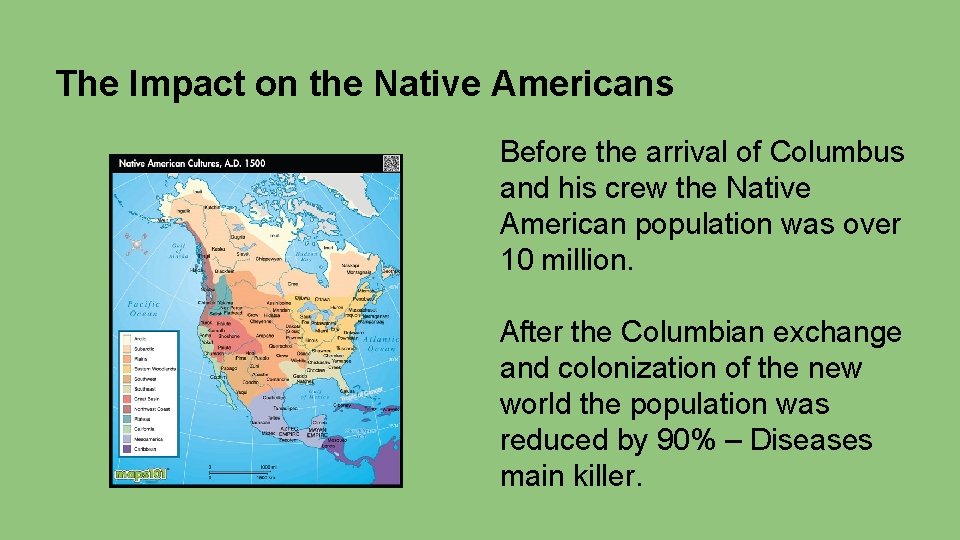
The Impact on the Native Americans Before the arrival of Columbus and his crew the Native American population was over 10 million. After the Columbian exchange and colonization of the new world the population was reduced by 90% – Diseases main killer.