
The Age of Enlightenment Part 3 Mid 1700
- Slides: 6
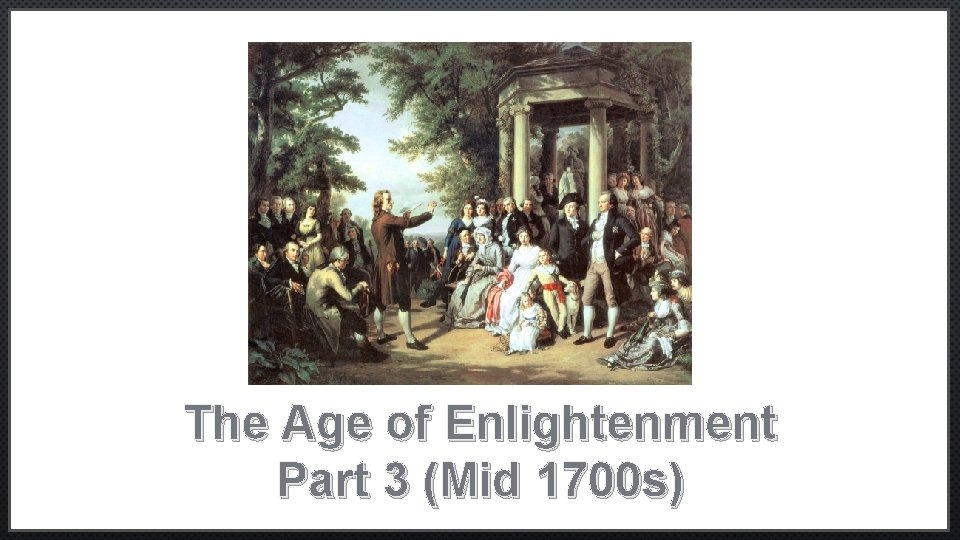
The Age of Enlightenment Part 3 (Mid 1700 s)
What was the Enlightenment? • Using methods of modern science, reformers set out to study human behavior and solve the political, social and economic problems of society using reason • Enlightened thinkers, called “philosophes”, were concerned with the relationship between government and the people, and their ideas were used by many modern nations in the creation of government • Resulted in the move away from absolutism and divine right (religion) and toward democracy and individual rights (secularism) • Encouraged revolutionary leaders throughout Europe and the Americas
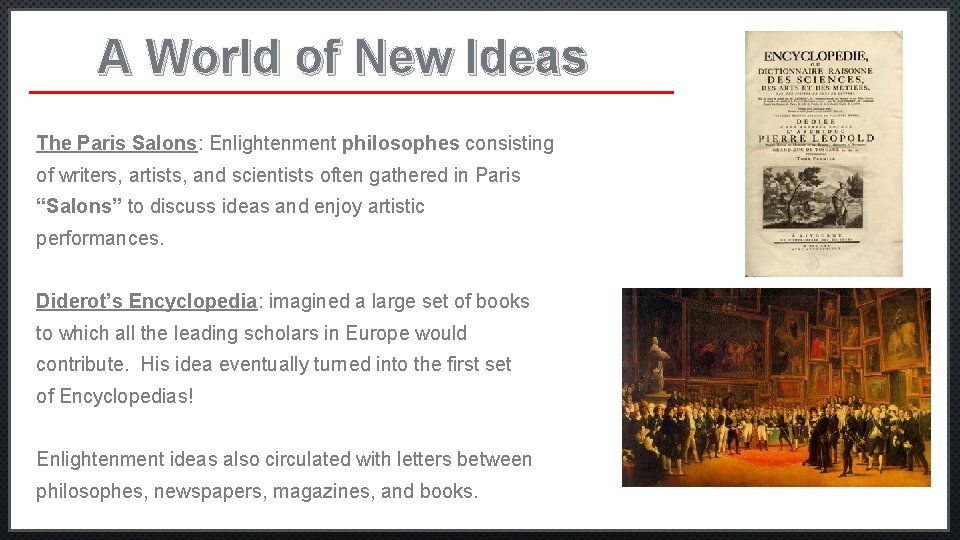
A World of New Ideas The Paris Salons: Enlightenment philosophes consisting of writers, artists, and scientists often gathered in Paris “Salons” to discuss ideas and enjoy artistic performances. Diderot’s Encyclopedia: imagined a large set of books to which all the leading scholars in Europe would contribute. His idea eventually turned into the first set of Encyclopedias! Enlightenment ideas also circulated with letters between philosophes, newspapers, magazines, and books.
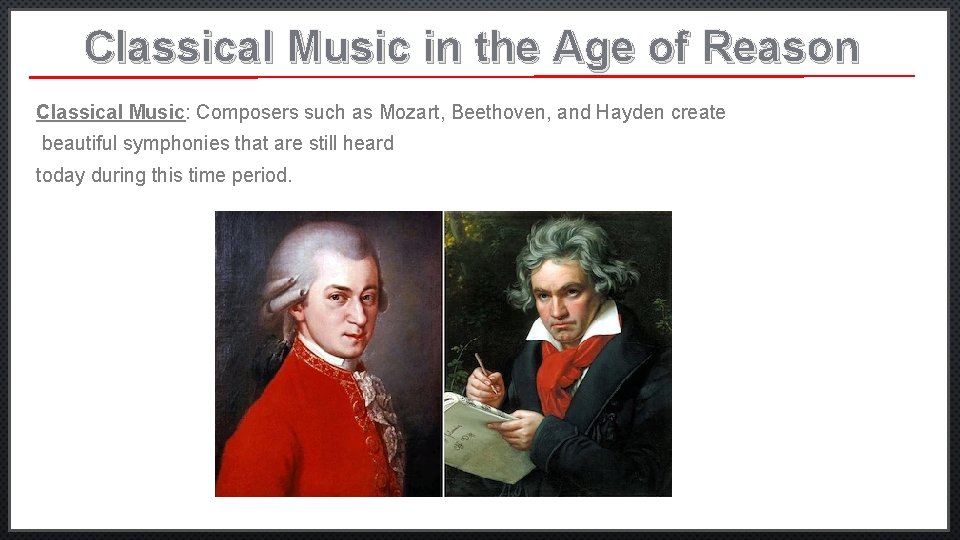
Classical Music in the Age of Reason Classical Music: Composers such as Mozart, Beethoven, and Hayden create beautiful symphonies that are still heard today during this time period.
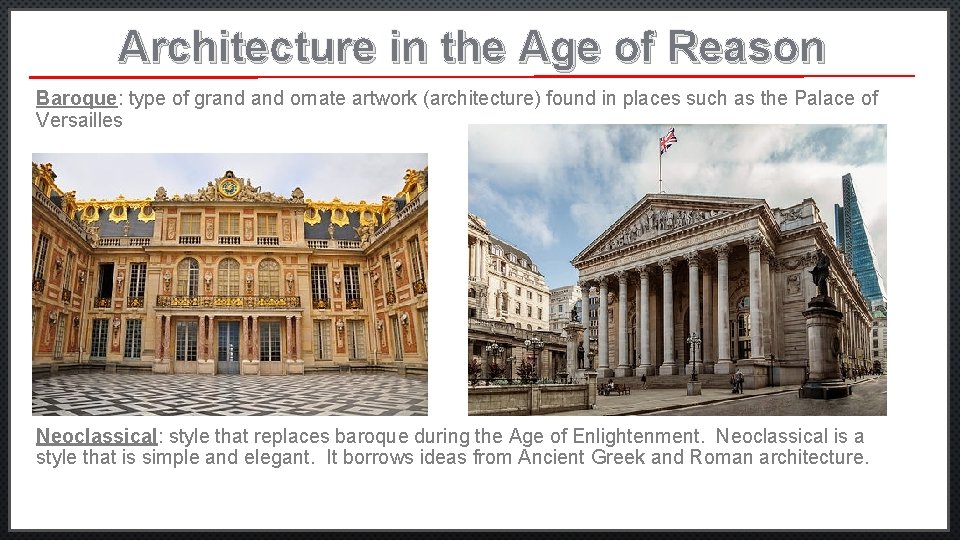
Architecture in the Age of Reason Baroque: type of grand ornate artwork (architecture) found in places such as the Palace of Versailles Neoclassical: style that replaces baroque during the Age of Enlightenment. Neoclassical is a style that is simple and elegant. It borrows ideas from Ancient Greek and Roman architecture.
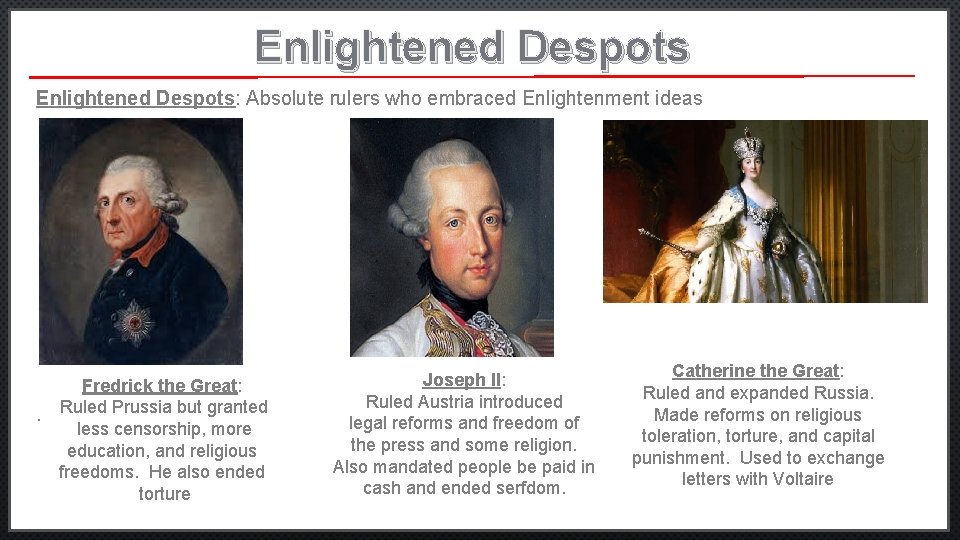
Enlightened Despots: Absolute rulers who embraced Enlightenment ideas Fredrick the Great: . Ruled Prussia but granted less censorship, more education, and religious freedoms. He also ended torture Joseph II: Ruled Austria introduced legal reforms and freedom of the press and some religion. Also mandated people be paid in cash and ended serfdom. Catherine the Great: Ruled and expanded Russia. Made reforms on religious toleration, torture, and capital punishment. Used to exchange letters with Voltaire