
The Age of Absolutism The Modern World Develops
The Age of Absolutism The Modern World Develops
Modern State • The 17 th century saw the development of two different models of government. • England – Constitutionalism • France - Absolutism
Political Development • Many differences in the two models of political development: – Religious factors affected the political destinies of England France – Major institutional differences between the two monarchies – Personalities of the rulers also played a significant role
On the Road to Constitutionalism • In 1603, Elizabeth I dies with no heir • James I of Scotland succeeds as the next English Monarch. • Puritan Movement in England
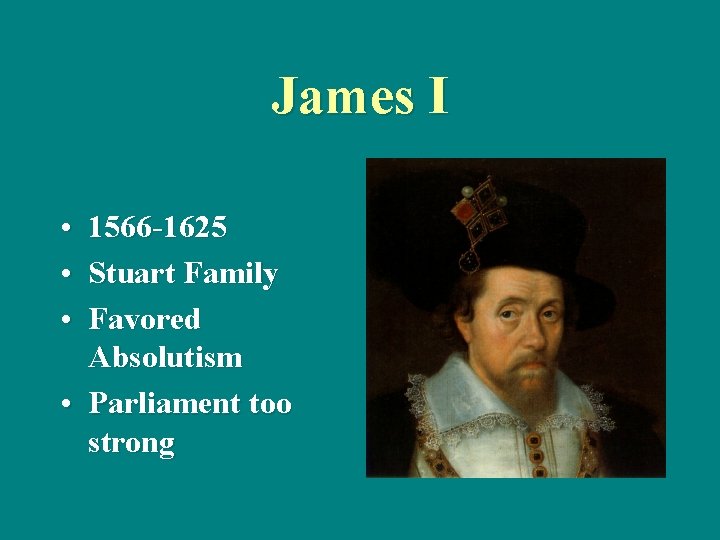
James I • 1566 -1625 • Stuart Family • Favored Absolutism • Parliament too strong
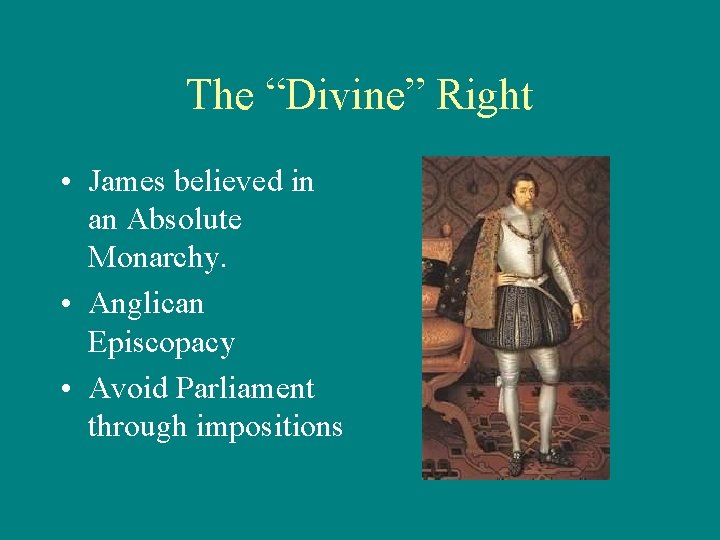
The “Divine” Right • James believed in an Absolute Monarchy. • Anglican Episcopacy • Avoid Parliament through impositions
Take Heed • 1604 – Millenary Petition at Hampton Court – “No Bishops … No King!!!” • Found issues with both the Puritans and the Catholics. – Gunpowder Plot of 1605
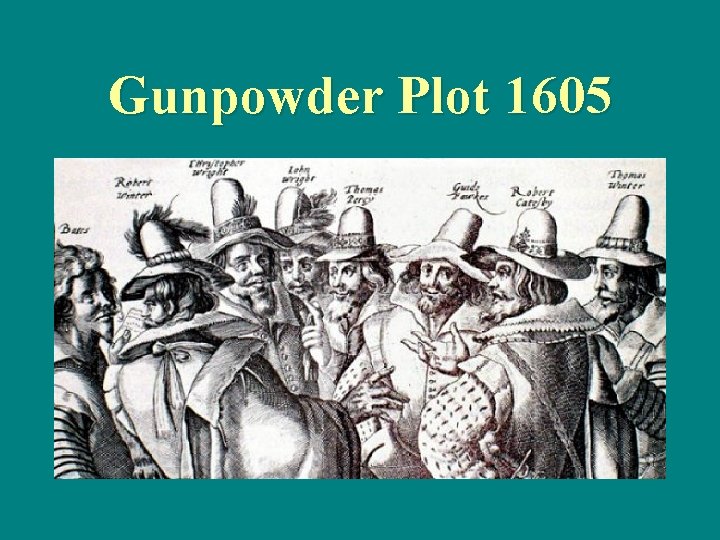
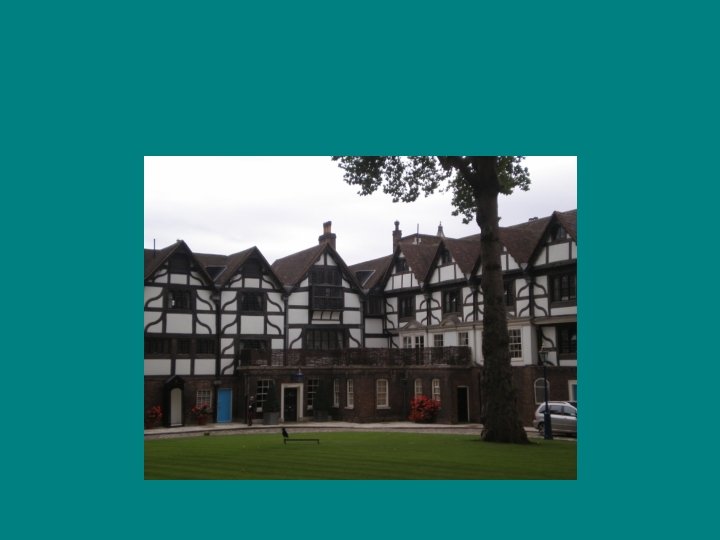
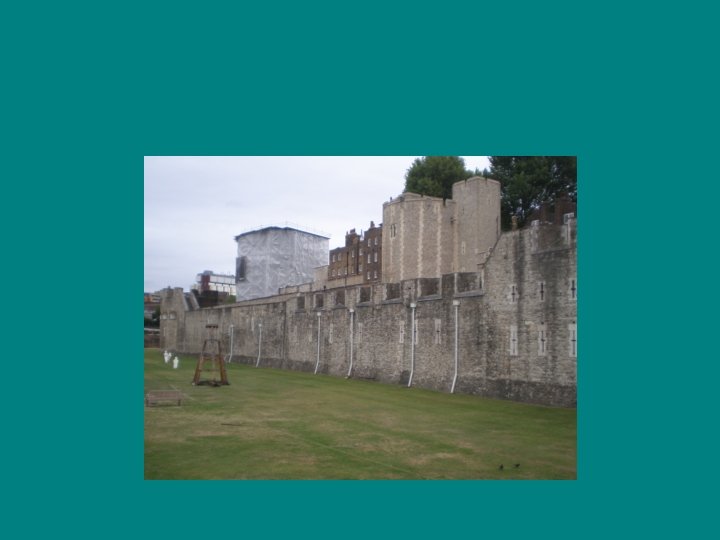
Gunpowder Plot 1605
Absolute Concessions • 1611 – Issued the King James Bible to ease the tensions with the Puritans • 1618 – Supported Bohemian Calvinists against the Catholic adversaries. • 1618 – “Popular Recreation on Sunday” • 1620 – Pilgrims sail to America • 1624 – War with Spain
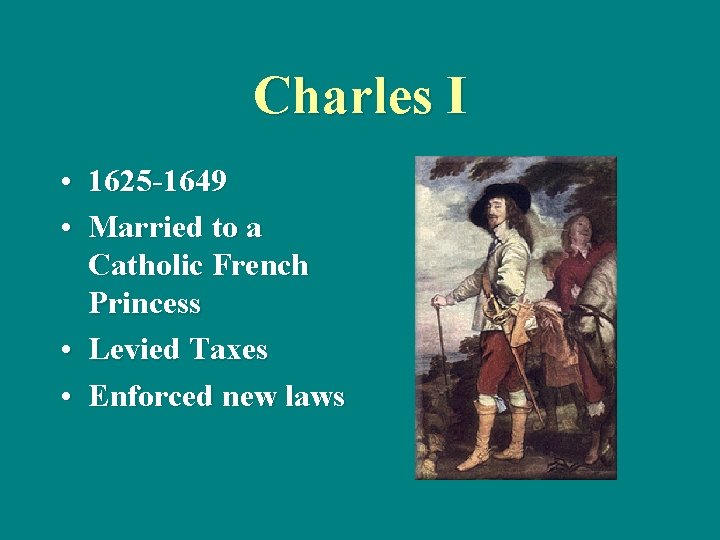
Charles I • 1625 -1649 • Married to a Catholic French Princess • Levied Taxes • Enforced new laws
Conflict and War • In 1629, Charles sent Parliament prorogued. • Fear of Popery among Parliament • In 1640, Scotland rebelled against Charles’ religious policies. • He calls Parliament to raise funds, but his efforts were to no avail.
The Long Parliament • 1640 -1660 • John Pym headed Parliament in the first phase. • During this time, Parliament moved to establish constitutionalism. • Parliament was uncooperative with Charles I. • Abolished tax and religious laws.
Eruption of Civil War • In 1641, Parliament issued Charles the “grand remonstrance” • In 1642, Charles storms Parliament and attempts to capture John Pym • Charles withdrew to Nottingham and raises an army.
The Civil War: 1642 -1646 • Fought over two main issues: 1. Government/Politics 2. Religion • England divided …. those who supported Parliament (Roundheads) and those who supported the King (Cavaliers).
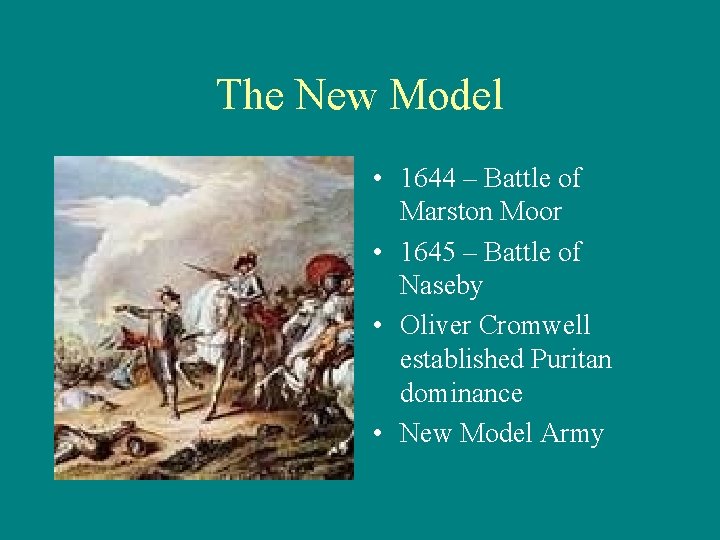
The New Model • 1644 – Battle of Marston Moor • 1645 – Battle of Naseby • Oliver Cromwell established Puritan dominance • New Model Army
The End of the War • Parliamentarians gain the upper hand by 1645, for two reasons: - alliance with Scotland - Oliver Cromwell • By 1648, Cromwell had defeated Charles, but… Pride’s Purge would seal his fate. - Rump Parliament
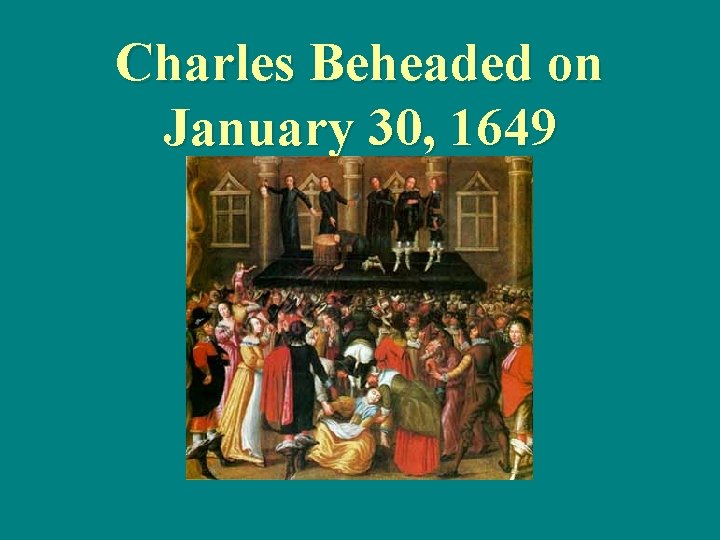
Charles Beheaded on January 30, 1649
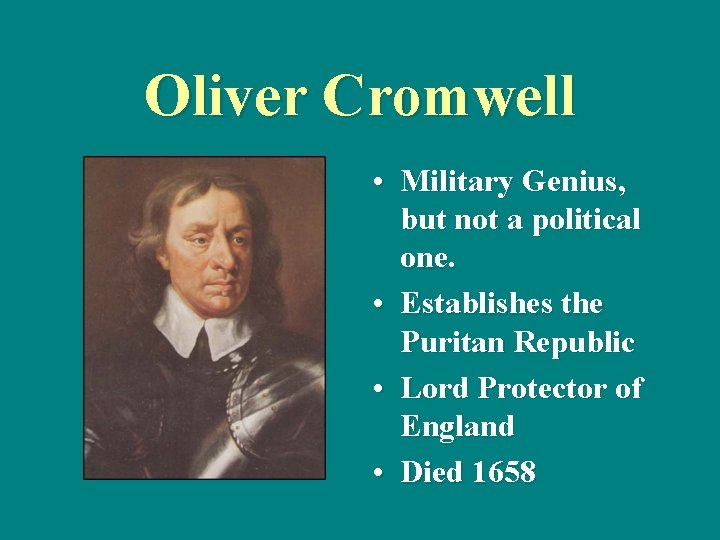
Oliver Cromwell • Military Genius, but not a political one. • Establishes the Puritan Republic • Lord Protector of England • Died 1658
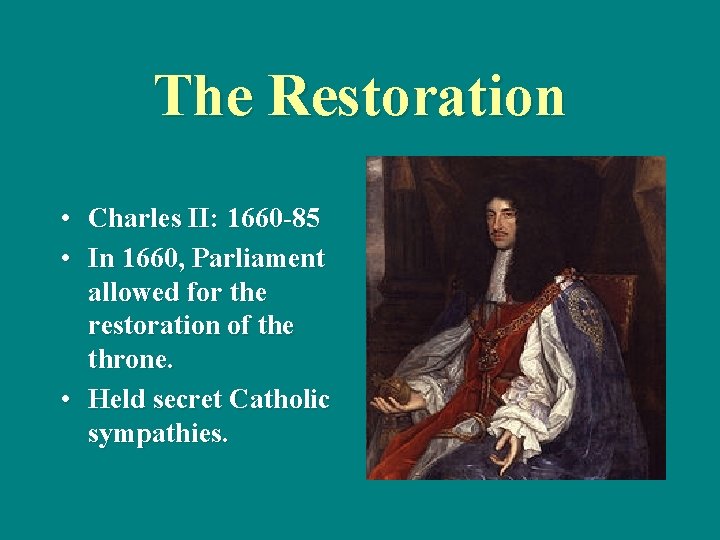
The Restoration • • Charles II: 1660 -85 In 1660, Parliament allowed for the restoration of the throne. • Held secret Catholic sympathies.
Renewed Rights • Charles II maintained a policy of religious toleration. – Religious tolerance for Catholics & Puritans to worship freely. • Clarendon Code - Parliament - Book of Common Prayer - Thirty Nine Articles
Religious Tension Revisited • Charles attempted to rejoin the Catholic faith… but found problems – 1670: Treaty of Dover – 1672: Declaration of Indulgence • Parliament responded with the Test Act. – oath against transubstantiation
Popish Plot • In 1678, Titus Oates swore that Charles’ wife was plotting with Jesuits and Irishmen to kill Charles. • Parliament believed Oates, despite his track of lying. • Charles II dies in 1685 and his brother James becomes king.
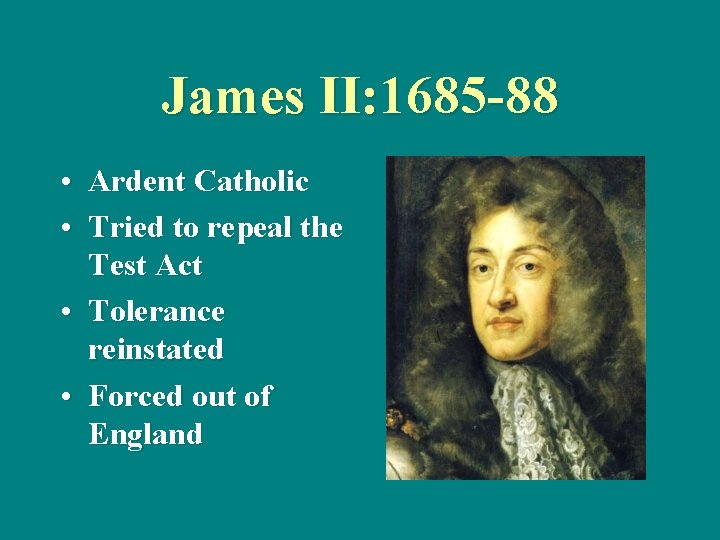
James II: 1685 -88 • Ardent Catholic • Tried to repeal the Test Act • Tolerance reinstated • Forced out of England
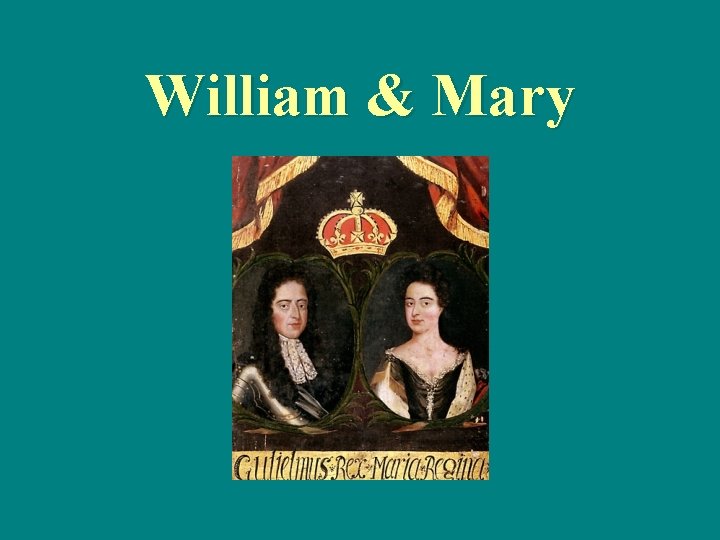
William & Mary
Glorious Revolution • In 1688, Parliament chased James II out of England. • Parliament declared throne vacant and proclaimed Wm. & Mary as the new monarchs in 1689 • The Bill of Rights - 1689 Constitutionalism Established.
The Settlement • • The Act of Toleration – 1689 The Mutiny Act – 1689 The Act of Settlement – 1701 The Act of Union - 1707
Absolute France • Rise of King Louis XIV in 1643 • “one king, one law, one faith” • Made the monarchy the most important and powerful political institution. • Used the system to his advantage.
Predecessors • Henry IV curtailed the privileges of the nobility. • In 1610, Louis XIII developed the role of the intendant. • The role of Cardinal Richelieu
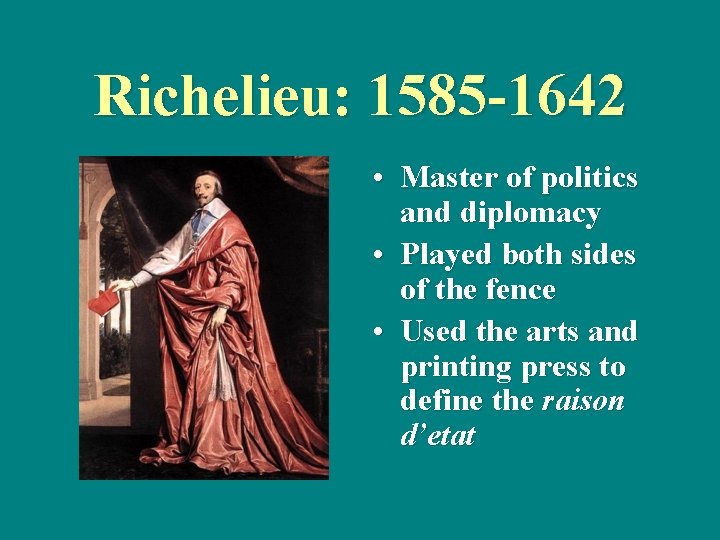
Richelieu: 1585 -1642 • Master of politics and diplomacy • Played both sides of the fence • Used the arts and printing press to define the raison d’etat
The Rise of Sun King • Louis XIV became monarch in 1643, but he was only FIVE. • Cardinal Mazarin was his chief advisor and ruled the government. • 1649 -1652: Paris Parlement revolted and took over the government. • 1652 - Louis XIV began his career. – Symbolically he was 14 years old.
“L’etat, c’est moi” • Louis XIV had two successful strategies. • First, he used propaganda to create a political image. • Second, he gained the favor of the French nobles
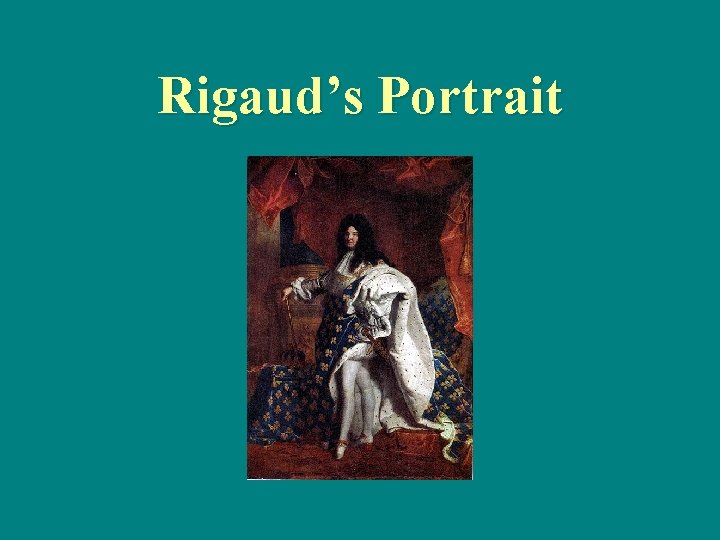
Rigaud’s Portrait
King By Divine Right • The Divine right of Kings - cited examples from the Old Testament • Only God could judge the King • Louis had help from Bishop Bossuet who was a master of Canon and French Law.
Smoke and Mirrors • Louis XIV continued his propaganda by moving the royal court to Versailles in 1683. • Chose the royal emblem of the “sun” as it was associated with Apollo the god of peace and arts.
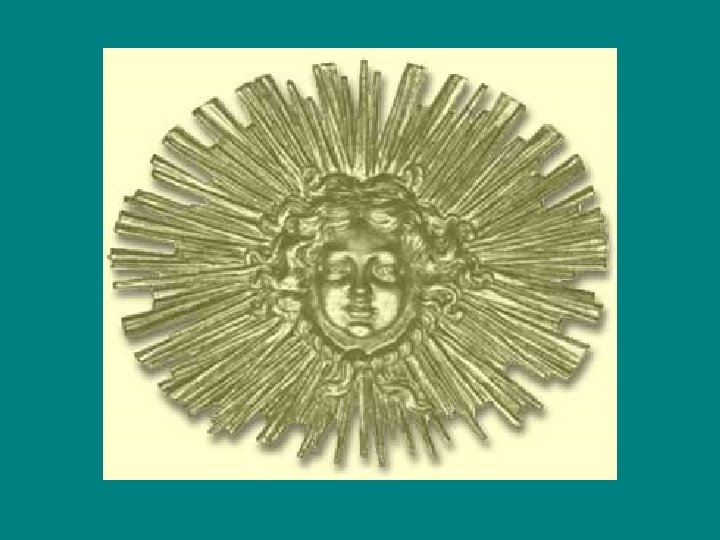
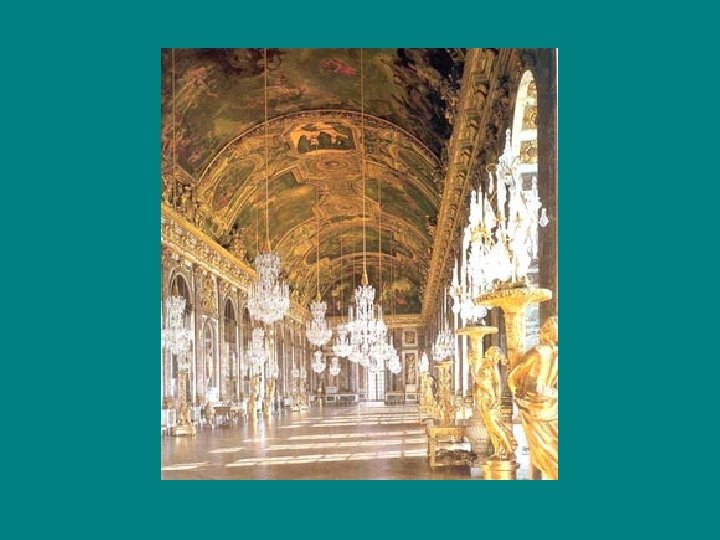
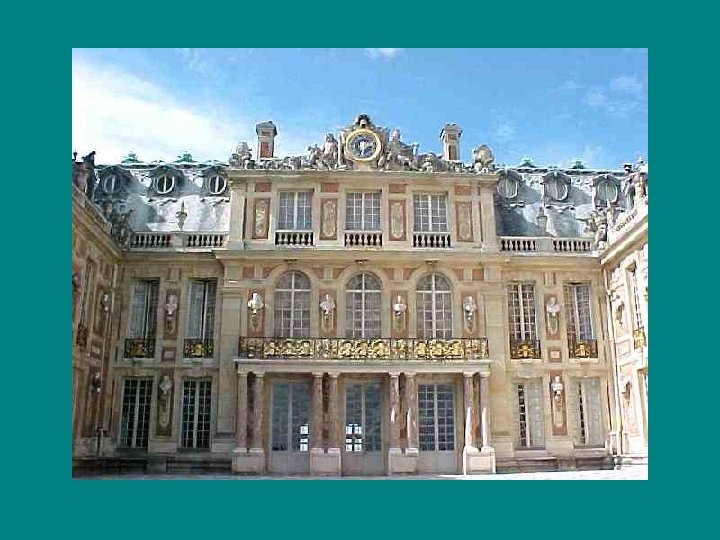






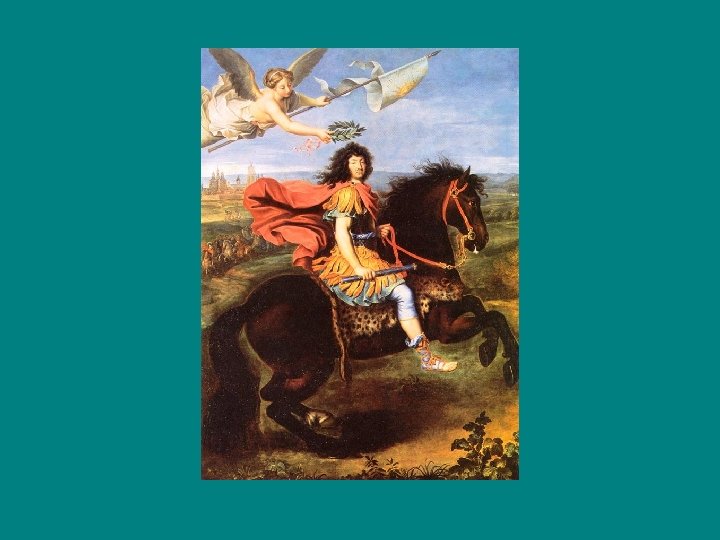
Religious Policies • Louis XIV upheld the doctrines of the Council of Trent • Suppressed the Jansenists and the French Huguenots. • Appealed to the Jesuit Rule. • 1685 – Revokes the Edict of Nantes
Absolute Unity • Louis XIV’s unification of France led to a strong military. • Secured international boundaries for France. • The Great War Machine: Colbert, Louvois, and Vauban.
Ministers of Defense • Jean-Baptiste Colbert: 1619 -1683 - Economic genius, he enhanced the mercantile system and increased taxes • Marquis of Louvois and Sebastien Vauban - Perfected the French Military, both in strength and tactics.
The Early Wars • The War of Devolution - 1667 -68 Louis held claim to Spanish Belgian – Treaty of the Pyrenees 1659 – Legally the property ‘devolved’ to his wife – Treaty of Aix-la-Chapelle 1669 • Invasion of the Netherlands - 1670 -72 Louis wanted control of the trading routes. – Peace of Nijmwegen 1679
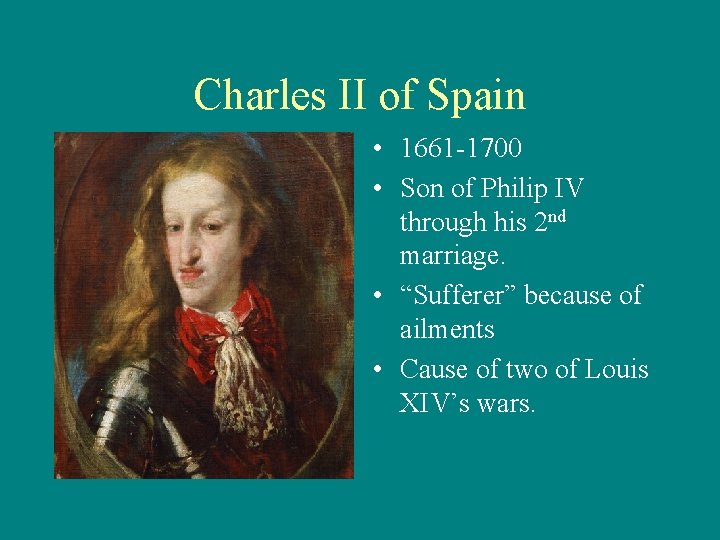
Charles II of Spain • 1661 -1700 • Son of Philip IV through his 2 nd marriage. • “Sufferer” because of ailments • Cause of two of Louis XIV’s wars.
The Later Wars • League of Augsburg & the Nine Years’ War – Conquered Alsace – Treaty of Ryswick 1697 • War of Spanish Succession - Long and drawn out war that weighed heavily on the French military. – Treaty of Utrecht 1713 – Treaty of Rastatt 1714
Social Contract Theory • A government is legitimate if people would voluntarily submit to its authority • Central idea: government (and its authority) are rational – Thomas Hobbes (1588 -1679) – John Locke (1632 -1704)
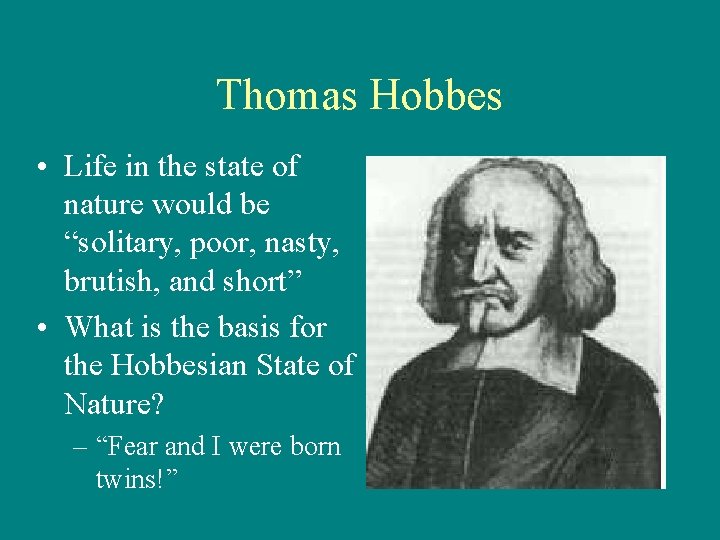
Thomas Hobbes • Life in the state of nature would be “solitary, poor, nasty, brutish, and short” • What is the basis for the Hobbesian State of Nature? – “Fear and I were born twins!”
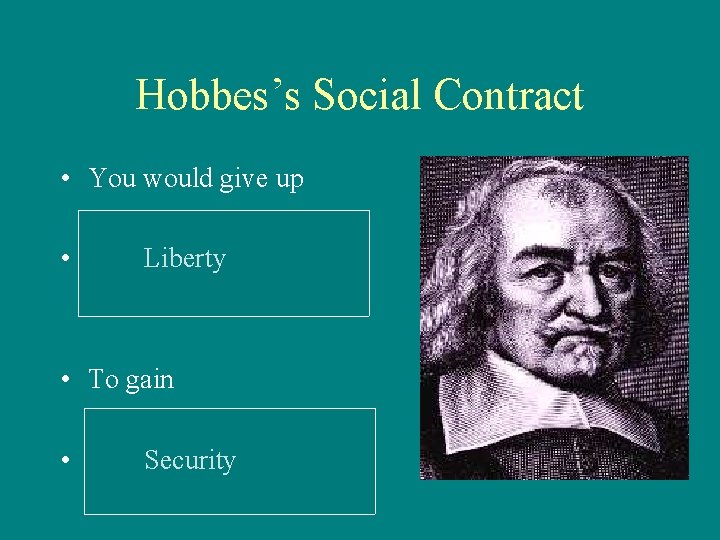
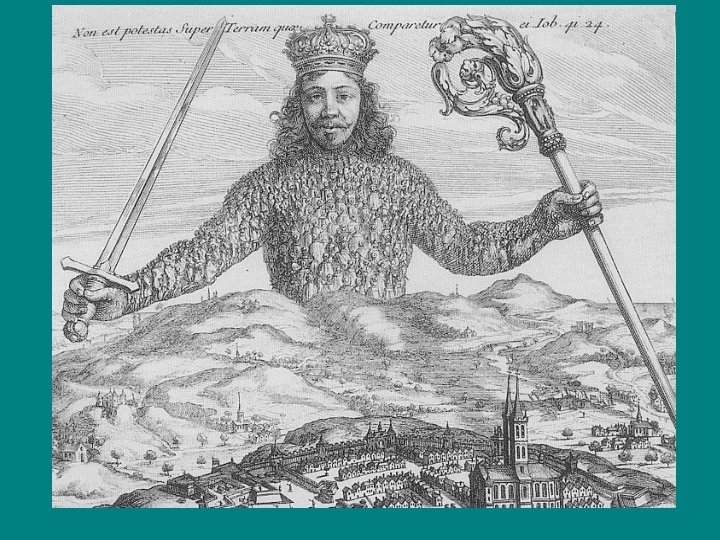
Hobbes’s Social Contract • You would give up • Liberty • To gain • Security
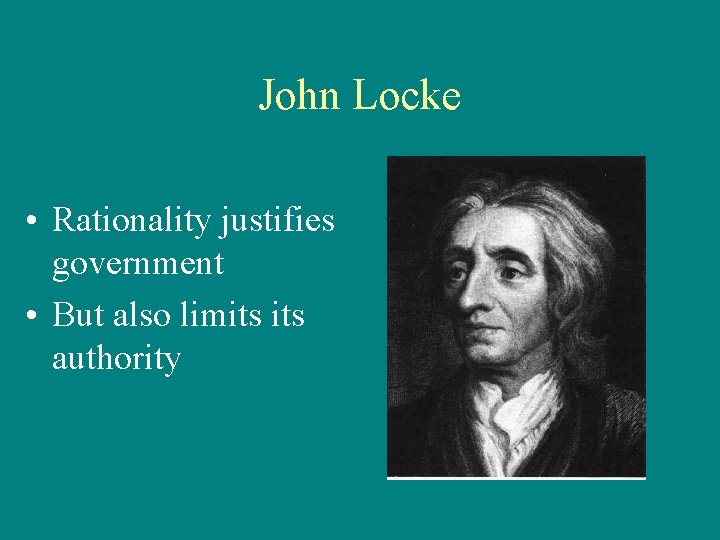
John Locke • Rationality justifies government • But also limits authority
Natural Rights and Freedom • Equality of power and jurisdiction • Liberty, not license • Law of nature: no one ought to harm another is his life, health, liberty, or possessions
Locke’s State of Nature • You have natural rights in the state of nature: – Rights to life, health, liberty, and property – Right of self-preservation – Right to execute the law of nature • Not a state of war
Next Week • Pascal’s Wager: In what way does Pascal demonstrate that reason is limited? What is his point in the Wager argument? • Persian Letters: What is the lesson in the parable of the Troglodytes? How can it be applied to society in the Enlightenment?
- Slides: 60