
The African language in the classroom What happens


- Slides: 24
The African language in the classroom: What happens when children’s home languages are used in education? Agatha van Ginkel, SIL International
My link with Africa • Since 1995 in Africa • SIL International Africa Area Office (based in Nairobi) • I have specialised in – reading in different languages in particular African language – transfer reading (L 2 -L 1 and L 1 – L 2) – Multilingual Education
Terminology L 1 first language – mother tongue – home language – language of the home – local language – national language – Indigenous language The language a child speaks best before she/he comes to school.
Terminology L 2 • L 2 second language – a language one learns in addition to the L 1. English as Second Language (it is used in the immediate environment) English as Foreign Language (it is not a language used in the immediate environment)
THE CURRENT SITUATION IN AFRICA
The reality • In Africa there about 2000 languages. • However, about 800 of them have a writing system.
The reality • The colonial languages English, French and Portuguese have taken a very high status position. • However, it is estimated that only between 10 and 15 per cent of the population in most African countries are fluent in the official languages (En/Fr/Port) (Ouane and Glanz 2010).
The reality • In many countries in Africa education is delivered in a language children do not understand. (Unlike Europe, UK and USA) • From the first day in school, the children are exposed to the new language and their mother tongue is not used in school.
The reality in school • The reality is that the children do not understand the teacher until several years into their education. • Consequently, most children in Africa find themselves having to try to learn through a language they do not understand. • Many of them fail and drop out before they learn any content. Many are excluded.
RESEARCH RESULTS
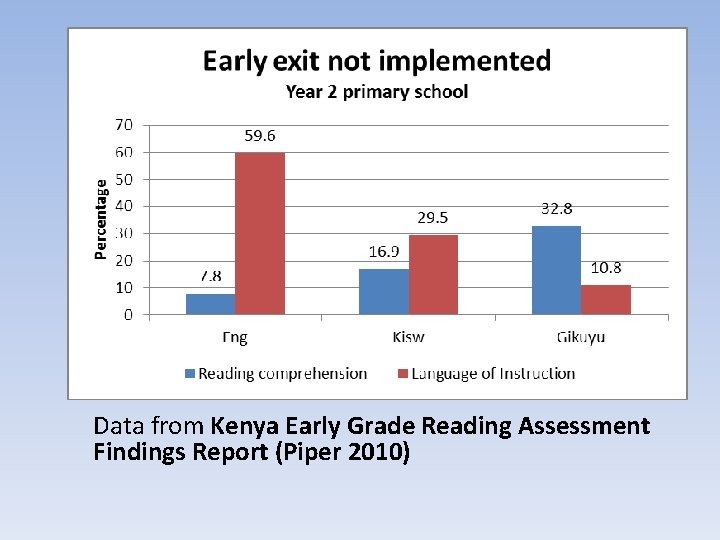
Data from Kenya Early Grade Reading Assessment Findings Report (Piper 2010)
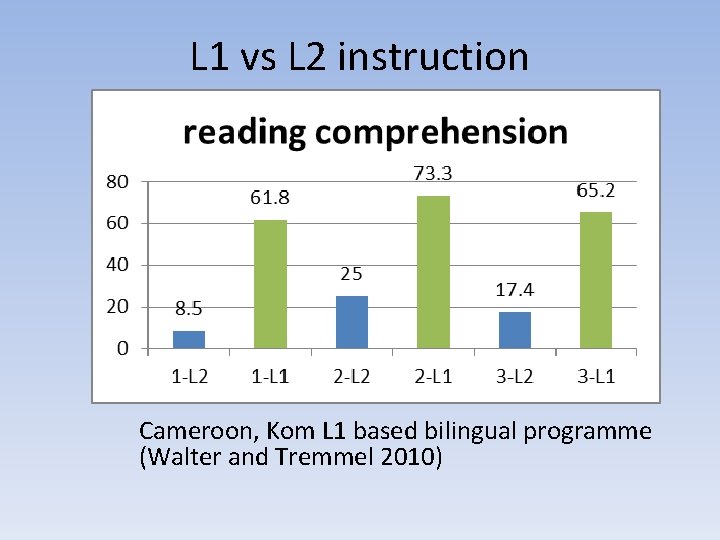
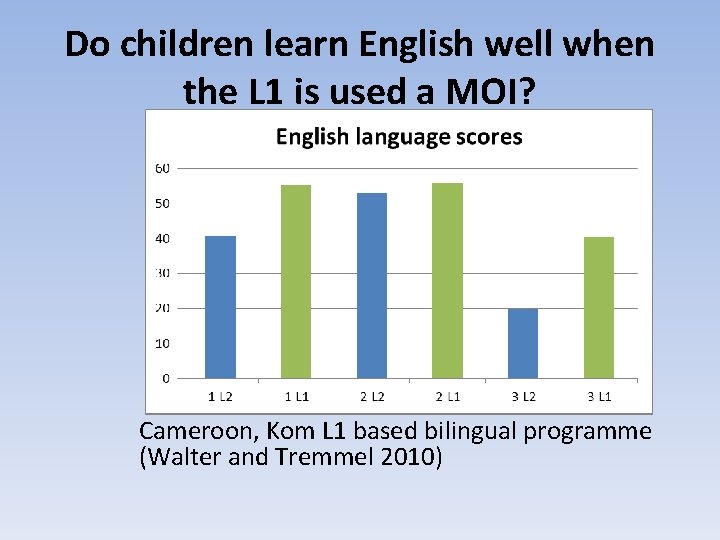
L 1 vs L 2 instruction Cameroon, Kom L 1 based bilingual programme (Walter and Tremmel 2010)
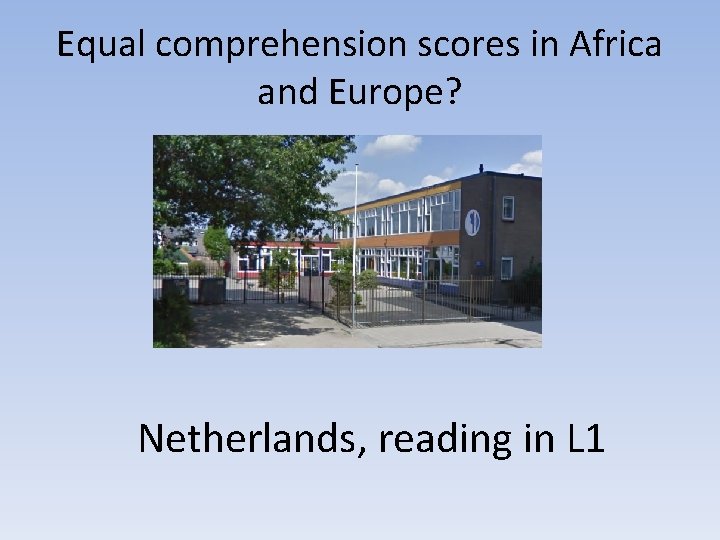
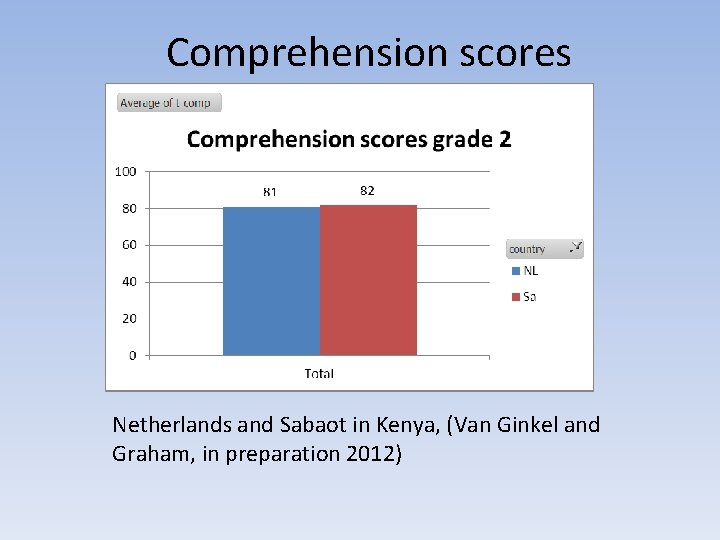
Equal comprehension scores in Africa and Europe? Netherlands, reading in L 1
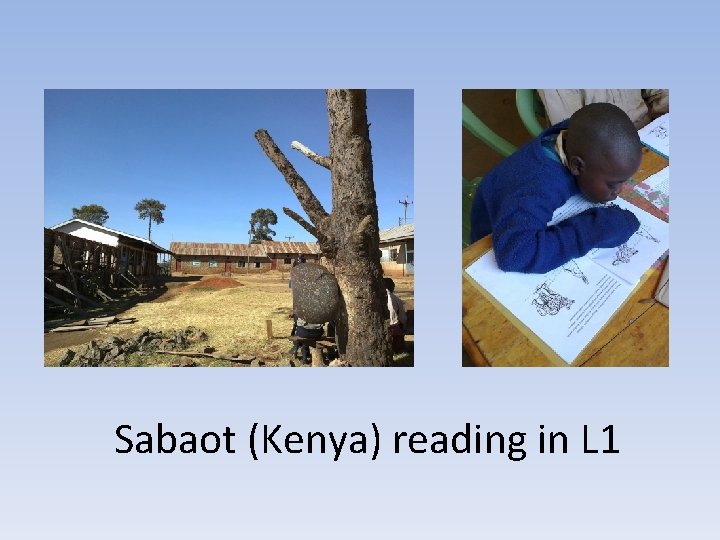
Sabaot (Kenya) reading in L 1
Comprehension scores Netherlands and Sabaot in Kenya, (Van Ginkel and Graham, in preparation 2012)
Do children learn English well when the L 1 is used a MOI? Cameroon, Kom L 1 based bilingual programme (Walter and Tremmel 2010)
WHAT ARE THE ISSUES?
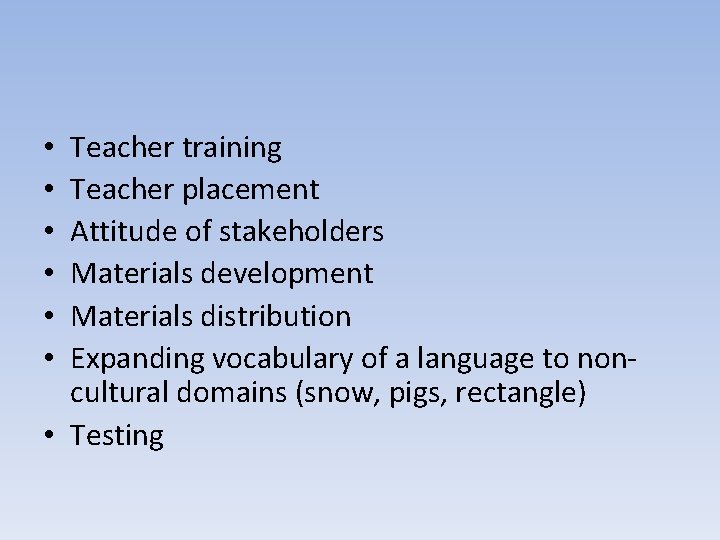
Teacher training Teacher placement Attitude of stakeholders Materials development Materials distribution Expanding vocabulary of a language to noncultural domains (snow, pigs, rectangle) • Testing • • •
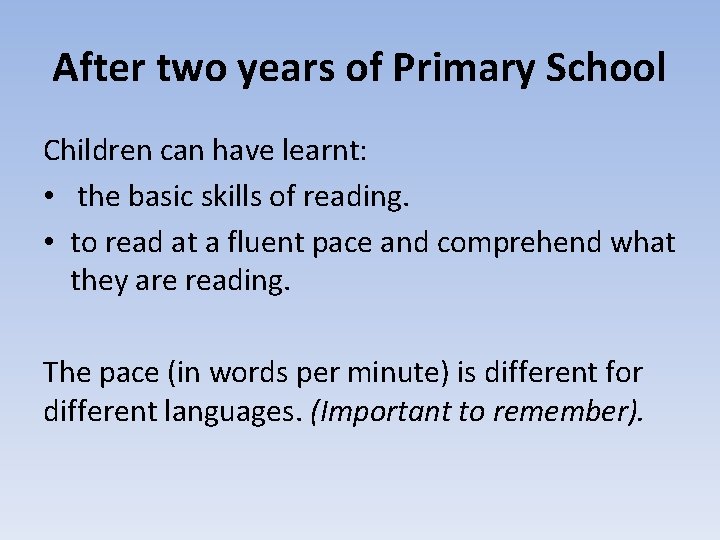
After two years of Primary School Children can have learnt: • the basic skills of reading. • to read at a fluent pace and comprehend what they are reading. The pace (in words per minute) is different for different languages. (Important to remember).
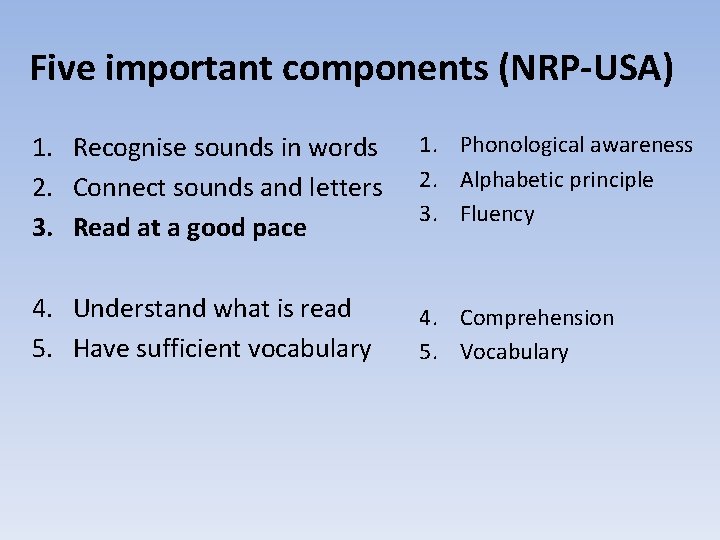
Five important components (NRP-USA) 1. Recognise sounds in words 2. Connect sounds and letters 3. Read at a good pace 1. Phonological awareness 2. Alphabetic principle 3. Fluency 4. Understand what is read 5. Have sufficient vocabulary 4. Comprehension 5. Vocabulary
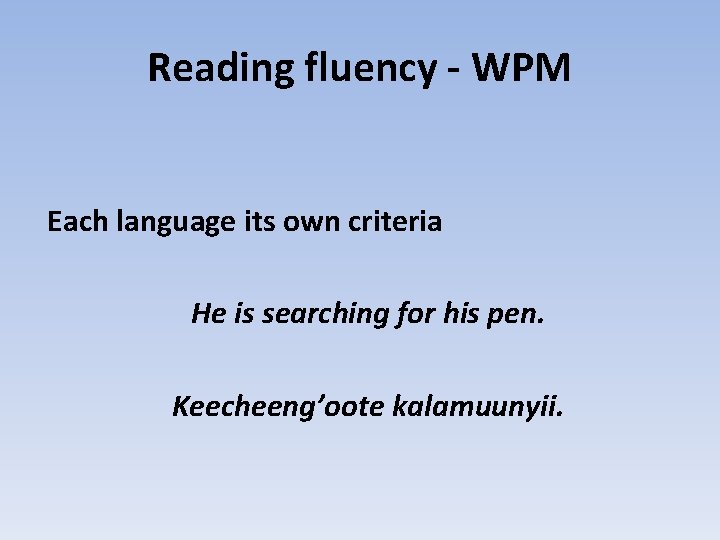
Reading fluency - WPM Each language its own criteria He is searching for his pen. Keecheeng’oote kalamuunyii.
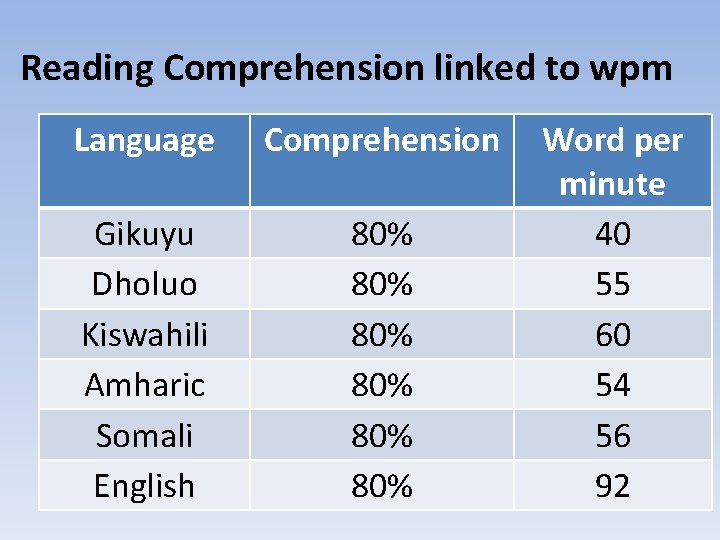
Reading Comprehension linked to wpm Language Comprehension Gikuyu Dholuo Kiswahili Amharic Somali English 80% 80% 80% Word per minute 40 55 60 54 56 92
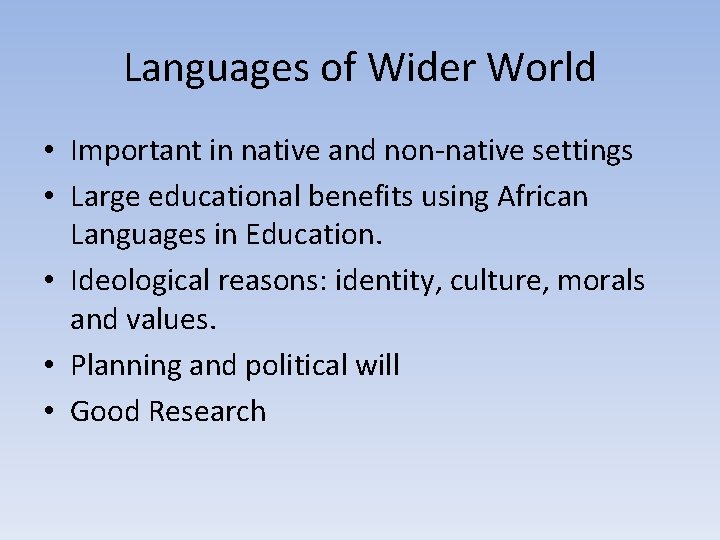
Languages of Wider World • Important in native and non-native settings • Large educational benefits using African Languages in Education. • Ideological reasons: identity, culture, morals and values. • Planning and political will • Good Research
ASANTE SANA