
The Aesthetic Experience Louise Rosenblatts Reading Theory Early
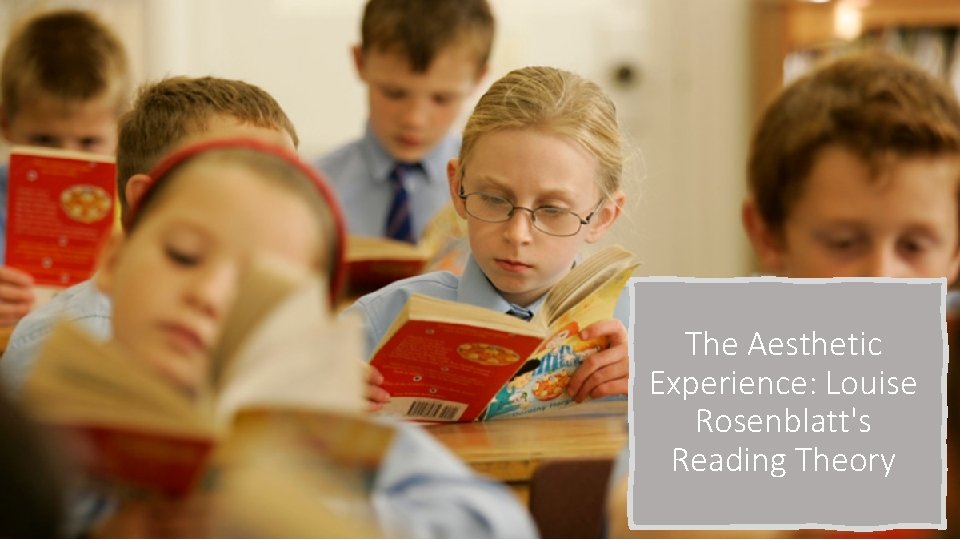
The Aesthetic Experience: Louise Rosenblatt's Reading Theory
Early Life • Born 1904 in Atlantic City NJ • Studied at Barnard College for six years from 19291935 • Book Literature As Exploration is published in 1938 • Now on 5 th edition six decades later. • After Barnard became advisor for Commission on Human Relations for a one-year study.
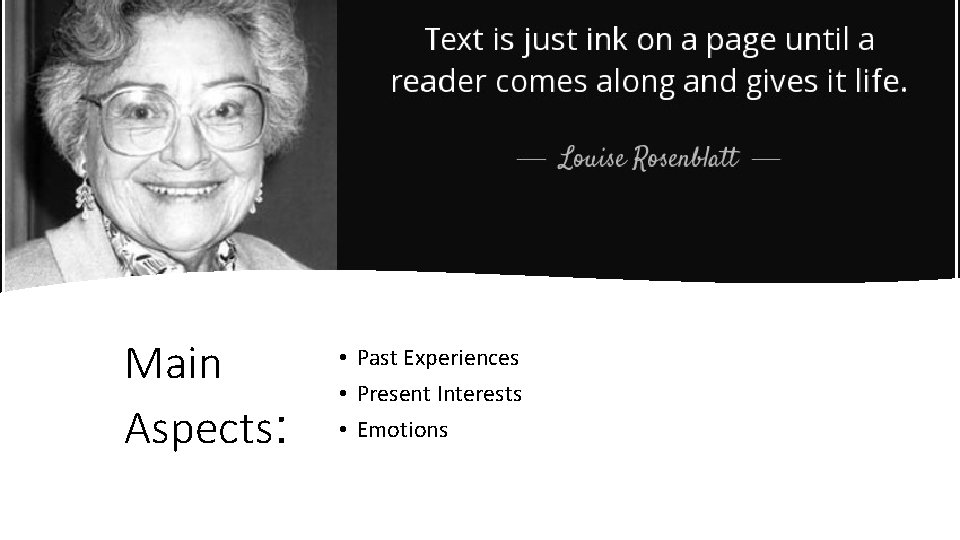
Main Aspects: • Past Experiences • Present Interests • Emotions
• Restoring Aesthetic value Goals of Theory • Goals of core curricula • Connect students with themselves and society • Make sound ethical judgement

New Criticism • Originated from Formalist Movement • Created by John Crowe Ransom • Text self-contained and use of close reading
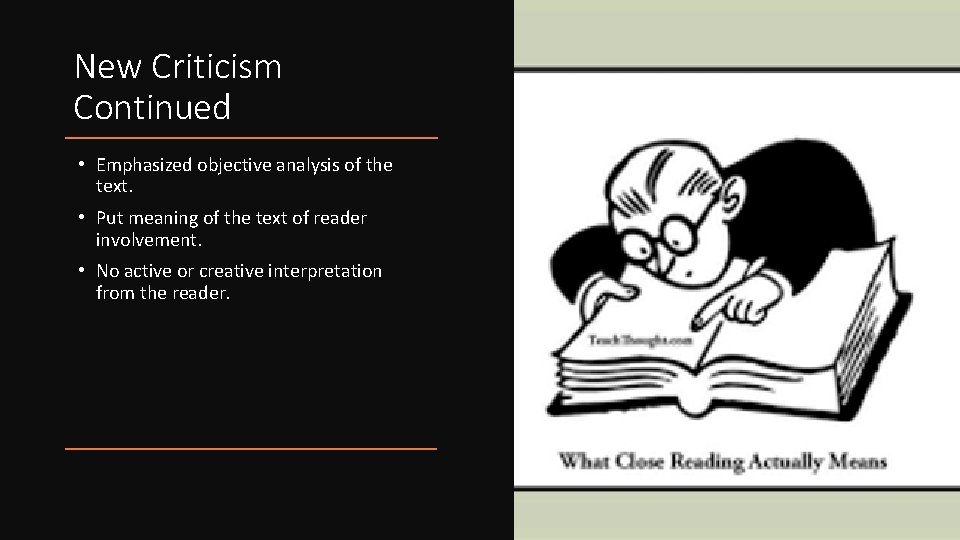
New Criticism Continued • Emphasized objective analysis of the text. • Put meaning of the text of reader involvement. • No active or creative interpretation from the reader.

Nineteenth Cen. Literary Theory • Emphasized literary and social history, author’s biography, and normative message of the text. • No inferences made.
Aesthetic experience— What is it?

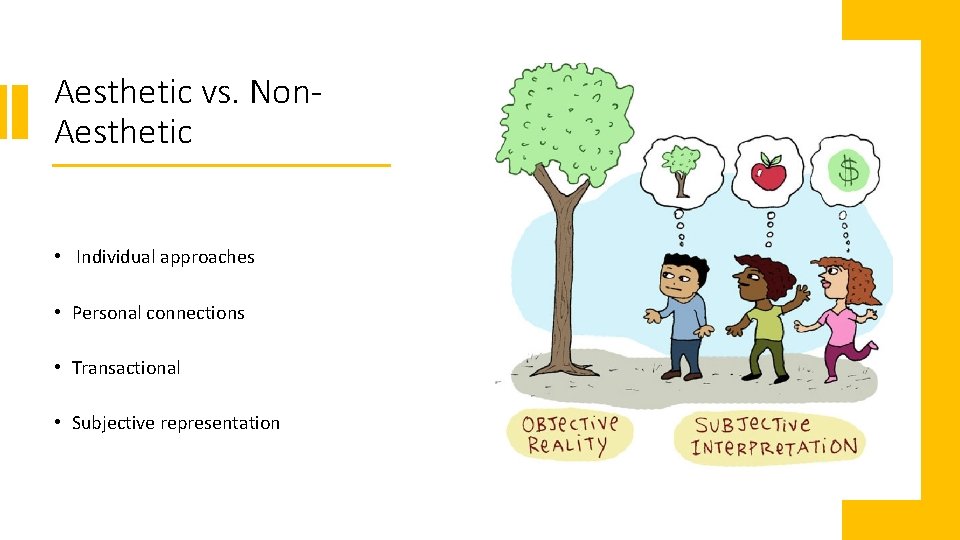
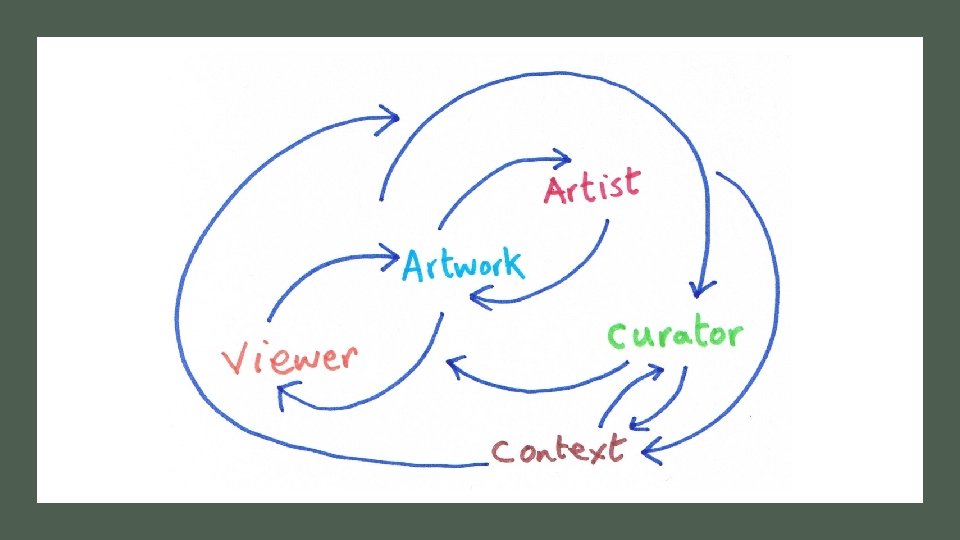
Aesthetic vs. Non. Aesthetic • Individual approaches • Personal connections • Transactional • Subjective representation

Connection to Emotional Drive

Stimulating Imagination

Purpose
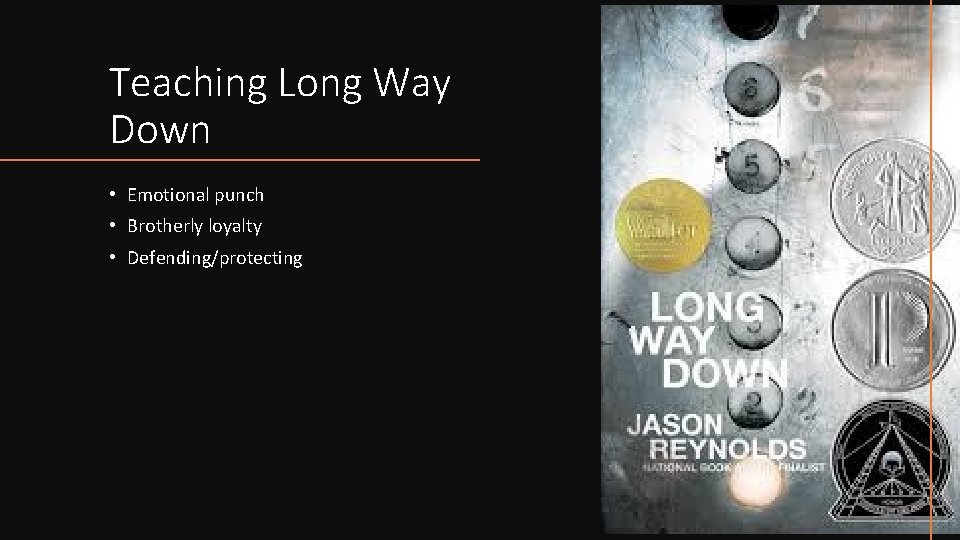
Teaching Long Way Down • Emotional punch • Brotherly loyalty • Defending/protecting
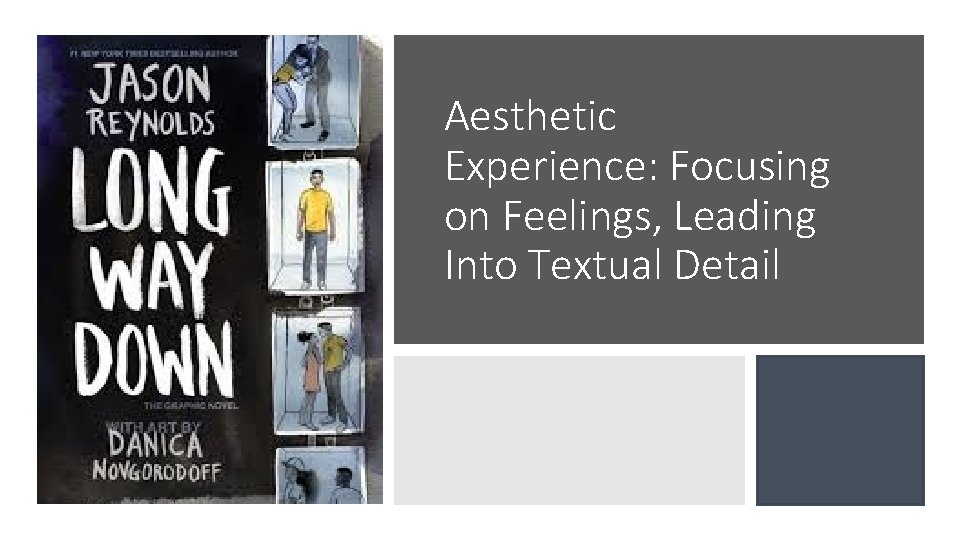
Aesthetic Experience: Focusing on Feelings, Leading Into Textual Detail

After Reading. . . • Emotions first, context second • Volatile writing first, linear plot second.

Conclusion
- Slides: 20