
The Aerobic System The Aerobic System The ATPPC
The Aerobic System
The Aerobic System The ATP/PC and Lactic Acid Systems are the predominant energy systems used during the first few minutes of high-intensity exercise. However, they are unable to provide all the energy required beyond this time and they are both reliant on the aerobic system to help them recover during and after exercise. Fuel = Glycogen (or fat) and Oxygen
The Aerobic System There are 3 stages to the Aerobic System: Stage 1: Aerobic Glycolysis Stage 2: Kreb’s Cycle Stage 3: Electron Transport Chain (ETC)
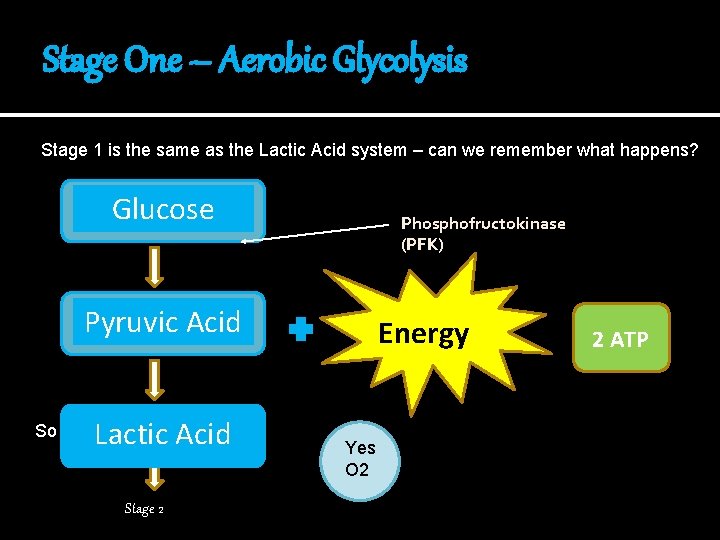
Stage One – Aerobic Glycolysis Stage 1 is the same as the Lactic Acid system – can we remember what happens? Glucose Phosphofructokinase (PFK) Pyruvic Acid Lactic Acid So no Lactic Acid by-product Stage 2 Energy Yes O 2 2 ATP
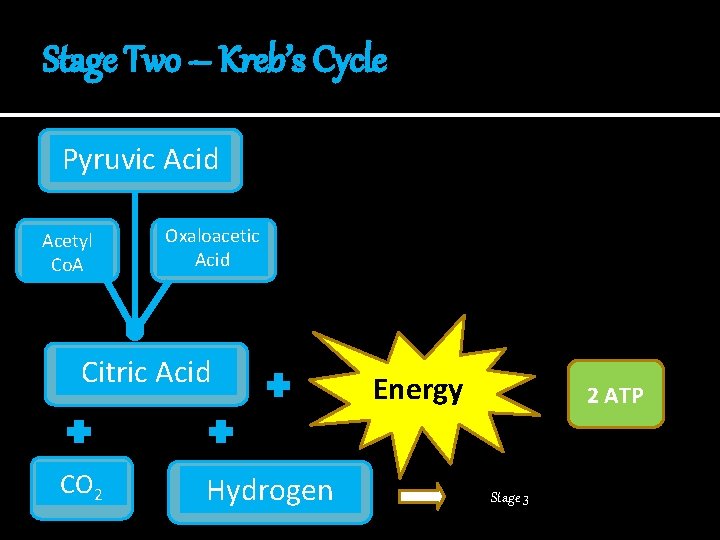
Stage Two – Kreb’s Cycle Pyruvic Acid Acetyl Co. A Oxaloacetic Acid Citric Acid CO 2 Hydrogen Energy 2 ATP Stage 3
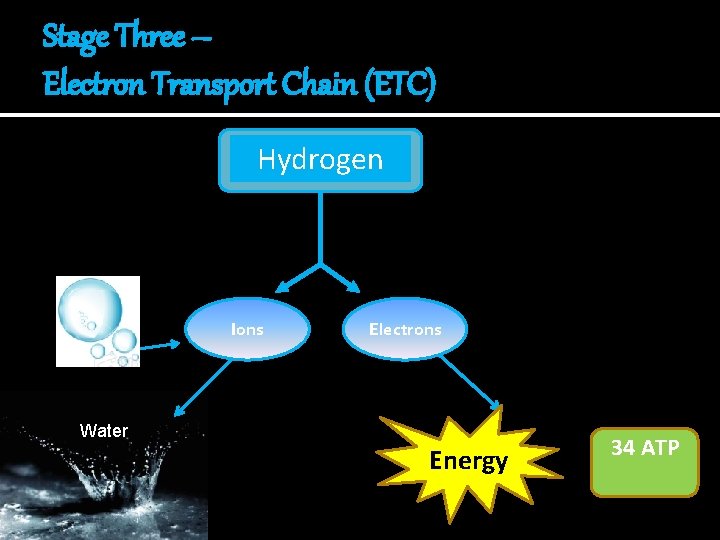
Stage Three – Electron Transport Chain (ETC) Hydrogen Ions Electrons Water Energy 34 ATP

The Aerobic System Therefore, the Total Energy Yield of the Aerobic Energy System is: 2 ATP Stage 1 2 ATP 34 ATP Stage 2 Stage 3 38 ATP
The Aerobic System As well as Carbohydrates, the Aerobic Energy System can also use Fats to provide energy. The use of Fats requires a lot more oxygen than the use of carbohydrates. The term ‘Hitting the Wall’, used in endurance events, is linked to the use of Fats to provide energy.
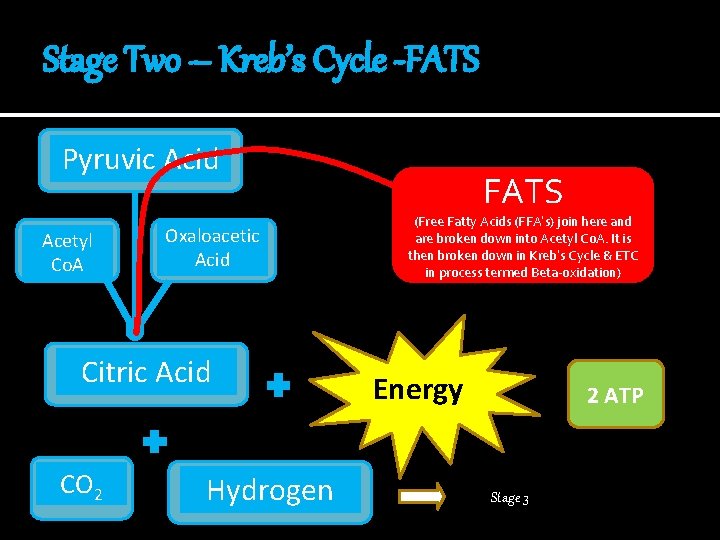
Stage Two – Kreb’s Cycle -FATS Pyruvic Acid Acetyl Co. A Oxaloacetic Acid Citric Acid CO 2 Hydrogen FATS (Free Fatty Acids (FFA’s) join here and are broken down into Acetyl Co. A. It is then broken down in Kreb’s Cycle & ETC in process termed Beta-oxidation) Energy 2 ATP Stage 3
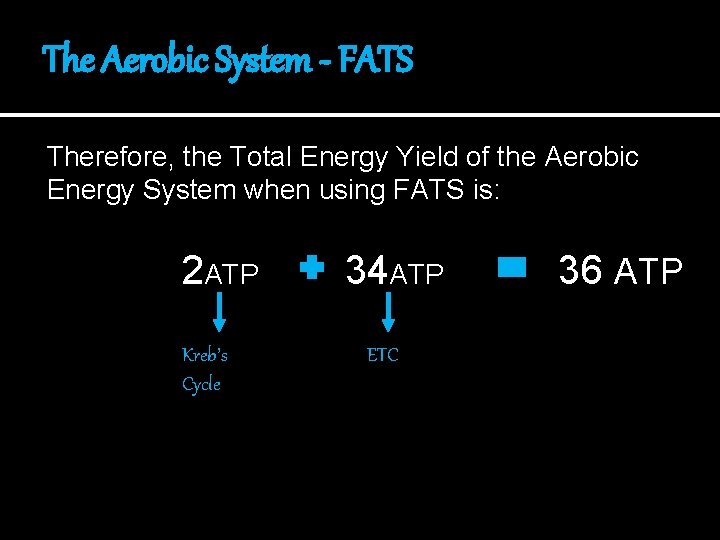
The Aerobic System - FATS Therefore, the Total Energy Yield of the Aerobic Energy System when using FATS is: 2 ATP Kreb’s Cycle 34 ATP ETC 36 ATP
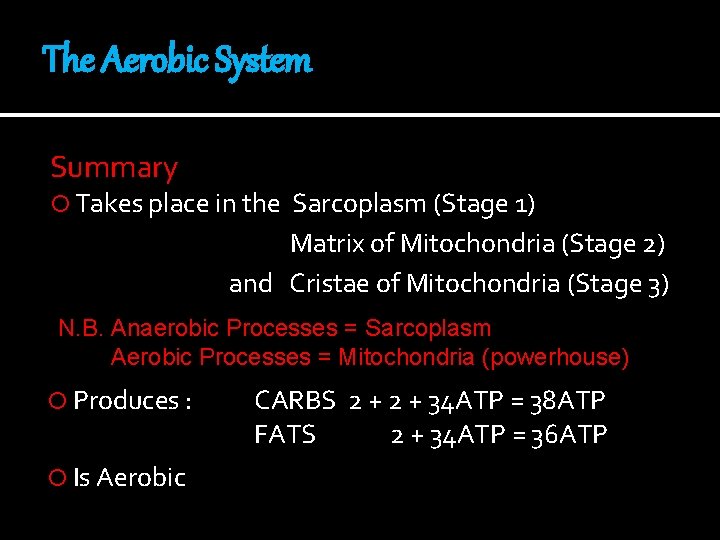
The Aerobic System Summary Takes place in the Sarcoplasm (Stage 1) Matrix of Mitochondria (Stage 2) and Cristae of Mitochondria (Stage 3) N. B. Anaerobic Processes = Sarcoplasm Aerobic Processes = Mitochondria (powerhouse) Produces : Is Aerobic CARBS 2 + 34 ATP = 38 ATP FATS 2 + 34 ATP = 36 ATP

The Aerobic System Advantages -lots of glycogen (+ fats) stored in body so lots of ATP resynthesized i. e. 38/36 ATP) -can last hours -no harmful by-products Disadvantages -needs O 2 so not immediate – need to wait for O 2 to get to the muscles - doesn’t work at high intensities (because O 2 can’t get there quick enough)
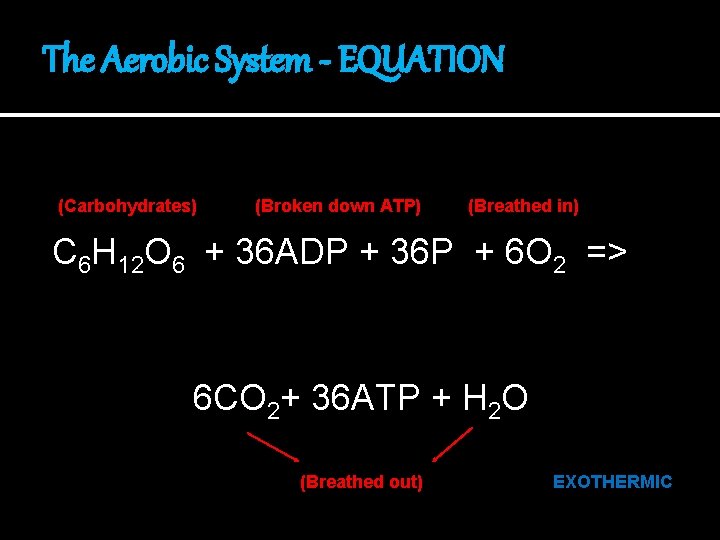
The Aerobic System - EQUATION (Carbohydrates) (Broken down ATP) (Breathed in) C 6 H 12 O 6 + 36 ADP + 36 P + 6 O 2 => 6 CO 2+ 36 ATP + H 2 O (Breathed out) EXOTHERMIC
- Slides: 13