
The AEC Learning Outcomes for the 1 st

- Slides: 9
The AEC Learning Outcomes for the 1 st, 2 nd and 3 rd cycles in music Martin Prchal European Association of Conservatoires (AEC) Trieste, 14 December 2007
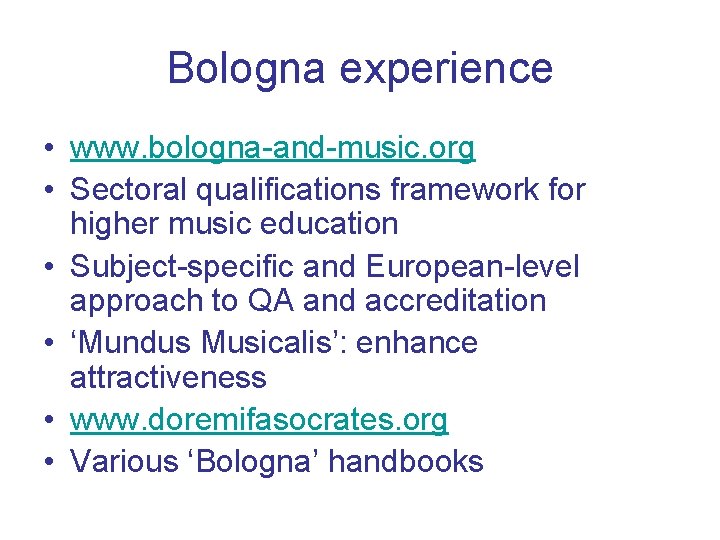
Bologna experience • www. bologna-and-music. org • Sectoral qualifications framework for higher music education • Subject-specific and European-level approach to QA and accreditation • ‘Mundus Musicalis’: enhance attractiveness • www. doremifasocrates. org • Various ‘Bologna’ handbooks
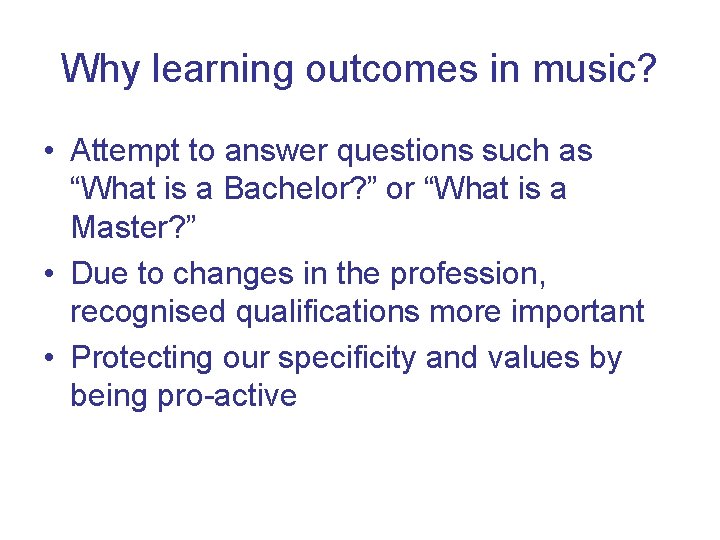
Why learning outcomes in music? • Attempt to answer questions such as “What is a Bachelor? ” or “What is a Master? ” • Due to changes in the profession, recognised qualifications more important • Protecting our specificity and values by being pro-active
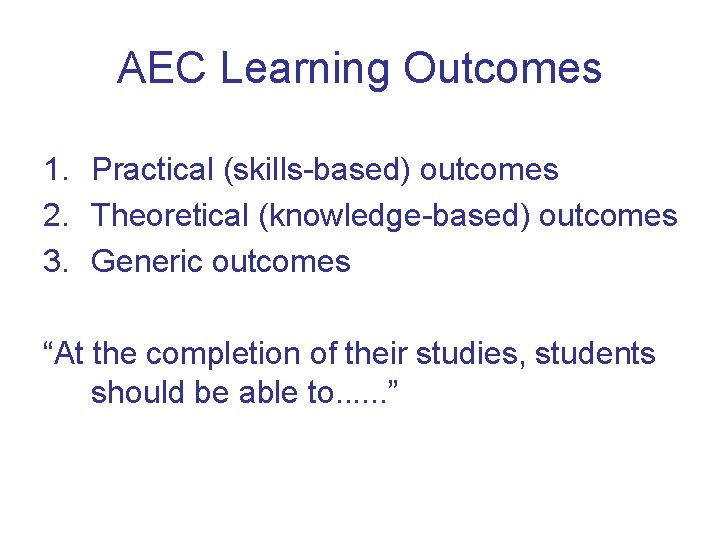
AEC Learning Outcomes 1. Practical (skills-based) outcomes 2. Theoretical (knowledge-based) outcomes 3. Generic outcomes “At the completion of their studies, students should be able to. . . ”
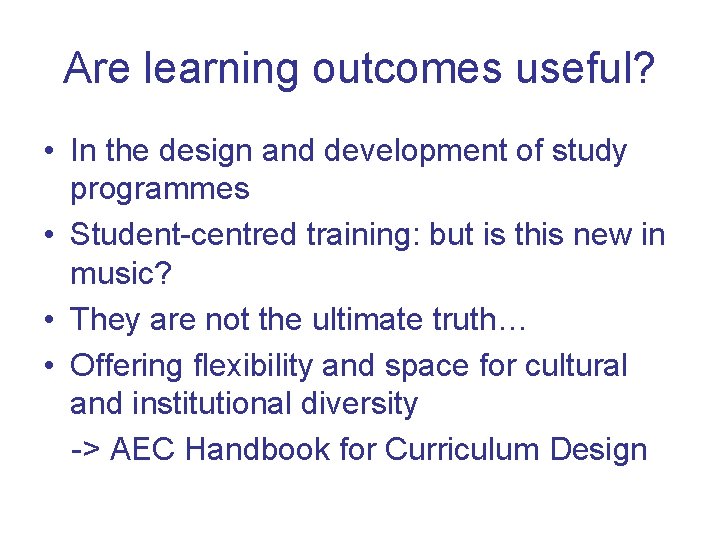
Are learning outcomes useful? • In the design and development of study programmes • Student-centred training: but is this new in music? • They are not the ultimate truth… • Offering flexibility and space for cultural and institutional diversity -> AEC Handbook for Curriculum Design
“Polifonia/Dublin Descriptors” “Musical” version of the “Dublin Descriptors” for higher education in general
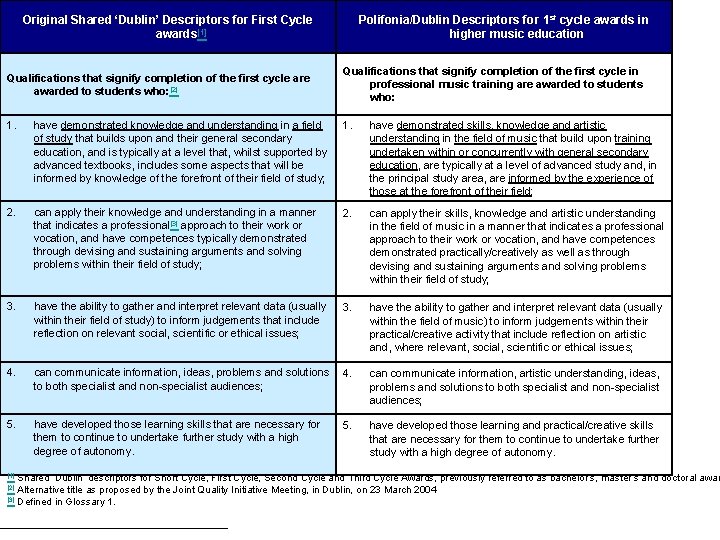
Original Shared ‘Dublin’ Descriptors for First Cycle awards[1] Polifonia/Dublin Descriptors for 1 st cycle awards in higher music education Qualifications that signify completion of the first cycle are awarded to students who: [2] Qualifications that signify completion of the first cycle in professional music training are awarded to students who: 1. have demonstrated knowledge and understanding in a field of study that builds upon and their general secondary education, and is typically at a level that, whilst supported by advanced textbooks, includes some aspects that will be informed by knowledge of the forefront of their field of study; 1. have demonstrated skills, knowledge and artistic understanding in the field of music that build upon training undertaken within or concurrently with general secondary education, are typically at a level of advanced study and, in the principal study area, are informed by the experience of those at the forefront of their field; 2. can apply their knowledge and understanding in a manner that indicates a professional[3] approach to their work or vocation, and have competences typically demonstrated through devising and sustaining arguments and solving problems within their field of study; 2. can apply their skills, knowledge and artistic understanding in the field of music in a manner that indicates a professional approach to their work or vocation, and have competences demonstrated practically/creatively as well as through devising and sustaining arguments and solving problems within their field of study; 3. have the ability to gather and interpret relevant data (usually within their field of study) to inform judgements that include reflection on relevant social, scientific or ethical issues; 3. have the ability to gather and interpret relevant data (usually within the field of music) to inform judgements within their practical/creative activity that include reflection on artistic and, where relevant, social, scientific or ethical issues; 4. can communicate information, ideas, problems and solutions to both specialist and non-specialist audiences; 4. can communicate information, artistic understanding, ideas, problems and solutions to both specialist and non-specialist audiences; 5. have developed those learning skills that are necessary for them to continue to undertake further study with a high degree of autonomy. 5. have developed those learning and practical/creative skills that are necessary for them to continue to undertake further study with a high degree of autonomy. Shared ‘Dublin’ descriptors for Short Cycle, First Cycle, Second Cycle and Third Cycle Awards, previously referred to as bachelor’s, master’s and doctoral awar Alternative title as proposed by the Joint Quality Initiative Meeting, in Dublin, on 23 March 2004 [3] Defined in Glossary 1. [1] [2]
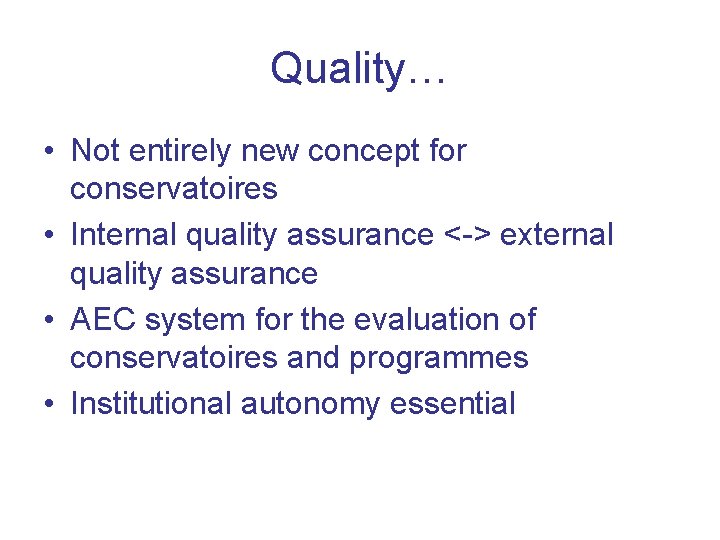
Quality… • Not entirely new concept for conservatoires • Internal quality assurance <-> external quality assurance • AEC system for the evaluation of conservatoires and programmes • Institutional autonomy essential
Finally… www. bologna-and-music. org www. polifonia-tn. org www. aecinfo. org