
The Advocacy Continuum Exercise MODULE IV 1 Introductions
- Slides: 17
The Advocacy Continuum Exercise MODULE IV 1
Introductions Parent? Self-Advocate? n Name n Part of state you are from n Experience with disability Provider? 2
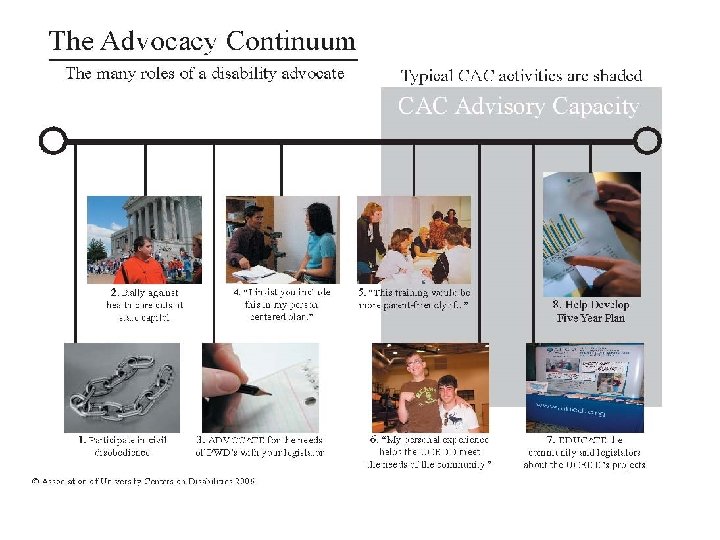
Introduction to the Advocacy Continuum Exercise n n Explore the range of advocacy activities Helps define the role of the CAC as advisors 3
What is Advocacy? Discussion 4
Educating vs. Advocating n n Educating is giving people information Advocating is telling people what they should do, based on that information Both are important tools Choosing when it is appropriate to educate or advocate can help you reach your goal a faster 5
How does my role as Advisor to the UCEDD fit with my role as an Educator? n n Educating as an Advisor CAC members educate in the community: q q q Talking to policymakers about the resources of the UCEDD Educating people in the disability system about values, resources, and best practices you have learned about through your experience advising the UCEDD Educating other people who have disabilities, their family members, and community members about the resources of the UCEDD 6
How does my role as an Advisor to the UCEDD fit with my role as an Advocate? n n Advocating as an Advisor CAC members advocate at the UCEDD, both in and out of CAC meetings q q “I know my son does not get his needs met in his IEP process: I would like to tell the UCEDD about my ideas to make the school system work better for students with disabilities. ” “I know of community resources that could help this UCEDD project meet the needs of more people. ” 7
8
Discussion n What are some examples of the following types of advocacy: q q q Self-Advocacy for a family member Advocacy for another individual Systems Advocacy Other? 9
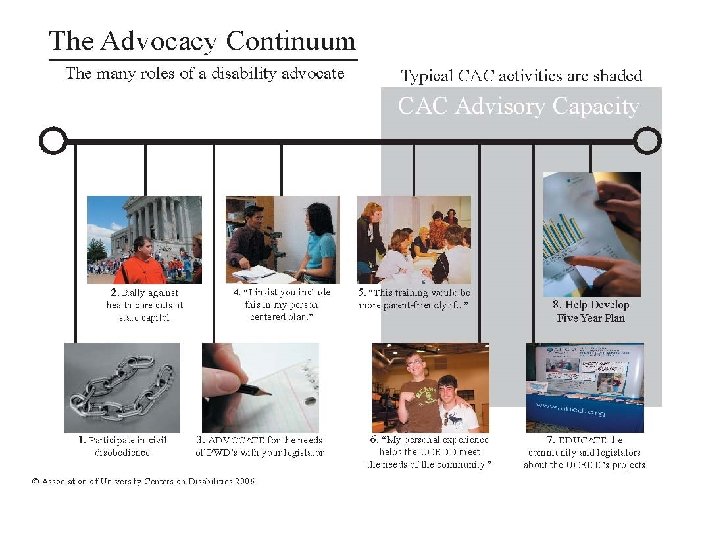
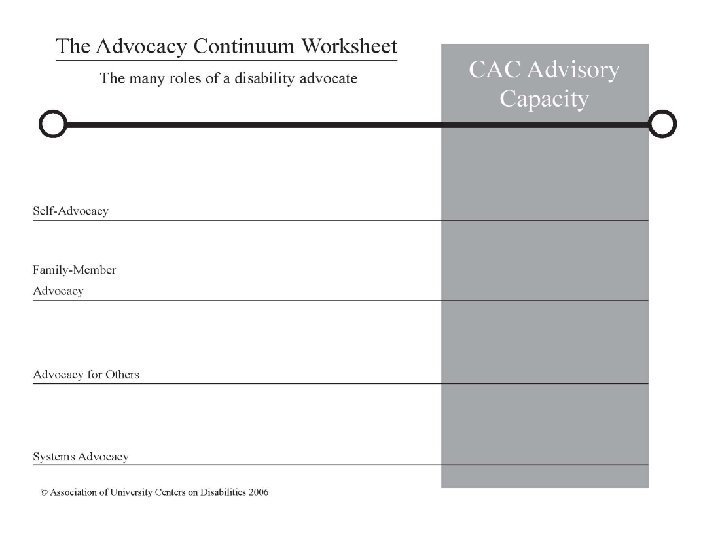
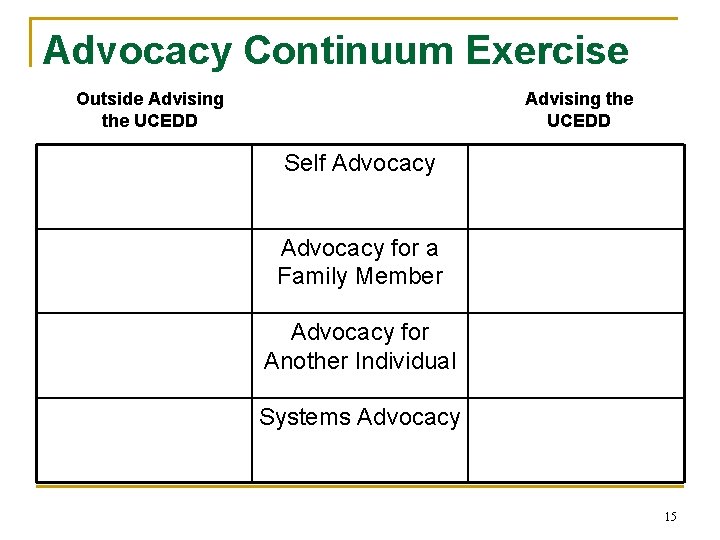
Advocacy Continuum Exercise n n n Using the examples you came up with, see where they fall on the Advocacy Continuum Can any of these examples be considered more than one type of advocacy? List all that apply on your Advocacy Continuum Worksheet 10
11
12
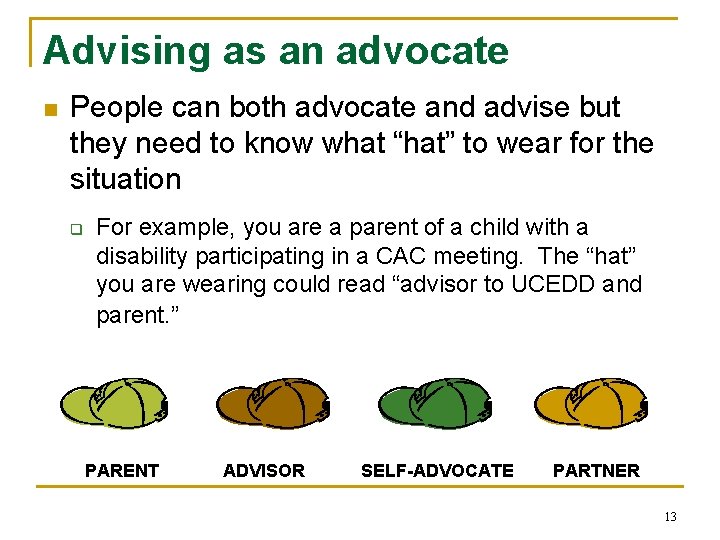
Advising as an advocate n People can both advocate and advise but they need to know what “hat” to wear for the situation q For example, you are a parent of a child with a disability participating in a CAC meeting. The “hat” you are wearing could read “advisor to UCEDD and parent. ” PARENT ADVISOR SELF-ADVOCATE PARTNER 13
Matching Roles The Advocacy Continuum can help you match your hat with the situation you are in What I do as a self-advocate? How do I advise the UCEDD? Let’s think about this a little more in the next slide 14
Advocacy Continuum Exercise Outside Advising the UCEDD Self Advocacy for a Family Member Advocacy for Another Individual Systems Advocacy 15
Discussion n Being a member of our UCEDD’s CAC q q What does the UCEDD expect from me? How does my experience help inform the UCEDD? What does the advisory committee do? What does it mean to advise the UCEDD? 16
Questions 17