
The Adventures of Huckleberry Finn By Mark Twain

The Adventures of Huckleberry Finn
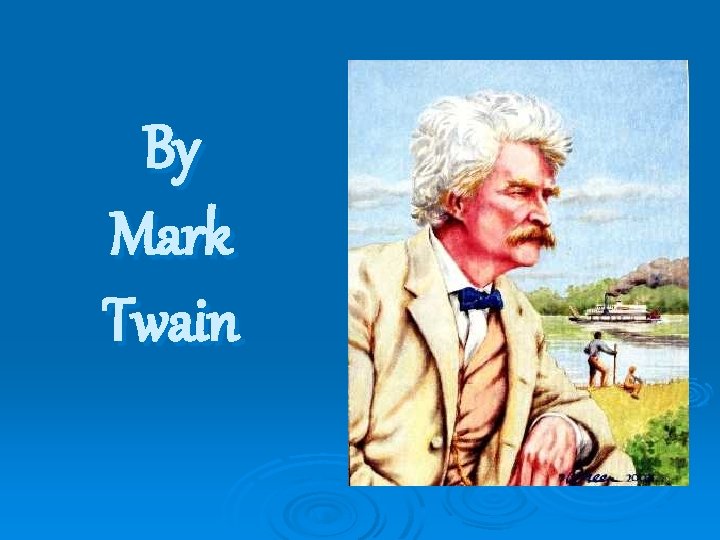
By Mark Twain
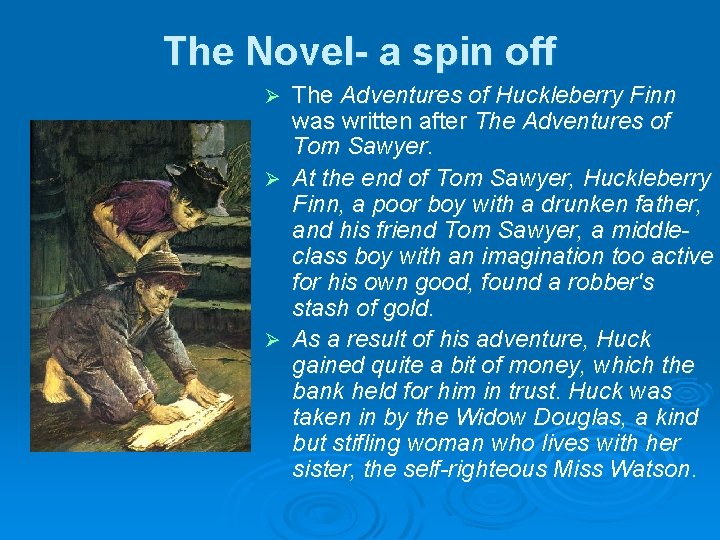
The Novel- a spin off The Adventures of Huckleberry Finn was written after The Adventures of Tom Sawyer. Ø At the end of Tom Sawyer, Huckleberry Finn, a poor boy with a drunken father, and his friend Tom Sawyer, a middleclass boy with an imagination too active for his own good, found a robber's stash of gold. Ø As a result of his adventure, Huck gained quite a bit of money, which the bank held for him in trust. Huck was taken in by the Widow Douglas, a kind but stifling woman who lives with her sister, the self-righteous Miss Watson. Ø
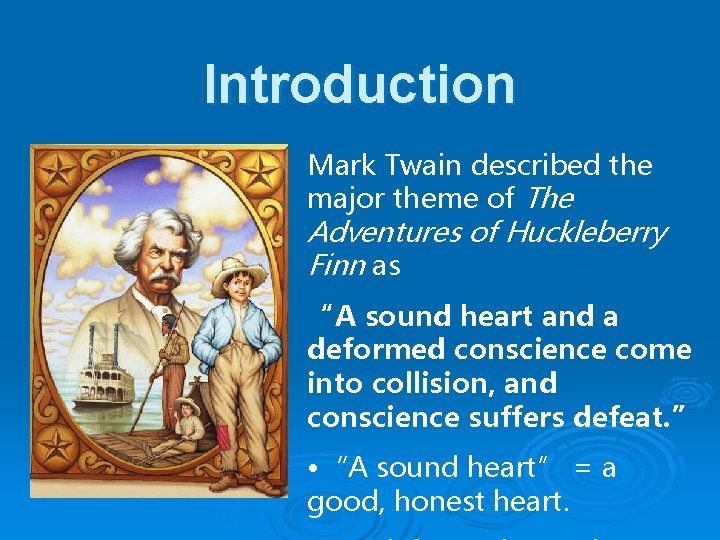
Introduction Mark Twain described the major theme of The Adventures of Huckleberry Finn as “A sound heart and a deformed conscience come into collision, and conscience suffers defeat. ” • “A sound heart” = a good, honest heart.

Key Facts Ø Genre l Satiric Novel- Horatian • A work that uses characters in a humor, irony, and exaggeration to ridicule society in order to bring about change Ø Narrator & Protagonist l Ø Huck Finn: literal, realistic, practical Setting l Time • Before the Civil War; roughly 1835– 1845 l Place • The Mississippi River town of St. Petersburg, Missouri
Themes: What does Twain teach us about each idea? Ø Racism & Slavery Ø Intellectual and Moral Education Ø The Hypocrisy of “Civilized” Society
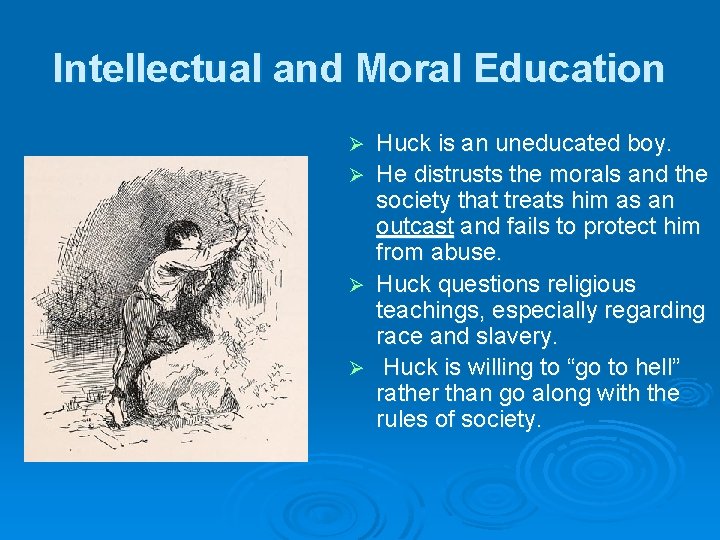
Intellectual and Moral Education Ø Ø Huck is an uneducated boy. He distrusts the morals and the society that treats him as an outcast and fails to protect him from abuse. Huck questions religious teachings, especially regarding race and slavery. Huck is willing to “go to hell” rather than go along with the rules of society.
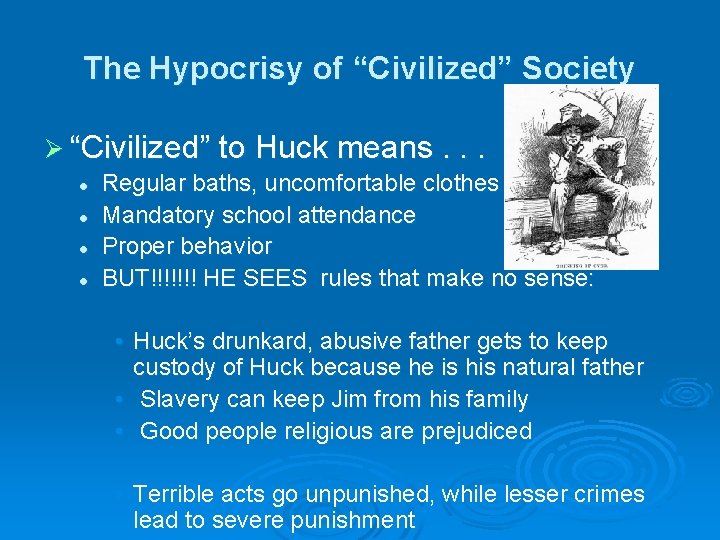
The Hypocrisy of “Civilized” Society Ø “Civilized” to Huck means. . . l l Regular baths, uncomfortable clothes Mandatory school attendance Proper behavior BUT!!!!!!! HE SEES rules that make no sense: • Huck’s drunkard, abusive father gets to keep custody of Huck because he is his natural father • Slavery can keep Jim from his family • Good people religious are prejudiced • Terrible acts go unpunished, while lesser crimes lead to severe punishment
Conflict and Climax Ø Major Conflict: Huck’s internal struggle with his “deformed conscience. ” The climax of Huckleberry Finn is when Huck decides to help Jim escape slavery from the Phelps farm (his own moral code) despite the fact that society believes he will suffer in hell for it.
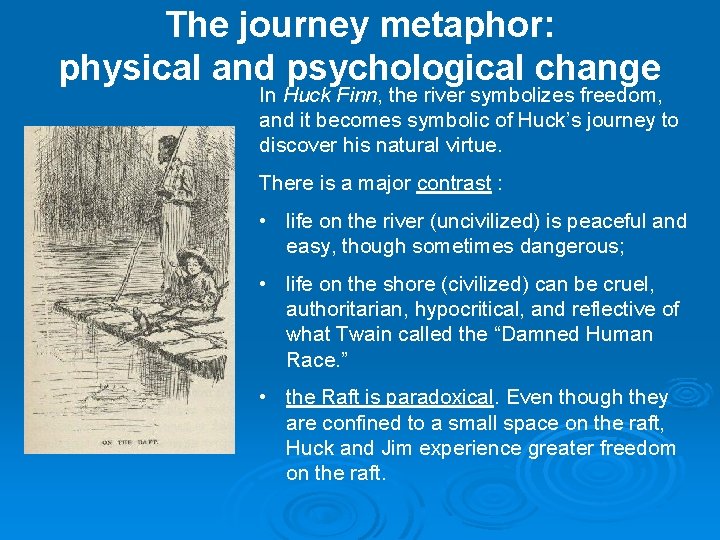
The journey metaphor: physical and psychological change In Huck Finn, the river symbolizes freedom, and it becomes symbolic of Huck’s journey to discover his natural virtue. There is a major contrast : • life on the river (uncivilized) is peaceful and easy, though sometimes dangerous; • life on the shore (civilized) can be cruel, authoritarian, hypocritical, and reflective of what Twain called the “Damned Human Race. ” • the Raft is paradoxical. Even though they are confined to a small space on the raft, Huck and Jim experience greater freedom on the raft.
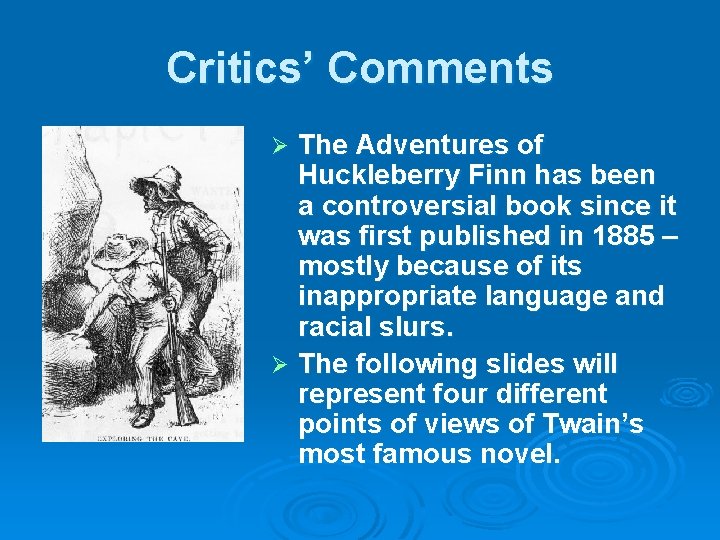
Critics’ Comments The Adventures of Huckleberry Finn has been a controversial book since it was first published in 1885 – mostly because of its inappropriate language and racial slurs. Ø The following slides will represent four different points of views of Twain’s most famous novel. Ø
- Slides: 11