
THE ADVANTAGES AND LIMITATIONS OF THE TEN TYPES

- Slides: 12
THE ADVANTAGES AND LIMITATIONS OF THE TEN TYPES OF LEARNING STRATEGIES. BY. CONNIE PARRISH
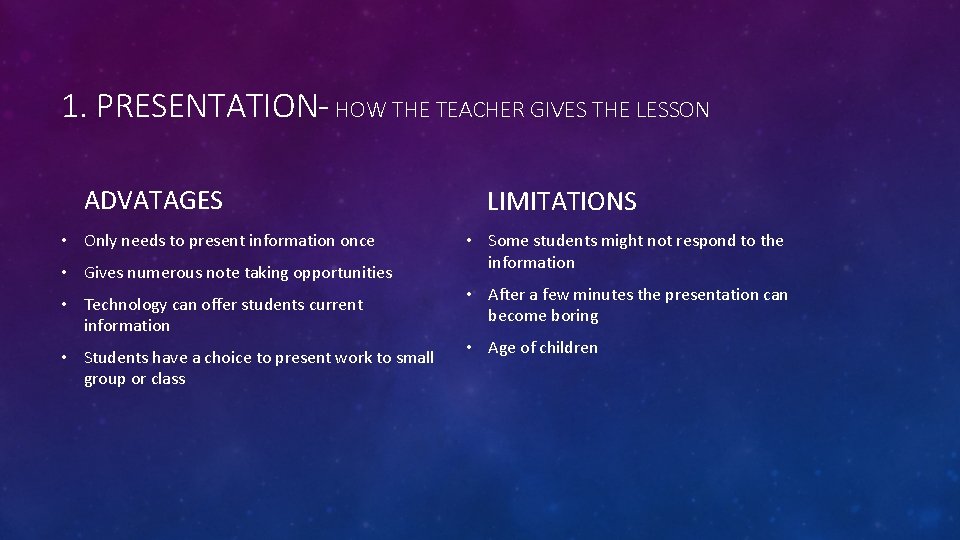
1. PRESENTATION- HOW THE TEACHER GIVES THE LESSON ADVATAGES • Only needs to present information once • Gives numerous note taking opportunities • Technology can offer students current information • Students have a choice to present work to small group or class LIMITATIONS • Some students might not respond to the information • After a few minutes the presentation can become boring • Age of children
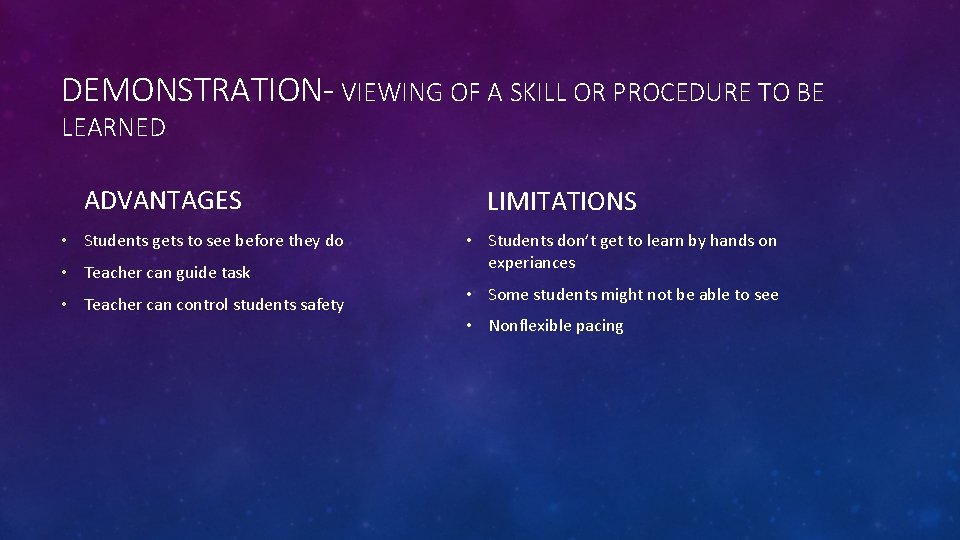
DEMONSTRATION- VIEWING OF A SKILL OR PROCEDURE TO BE LEARNED ADVANTAGES • Students gets to see before they do • Teacher can guide task • Teacher can control students safety LIMITATIONS • Students don’t get to learn by hands on experiances • Some students might not be able to see • Nonflexible pacing
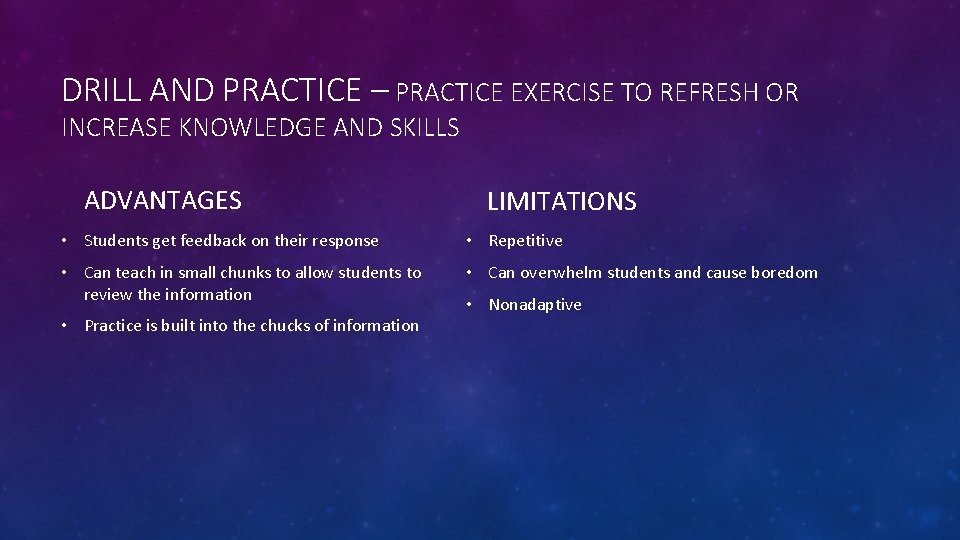
DRILL AND PRACTICE – PRACTICE EXERCISE TO REFRESH OR INCREASE KNOWLEDGE AND SKILLS ADVANTAGES LIMITATIONS • Students get feedback on their response • Repetitive • Can teach in small chunks to allow students to review the information • Can overwhelm students and cause boredom • Practice is built into the chucks of information • Nonadaptive
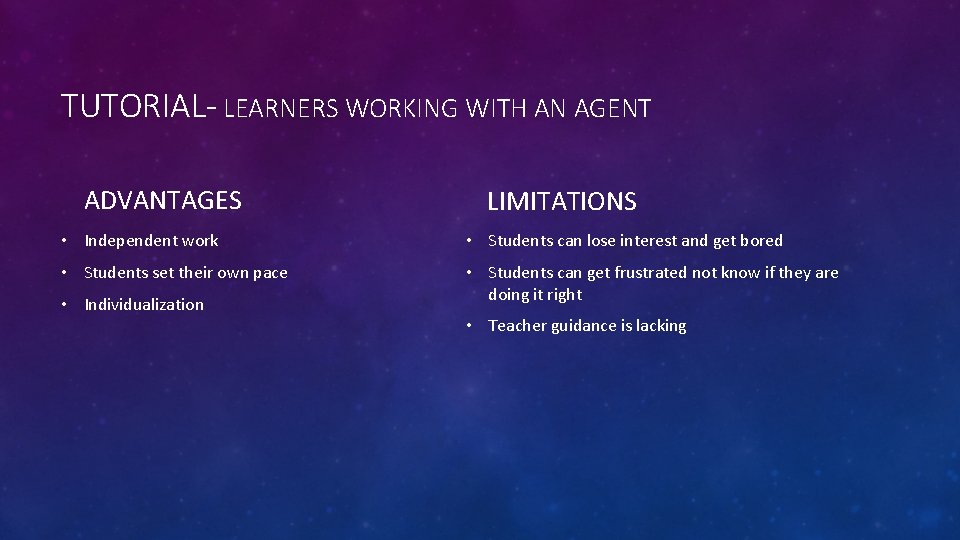
TUTORIAL- LEARNERS WORKING WITH AN AGENT ADVANTAGES LIMITATIONS • Independent work • Students can lose interest and get bored • Students set their own pace • Students can get frustrated not know if they are doing it right • Individualization • Teacher guidance is lacking
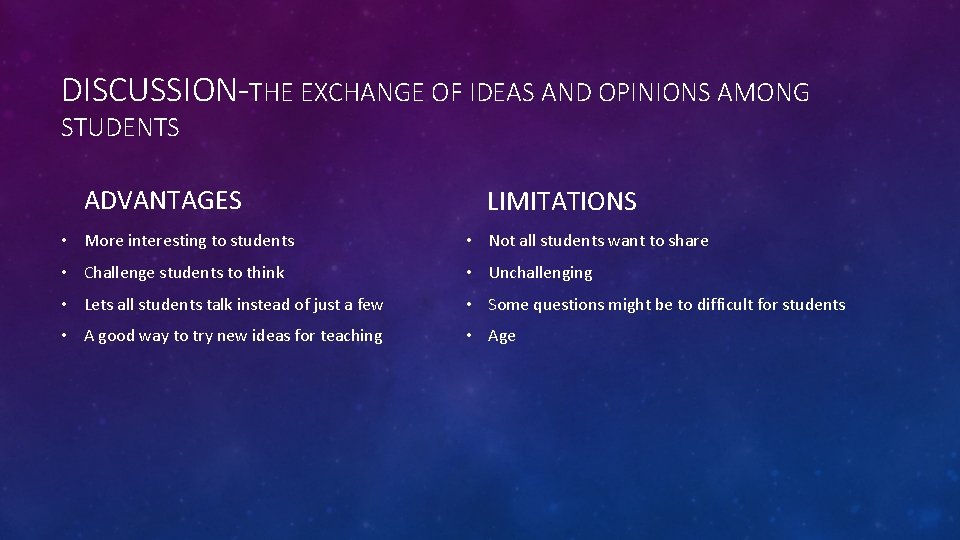
DISCUSSION-THE EXCHANGE OF IDEAS AND OPINIONS AMONG STUDENTS ADVANTAGES LIMITATIONS • More interesting to students • Not all students want to share • Challenge students to think • Unchallenging • Lets all students talk instead of just a few • Some questions might be to difficult for students • A good way to try new ideas for teaching • Age
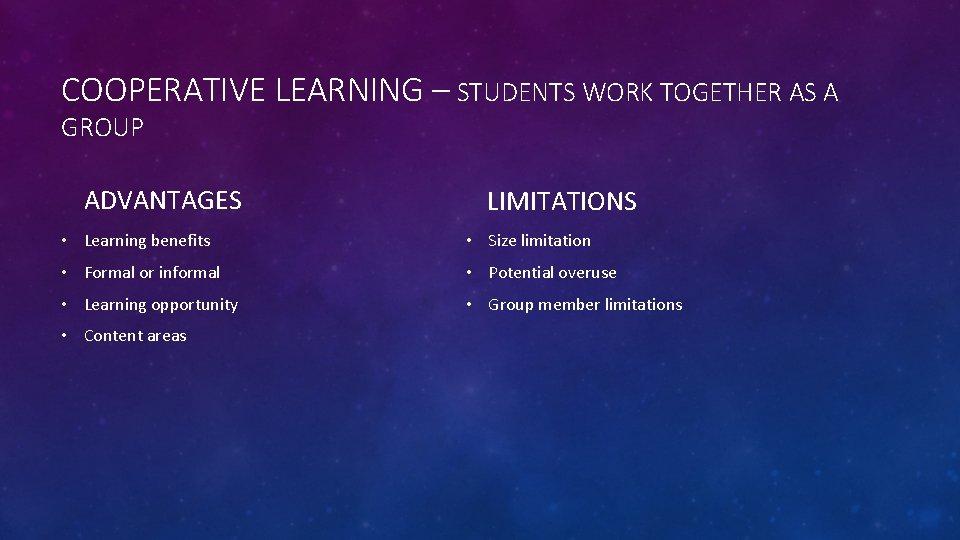
COOPERATIVE LEARNING – STUDENTS WORK TOGETHER AS A GROUP ADVANTAGES LIMITATIONS • Learning benefits • Size limitation • Formal or informal • Potential overuse • Learning opportunity • Group member limitations • Content areas
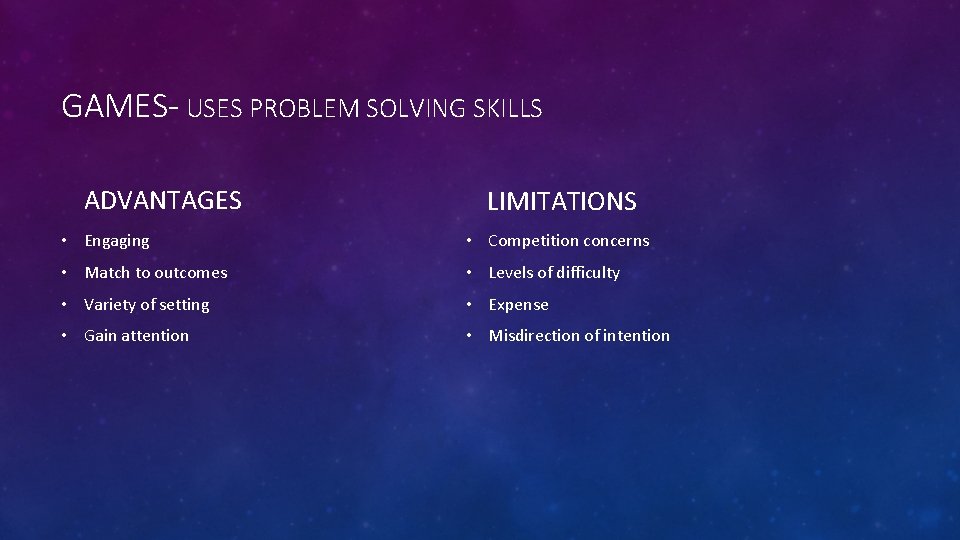
GAMES- USES PROBLEM SOLVING SKILLS ADVANTAGES LIMITATIONS • Engaging • Competition concerns • Match to outcomes • Levels of difficulty • Variety of setting • Expense • Gain attention • Misdirection of intention
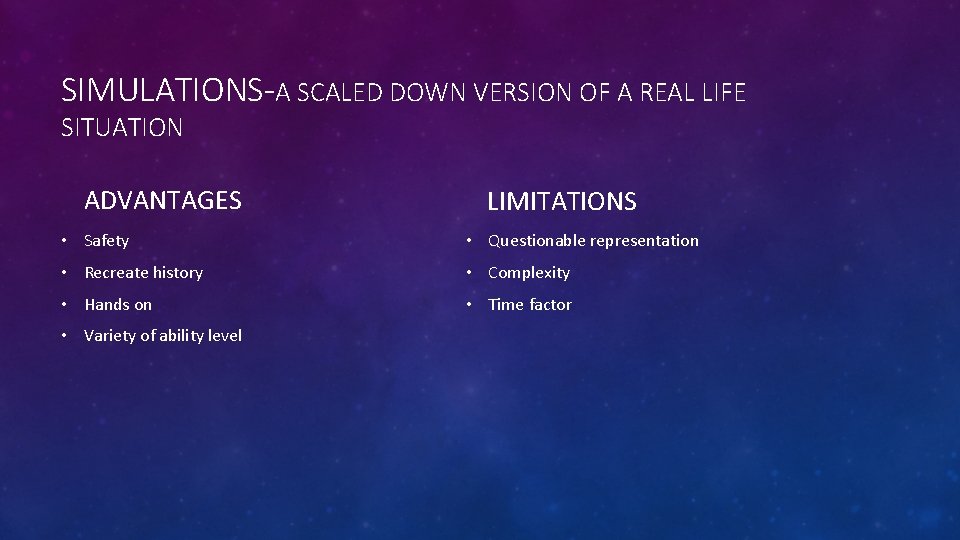
SIMULATIONS-A SCALED DOWN VERSION OF A REAL LIFE SITUATION ADVANTAGES LIMITATIONS • Safety • Questionable representation • Recreate history • Complexity • Hands on • Time factor • Variety of ability level
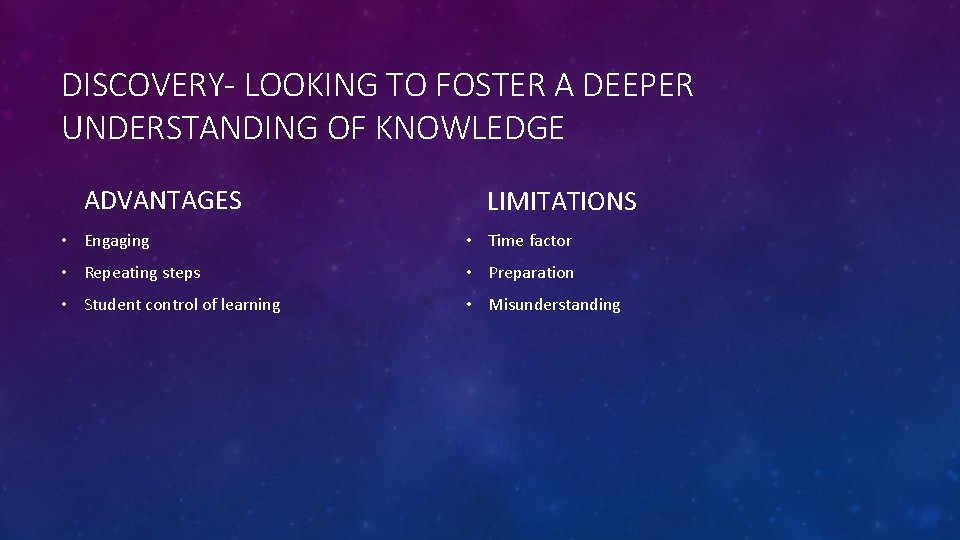
DISCOVERY- LOOKING TO FOSTER A DEEPER UNDERSTANDING OF KNOWLEDGE ADVANTAGES LIMITATIONS • Engaging • Time factor • Repeating steps • Preparation • Student control of learning • Misunderstanding
PROBLEM-BASED LEARNING – ACTIVELY SEEK SOLUTIONS TO STRUCTURED OR ILL-STRUCTURED PROBLEMS IN THE REAL WORLD ADVANTAGES LIMITATIONS • Engaging • Difficult to create • Context for learning • time consuming • Levels of complexity • Age appropriateness
Work cite Smaldino, S. E. , D. L. Lowther, and J. D. Russel. Instructional technology and media for learning. 10. Boston, MA: Pearson Education. Inc, 2012. 73 -83. Print.