
The Advanced Technology Solar Telescope SWG Meeting 9
- Slides: 24
The Advanced Technology Solar Telescope SWG Meeting 9 -11 September 2009 NSO Operations of the ATST
Operation Assumptions • ATST will be oversubscribed and available observing hours must be maximized. • Both PI-mode (on site) and queue-mode (service mode, for either PI or community) observing will be supported. • ATST will be scheduled together with spacebased observations frequently (priority? ). • ATST instrumentation and data analysis will require strong scientific support. • NSO will restructure its organization to support ATST operations 10/26/2020 2
Operation Assumptions • NSO will integrate ATST data archiving into its data center • ATST will dynamically respond to changing solar conditions on timescales of hours to days • ATST Instrumentation development will be an ongoing program. • Some instrument maintenance and instrument change over will occur at night. • ATST will support remote observations, which is defined as telescope status and acquisition, telescope status availability for remote collaborators. • ATST will support night-time observations on a case-by-case basis only. 10/26/2020 3
Operating Locations • Summit Facility – telescope and support structures on the summit • Maui-base – administrative and technical support services, data handling at the mountain base • NSO Headquarters – data center, instrumentation program, business services 10/26/2020 4
Transition from Construction • Integration, Testing, and Commissioning (IT&C) • Begin ramp up of operations personnel to support IT&C • Personnel Training • Science Verification – Instruments – Calibration of control systems • Acceptance Matrix (SPEC-0038) 10/26/2020 5
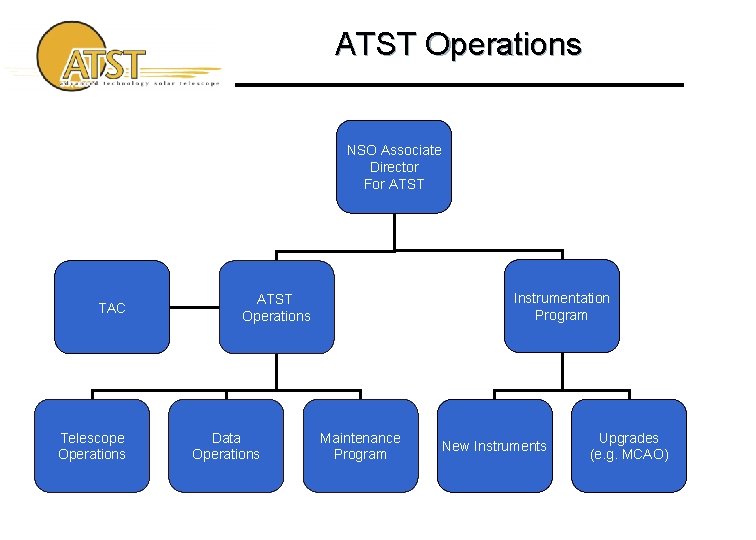
ATST Operations NSO Associate Director For ATST TAC Telescope Operations 10/26/2020 Instrumentation Program ATST Operations Data Operations Maintenance Program New Instruments Upgrades (e. g. MCAO) 6
Observing Modes • Queue-Mode (service mode) – These are PI proposals or community programs that require specific environmental or solar conditions. They are placed in a queue and executed when the specific conditions are available. The proposal can be executed without direct participation by the PI. • PI-Mode (visitor mode) – requires direct or remote participation by the PI • Engineering Mode – time allocated for maintenance, instrument development and commissioning 10/26/2020 7
Observing Programs • Campaign Programs – These are queue-mode (service) or PI-mode observations collected by visiting or NSO scientists in collaboration with other space and ground facilities in campaigns • Community Programs – Collection of standard datasets of general interest. These could include a standard observation of a canonical active region, a series of observations of an active region during its entire transit across the disk, or the collection a statistical sample of observations of a specific solar feature. They would be conducted in consultation with the community and would allow for “generic” data sets that can be used by many different people (similar to a nighttime survey program). 10/26/2020 8
Telescope Allocations • Proposal Period – 6 months • Instrument Calculators (for PIs, for TAC and Operators) • Common submission software • ATST Support Scientists – Instruments – WFC – Data • Proposals screened for technical feasibility 10/26/2020 9
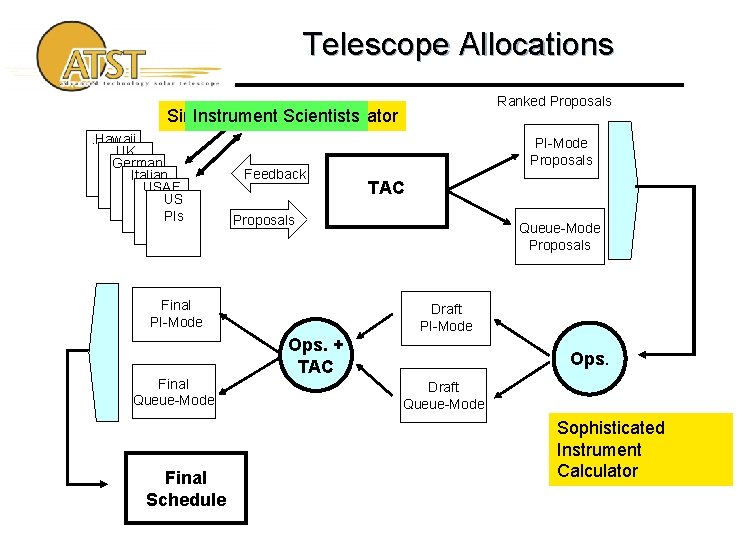
Telescope Allocations Ranked Proposals Simple Instrument Calculator Instrument Scientists. Hawaii UK German PIs Italian PIs USAF PIs US PIs Feedback 10/26/2020 Final Schedule TAC Proposals Final PI-Mode Final Queue-Mode PI-Mode Proposals Queue-Mode Proposals Draft PI-Mode Ops. + TAC Ops. Draft Queue-Mode Sophisticated Instrument Calculator 10
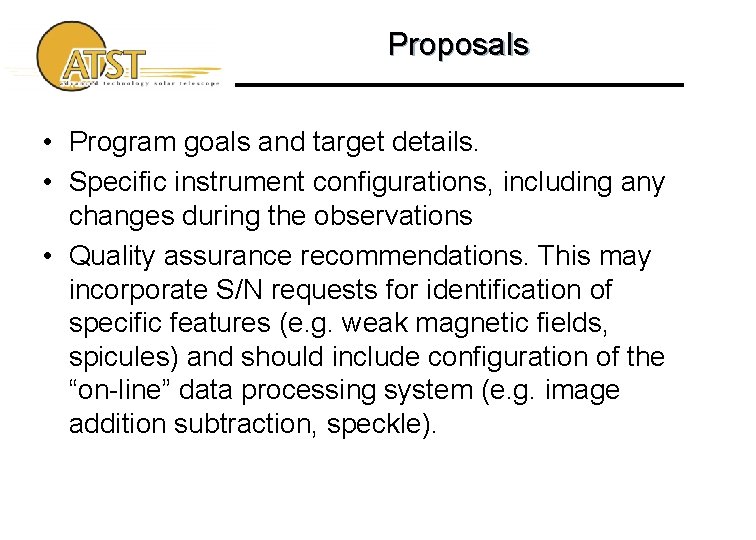
Proposals • Program goals and target details. • Specific instrument configurations, including any changes during the observations • Quality assurance recommendations. This may incorporate S/N requests for identification of specific features (e. g. weak magnetic fields, spicules) and should include configuration of the “on-line” data processing system (e. g. image addition subtraction, speckle). 10/26/2020 11
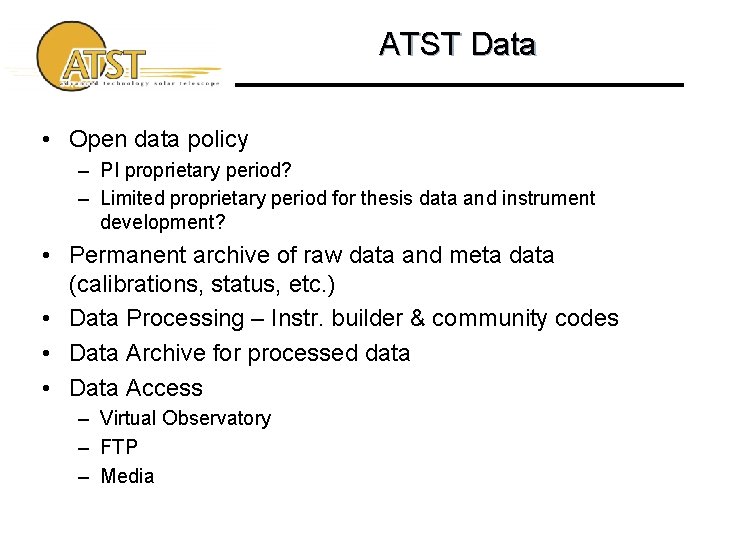
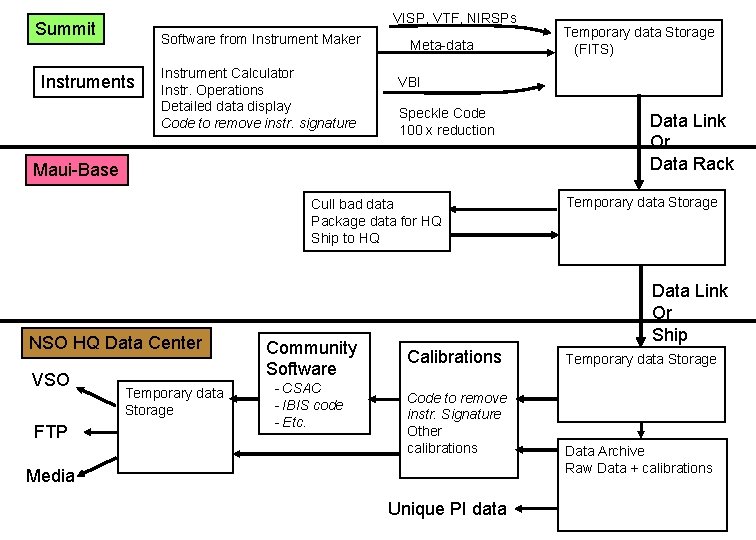
ATST Data • Open data policy – PI proprietary period? – Limited proprietary period for thesis data and instrument development? • Permanent archive of raw data and meta data (calibrations, status, etc. ) • Data Processing – Instr. builder & community codes • Data Archive for processed data • Data Access – Virtual Observatory – FTP – Media 10/26/2020 12
VISP, VTF, NIRSPs Summit Software from Instrument Maker Instruments Instrument Calculator Instr. Operations Detailed data display Code to remove instr. signature Meta-data VBI Speckle Code 100 x reduction Maui-Base Cull bad data Package data for HQ Ship to HQ NSO HQ Data Center VSO FTP Temporary data Storage Community Software - CSAC - IBIS code - Etc. Data Link Or Data Rack Temporary data Storage Data Link Or Ship Calibrations Code to remove instr. Signature Other calibrations Media 10/26/2020 Temporary data Storage (FITS) Unique PI data Temporary data Storage Data Archive Raw Data + calibrations 13
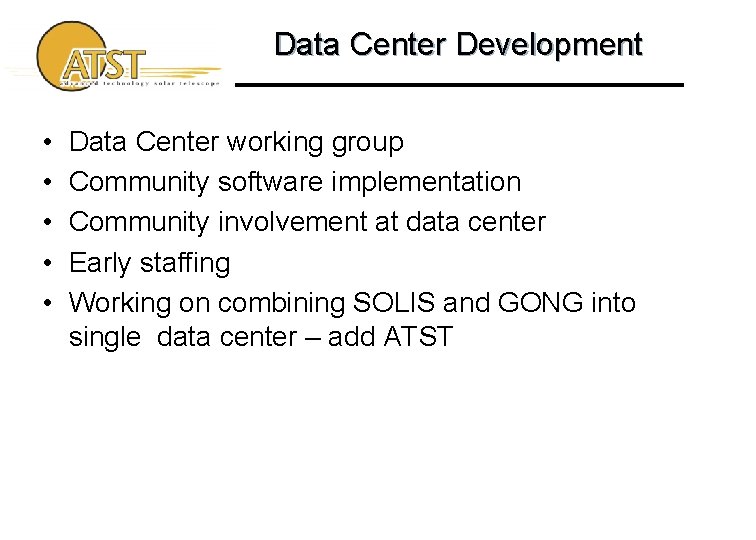
Data Center Development • • • Data Center working group Community software implementation Community involvement at data center Early staffing Working on combining SOLIS and GONG into single data center – add ATST 10/26/2020 14
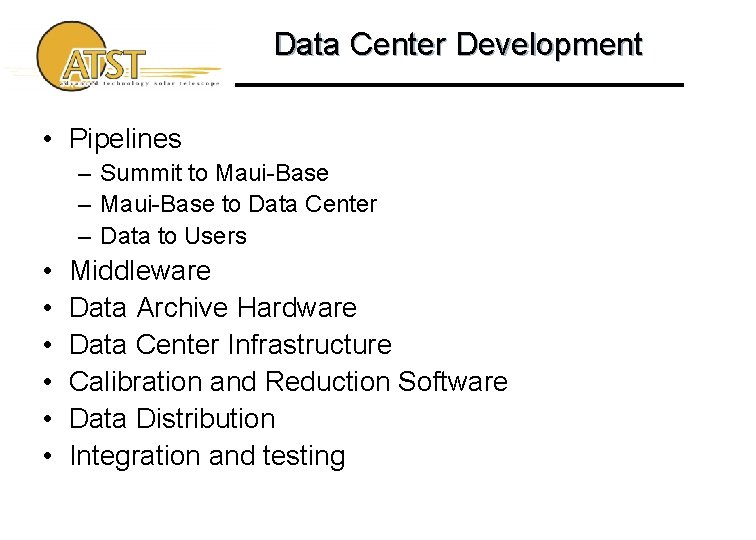
Data Center Development • Pipelines – Summit to Maui-Base – Maui-Base to Data Center – Data to Users • • • Middleware Data Archive Hardware Data Center Infrastructure Calibration and Reduction Software Data Distribution Integration and testing 10/26/2020 15
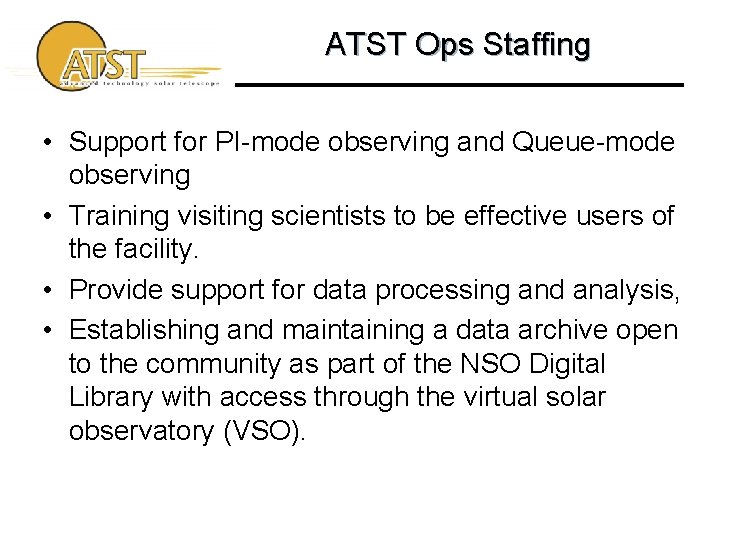
ATST Ops Staffing • Support for PI-mode observing and Queue-mode observing • Training visiting scientists to be effective users of the facility. • Provide support for data processing and analysis, • Establishing and maintaining a data archive open to the community as part of the NSO Digital Library with access through the virtual solar observatory (VSO). 10/26/2020 16
Staffing • Provide for the development of new instrumentation and upgrades of existing instruments and computational facilities, support for community PIs • Perform preventive maintenance to maintain very high telescope availability for observing. • Respond quickly to failures. • Conduct an education and public outreach program including the training of scientific and technical personnel in Hawai’i. 10/26/2020 17
Management • • Integration into NSO Managing a Distributed Facility Environment, Safety and Health (ES&H) Outreach Operations and Science Support Staffing Administration Staffing Engineering Staffing Data Center Staffing 10/26/2020 18
Operations Cost Summary 10/26/2020 19
Start-up Costs • Relocation of personnel and equipment • Vehicles • ATST Support Facility (build vs lease) 10/26/2020 20
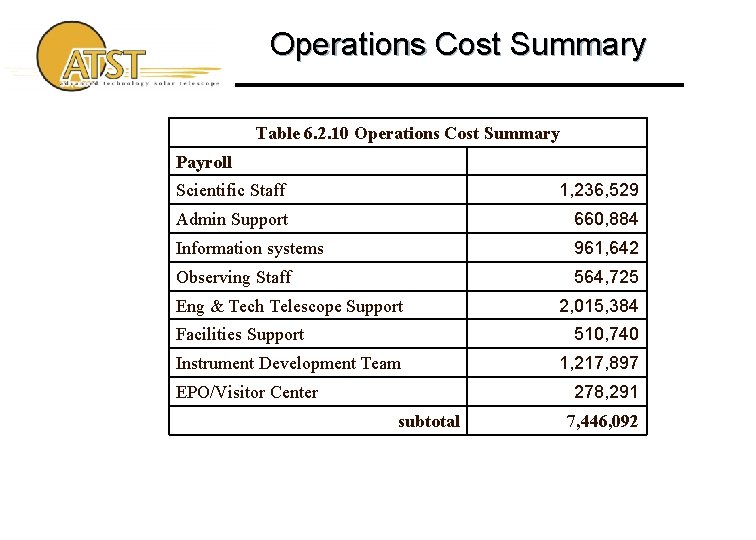
Operations Cost Summary Table 6. 2. 10 Operations Cost Summary Payroll Scientific Staff 1, 236, 529 Admin Support 660, 884 Information systems 961, 642 Observing Staff 564, 725 Eng & Tech Telescope Support 510, 740 Facilities Support Instrument Development Team 1, 217, 897 278, 291 EPO/Visitor Center subtotal 10/26/2020 2, 015, 384 7, 446, 092 21
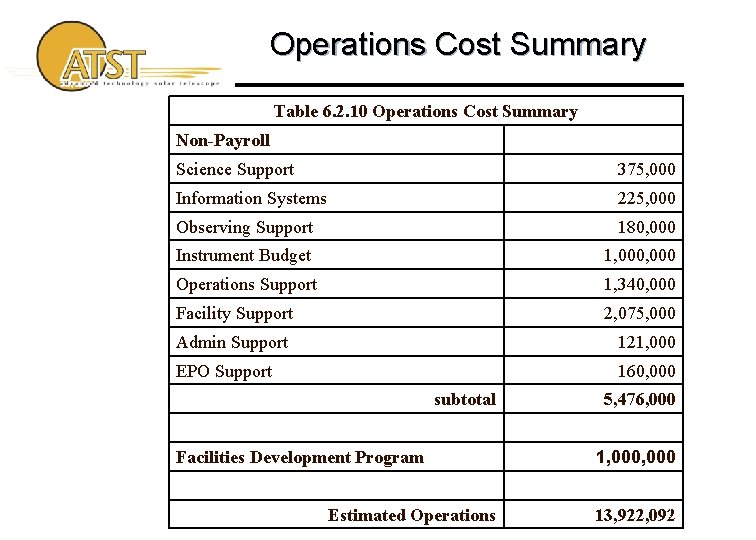
Operations Cost Summary Table 6. 2. 10 Operations Cost Summary Non-Payroll Science Support 375, 000 Information Systems 225, 000 Observing Support 180, 000 Instrument Budget 1, 000 Operations Support 1, 340, 000 Facility Support 2, 075, 000 Admin Support 121, 000 EPO Support 160, 000 subtotal Facilities Development Program 10/26/2020 Estimated Operations 5, 476, 000 1, 000 22 13, 922, 092
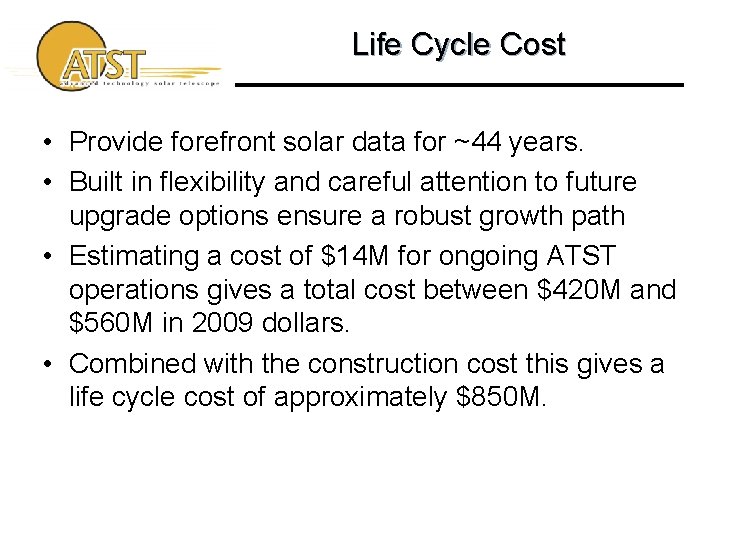
Life Cycle Cost • Provide forefront solar data for ~44 years. • Built in flexibility and careful attention to future upgrade options ensure a robust growth path • Estimating a cost of $14 M for ongoing ATST operations gives a total cost between $420 M and $560 M in 2009 dollars. • Combined with the construction cost this gives a life cycle cost of approximately $850 M. 10/26/2020 23
Contact Information Stephen L. Keil, NSO Project Director skeil@nso. edu 1 -505 -434 -7039 Thomas Rimmele, Project Scientist, 1 -505 -434 -7022 Jeremy Wagner, Project Manager, 1 -520 -318 -8249 For More Information see: http: //atst. nso. edu 10/26/2020 24