
The Administration of George Washington Election of 1789
- Slides: 18
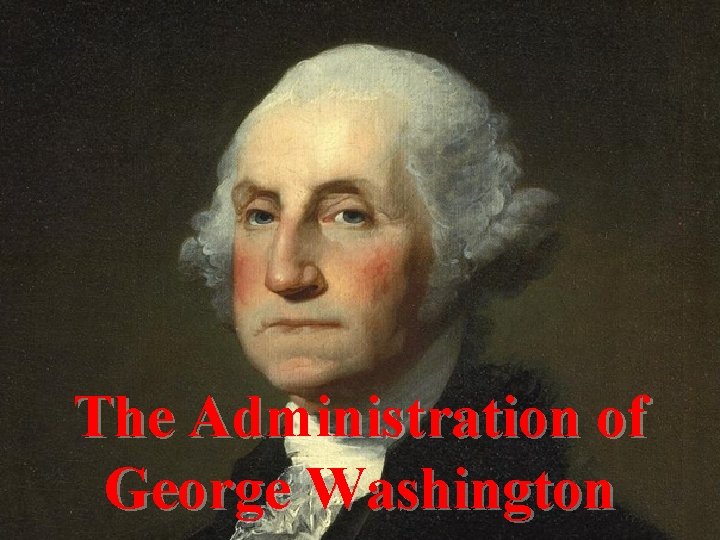
The Administration of George Washington
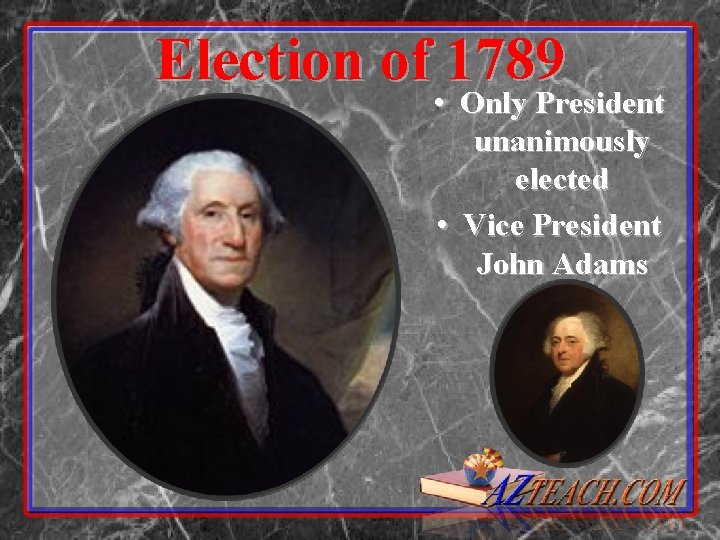
Election of 1789 • Only President unanimously elected • Vice President John Adams
Foresight in going first "As the first of every thing, in our situation will serve to establish a Precedent, it is devoutly wished on my part, that these precedents may be fixed on true principles. ” - from a letter written to James Madison
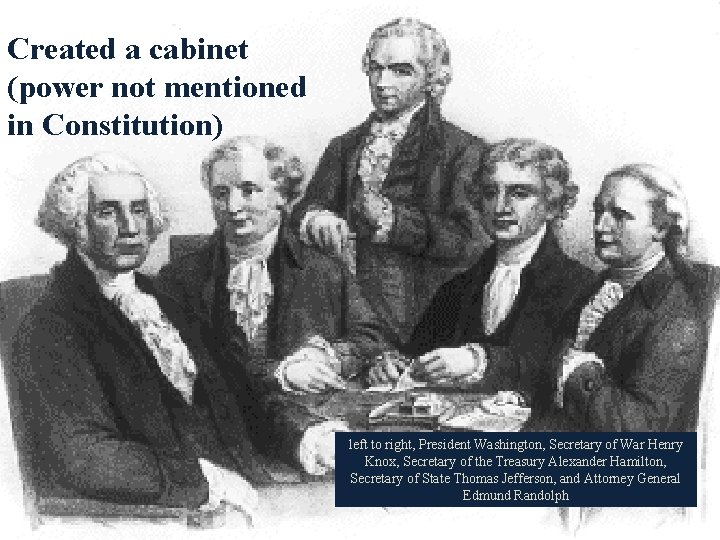
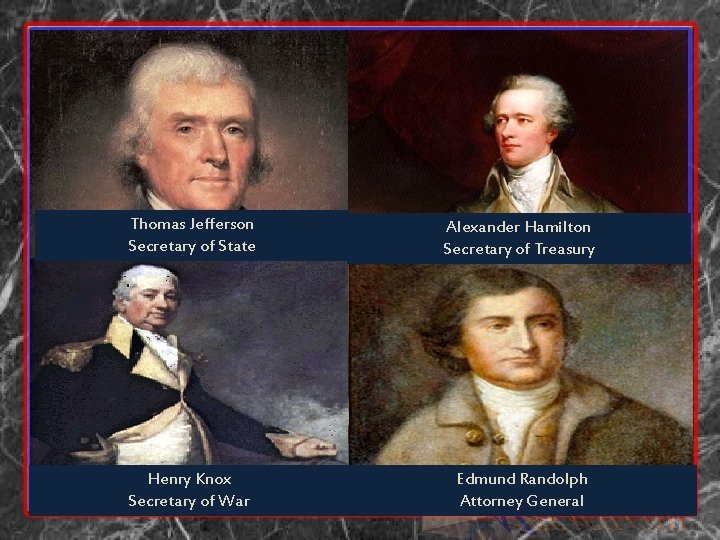
Created a cabinet (power not mentioned in Constitution) left to right, President Washington, Secretary of War Henry Knox, Secretary of the Treasury Alexander Hamilton, Secretary of State Thomas Jefferson, and Attorney General Edmund Randolph
Thomas Jefferson Secretary of State Alexander Hamilton Secretary of Treasury Henry Knox Secretary of War Edmund Randolph Attorney General
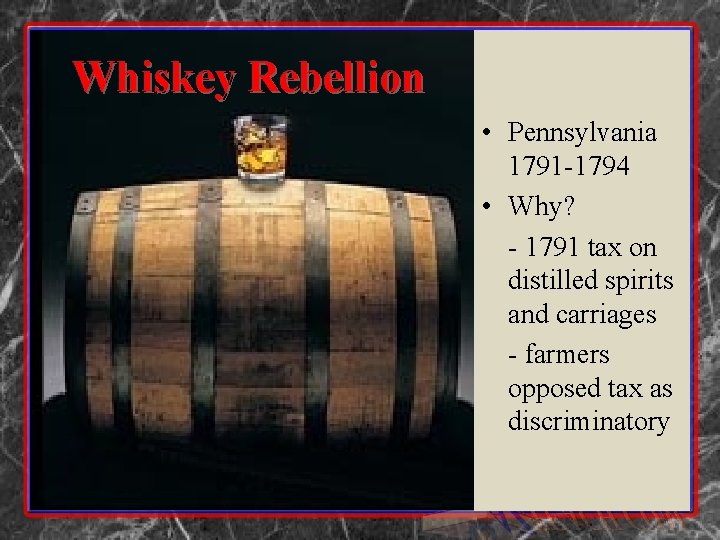
Whiskey Rebellion • Pennsylvania 1791 -1794 • Why? - 1791 tax on distilled spirits and carriages - farmers opposed tax as discriminatory
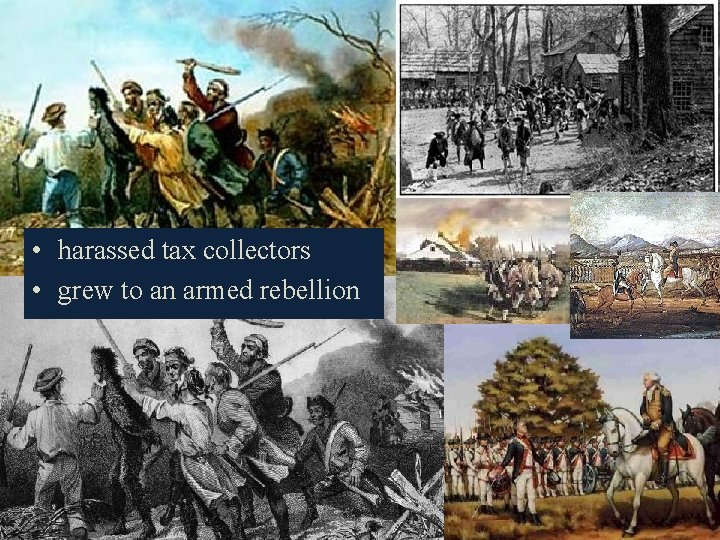
• harassed tax collectors • grew to an armed rebellion
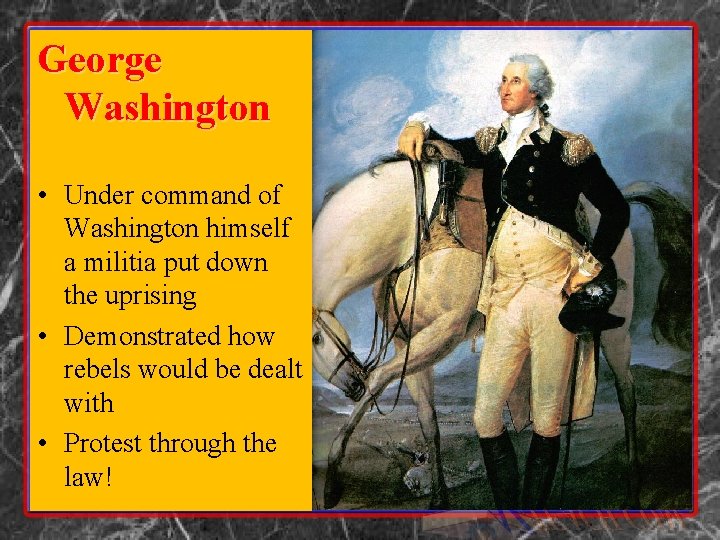
George Washington • Under command of Washington himself a militia put down the uprising • Demonstrated how rebels would be dealt with • Protest through the law!
Neutrality Act • War between Great Britain and France • Which side did US take? - France wants a Franco-American Alliance • Neutrality Proclamation issued on April 22, 1793 - By Washington - US would be "friendly and impartial" • Jefferson resigned at the end of 1793 • Congress passed the Neutrality Act of 1794 - based off Washington’s ideas
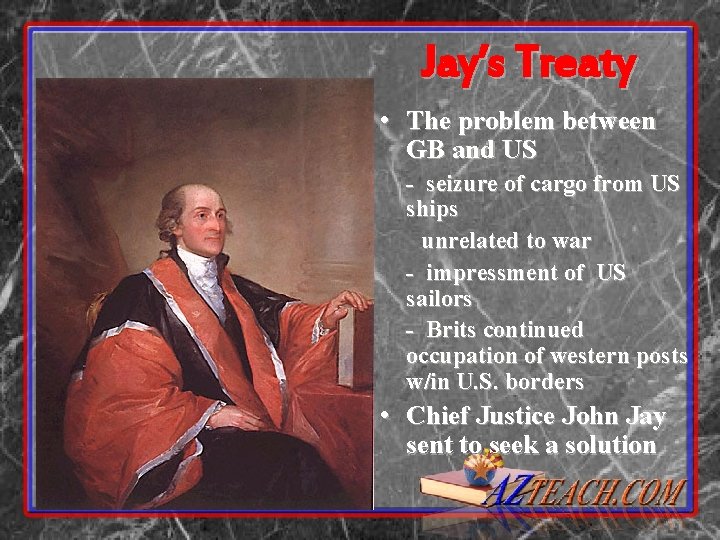
Jay’s Treaty • The problem between GB and US - seizure of cargo from US ships unrelated to war - impressment of US sailors - Brits continued occupation of western posts w/in U. S. borders • Chief Justice John Jay sent to seek a solution
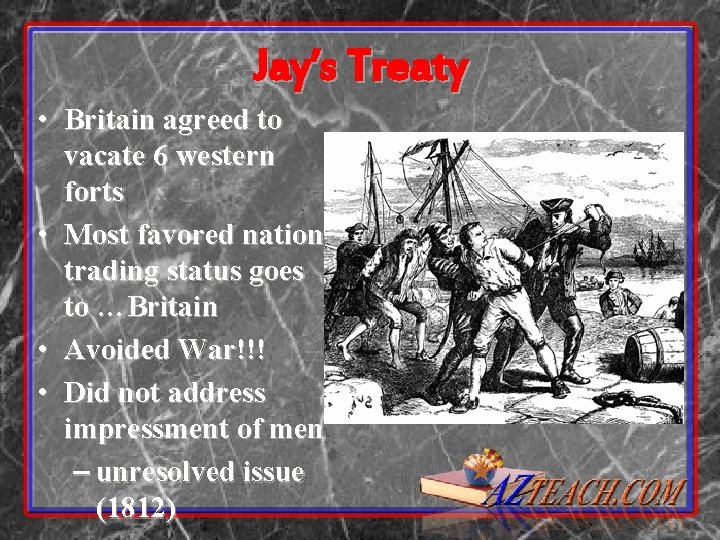
Jay’s Treaty • Britain agreed to vacate 6 western forts • Most favored nation trading status goes to …Britain • Avoided War!!! • Did not address impressment of men – unresolved issue (1812)
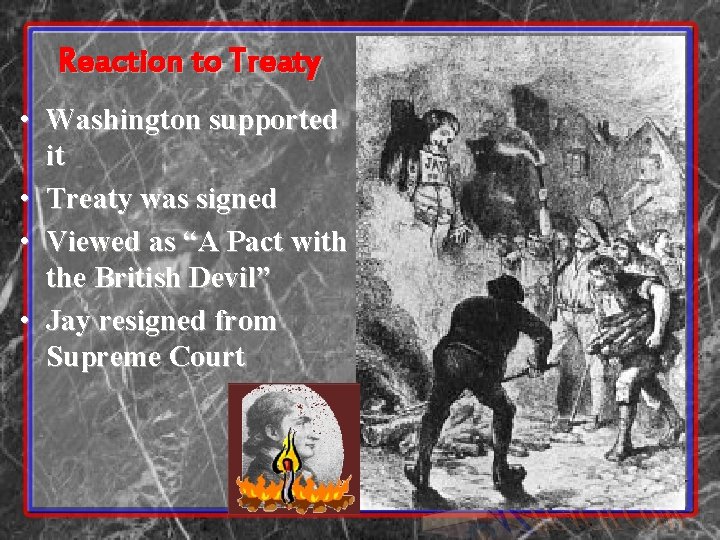
Reaction to Treaty • Washington supported it • Treaty was signed • Viewed as “A Pact with the British Devil” • Jay resigned from Supreme Court
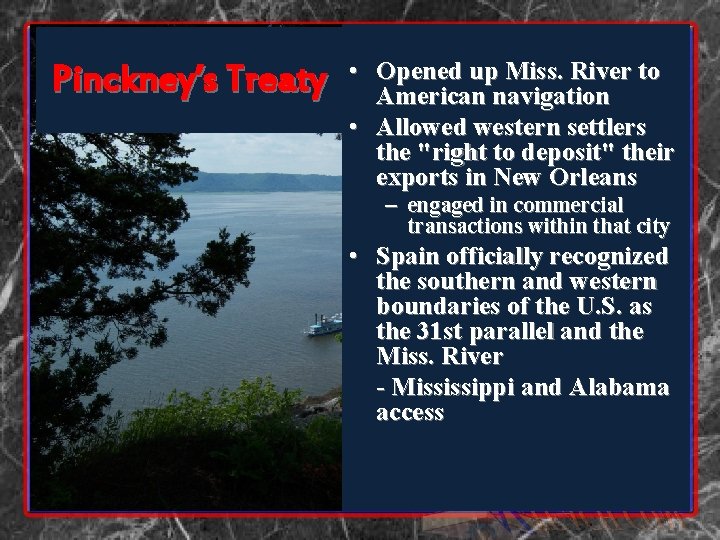
Pinckney’s Treaty • Opened up Miss. River to American navigation • Allowed western settlers the "right to deposit" their exports in New Orleans – engaged in commercial transactions within that city • Spain officially recognized the southern and western boundaries of the U. S. as the 31 st parallel and the Miss. River - Mississippi and Alabama access
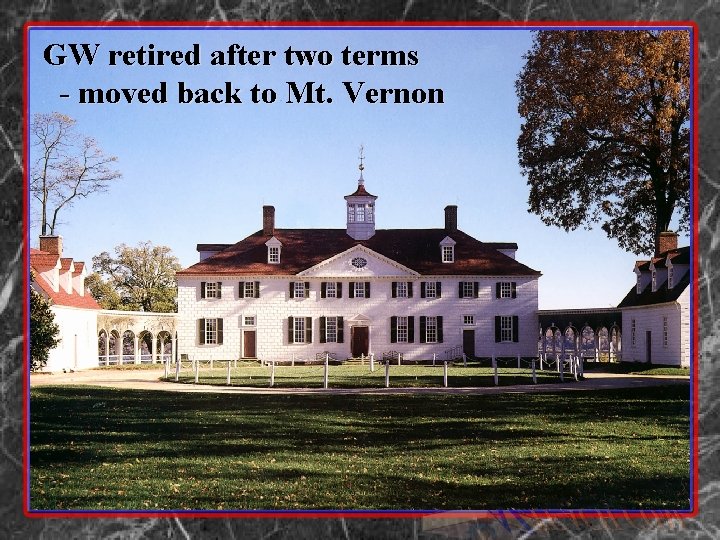
GW retired after two terms - moved back to Mt. Vernon
Farewell Address “It serves to distract the Public Councils, and • Warned of two enfeeble the Public important ideas: Administration. . agitates 1. The US should avoid the Community with illentangling alliances founded jealousies and 2. The US should avoid false alarms; kindles the forming political parties animosity of one. . against another. . it opens the door to foreign influence and corruption. . . thus the policy "It is our true policy to steer clear and the will of one country of permanent alliances with any are subjected to the policy portion of the foreign world. . . " and will of another. "
Precedents set by Washington • Established the Cabinet • Supported innovative fiscal concepts such as the Bank of the US and a national debt • Introduced a policy of neutrality pertaining to foreign wars • Two-term limit • Established relations with Great Britain with Jay’s Treaty • Established the tradition of a Presidential Farewell Address as well as an inaugural address
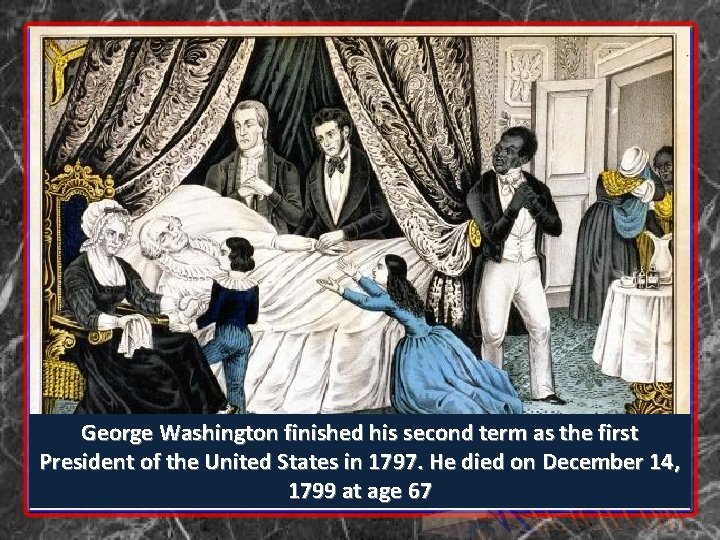
George Washington finished his second term as the first President of the United States in 1797. He died on December 14, 1799 at age 67
First in war, first in peace, and first in the hearts of his countrymen, he was second to none in humble and enduring scenes of private life. Pious, just, humane, temperate, and sincere; uniform, dignified, and commanding; his example was as edifying to all around him as were the effects of that example lasting…Correct throughout, vice shuddered in his presence and virtue always felt his fostering hand. The purity of his private character gave effulgence to his public virtues…Such was the man for whom our nation mourns. Henry Lee